Issues-Claim for Damages Based Upon Invasion of Privacy by Intrusion Upon Seclusion
What is this form?
The Issues-Claim for Damages Based Upon Invasion of Privacy by Intrusion Upon Seclusion is a legal document used by individuals seeking to claim damages for violations of their privacy rights. This form focuses specifically on situations where an individual has suffered harm as a result of unauthorized intrusion into their personal space or affairs. It is different from other privacy-related forms because it emphasizes the element of intrusion and the resulting damages, not just general privacy concerns.
What’s included in this form
- Identification of the plaintiff and defendant.
- Details of the alleged intrusion upon seclusion.
- Evidence of harm suffered by the plaintiff.
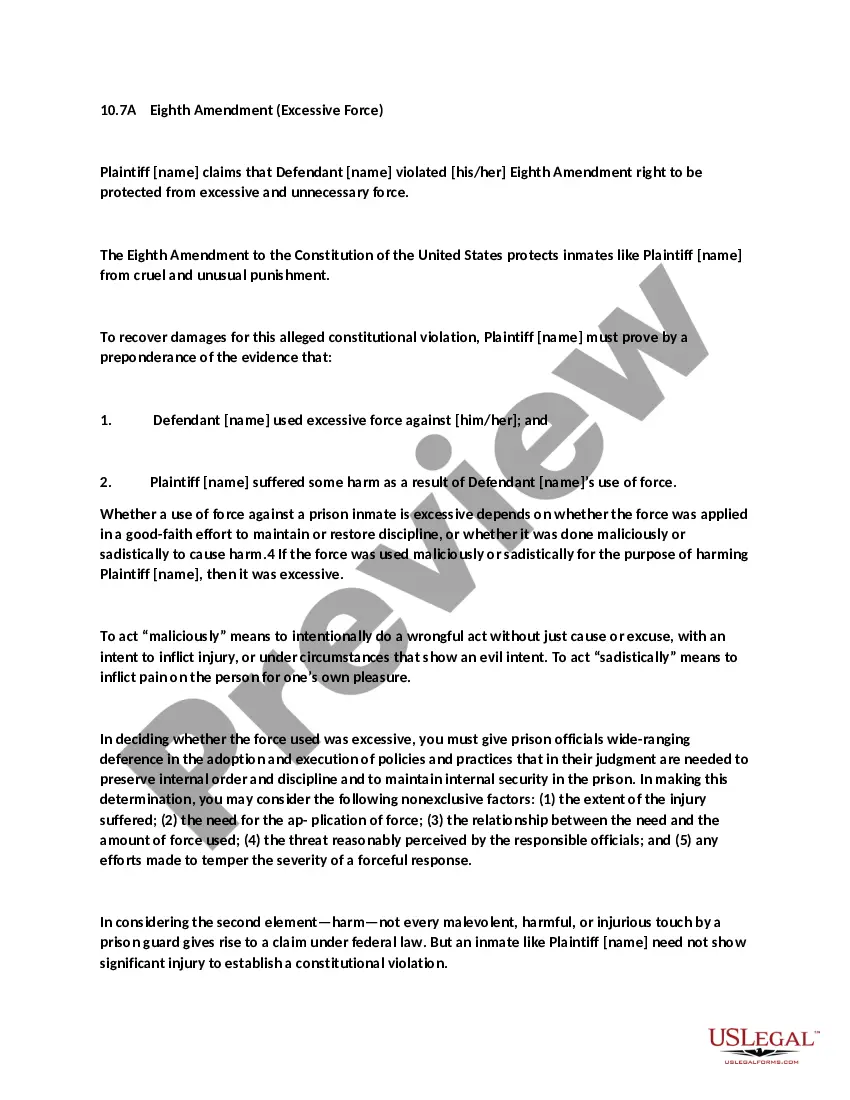
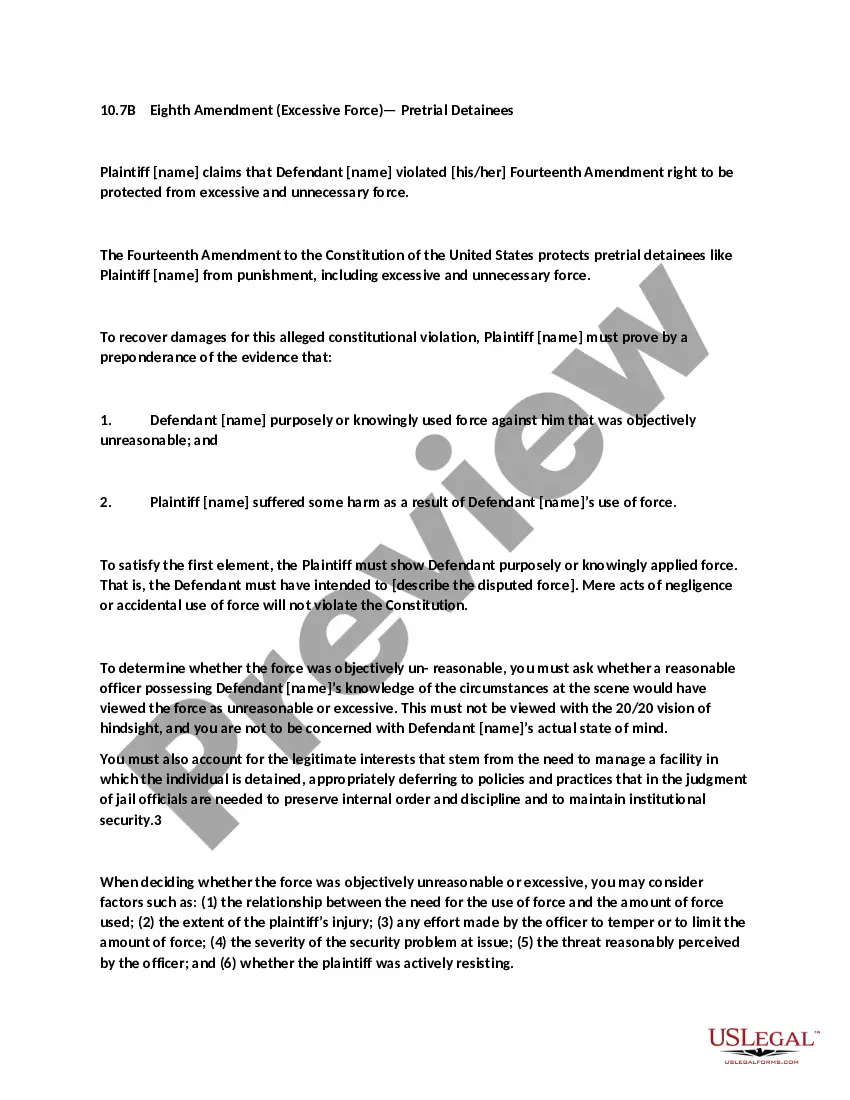
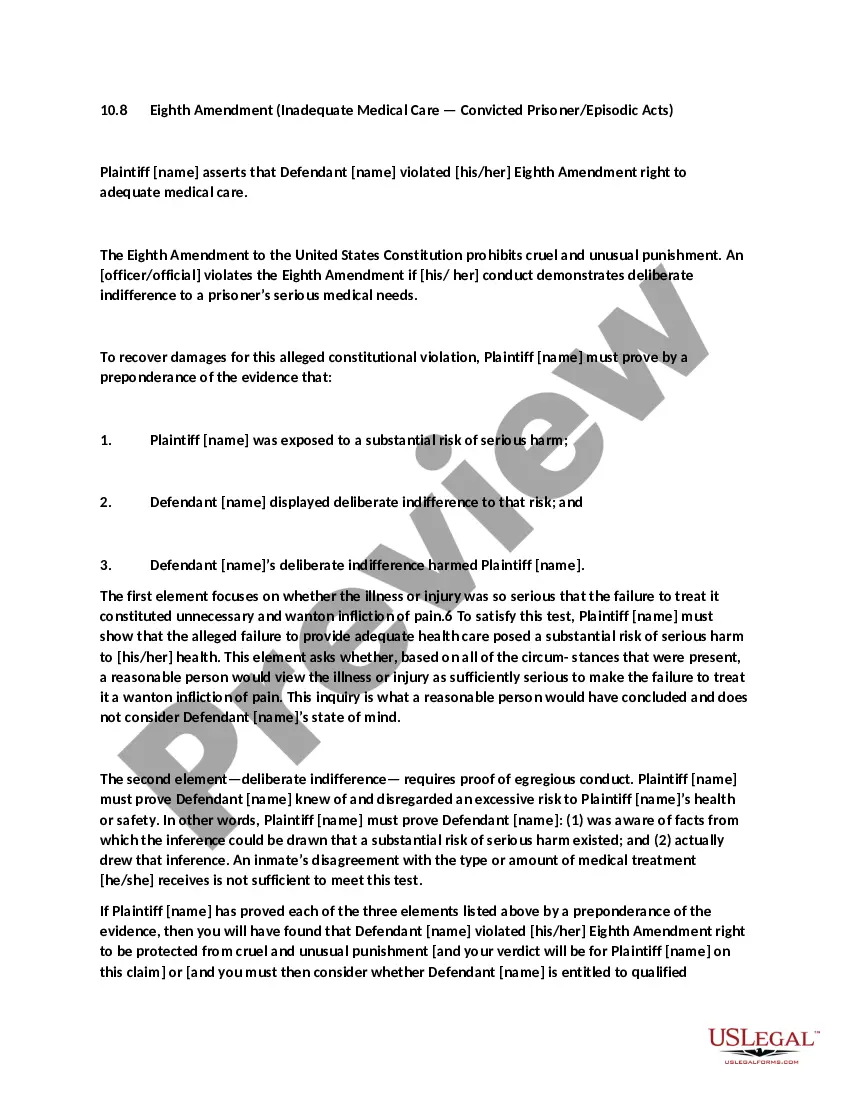
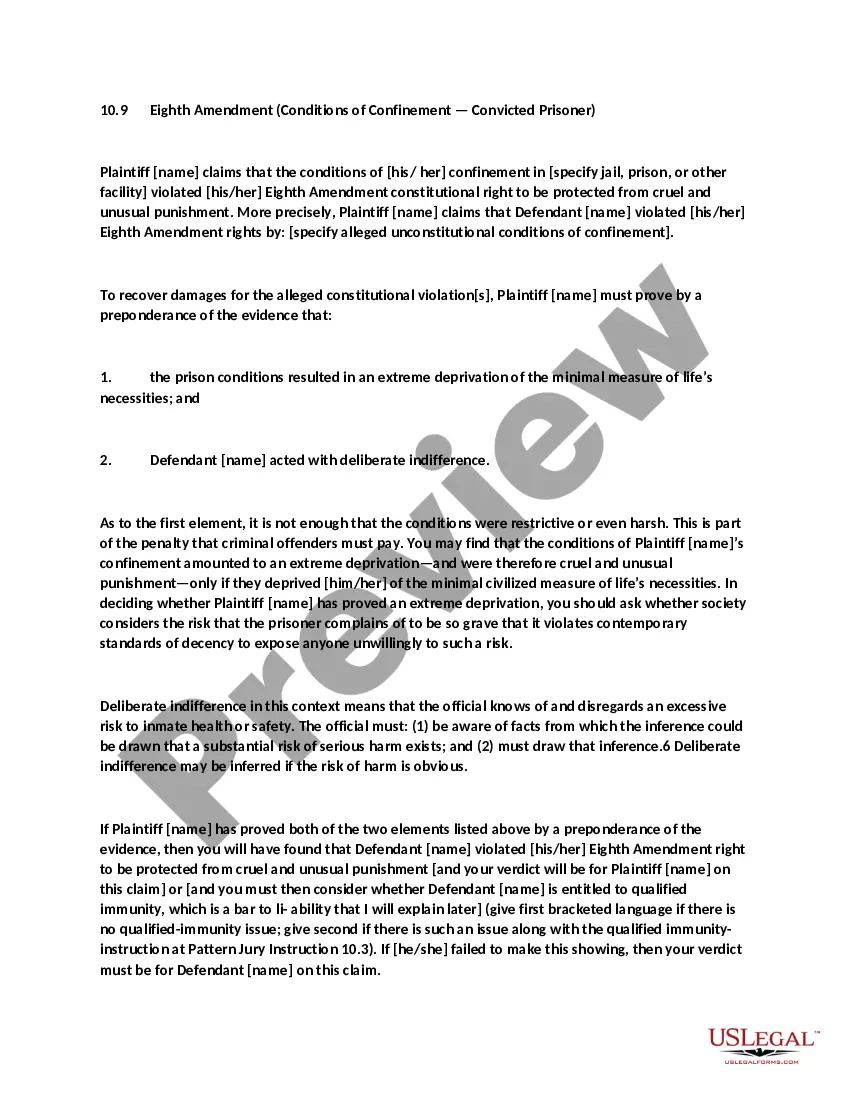
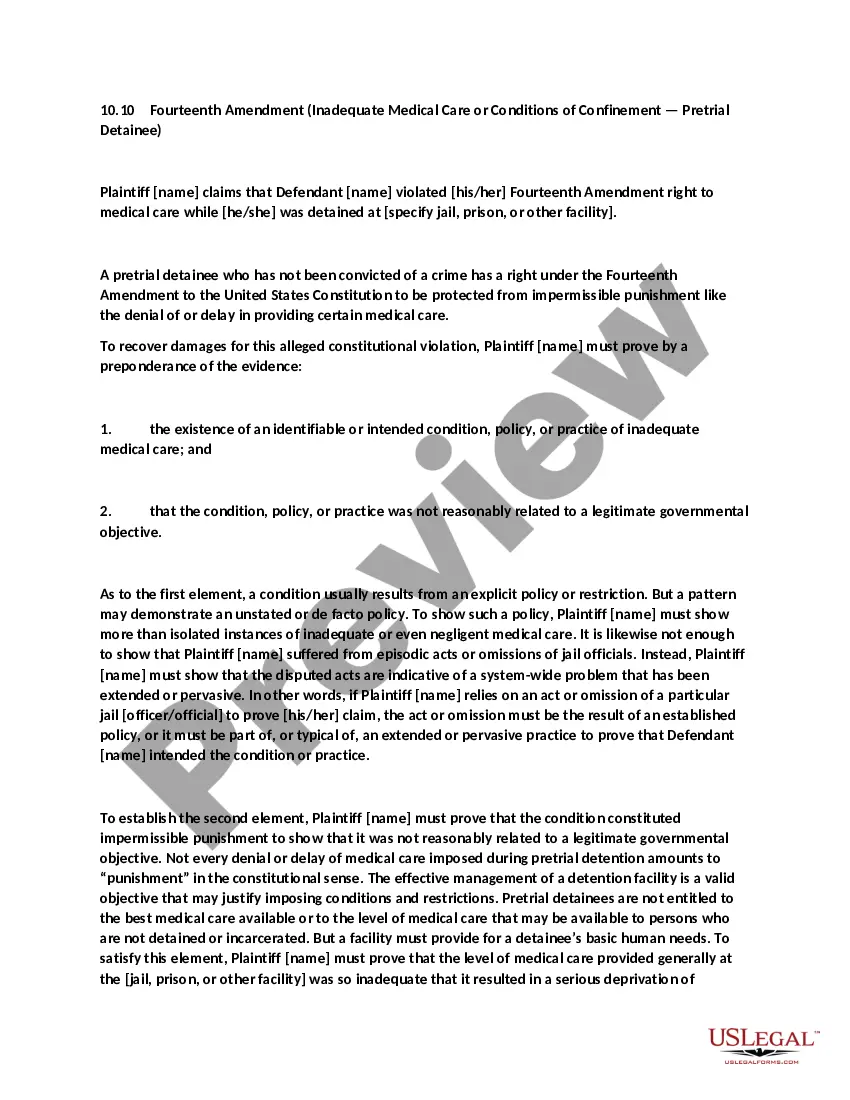
- Discussion of legal standards for excessive force and privacy violations.
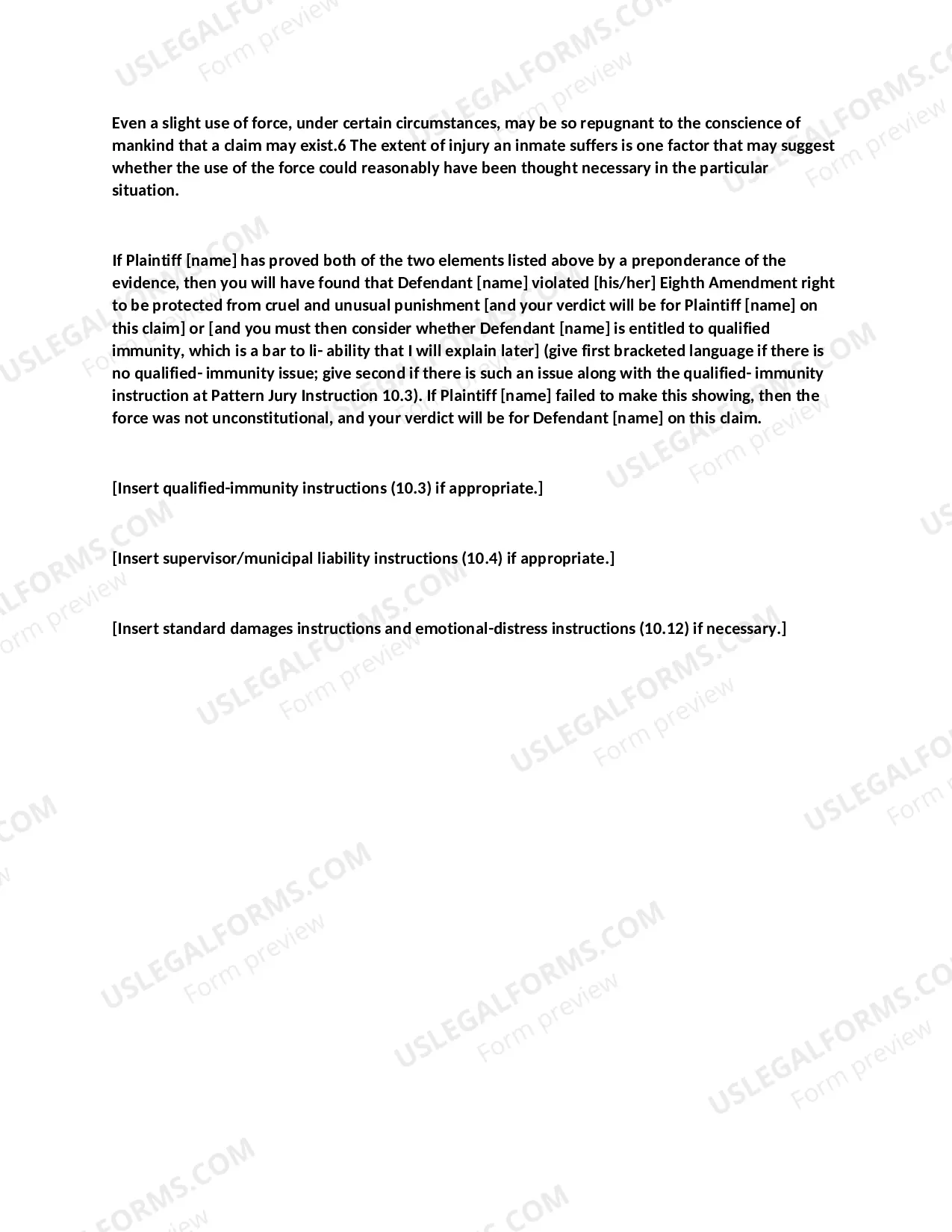
- Instructions on potential damages and qualified immunity considerations.
Common use cases
This form should be used when an individual believes their privacy has been invaded through intrusive actions that caused them harm. Common scenarios include unauthorized surveillance, unauthorized access to private information, or instances where private activities were exposed without consent. If you feel that your right to privacy has been violated and you wish to pursue damages, this form is essential for structuring your claim.
Intended users of this form
- Individuals who believe they have been victims of privacy invasions.
- People seeking to claim damages for emotional distress or other harms due to such intrusions.
- Those looking to understand their rights and procedures related to privacy claims.
Steps to complete this form
- Identify the parties involved: include the full names of the plaintiff and defendant.
- Detail the specific actions that led to the invasion of privacy, including dates and locations.
- Provide evidence or examples of the harm suffered due to the invasion.
- Sign and date the form to affirm its accuracy.
- File the form with the appropriate court or authority as required.
Notarization requirements for this form
This form does not typically require notarization to be legally valid. However, some jurisdictions or document types may still require it. US Legal Forms provides secure online notarization powered by Notarize, available 24/7 for added convenience.
Get your form ready online
Our built-in tools help you complete, sign, share, and store your documents in one place.
Make edits, fill in missing information, and update formatting in US Legal Forms—just like you would in MS Word.
Download a copy, print it, send it by email, or mail it via USPS—whatever works best for your next step.
Sign and collect signatures with our SignNow integration. Send to multiple recipients, set reminders, and more. Go Premium to unlock E-Sign.
If this form requires notarization, complete it online through a secure video call—no need to meet a notary in person or wait for an appointment.
We protect your documents and personal data by following strict security and privacy standards.

Make edits, fill in missing information, and update formatting in US Legal Forms—just like you would in MS Word.

Download a copy, print it, send it by email, or mail it via USPS—whatever works best for your next step.

Sign and collect signatures with our SignNow integration. Send to multiple recipients, set reminders, and more. Go Premium to unlock E-Sign.

If this form requires notarization, complete it online through a secure video call—no need to meet a notary in person or wait for an appointment.

We protect your documents and personal data by following strict security and privacy standards.
Typical mistakes to avoid
- Failing to accurately identify all parties involved in the claim.
- Not providing sufficient details about the events leading to the intrusion.
- Neglecting to include evidence of harm suffered.
- Overlooking state-specific legal requirements when filing.
Advantages of online completion
- Convenient and quick access to legally vetted templates.
- Easy to edit and customize the form to fit individual circumstances.
- Reliable access to legal expertise through licensed attorney-drafted materials.
Looking for another form?

Form popularity
FAQ
The elements of a cause of action for invasion of privacy by intrusion on seclusion or private affairs are (1) the defendant intentionally intruded on the plaintiff's solitude, seclusions, or private affairs, and (2) the intrusion would be highly offensive to a reasonable person.
Those four types are 1) intrusion on a person's seclusion or solitude; 2) public disclosure of embarrassing private facts about a person; 3) publicity that places a person in a false light in the public eye; and 4) appropriation, for the defendant's advantage, of the person's name or likeness. 1.
Intrusion upon Seclusion. One who intentionally intrudes, physically or otherwise, upon the solitude or seclusion of another or his private affairs or concerns, is subject to liability to the other for invasion of his privacy, if the intrusion would be highly offensive to a reasonable person.
To pursue an intrusion on seclusion claim in most states, a plaintiff must establish several things. The defendant, without authorization, intentionally invaded the plaintiff's private matters. The invasion is offensive to a reasonable person. The matter that the defendant intruded upon is a private one.
Those four types are 1) intrusion on a person's seclusion or solitude; 2) public disclosure of embarrassing private facts about a person; 3) publicity that places a person in a false light in the public eye; and 4) appropriation, for the defendant's advantage, of the person's name or likeness. 1.
A claimant must plead and prove four elements: there was an unauthorized intrusion or prying into his seclusion; the intrusion was highly offensive to or objectionable to a reasonable person; the matter intruded upon was private; and. the intrusion caused anguish and suffering.
To pursue an intrusion on seclusion claim in most states, a plaintiff must establish several things. The defendant, without authorization, intentionally invaded the plaintiff's private matters. The invasion is offensive to a reasonable person. The matter that the defendant intruded upon is a private one.
Invasion of Privacy ? Intrusion Upon Seclusion Of intentional intrusion, physical or otherwise, at a secluded place or in the private affairs or concerns of another, without permission. This can include forcibly entering a home, hotel room, etc.