Trade Secrets - Damages - Compensatory
About this form
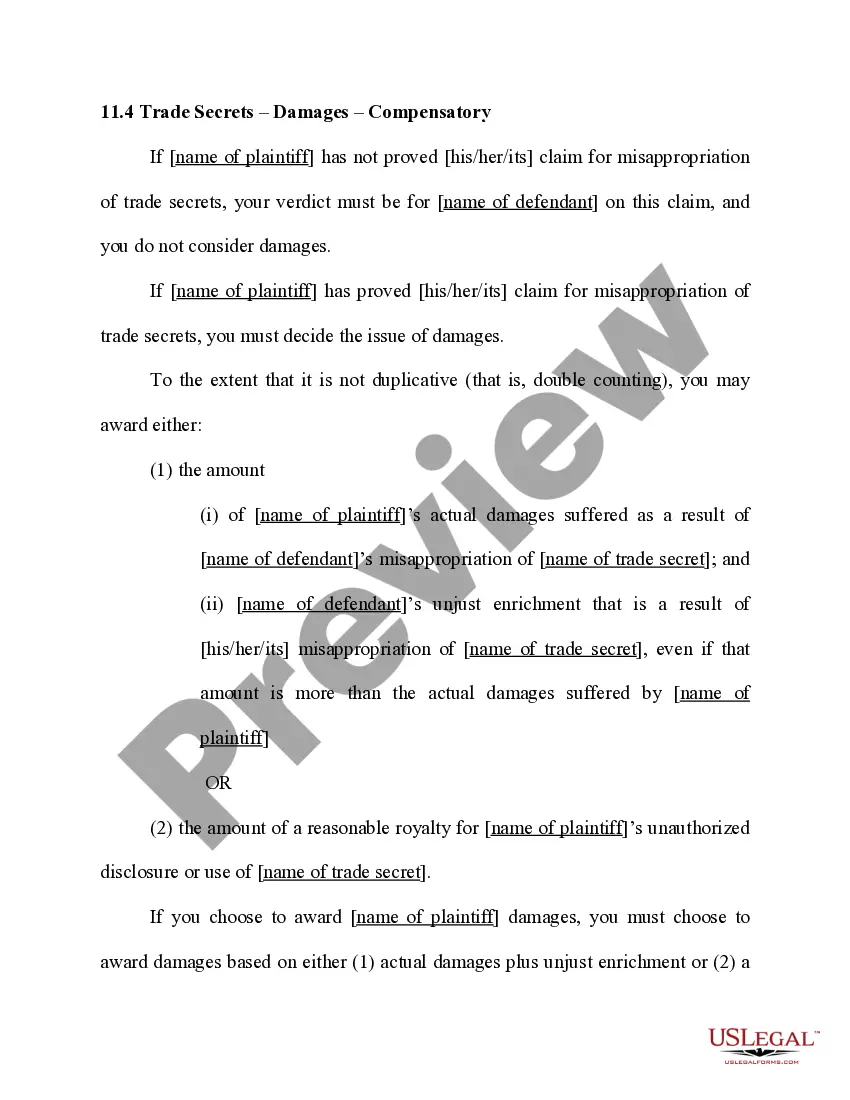
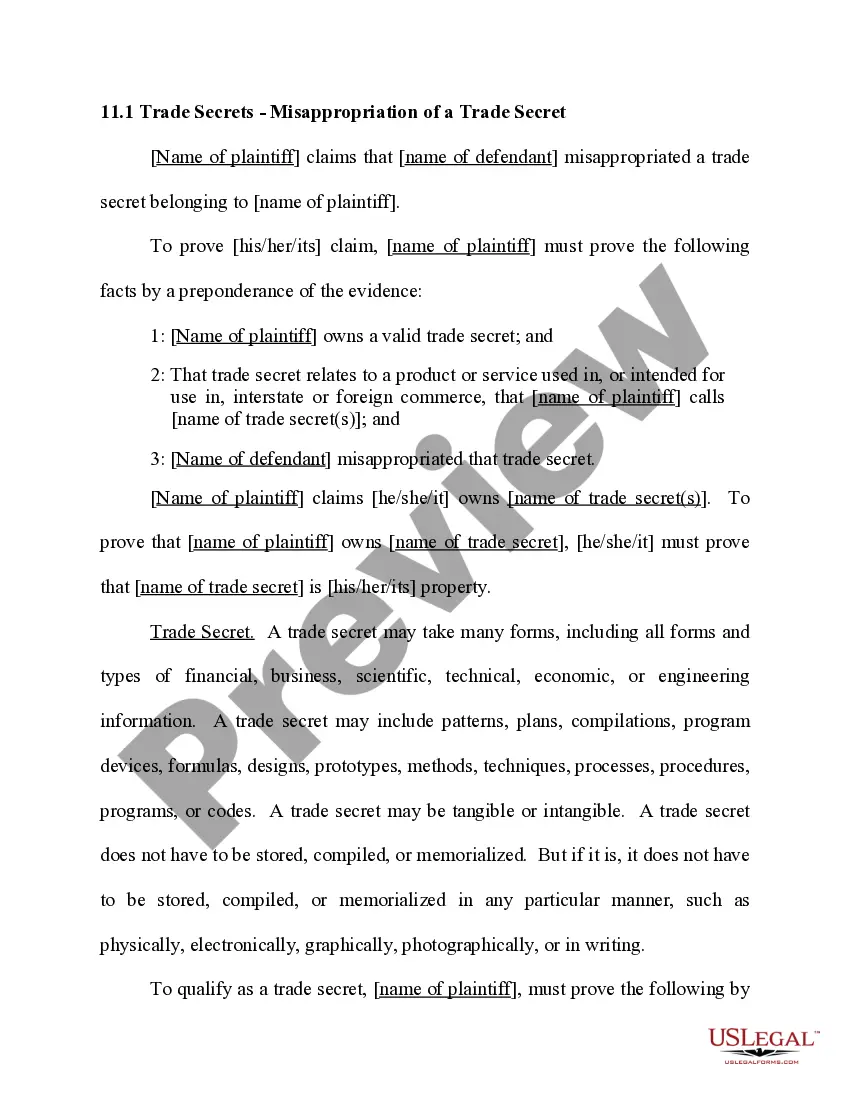
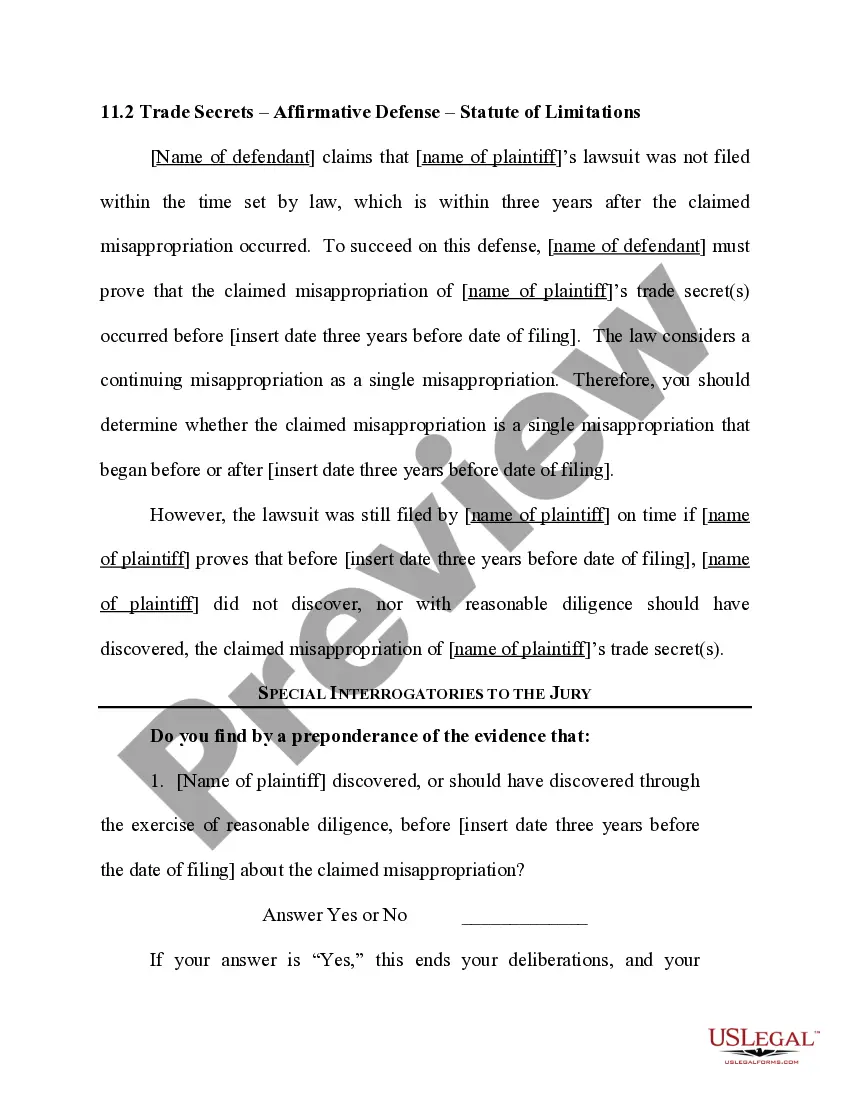
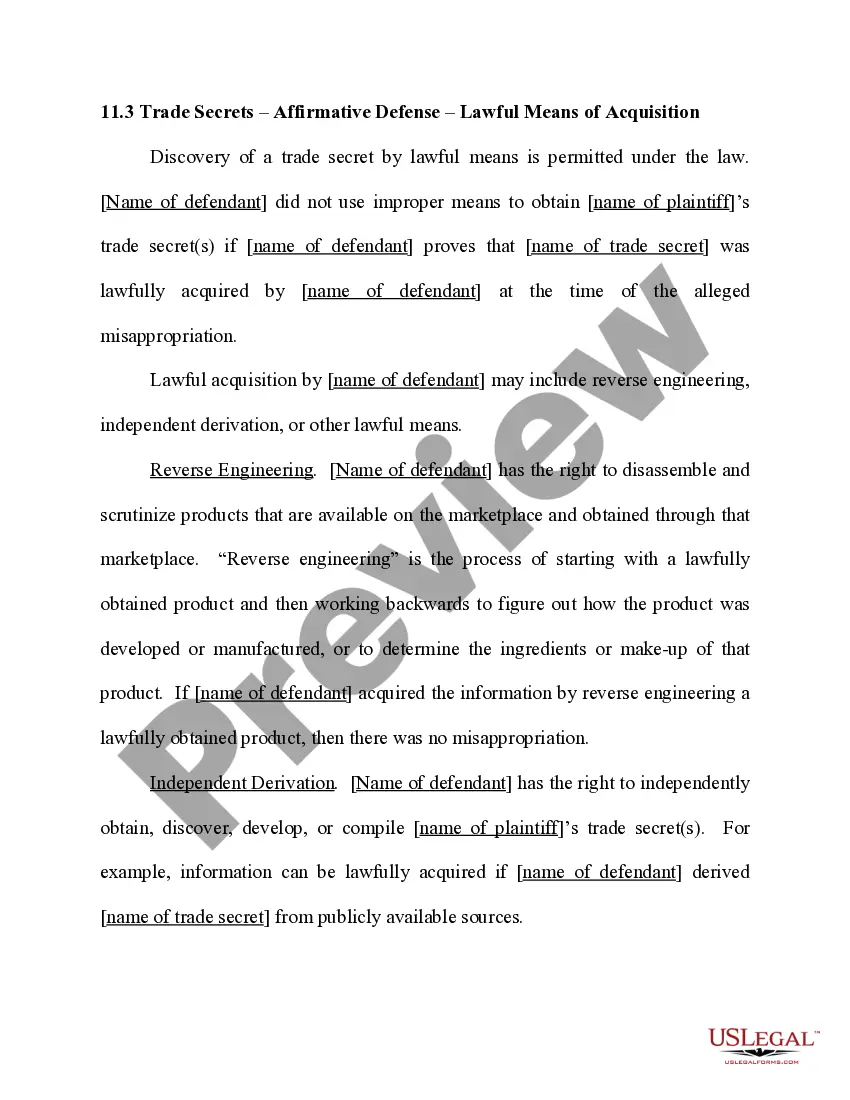
The Trade Secrets - Damages - Compensatory form is a legal document used in cases of misappropriation of trade secrets. It outlines how to determine and award damages to the plaintiff if they prove their claim. This form is specifically designed for jury instructions from the 11th Circuit Federal Court of Appeals, differentiating it from general damage award forms by focusing on the exclusive context of trade secrets.
Form components explained
- Clarification on proof of misappropriation of trade secrets by the plaintiff.
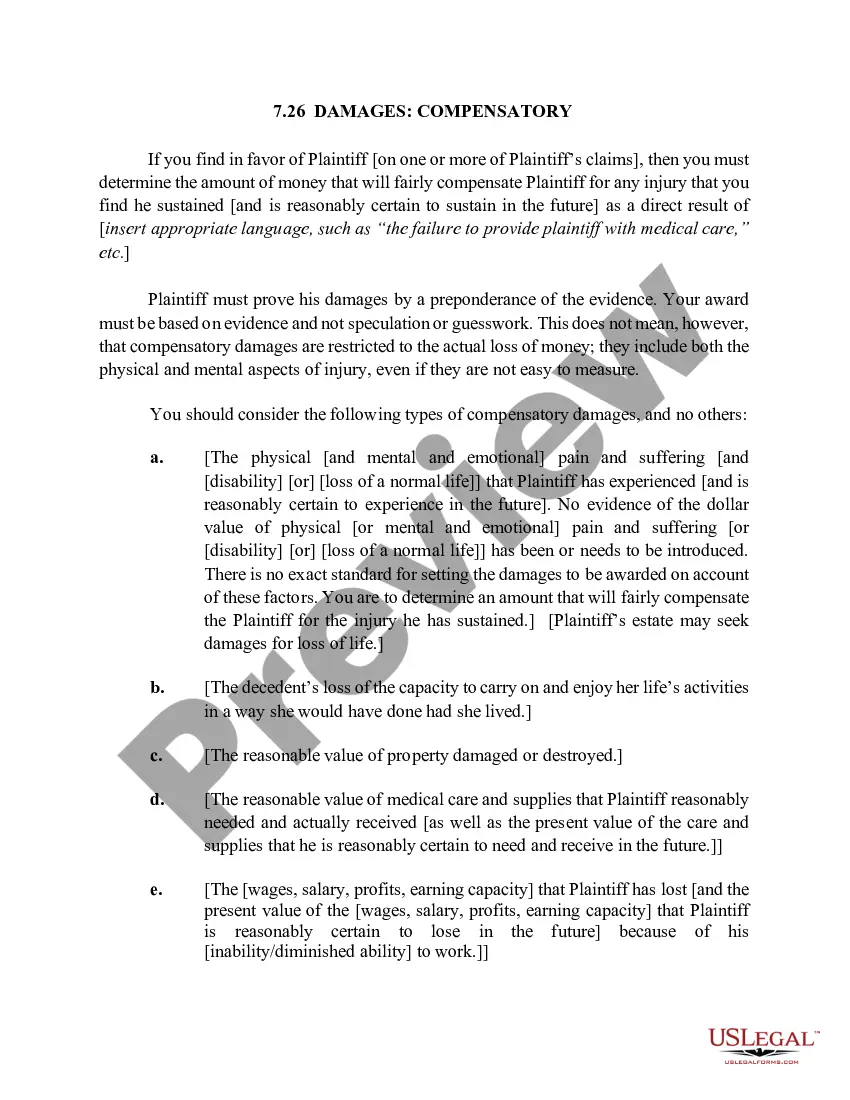
- Options for awarding damages: actual damages plus unjust enrichment or a reasonable royalty.
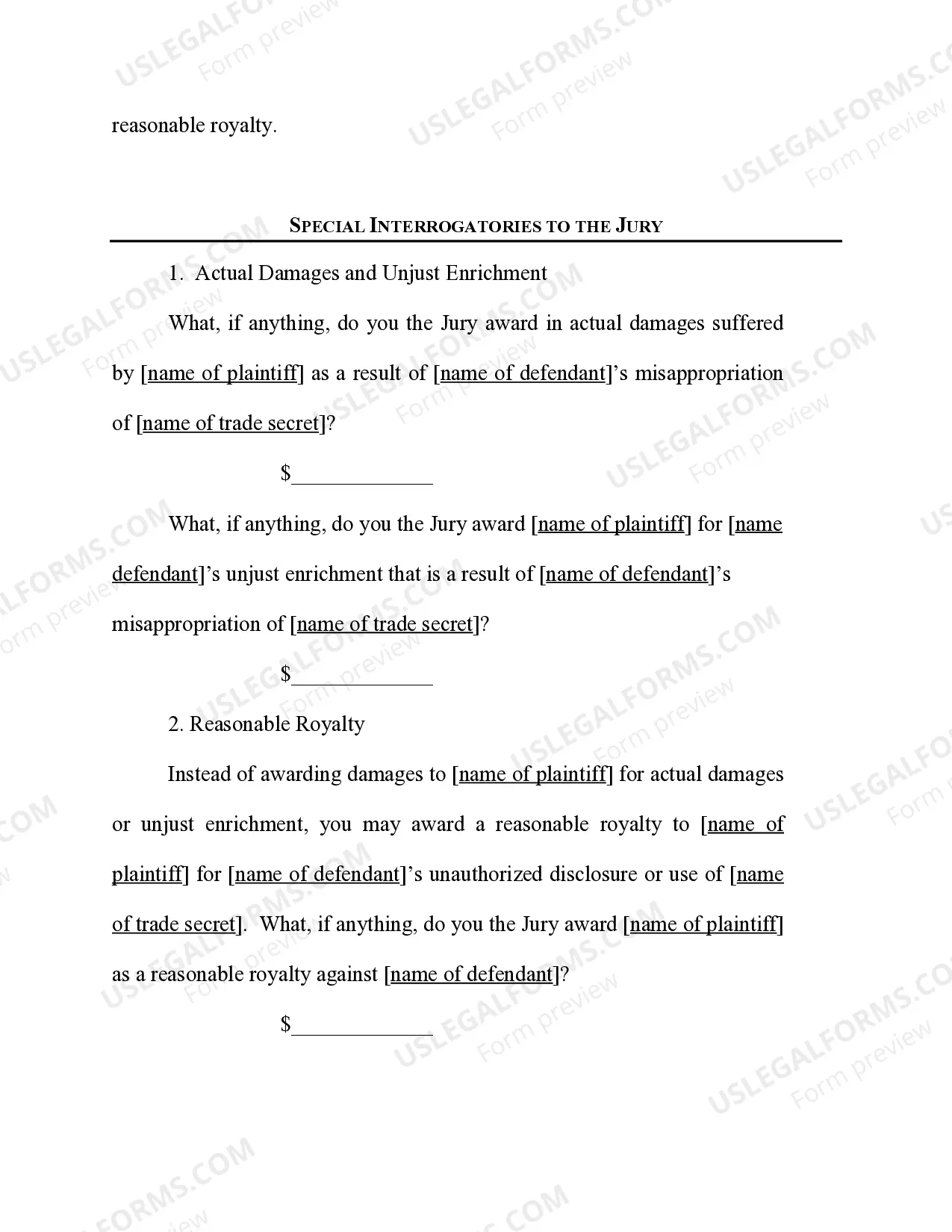
- Special interrogatories for the jury to determine actual damages and unjust enrichment.
- Fields for the jury to specify the amounts awarded for damages and royalties.
Situations where this form applies
This form should be used in legal proceedings where a party claims the misappropriation of trade secrets. It is applicable when the plaintiff seeks to recover damages resulting from the unauthorized use or disclosure of their trade secrets, which may include confidential formulas, practices, or processes that provide a competitive advantage.
Who should use this form
- Businesses alleging the misappropriation of their trade secrets.
- Individuals seeking to enforce their rights over proprietary information.
- Legal professionals representing clients in trade secret litigation.
Completing this form step by step
- Identify the parties involved: clearly state the names of the plaintiff and defendant.
- Determine the claim: specify if the plaintiff has proven misappropriation of trade secrets.
- Calculate damages: evaluate actual damages and unjust enrichment or decide on a reasonable royalty.
- Fill in the amounts awarded in the special interrogatories section.
- Ensure the final verdict is clearly articulated for jury consideration.
Notarization requirements for this form
This form usually doesn’t need to be notarized. However, local laws or specific transactions may require it. Our online notarization service, powered by Notarize, lets you complete it remotely through a secure video session, available 24/7.
Get your form ready online
Our built-in tools help you complete, sign, share, and store your documents in one place.
Make edits, fill in missing information, and update formatting in US Legal Forms—just like you would in MS Word.
Download a copy, print it, send it by email, or mail it via USPS—whatever works best for your next step.
Sign and collect signatures with our SignNow integration. Send to multiple recipients, set reminders, and more. Go Premium to unlock E-Sign.
If this form requires notarization, complete it online through a secure video call—no need to meet a notary in person or wait for an appointment.
We protect your documents and personal data by following strict security and privacy standards.

Make edits, fill in missing information, and update formatting in US Legal Forms—just like you would in MS Word.

Download a copy, print it, send it by email, or mail it via USPS—whatever works best for your next step.

Sign and collect signatures with our SignNow integration. Send to multiple recipients, set reminders, and more. Go Premium to unlock E-Sign.

If this form requires notarization, complete it online through a secure video call—no need to meet a notary in person or wait for an appointment.

We protect your documents and personal data by following strict security and privacy standards.
Common mistakes
- Failing to provide sufficient evidence to prove misappropriation.
- Not differentiating between actual damages and unjust enrichment.
- Inaccurately calculating or reporting awarded amounts in the interrogatories.
Benefits of using this form online
- Convenience of downloading and completing the form at your own pace.
- Editability allows for easy customization to meet specific case needs.
- Reliable access to professionally drafted legal content, ensuring compliance with legal standards.
Looking for another form?
Form popularity
FAQ
Under federal law, if someone has caused you financial or business harm by misappropriating your trade secret, you may be entitled to damages in the amount of the actual monetary loss caused by the misappropriation. Damages may also be awarded for any unjust enrichment caused by the misappropriation.
Thus, as long as the employer has secured information on employee salaries through appropriate procedures, the earnings may be considered a protected trade secret.
Damages Under the California Uniform Trade Secrets Act and the Federal Trade Secrets Act. Both the DTSA and CUSTA provide for three types of damages: actual loss, unjust enrichment, and a reasonable royalty.
Unjust enrichment damages Under the theory of unjust enrichment, a plaintiff can recover any gains made by the defendant related to the misappropriation of trade secrets.
A relatively rare remedy that addresses some of these concerns is known as ?disgorgement? where a judge (not a jury) may award the trade secret owner up to the total profit earned on sales of a product that incorporates the accused trade secret.
Damages Under the California Uniform Trade Secrets Act and the Federal Trade Secrets Act. Both the DTSA and CUSTA provide for three types of damages: actual loss, unjust enrichment, and a reasonable royalty. The statutes are subtly different in how a plaintiff can recover these damages.
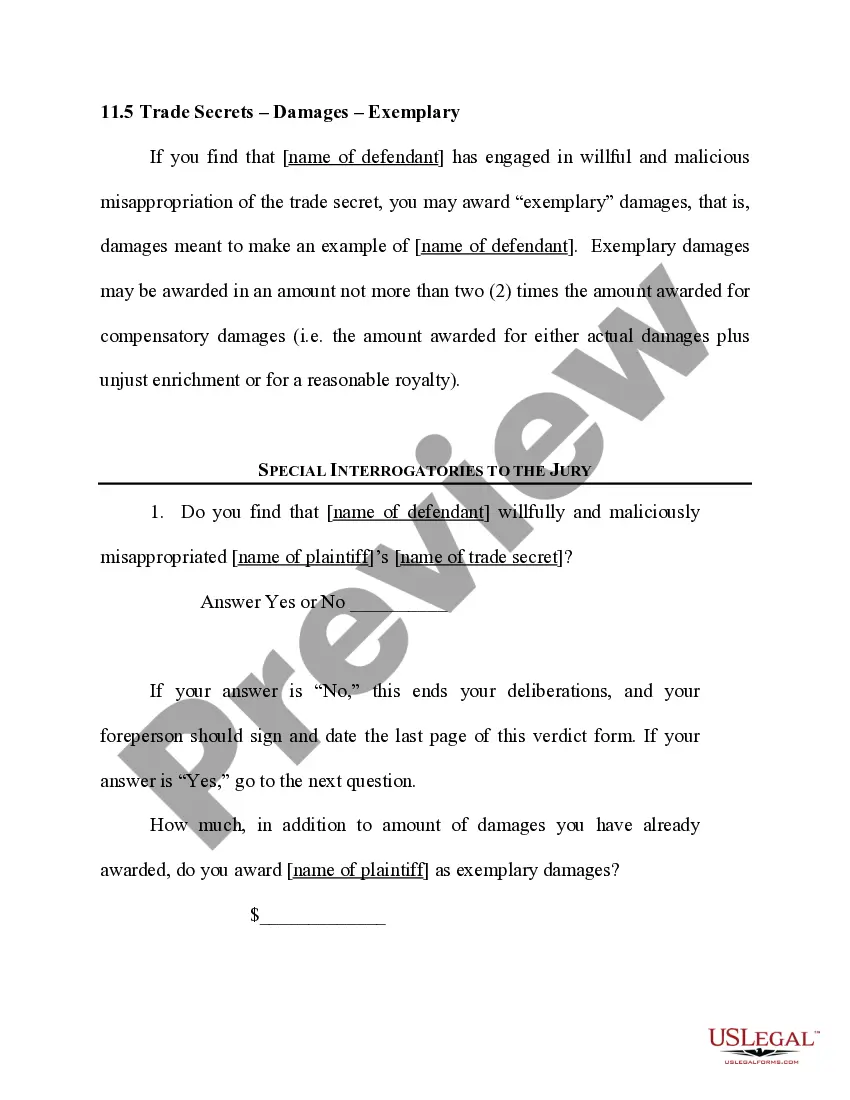
Under the DTSA, parties may seek ?exemplary? (i.e., punitive) damages up to twice the amount of ordinary damages if the trade secret is ?willfully and maliciously misappropriated.?41 While some state statutes (like California's) include the same cap on punitive damages, others (e.g., Ohio's) allow up to three times in
Exemplary damages up to two times the amount of the damages for willful and malicious misappropriation. Reasonable attorneys' fees for the prevailing party if: the misappropriation claim is made in bad faith; a motion to terminate an injunction is made or opposed in bad faith; or.