Issues-Claim for Damages Based Upon Abuse of Process-Burden of Proof
What is this form?
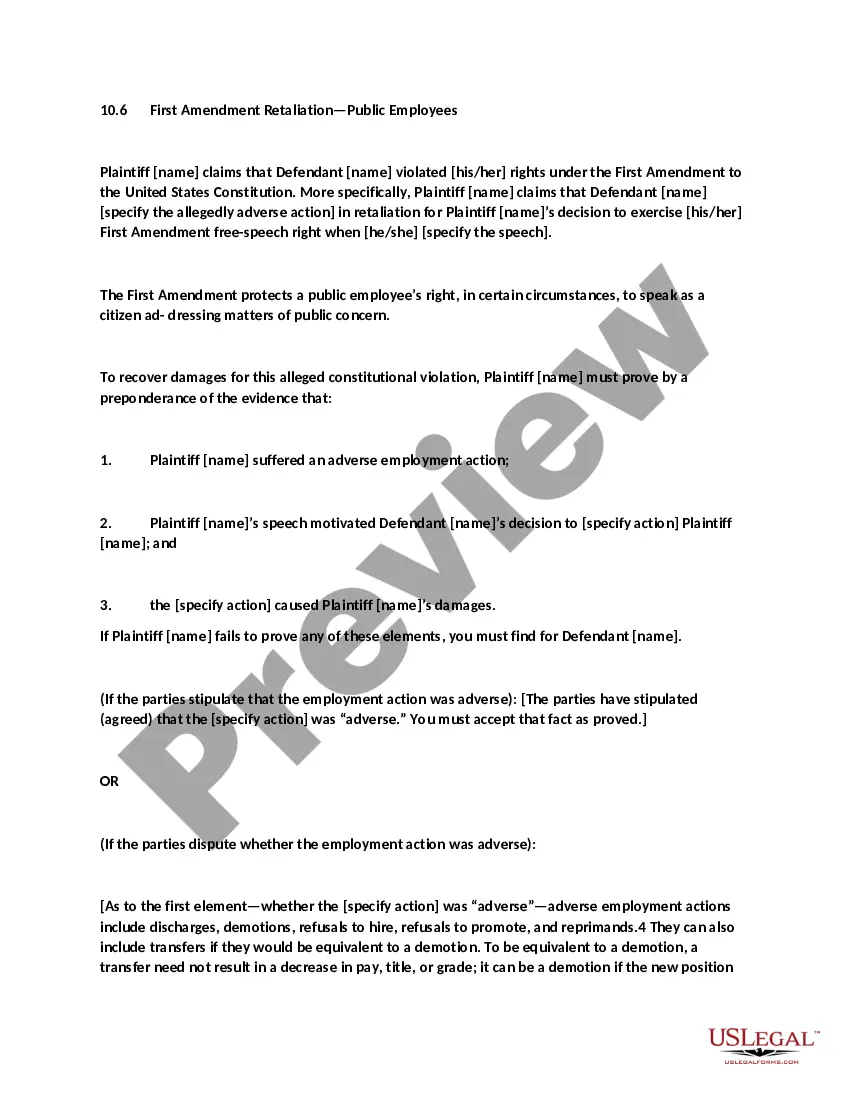
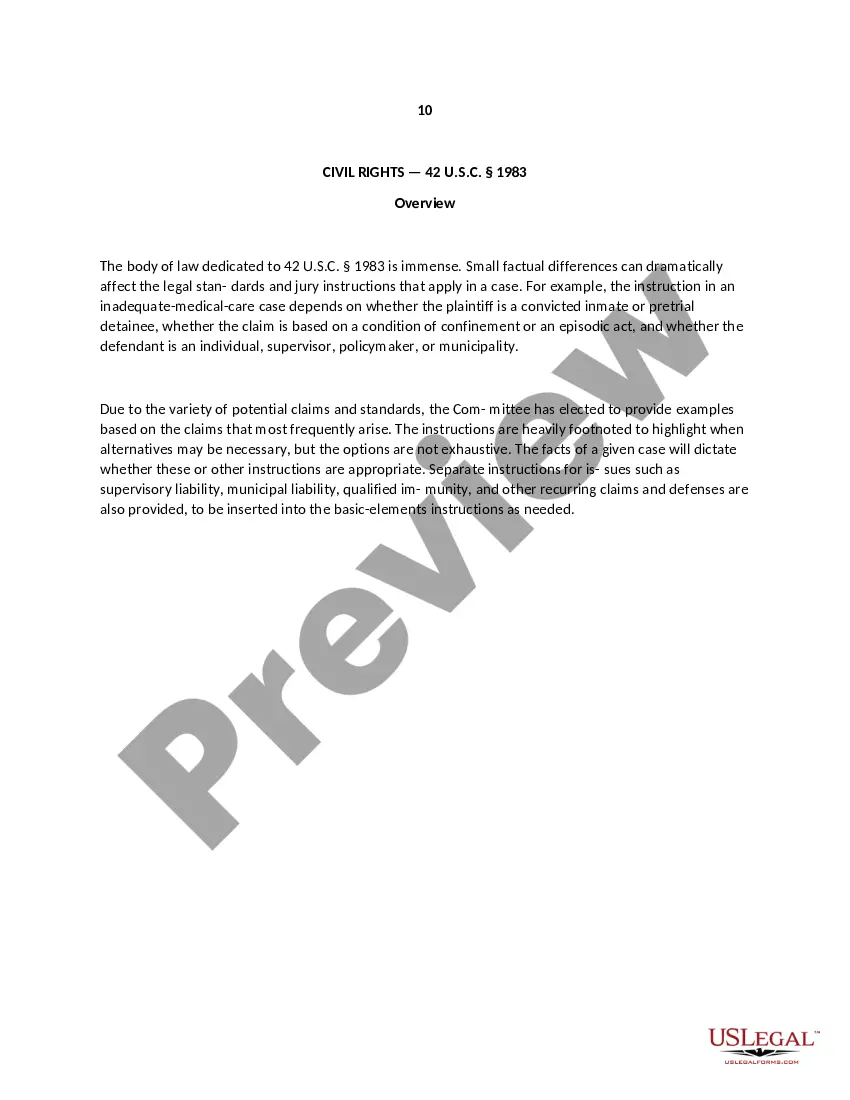
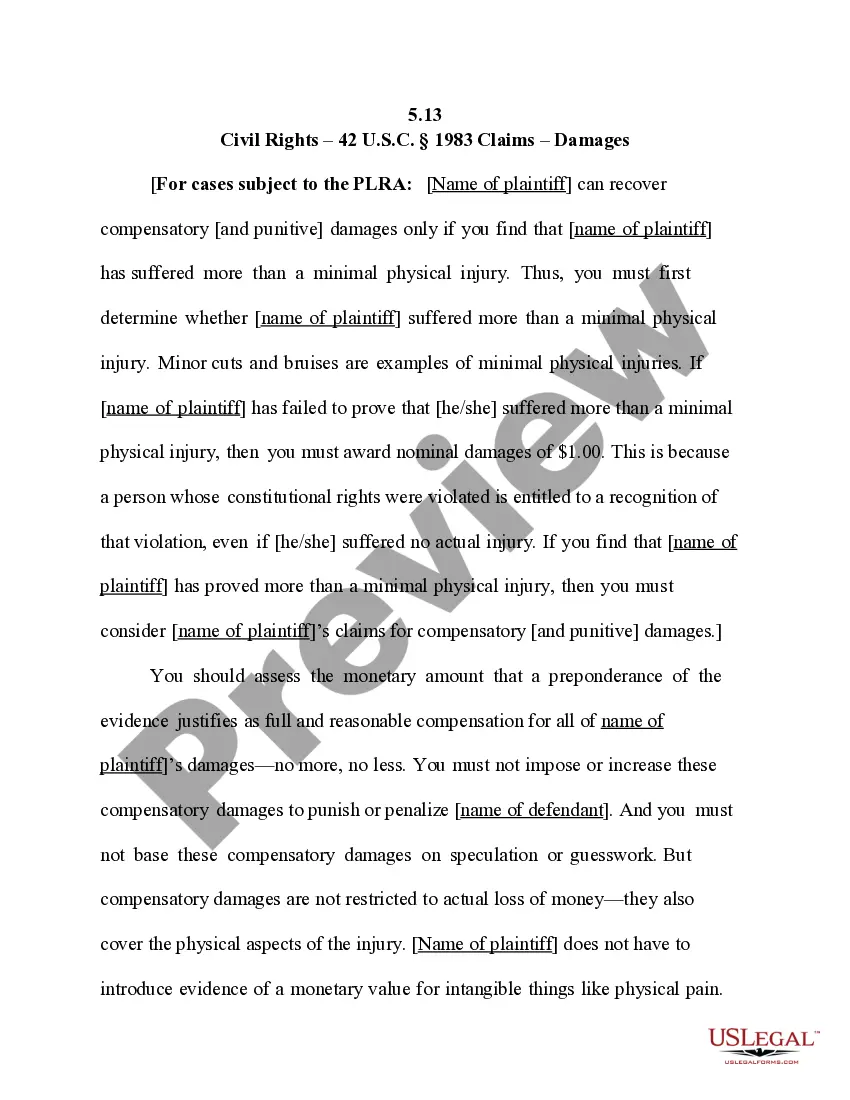
The Issues-Claim for Damages Based Upon Abuse of Process-Burden of Proof form is designed to assist individuals in seeking compensation for damages caused by the abuse of legal processes. This form specifically addresses claims where a defendant's misuse of legal proceedings has violated a plaintiffâs constitutional rights. It is important to note that this form differs from general civil suits in that it specifically requires evidence to overcome the qualified immunity that certain government officials may claim.
Key components of this form
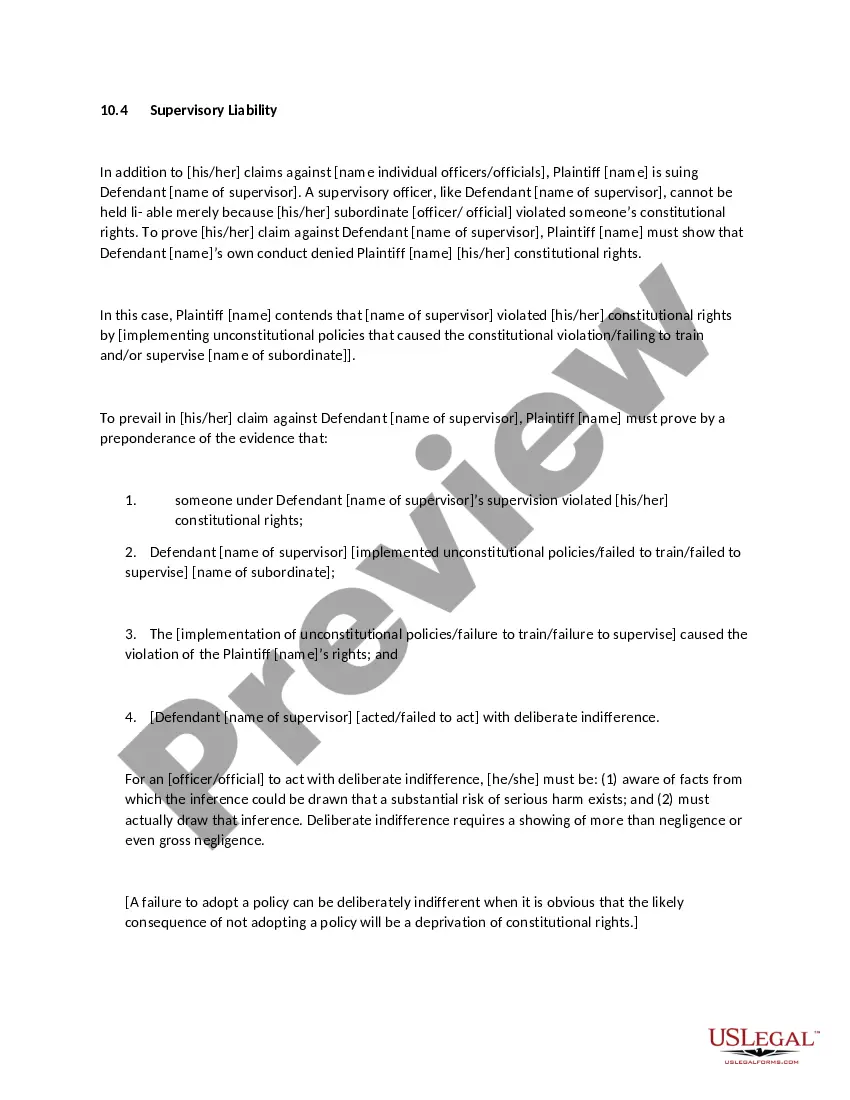
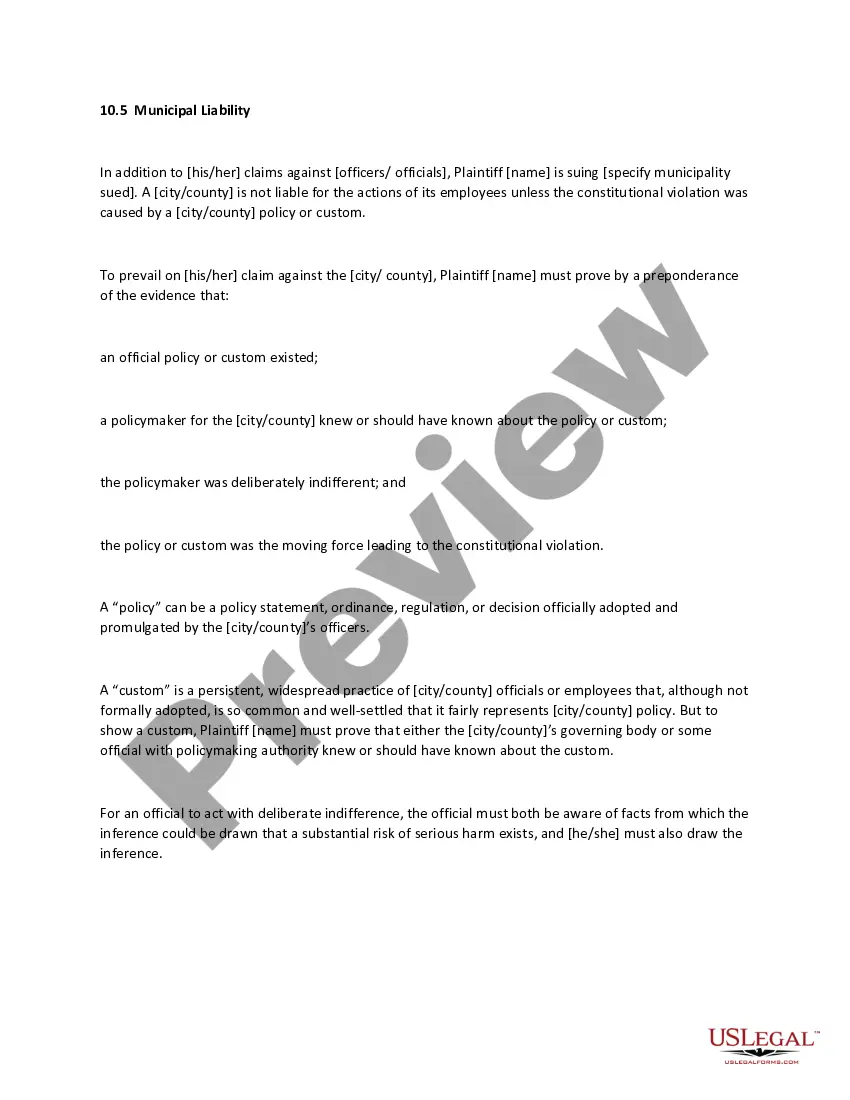
- Introduction to qualified immunity and its implications for the defendant.
- Definition of the burden of proof that the plaintiff must meet.
- Criteria for qualifying a defendant for immunity based on their reasonable belief of legality in the actions taken.
- Assessment of whether constitutional rights were violated by the defendant.
- Specific details regarding the circumstances surrounding the disputed legal actions.
When to use this form
This form should be utilized when an individual believes they have suffered damages due to the misuse of legal processes by a government official or law enforcement officer. Typical scenarios include wrongful arrests, improper searches, or other actions that infringe upon a personâs constitutional rights through legal avenues. It is essential to use this form when there are grounds to challenge the qualified immunity defense that a defendant may assert.
Who can use this document
- Individuals seeking to file a claim against a government official or law enforcement officer.
- People who believe their constitutional rights have been violated through abuse of legal processes.
- Those who have sufficient evidence to argue against a defendant's claims of qualified immunity.
Instructions for completing this form
- Identify the parties involved, including the plaintiff and defendant.
- Clearly specify the actions taken by the defendant that you claim constitute abuse of process.
- Document the evidence supporting your claim against the defendant's assertion of qualified immunity.
- Provide any relevant facts that demonstrate a violation of your constitutional rights.
- Sign and date the form in the designated area.
Does this form need to be notarized?
This form does not typically require notarization unless specified by local law. However, verifying with local requirements ensures compliance with any state-specific regulations.
Get your form ready online
Our built-in tools help you complete, sign, share, and store your documents in one place.
Make edits, fill in missing information, and update formatting in US Legal Forms—just like you would in MS Word.
Download a copy, print it, send it by email, or mail it via USPS—whatever works best for your next step.
Sign and collect signatures with our SignNow integration. Send to multiple recipients, set reminders, and more. Go Premium to unlock E-Sign.
If this form requires notarization, complete it online through a secure video call—no need to meet a notary in person or wait for an appointment.
We protect your documents and personal data by following strict security and privacy standards.

Make edits, fill in missing information, and update formatting in US Legal Forms—just like you would in MS Word.

Download a copy, print it, send it by email, or mail it via USPS—whatever works best for your next step.

Sign and collect signatures with our SignNow integration. Send to multiple recipients, set reminders, and more. Go Premium to unlock E-Sign.

If this form requires notarization, complete it online through a secure video call—no need to meet a notary in person or wait for an appointment.

We protect your documents and personal data by following strict security and privacy standards.
Common mistakes to avoid
- Failing to provide adequate evidence to counter the qualified immunity claim.
- Not fully understanding the legal definitions of abuse of process.
- Neglecting to specify the constitutional rights that were violated.
- Overlooking the need for precision in detailing the circumstances of the case.
Why complete this form online
- Convenience of downloading and completing the form at your own pace.
- Editability allows for tailored responses specific to your case.
- Reliability ensured by templates drafted by licensed attorneys.
Legal use & context
- The form is used in civil litigation to pursue damages for constitutional violations.
- Understanding the conditions under which qualified immunity applies can impact your case significantly.
- Accurate completion of the form can enhance your chances of a favorable ruling.
Summary of main points
- The form is vital for those seeking to claim damages from abuses of legal processes.
- Candidates must prepare to counter qualified immunity claims effectively.
- Completing the form thoroughly increases the likelihood of success in court.
Looking for another form?
Form popularity
FAQ
Examples include serving legal papers on someone which have not actually been filed with the intent to intimidate, or filing a lawsuit without a genuine legal basis in order to obtain information, force payment through fear of legal entanglement or gain an unfair or illegal advantage.
6 To establish an abuse of process, one must show ?(1) the present defendant made an illegal, improper, perverted use of process, a use neither warranted nor authorized by the process; (2) the defendant had an improper purpose in exercising such illegal, perverted or improper use of process; and (3) damage resulted.?
The essential elements of the tort of abuse of process are that: "(1) `process' was used; (2) for an ulterior or illegitimate purpose; (3) resulting in damage." Jones v. Brockton Public Markets, Inc., 340 N.E.2d 484, 485 (Mass.
Examples include serving legal papers on someone which have not actually been filed with the intent to intimidate, or filing a lawsuit without a genuine legal basis in order to obtain information, force payment through fear of legal entanglement or gain an unfair or illegal advantage.
The primary difference between the two legal actions is that malicious prosecution concerns the malicious or wrongful commencement of an action, while, on the other hand, abuse of process concerns the improper use of the legal process after process has already been issued and a suit has commenced.
Generally, the elements for abuse of process are: (1) the use of an illegal or improper use of process; (2) an ulterior motive or improper purpose; and in some jurisdictions (3) harm to a litigant.
In order to prove the tort of abuse of process, a plaintiff must establish the following elements: (1) a legal procedure set in motion in proper form, even with probable cause, and even with ultimate success, but (2) perverted to accomplish an ulterior purpose for which it was not designed, and (3) a willful act in the
First, the prosecutor must have instigated or continued bringing criminal charges against you that resulted in you winning, outright. Second, that prosecutor must have acted ?maliciously? and without ?reasonable grounds.? Third, you must have been damaged in a verifiable way.