Michigan Quitclaim Deed from Three (3) Individuals to Four (4) Individuals
About this form
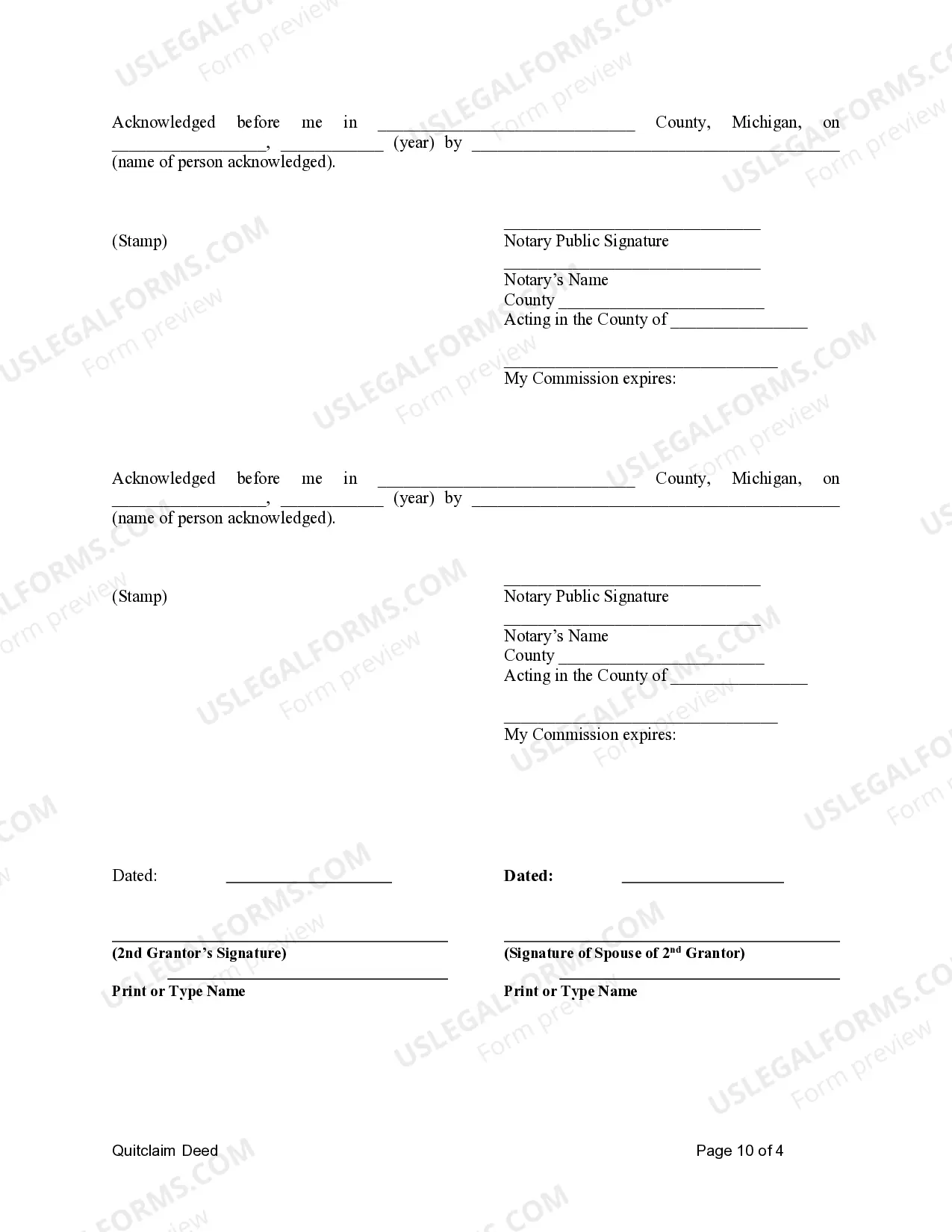
This form is a Quitclaim Deed from three individuals to four individuals. It allows the grantors to convey their interest in a specific property to the grantees without providing any warranties. Unlike other deeds, a quitclaim deed does not guarantee that the grantors have clear title to the property. This form complies with all applicable state laws, making it a reliable option for property transfers in various situations.
Key parts of this document
- Identifies the parties involved: three grantors and four grantees.
- Describes the specific property being transferred.
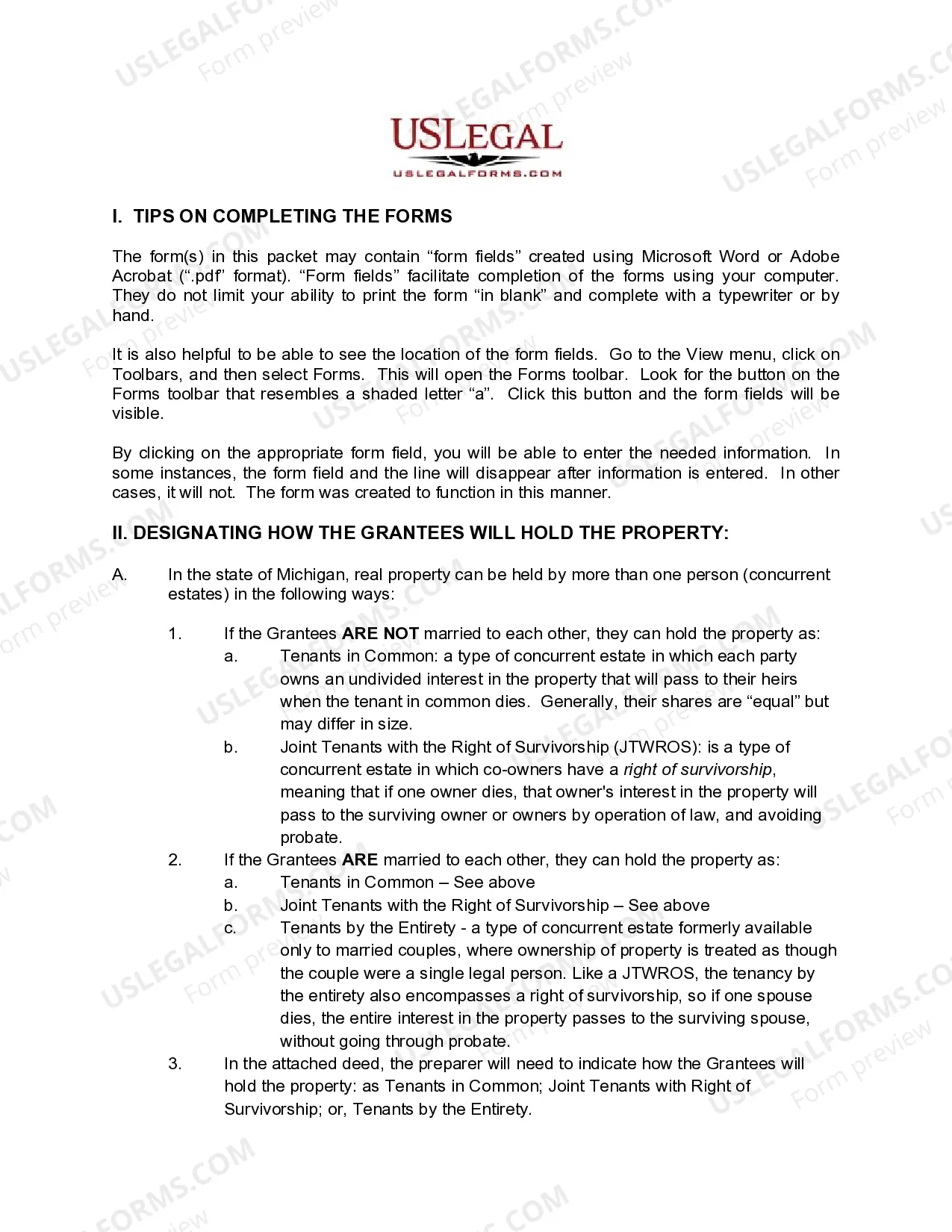
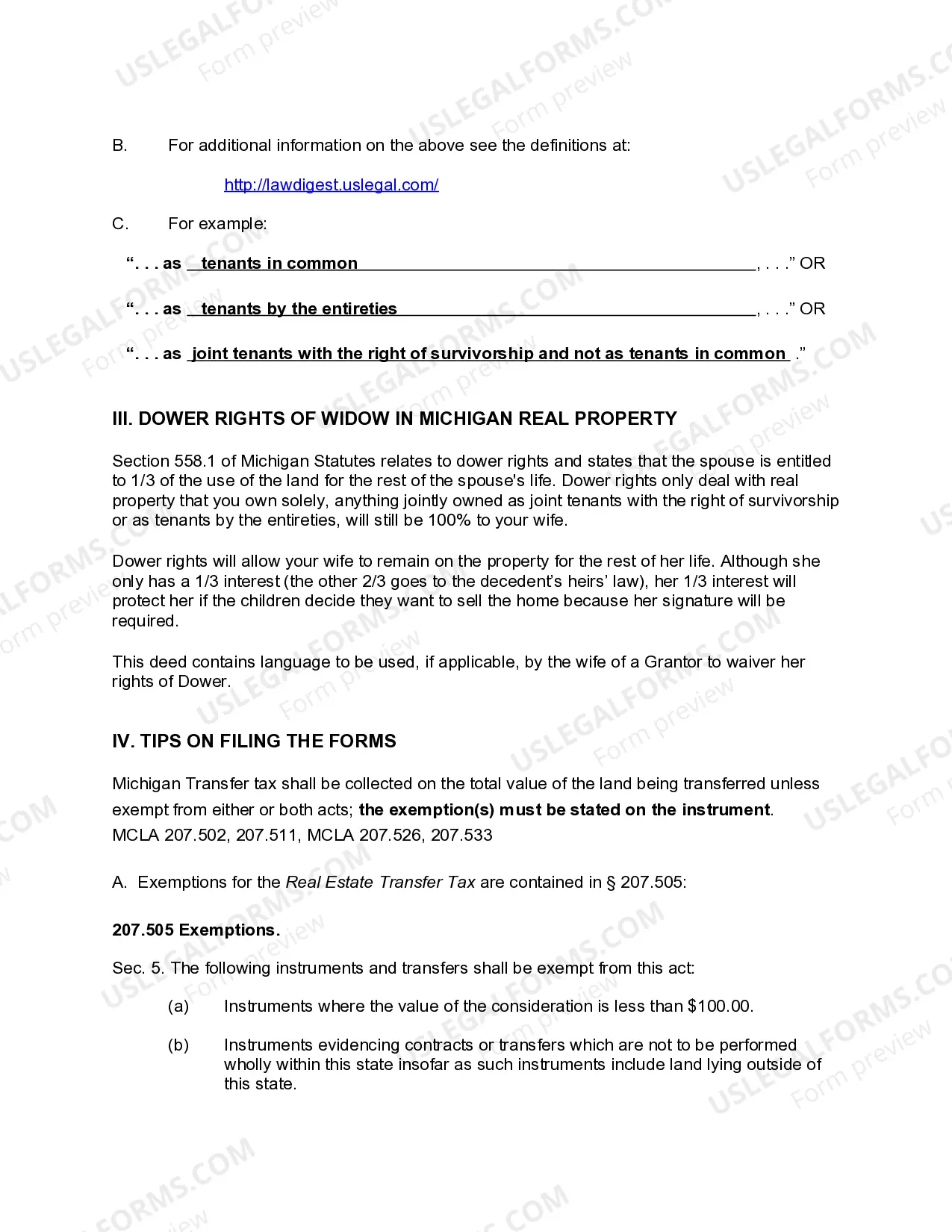
- Includes options for how the grantees will hold the property (e.g., as tenants in common, joint tenants with right of survivorship, or tenants by the entirety).
- Provides necessary language regarding dower rights in Michigan.
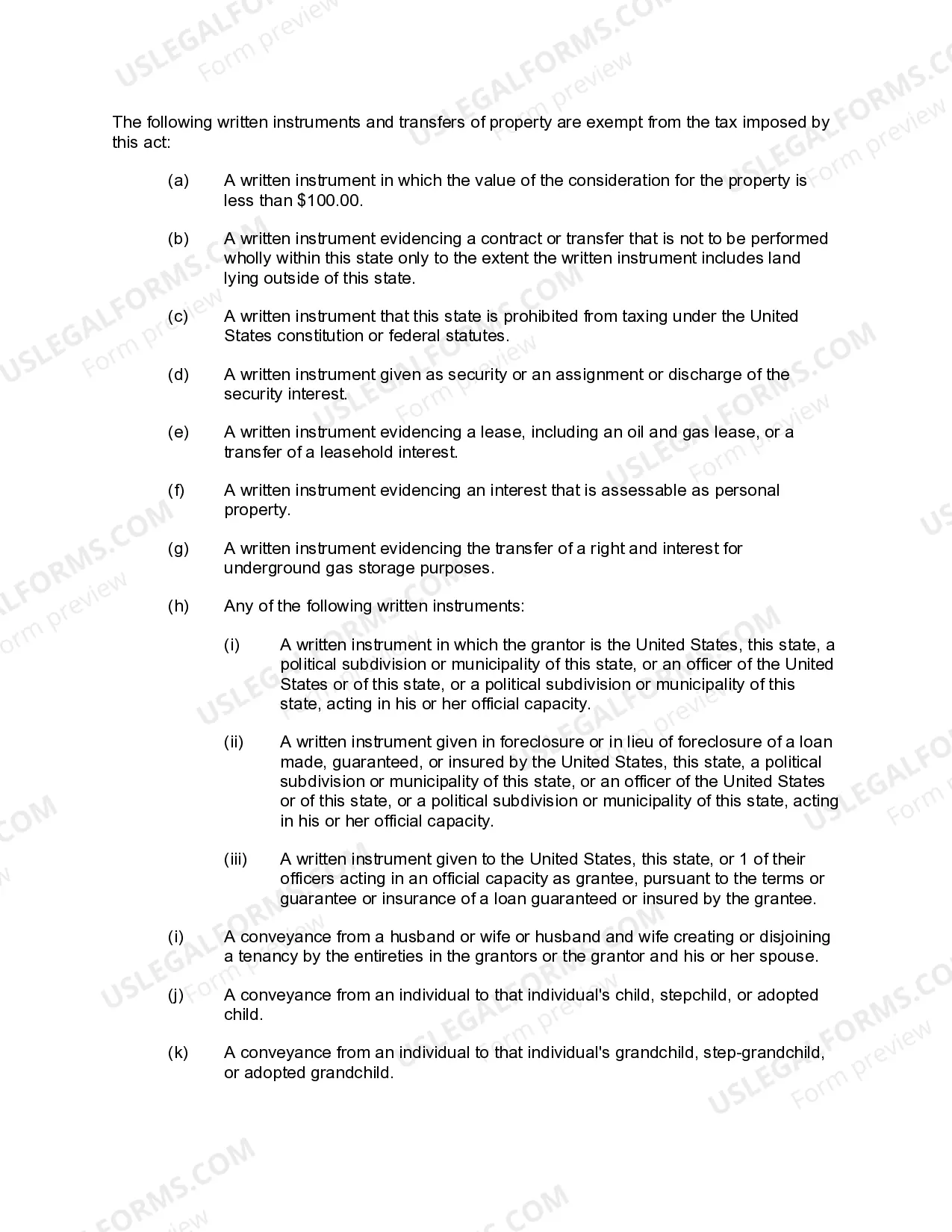
- Outlines transfer tax requirements and potential exemptions relevant to the transaction.







When this form is needed
This form should be used when three individuals wish to transfer their interest in property to four other individuals. It is commonly utilized in situations such as family property transfers, divorce settlements, or when multiple parties are consolidating ownership of a property. This deed is particularly useful when there are no warranties or guarantees being conveyed between the parties.
Intended users of this form
- Individuals involved in a property transfer who do not want to provide warranties on the title.
- Property owners looking to consolidate or distribute their ownership among multiple parties.
- Anyone needing a legal document that complies with state laws for property conveyance.
Instructions for completing this form
- Clearly identify the three grantors and four grantees involved in the transaction.
- Specify the legal description of the property being transferred.
- Select the method by which the grantees will hold the property (e.g., tenants in common or joint tenants with right of survivorship).
- Ensure any necessary dower rights waivers are included if applicable.
- Complete the transfer tax information, and indicate any exemptions if relevant.
- Have all parties sign the form in accordance with state requirements.
Does this form need to be notarized?
Notarization is required for this form to take effect. Our online notarization service, powered by Notarize, lets you verify and sign documents remotely through an encrypted video session, available 24/7.
Get your form ready online
Our built-in tools help you complete, sign, share, and store your documents in one place.
Make edits, fill in missing information, and update formatting in US Legal Forms—just like you would in MS Word.
Download a copy, print it, send it by email, or mail it via USPS—whatever works best for your next step.
Sign and collect signatures with our SignNow integration. Send to multiple recipients, set reminders, and more. Go Premium to unlock E-Sign.
If this form requires notarization, complete it online through a secure video call—no need to meet a notary in person or wait for an appointment.
We protect your documents and personal data by following strict security and privacy standards.

Make edits, fill in missing information, and update formatting in US Legal Forms—just like you would in MS Word.

Download a copy, print it, send it by email, or mail it via USPS—whatever works best for your next step.

Sign and collect signatures with our SignNow integration. Send to multiple recipients, set reminders, and more. Go Premium to unlock E-Sign.

If this form requires notarization, complete it online through a secure video call—no need to meet a notary in person or wait for an appointment.

We protect your documents and personal data by following strict security and privacy standards.
Common mistakes
- Failing to accurately describe the property leading to potential disputes.
- Not specifying how the grantees will hold the property, which can cause confusion later.
- Omitting necessary signatures or information, which can invalidate the deed.
- Ignoring transfer tax implications and exemptions, which may lead to penalties.
Advantages of online completion
- Convenience: Complete the form from the comfort of your home at any time.
- Editability: Easily make changes to the form before printing or signing.
- Reliability: Forms are drafted by licensed attorneys and comply with legal standards in your state.
Looking for another form?



Form popularity
FAQ
There will be a $30 recording fee. If you prepare a quitclaim deed using the Do-It-Yourself Quitclaim Deed (after Divorce) tool, detailed instructions on what to do next will print out along with the deed.
Step 1: Download the MI quitclaim deed form. Step 2: Add the name and address of the preparer under Prepared By on the first line of the document. Step 3: Add the return address under After Recording Return To. This is typically the name and address of the grantee, but it could be a different party.
The drawback, quite simply, is that quitclaim deeds offer the grantee/recipient no protection or guarantees whatsoever about the property or their ownership of it. Maybe the grantor did not own the property at all, or maybe they only had partial ownership.
How many people can get a joint mortgage? Most lenders allow a maximum of four buyers to take up a mortgage together because they require each mortgagor to be named on the property deeds. As a property deed only has space for four names, this is likely to be the maximum number who can take a joint mortgage.
In Michigan, a quit claim deed must be signed by a witness, in addition to the notary, to make it legal.After all required signatures are collected and notarized, file the document with your local register of deeds to complete the transaction.
Six people can be on title. It can cause a lot of problems when it comes time to sell though. If even one of the six won't sign, you have a problem. They can sign at different times and from different locations depending on the closing attorney or escrow company.
But you might be wondering if an owner can transfer a deed to another person without a real estate lawyer. The answer is yes. Parties to a transaction are always free to prepare their own deeds.A quitclaim deed, for example, is far simpler than a warranty deed.