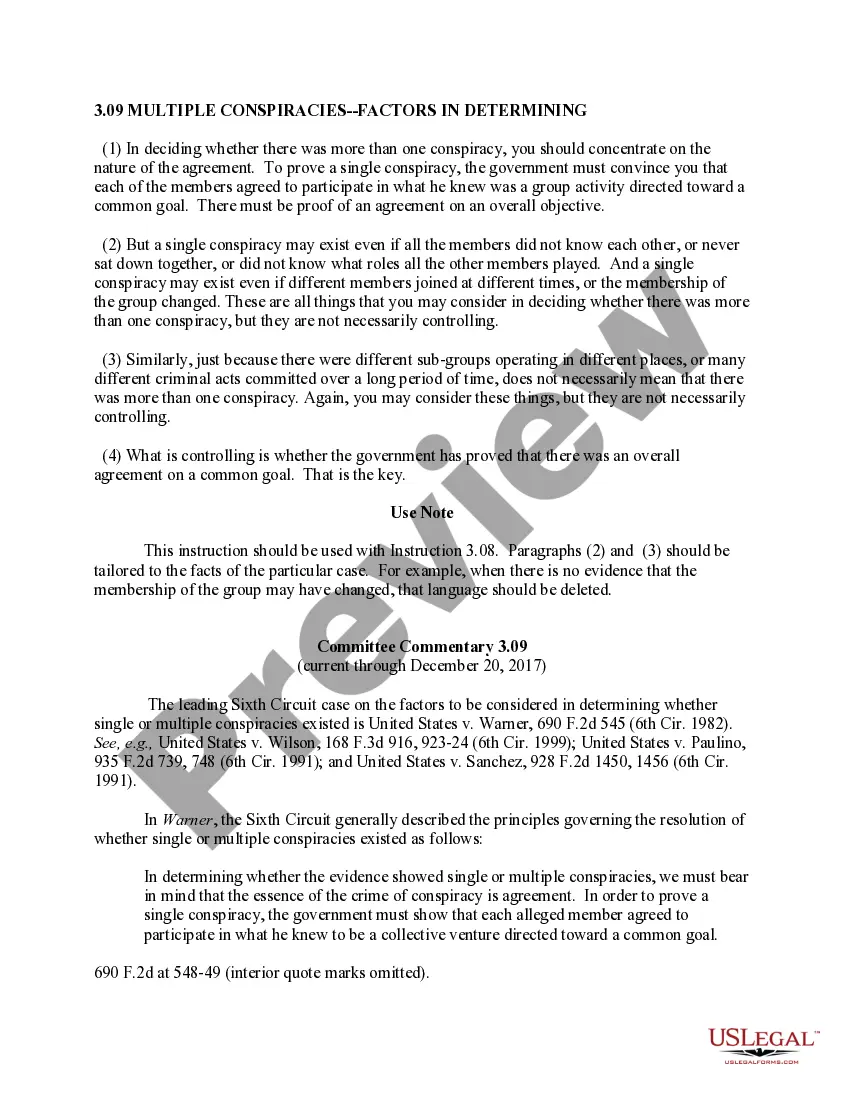
MULTIPLE CONSPIRACIES--FACTORS IN DETERMINING
What is this form?
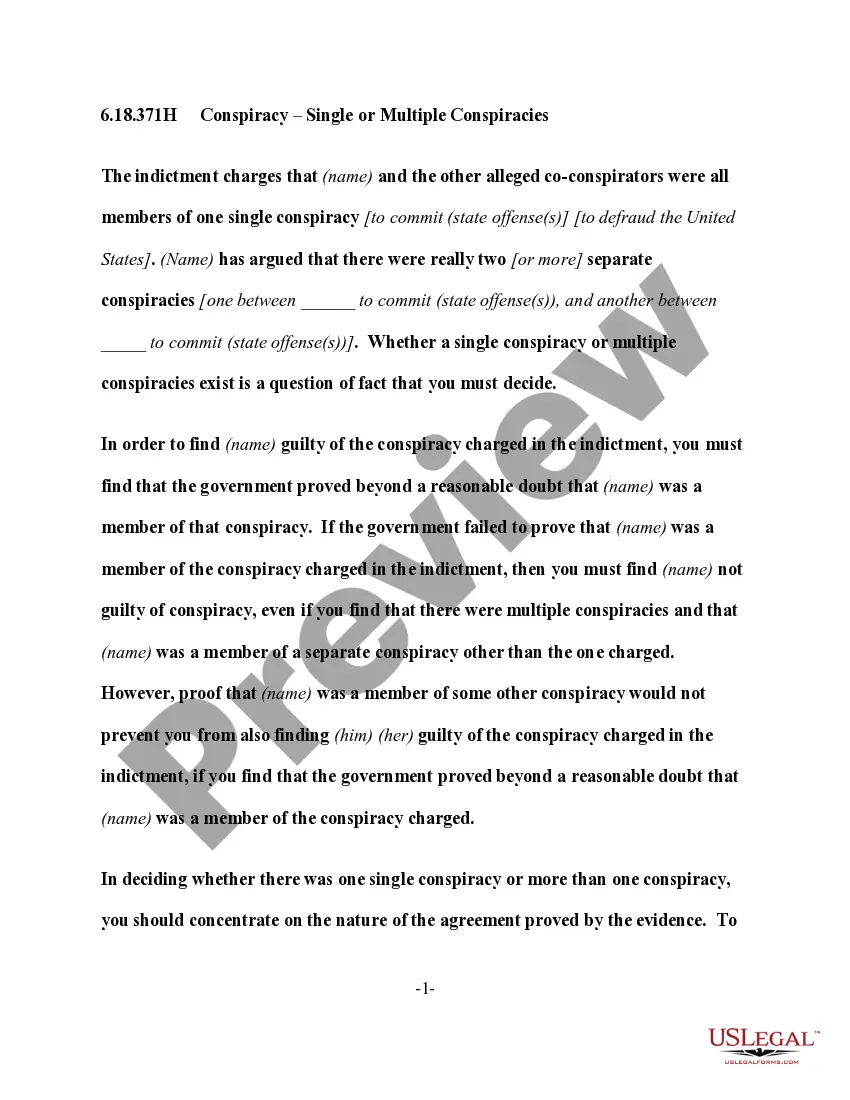
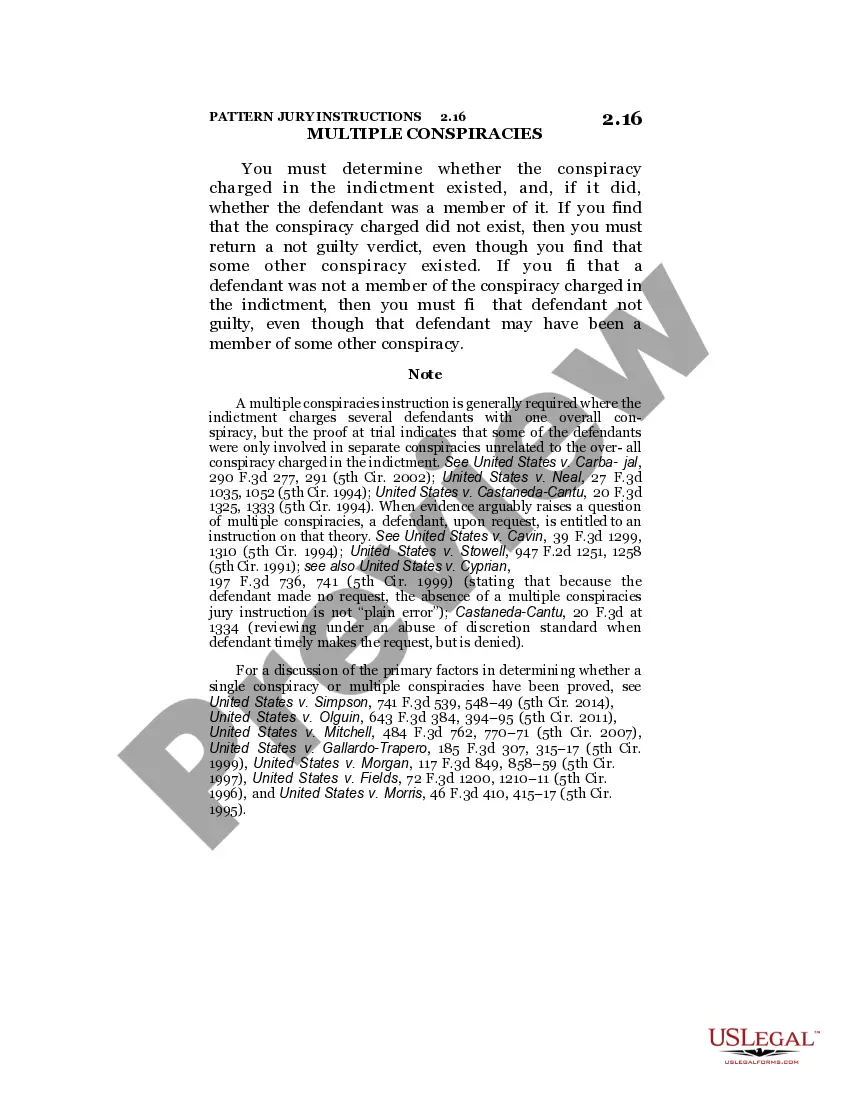
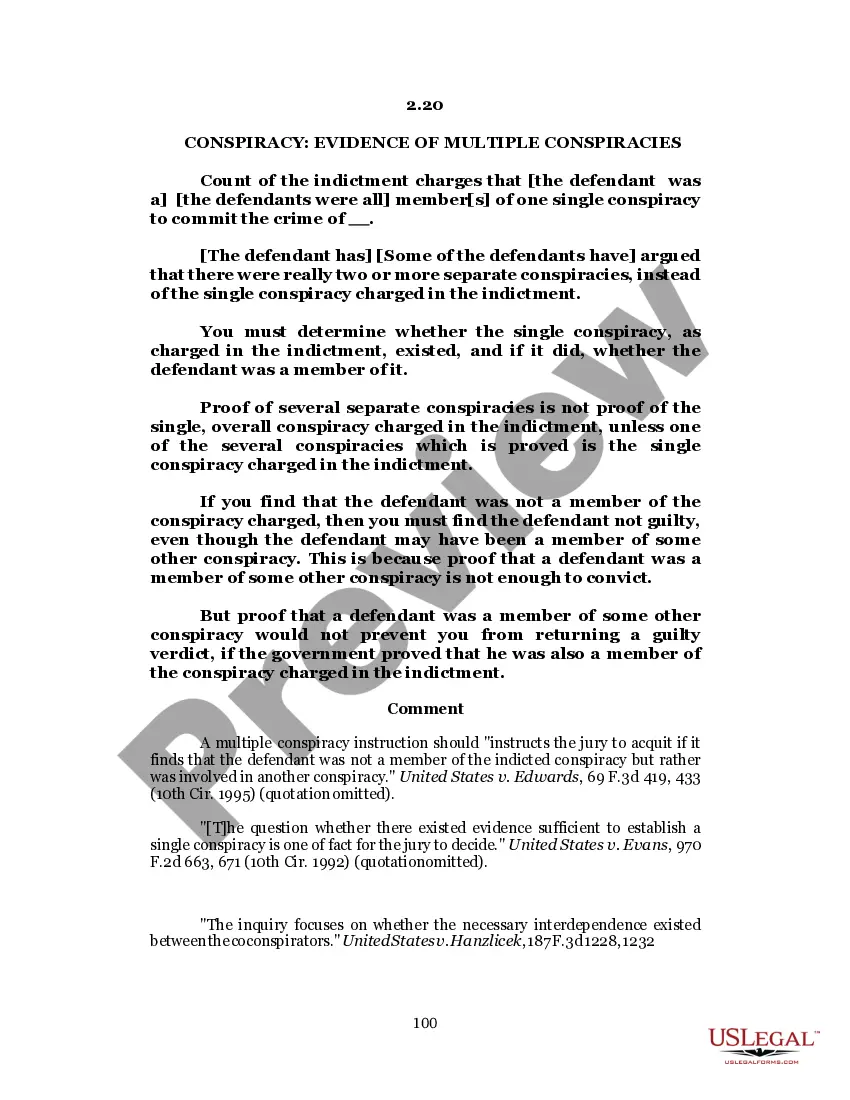
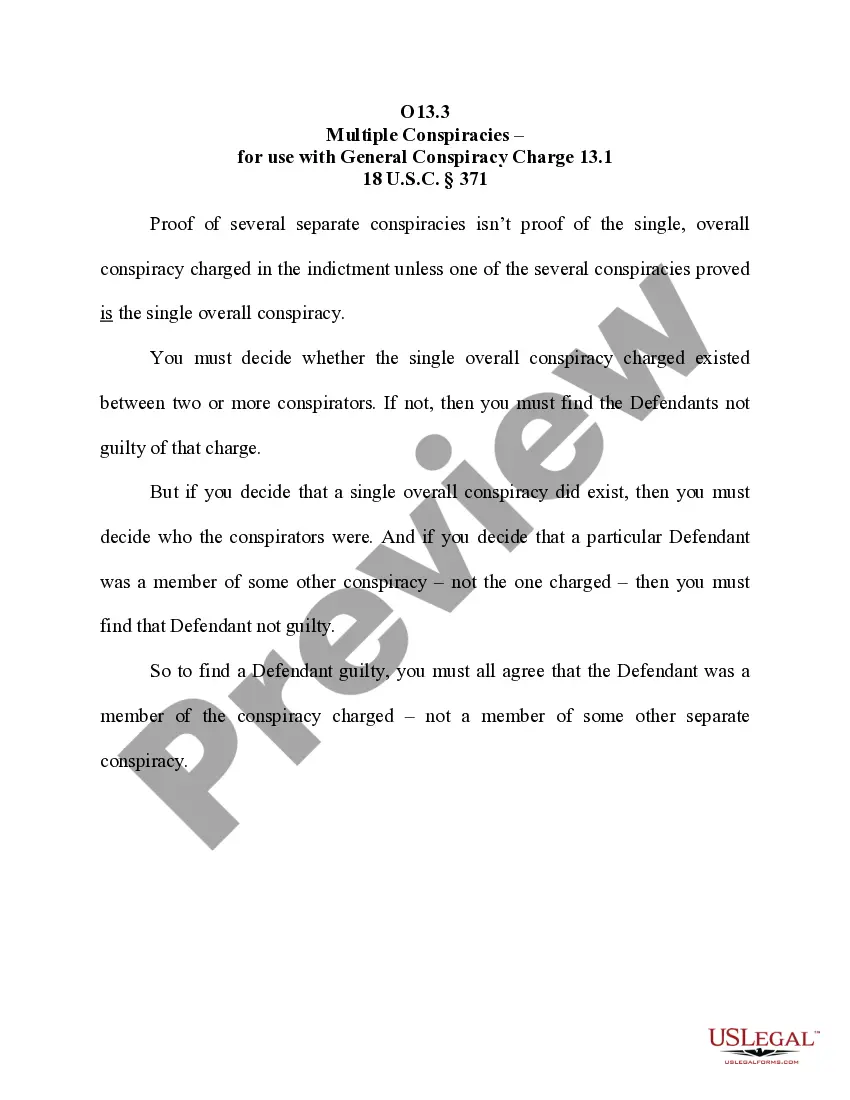
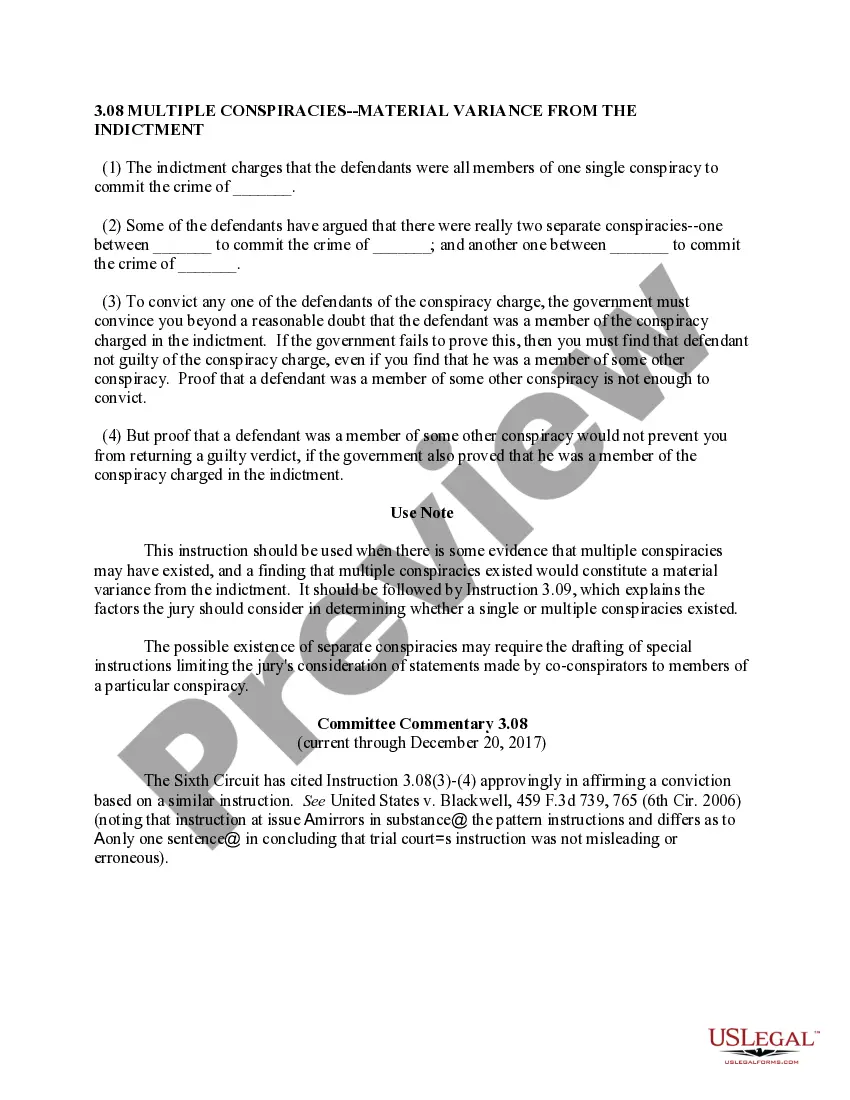
The Multiple Conspiracies - Factors in Determining form outlines key considerations in determining whether multiple conspiracies exist within a given set of actions. This instruction guide highlights the fundamental criterion of an overall agreement directed toward a common goal, differentiating it from similar legal frameworks that may focus strictly on individual conspirator actions or relationships. Understanding these factors is essential for evaluating the existence of a single versus multiple conspiracies in legal proceedings.
What’s included in this form
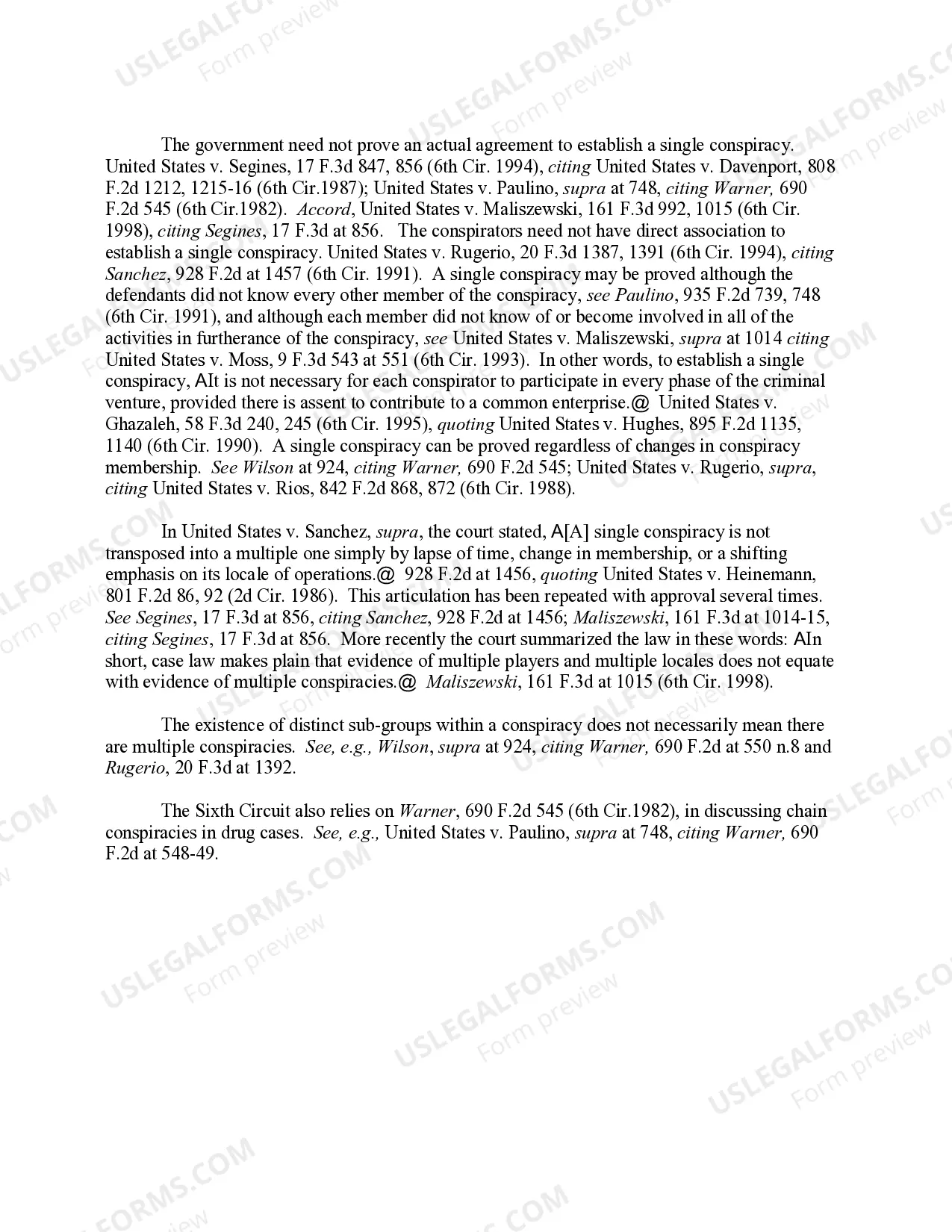
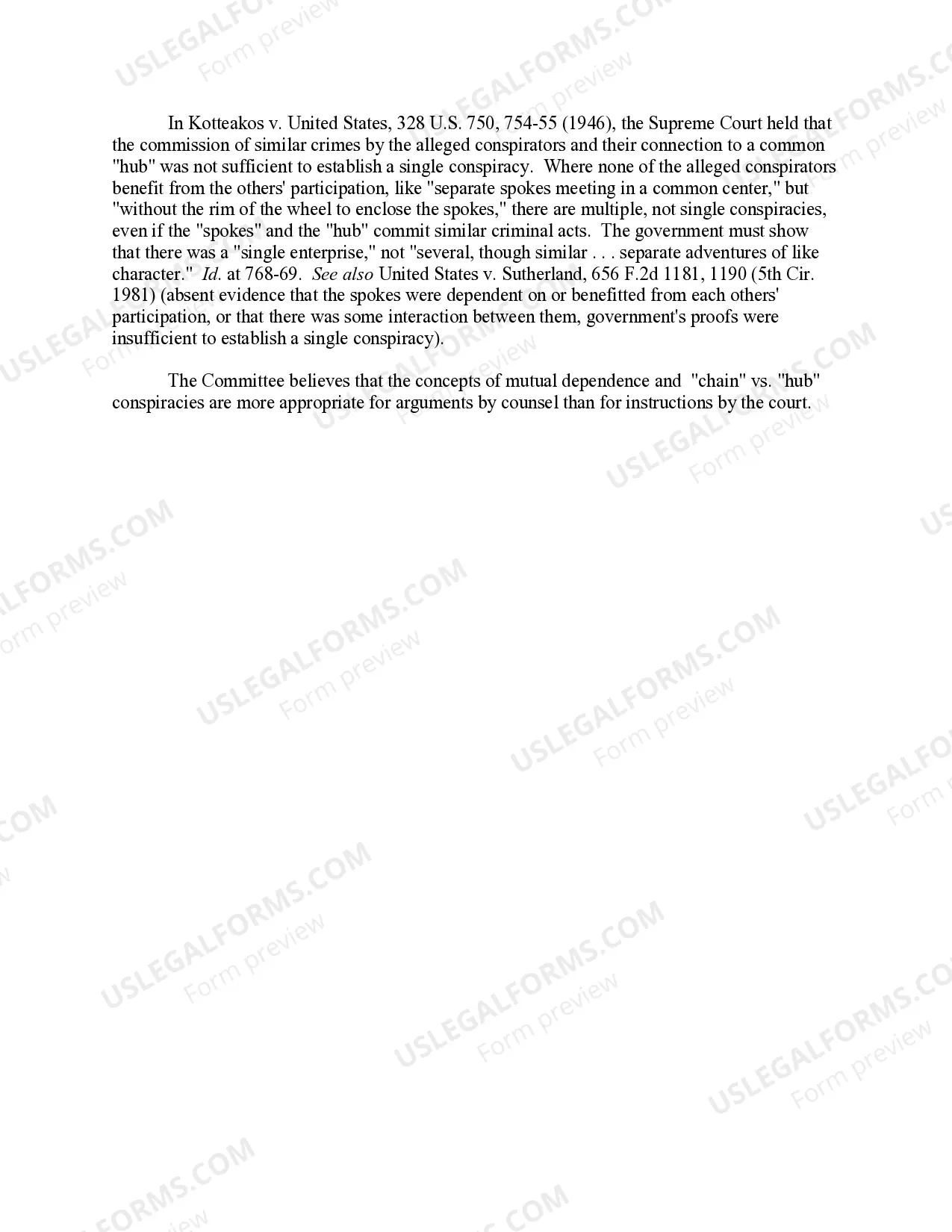
- Definition of conspiracy and the importance of agreement among members.
- Considerations for establishing a single conspiracy despite unknown roles or varying membership.
- Factors that do not automatically imply multiple conspiracies, such as sub-groups or time elapsed.
- Emphasis on the government's burden to prove a common goal agreement for a single conspiracy.
- Instructions on adjusting paragraphs to fit specific case details.
When to use this document
This form is used in legal contexts where conspiracy charges are being assessed. It is essential in cases involving allegations of coordinated action among defendants, particularly when the government must demonstrate whether a single conspiracy existed. This instruction set is applicable in criminal cases addressing multiple defendants or actions that may suggest distinct conspiracies.
Intended users of this form
- Legal professionals engaged in criminal defense or prosecution.
- Judges needing to provide jury instructions on conspiracy charges.
- Students or individuals studying criminal law concepts related to conspiracy.
- Any party involved in a case where the existence of multiple conspiracies is under scrutiny.
How to complete this form
- Review the nature of the agreement among the involved parties.
- Identify the overall objective that the group aimed to achieve.
- Consider the relationships and knowledge among the conspirators.
- Assess any evidence of sub-groups or changes in membership over time.
- Gather and present any relevant case-specific facts to support your arguments.
Notarization guidance
Notarization is not commonly needed for this form. However, certain documents or local rules may make it necessary. Our notarization service, powered by Notarize, allows you to finalize it securely online anytime, day or night.
Get your form ready online
Our built-in tools help you complete, sign, share, and store your documents in one place.
Make edits, fill in missing information, and update formatting in US Legal Forms—just like you would in MS Word.
Download a copy, print it, send it by email, or mail it via USPS—whatever works best for your next step.
Sign and collect signatures with our SignNow integration. Send to multiple recipients, set reminders, and more. Go Premium to unlock E-Sign.
If this form requires notarization, complete it online through a secure video call—no need to meet a notary in person or wait for an appointment.
We protect your documents and personal data by following strict security and privacy standards.

Make edits, fill in missing information, and update formatting in US Legal Forms—just like you would in MS Word.

Download a copy, print it, send it by email, or mail it via USPS—whatever works best for your next step.

Sign and collect signatures with our SignNow integration. Send to multiple recipients, set reminders, and more. Go Premium to unlock E-Sign.

If this form requires notarization, complete it online through a secure video call—no need to meet a notary in person or wait for an appointment.

We protect your documents and personal data by following strict security and privacy standards.
Mistakes to watch out for
- Assuming that different locations automatically imply multiple conspiracies.
- Overlooking the importance of demonstrating a common goal among conspirators.
- Failing to tailor the instruction paragraphs to fit specific case facts.
- Misunderstanding the significance of membership changes within the conspiracy.
Benefits of completing this form online
- Convenient access to professionally drafted legal instructions.
- Customizable sections tailored to specific case needs.
- Immediate availability ensures timely preparation for legal proceedings.
Key takeaways
- Conspiracies are assessed based on collective agreements, not just individual actions.
- A single conspiracy may exist despite unknowns among group members.
- The government must demonstrate a shared objective to prove a single conspiracy.
Looking for another form?




Form popularity
FAQ
Like other inchoate crimes such as attempt, a defendant charged with conspiracy can raise the defense of abandonment or withdrawal. In order to do so, a defendant must show that he affirmatively communicated his withdrawal to his co-conspirators and took some positive action to withdraw from the conspiracy.
An example of a conspiracy charge could be two people that make an agreement to kill someone and buy the weapons to do it. They are charged with conspiracy, even if they never fully follow through on killing the person.
CONSPIRACY WOULD BE REDEFINED AS THE ACTOR'S ASSENT TO THE CRIMINAL PURPOSE PLUS SOME ACT PURSUANT TO THE CONSPIRACY THAT ESTABLISHES THAT A CONSPIRACY IS UNDERWAY. SOLICITATION WOULD REQUIRE CIRCUMSTANCES THAT STRONGLY CORROBORATE THE ACTOR'S INTENT TO PERSUADE ANOTHER PERSON TO COMMIT A CRIME.
An overt act is any act knowingly committed by one or more of the conspirators in an effort to accomplish some purpose of the conspiracy. Only one overt act has to be proven. The government is not required to prove that defendant personally committed or knew about the overt act.
Elements of a Conspiracy 1 Two or more people agreed to commit a crime. 2 All conspirators had the specific intent to commit the crime. 3 At least one of the conspirators committed an overt act (most states)
To conspire to defraud the United States means primarily to cheat the Government out of property or money, but it also means to interfere with or obstruct one of its lawful governmental functions by deceit, craft or trickery, or at least by means that are dishonest.
Those elements are: 1. You must have 2 or more persons who 2. Intentionally 3. make an agreement 4. to violate federal law or defraud the United states, and then 5.
App. 2d 781 (1952) . As far as the actus reus requirement for conspiracy is concerned, at common law, a conspiracy is completed as soon as an agreement between one or more people is made.