Oklahoma Installments Fixed Rate Promissory Note Secured by Personal Property
Understanding this form
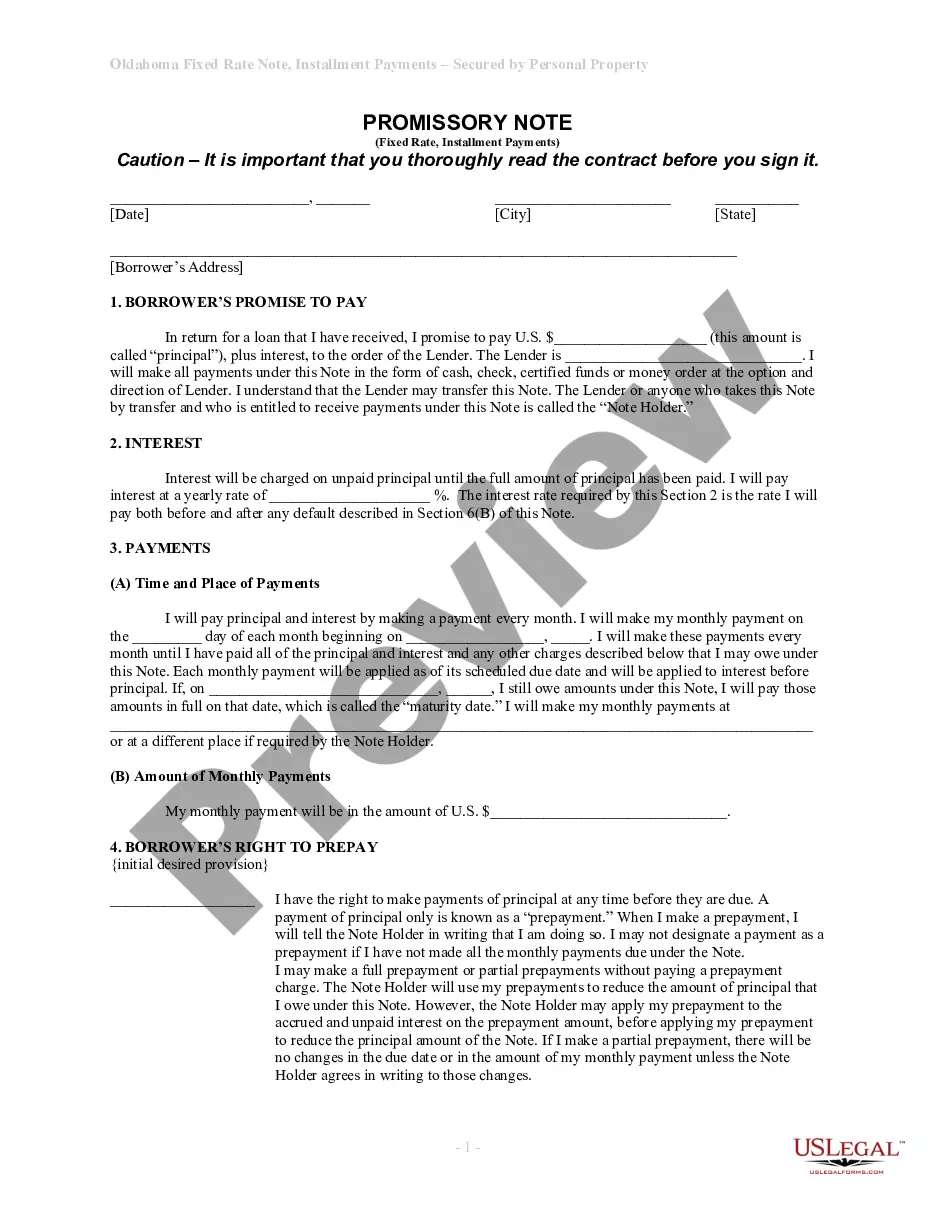
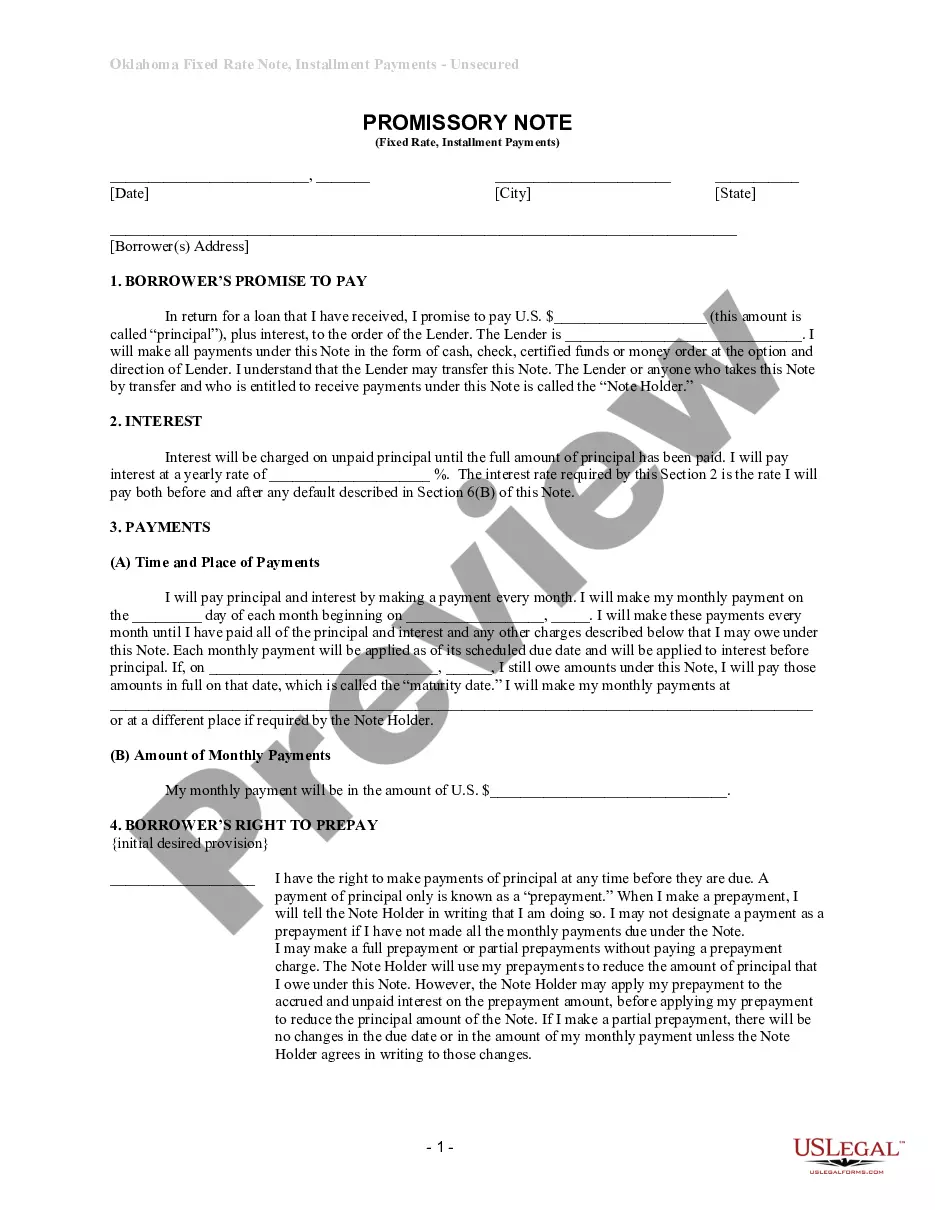
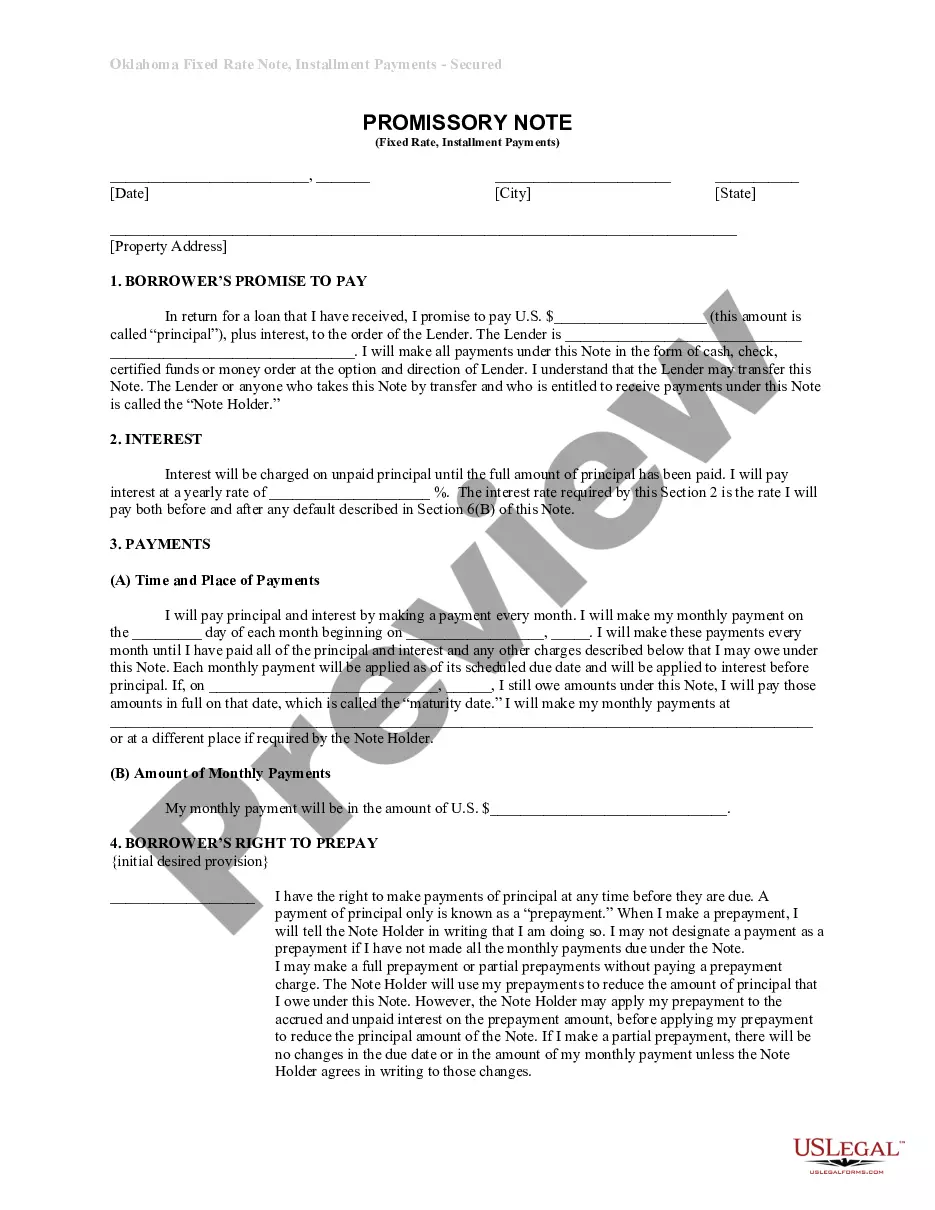
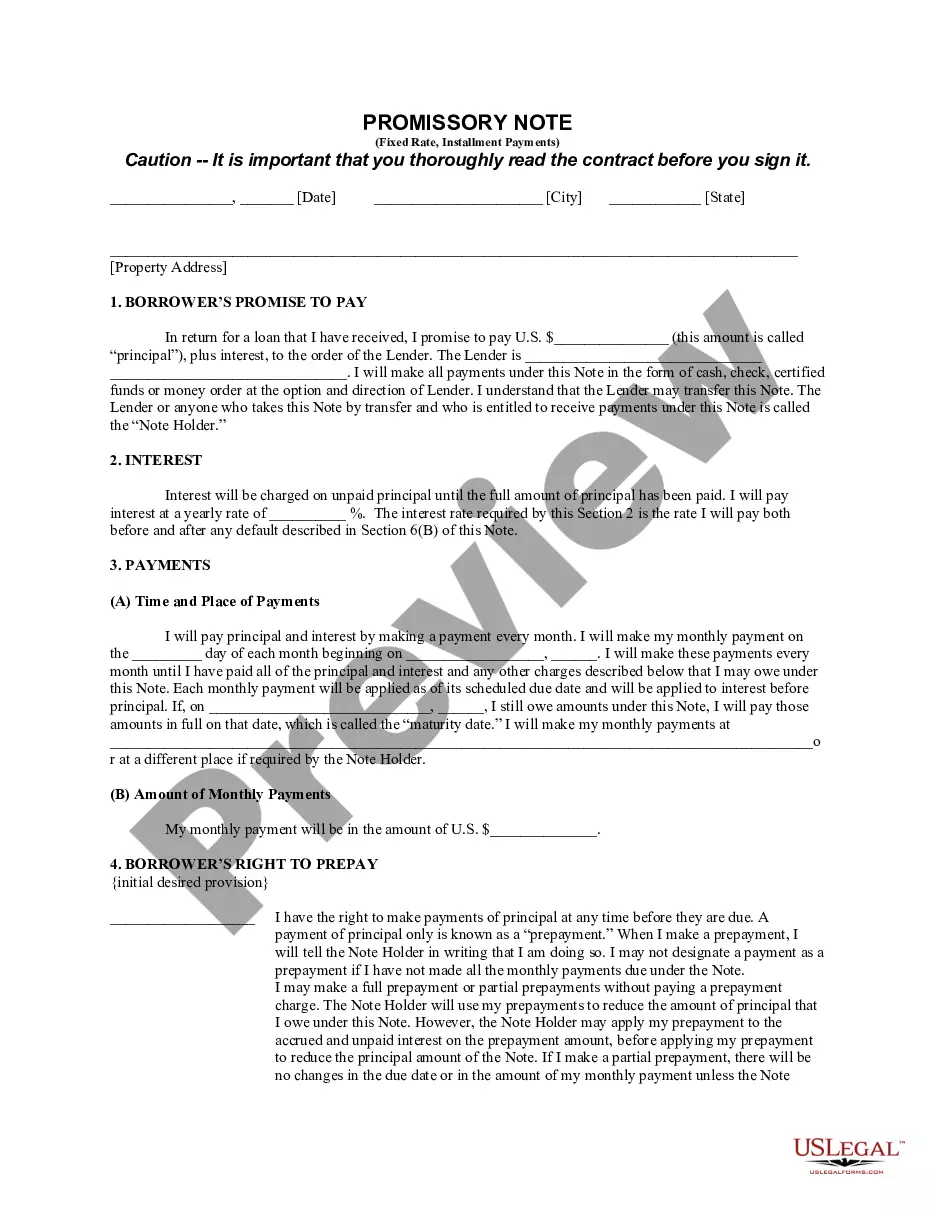
The Oklahoma Installments Fixed Rate Promissory Note Secured by Personal Property is a legal document where a Borrower promises to pay a Lender a specified amount, plus interest, over time through fixed installment payments. This form is unique in that it secures the loan with the Borrower's personal property, providing the Lender with the right to take possession of the property if the Borrower fails to repay the loan as agreed. This promissory note is specifically tailored to comply with Oklahoma state requirements, making it suitable for residents of this state who need a reliable loan agreement backed by personal assets.
Key parts of this document
- Borrower's Promise to Pay: The Borrower agrees to repay the principal amount plus interest.
- Interest Rate: Specifies the interest charged on unpaid principal until fully paid.
- Payment Schedule: Details the frequency and amount of monthly payments.
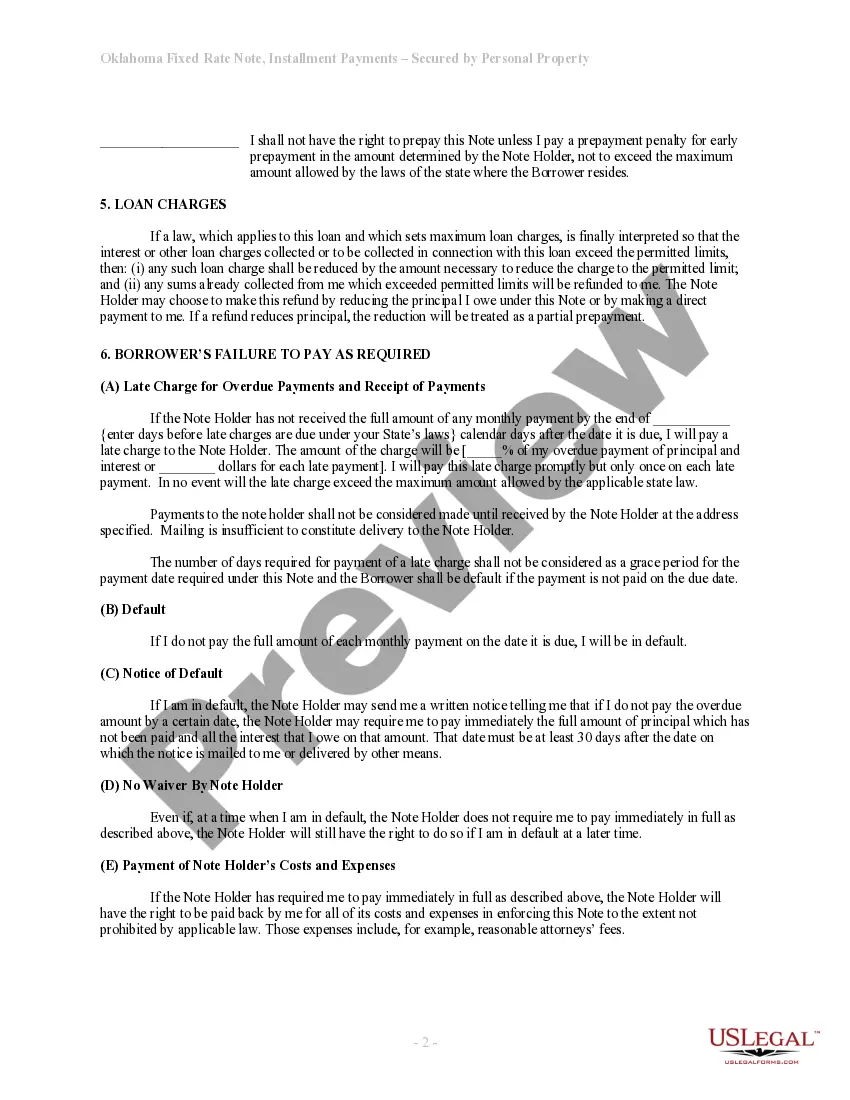
- Right to Prepay: Provides options for making early payments on the principal without penalty.
- Default Terms: Outlines consequences if the Borrower fails to make payments on time.
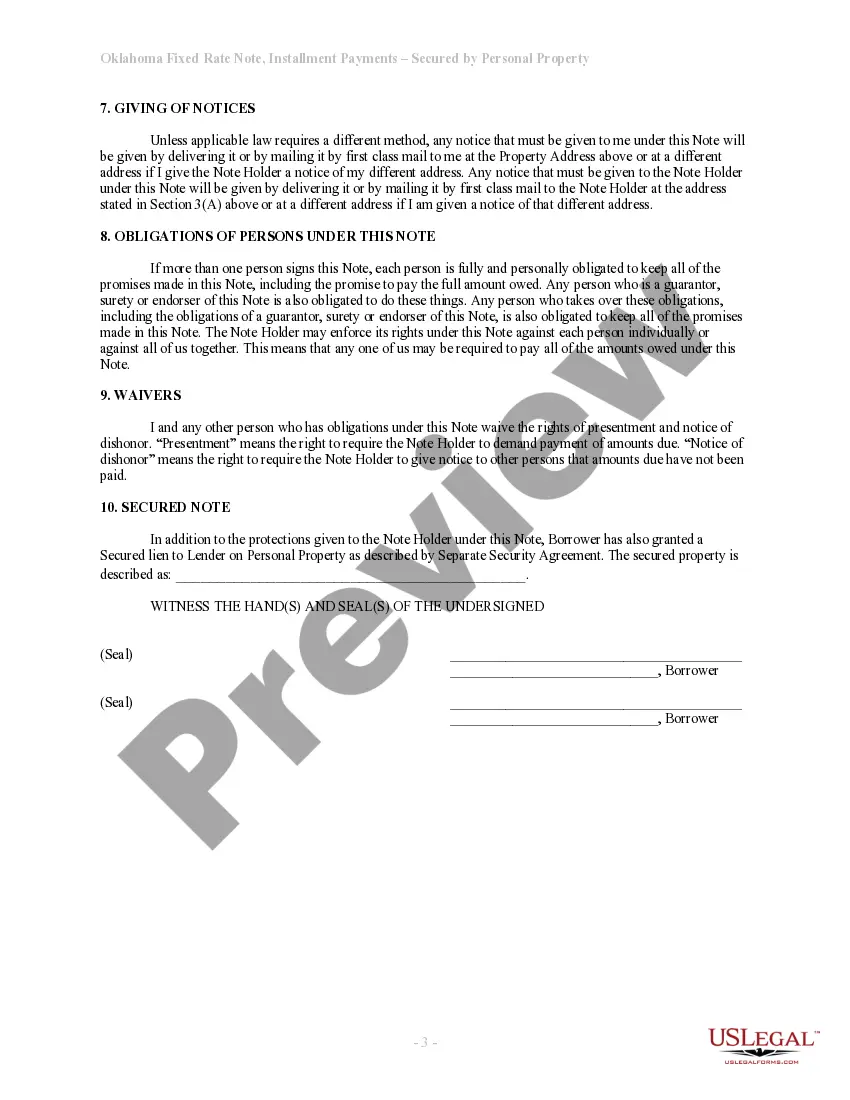
- Secured Note Clause: Indicates the personal property that secures the loan.
When this form is needed
This form is ideal for individuals seeking financing secured by personal property. It can be used when a Borrower needs to borrow funds from a Lender while providing collateral to protect the Lender's investment. Common scenarios include purchasing vehicles, equipment, or other significant assets where the Lender wants assurance of repayment through secured personal property.
Who should use this form
- Individuals or businesses borrowing money who wish to provide personal property as collateral.
- Lenders looking to formalize a loan agreement with clear terms of repayment and security.
- Residents of Oklahoma needing a legally compliant promissory note for personal loans.
Completing this form step by step
- Identify the parties involved: Name the Borrower and the Lender.
- Enter the principal amount: Specify the total amount being borrowed.
- Set the interest rate: Indicate the annual interest rate applicable to the loan.
- Detail the payment schedule: Specify the monthly payment amount and when payments begin.
- Describe the secured property: Clearly outline what personal property is used as collateral.
Notarization requirements for this form
This form usually doesn’t need to be notarized. However, local laws or specific transactions may require it. Our online notarization service, powered by Notarize, lets you complete it remotely through a secure video session, available 24/7.
Get your form ready online
Our built-in tools help you complete, sign, share, and store your documents in one place.
Make edits, fill in missing information, and update formatting in US Legal Forms—just like you would in MS Word.
Download a copy, print it, send it by email, or mail it via USPS—whatever works best for your next step.
Sign and collect signatures with our SignNow integration. Send to multiple recipients, set reminders, and more. Go Premium to unlock E-Sign.
If this form requires notarization, complete it online through a secure video call—no need to meet a notary in person or wait for an appointment.
We protect your documents and personal data by following strict security and privacy standards.

Make edits, fill in missing information, and update formatting in US Legal Forms—just like you would in MS Word.

Download a copy, print it, send it by email, or mail it via USPS—whatever works best for your next step.

Sign and collect signatures with our SignNow integration. Send to multiple recipients, set reminders, and more. Go Premium to unlock E-Sign.

If this form requires notarization, complete it online through a secure video call—no need to meet a notary in person or wait for an appointment.

We protect your documents and personal data by following strict security and privacy standards.
Avoid these common issues
- Failing to clearly identify the secured property, which can cause disputes later.
- Not specifying the correct interest rate or payment schedule, leading to confusion.
- Overlooking the need for both parties to sign the document, rendering it unenforceable.
Benefits of completing this form online
- Convenience: Easily download and customize the form at your convenience.
- Editability: Modify the document as necessary to suit your specific needs.
- Reliability: Forms are drafted by licensed attorneys, ensuring compliance with state laws.
Looking for another form?

Form popularity
FAQ
Promissory notes are ideal for individuals who do not qualify for traditional mortgages because they allow them to purchase a home by using the seller as the source of the loan and the purchased home as the source of the collateral.
You can use a template or create a promissory note online. But before you begin, you'll need to gather some information and make decisions about the way the loan will be structured. First, you'll need the names and addresses of both the lender (or "payee") and the borrower.
To secure a promissory note means that you identify some specific property and attach it to the note. Then, if the borrower defaults on the loan, you will be able to repossess the collateral as compensation for the loan.
Promissory notes are a valuable legal tool that any individual can use to legally bind another individual to an agreement for purchasing goods or borrowing money. A well-executed promissory note has the full effect of law behind it and is legally binding on both parties.
These terms all mean the same thing. A mortgage is a loan secured by property that is used as collateral, which the lender can seize if the borrower defaults on the loan. The promissory note is exactly what it sounds like the borrower's written, signed promise to repay the loan.
Secured or unsecured? Generally, promissory notes are unsecured which means it is more like a formal IOU. However, lenders can request some security for the loan. For personal secured promissory notes, a house or car is often used as collateral.
It includes land and buildings, for example. Personal property typically includes furniture, fixtures, tools, vehicles, and machinery and equipment. All of these items can be moved.
Examples of tangible personal property are your household goods and motor vehicles.Examples of intangible personal property are stocks, bonds, mutual funds, and securities. In addition, if a person owes you money, you may have a promissory note which describes the loan and amount of money the individual owes you.
In general, under the Securities Acts, promissory notes are defined as securities, but notes with a maturity of 9 months or less are not securities.The US Supreme Court in Reves recognizes that most notes are, in fact, not securities.