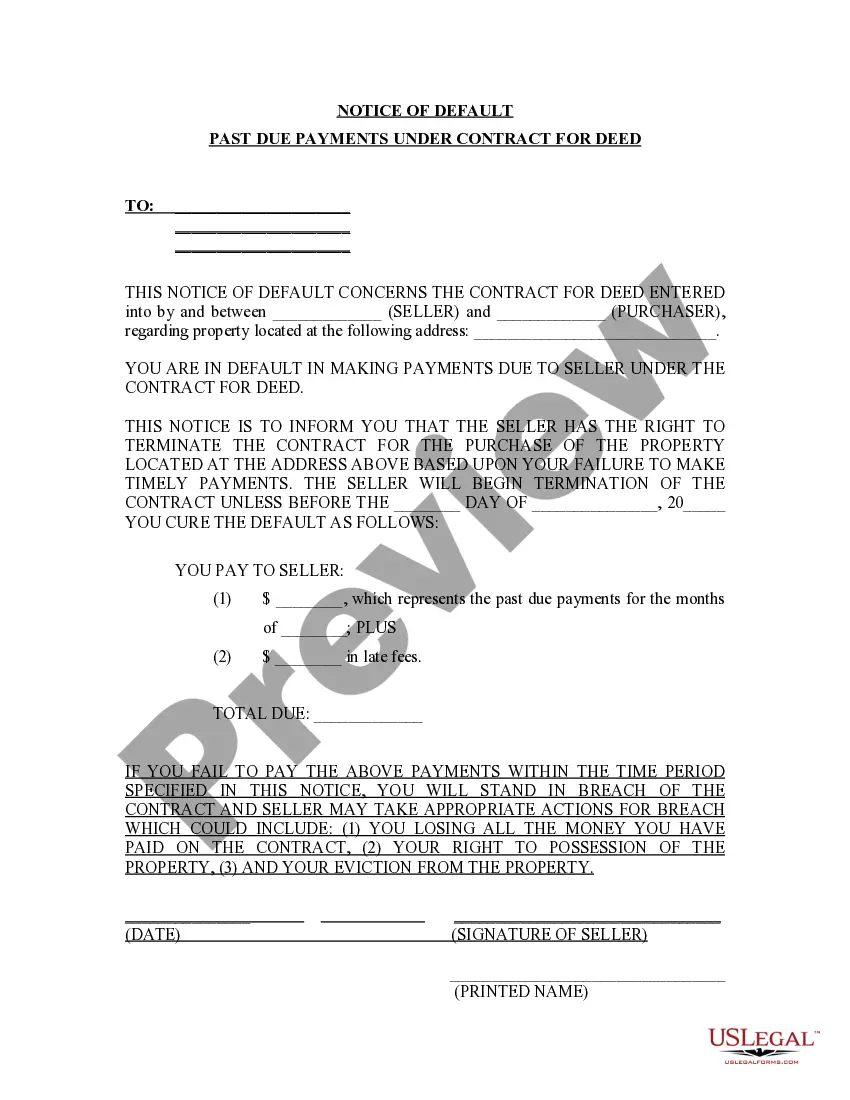
MULTIPLE CONSPIRACIES--MATERIAL VARIANCE FROM THE INDICTMENT
Overview of this form
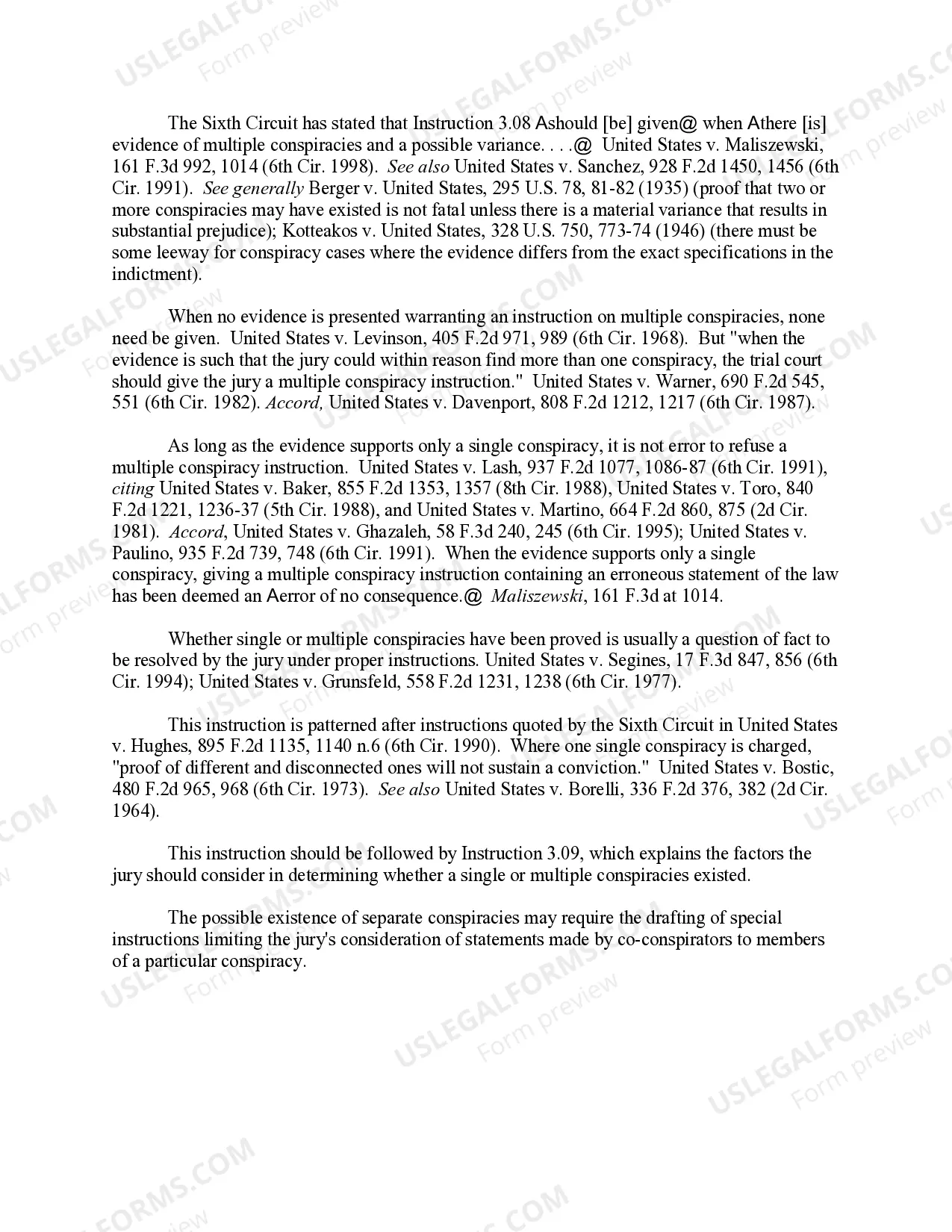
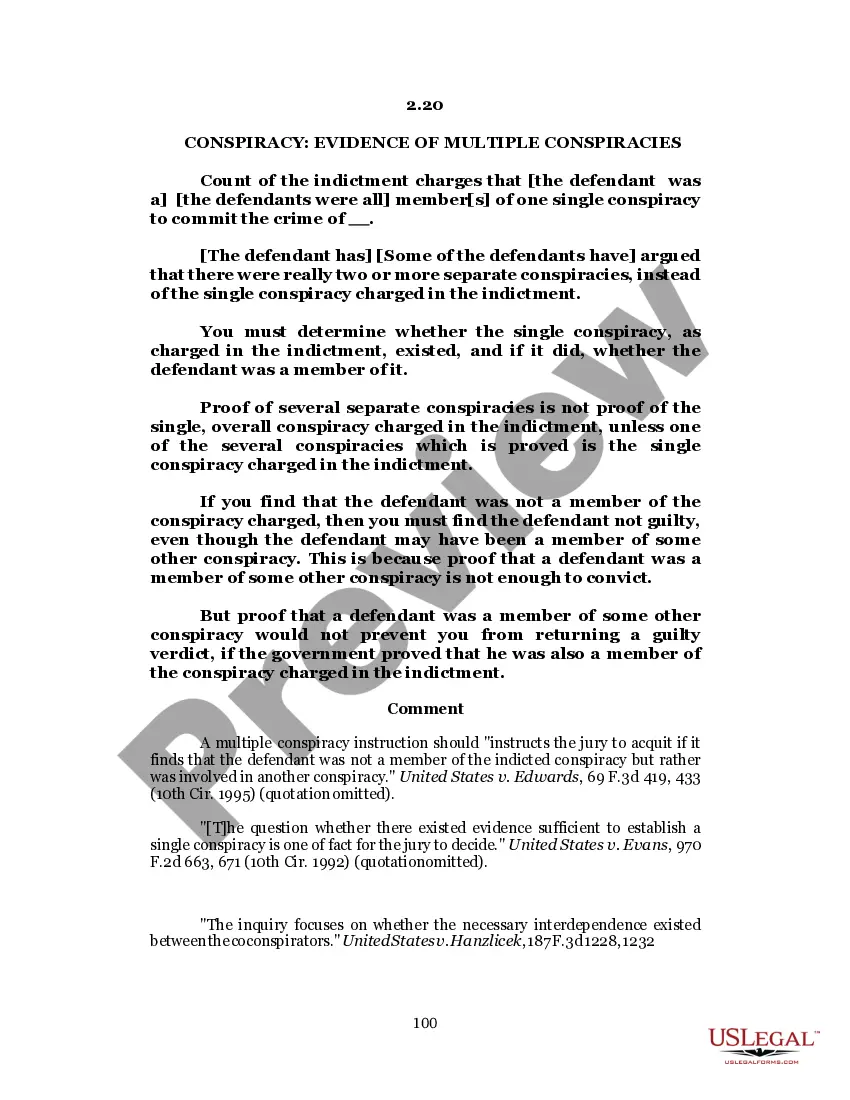
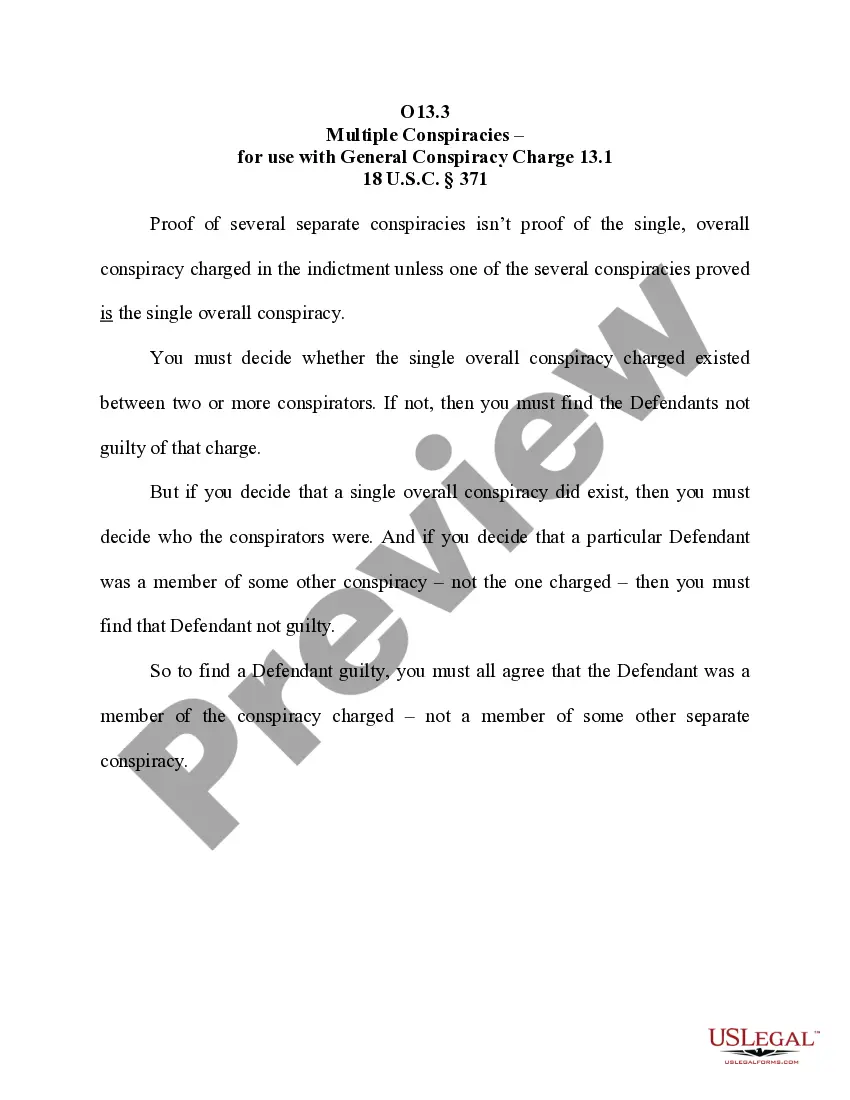
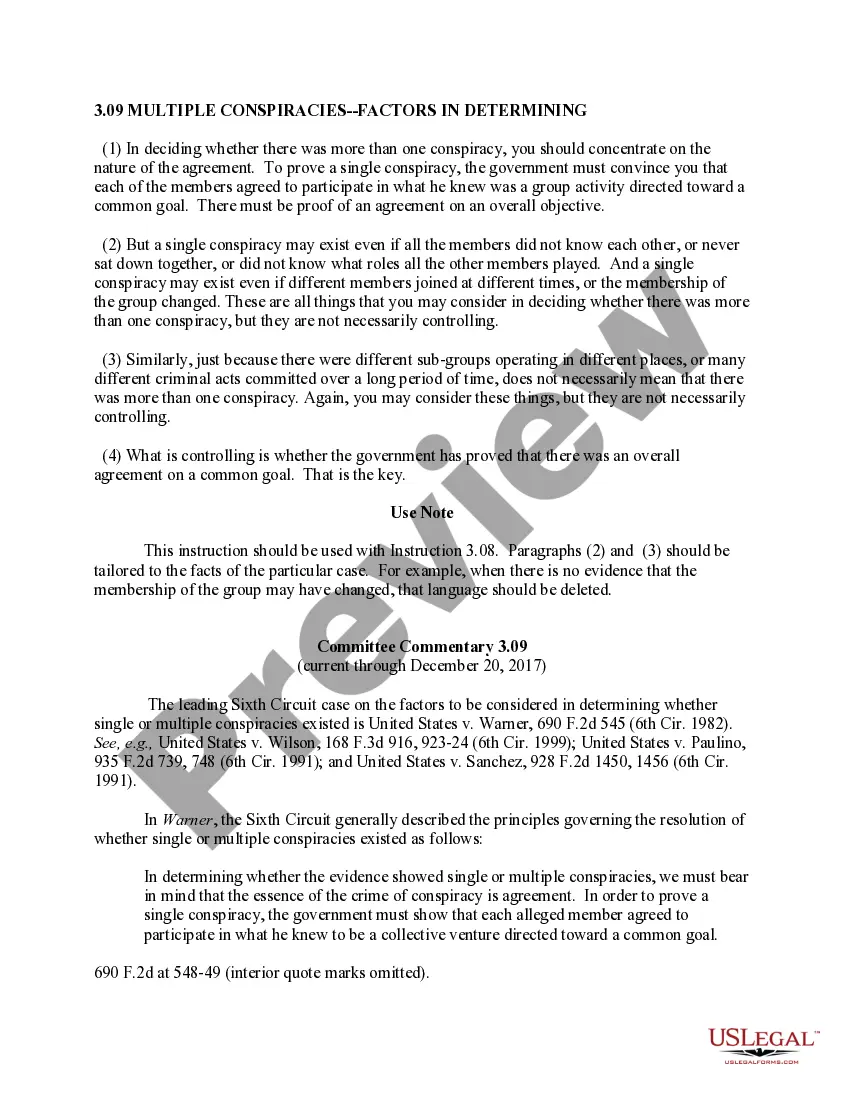
The Multiple Conspiracies--Material Variance from the Indictment form is designed to address situations where evidence suggests that multiple conspiracies may exist rather than a single conspiracy as charged in an indictment. This instruction is critical for the jury's understanding of how to assess the evidence and determine a defendant's membership in the alleged conspiracy or conspiracies. It provides clarity on what constitutes a material variance from the indictment and differentiates between a single conspiracy and multiple conspiracies, emphasizing the need for the prosecution to prove membership in the specific conspiracy charged.
Main sections of this form
- Definition of allegations regarding a single conspiracy versus multiple conspiracies.
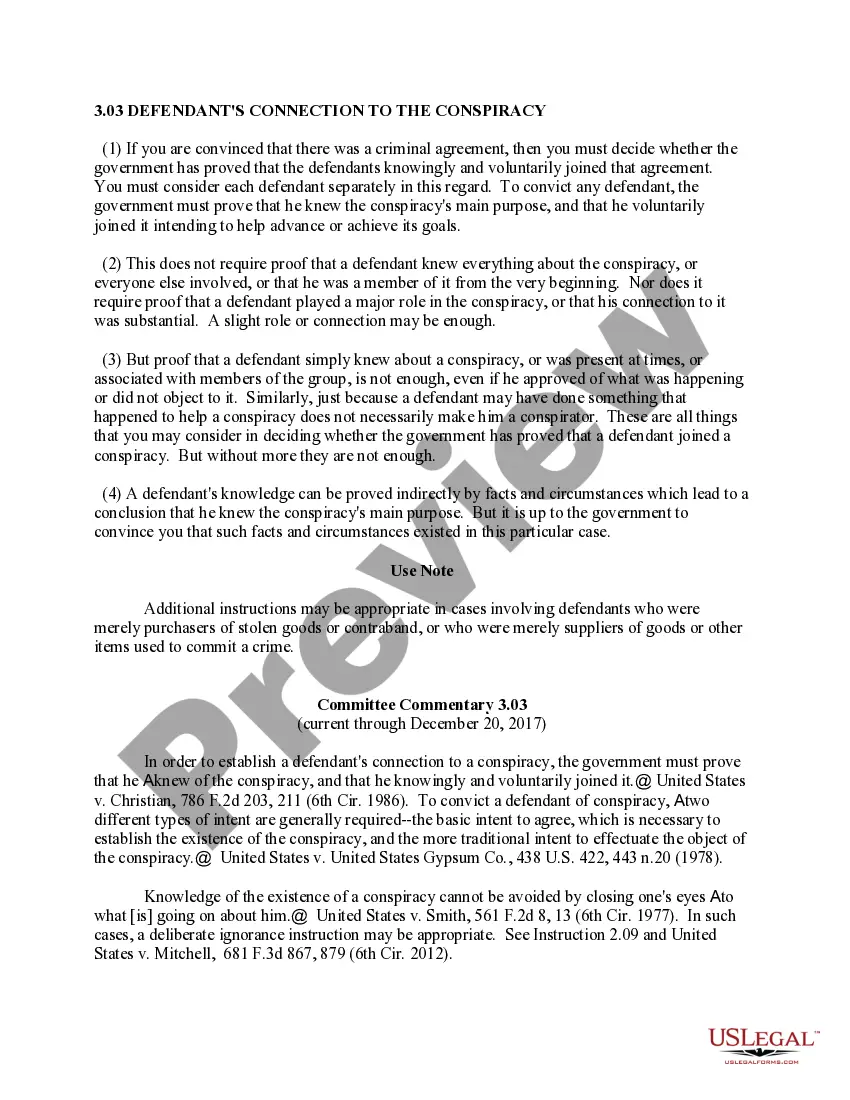
- Requirements for the prosecution to prove membership in the charged conspiracy.
- Guidance for jury considerations when evaluating the existence of multiple conspiracies.
- Clarification that proof of membership in a separate conspiracy is not sufficient for conviction.
When to use this form
This form is used during criminal trials where defendants are accused of conspiracy. It is particularly relevant if the defense presents evidence indicating the possibility of separate conspiracies, which may alter the jury's determination of guilt. This instruction helps ensure that the jury correctly applies the law concerning multiple conspiracies, particularly when the indictment does not reflect such variations.
Who this form is for
- Judges presiding over conspiracy trials needing to instruct juries on the law regarding multiple conspiracies.
- Defense attorneys advocating for their clients when evidence suggests that multiple conspiracies could be relevant to the case.
- Prosecutors formulating their arguments to address potential claims of multiple conspiracies from the defense.
Completing this form step by step
- Begin by identifying the charge that alleges a single conspiracy to commit a crime.
- Review the defense's argument regarding the existence of multiple conspiracies.
- Evaluate the evidence presented by both the prosecution and defense related to conspiracy membership.
- Instruct the jury on the correct legal standards concerning multiple conspiracies and material variance.
Is notarization required?
Notarization is generally not required for this form. However, certain states or situations might demand it. You can complete notarization online through US Legal Forms, powered by Notarize, using a verified video call available anytime.
Get your form ready online
Our built-in tools help you complete, sign, share, and store your documents in one place.
Make edits, fill in missing information, and update formatting in US Legal Forms—just like you would in MS Word.
Download a copy, print it, send it by email, or mail it via USPS—whatever works best for your next step.
Sign and collect signatures with our SignNow integration. Send to multiple recipients, set reminders, and more. Go Premium to unlock E-Sign.
If this form requires notarization, complete it online through a secure video call—no need to meet a notary in person or wait for an appointment.
We protect your documents and personal data by following strict security and privacy standards.

Make edits, fill in missing information, and update formatting in US Legal Forms—just like you would in MS Word.

Download a copy, print it, send it by email, or mail it via USPS—whatever works best for your next step.

Sign and collect signatures with our SignNow integration. Send to multiple recipients, set reminders, and more. Go Premium to unlock E-Sign.

If this form requires notarization, complete it online through a secure video call—no need to meet a notary in person or wait for an appointment.

We protect your documents and personal data by following strict security and privacy standards.
Mistakes to watch out for
- Failing to recognize the need for a multiple conspiracies instruction when evidence is presented.
- Misinterpreting the legal standards required for proving membership in a conspiracy.
- Providing unclear instructions to the jury that could lead to confusion regarding the variance from the indictment.
Legal use & context
- This form is used in federal and state criminal trials where conspiracy charges are involved.
- It helps ensure that the jury understands the distinctions between membership in one conspiracy versus multiple conspiracies.
- Following proper legal standards, this instruction supports the integrity of the trial process and protects defendants' rights.
Key takeaways
- The form clarifies the necessary legal standards for addressing multiple conspiracies in a trial.
- It ensures that jurors are well-informed about how to assess evidence concerning conspiracy charges.
- Using this form correctly is crucial for fair trial outcomes, especially in complex conspiracy cases.
Looking for another form?



Form popularity
FAQ
You must have 2 or more persons who 2. Intentionally 3. make an agreement 4. to violate federal law or defraud the United states, and then 5. Commit some overt act in furtherance of the agreement.
For example, a charge of assault on a police officer may be negated by genuine (and perhaps reasonable) mistake of fact that the person the defendant assaulted was a criminal and not an officer, thus allowing a defense of use of force to prevent a violent crime (generally part of self-defense/defense of person).
The Crime of Conspiracy in North Carolina In North Carolina, a person can be charged with conspiracy if there is an agreement or plan by a group of people to commit a crime. In fact, you could face conspiracy charges if you are plotting to do something lawful through illegal conduct.
What is an example of a conspiracy charge? An example of a conspiracy charge could be two people that make an agreement to kill someone and buy the weapons to do it. They are charged with conspiracy, even if they never fully follow through on killing the person.
Effective conspiracy defense strategies can rely on proving that: You did not get involved in any agreement to commit a crime, so the conspiracy did not exist. You had no intent to commit a crime. You did not know the plan involved criminal activity.
All that is required is that the parties had a mutual understanding to undertake an unlawful plan. Second, all conspirators must have the specific intent to commit the objective of the conspiracy.
Conspiracy is an agreement between two or more people to commit an illegal act, along with an intent to achieve the agreement's goal. Most U.S. jurisdictions also require an overt act toward furthering the agreement. An overt act is a statutory requirement, not a constitutional one.
Like other inchoate crimes such as attempt, a defendant charged with conspiracy can raise the defense of abandonment or withdrawal. In order to do so, a defendant must show that he affirmatively communicated his withdrawal to his co-conspirators and took some positive action to withdraw from the conspiracy.