New Mexico Organizing your Personal Assets Package
Overview of this form package
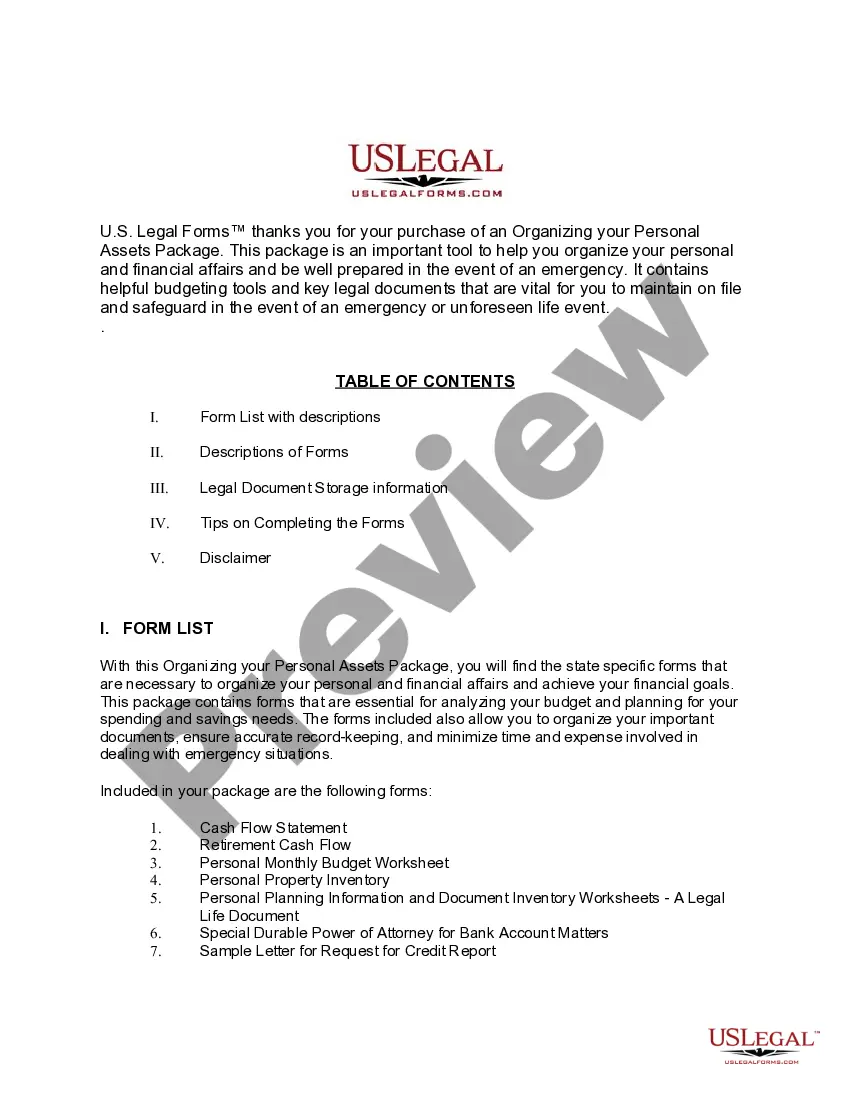
The New Mexico Organizing Your Personal Assets Package provides essential legal forms to help individuals organize their personal and financial affairs. This package stands out by offering state-specific forms designed to streamline budgeting, financial planning, and document management. With over 48% savings compared to purchasing forms individually, this package is an efficient solution for managing your financial goals and ensuring preparedness in emergency situations.
Forms provided in this package
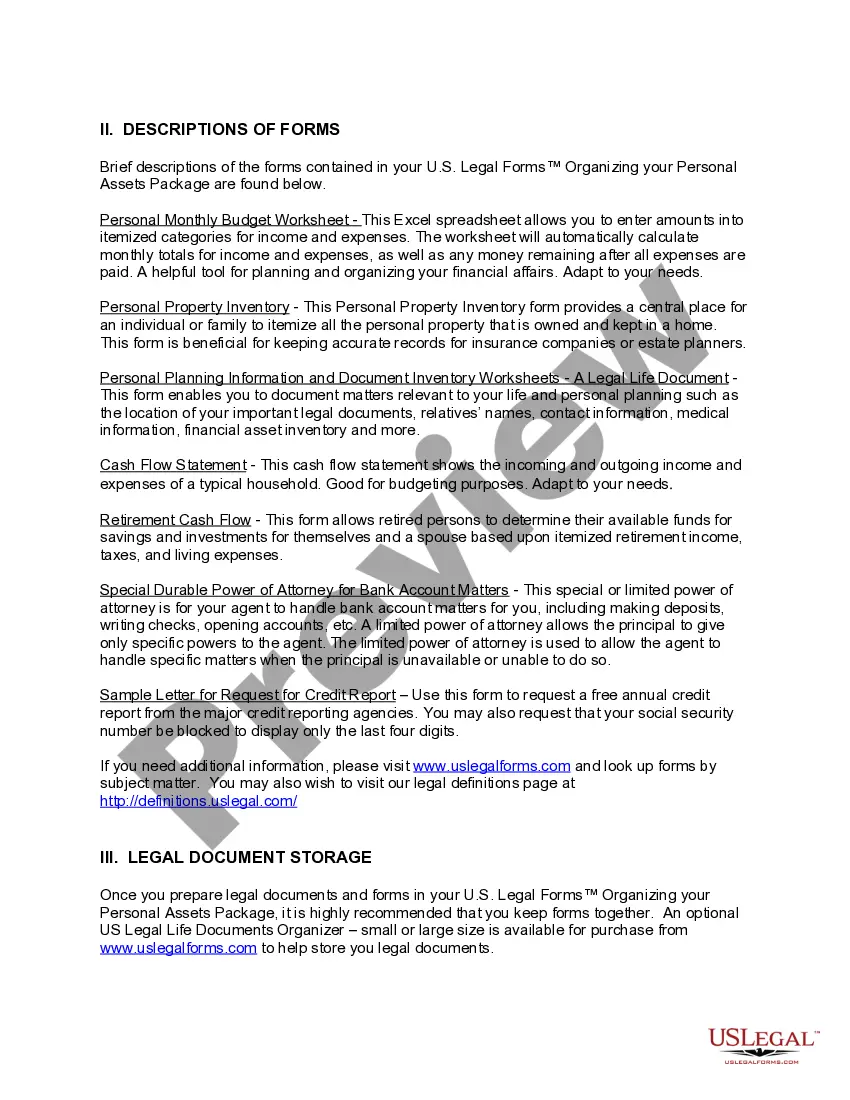
- Special Durable Power of Attorney for Bank Account Matters
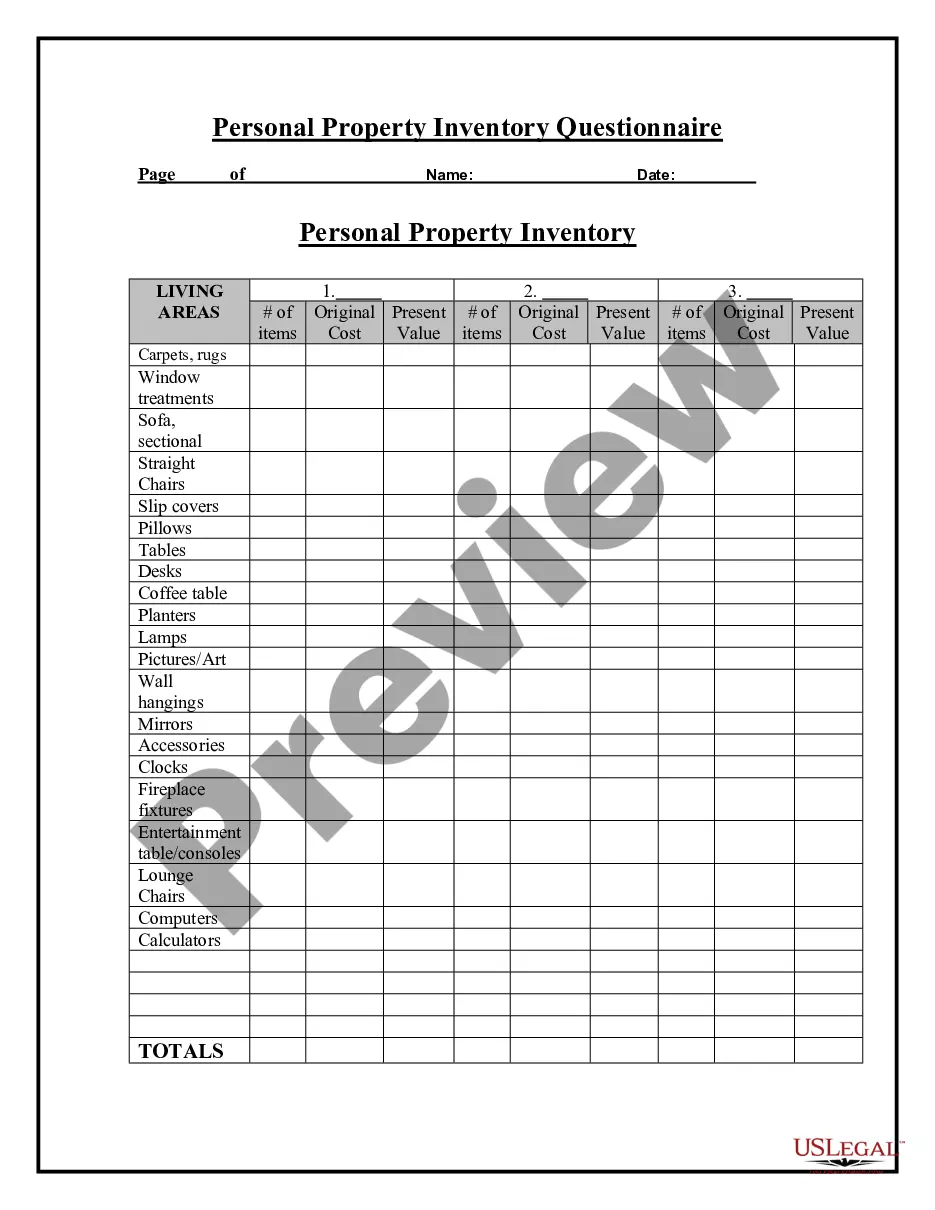
- Personal Property Inventory
- Sample Letter for Request for Free Credit Report Allowed by Federal Law
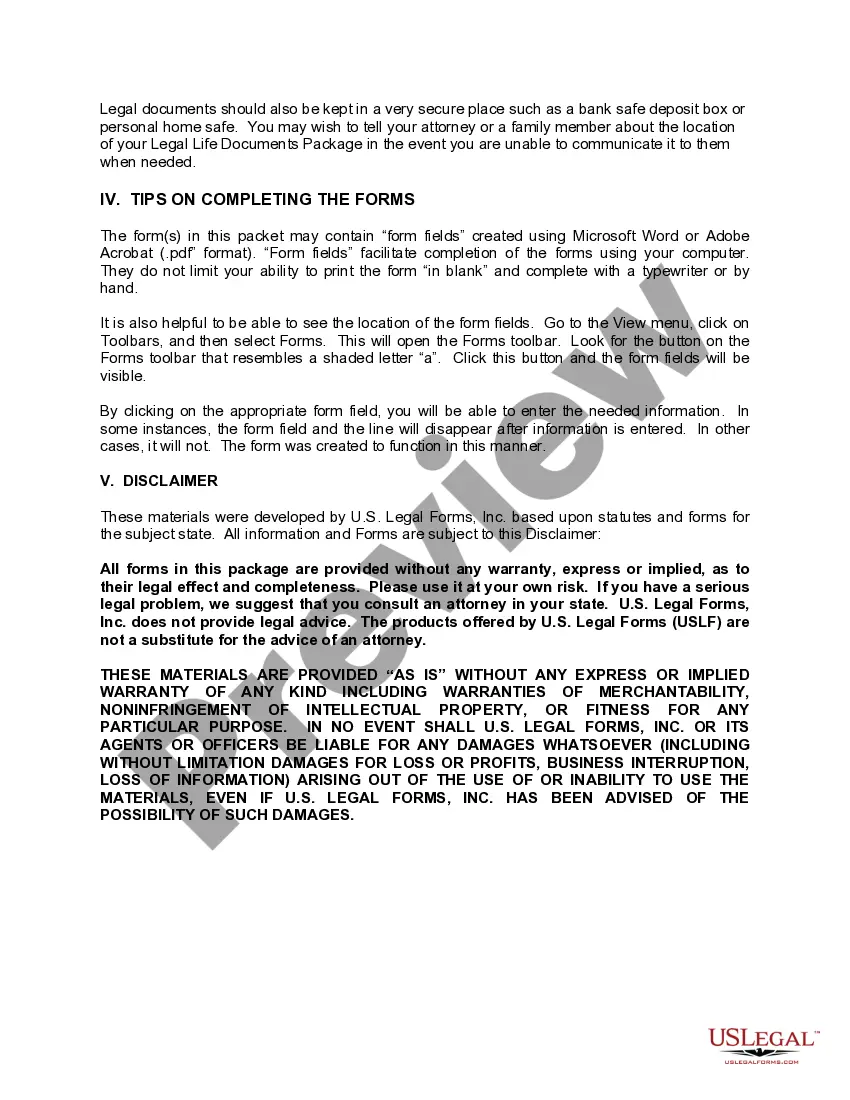
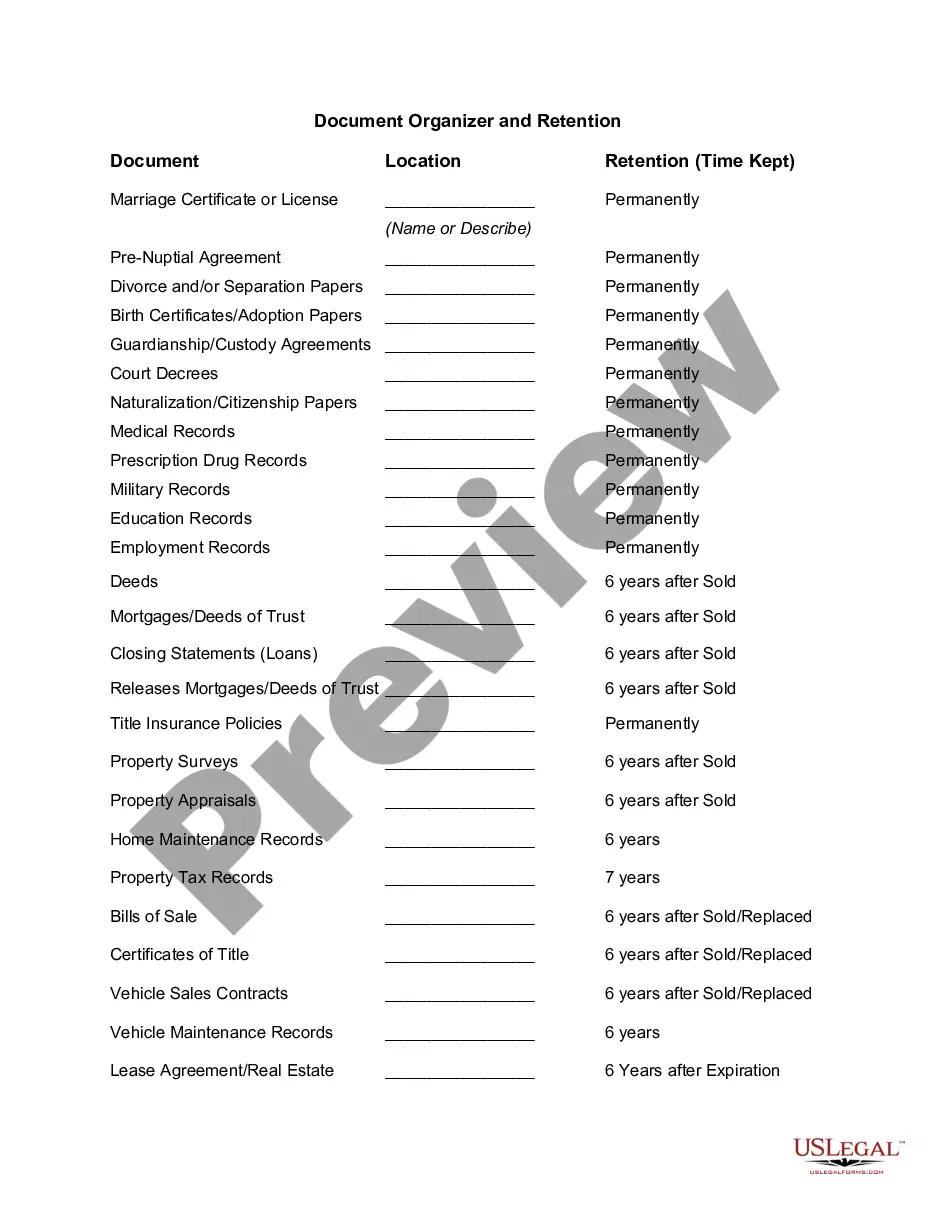
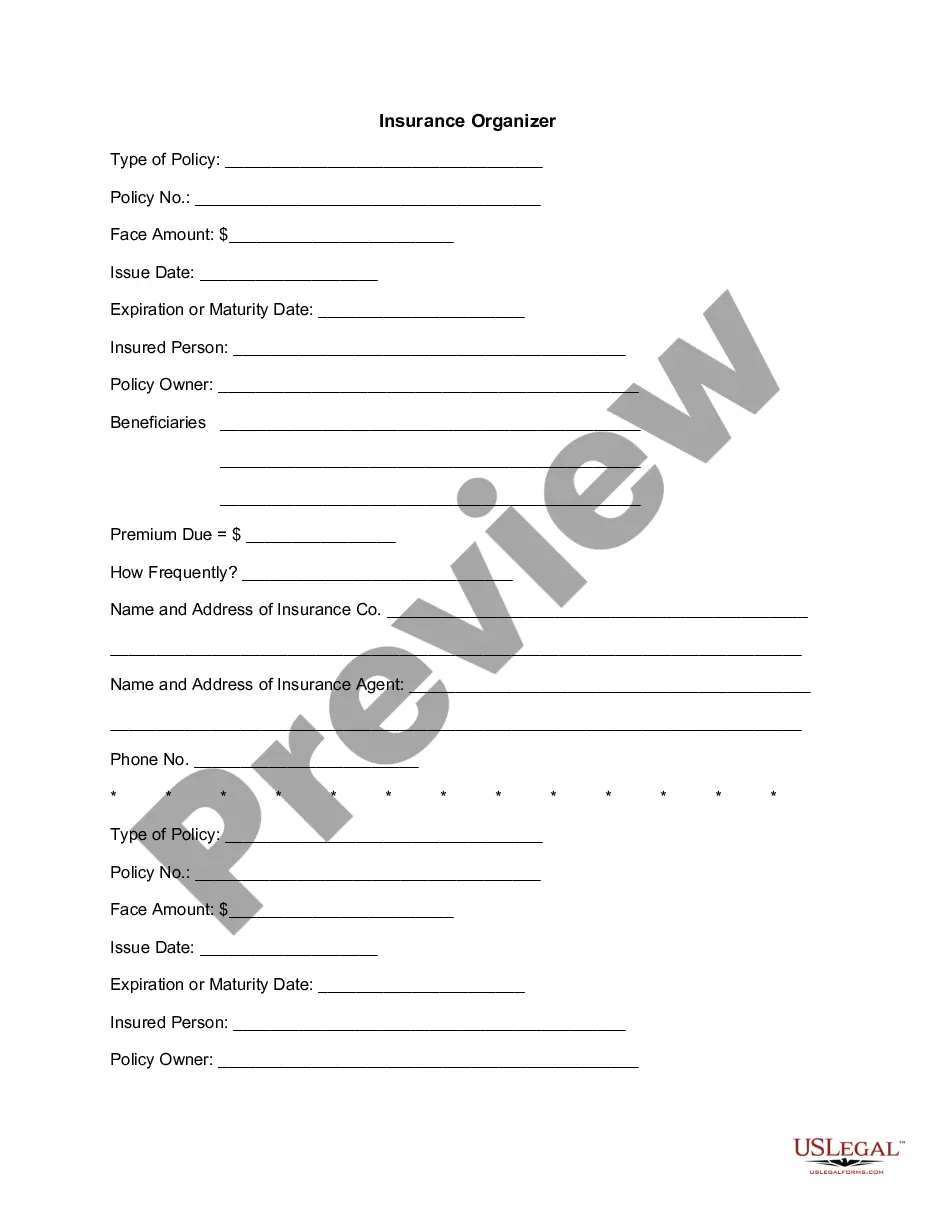
- Personal Planning Information and Document Inventory Worksheets - A Legal Life Document
- Cash Flow Statement
- Retirement Cash Flow
- Personal Monthly Budget Worksheet
When this form package is needed
This form package is useful in various scenarios, including:
- When you want to create a detailed budget to analyze your monthly expenditures and savings.
- If you need to compile an inventory of personal property for insurance purposes or estate planning.
- When preparing for retirement and understanding your cash flow during retirement years.
- When organizing important legal documents and creating a plan for document retrieval.
- If you need to authorize someone to manage bank account matters on your behalf.
Who needs this form package
- Individuals or families looking to organize personal and financial records.
- People planning for retirement or analyzing their post-retirement finances.
- Anyone needing to keep an accurate record of their personal property.
- Those who wish to establish a durable power of attorney for specific financial matters.
- Individuals wanting to ensure they have access to important documents in emergencies.
Steps to complete these forms
- Review all included forms to understand their purpose and requirements.
- Fill out the Cash Flow Statement and Monthly Budget Worksheet to track income and expenses.
- Complete the Personal Property Inventory to document your possessions accurately.
- Use the Personal Planning Information and Document Inventory Worksheets to organize key documents.
- Prepare the Special Durable Power of Attorney for Bank Account Matters if you wish to delegate authority.
- Submit the Sample Letter for Request for Credit Report to obtain your credit report.
Notarization guidance for this package
Some included forms must be notarized to ensure validity. US Legal Forms provides secure online notarization powered by Notarize, allowing you to complete the process through a verified video call anytime.
Get your form ready online
Our built-in tools help you complete, sign, share, and store your documents in one place.
Make edits, fill in missing information, and update formatting in US Legal Forms—just like you would in MS Word.
Download a copy, print it, send it by email, or mail it via USPS—whatever works best for your next step.
Sign and collect signatures with our SignNow integration. Send to multiple recipients, set reminders, and more. Go Premium to unlock E-Sign.
If this form requires notarization, complete it online through a secure video call—no need to meet a notary in person or wait for an appointment.
We protect your documents and personal data by following strict security and privacy standards.

Make edits, fill in missing information, and update formatting in US Legal Forms—just like you would in MS Word.

Download a copy, print it, send it by email, or mail it via USPS—whatever works best for your next step.

Sign and collect signatures with our SignNow integration. Send to multiple recipients, set reminders, and more. Go Premium to unlock E-Sign.

If this form requires notarization, complete it online through a secure video call—no need to meet a notary in person or wait for an appointment.

We protect your documents and personal data by following strict security and privacy standards.
Common mistakes
- Failing to provide accurate income or expense figures in the budget worksheets.
- Not updating the Personal Property Inventory regularly to reflect changes.
- Overlooking to designate a trusted person in the durable power of attorney.
- Not keeping the organized documents in a secure location.
- Submitting incomplete forms that may delay legal processes.
Why complete this package online
- Convenience of downloadable forms that can be accessed and completed at any time.
- Editability allows you to make changes easily without starting over.
- Reliability of forms drafted by licensed attorneys, tailored for New Mexico residents.
- Comprehensive guidelines included to assist in the completion of each form correctly.
Legal use & context
- The forms are legally valid in New Mexico and designed to meet state-specific requirements.
- Using these forms helps clarify your personal financial organization and legal decisions.
- These documents may be enforceable in court, depending on adherence to state laws.
Looking for another form?

Form popularity
FAQ
To make a will self-proved in New Mexico, the testator and witnesses must sign a self proving affidavit before a notary public. An affidavit is a sworn statement, and a notary public is an officer of the court. Therefore, an affidavit before a notary public is like making a statement in court.
No, in New Mexico, you do not need to notarize your will to make it legal. However, New Mexico allows you to make your will "self-proving" and you'll need to go to a notary if you want to do that. A self-proving will speeds up probate because the court can accept the will without contacting the witnesses who signed it.
In New Mexico, you can make a living trust to avoid probate for virtually any asset you ownreal estate, bank accounts, vehicles, and so on. You need to create a trust document (it's similar to a will), naming someone to take over as trustee after your death (called a successor trustee).
The only requirements for a valid will in New Mexico are that it be: in writing; signed by you or signed by someone directed by you and in your presence; and signed by two witnesses who both sign in the presence of you and each other.
A handwritten will can be used in New Mexico, but only if it comports with other statutory requirements to create a valid will. Some states also require that the will be dated.
The will must be administered through probate once the will has been submitted. Probate also is necessary if a person dies without a will or a living trust. In this situation, the assets of the decedent are distributed based on a priority established under New Mexico intestate succession law.
Age: The testator must be at least 18 years old. Capacity: The testator must be of sound mind. Signature: The will must be signed by the testator or by someone else in the testator's name in his conscious presence, by his direction.
From start to finish, most New Mexico probates take about two years to complete. However, 90% of the work is usually done in the first five or six months of a probate, and most estates distribute assets within a year. Creditors have up to one year to make a claim.