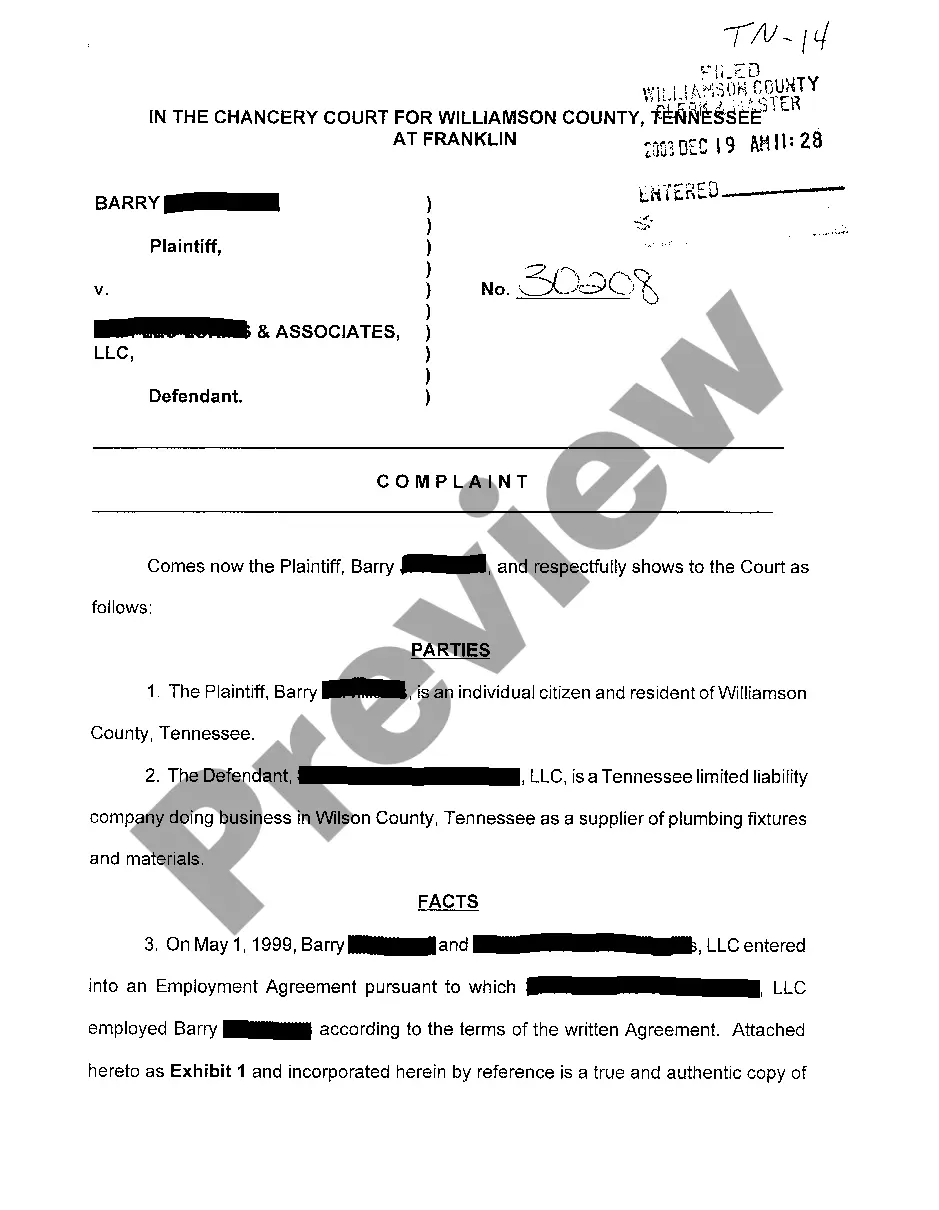
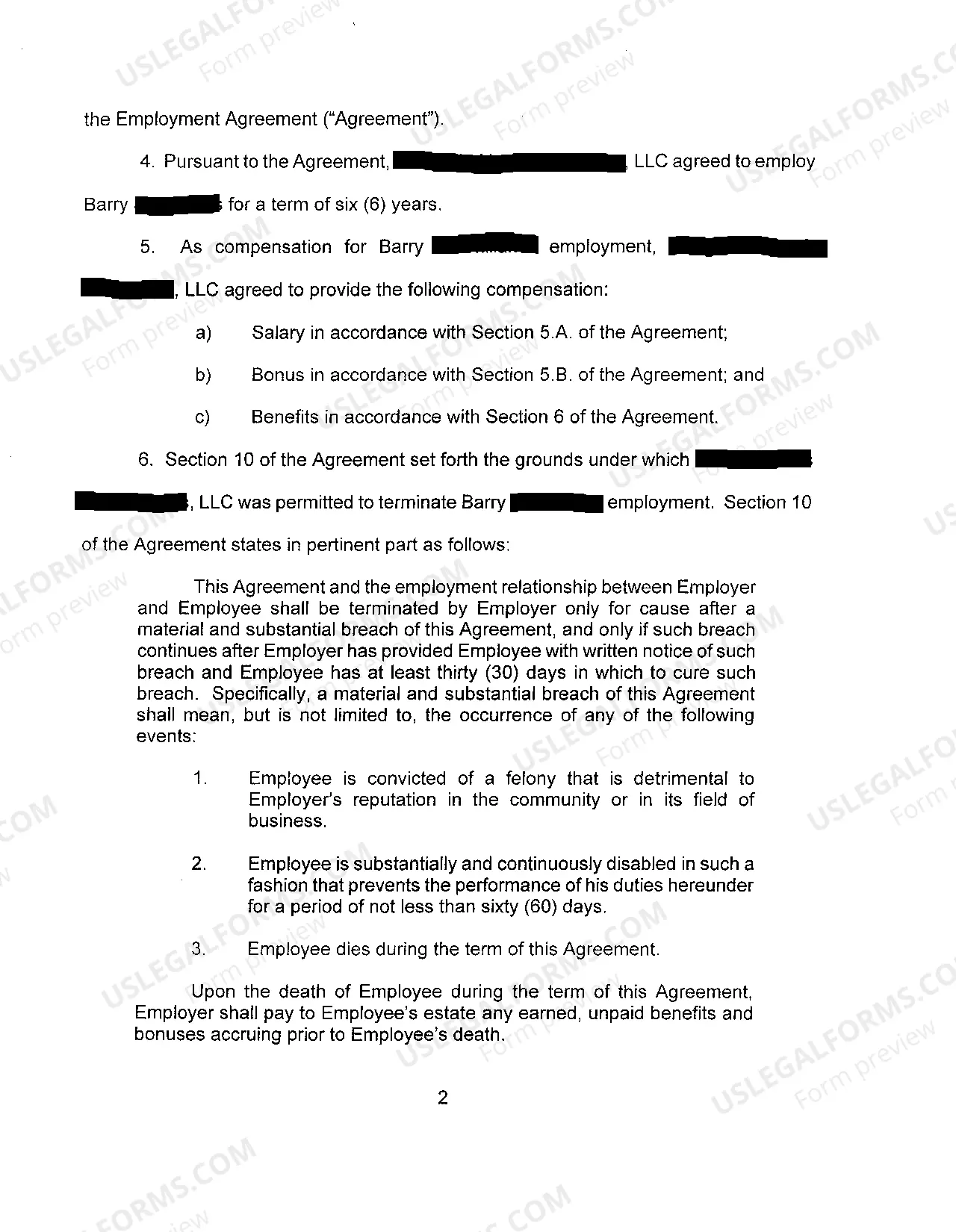
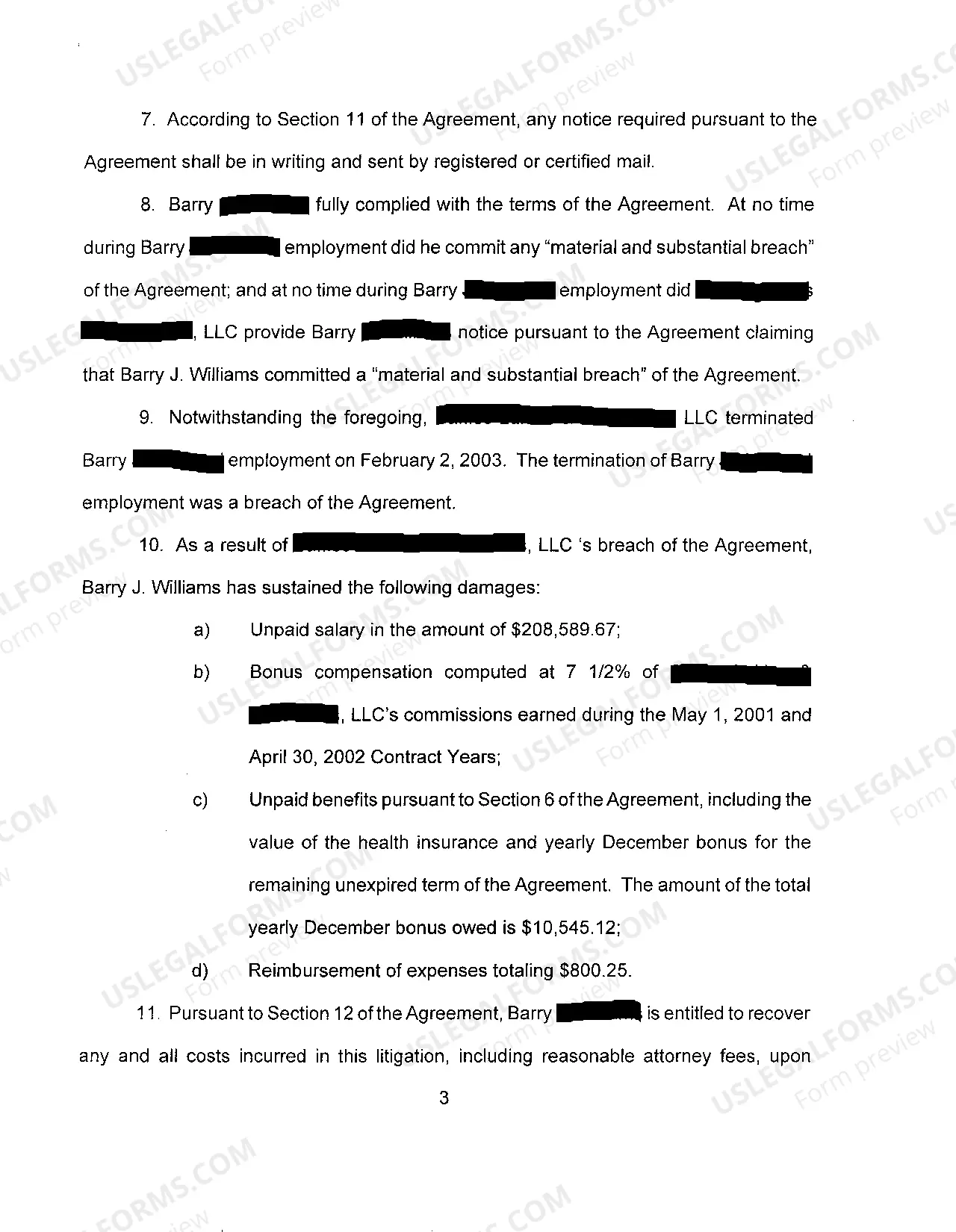
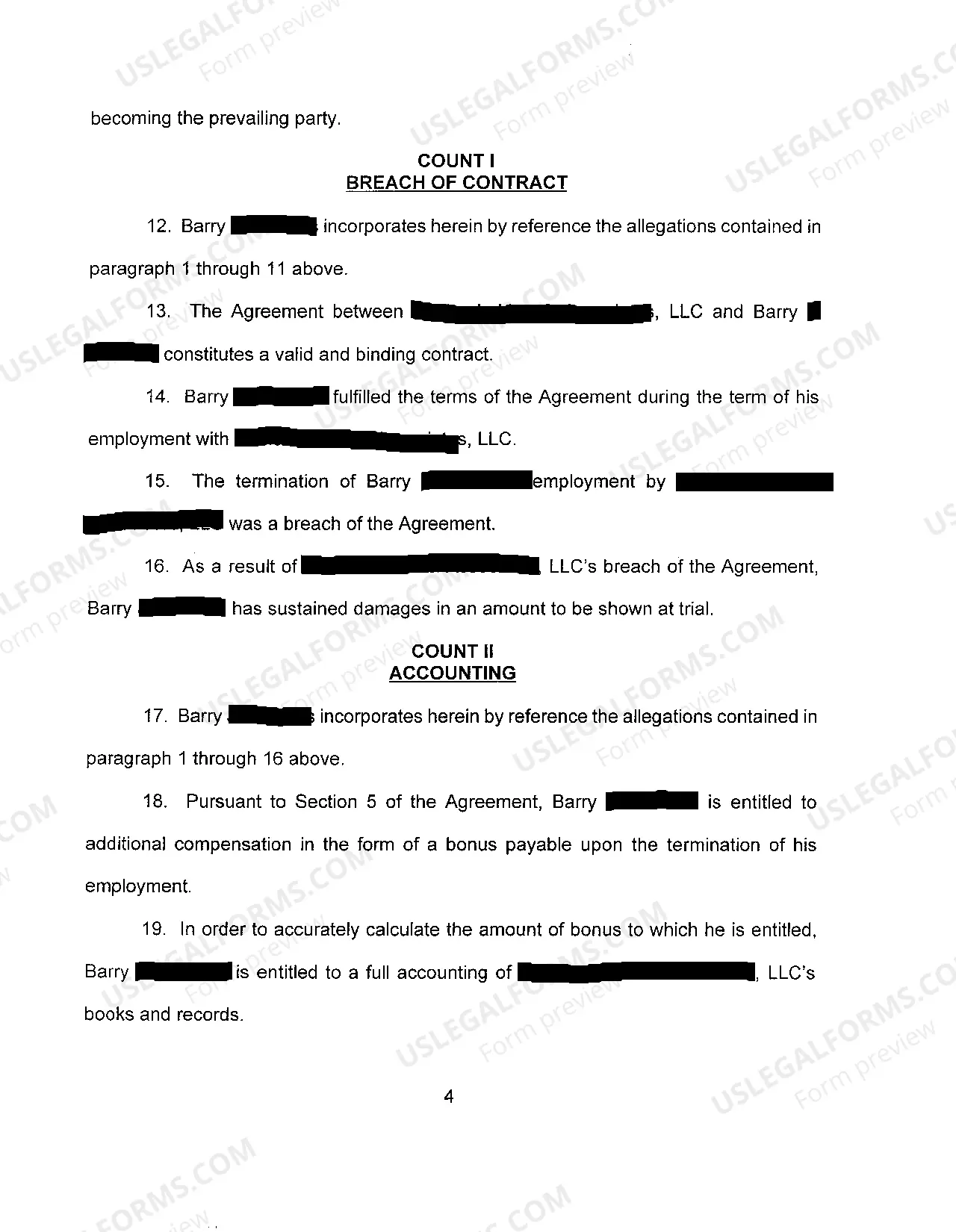
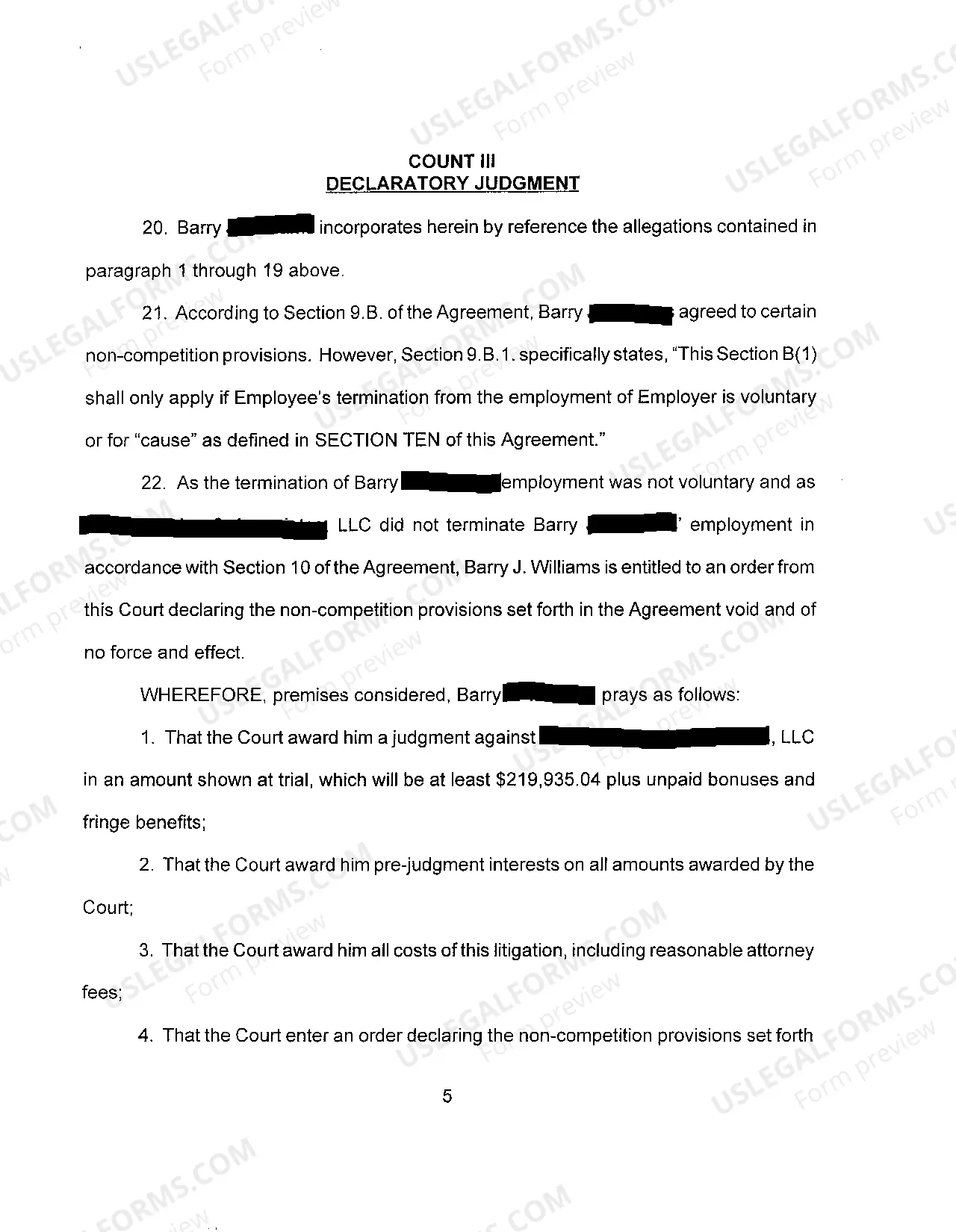
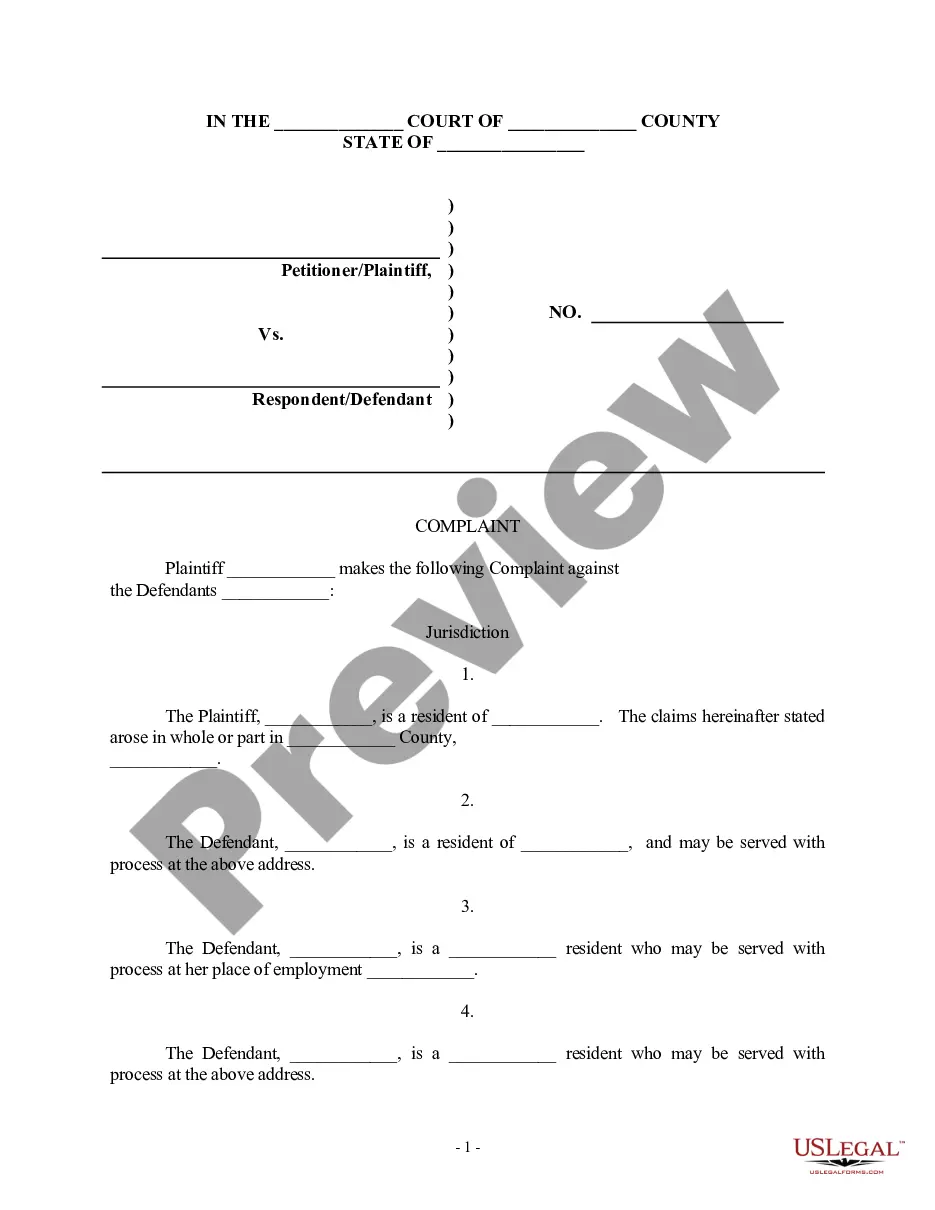
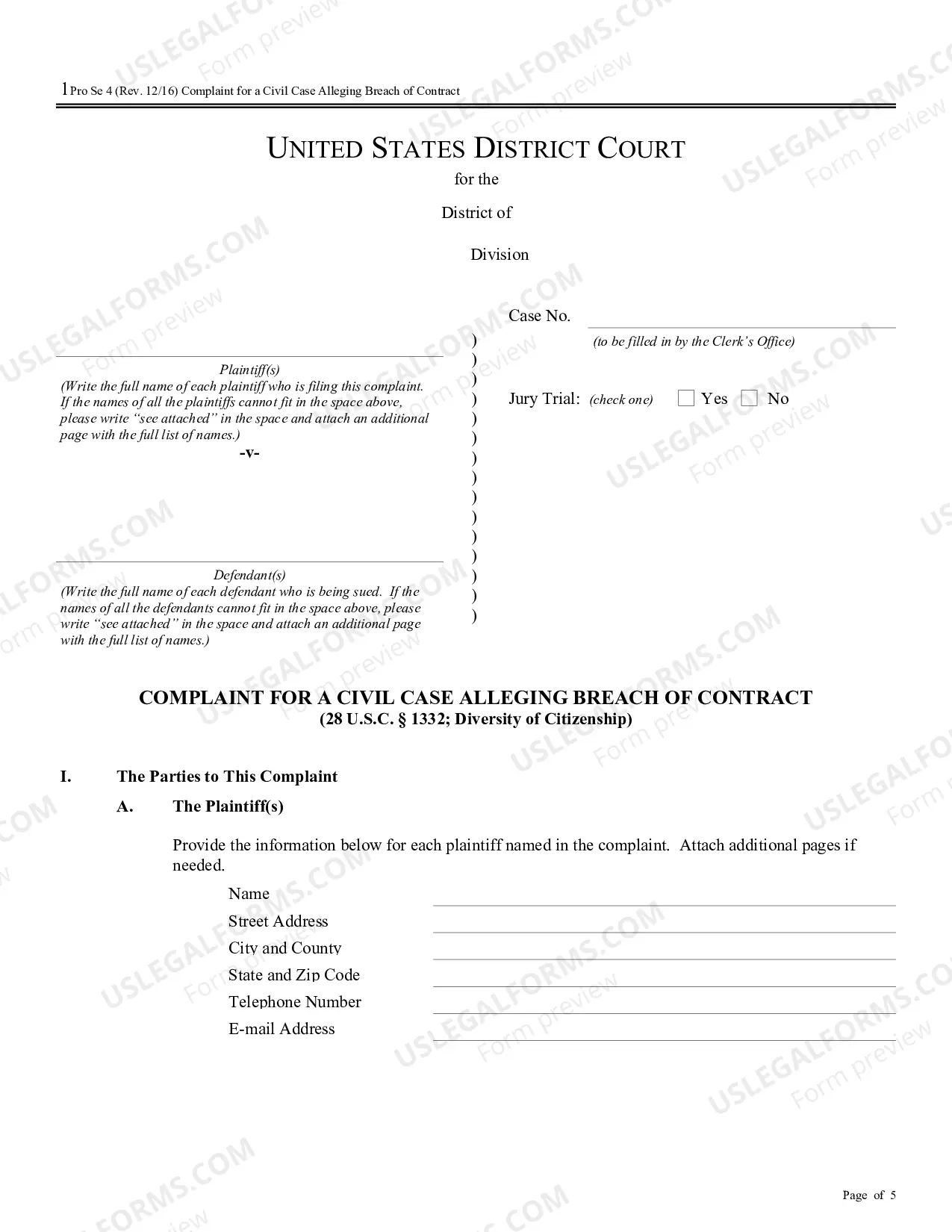
Tennessee Complaint regarding Employment Contract and Failure to Pay Compensation as Agreed
Does this document require notarization?
Notarization is generally not required for this form. However, certain states or situations might demand it. You can complete notarization online through US Legal Forms, powered by Notarize, using a verified video call available anytime.

Form popularity
FAQ
If an employee works 8 or more consecutive hours, the employer must provide a 30-minute break and an additional 15 minute break for every additional 4 consecutive hours worked.
Employee Rights Employers may legally hire, fire, suspend or discipline any employee at any time and for any reason - good or bad - or for no reason at all; however, an employer may not discriminate against any employee on the basis of the employee's race, sex, age, religion, color, national origin, or disability.
Tennessee Labor Violations and LawsuitsTennessee law does not provide a way for workers to directly sue their workplaces for discrimination. Rather, the claim must first be filed with the Equal Employment Opportunity Commission (EEOC) or the Tennessee Human Rights Commission (THRC).
In an at-will employment state like Tennessee, an employer can terminate an employee for almost any reason at all, good or bad. But when a company unlawfully lays off or fires an employee, it's called a wrongful termination or wrongful dismissal, and the employee does have legal recourse.
A typical breach in employment contract cases occurs when an employer fails to pay the employee at the time or in the amount that is stated in the contract. This type of breach not only allows the employee out of the contract, but may also give the employee cause to sue the employer for damages.
Tennessee law requires employers to provide a meal break, but no rest breaks. In Tennessee, employers must provide a 30-minute break to employees who are scheduled to work at least six consecutive hours. This break may be unpaid. Employers who have at least five employees are covered by this law.
There is no legal requirement for an employee to have a written contract of employment, although having something in writing can make it easier to understand what your contractual obligations and rights are. Sometimes employment contracts can be verbal, which is especially common in small businesses.
Right to be free from discrimination and harassment of all types; Right to a safe workplace free of dangerous conditions, toxic substances, and other potential safety hazards; Right to be free from retaliation for filing a claim or complaint against an employer (these are sometimes called "whistleblower" rights); and.
Every employee is entitled to one day of rest in 7. So, an employer cannot require you to work more than six days out of seven. But if the nature of the work reasonably requires that the you work seven or more consecutive days, you have to get the...