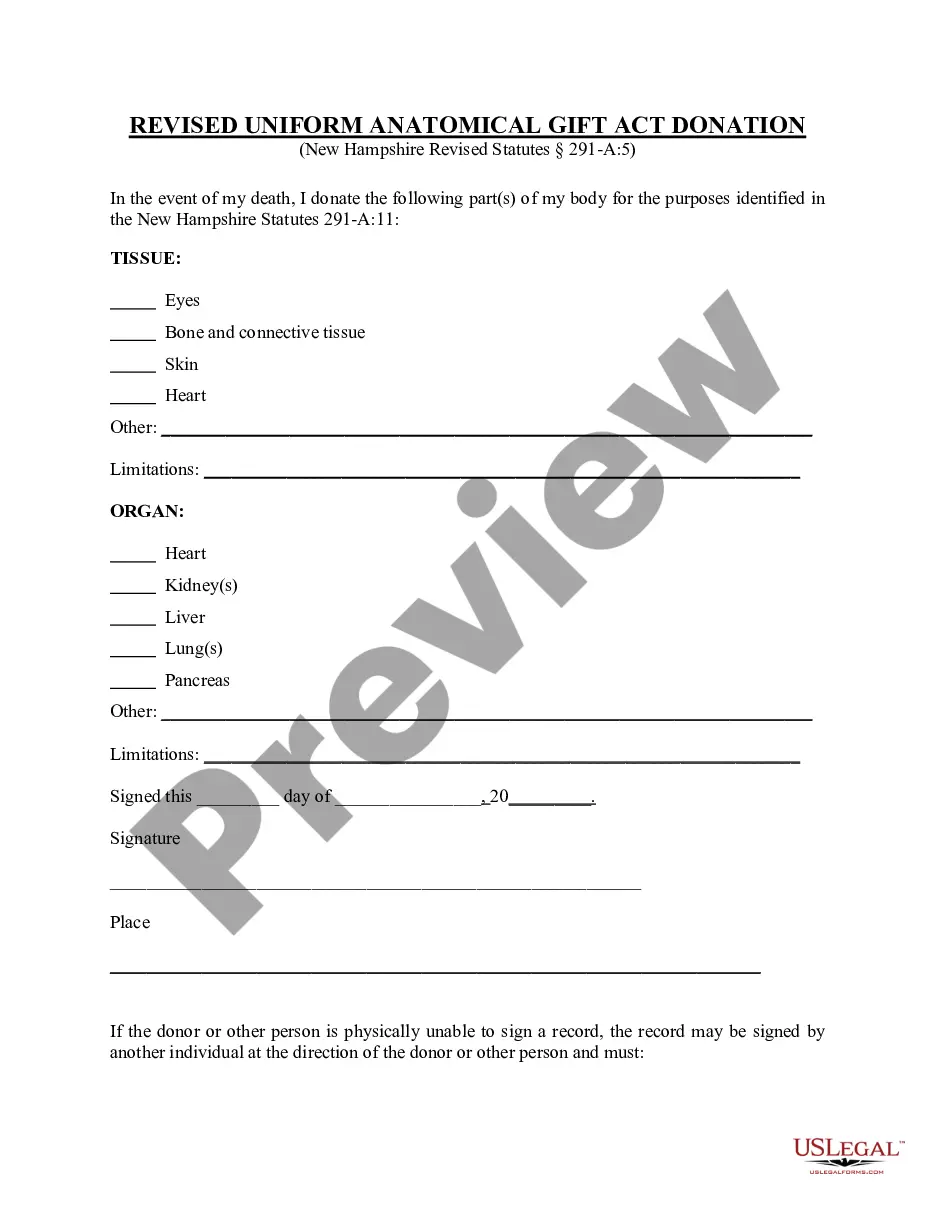
Clerical Staff Agreement - Self-Employed Independent Contractor
Understanding this form
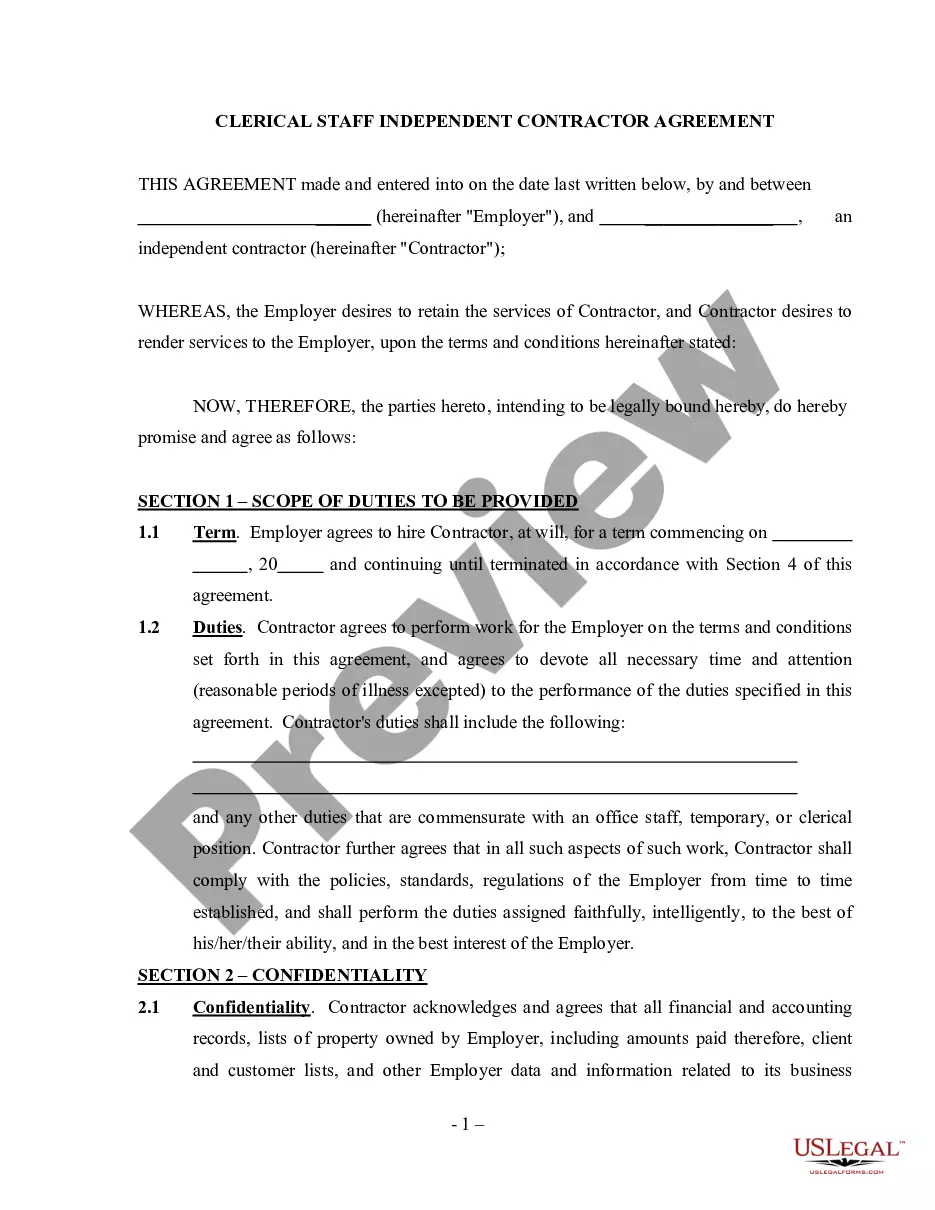
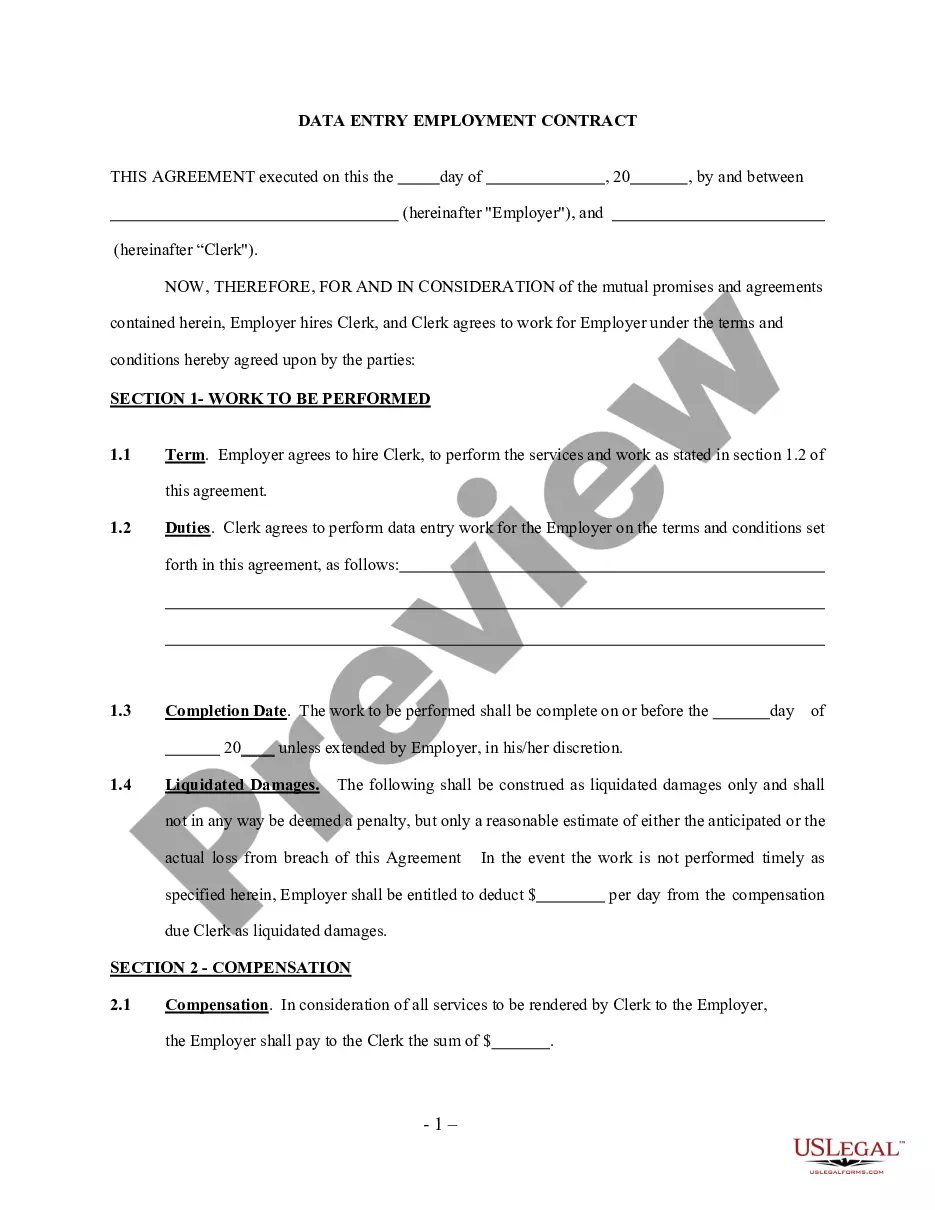
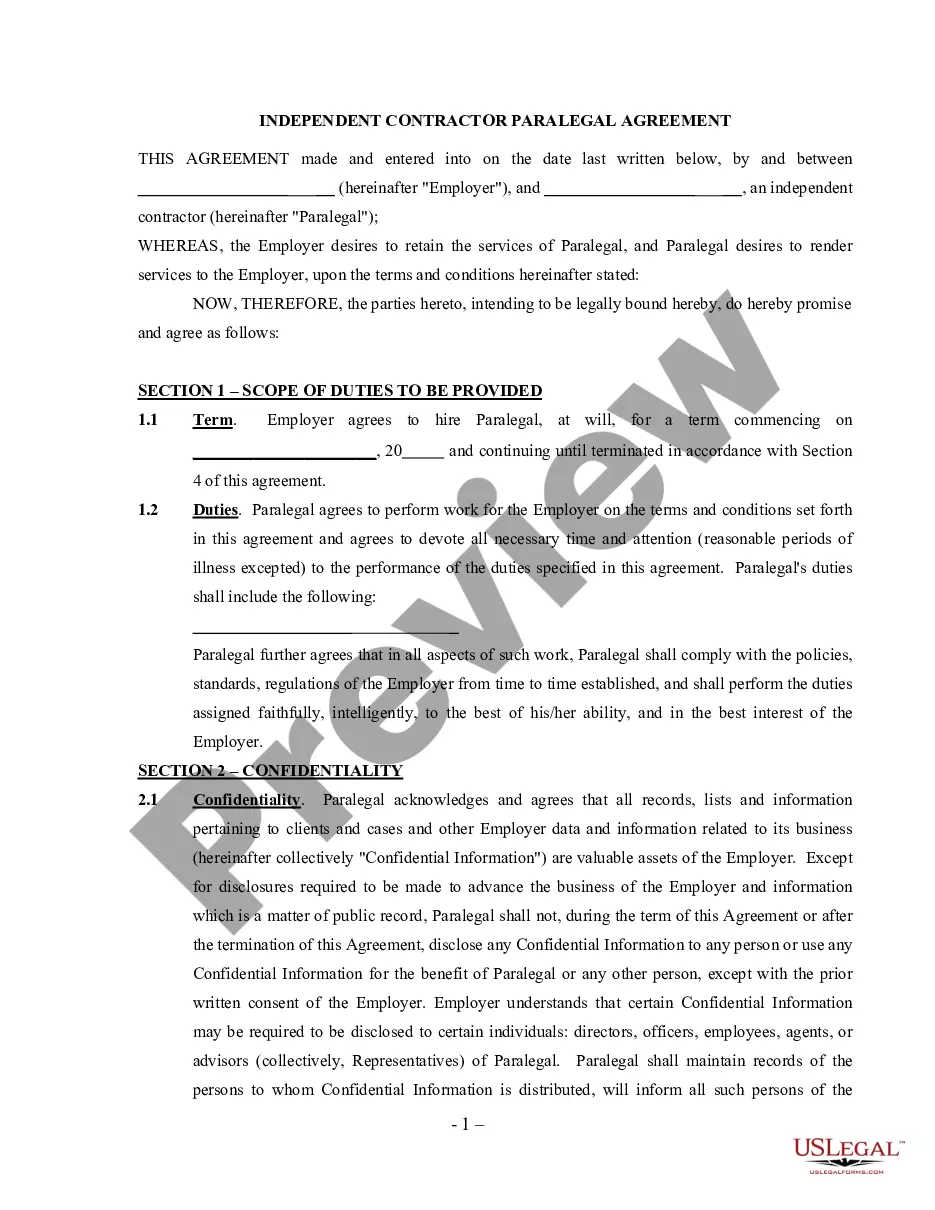
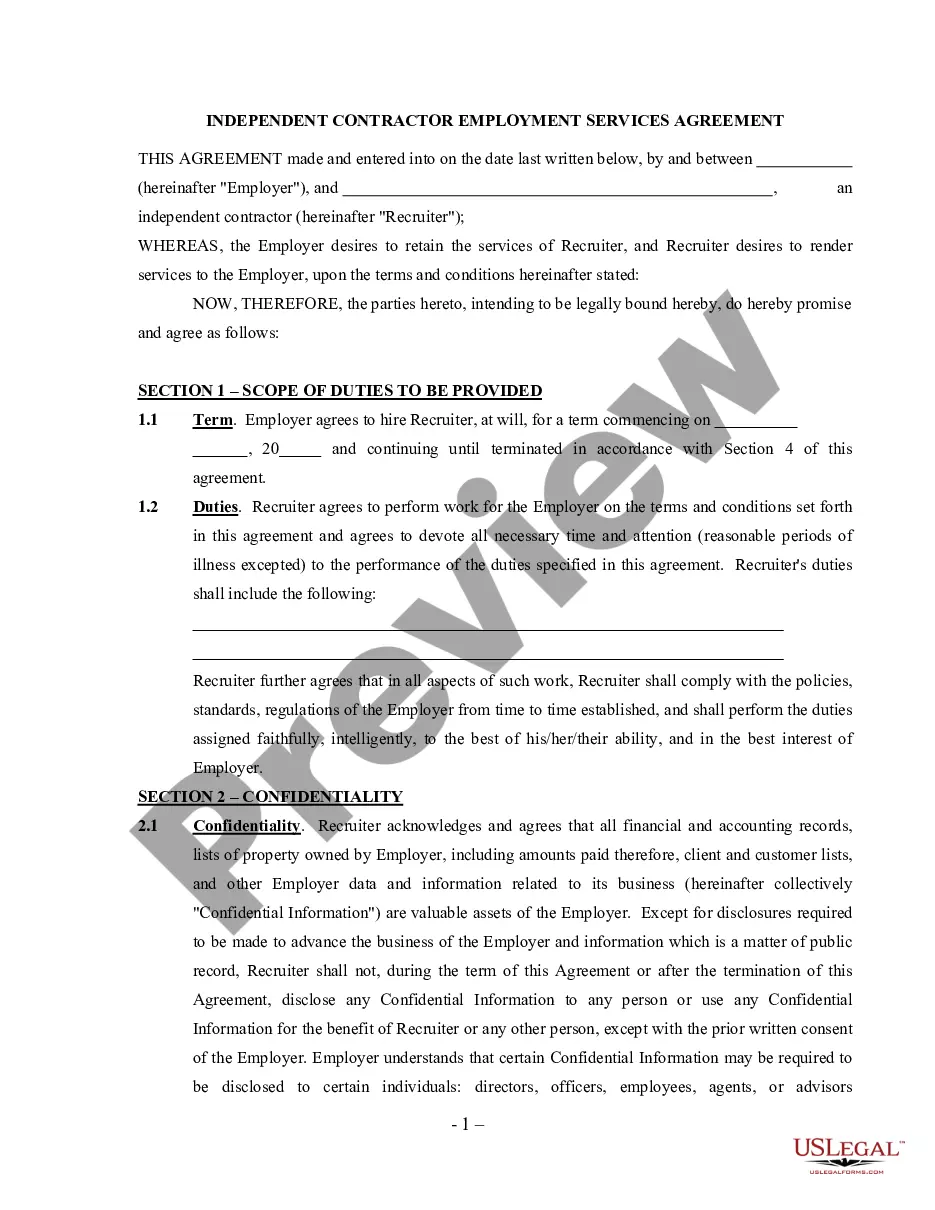
The Clerical Staff Agreement - Self-Employed Independent Contractor is a legal document that formalizes the relationship between an employer and clerical staff hired as independent contractors. This agreement clearly outlines the expectations and responsibilities of both parties, establishing terms of service and confidentiality. It distinguishes itself from other employment forms by focusing specifically on independent contractor arrangements, which do not involve traditional employee benefits or tax withholdings.
Key parts of this document
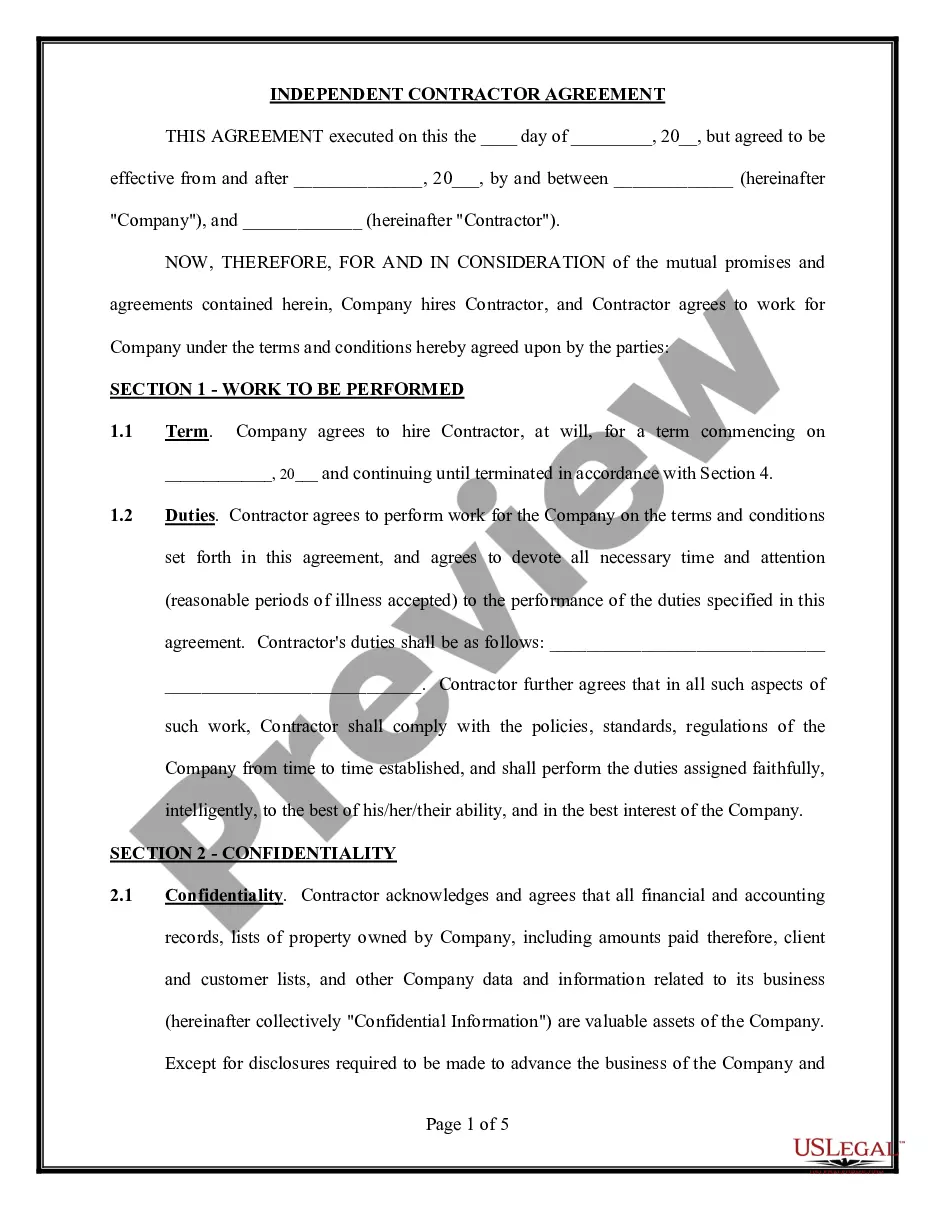
- Scope of duties: Defines the specific clerical tasks the contractor will perform.
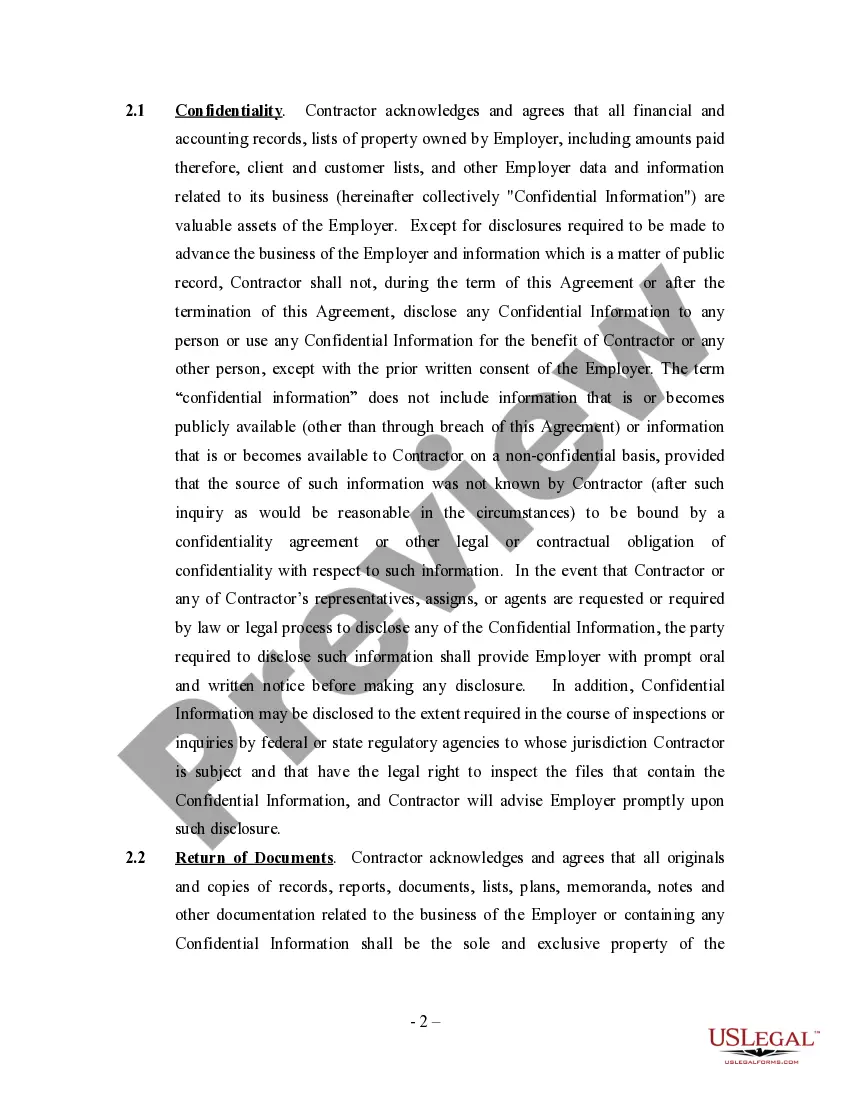
- Confidentiality: Mandates that the contractor maintains the confidentiality of the employer's sensitive information.
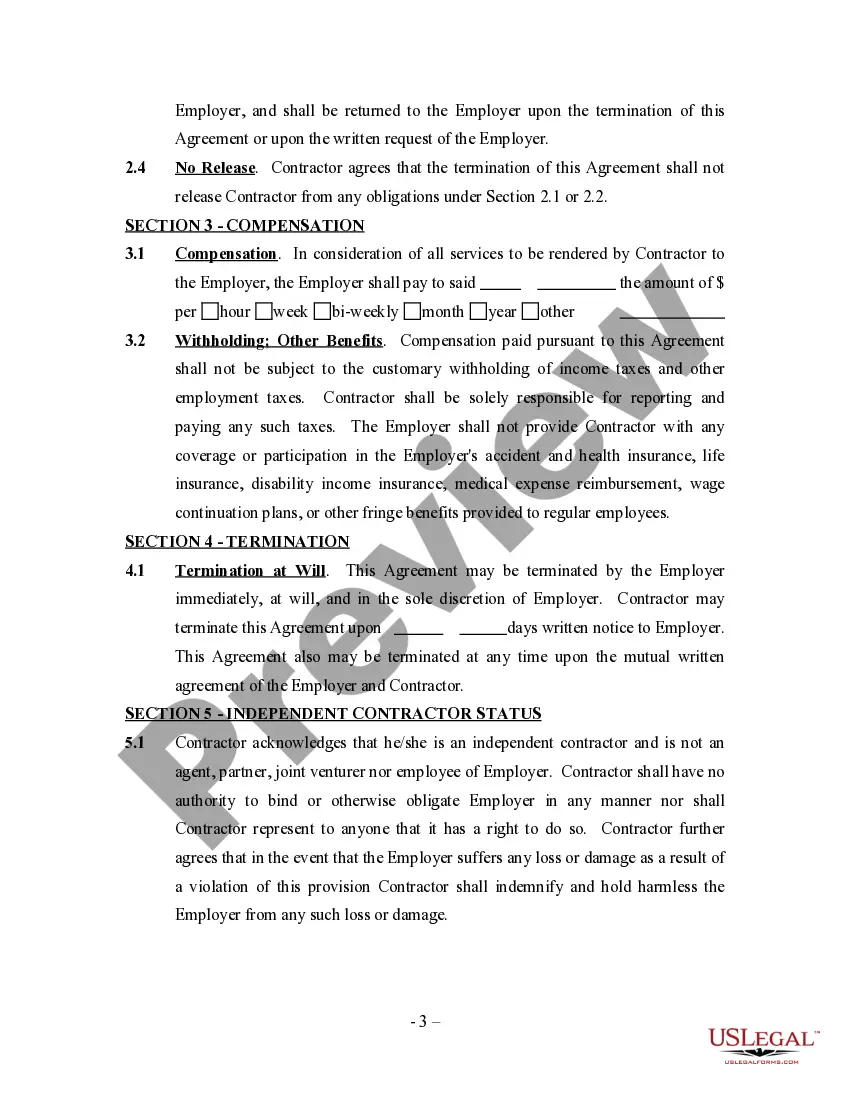
- Compensation: Details the payment terms for the contractor's services.
- Termination: Outlines how and when the agreement can be ended by either party.
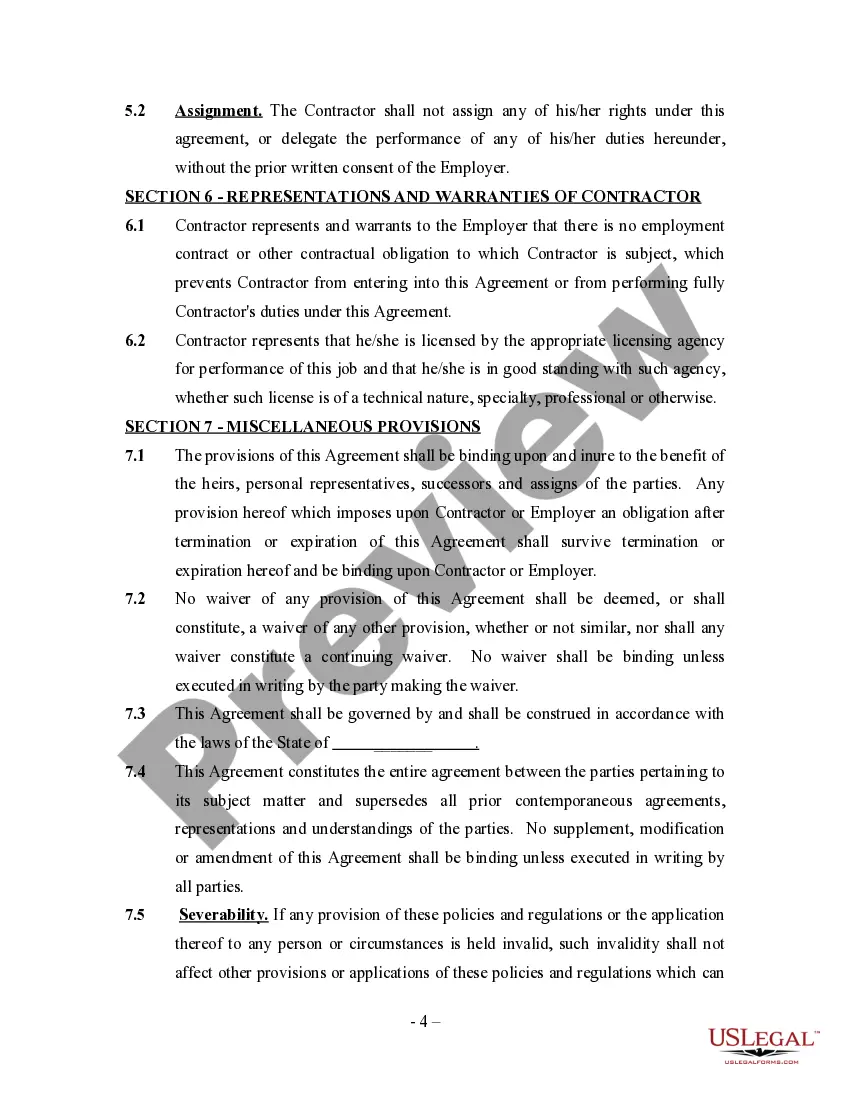
- Representations and warranties: Includes assurances from the contractor regarding licensing and the absence of conflicting obligations.
- Miscellaneous provisions: Covers various legal disclaimers and the binding nature of the agreement.
Situations where this form applies
This agreement should be used when a business intends to hire clerical staff as independent contractors rather than employees. It is suitable for situations where an employer requires specific administrative tasks to be completed but wishes to avoid the complexities associated with standard employment contracts. This form is particularly relevant for small businesses or freelance professionals providing clerical services.
Who this form is for
- Employers looking to engage clerical staff on a contract basis.
- Self-employed individuals seeking to formalize their work agreements with clients.
- Small business owners who need temporary or part-time clerical support without hiring employees.
Instructions for completing this form
- Identify the parties: Enter the names and addresses of both the employer and the contractor.
- Define the scope of duties: Clearly outline the clerical tasks to be performed by the contractor.
- Include confidentiality terms: Specify what constitutes confidential information and the contractor's obligations to protect it.
- Set compensation details: State the payment amount and schedule for the contractor's work.
- Review termination clauses: Select appropriate terms under which either party can terminate the agreement.
- Obtain signatures: Ensure both parties sign and date the agreement to make it legally binding.
Is notarization required?
This form usually doesn’t need to be notarized. However, local laws or specific transactions may require it. Our online notarization service, powered by Notarize, lets you complete it remotely through a secure video session, available 24/7.
Get your form ready online
Our built-in tools help you complete, sign, share, and store your documents in one place.
Make edits, fill in missing information, and update formatting in US Legal Forms—just like you would in MS Word.
Download a copy, print it, send it by email, or mail it via USPS—whatever works best for your next step.
Sign and collect signatures with our SignNow integration. Send to multiple recipients, set reminders, and more. Go Premium to unlock E-Sign.
If this form requires notarization, complete it online through a secure video call—no need to meet a notary in person or wait for an appointment.
We protect your documents and personal data by following strict security and privacy standards.

Make edits, fill in missing information, and update formatting in US Legal Forms—just like you would in MS Word.

Download a copy, print it, send it by email, or mail it via USPS—whatever works best for your next step.

Sign and collect signatures with our SignNow integration. Send to multiple recipients, set reminders, and more. Go Premium to unlock E-Sign.

If this form requires notarization, complete it online through a secure video call—no need to meet a notary in person or wait for an appointment.

We protect your documents and personal data by following strict security and privacy standards.
Avoid these common issues
- Failing to define the scope of work clearly, leading to misunderstandings.
- Not including specific confidentiality obligations, which can risk sensitive information exposure.
- Omitting compensation details, leading to disputes over payment.
- Not having both parties sign the agreement, which can invalidate the contract.
Advantages of online completion
- Convenience: Easily accessible and downloadable at any time.
- Editability: Allows customization to fit specific needs and circumstances.
- Reliability: Templates are crafted by licensed attorneys to ensure compliance with legal standards.
Legal use & context
- The agreement creates a legally binding relationship between the contractor and the employer.
- Following the terms outlined helps protect both parties in case of disputes.
- Proper execution of this form aids in avoiding potential legal issues regarding employment classification.
Quick recap
- The agreement formalizes the relationship between an employer and clerical staff as independent contractors.
- Clear definition of duties, confidentiality, and compensation is essential to avoid disputes.
- This form is suitable for businesses needing flexible, part-time clerical support.
Looking for another form?




Form popularity
FAQ
Terms. This is the first section of any agreement or contract and states the names and locations of the parties involved. Responsibilities & Deliverables. Payment-Related Details. Confidentiality Clause. Contract Termination. Choice of Law.
The earnings of a person who is working as an independent contractor are subject to Self-Employment Tax. If you are an independent contractor, you are self-employed. To find out what your tax obligations are, visit the Self-Employed Tax Center.
If you're self-employed, you do not have a contract of employment with an employer.You don't have employment rights as such if you're self-employed as you are your own boss and can therefore decide how much to charge for your work and how much holiday to give yourself. You do have some legal protection.
The good news is that you can employ people and remain a sole trader. There's no need to set up a limited company if you don't want to. While sole traders operate the business on their own, that doesn't mean they have to work alone.
Finally, the new stimulus bill provides independent contractors with paid sick and paid family leave benefits through March 14, 2021.Under CARES Act II, unemployed or underemployed independent contractors who have an income mix from self-employment and wages paid by an employer are still eligible for PUA.
Do you know your ABCs? California's new independent contractor test makes it difficult to hire a former employee, even if they are retired, as an independent contractor.
Name of contractor and contact information. Name of homeowner and contact information. Describe property in legal terms. List attachments to the contract. The cost. Failure of homeowner to obtain financing. Description of the work and the completion date. Right to stop the project.
Can independent contractors hire employees? Sure. As a self-employed person, you're technically your own business. Businesses are allowed to hire employees.