Copyright Release for Photographs
What is this form?
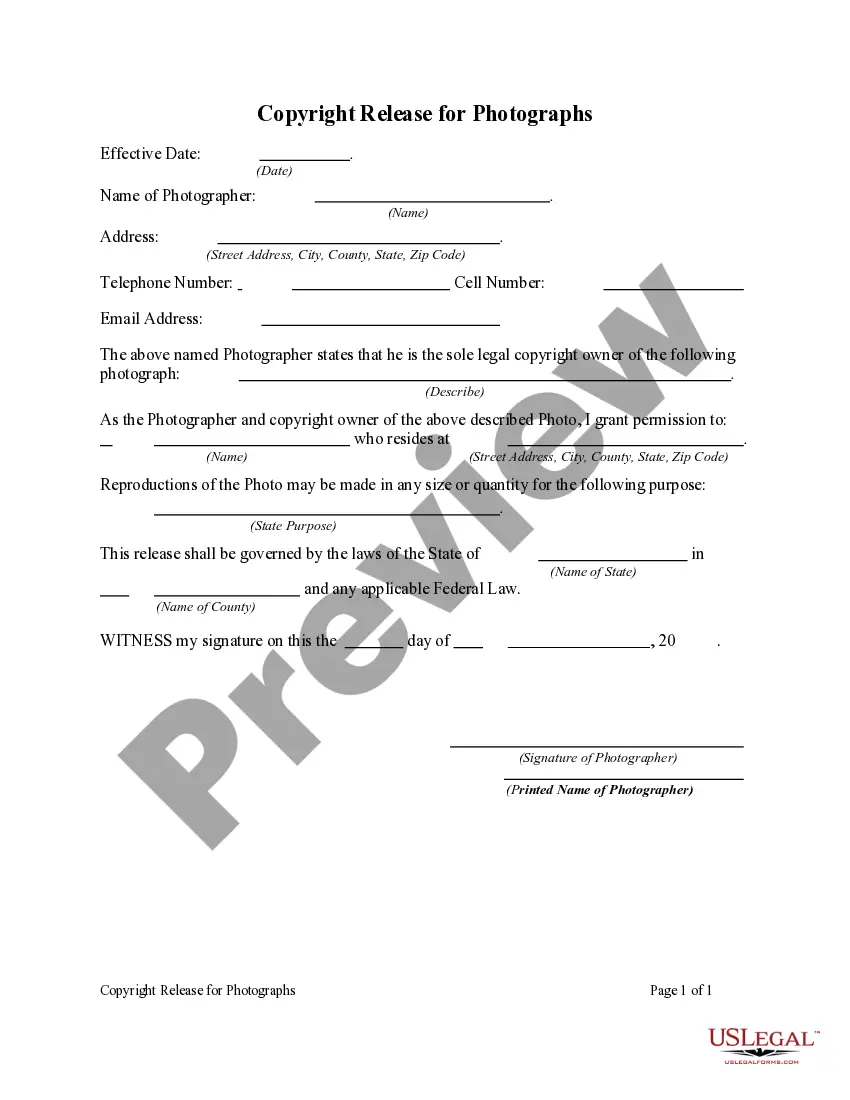
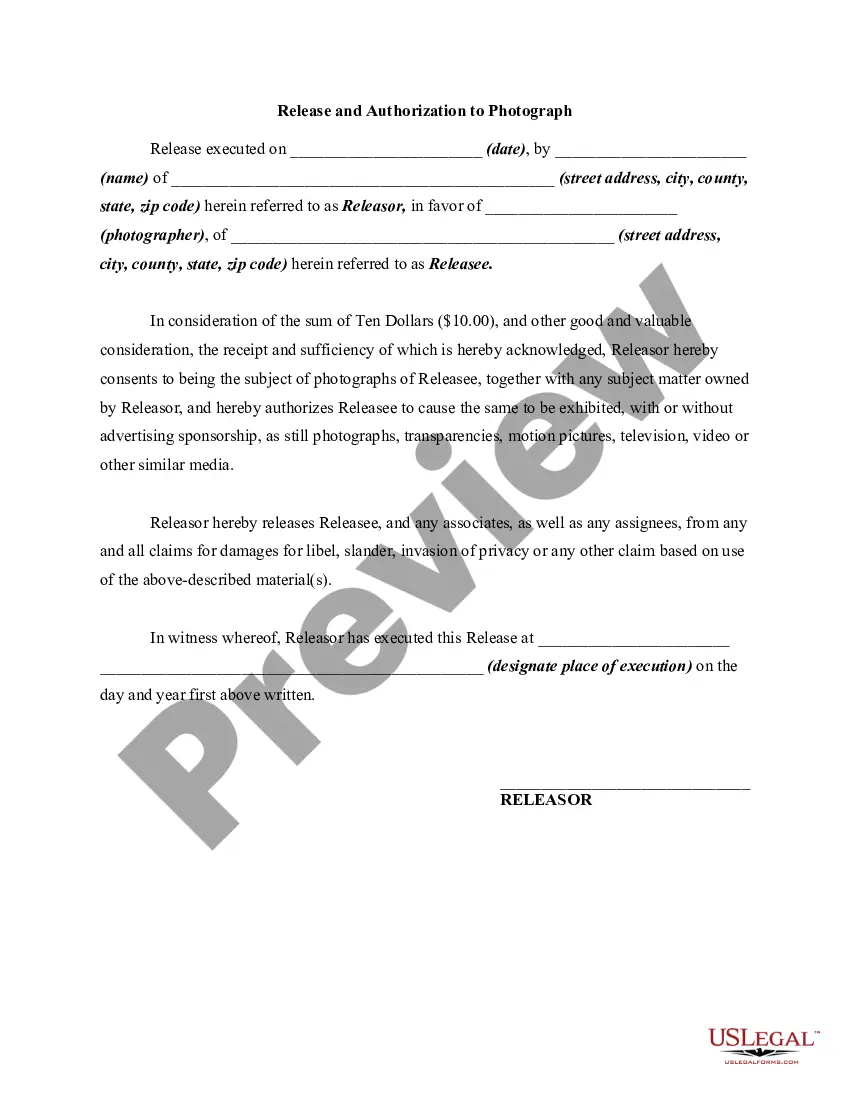
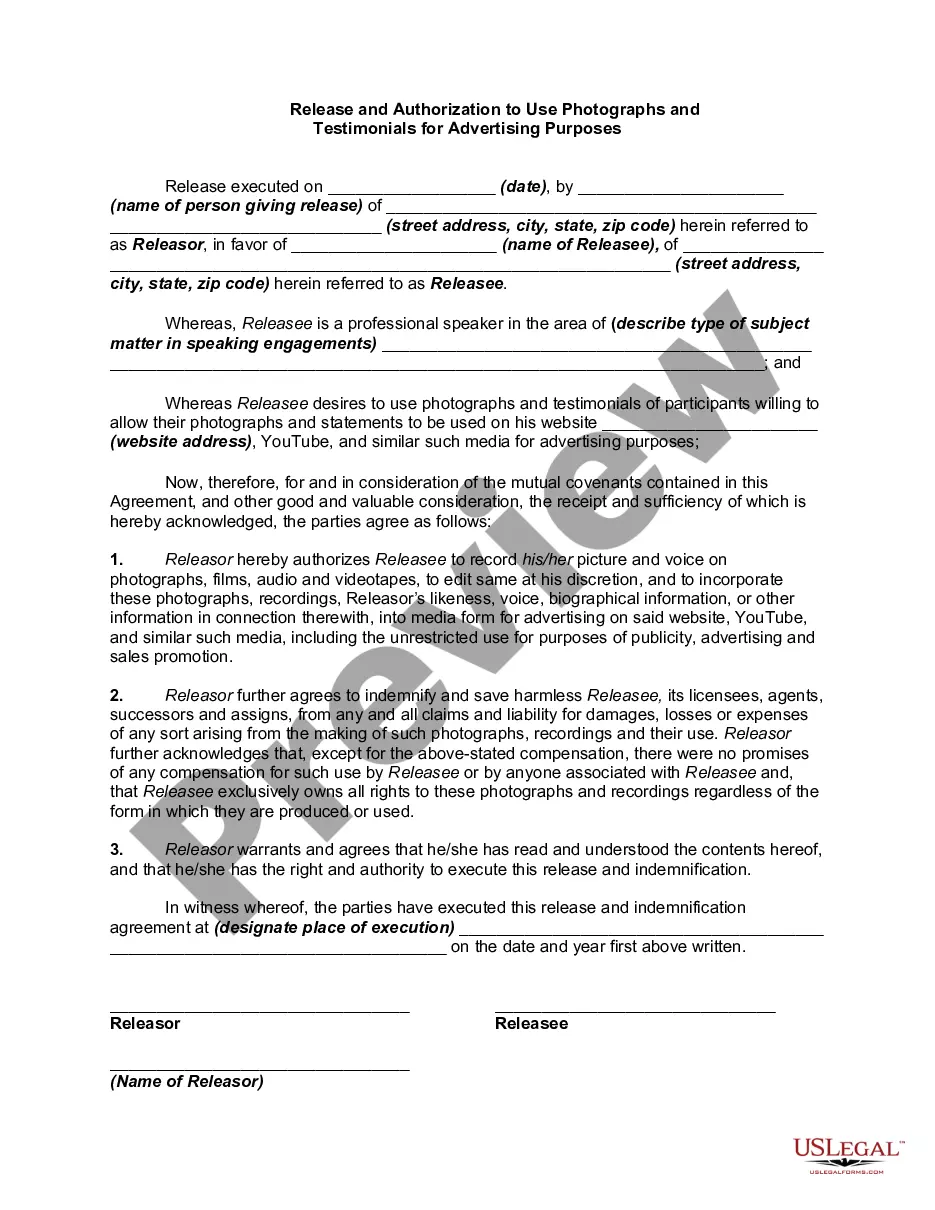
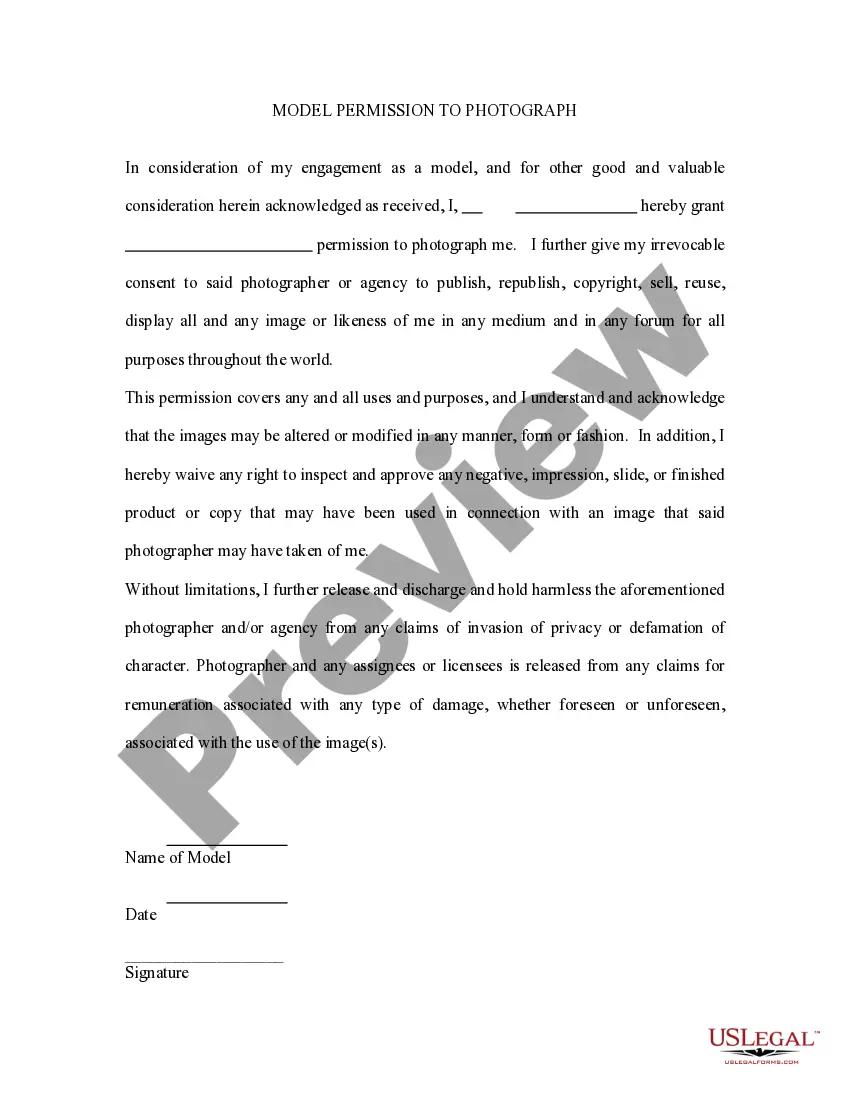
The copyright release for photographs is a legal document that grants permission from the photographer to allow others to use their images without infringing on copyright law. This form is essential for anyone who wishes to formally transfer or relinquish rights associated with specific photographs, ensuring that usage is clear and legally binding. Unlike informal agreements, this copyrighted release document protects both the photographer and the user, specifying the terms of use and eliminating potential disputes over ownership or usage rights.
Form components explained
- Photographer's information: Include the name and contact details of the photographer granting the release.
- Recipient's information: Details about the individual or organization receiving the rights to use the photographs.
- Descriptions of the photographs: Specific titles or descriptions identifying the photographs being released.
- Usage rights granted: Clear statements outlining how the photographs can be used (e.g., commercial, advertising, personal).
- Signatures: Both parties must sign to acknowledge their agreement to the terms of the release.
When this form is needed
This form is useful in various scenarios, such as when a photographer wants to allow a business to use their photos in promotions or advertisements. It's also applicable when photographers collaborate with models or artists and need to clarify the extent of image usage rights. Use this form to avoid confusion regarding ownership and usage terms, ensuring that all parties understand their rights and obligations regarding the photographs involved.
Who this form is for
- Photographers wishing to grant usage rights for their work.
- Businesses or individuals seeking to use photographs in marketing or for other purposes.
- Models or subjects appearing in photographs who wish to release usage rights to respective photographers.
- Organizations that need to clarify and document the use of images in any capacity.
How to prepare this document
- Identify the photographer: Fill in the name and contact details of the photographer granting rights.
- Provide recipient details: Enter the name of the individual or organization receiving permission to use the photographs.
- Describe the photographs: List specific titles or descriptions for the images being released.
- Outline usage rights: Clearly state how the photographs can be used to avoid any ambiguity.
- Collect signatures: Ensure both parties sign the document to make the release legally binding.
Is notarization required?
Notarization is not commonly needed for this form. However, certain documents or local rules may make it necessary. Our notarization service, powered by Notarize, allows you to finalize it securely online anytime, day or night.
Get your form ready online
Our built-in tools help you complete, sign, share, and store your documents in one place.
Make edits, fill in missing information, and update formatting in US Legal Forms—just like you would in MS Word.
Download a copy, print it, send it by email, or mail it via USPS—whatever works best for your next step.
Sign and collect signatures with our SignNow integration. Send to multiple recipients, set reminders, and more. Go Premium to unlock E-Sign.
If this form requires notarization, complete it online through a secure video call—no need to meet a notary in person or wait for an appointment.
We protect your documents and personal data by following strict security and privacy standards.

Make edits, fill in missing information, and update formatting in US Legal Forms—just like you would in MS Word.

Download a copy, print it, send it by email, or mail it via USPS—whatever works best for your next step.

Sign and collect signatures with our SignNow integration. Send to multiple recipients, set reminders, and more. Go Premium to unlock E-Sign.

If this form requires notarization, complete it online through a secure video call—no need to meet a notary in person or wait for an appointment.

We protect your documents and personal data by following strict security and privacy standards.
Avoid these common issues
- Failing to include specific descriptions of the photographs being released.
- Not clearly defining the usage rights, leading to potential misunderstandings.
- Omitting required signatures from either party.
- Using vague language that could create disputes about permissible use.
Advantages of online completion
- Convenient access: Easily download the form at any time from anywhere.
- Editability: Customize the form to fit specific needs or details.
- Legal reliability: Use forms drafted by licensed attorneys to ensure compliance with current laws.
Key takeaways
- It's essential for photographers and users to have a clear understanding of their rights regarding image usage.
- The copyright release form provides legal assurance and protects both parties involved.
- Completing the form correctly is vital; ensure that all necessary details and signatures are included.
Looking for another form?

Form popularity
FAQ
Under copyright law, the photographer owns the copyright and can use it for any editorial use without permission of the person in the picture.
First, Check Creative Commons for Free Use. Not all photographs are copyrighted. Contact Photo's Owner. If the target photograph is under copyright, you must contact the owner first to inquire about usage. Give Payment/Consideration. Obtain Signature. Finally, Use the Photo.
Use business letterhead paper to create the document. State who owns the copyright. Describe and name the images(s) to be released. Explain the release usage.
As the name suggests, the copyright is owned by the public, and images are free for anyone to use, reuse, modify, adapt and distribute. While the images are copyright-free, it's still professional courtesy to attribute the work's original creator whenever possible.
Identify the releasor. Describe the photo, image, likeness, or video. Address any payment the model receives for the release. Address royalties. Address whether the model has the ability to revoke their authorization. The parties sign and date the release.
Identify the releasor. Describe the photo, image, likeness, or video. Address any payment the model receives for the release. Address royalties. Address whether the model has the ability to revoke their authorization. The parties sign and date the release.
It's by no means impossible to use an image that is copyright protected you just need to get a a license or other permission to use it from the creator first. In most cases, using the work either involves licensing an image through a third-party website, or contacting the creator directly.
Copyright in photography means that you own an image you created. The law says you created that image as soon as the shutter is released. The photographer who pushed the button owns the copyright. A photographer will own that copyright throughout their life and 70 years afterwards.
Copyright is a property right. Under the Federal Copyright Act of 1976, photographs are protected by copyright from the moment of creation. According to the U.S. Copyright Office, the owner of the work is generally the photographer or, in certain situations, the employer of the photographer.