Easement for Streets and Roads
Understanding this form
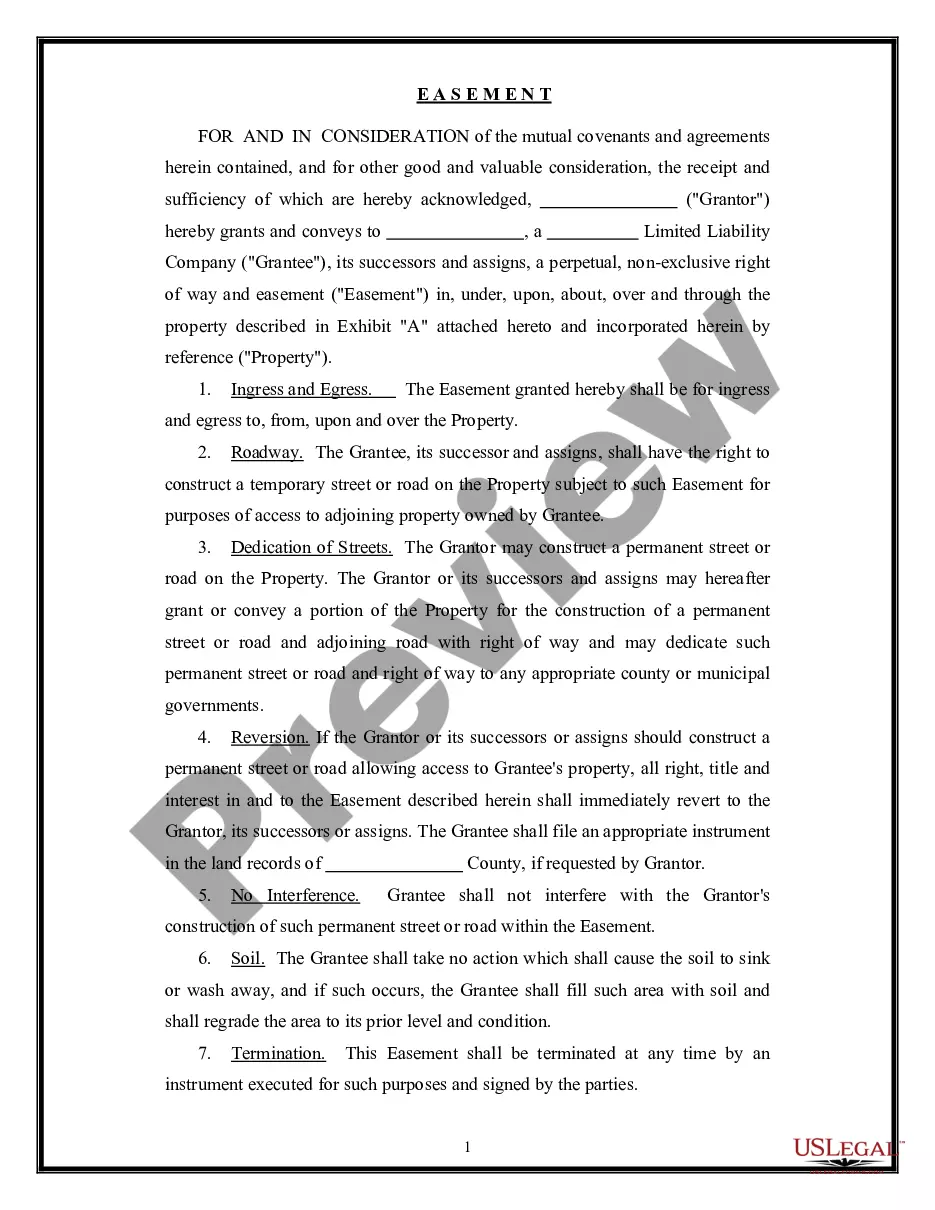
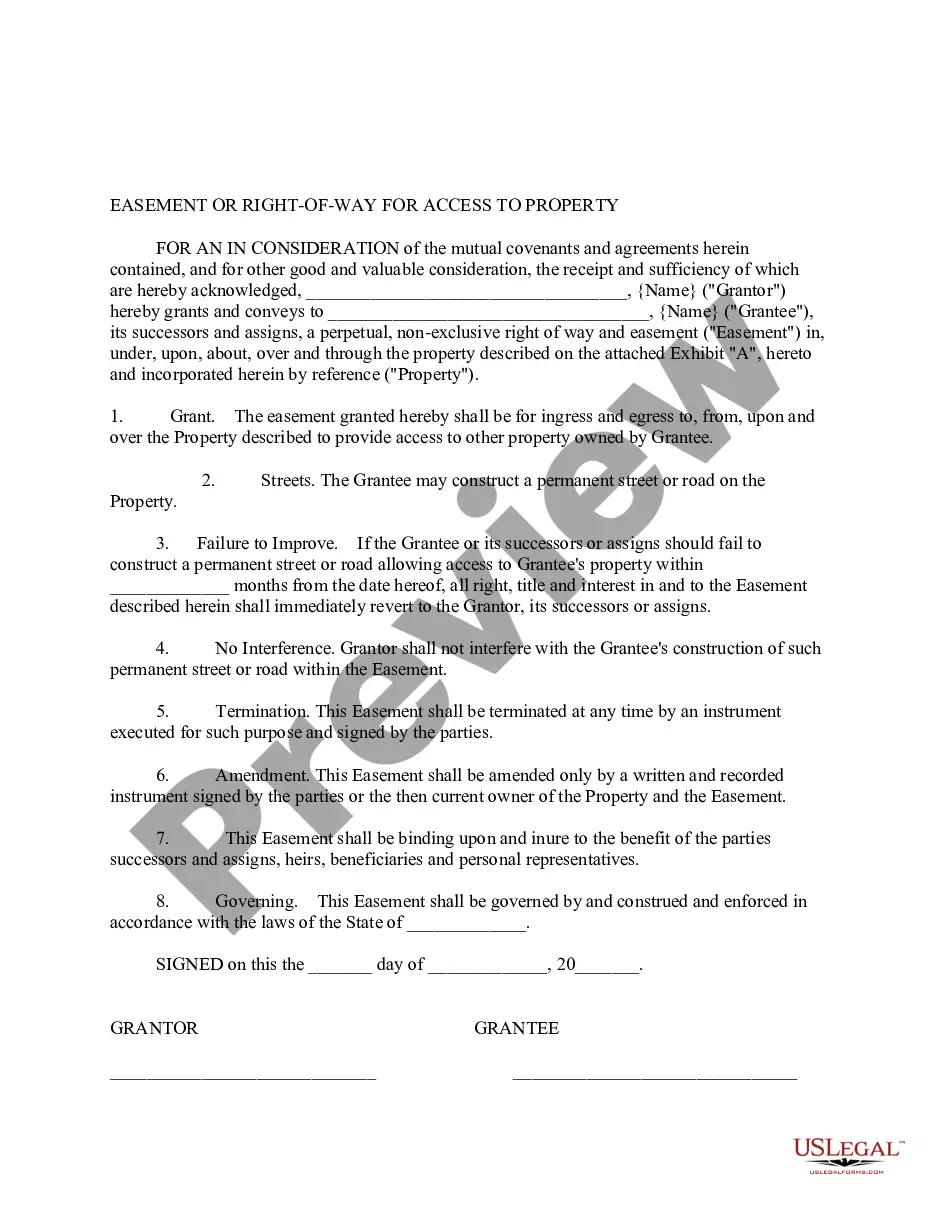
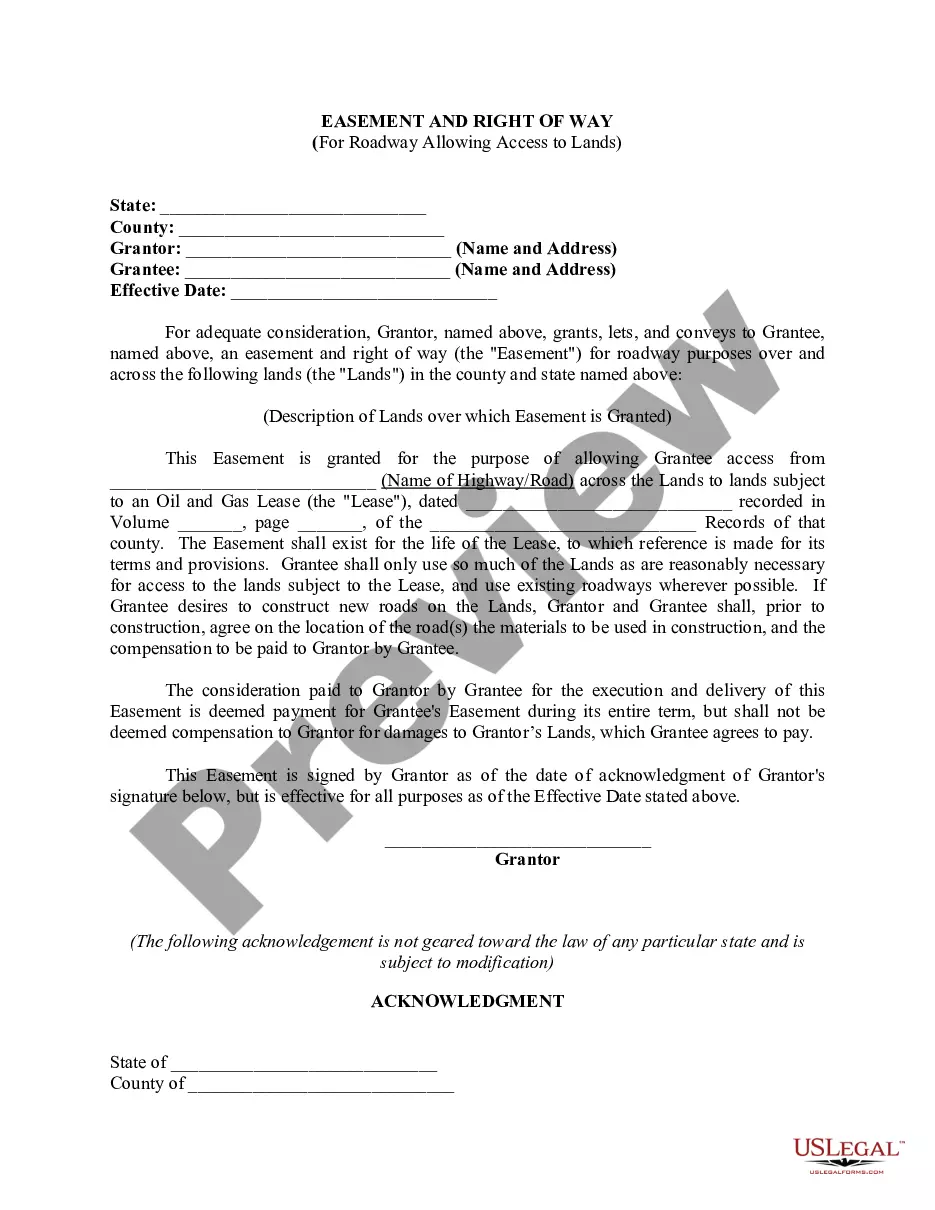
The Easement for Streets and Roads is a legal document that grants a party the right to use a portion of another party's land for street or road access. This form establishes a perpetual, non-exclusive right of way, allowing for both temporary and permanent construction. It is essential for facilitating access to adjoining properties while ensuring that the underlying land rights remain with the property owner.
Key parts of this document
- Ingress and Egress: Specifies the right of access to the property.
- Roadway Construction: Allows the grantee to build temporary streets or roads.
- Permanent Street Dedication: Grants the right to construct and dedicate permanent streets to municipal authorities.
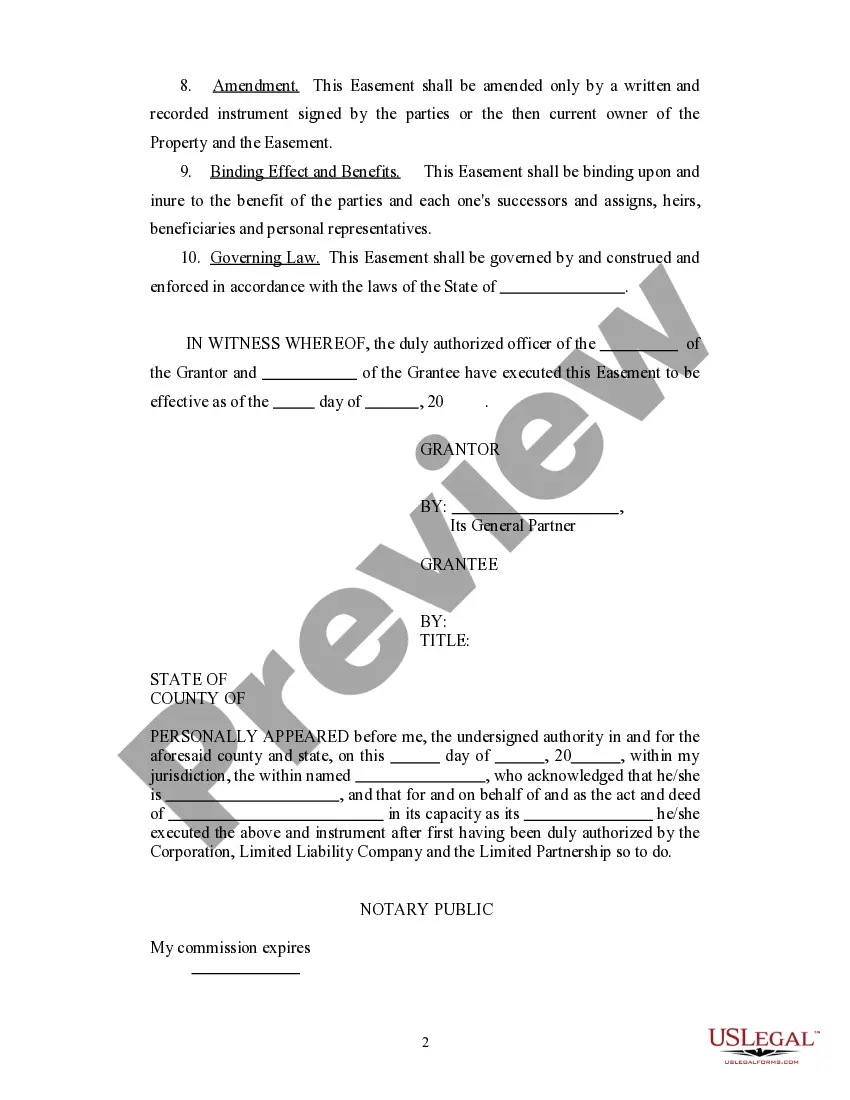
- Termination clause: Describes how the easement can be terminated by an authorized instrument.
- Amendment clause: Outlines the process for modifying the easement.
- Binding Effect: Clarifies that the easement is binding on successors, assigns, and beneficiaries.

When to use this form
This form is used when a property owner wishes to grant another party the right to access their land for the construction of streets or roads. It is particularly useful in scenarios where landlocked properties require access or when infrastructure improvements are being planned that involve multiple landowners.
Who should use this form
- Property owners granting access rights to adjoining land.
- Developers needing to create roads for a new project.
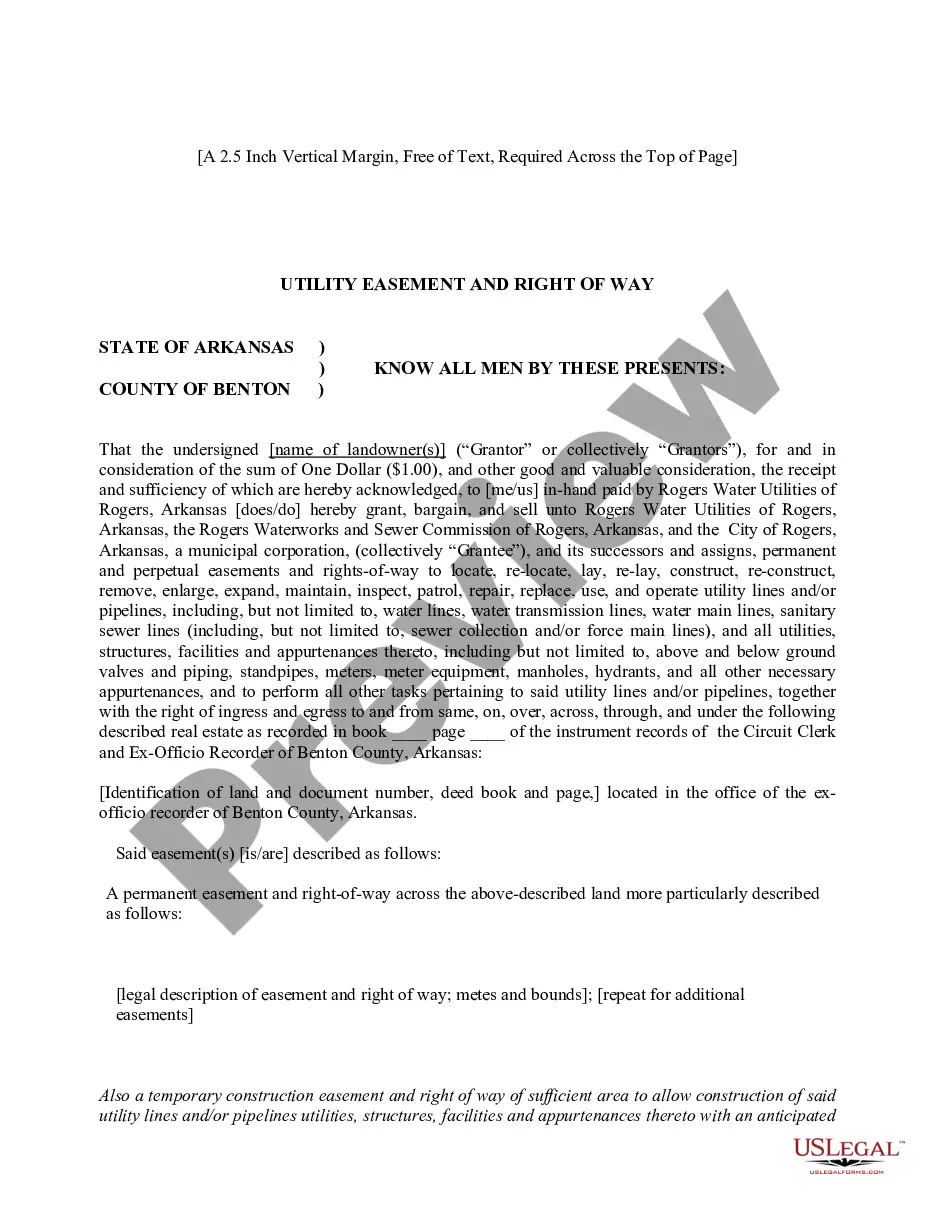
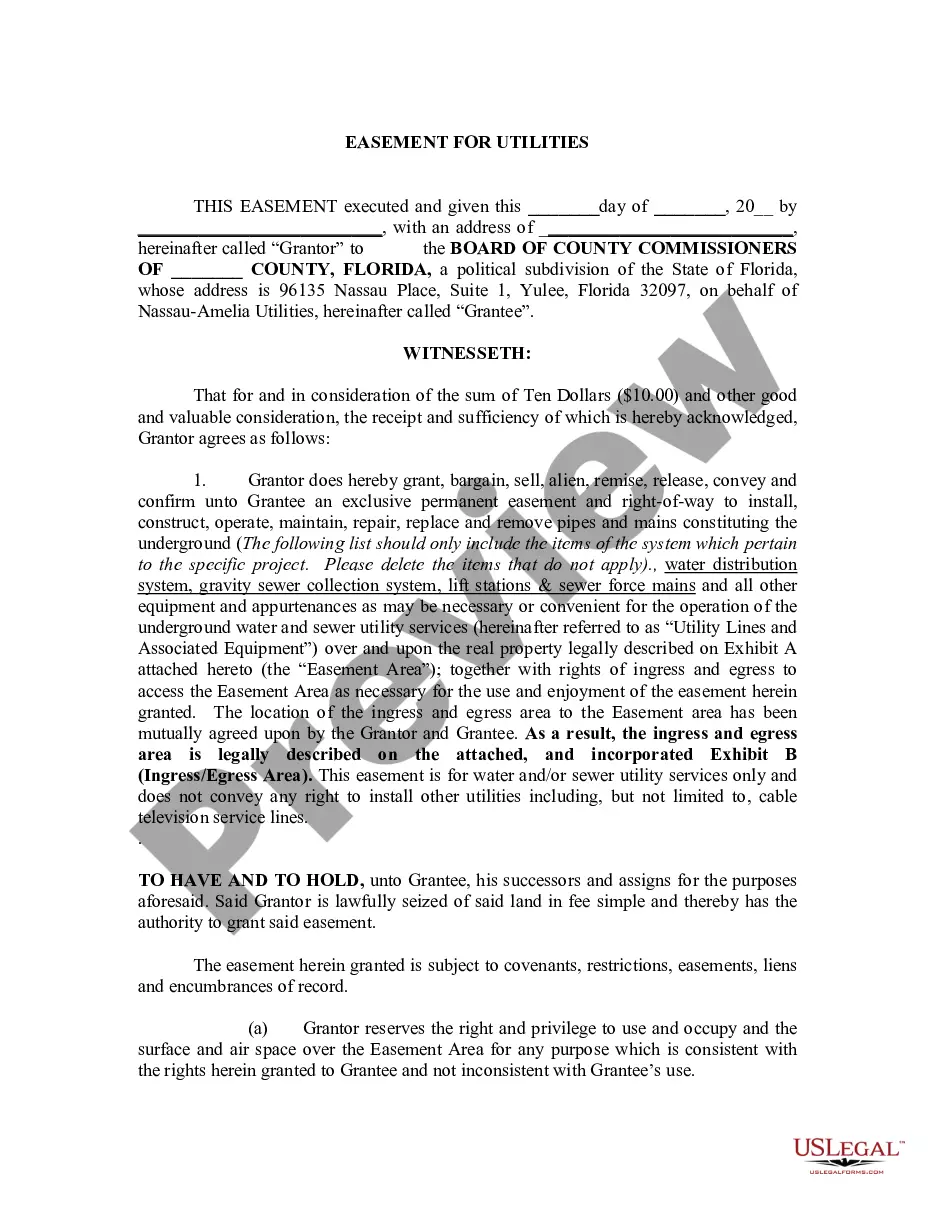
- Utility companies requiring access for installation or maintenance.
- Real estate professionals facilitating property transactions involving easements.
How to complete this form
- Identify the parties involved in the easement.
- Specify the property that the easement will affect.
- Outline terms for construction and maintenance of the road or street.
- Include signatures from all parties and date the document.
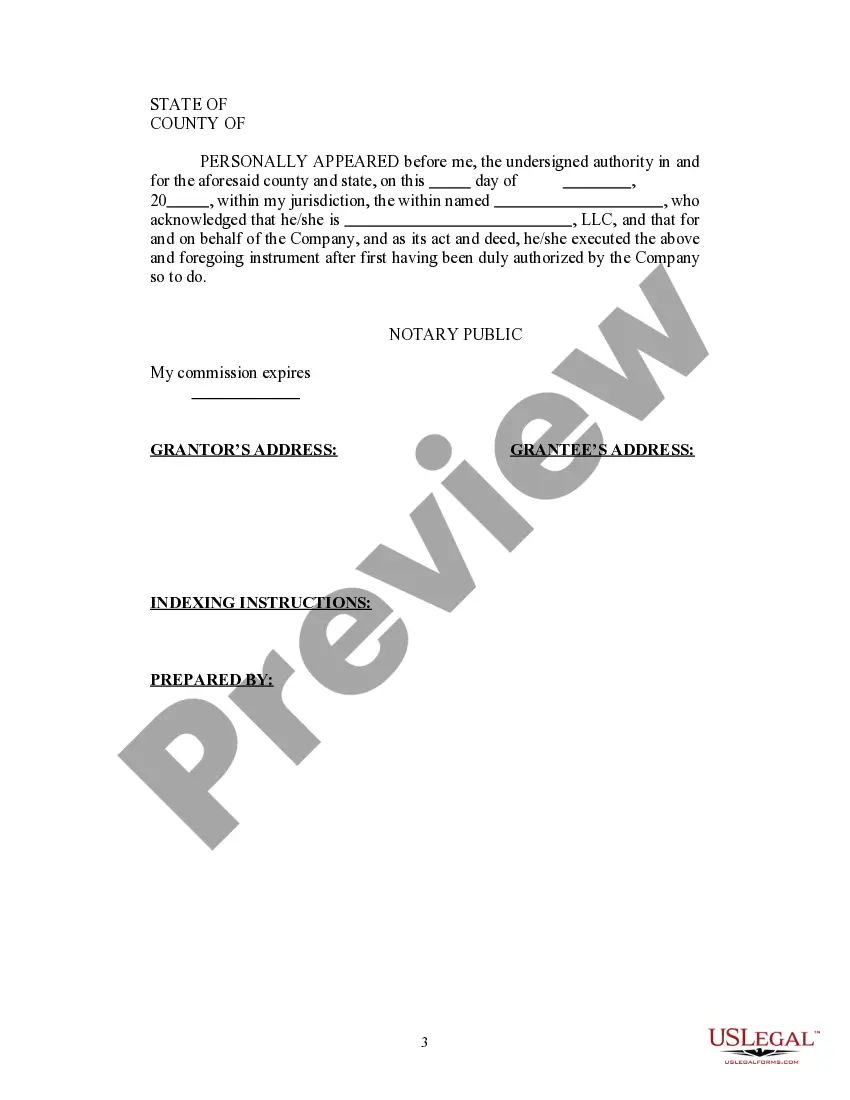
- Record the easement with the appropriate local government office if required.
Does this form need to be notarized?
This document requires notarization to meet legal standards. US Legal Forms provides secure online notarization powered by Notarize, allowing you to complete the process through a verified video call, available 24/7.
Get your form ready online
Our built-in tools help you complete, sign, share, and store your documents in one place.
Make edits, fill in missing information, and update formatting in US Legal Forms—just like you would in MS Word.
Download a copy, print it, send it by email, or mail it via USPS—whatever works best for your next step.
Sign and collect signatures with our SignNow integration. Send to multiple recipients, set reminders, and more. Go Premium to unlock E-Sign.
If this form requires notarization, complete it online through a secure video call—no need to meet a notary in person or wait for an appointment.
We protect your documents and personal data by following strict security and privacy standards.

Make edits, fill in missing information, and update formatting in US Legal Forms—just like you would in MS Word.

Download a copy, print it, send it by email, or mail it via USPS—whatever works best for your next step.

Sign and collect signatures with our SignNow integration. Send to multiple recipients, set reminders, and more. Go Premium to unlock E-Sign.

If this form requires notarization, complete it online through a secure video call—no need to meet a notary in person or wait for an appointment.

We protect your documents and personal data by following strict security and privacy standards.
Common mistakes
- Failing to clearly define the boundaries of the easement.
- Not including all necessary signatures from the parties involved.
- Neglecting to specify the intended use of the easement.
- Overlooking local recording requirements for validity.
Why complete this form online
- Access legal forms instantly without needing to visit a lawyer.
- Edit and customize the document according to specific project needs.
- Ensure compliance with legal standards and terminology.
Legal use & context
- Easements create legal access rights and are enforceable in court.
- They should clearly state the purpose to avoid future disputes.
- Local laws may impact easement conditions and enforceability.
What to keep in mind
- An easement for streets and roads allows access for various uses.
- Proper completion and recording are crucial for legal validity.
- Understanding the specific terms and conditions can prevent disputes.
Looking for another form?
Form popularity
FAQ
A road easement gives you the right to access a part of someone else's property to enter and exit your own. They are commonly given to property owners with landlocked property, which means they would be unable to reach their property without a road easement.
Easements can be created in a variety of ways. They can be created by an express grant, by implication, by necessity, and by adverse possession.
Easement holders have the right to use the land to their enjoyment as long as it does not place an unreasonable burden on the servient estate. Landowners have the right to make whatever use of the land as long as it doesn't unduly affect the easement.
Benefits the owner of adjacent land. The easement is thus appurtenant to the holder's land. The benefited land is called the dominant tenementThe land that benefits from an easement., and the burdened landthat is, the land subject to the easementis called the servient tenement.
Rights of way (similar to the driveway example, but also including walkways or pathways); Public utilities, such as gas, electricity or water and sewer mains; Parking areas; Access to light and air; and. Shared walls.
When you're buying a house, you might find out that the property has an easement on it. Essentially this means that someone other than you could have access to the land. This isn't necessarily a bad thing. For example, utility companies typically hold easements in case they need to access pipes or cables.
An easement may be created by means of an appropriate dealing registered in NSW LRS or by the inclusion in a Section 88B instrument lodged with a new deposited plan.
An access easement is a right to pass over someone else's property for you guessed it access. A private road also provides access to one's land.Generally, only a limited number of people may use an access easement.