Bill of Lading
About this form
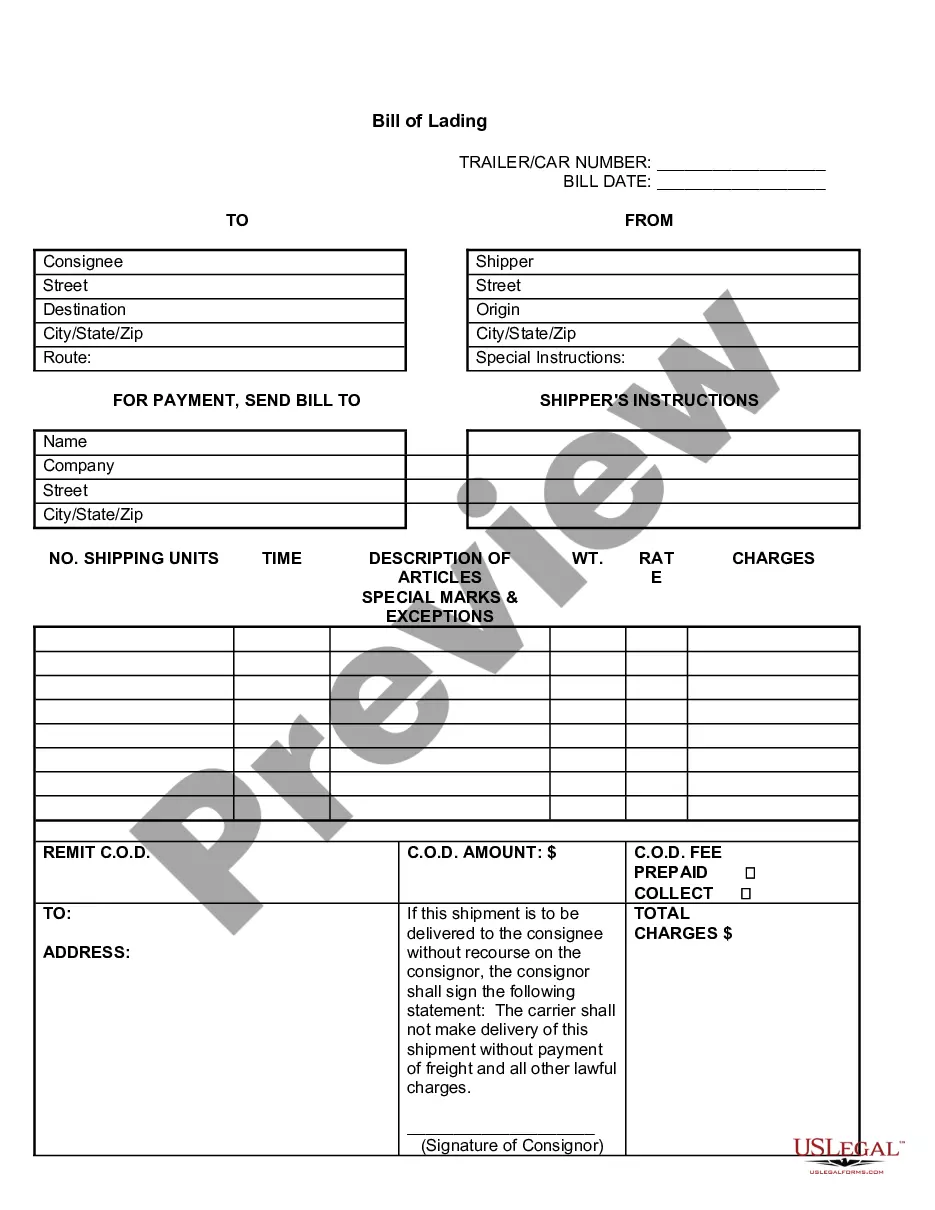
The Bill of Lading is a legal document that serves as a receipt of goods transferred between a shipper and a carrier. It details the type, quantity, and destination of the goods being shipped, distinguishing it from other transportation documents by its role in the transfer of ownership. This form is essential for both parties in a shipping agreement as it provides proof of the contract and outlines terms for transportation.
What’s included in this form
- Trailer/Car number
- Bill date
- Consignee and shipper details
- Destination and origin details
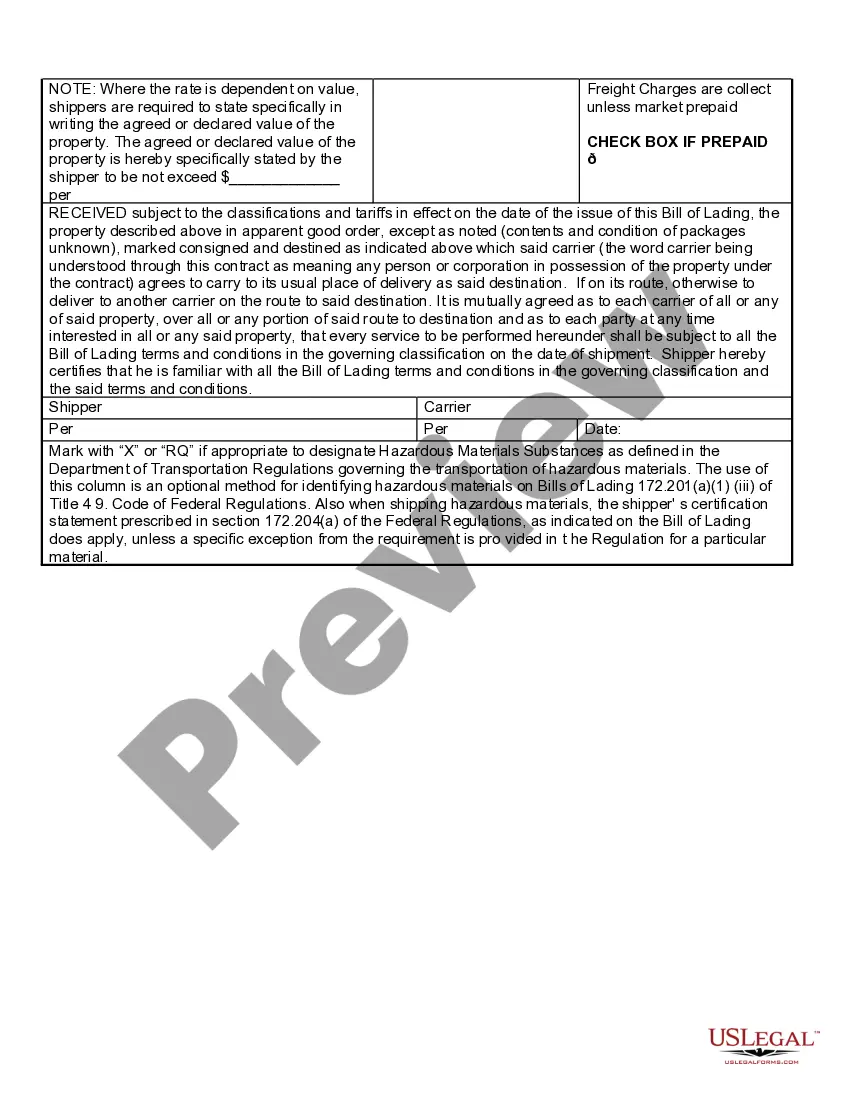
- Description of articles, including hazardous materials
- Freight charges and payment instructions
- Signature of consignor
Common use cases
This form should be used whenever goods are transported from one location to another, especially in commercial shipping scenarios. It's particularly important for businesses that engage in shipping bulk items, hazardous materials, or require a formal agreement between the shipper and the carrier regarding shipping conditions.
Who this form is for
- Shippers sending goods to customers
- Carriers transporting goods for businesses
- Consignees receiving goods
- Businesses involved in logistics and distribution
Completing this form step by step
- Identify the trailer/car number and the bill date.
- Fill in the consignee and shipper details, including addresses.
- Clearly describe the articles being shipped and indicate any special instructions.
- Specify the freight charges, including whether the payment is prepaid or collect.
- Ensure the consignor signs the document, confirming the shipping details.
- If shipping hazardous materials, mark the appropriate section as required.
Does this form need to be notarized?
This form does not typically require notarization unless specified by local law. However, ensuring that all parties understand the terms and conditions outlined is crucial for its enforceability.
Get your form ready online
Our built-in tools help you complete, sign, share, and store your documents in one place.
Make edits, fill in missing information, and update formatting in US Legal Forms—just like you would in MS Word.
Download a copy, print it, send it by email, or mail it via USPS—whatever works best for your next step.
Sign and collect signatures with our SignNow integration. Send to multiple recipients, set reminders, and more. Go Premium to unlock E-Sign.
If this form requires notarization, complete it online through a secure video call—no need to meet a notary in person or wait for an appointment.
We protect your documents and personal data by following strict security and privacy standards.

Make edits, fill in missing information, and update formatting in US Legal Forms—just like you would in MS Word.

Download a copy, print it, send it by email, or mail it via USPS—whatever works best for your next step.

Sign and collect signatures with our SignNow integration. Send to multiple recipients, set reminders, and more. Go Premium to unlock E-Sign.

If this form requires notarization, complete it online through a secure video call—no need to meet a notary in person or wait for an appointment.

We protect your documents and personal data by following strict security and privacy standards.
Typical mistakes to avoid
- Leaving out key details about the goods being shipped.
- Not signing the Bill of Lading as required.
- Failing to specify freight charges accurately.
- Omitting special instructions for the carrier.
Why use this form online
- Convenience of accessing and downloading the document from anywhere.
- Editability to customize the form for specific shipping needs.
- Reliable templates prepared by licensed attorneys ensure legal validity.
Legal use & context
- The Bill of Lading serves as an enforceable contract between the parties involved in a shipment.
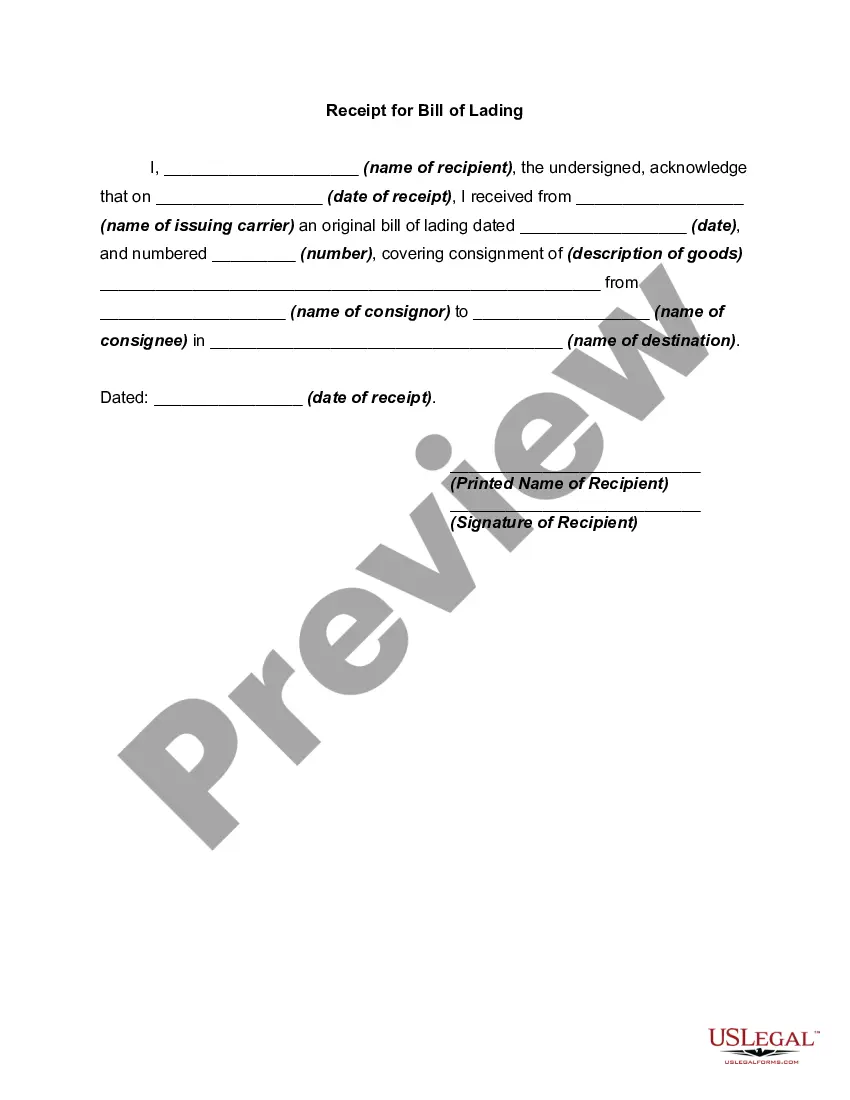
- It functions as a receipt, providing proof that goods were loaded onto a specific mode of transport.
- It is essential documentation for claims against liability for lost or damaged goods.
Quick recap
- The Bill of Lading is crucial for shipping goods legally and efficiently.
- Accurate completion ensures clarity and protects the rights of both shippers and carriers.
- Use this form to establish terms of transport and to facilitate payment for services rendered.
Looking for another form?

Form popularity
FAQ
Definition: Bill of lading (BOL) is one of the most important documents in the shipping process.A completed BOL legally shows that the carrier has received the freight as described and is obligated to deliver that freight in good condition to the consignee.
The contract between the carrier and the shipper is already created before issuing the bill of lading when the cargo is loaded on the ship. This is done to safeguard the shipper in case the cargo is damaged before loading it on board the vessel and to help the shipper in the claim process.
An example of a bill of lading is the form that is provided by a moving company to a third-party carrier, which will be delivering store fixtures for them to a retail location.The third-party then hands the bill of lading over to the store as a receipt for the goods, once the delivery has been made.
A Bill of Lading is a receipt for the cargo, which contains all the pertinent information for the shipment.It includes the shipper/consignee information, container numbers, seals, piece counts, weights, and more. Without the Bill of Lading, the cargo cannot be released.
A Bill of Lading is a receipt for the cargo, which contains all the pertinent information for the shipment.It includes the shipper/consignee information, container numbers, seals, piece counts, weights, and more. Without the Bill of Lading, the cargo cannot be released.
The bill of lading (B/L) outlines the journey of your cargo from the origin to the destination. This is issued by a carrier to a shipper to detail the method and path of a shipment, and is used as a contract for the movement of the cargo.
The carrier issues bill of lading by confirming receipt of cargo from shipper/exporter, once after receipt of 'let export' order delivered by shipper's customs house agent. Now, the cargo is under the custody of carrier and he has been permitted to move the cargo to foreign destination.