Verbal Warning Letter or Memo
Overview of this form
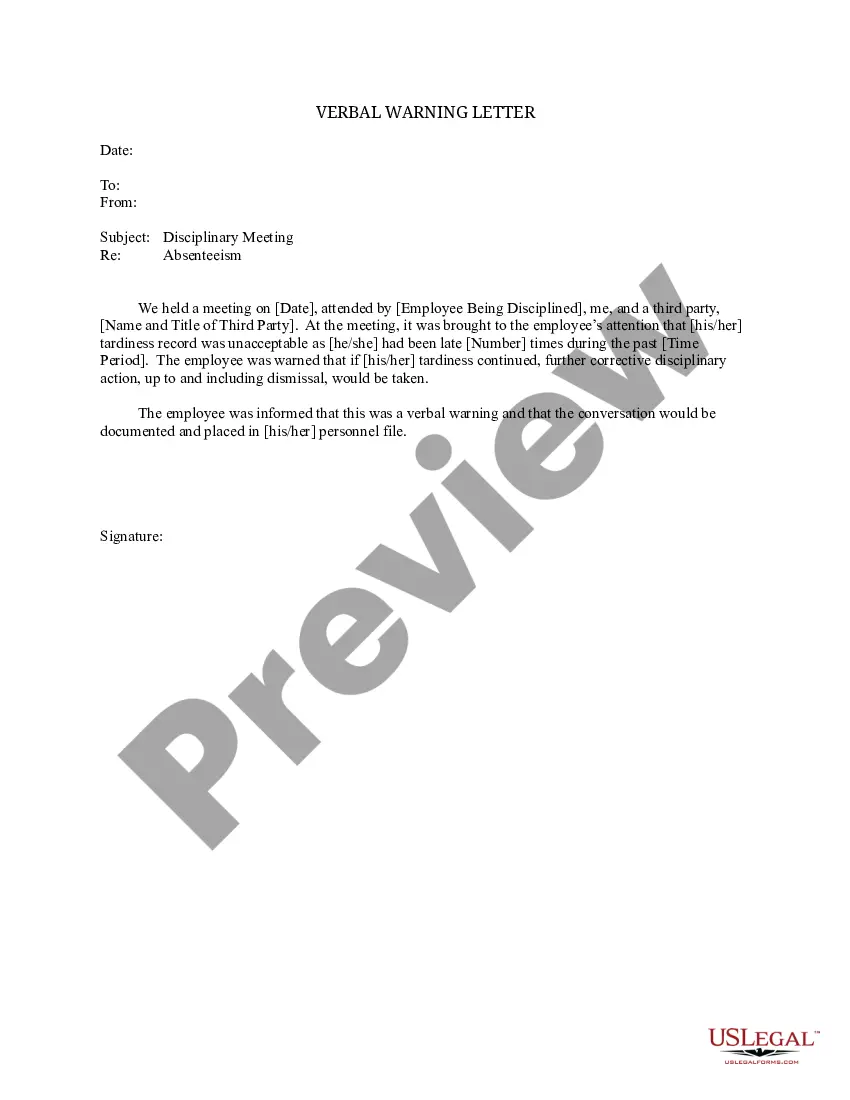
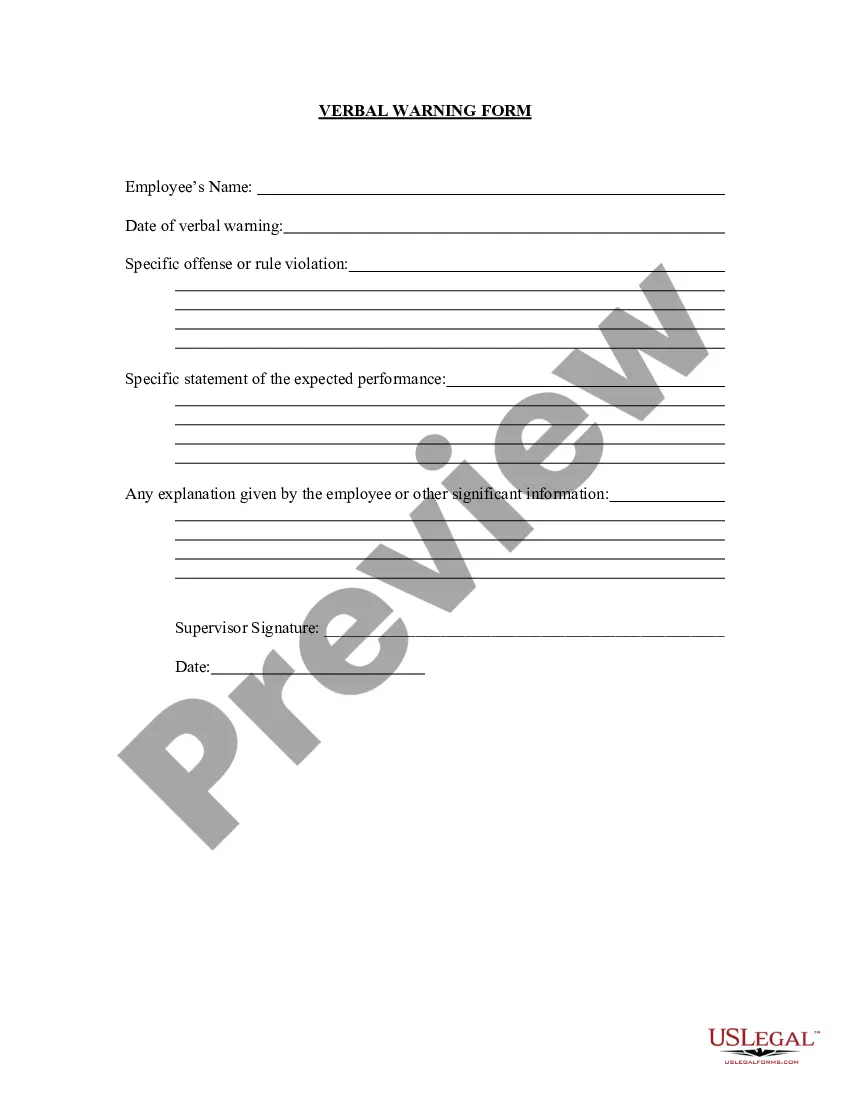
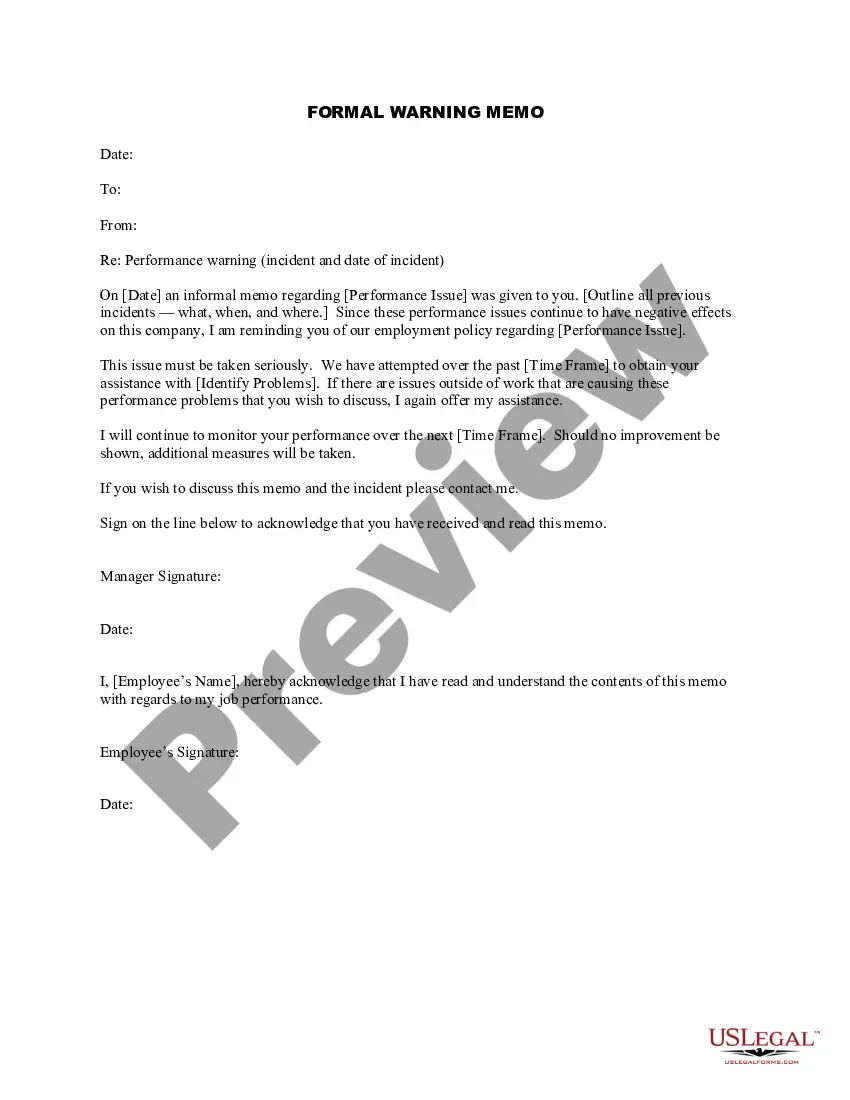
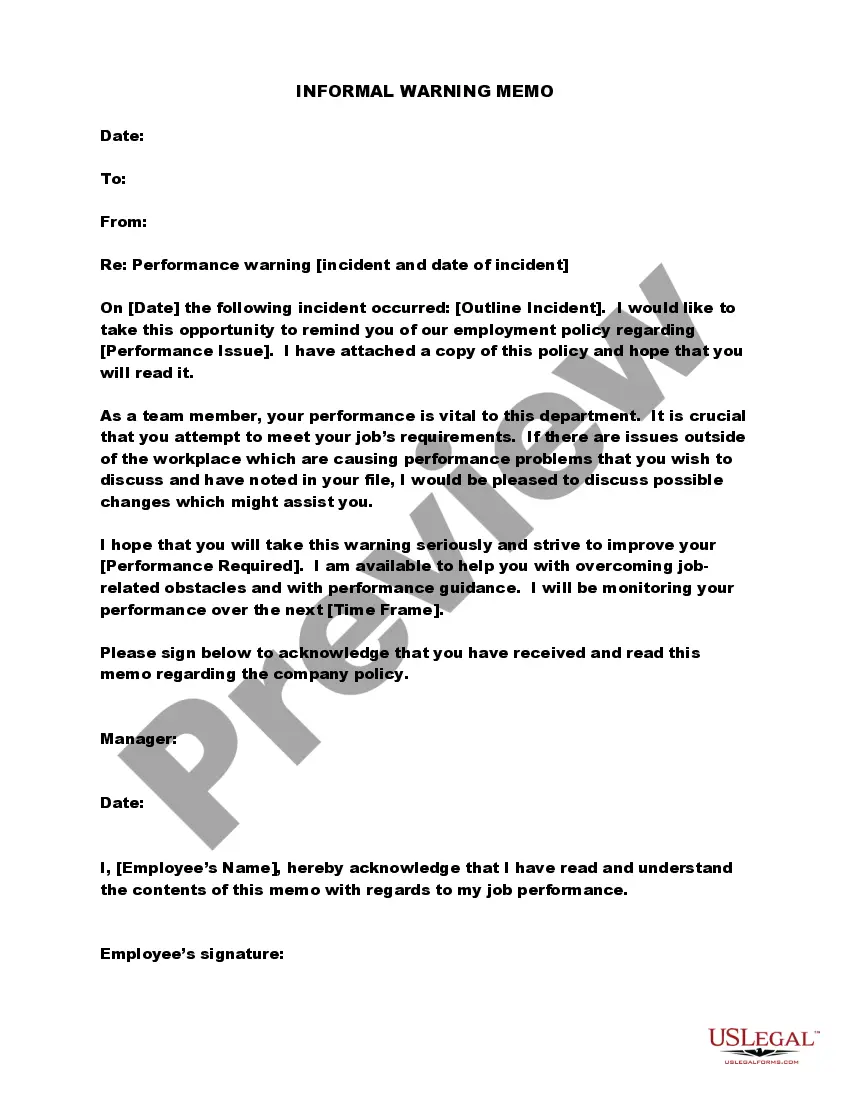
A verbal warning letter or memo is a formal document used by employers to record the issuance of a verbal warning to an employee after an in-person meeting. This letter serves as a record of the conversation between the manager and the employee regarding unsatisfactory behavior or performance. It differs from other disciplinary documents in that it specifically addresses a verbal warning rather than written warnings or terminations, providing a clear trail of communication and follow-up actions within workplace disciplinary processes.
What’s included in this form
- Date of the warning issue.
- Names and titles of the parties involved in the meeting.
- Details of the behavior or performance issues discussed.
- Consequences of failing to improve, including potential further action.
- Space for signatures of the involved parties.
Situations where this form applies
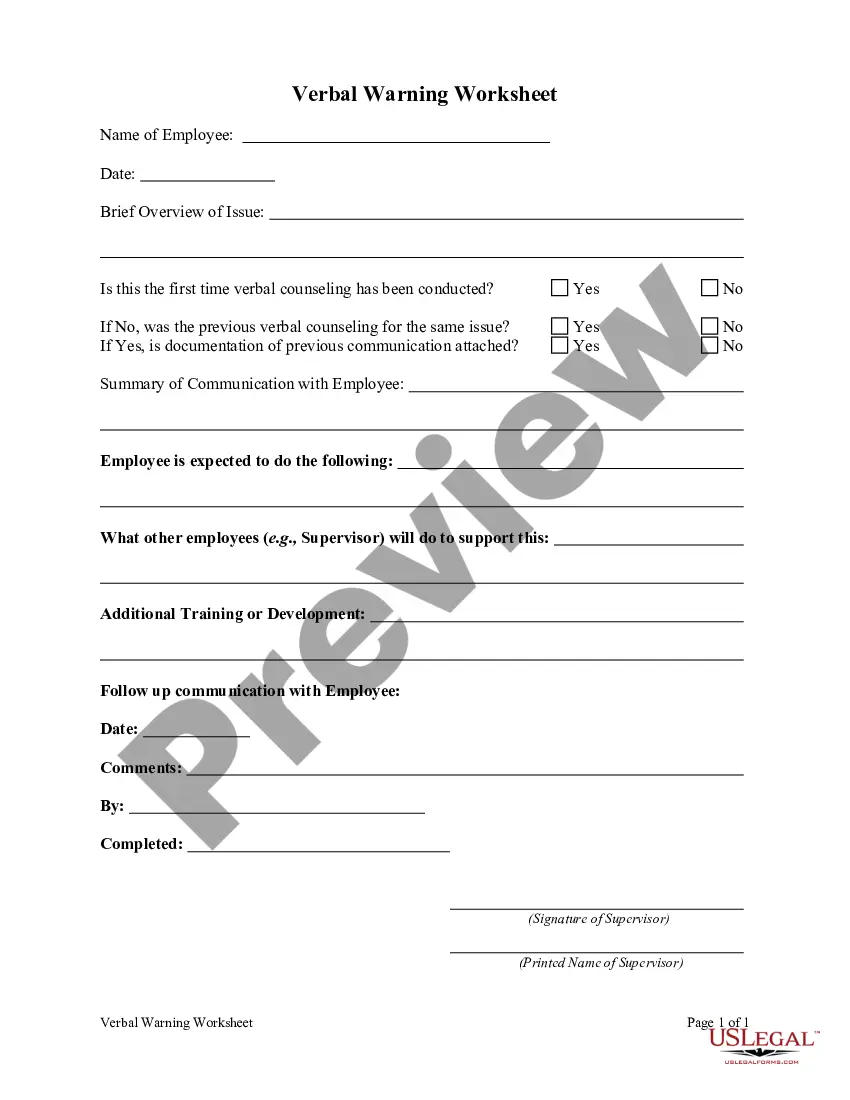
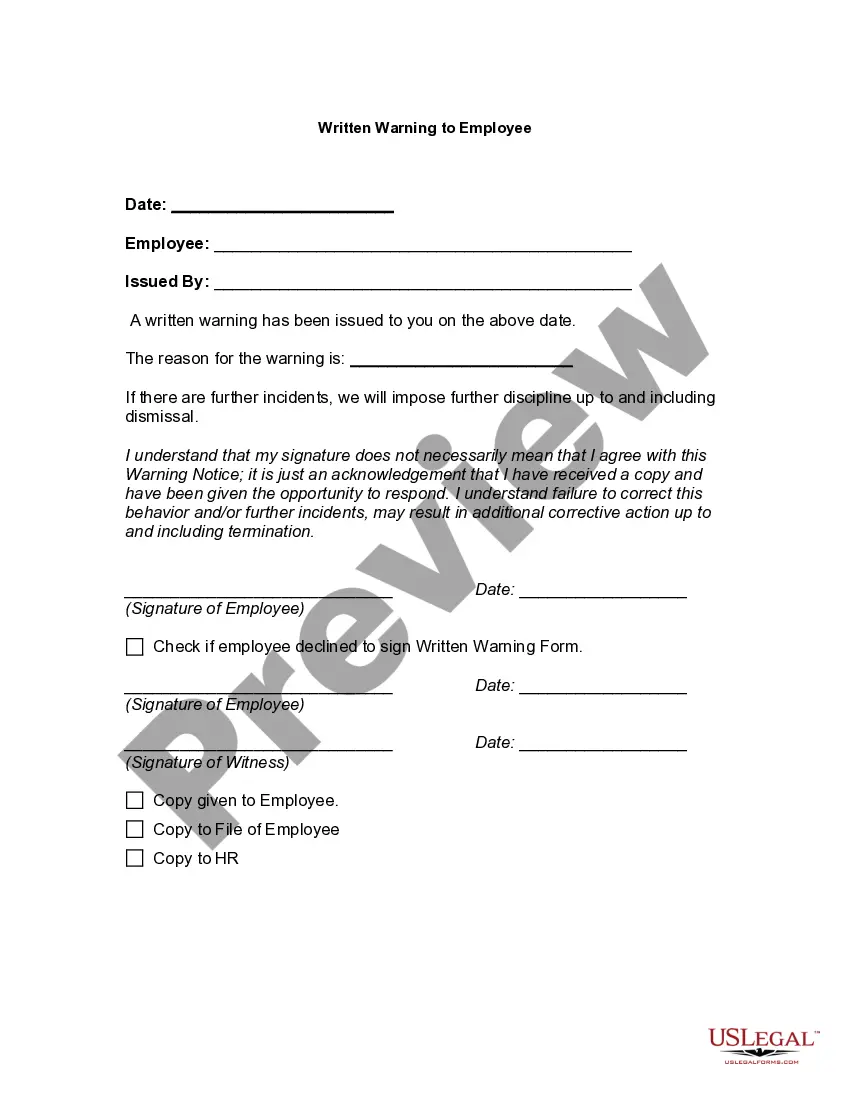
This form should be used after a verbal warning has been discussed with the employee. It is essential in situations where an employee's performance, such as tardiness or failure to meet job standards, needs to be officially documented. Using this form can help clarify expectations and implications moving forward, ensuring that the employee understands the need for improvement and the potential consequences of continued issues.
Who should use this form
- Employers and managers conducting performance evaluations.
- HR professionals managing employee relations and compliance.
- Supervisors needing to document disciplinary procedures.
How to prepare this document
- Enter the date on which the warning is issued.
- Include the names of the participant parties in the meeting.
- Detail the specific performance issues discussed during the meeting.
- Outline the consequences if performance does not improve.
- Both the manager and the employee should sign the document to acknowledge receipt.
Is notarization required?
This form does not typically require notarization unless specified by local law.
Get your form ready online
Our built-in tools help you complete, sign, share, and store your documents in one place.
Make edits, fill in missing information, and update formatting in US Legal Forms—just like you would in MS Word.
Download a copy, print it, send it by email, or mail it via USPS—whatever works best for your next step.
Sign and collect signatures with our SignNow integration. Send to multiple recipients, set reminders, and more. Go Premium to unlock E-Sign.
If this form requires notarization, complete it online through a secure video call—no need to meet a notary in person or wait for an appointment.
We protect your documents and personal data by following strict security and privacy standards.

Make edits, fill in missing information, and update formatting in US Legal Forms—just like you would in MS Word.

Download a copy, print it, send it by email, or mail it via USPS—whatever works best for your next step.

Sign and collect signatures with our SignNow integration. Send to multiple recipients, set reminders, and more. Go Premium to unlock E-Sign.

If this form requires notarization, complete it online through a secure video call—no need to meet a notary in person or wait for an appointment.

We protect your documents and personal data by following strict security and privacy standards.
Typical mistakes to avoid
- Failing to document the specifics of the conversation.
- Not including dates or signatures, which are critical for validation.
- Using vague language that does not clearly state the issues at hand.
Benefits of completing this form online
- Convenience of instant access and downloading.
- Editability to customize the letter according to specific needs.
- Reliability by utilizing templates drafted by licensed attorneys.
Legal use & context
- This form acts as evidence of the warning in case of future disputes.
- Proper documentation can help protect employers from potential legal issues concerning wrongful termination or discrimination claims.
What to keep in mind
- A verbal warning letter is critical for documenting employee discipline.
- Clear documentation can prevent misunderstandings about performance expectations.
- Using standardized forms can enhance the professionalism and consistency of HR practices.
Looking for another form?


Form popularity
FAQ
A verbal warning should definitely be documented. Employers should keep the documentation of the verbal warning in their informal notes, and you as the employee should sign the documentation to indicate that you have received it.
The purpose of a verbal warning is to inform the employee of his/her performance or behavioural issue and thereby give an opportunity to correct him/her. A written warning is issued to inform the consequences if the said behaviour or performance issue is not corrected or improved within a specific period.
A verbal warning doesn't go on any record.A verbal warning does not go on your record for speeding. The State needs a written record of your citation to go on your record.
Should a verbal warning be confirmed in writing? It is advisable to confirm a verbal warning in writing for your records and to support any resulting or related disciplinary action against the employee.
Communication, whether verbal or written, is considered to be an integral factor in the business world. Although many would prefer verbal communication, a lot of business experts consider written communication as more effective.
The point is that, while most employers will indeed give you a verbal warning before a written warning, they don't technically have to.If the work or behavior does not improve or change, the employer may issue a written warning stating that the employee may be terminated if they do not make improvements or changes.
Unlike initial letters of concern, or an informal verbal warning, which have no real recognition in law, a verbal warning is formal. This means details of what you did discuss with your employee should go on their employment file. After you do this, you should also provide them with a copy.
A memo uses informal tone and is straight to the point. On the other extreme, letters are very formal and contain lots of information. The use of memorandum is internal to the organisation, in the sense that it is exchanged between two departments, or units or sent by the manager to inform subordinates.
Take the employee into a private room. State what the issue is. Discuss the changes they should make. Provide a timeframe for correction. State consequences.