Formal Warning Memo
What this document covers
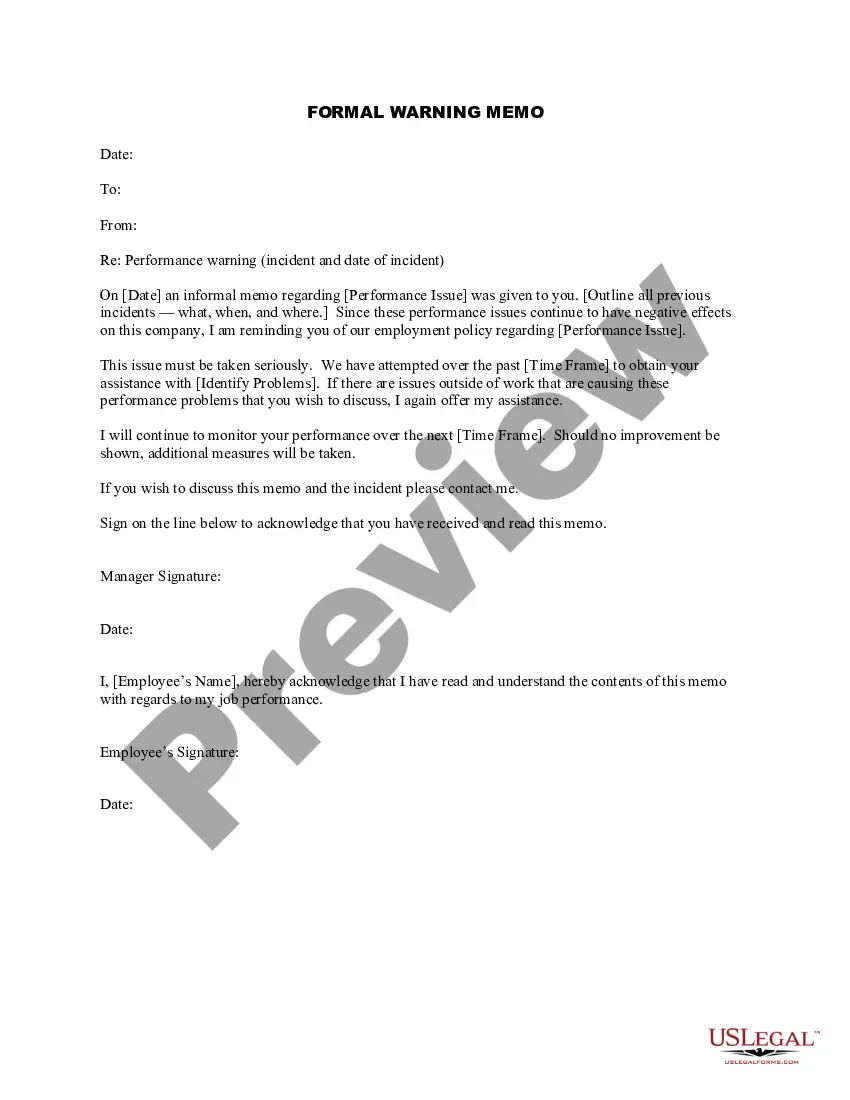
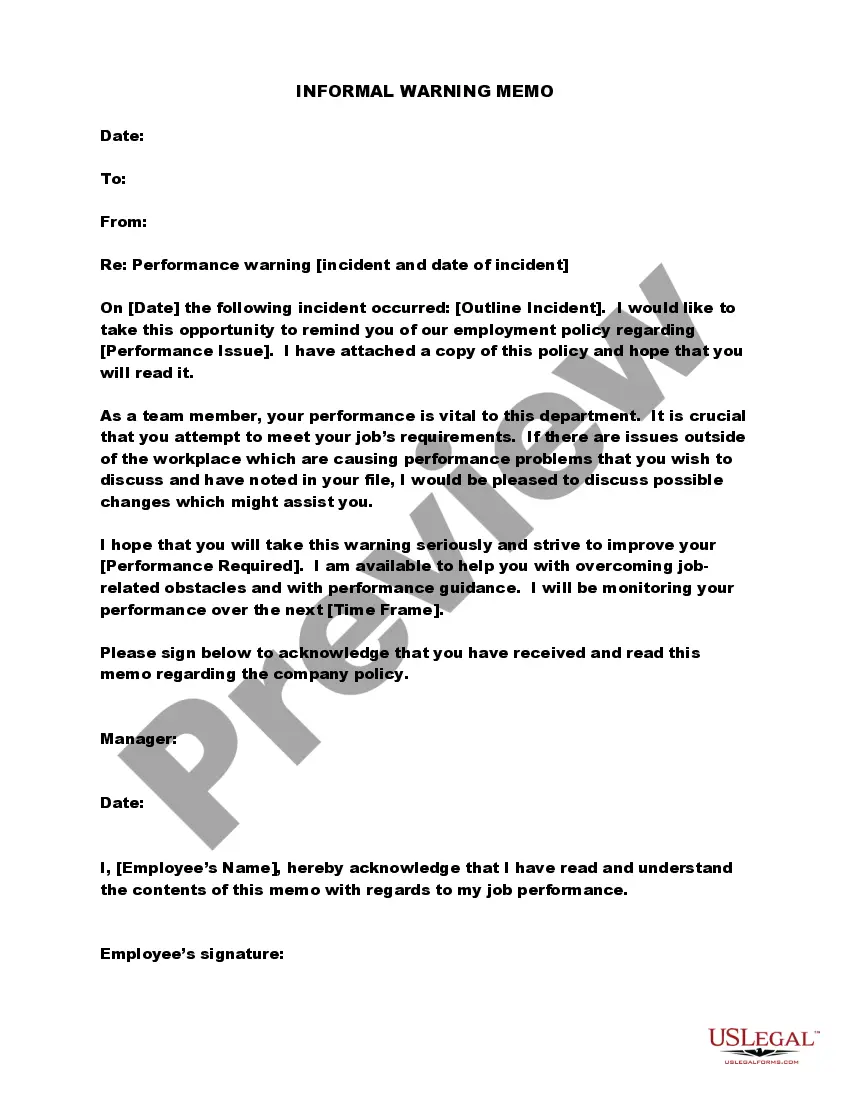
The Formal Warning Memo is a structured document used by employers to formally address ongoing performance issues with an employee after they have received an informal warning. This memo serves as an official record of the company's concerns and expectations, providing a clear pathway for the employee to improve their performance.
Key components of this form
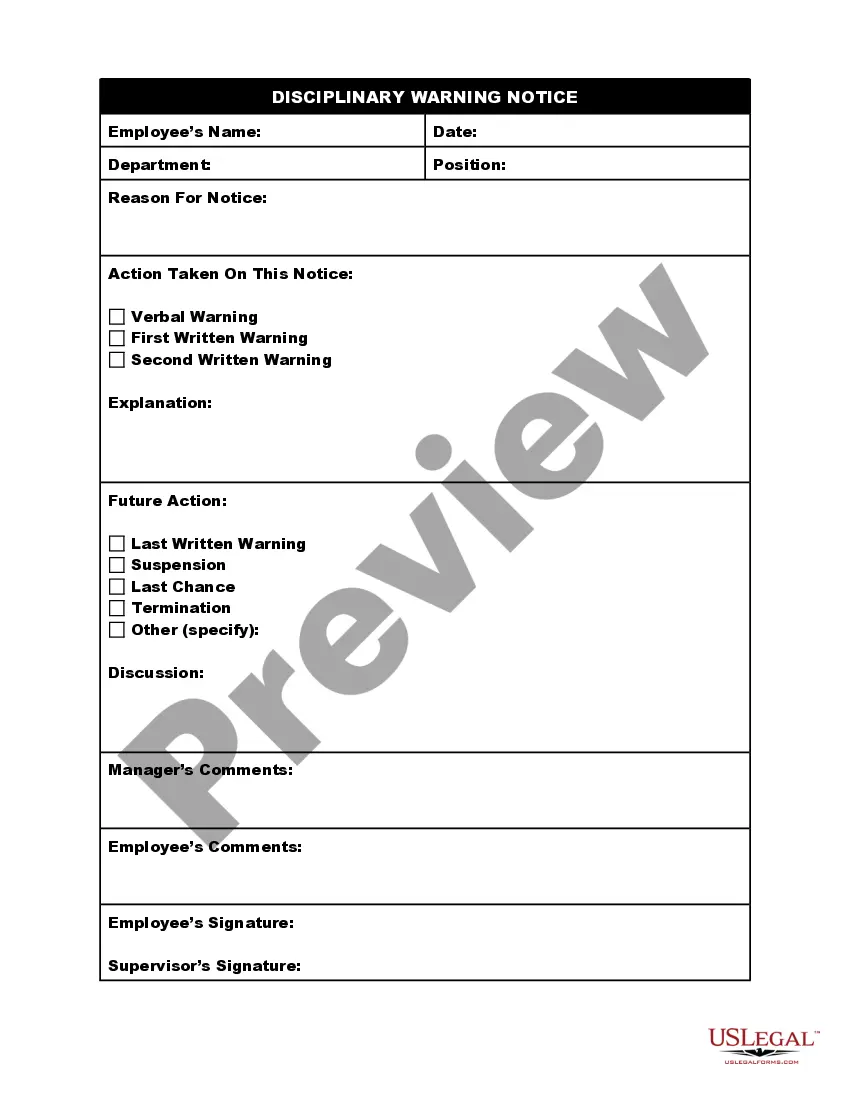
- Date: The date the memo is issued.
- Sender and Recipient Information: Space for the names and titles of both the manager and the employee.
- Incident Details: A section to outline specific performance issues, incidents, and dates.
- Performance Expectations: Clear statements regarding the company's expectations for improvement and the timeline for achieving it.
- Acknowledgment Line: A section for the employee to sign, confirming they have received and understood the warning.
When to use this form
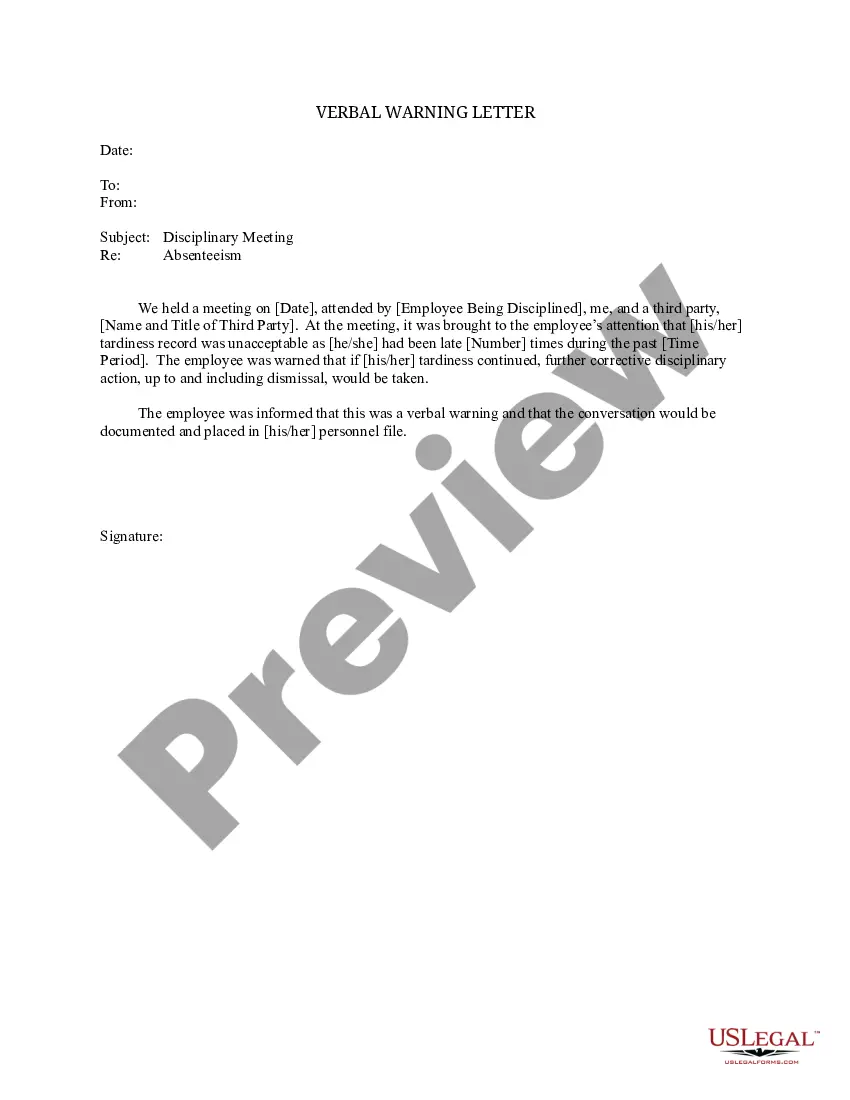
The Formal Warning Memo should be used when an employee continues to exhibit performance problems after having received prior informal warnings. This document is crucial for establishing a formal record before any potential disciplinary actions or termination might take place. It serves as a final opportunity for the employee to address the issues raised.
Who this form is for
- Human resources personnel managing employee performance.
- Managers who have observed ongoing issues with an employee's performance.
- Employers seeking to comply with company policies regarding employee management.
How to complete this form
- Fill in the date of the memo.
- Enter the names and titles of both the manager and employee.
- Detail the incidents and performance issues, including what occurred and when.
- Clearly state the performance expectations and timeframe for improvement.
- Have the employee sign the acknowledgment line to confirm receipt of the memo.
Does this form need to be notarized?
This form usually doesn’t need to be notarized. However, local laws or specific transactions may require it. Our online notarization service, powered by Notarize, lets you complete it remotely through a secure video session, available 24/7.
Get your form ready online
Our built-in tools help you complete, sign, share, and store your documents in one place.
Make edits, fill in missing information, and update formatting in US Legal Forms—just like you would in MS Word.
Download a copy, print it, send it by email, or mail it via USPS—whatever works best for your next step.
Sign and collect signatures with our SignNow integration. Send to multiple recipients, set reminders, and more. Go Premium to unlock E-Sign.
If this form requires notarization, complete it online through a secure video call—no need to meet a notary in person or wait for an appointment.
We protect your documents and personal data by following strict security and privacy standards.

Make edits, fill in missing information, and update formatting in US Legal Forms—just like you would in MS Word.

Download a copy, print it, send it by email, or mail it via USPS—whatever works best for your next step.

Sign and collect signatures with our SignNow integration. Send to multiple recipients, set reminders, and more. Go Premium to unlock E-Sign.

If this form requires notarization, complete it online through a secure video call—no need to meet a notary in person or wait for an appointment.

We protect your documents and personal data by following strict security and privacy standards.
Mistakes to watch out for
- Failing to provide specific examples of performance issues.
- Neglecting to include a clear timeline for improvement.
- Using vague language that does not specify expectations.
- Forgetting to document the acknowledgment from the employee.
Benefits of using this form online
- Convenience: Easily accessible and can be filled out on any device.
- Editability: Quick adjustments can be made before finalizing the document.
- Reliability: Consistent format ensures all necessary information is included.
Legal use & context
- The memo serves as a formal record that can be used in future disciplinary actions.
- A well-documented process helps in upholding employment policies and avoiding potential legal issues.
Summary of main points
- The Formal Warning Memo is a critical step in the disciplinary process for employee performance issues.
- It serves to formally state expectations and document ongoing performance problems.
- Clear communication and specific examples are essential for effectiveness.
Looking for another form?
Form popularity
FAQ
Document verbal warnings first. Track all verbal warnings and disciplinary measures in writing at the time they are given. Determine tone. Consult with manager. Formalities. State company policy. Describe what happened. State expectations. Outline consequences.
In cases of serious misconduct or poor performance, the employer does not have to give a first written warning and can instead go straight to a final written warning. For example, where the employee's actions have, or could, cause serious harm to the business.The employer should make this clear to the employee.
Date: Include the official date of the letter a few lines below the recipient's address. Subject line: The subject of your letter should be clear and to the point. For example, it should say something like 'Warning Letter for Employee Name', followed by the reason for the reprimand.
State why you are writing to the employee. State how long you'll place the warning on their file, and if you intend to disregard it after a certain amount of time. Detail the nature of the offence, incident, or behaviour. Note how you expect the employee to improve (you may add a timescale of expected improvement).
Warning Letter: Discipline IssueExamples include harassment and violence. Dear <First name of the Employee>, This letter is to serve an official warning to you for the incident that happened on <Date of Incident>. We were informed about <Describe in brief the Incident>.
Identify the problem. Meet with the employee and clarify the issue. Create your warning letter and include all the performance issues you've considered. Give the employee the warning notice and make sure you receive a signature to confirm receipt.
Step 1: Identify and consider the problem. Clearly identify the performance or conduct issue. Step 2: Meet with the employee. Generally, meeting with the employee is important for: Step 3: Create your letter of warning. Step 4: Provide the employee with the letter of warning.
Salutation: You should follow a formal salutation such as 'Dear Mr. Ali'. Opening paragraph: Get straight to the point of the warning letter. List the problem clearly and meticulously, as well as the reason for issuing the letter.
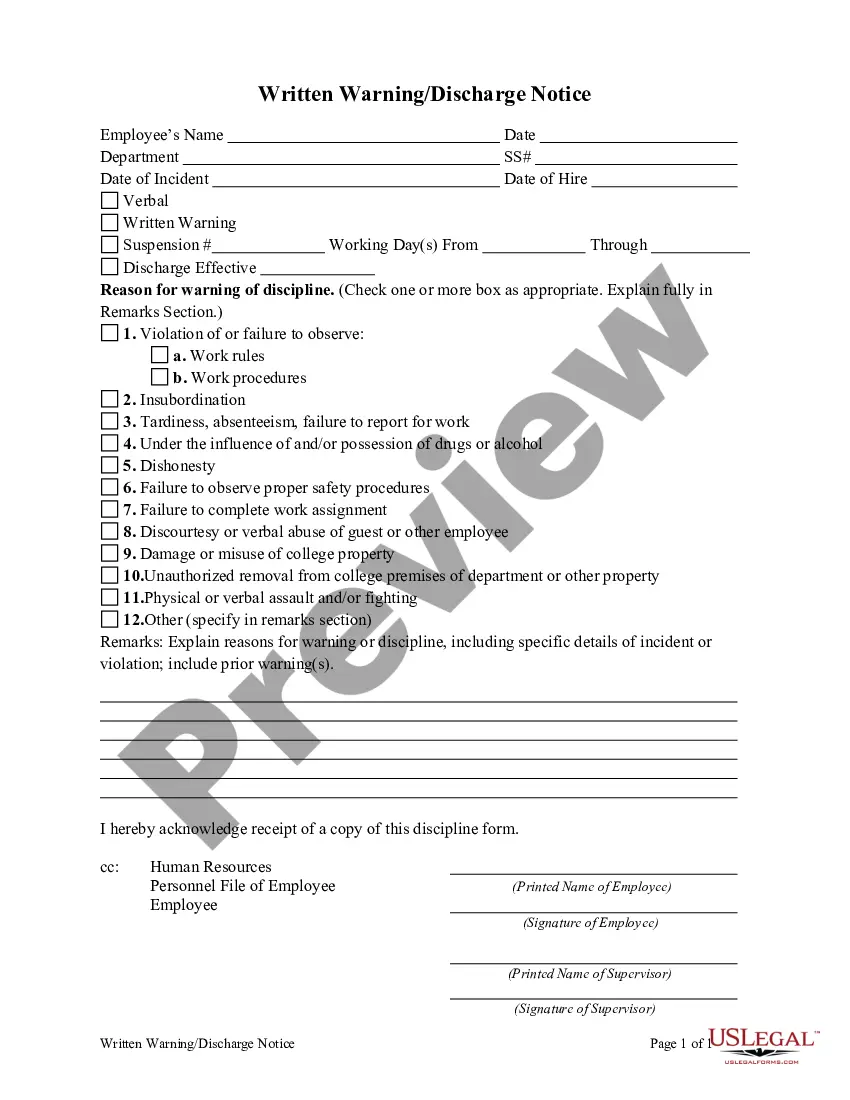
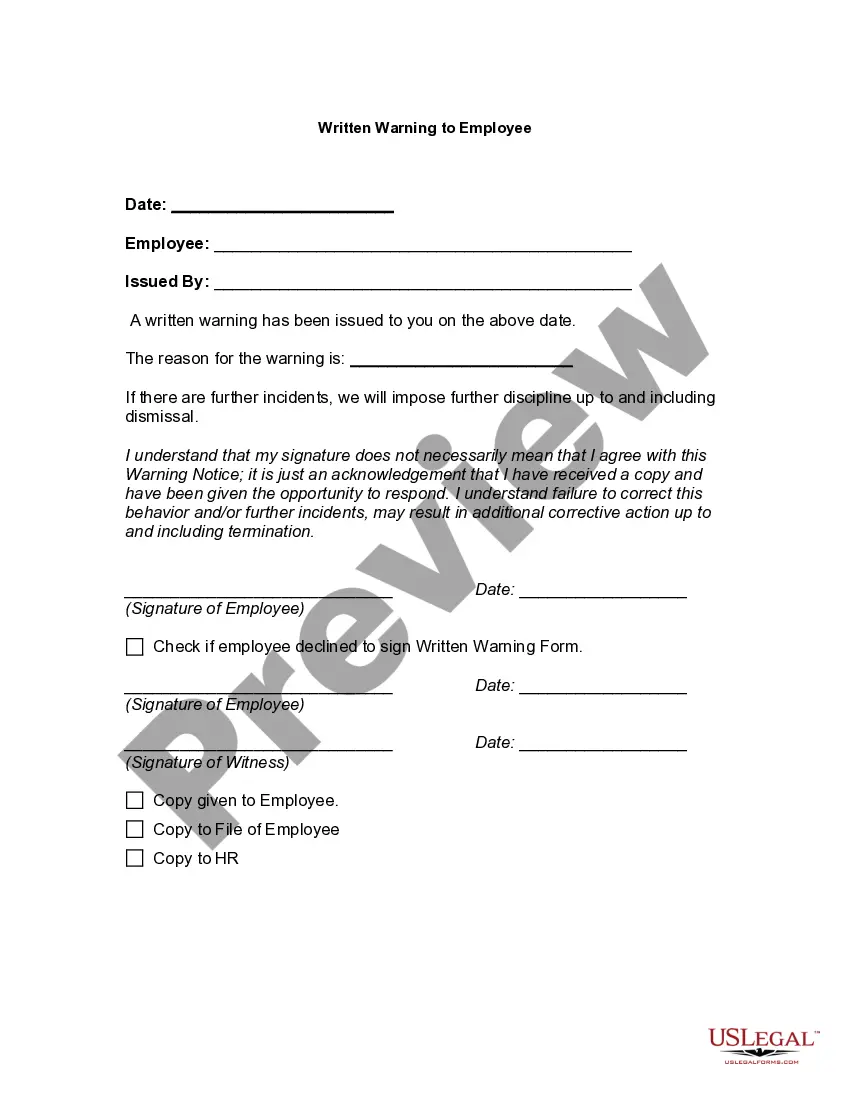
The date of the warning; the name of the employee; the name and position of the person issuing the discipline; the level/type of discipline (e.g., written warning or written warning with three-day suspension);