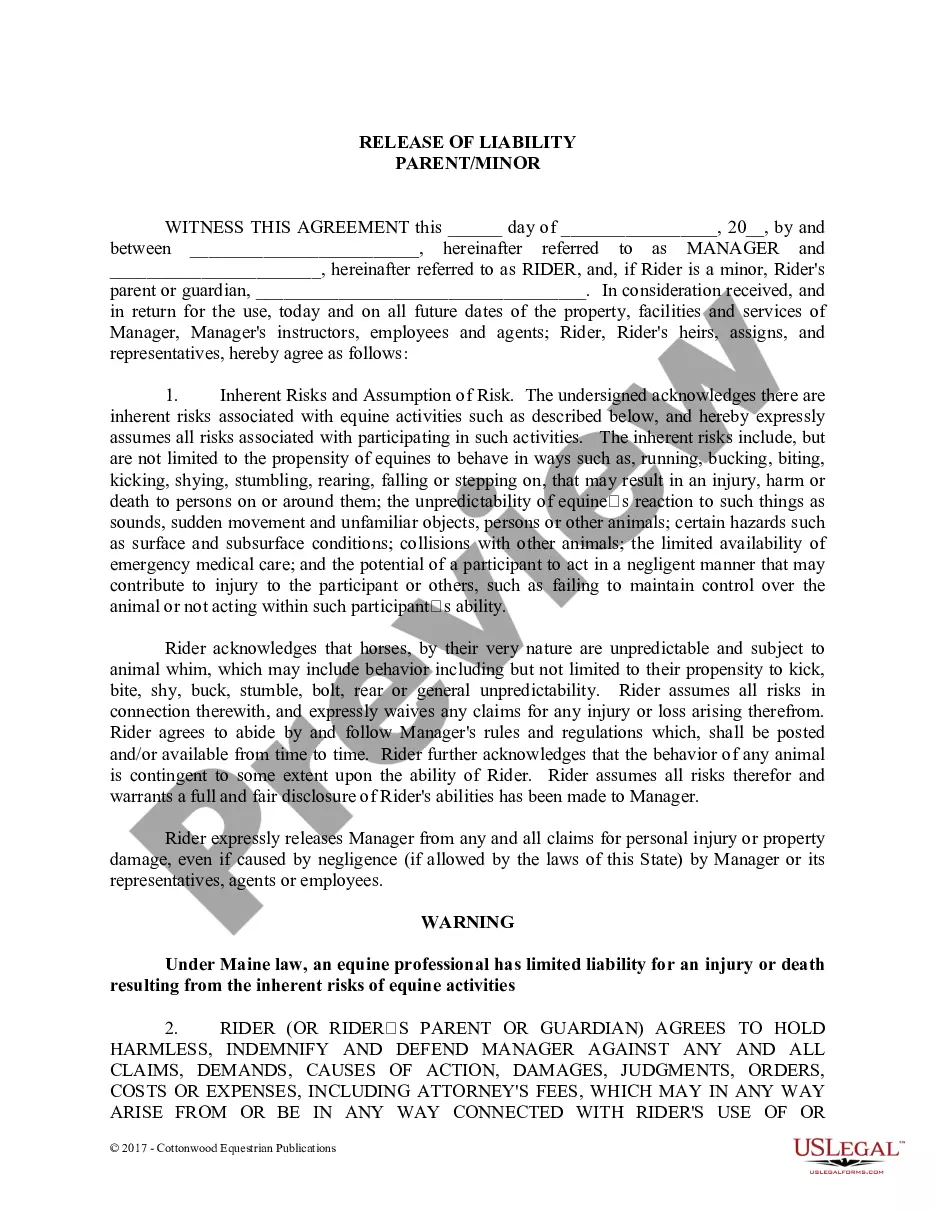
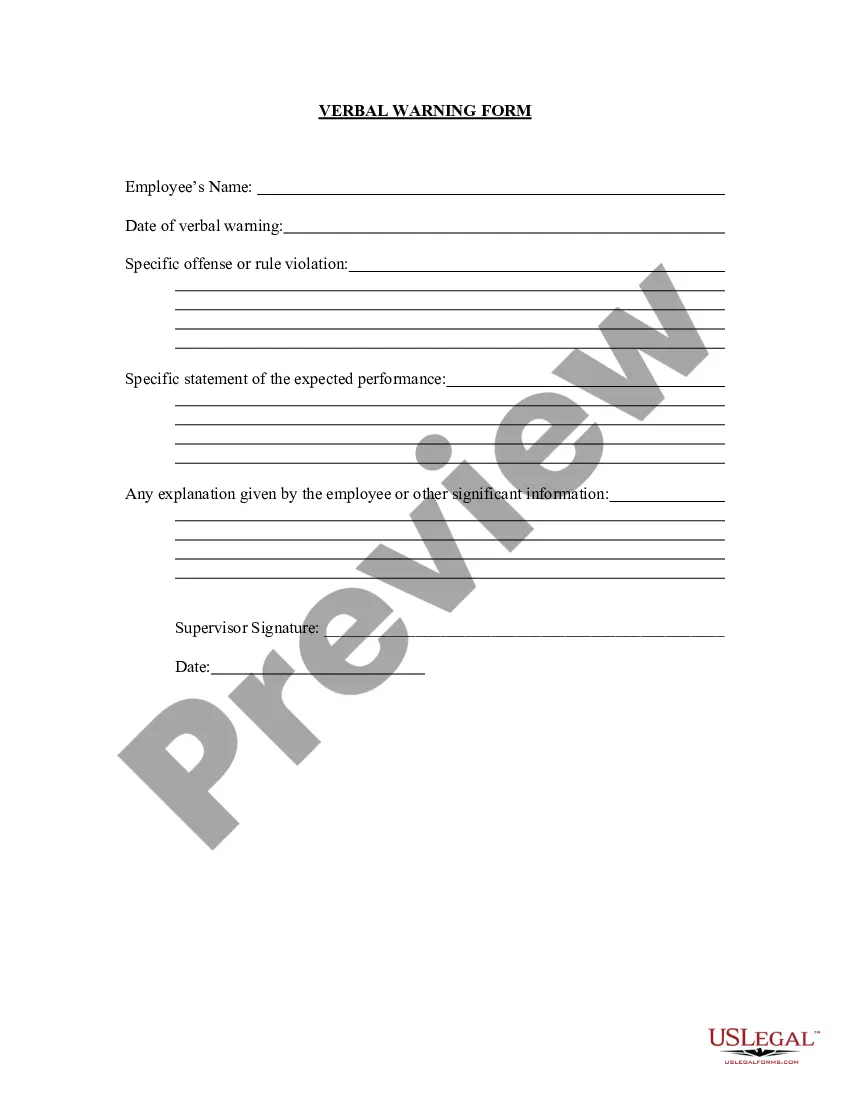
Verbal Warning Form
Overview of this form
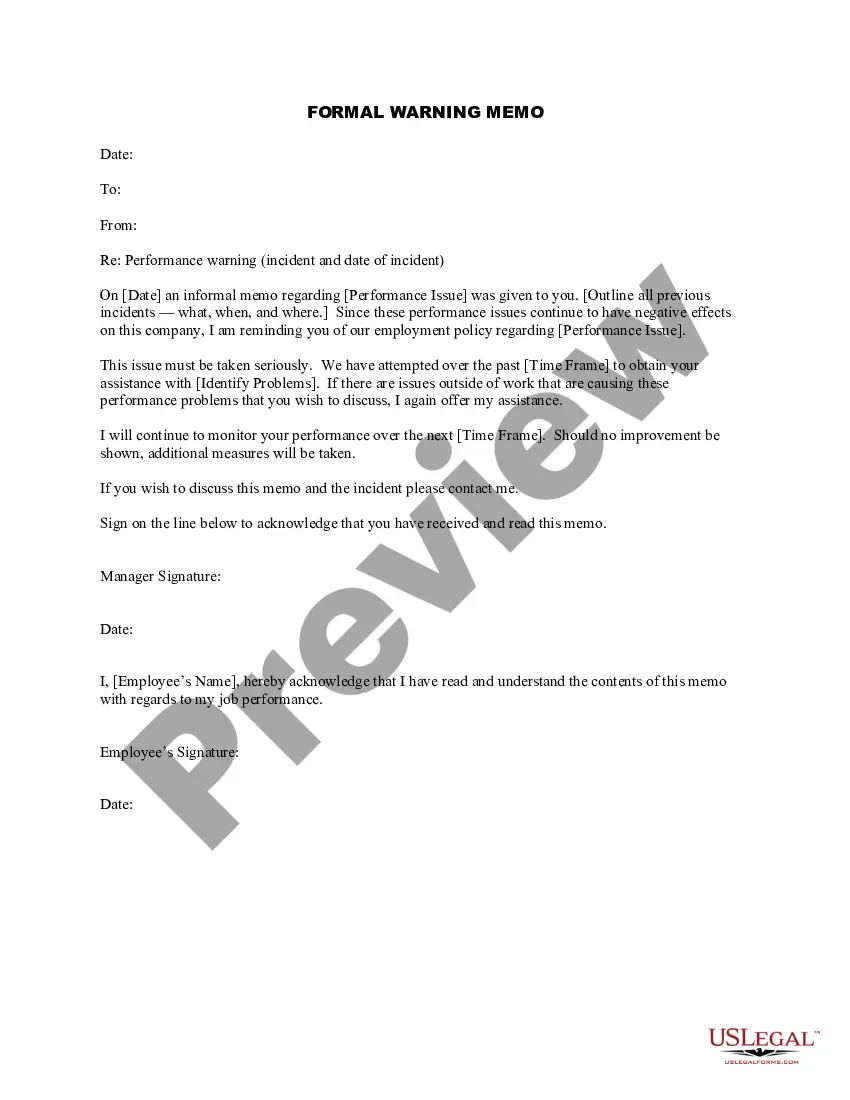
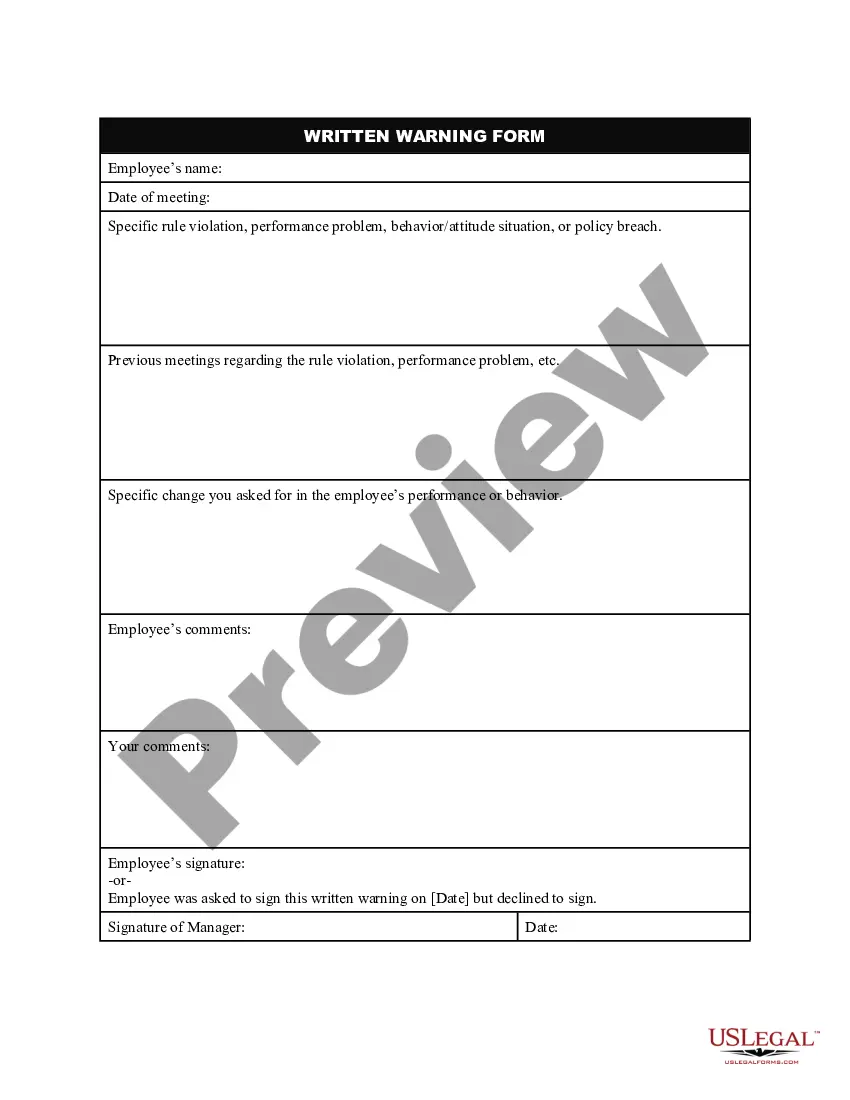
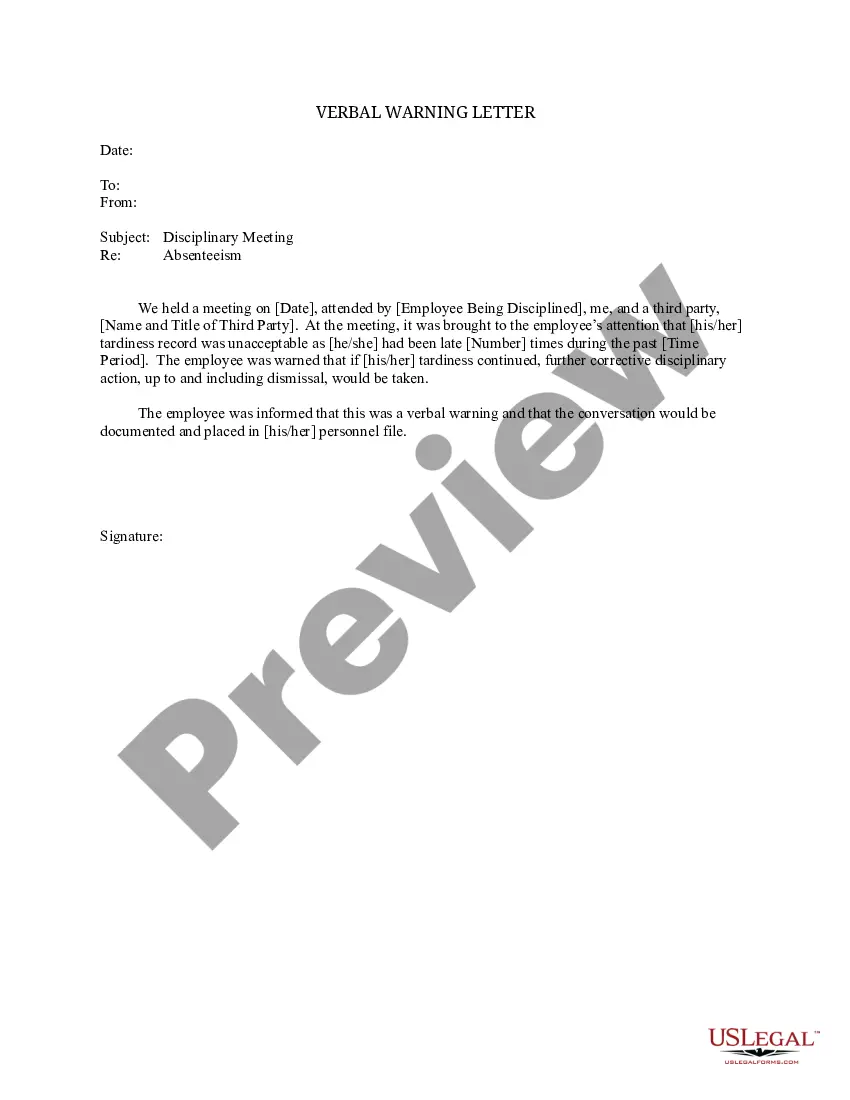
The verbal warning form is a critical tool for employers to address employee performance issues. This form serves as documentation for a verbal warning given to an employee, highlighting specific concerns and expectations for improvement. Unlike other disciplinary forms, the verbal warning form focuses on initial corrective action before more severe disciplinary measures are taken.
Form components explained
- Employer and employee information: Details about the parties involved.
- Date of the warning: The specific date when the warning is issued.
- Performance issue description: A clear outline of the behavior or performance that prompted the warning.
- Expected improvements: Specific actions the employee should take to rectify the issue.
- Consequences of non-compliance: Details about potential further action if improvements are not made.
- Signatures: A section for both the employer and employee to acknowledge the warning.
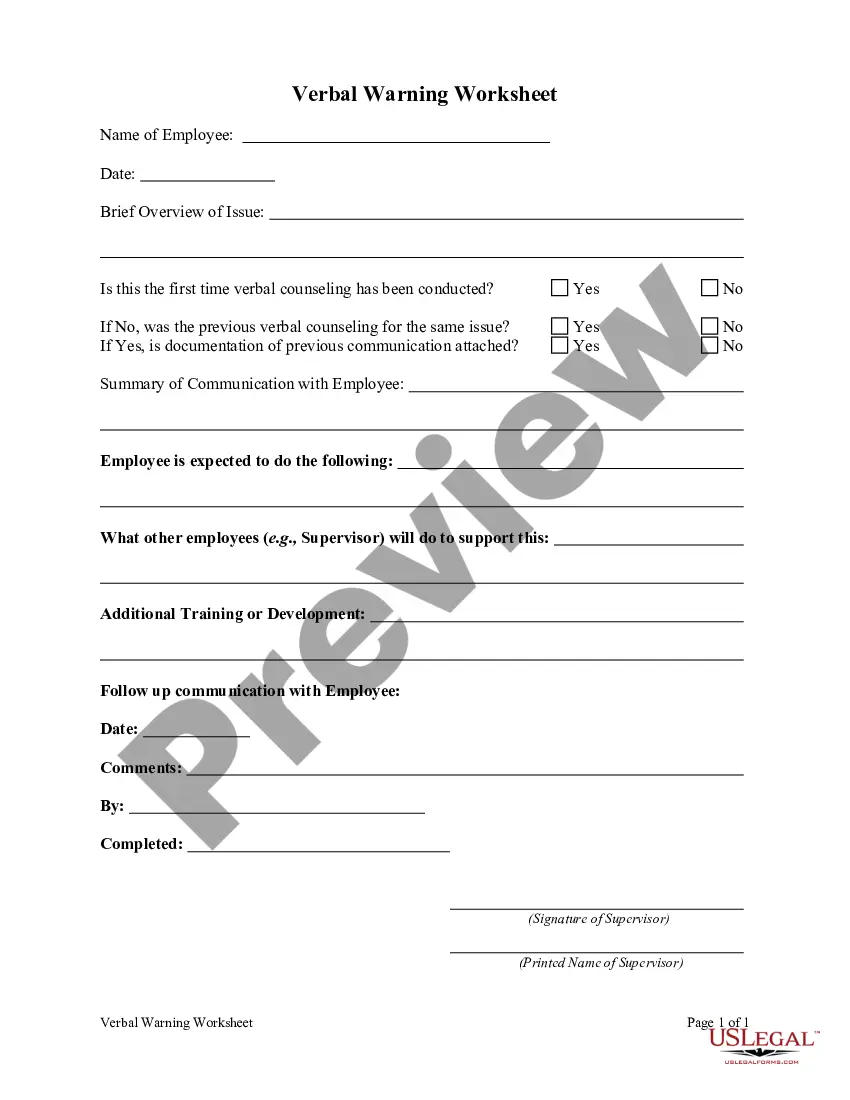
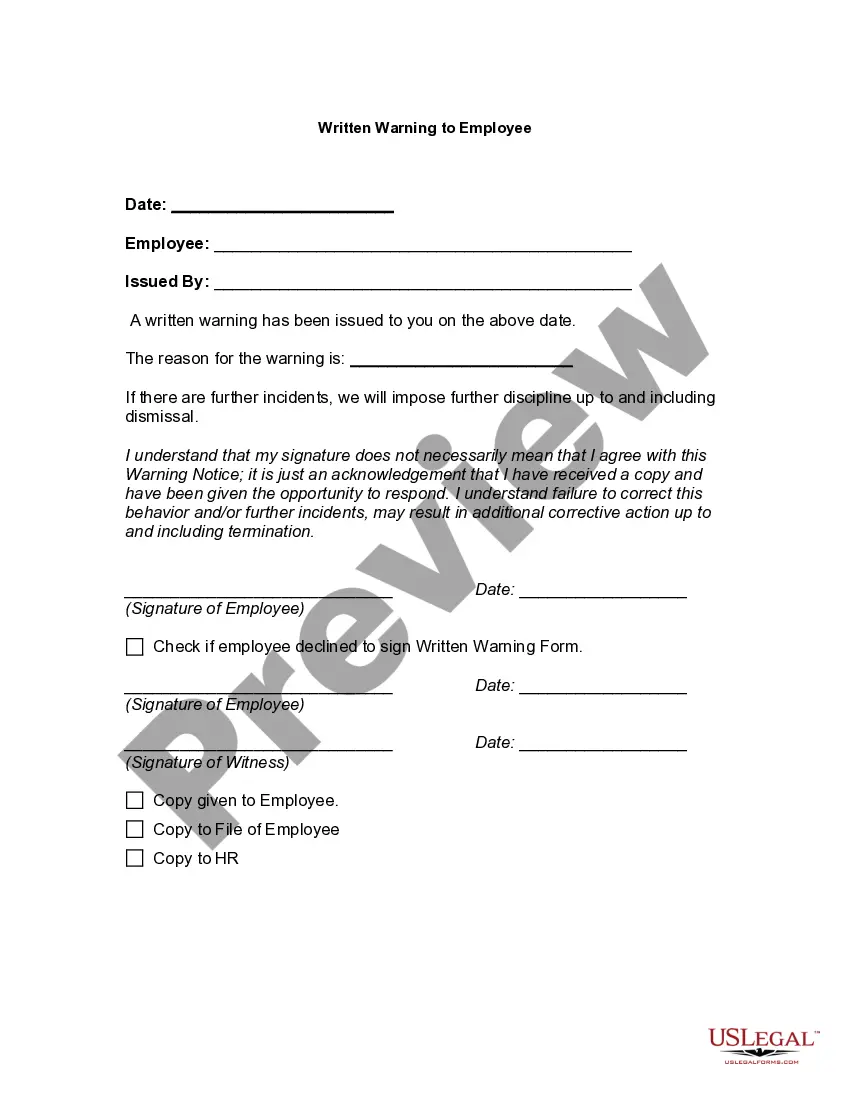
Situations where this form applies
This form is typically used in the workplace when an employee's performance does not meet expectations but does not warrant immediate suspension or termination. Situations may include repeated tardiness, failure to meet deadlines, or inadequate performance in job responsibilities. Providing a verbal warning documented through this form can help clarify expectations and support fair treatment of employees.
Who needs this form
The verbal warning form is intended for:
- Human resources professionals managing employee performance.
- Managers or supervisors addressing specific performance issues within their teams.
- Employers of all sizes looking to document verbal warnings consistently.
Completing this form step by step
- Identify the parties: Fill in the names of the employer and employee involved.
- Enter the date: Specify the date the warning is being issued.
- Describe the issue: Clearly state the performance or conduct issue being addressed.
- Outline expected improvements: Detail what changes or actions are required from the employee.
- Explain consequences: Include potential outcomes if the issues are not resolved.
- Obtain signatures: Have both the employer and employee sign and date the form for acknowledgment.
Does this document require notarization?
This form does not typically require notarization unless specified by local law. Ensure you check for any specific requirements in your state to maintain legal validity.
Get your form ready online
Our built-in tools help you complete, sign, share, and store your documents in one place.
Make edits, fill in missing information, and update formatting in US Legal Forms—just like you would in MS Word.
Download a copy, print it, send it by email, or mail it via USPS—whatever works best for your next step.
Sign and collect signatures with our SignNow integration. Send to multiple recipients, set reminders, and more. Go Premium to unlock E-Sign.
If this form requires notarization, complete it online through a secure video call—no need to meet a notary in person or wait for an appointment.
We protect your documents and personal data by following strict security and privacy standards.

Make edits, fill in missing information, and update formatting in US Legal Forms—just like you would in MS Word.

Download a copy, print it, send it by email, or mail it via USPS—whatever works best for your next step.

Sign and collect signatures with our SignNow integration. Send to multiple recipients, set reminders, and more. Go Premium to unlock E-Sign.

If this form requires notarization, complete it online through a secure video call—no need to meet a notary in person or wait for an appointment.

We protect your documents and personal data by following strict security and privacy standards.
Common mistakes to avoid
- Failing to clearly document the performance issue.
- Not specifying the expected improvements.
- Omitting the consequences of continued non-compliance.
- Forgetting to include date and signatures may invalidate the warning.
Advantages of online completion
- Quick access to professionally drafted templates.
- Editable fields allow for customization based on specific employee situations.
- Easy storage and retrieval for future reference or audits.
- Ensures compliance with legal standards for documenting employee warnings.
Quick recap
- The verbal warning form is essential for documenting employee performance issues.
- It helps employers communicate expectations clearly and support employee improvement.
- Properly completed forms can protect employers in disciplinary disputes.
Looking for another form?


Form popularity
FAQ
Stay calm: During the meeting to discuss your warning, and afterward, do your very best to avoid crying, raising your voice, or showing extreme distress. Take notes: It can help that first goal keeping calm to take notes during any meeting about the warning.
Does a verbal warning need to be documented? A verbal warning should definitely be documented. Employers should keep the documentation of the verbal warning in their informal notes, and you as the employee should sign the documentation to indicate that you have received it.
How To Document Verbal Conversations. Create a written document, memorandum or email for every important conversation, verbal warning or counseling session. Include who was present for the conversation, a summary of the key issues that were discussed and the responses given by the employee.
Take the employee into a private room. Start by taking the employee into a private office or room to discuss the issue. State what the issue is. Discuss the changes they should make. Provide a timeframe for correction. State consequences.
Should a verbal warning be confirmed in writing? It is advisable to confirm a verbal warning in writing for your records and to support any resulting or related disciplinary action against the employee.
As noted earlier on, using the email for communication is formal.Therefore, before warning an employee via email, consider verbal warnings. Some employees will adjust when you do this. Hence, you do not need to get these warnings on the record because they can affect the employees' promotion and future employment.
The verbal warning is documented by the supervisor in their informal notes about the efforts provided to help the employee improve.These notes are not part of an employee's personnel file; they are private supervisory documentation of an employee's performance.
Unlike initial letters of concern, or an informal verbal warning, which have no real recognition in law, a verbal warning is formal. This means details of what you did discuss with your employee should go on their employment file. After you do this, you should also provide them with a copy.