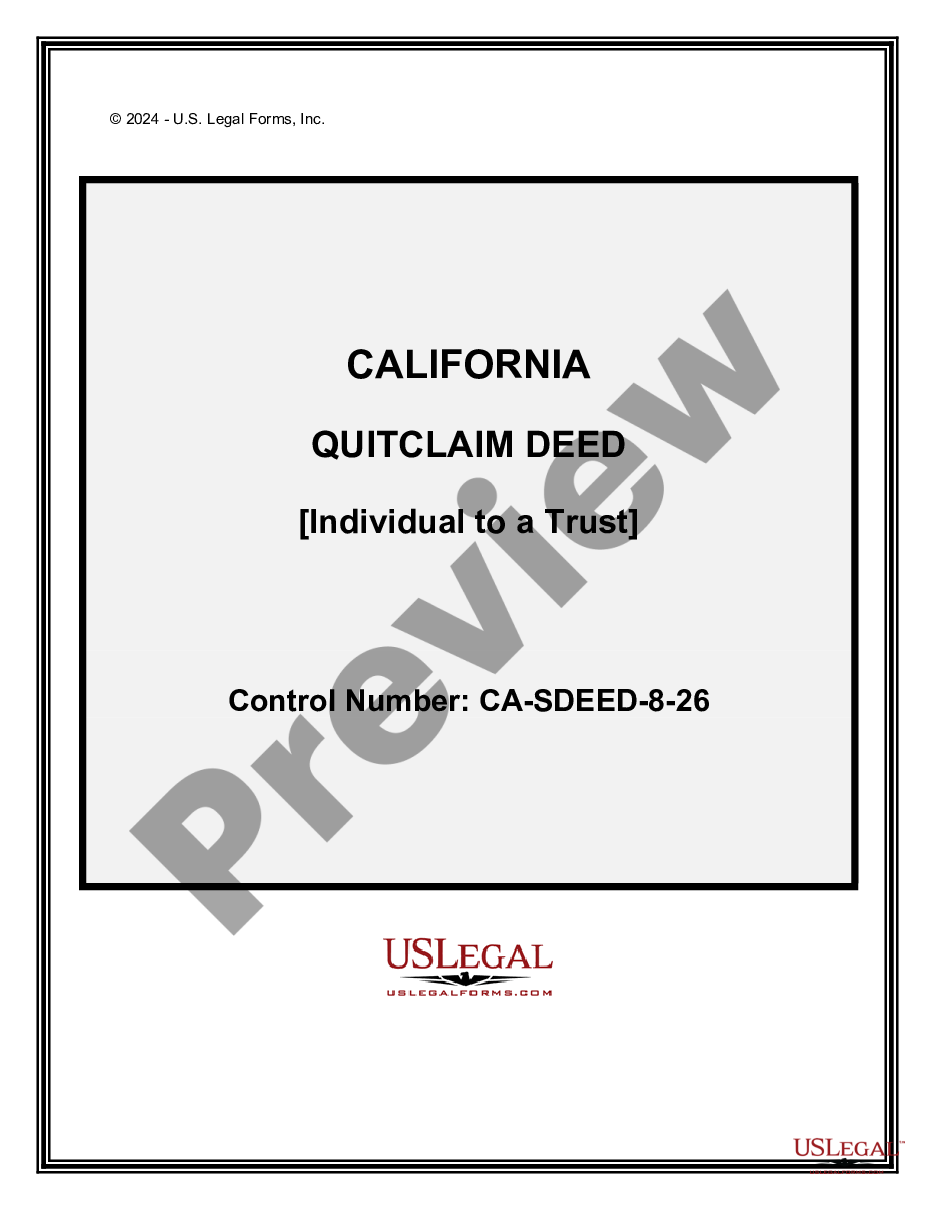
California Quitclaim Deed for Individual to a Trust
Overview of this form
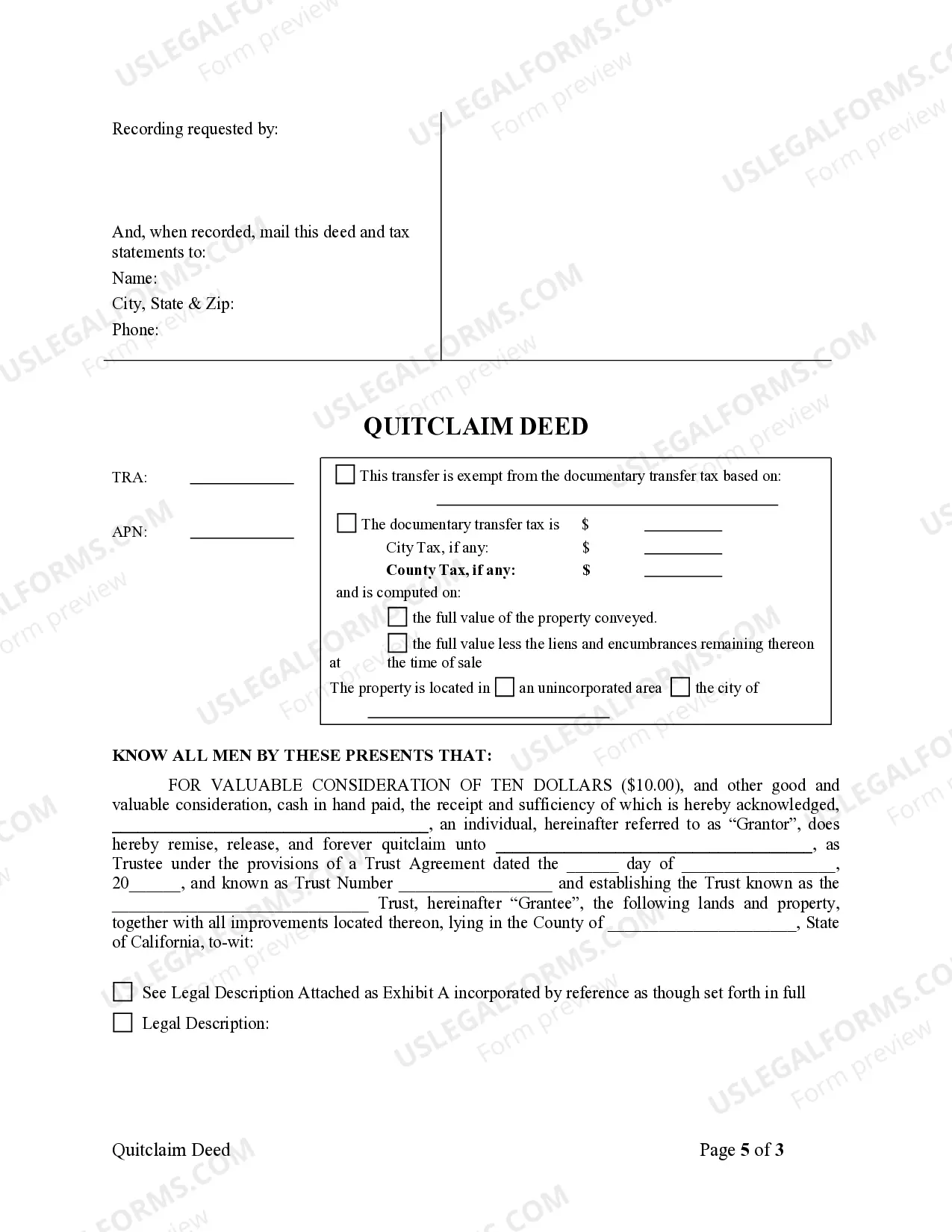
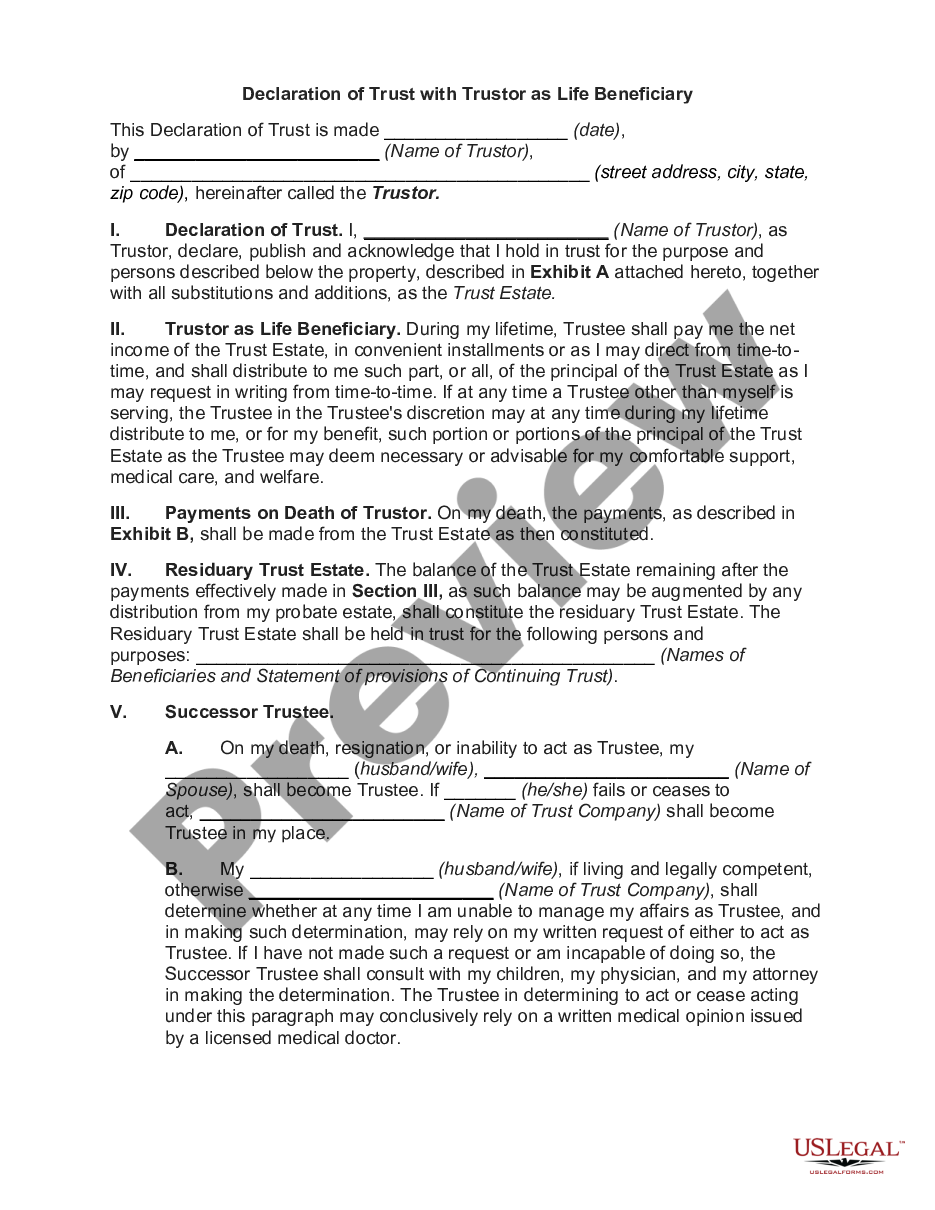
This Quitclaim Deed for Individual to a Trust allows an individual, known as the grantor, to transfer property ownership to a trust, the grantee. Unlike other types of deeds, such as warranty deeds, a quitclaim deed does not guarantee that the title is free of defects. This form is commonly used for transferring assets into a trust for estate planning purposes, ensuring that property is managed according to the trust's terms.
Main sections of this form
- Identification of the grantor and grantee, including names and addresses
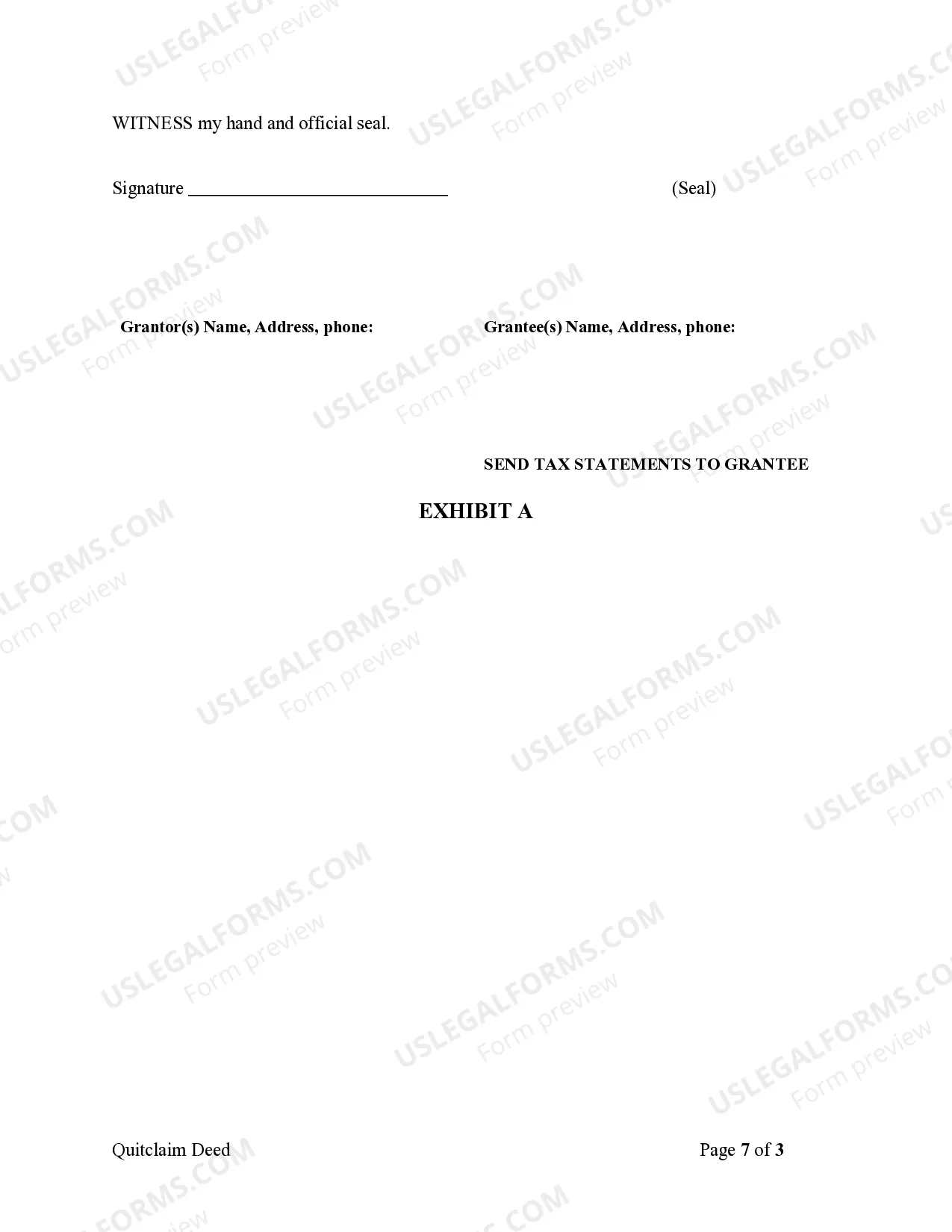
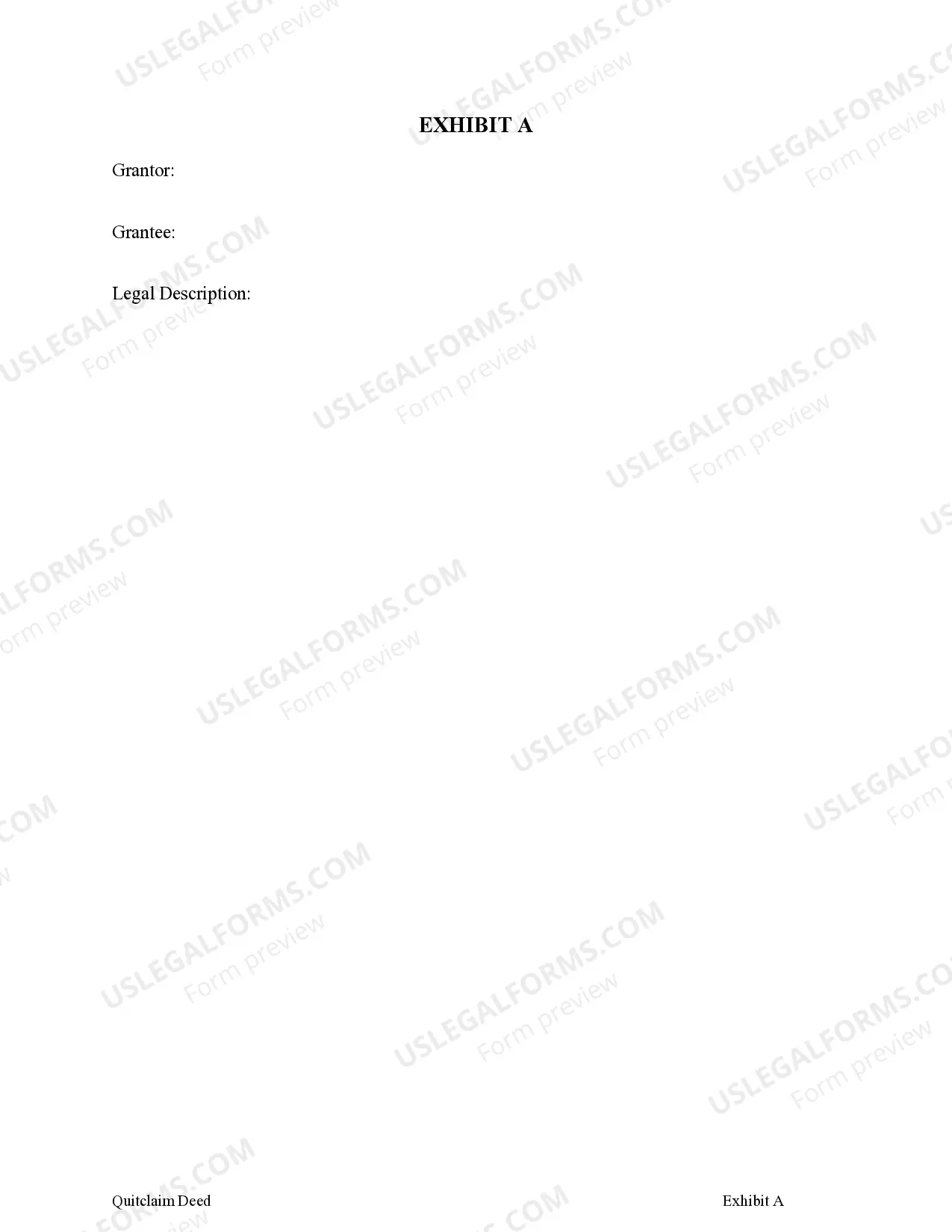
- Legal description of the property being transferred
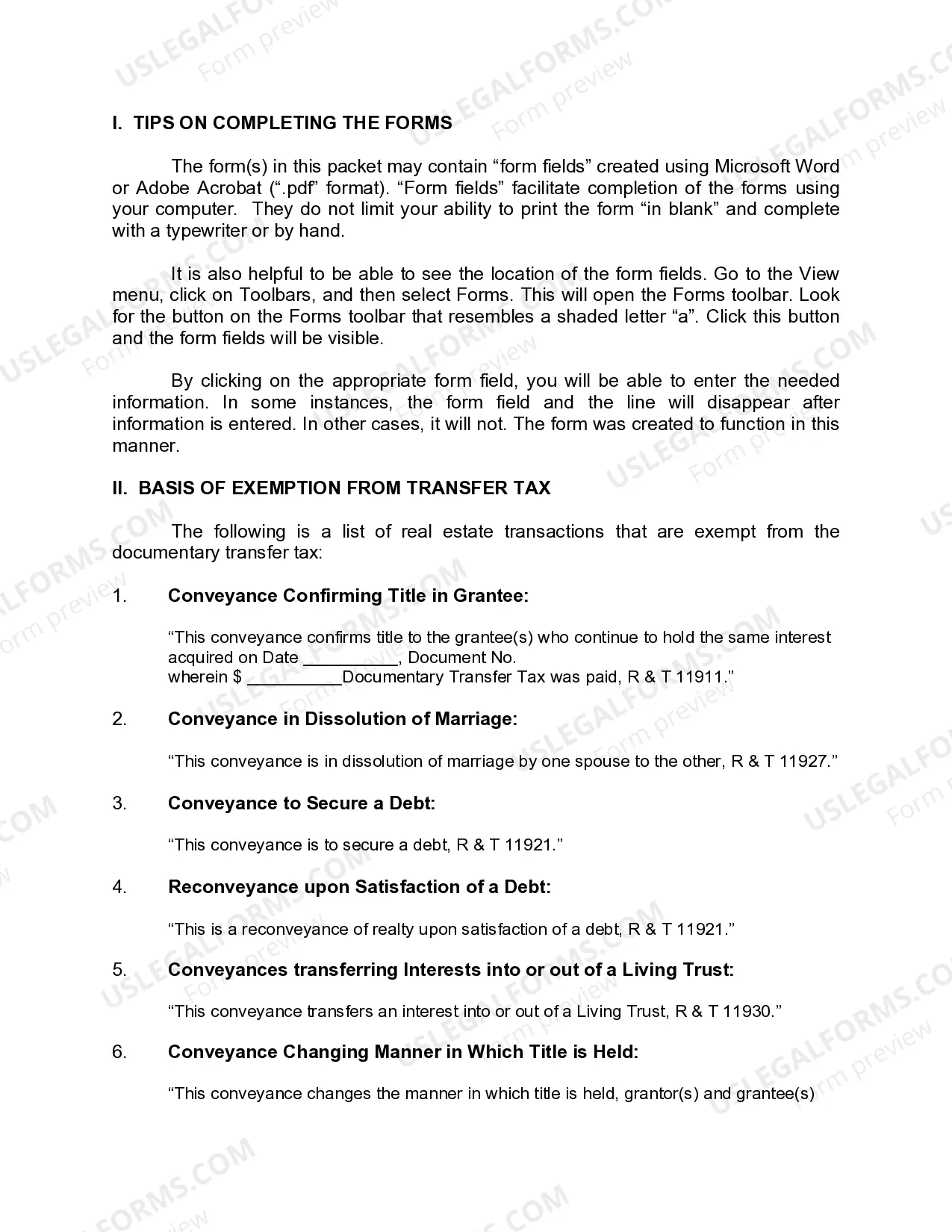
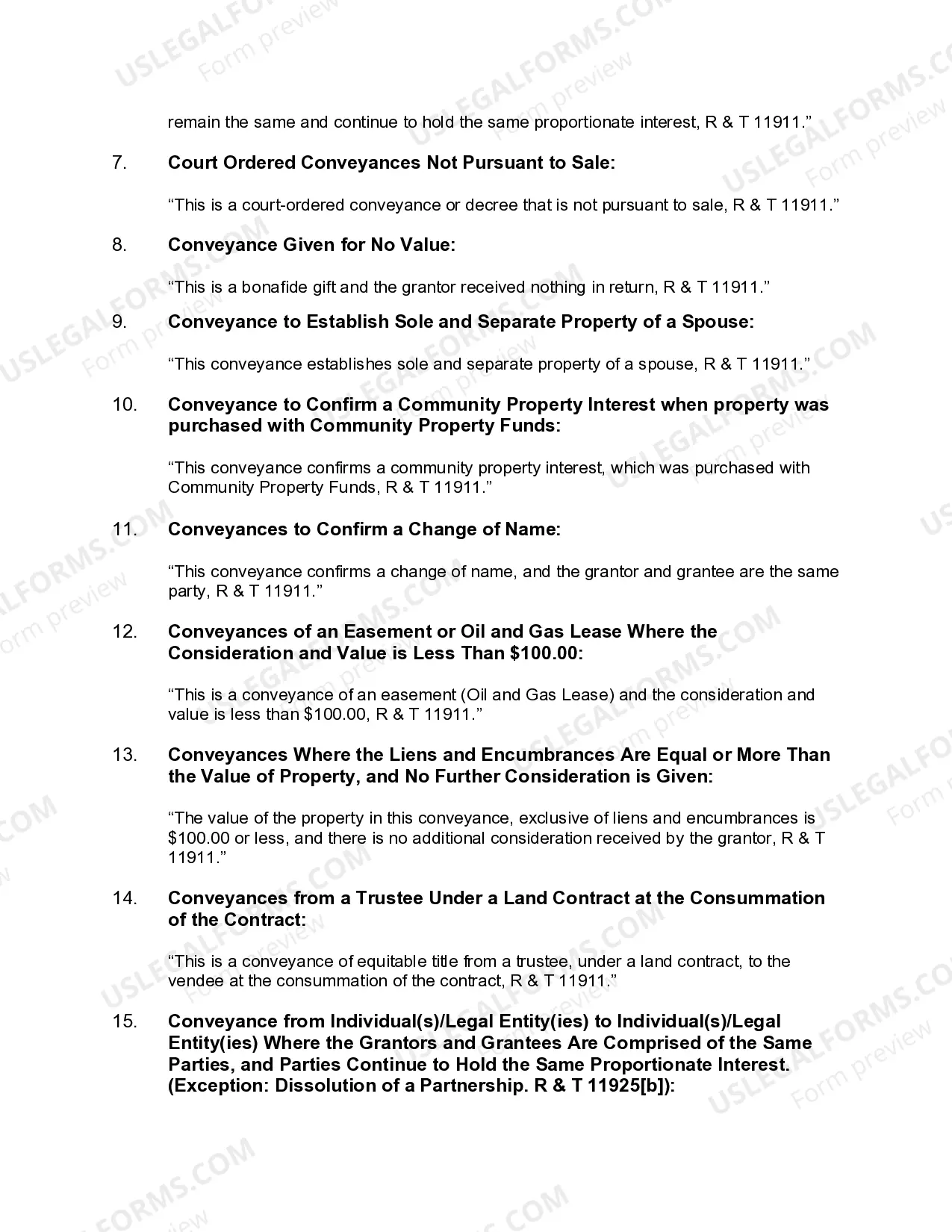
- A statement confirming the transfer is exempt from documentary transfer tax (if applicable)
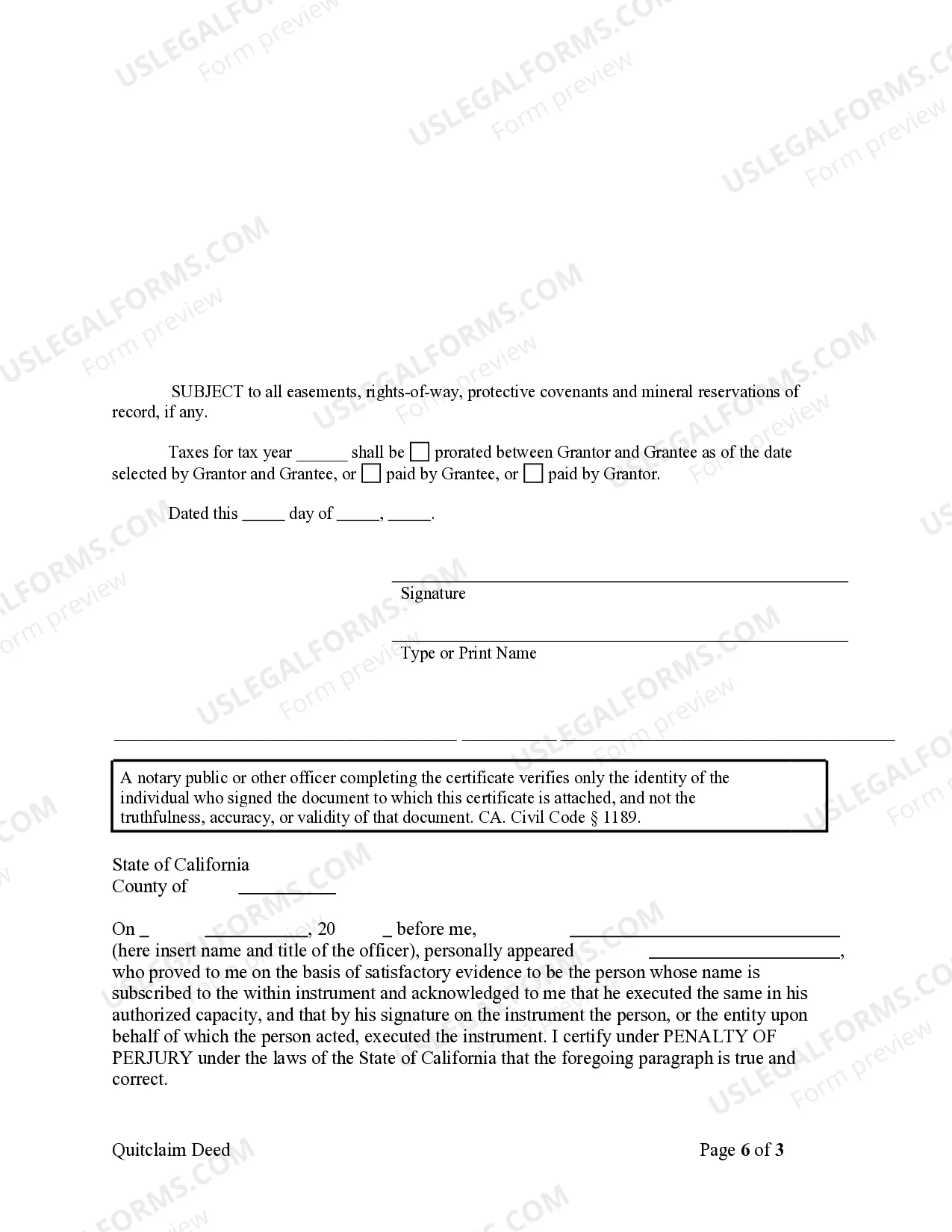
- Signature of the grantor
- Space for notarization, if required in certain jurisdictions




Situations where this form applies
This quitclaim deed should be used when you want to transfer ownership of real property to a trust. It is particularly useful in situations such as estate planning, where you wish to manage an asset after your death or protect it from probate proceedings. It is also relevant in cases of transferring property for family-related transactions or restructuring asset ownership.
Who should use this form
- Individuals looking to transfer property into a trust for estate planning purposes
- Grantors who wish to facilitate the management of their assets
- Trustees or beneficiaries involved in property transactions
Steps to complete this form
- Identify the parties involved: Enter the grantor's and grantee's names and addresses.
- Specify the property: Provide the legal description of the property being transferred.
- Indicate any exemption from transfer tax: Note if the transfer qualifies for any exemptions.
- Have the grantor sign the document in the designated area.
- Ensure notarization if required, by having it signed by a notary public.
Notarization requirements for this form
Notarization is required for this form to take effect. Our online notarization service, powered by Notarize, lets you verify and sign documents remotely through an encrypted video session, available 24/7.
Get your form ready online
Our built-in tools help you complete, sign, share, and store your documents in one place.
Make edits, fill in missing information, and update formatting in US Legal Forms—just like you would in MS Word.
Download a copy, print it, send it by email, or mail it via USPS—whatever works best for your next step.
Sign and collect signatures with our SignNow integration. Send to multiple recipients, set reminders, and more. Go Premium to unlock E-Sign.
If this form requires notarization, complete it online through a secure video call—no need to meet a notary in person or wait for an appointment.
We protect your documents and personal data by following strict security and privacy standards.

Make edits, fill in missing information, and update formatting in US Legal Forms—just like you would in MS Word.

Download a copy, print it, send it by email, or mail it via USPS—whatever works best for your next step.

Sign and collect signatures with our SignNow integration. Send to multiple recipients, set reminders, and more. Go Premium to unlock E-Sign.

If this form requires notarization, complete it online through a secure video call—no need to meet a notary in person or wait for an appointment.

We protect your documents and personal data by following strict security and privacy standards.
Avoid these common issues
- Not including the complete legal description of the property.
- Failing to notarize the document when required by state law.
- Leaving out critical information about the grantor or grantee.
- Not stating the reasons for tax exemption clearly.
Benefits of completing this form online
- Convenient access to legal forms from anywhere, anytime.
- Editable forms that allow for easy input of necessary information.
- Reliable legal language drafted by licensed attorneys.
- Time-saving process compared to traditional legal methods.
Legal use & context
- The Quitclaim Deed serves to transfer property without guaranteeing title quality, which is important in trust-related transactions.
- Legally, the grantor relinquishes any claim to the property, though it does not clear the title of previous claims or encumbrances.
Main things to remember
- The Quitclaim Deed for Individual to a Trust enables individuals to transfer property into a trust.
- This form is essential for estate planning and asset management.
- Proper completion and notarization are crucial for the legality of the transfer.
Looking for another form?

Form popularity
FAQ
Filling out a California Quitclaim Deed for Individual to a Trust involves several important steps. First, you need to include the legal names of the grantor and grantee, along with their addresses. Make sure to clearly describe the property being transferred, including any identified parcel number. After completing the form, both parties should sign in the presence of a notary to ensure the deed is valid and can be recorded.
Transferring a deed to a trust in California involves preparing a transmission deed that specifies the property details and the trust as the new owner. After preparing the document, file it with the county recorder's office. This process can assist in maintaining the benefits of your assets under trust management. Using a California Quitclaim Deed for Individual to a Trust makes this transfer effective and simple.
To quitclaim a property to a trust, you need to create a quitclaim deed that identifies the trust as the new property owner. Clearly include the name of the trust and the trustee in the deed. Once completed, file the deed with the county recorder’s office. A California Quitclaim Deed for Individual to a Trust lets you efficiently transfer assets and ensures your estate planning aligns with your wishes.
Yes, you can perform a quitclaim deed from a trust to another individual or entity. The trustee must execute the quitclaim deed, which effectively transfers the trust's interest in the property. This action is straightforward and can help in reallocating assets based on your estate planning strategies. Utilizing a California Quitclaim Deed for Individual to a Trust can streamline this transfer process.
To file a deed of trust in California, you need to prepare the document with all required information, including the names of the parties involved and a legal description of the property. After completing the deed, submit it to the county recorder's office where the property is located. Remember that a California Quitclaim Deed for Individual to a Trust can simplify transferring property into a trust, making this process more straightforward.
Deciding whether to gift a house or place it in a trust involves weighing your personal and financial goals. Placing a property in a trust can provide better control and protection of assets, as well as potential tax benefits. In contrast, gifting a house directly could trigger gift tax consequences. A California Quitclaim Deed for Individual to a Trust can facilitate this process efficiently while benefiting your beneficiaries.
The primary disadvantage of a quitclaim deed is that it offers no guarantees regarding the property's title. This type of deed transfers ownership without warranties, which means you may inherit any existing liabilities. Additionally, a California Quitclaim Deed for Individual to a Trust does not provide protection against claims from other parties. It's crucial to thoroughly evaluate your situation and consider legal advice before proceeding.
In California, anyone can technically prepare a quitclaim deed, but it is highly advisable to seek legal assistance to avoid any mistakes. Attorneys or professional services familiar with California quitclaim deeds can help ensure compliance with state laws. This is especially important when using a California Quitclaim Deed for Individual to a Trust, as precise language and proper execution are crucial. US Legal Forms offers resources and templates to support you in this task.
To place your house in a trust in California, you must first create a trust document that outlines the terms. After that, you will need to execute a California Quitclaim Deed for Individual to a Trust, transferring ownership of your property to the trust. It's important to ensure the deed is properly signed and notarized to be legally recognized. Utilizing platforms like US Legal Forms can simplify this process by providing the necessary templates and guidance.