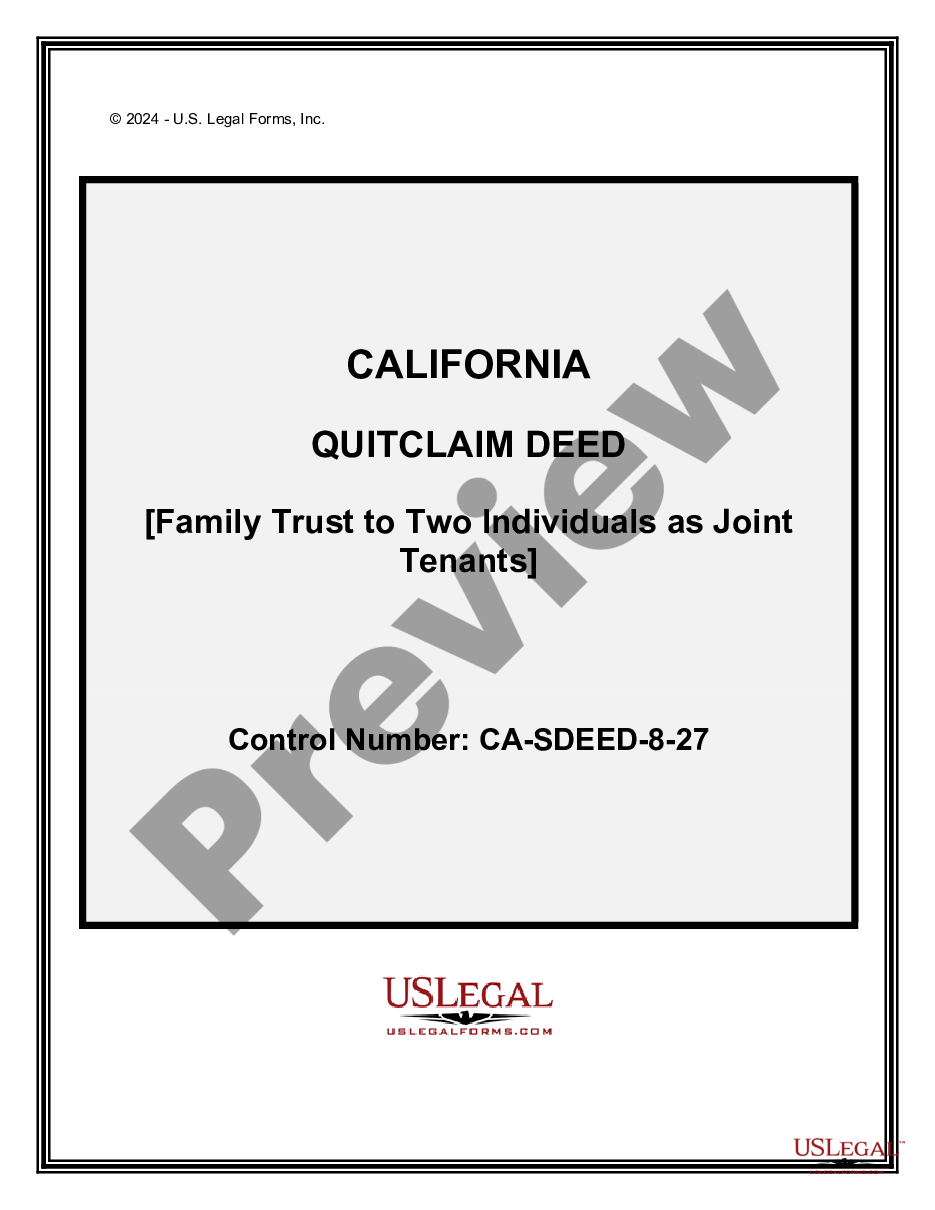
California Quitclaim Deed for Family Trust to Two Individuals as Joint Tenants
About this form
The Quitclaim Deed for Family Trust to Two Individuals as Joint Tenants is a legal document used to transfer ownership of property from a family trust to two individuals, who will hold the title as joint tenants. Unlike other types of deeds, a quitclaim deed does not guarantee that the grantor holds valid title to the property, making it important for parties who trust each other, such as family members, to use this form. This deed effectively updates the property's title without conveying the entire ownership responsibility of the trust.
Key components of this form
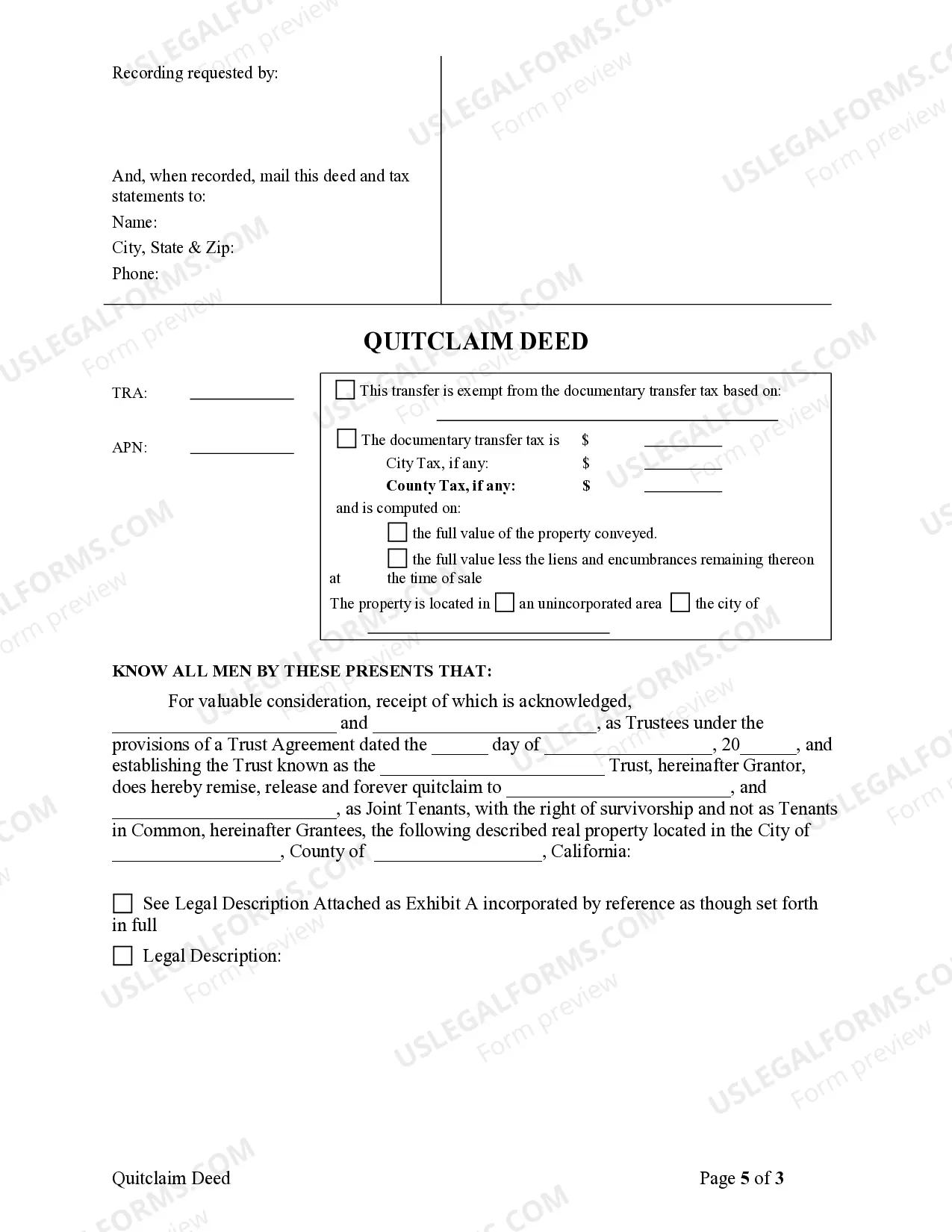
- Grantor: identifies the family trust transferring the property.
- Grantees: names the two individuals receiving the property.
- Joint Tenancy Clause: specifies that the individuals will hold the property together as joint tenants, including rights of survivorship.
- Legal Description: provides a detailed description of the property being transferred.
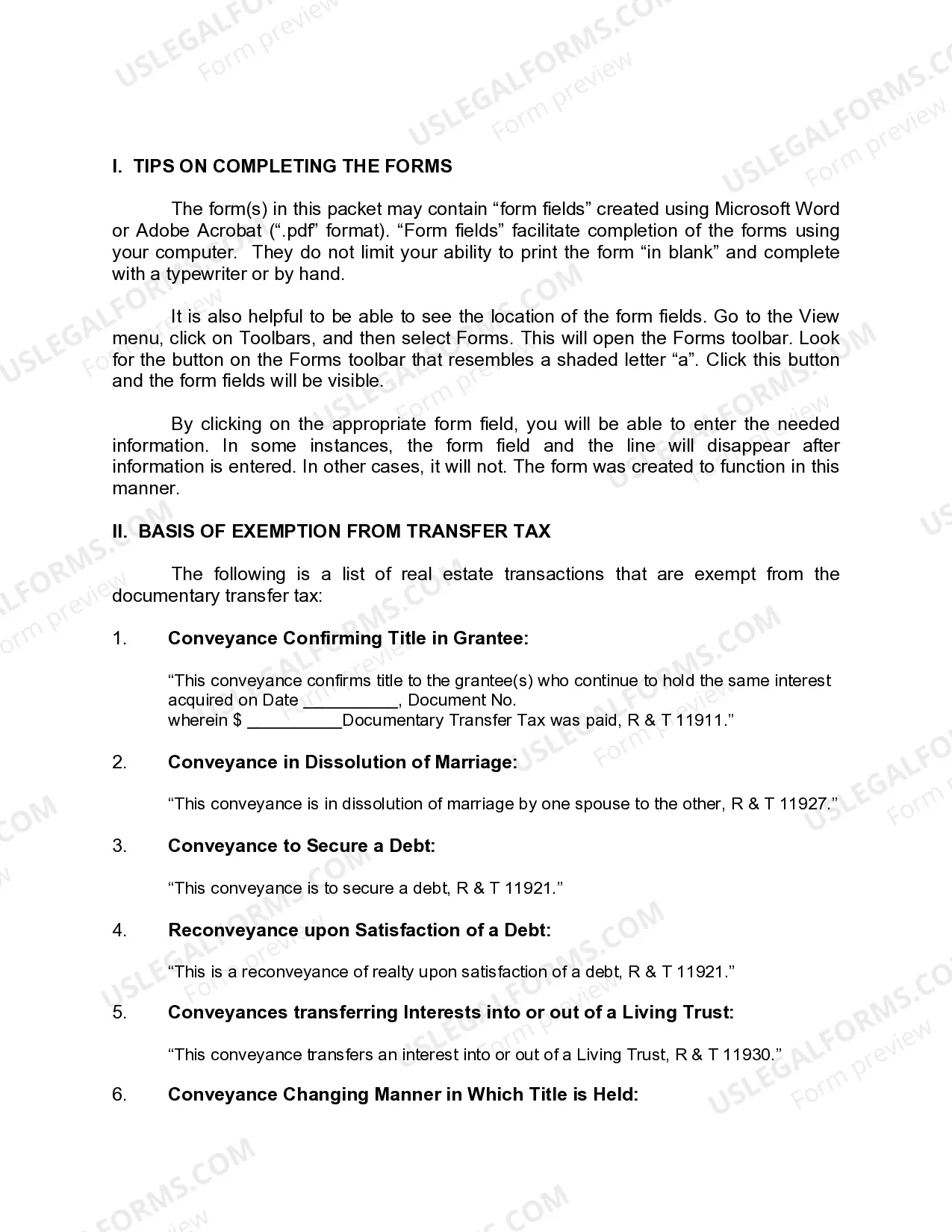
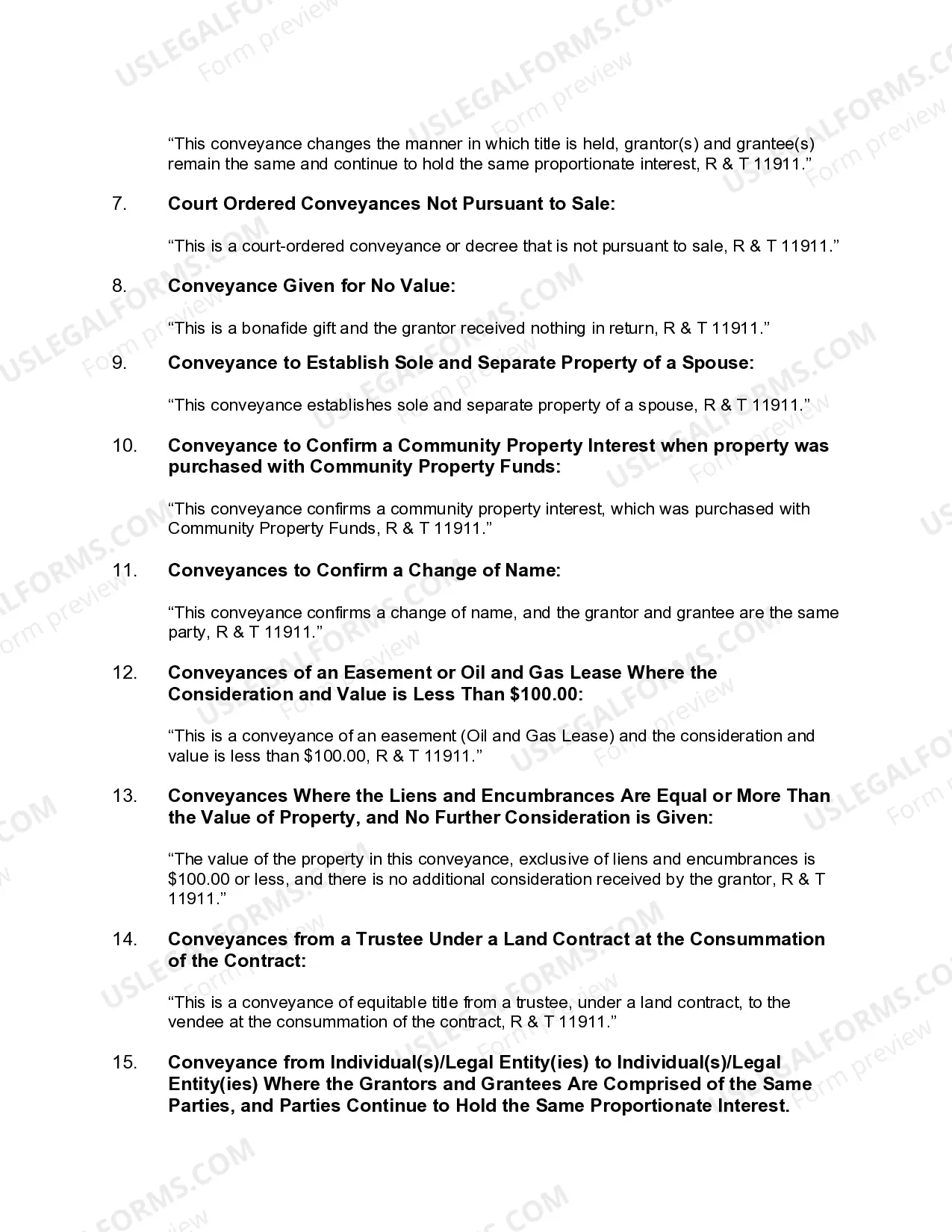
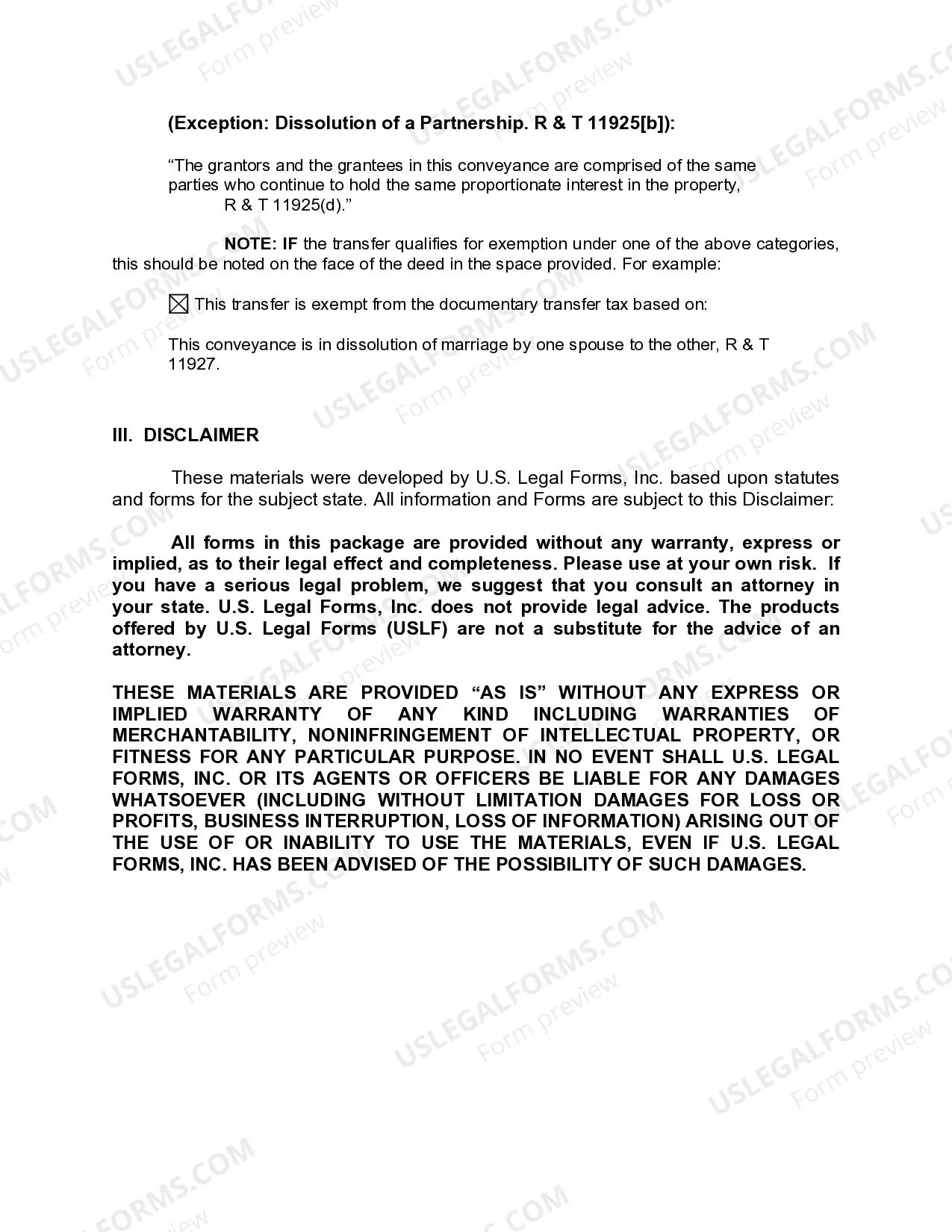
- Exemption from Transfer Tax: indicates if this transaction qualifies for exemption under state laws.
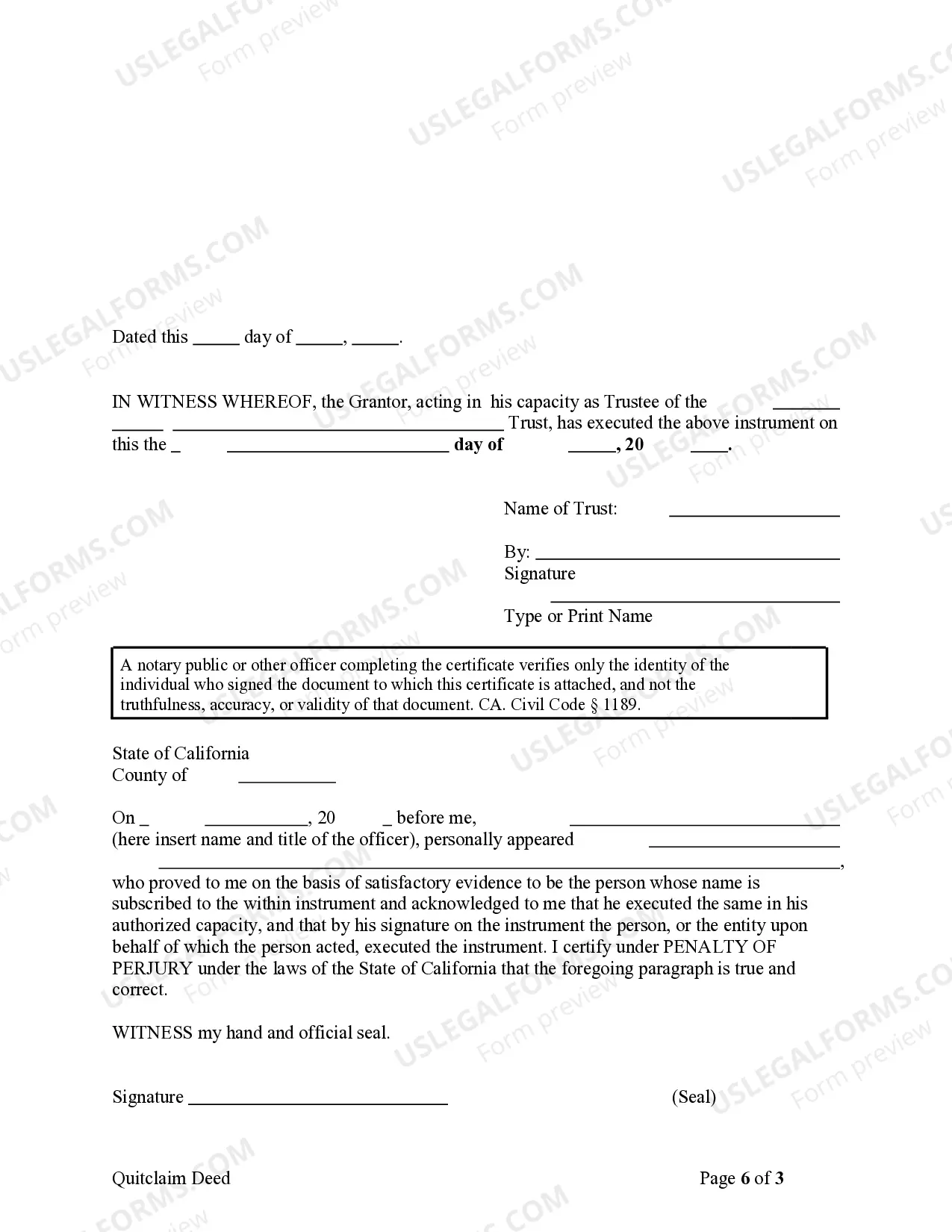
- Signature Field: requires the grantor's signature to validate the deed.



When to use this form
This form is used when a family trust is transferring property to two individuals who wish to hold the property together as joint tenants. This scenario often arises in family situations, such as transferring a home from a family trust to adult children or siblings. It is also suitable for estate planning to ensure that the property automatically passes to the surviving tenant in the event of one party's death.
Who this form is for
- Family trusts transferring property to beneficiaries or family members.
- Siblings or family members who want to hold property jointly.
- Individuals involved in estate planning or managing family assets.
Completing this form step by step
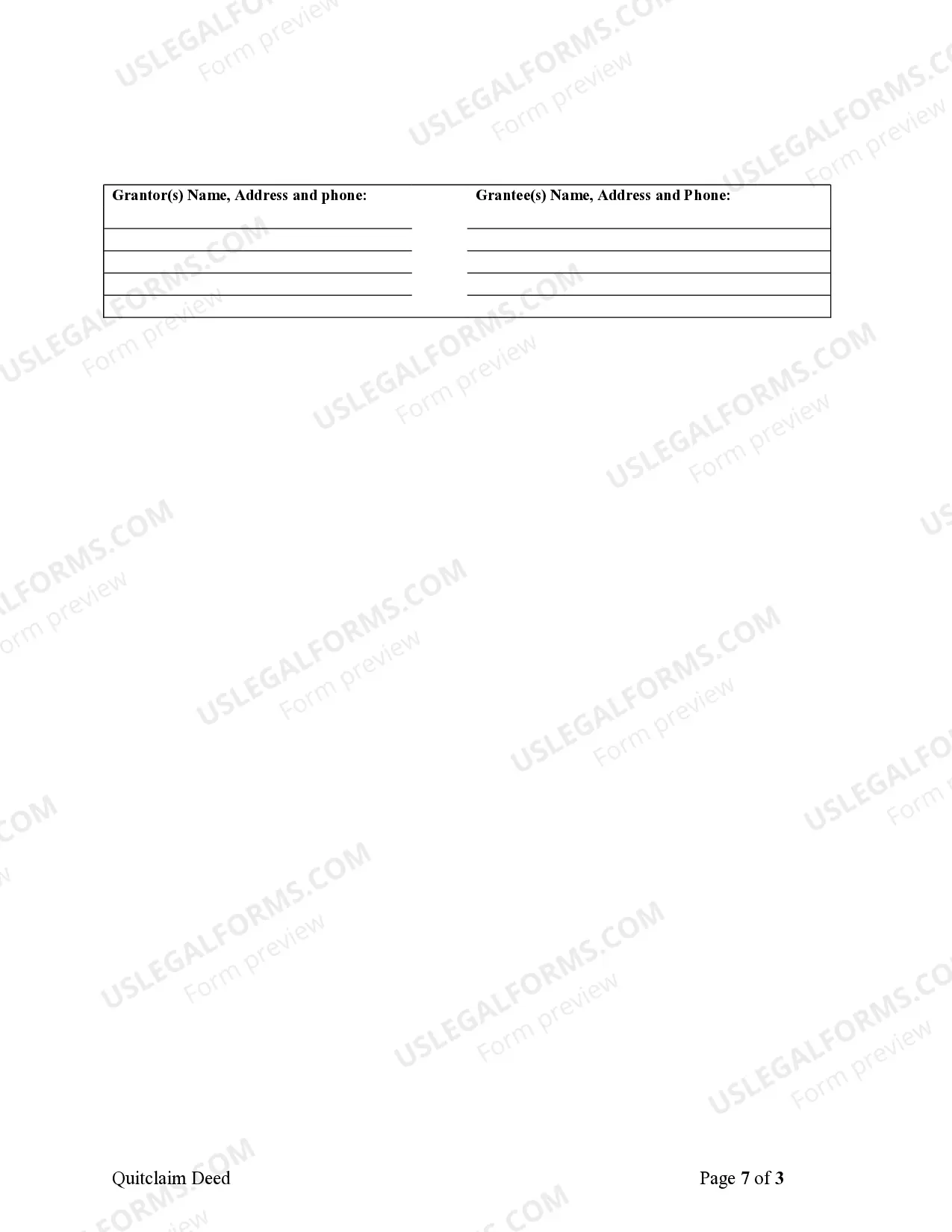
- Identify the parties: fill in the names of the family trust as the grantor and the names of the two individuals as grantees.
- Specify the property: provide the legal description of the property being transferred.
- Enter dates: include the date on which the deed is executed.
- Indicate tax exemption: check the applicable exemption from documentary transfer tax if relevant.
- Sign the form: ensure the grantor (trust representative) signs the form to finalize the transfer.
Notarization requirements for this form
This document requires notarization to meet legal standards. US Legal Forms provides secure online notarization powered by Notarize, allowing you to complete the process through a verified video call, available 24/7.
Get your form ready online
Our built-in tools help you complete, sign, share, and store your documents in one place.
Make edits, fill in missing information, and update formatting in US Legal Forms—just like you would in MS Word.
Download a copy, print it, send it by email, or mail it via USPS—whatever works best for your next step.
Sign and collect signatures with our SignNow integration. Send to multiple recipients, set reminders, and more. Go Premium to unlock E-Sign.
If this form requires notarization, complete it online through a secure video call—no need to meet a notary in person or wait for an appointment.
We protect your documents and personal data by following strict security and privacy standards.

Make edits, fill in missing information, and update formatting in US Legal Forms—just like you would in MS Word.

Download a copy, print it, send it by email, or mail it via USPS—whatever works best for your next step.

Sign and collect signatures with our SignNow integration. Send to multiple recipients, set reminders, and more. Go Premium to unlock E-Sign.

If this form requires notarization, complete it online through a secure video call—no need to meet a notary in person or wait for an appointment.

We protect your documents and personal data by following strict security and privacy standards.
Common mistakes to avoid
- Forgetting to include the legal description of the property, which is essential for the deed's validity.
- Not specifying the joint tenancy clause, which clarifies how the grantees will hold the title.
- Failing to sign the deed, which will make it legally ineffective.
- Neglecting to check for tax exemptions applicable to the transaction.
Why complete this form online
- Convenient access: easily download and complete the form from home.
- Editability: fill out the form digitally, reducing the chance of legibility issues.
- Guided completion: integrated form fields ensure all necessary information is captured.
Looking for another form?
Form popularity
FAQ
When two individuals are on the deed, they typically share ownership rights equally, unless specified otherwise. This joint tenancy allows both parties to benefit from the property equally, and in the event of one owner’s passing, the survivor inherits the property automatically. Understanding the implications of a California Quitclaim Deed for Family Trust to Two Individuals as Joint Tenants can enhance your family’s estate planning.
Several factors can void a quitclaim deed, including lack of legal capacity or failure to follow state laws during the transfer. If a party involved in the quitclaim deed disputes the agreement or if the deed contains errors, it can also become invalid. When dealing with a California Quitclaim Deed for Family Trust to Two Individuals as Joint Tenants, understanding these pitfalls can help maintain your transfer's validity.
Two trusts can generally be joint tenants, but specific legal protocols must be followed. This arrangement allows both trusts to hold equal rights to the property, facilitating seamless transfer upon death of a trustee. When contemplating a California Quitclaim Deed for Family Trust to Two Individuals as Joint Tenants, it’s crucial to consult legal documentation to clarify ownership rights.
Yes, a quitclaim deed can transfer property from a trust to another party. This process is straightforward, but ensure that the trust document grants the trustee this authority. If you want to navigate the California Quitclaim Deed for Family Trust to Two Individuals as Joint Tenants, consider all your legal obligations to avoid complications later.
Choosing between a quitclaim deed and a trust depends on your goals. A quitclaim deed transfers property rights without guarantees, making it simpler but riskier. In contrast, a trust provides a comprehensive structure for asset management and protection. If you're considering a California Quitclaim Deed for Family Trust to Two Individuals as Joint Tenants, think about your long-term financial security and family needs.
The most common way to transfer ownership of real estate is through a deed. Many people choose to use a California Quitclaim Deed for Family Trust to Two Individuals as Joint Tenants for its simplicity and effectiveness. This type of deed allows for an uncomplicated transfer, especially within families. Always consider recording the deed to protect ownership rights and maintain clear records.
To transfer property title between family members effectively, use a deed that meets California’s legal requirements. The California Quitclaim Deed for Family Trust to Two Individuals as Joint Tenants is a great option for this purpose. It allows family members to hold property jointly while streamlining the transfer process. Ensure that you correctly complete and record the deed for it to be legally binding.
The best way to transfer property to a family member is through a properly executed deed. Utilizing a California Quitclaim Deed for Family Trust to Two Individuals as Joint Tenants simplifies the process, ensuring both parties have equal ownership rights. This method is often faster and less expensive than traditional methods. Just be sure to follow California laws to validate the transfer.
Yes, a trust can be a joint tenant in California. When it comes to using a California Quitclaim Deed for Family Trust to Two Individuals as Joint Tenants, this legal structure allows the trust to hold property alongside individuals. This arrangement can provide benefits such as seamless transfer of property upon death. It is crucial to have the deed correctly structured to ensure proper alignment with your estate planning goals.
Yes, you can transfer a deed without an attorney in California. Using a California Quitclaim Deed for Family Trust to Two Individuals as Joint Tenants is a straightforward process. However, if you have concerns or complex situations, consulting an attorney might be beneficial. Doing the deed transfer correctly ensures that your intentions are clearly documented and legally upheld.