Joint Venture Agreement - Joint Venture Agreements for Two Parties Owning Property as Tenants in Common
What this document covers
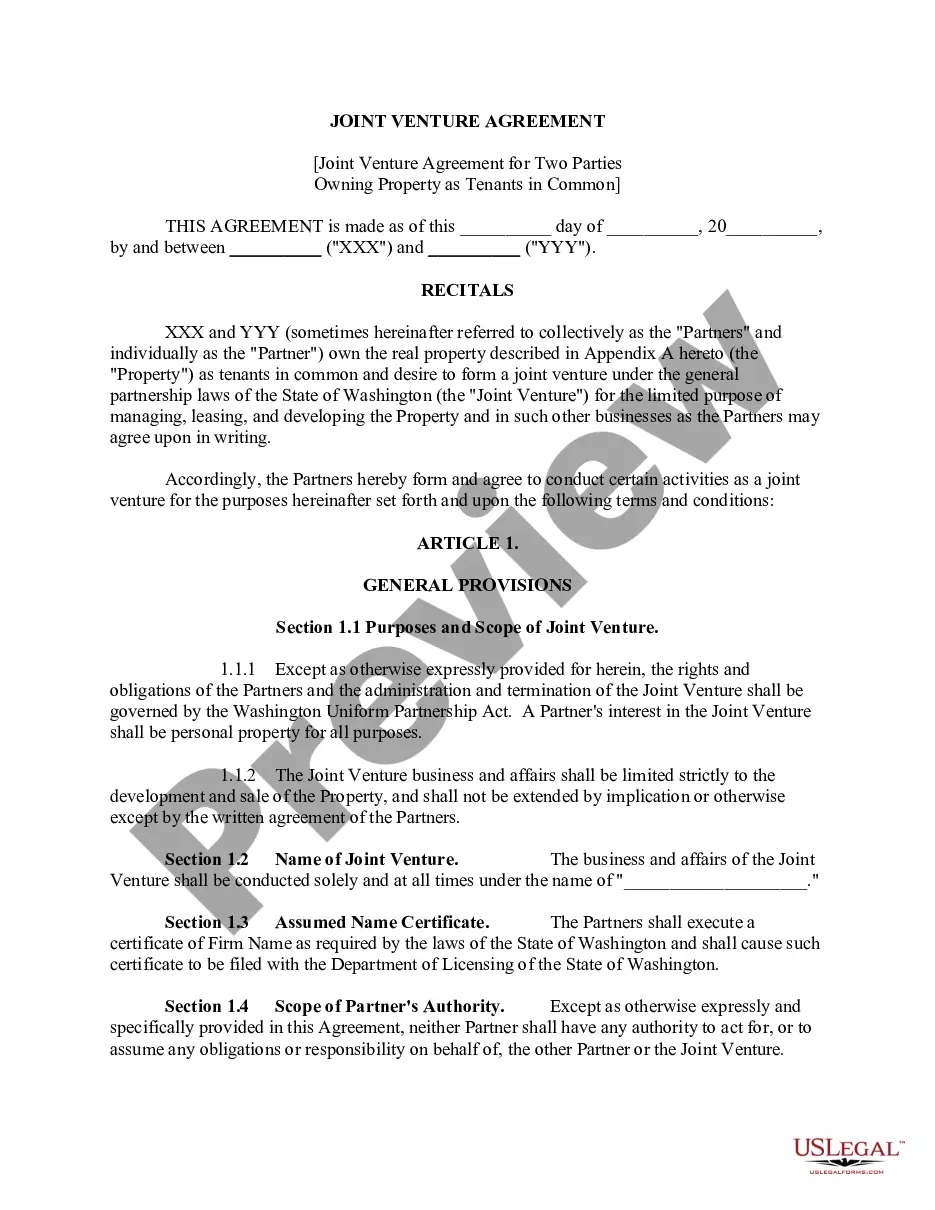
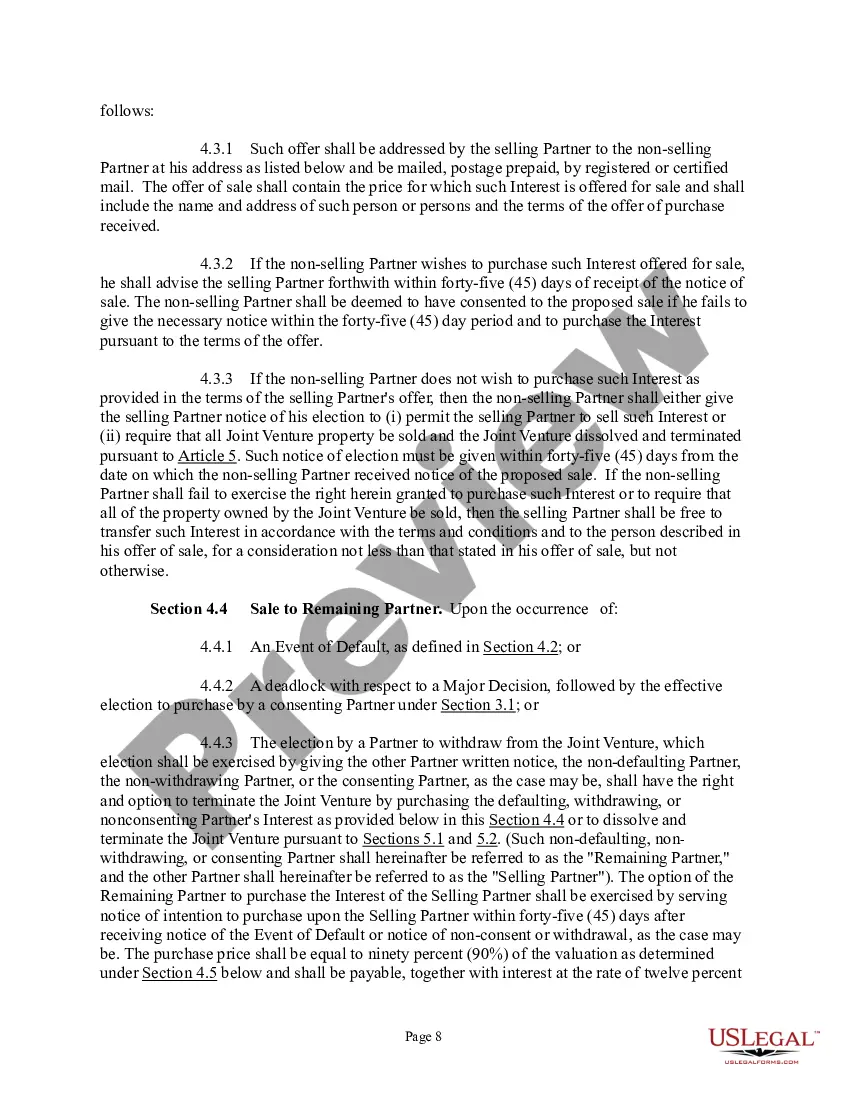
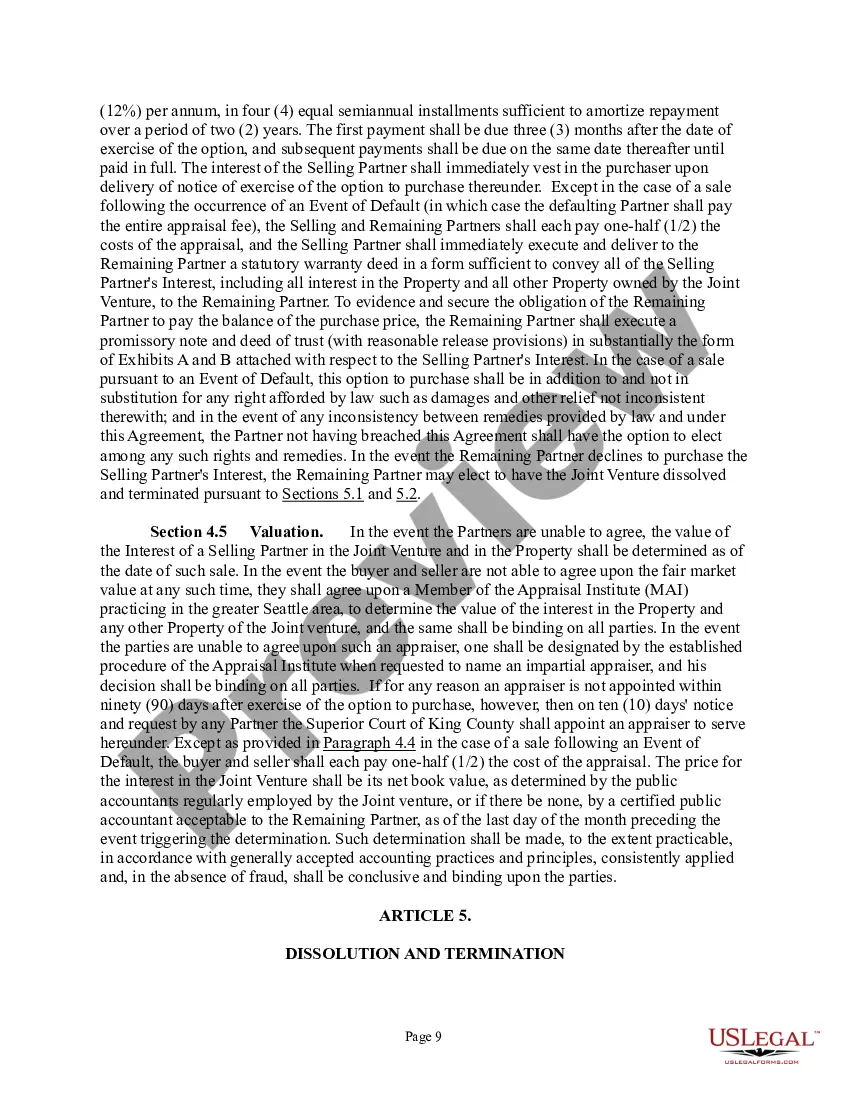
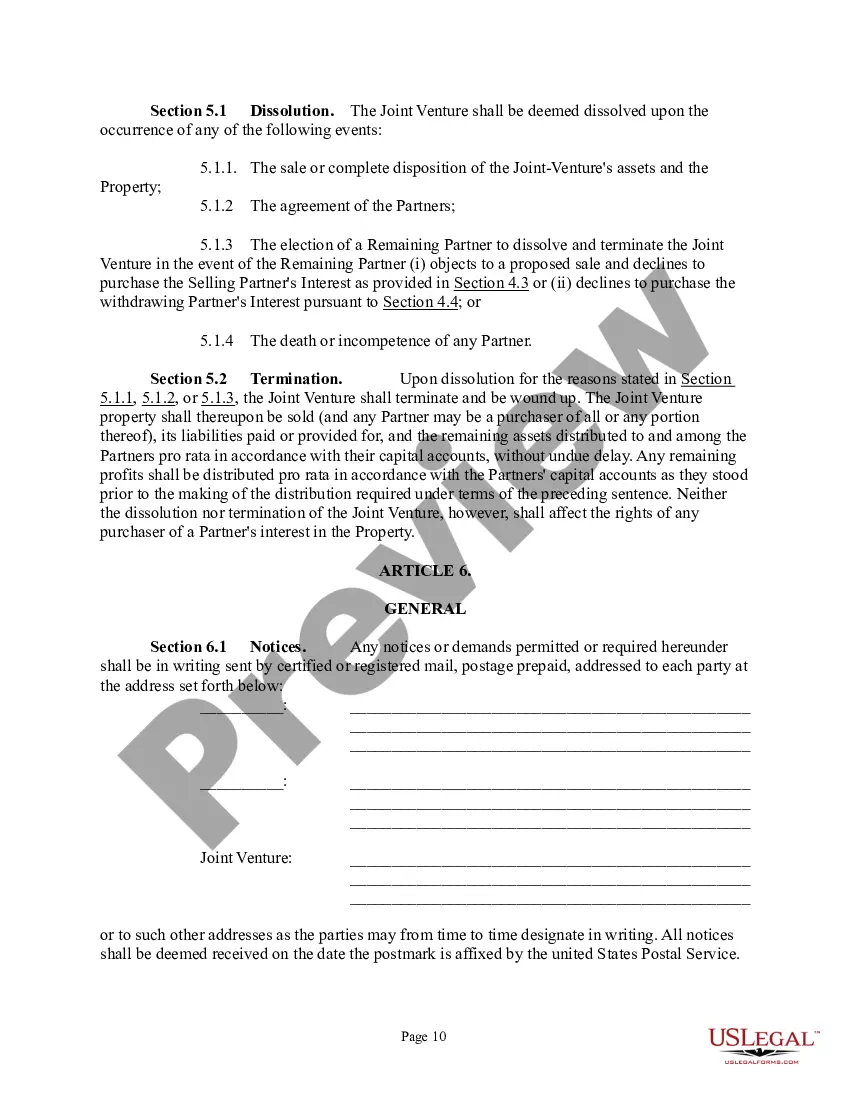
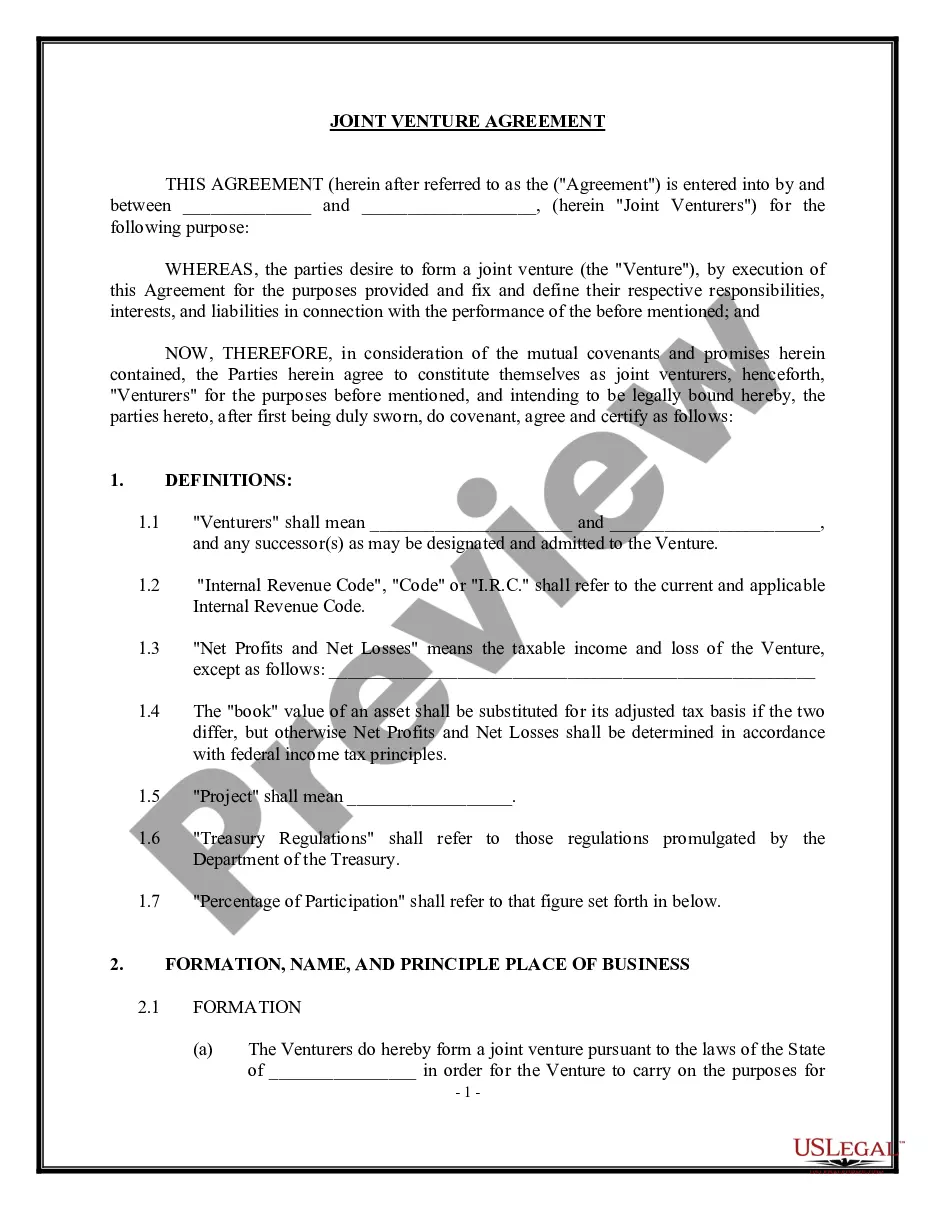
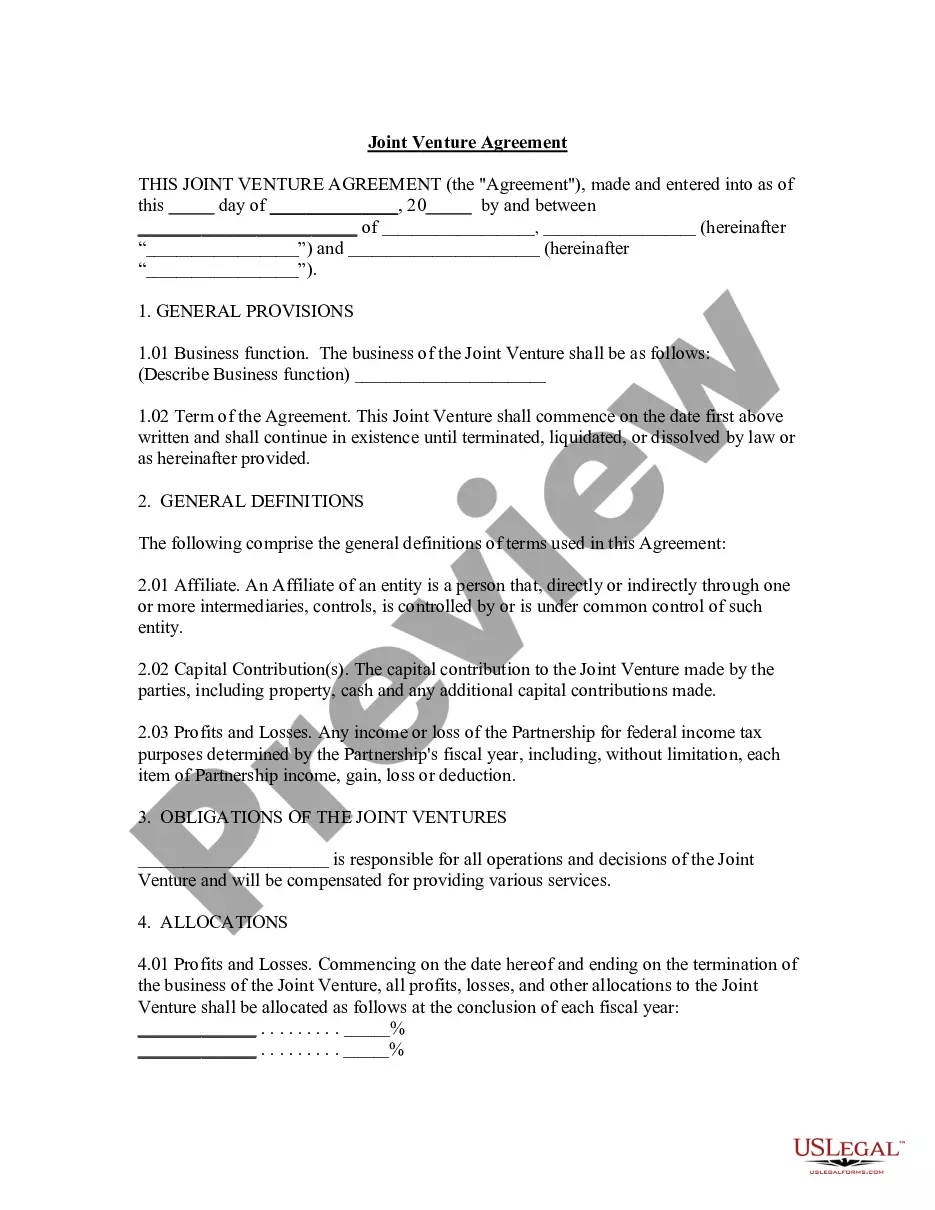
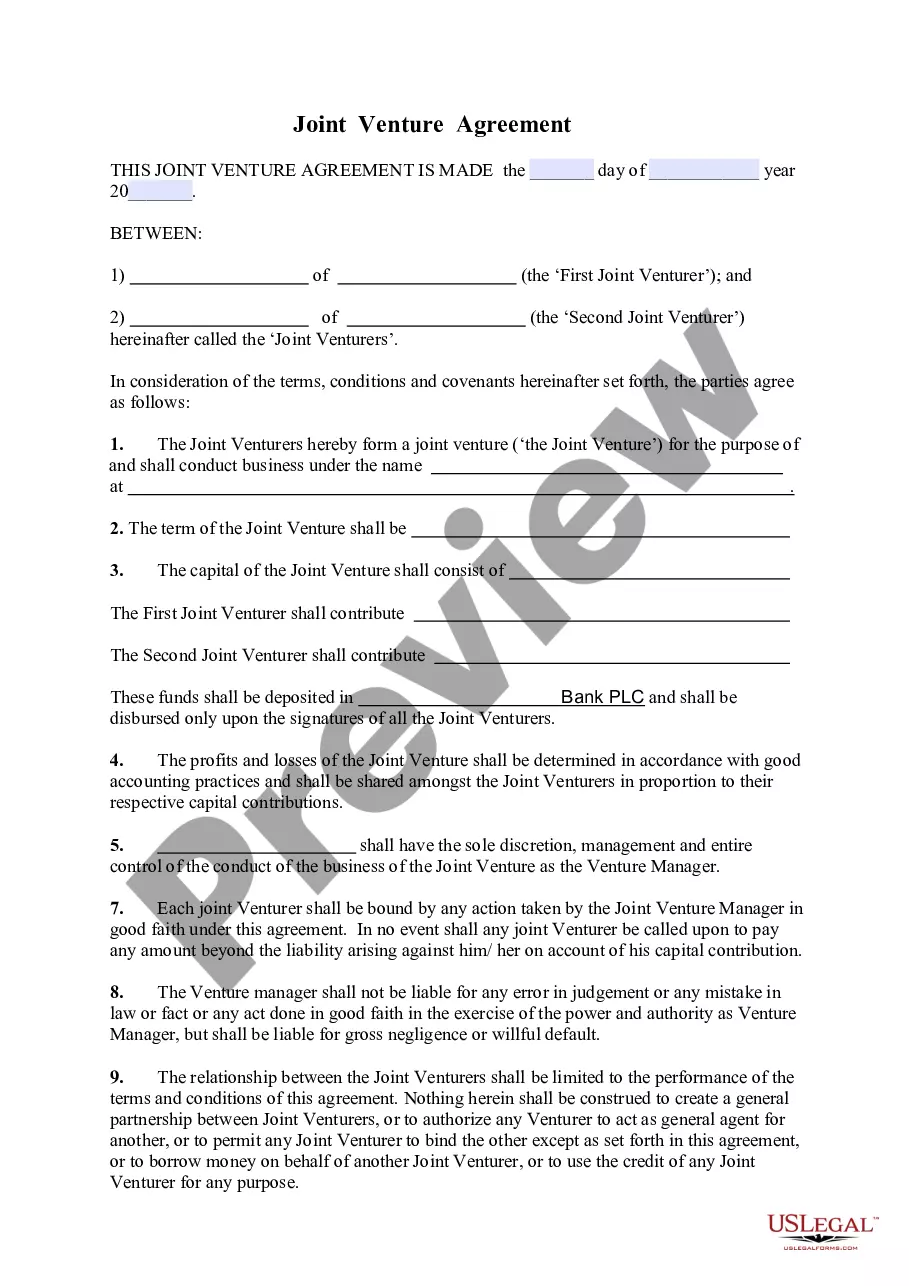
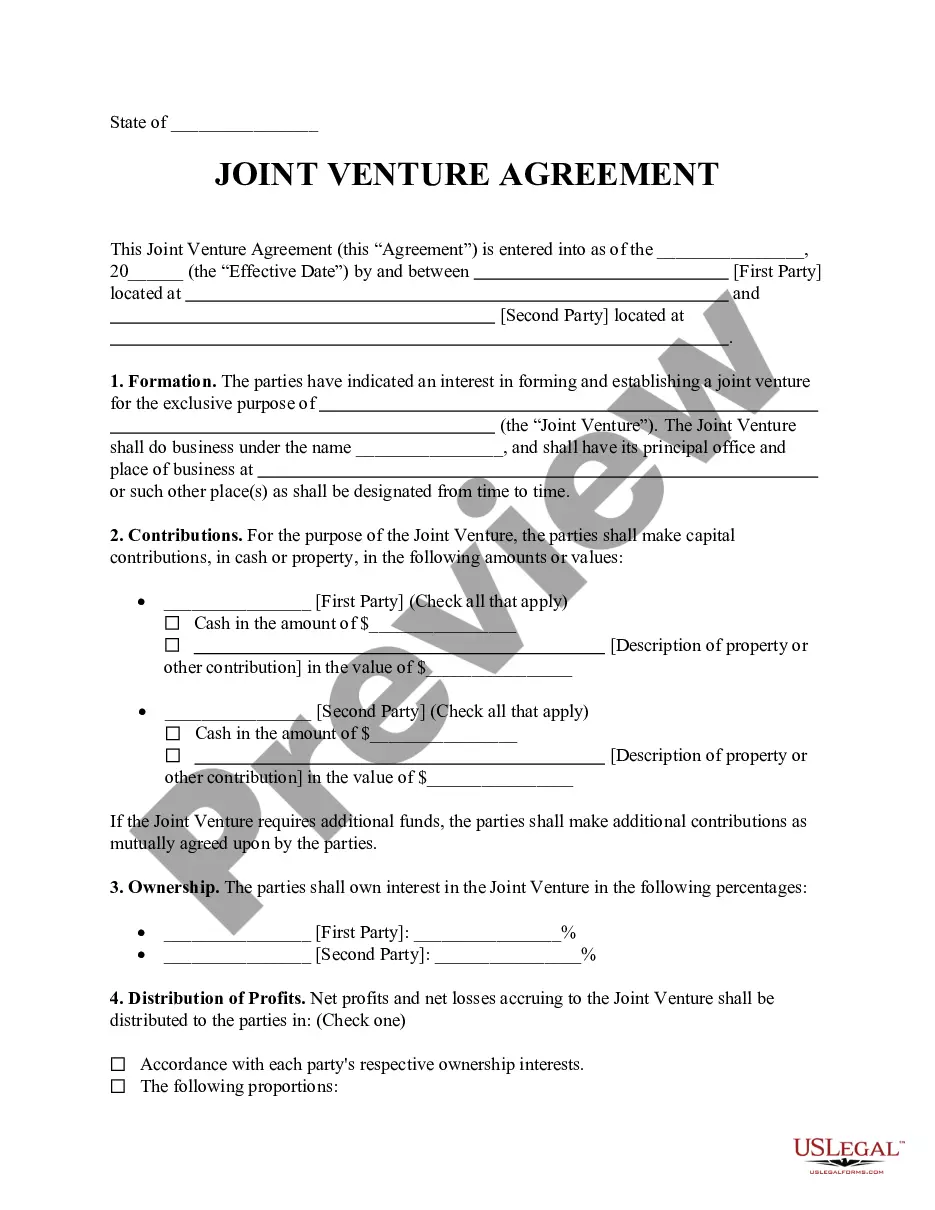
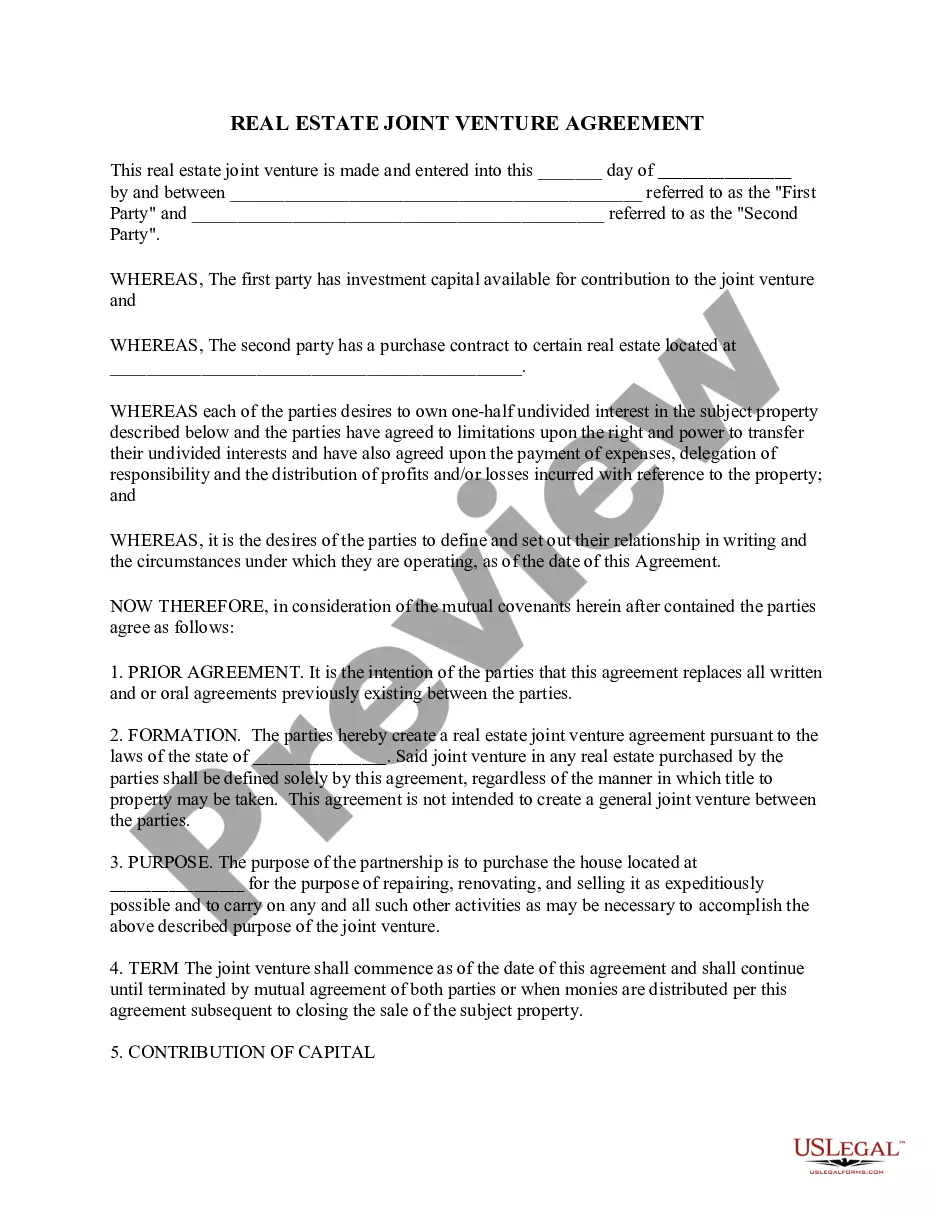
This Joint Venture Agreement is a legal document for two parties who co-own property as tenants in common. It establishes a joint venture to manage, lease, and develop the property while outlining the roles and responsibilities of each partner. Unlike general property ownership agreements, this form enables both parties to collaborate in a structured manner, protecting their legal interests and ensuring smooth operations of the joint venture.
Form components explained
- Recitals: Outlines the intention of the partners to form the joint venture.
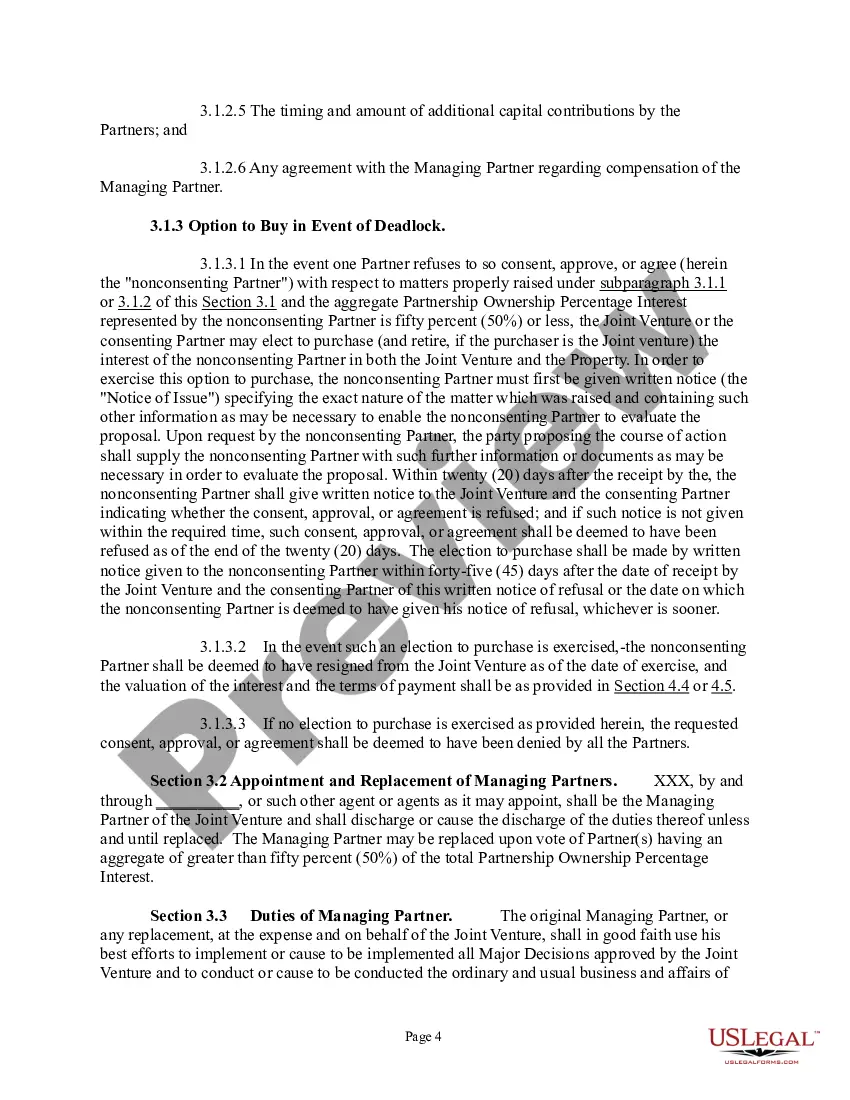
- General Provisions: Governs the rights and obligations of the partners and management terms of the joint venture.
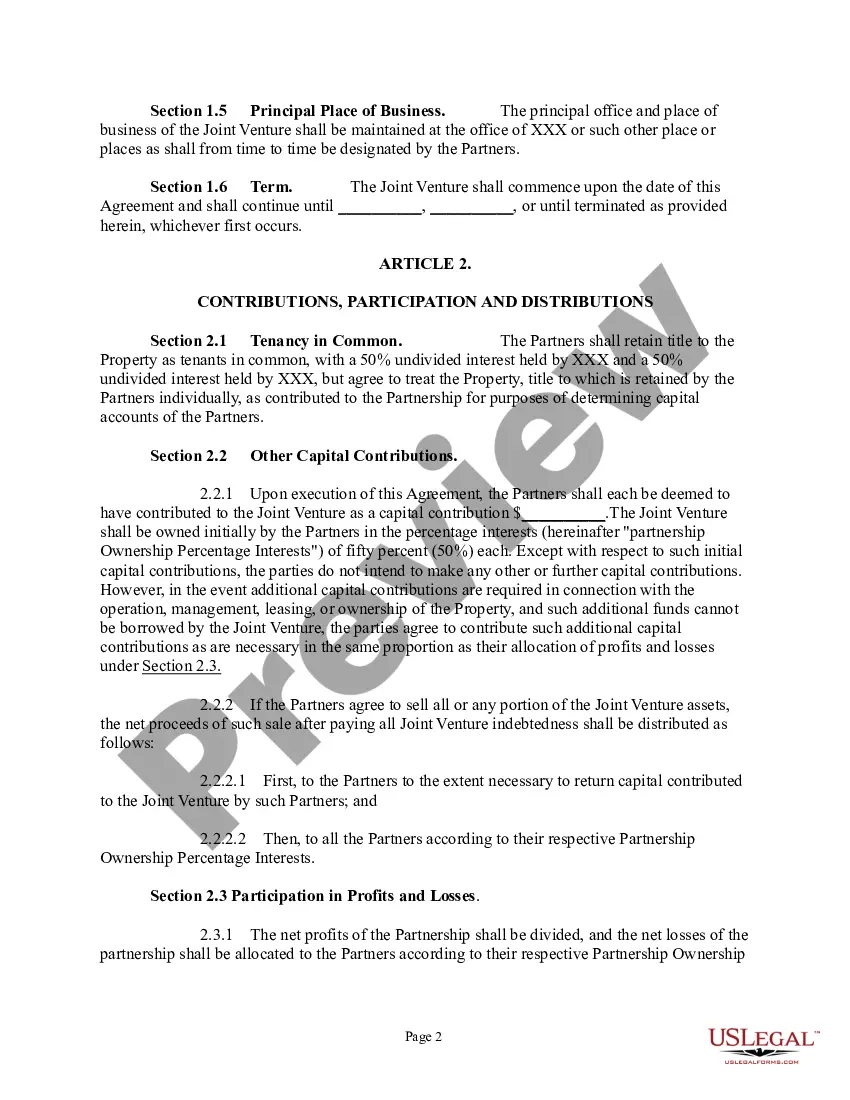
- Contributions, Participation and Distributions: Details capital contributions, profit sharing, and the management of finances.
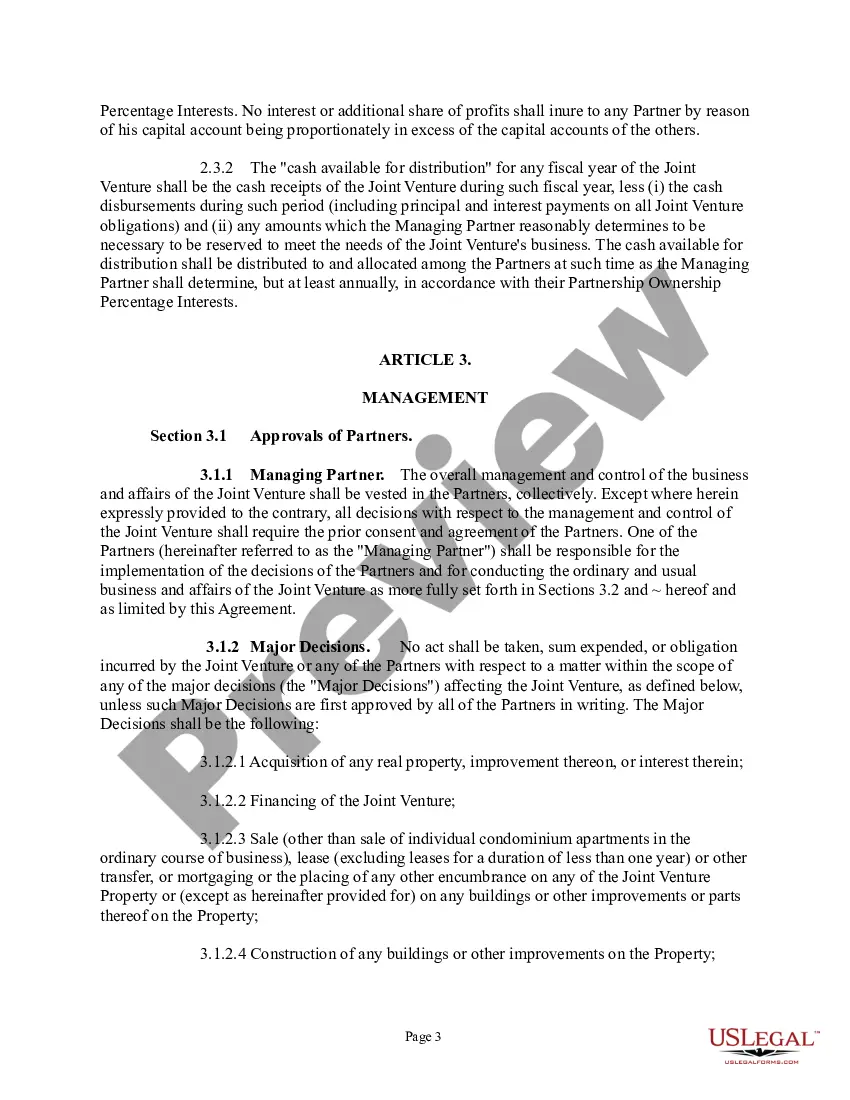
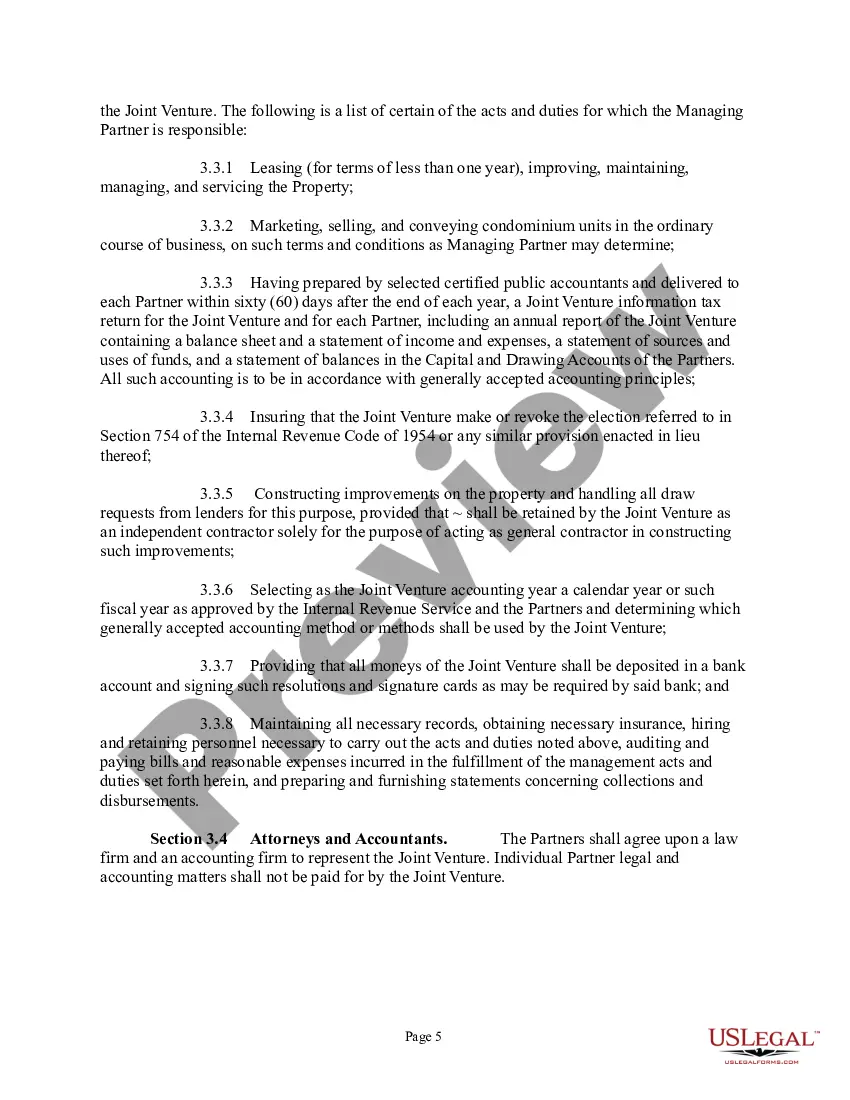
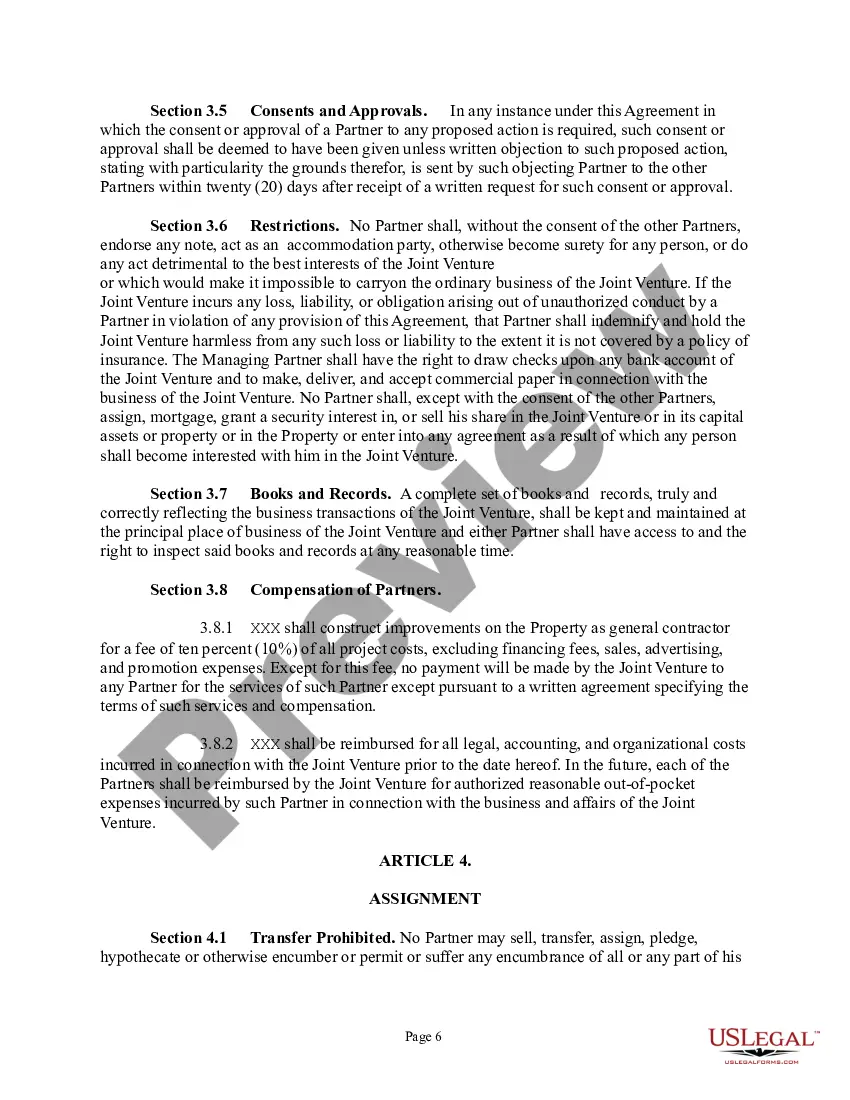
- Management: Defines management structure and decision-making processes.
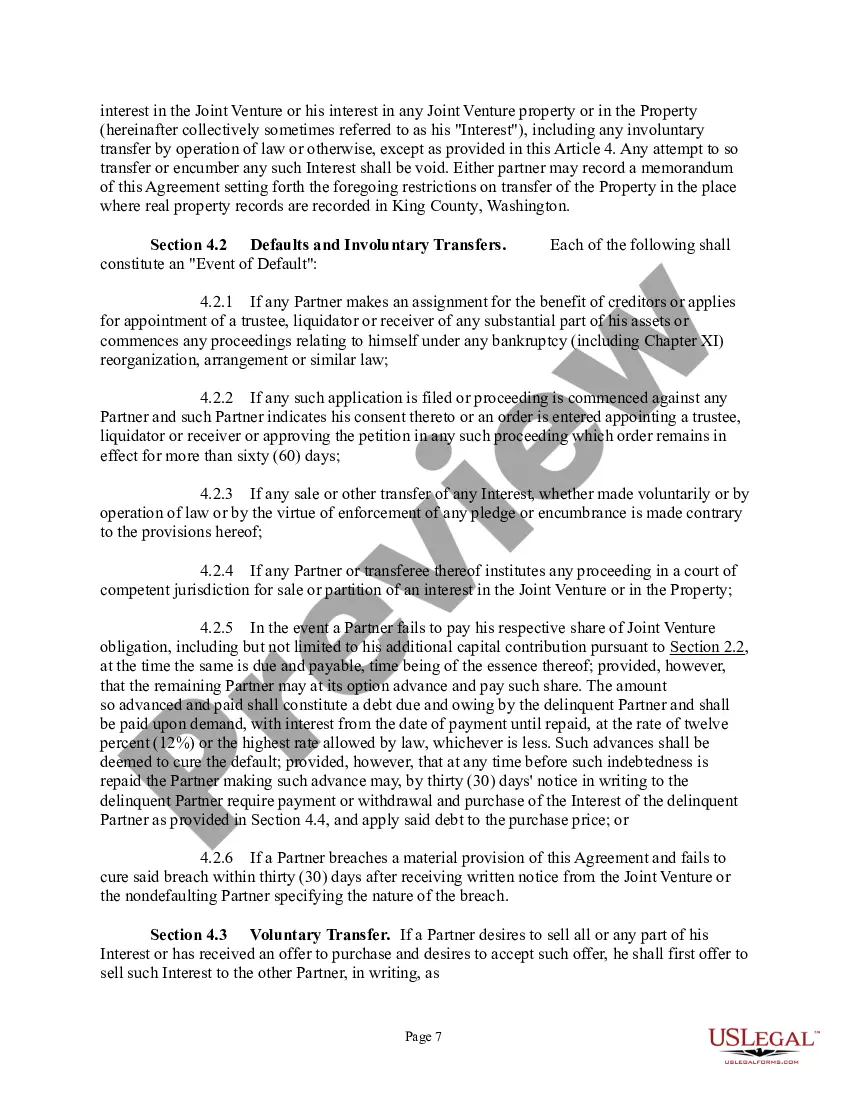
- Assignment: Regulates the transfer of interests in the joint venture.
- Dissolution: Specifies the conditions under which the joint venture can be dissolved.

Common use cases
This Joint Venture Agreement is necessary when two or more parties decide to jointly own and manage property as tenants in common. It is particularly useful in real estate ventures where both partners want to participate in the decision-making process, share financial responsibilities, and outline clear terms for operations, profit sharing, and exit strategies. This agreement can help prevent disputes by clearly defining each partner's rights and responsibilities.
Who should use this form
- Individuals or entities entering a joint venture for property ownership.
- Partners who want to specify their roles and contributions in managing the property.
- Real estate investors looking to collaboratively develop or lease a property.
Completing this form step by step
- Identify the parties involved, inserting their names and contact information.
- Describe the property being jointly owned and any specific terms related to its management.
- Specify the capital contributions from each partner, including any initial funding and future obligations.
- Establish the decision-making processes and how profits and losses will be shared.
- Enter the duration of the joint venture and conditions for dissolution, if needed.
Does this form need to be notarized?
This form does not typically require notarization unless specified by local law. However, it is advisable to consult with an attorney or local regulations to confirm any notarization requirements specific to your jurisdiction.
Get your form ready online
Our built-in tools help you complete, sign, share, and store your documents in one place.
Make edits, fill in missing information, and update formatting in US Legal Forms—just like you would in MS Word.
Download a copy, print it, send it by email, or mail it via USPS—whatever works best for your next step.
Sign and collect signatures with our SignNow integration. Send to multiple recipients, set reminders, and more. Go Premium to unlock E-Sign.
If this form requires notarization, complete it online through a secure video call—no need to meet a notary in person or wait for an appointment.
We protect your documents and personal data by following strict security and privacy standards.

Make edits, fill in missing information, and update formatting in US Legal Forms—just like you would in MS Word.

Download a copy, print it, send it by email, or mail it via USPS—whatever works best for your next step.

Sign and collect signatures with our SignNow integration. Send to multiple recipients, set reminders, and more. Go Premium to unlock E-Sign.

If this form requires notarization, complete it online through a secure video call—no need to meet a notary in person or wait for an appointment.

We protect your documents and personal data by following strict security and privacy standards.
Typical mistakes to avoid
- Failing to clearly define each partner's responsibilities and contributions.
- Not specifying how disputes will be resolved, leading to potential conflicts.
- Overlooking the need for a management structure, which can cause confusion in operations.
Benefits of completing this form online
- Convenience of downloading the form anytime, anywhere.
- Editability allows customization according to specific needs and preferences.
- Reliability of a document drafted by licensed attorneys, ensuring legal compliance.
Looking for another form?
Form popularity
FAQ
These joint venture examples involve some of the world's most famous businesses. Caradigm (Microsoft Corporation + General Electric) Hulu. Barnes & Noble + Starbucks. Fiat Chrysler + Google. Samsung + Spotify. SABmiller + Molson Coors Brewing Company. Ford + Toyota.
Four types of joint ventures Project-based joint venture. A project-based joint venture has two or more parties working on a specific project.Functional-based joint venture.Vertical joint venture.Horizontal joint venture.
A tenancy in common is a specific type of ownership of real property by two or more parties. It is similar to a joint venture; however, a joint venture usually is recognized as a business entity that has been established to accomplish a specific purpose.
From a structural point of view, there are three different types of Joint Ventures ? Corporations, Partnerships or Limited Liability Companies (LLCs). The difference between the three are about how the responsibilities are shared.
An obvious advantage of holding title as tenants in common is that it allows persons without the financial means to purchase an entire property on their own to still own an undivided and transferable share of property. Tenancy in common also generally allows for more tenants to be added over time.
The common elements necessary to establish the existence of a joint venture are an express or implied contract, which includes the following elements: (1) a community of interest in the performance of the common purpose; (2) joint control or right of control; (3) a joint proprietary interest in the subject matter; (4)
Types of Joint Ventures Project Joint Venture. This is the most common form of joint venture.Functional Joint Venture.Vertical Joint Venture.Horizontal Joint Venture.
Cons All tenants are equally liable for debts and property tax. It only takes one of the people involved to force the sale of the property. You don't automatically get the property rights of a fellow tenant when they die.