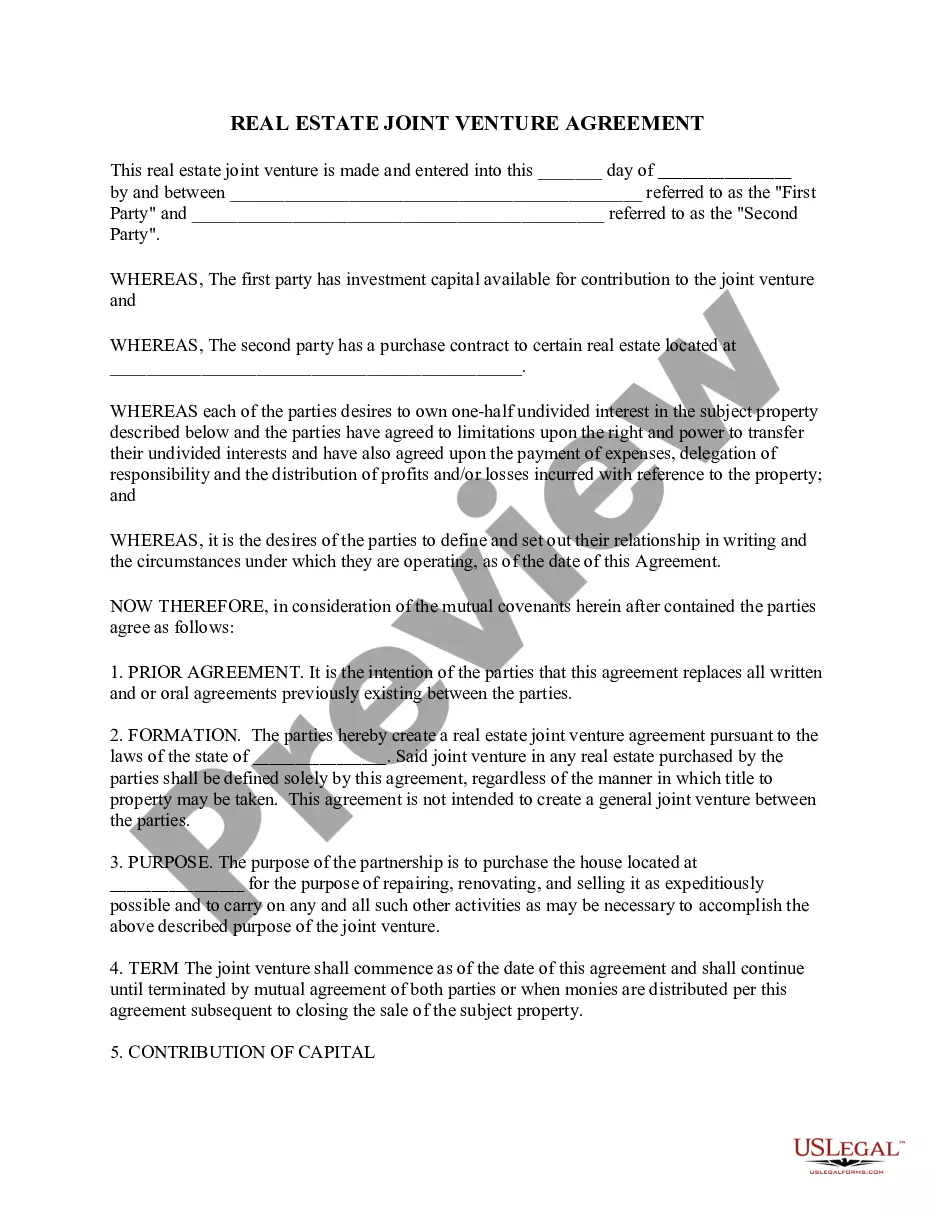
Real Estate Joint Venture Agreement
What this document covers
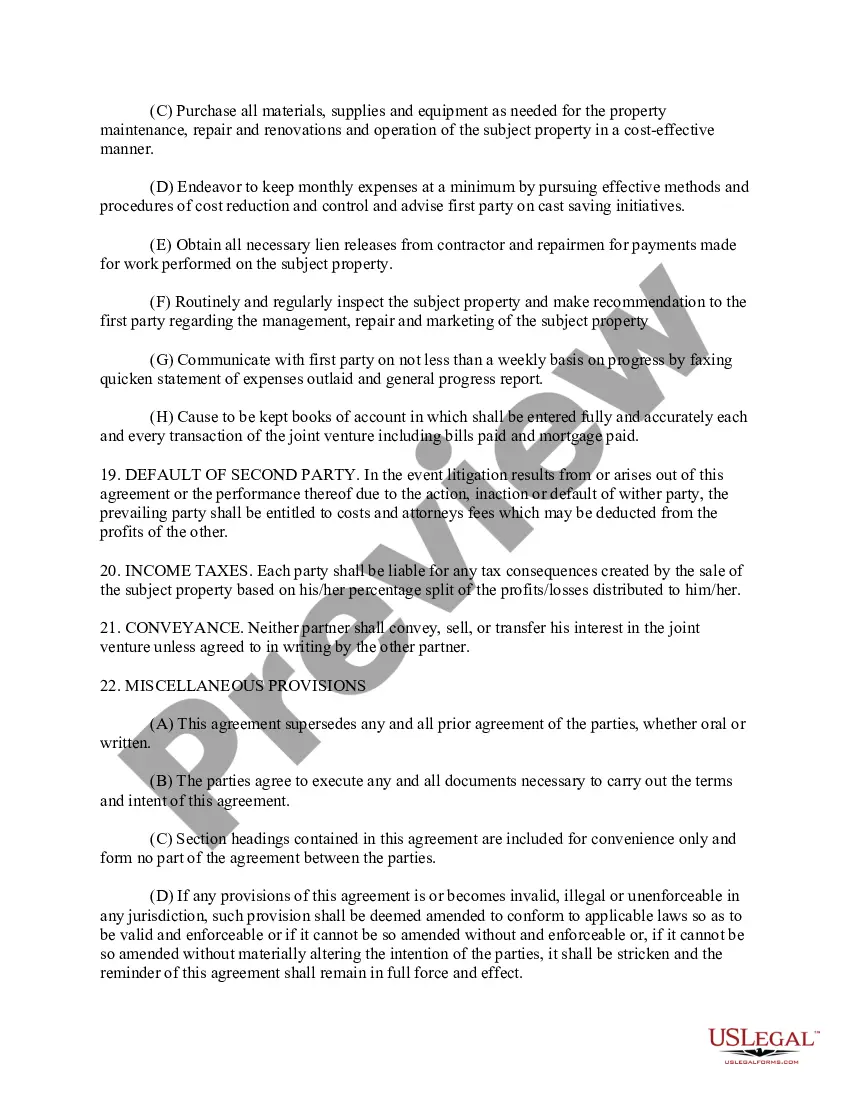
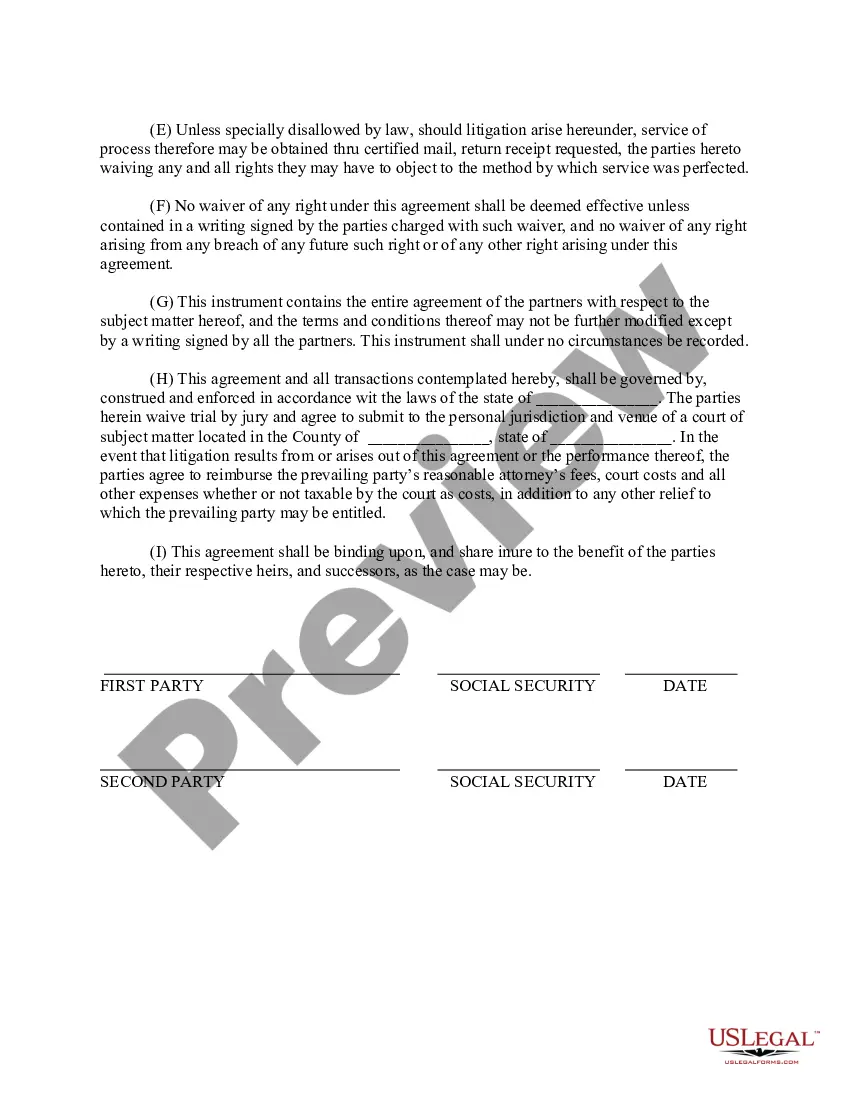
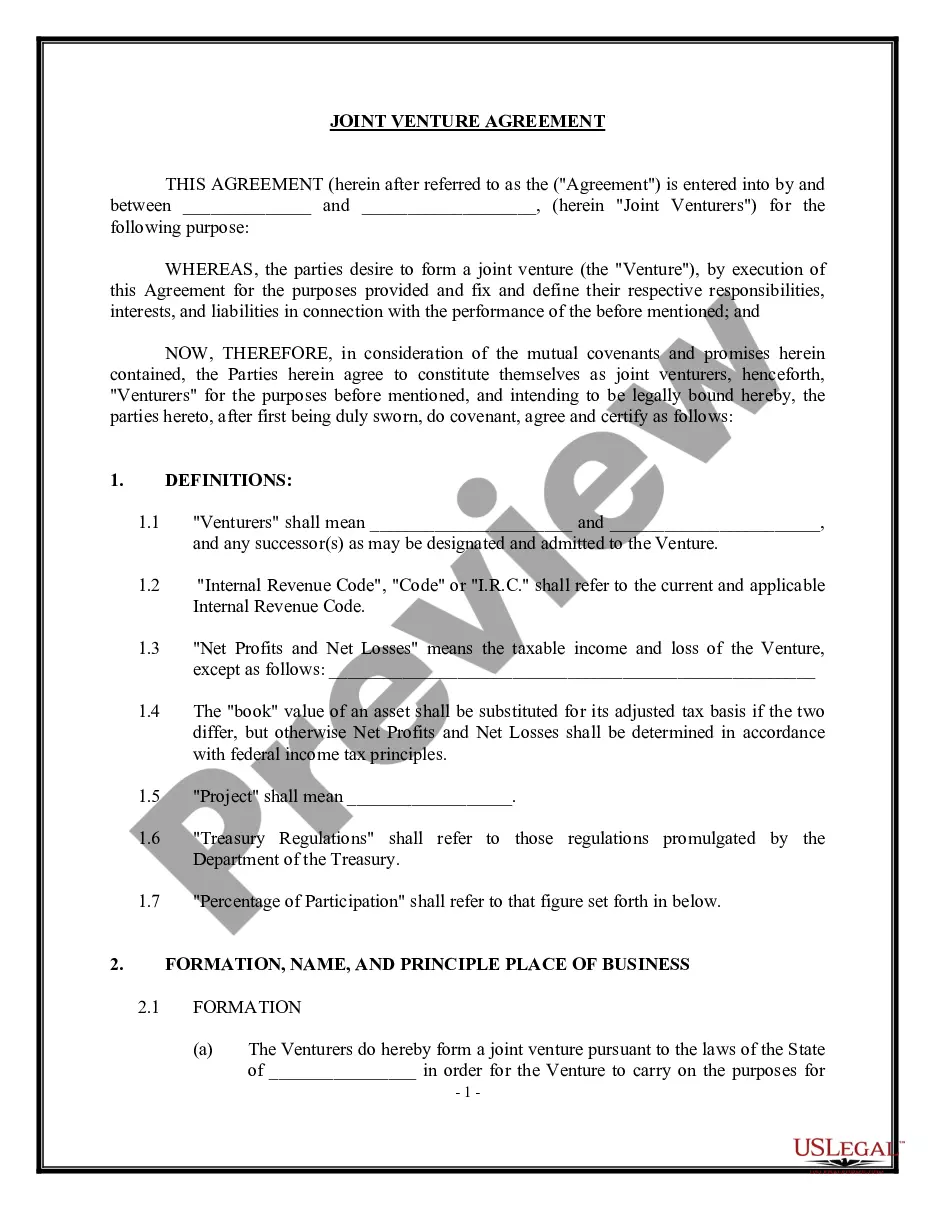
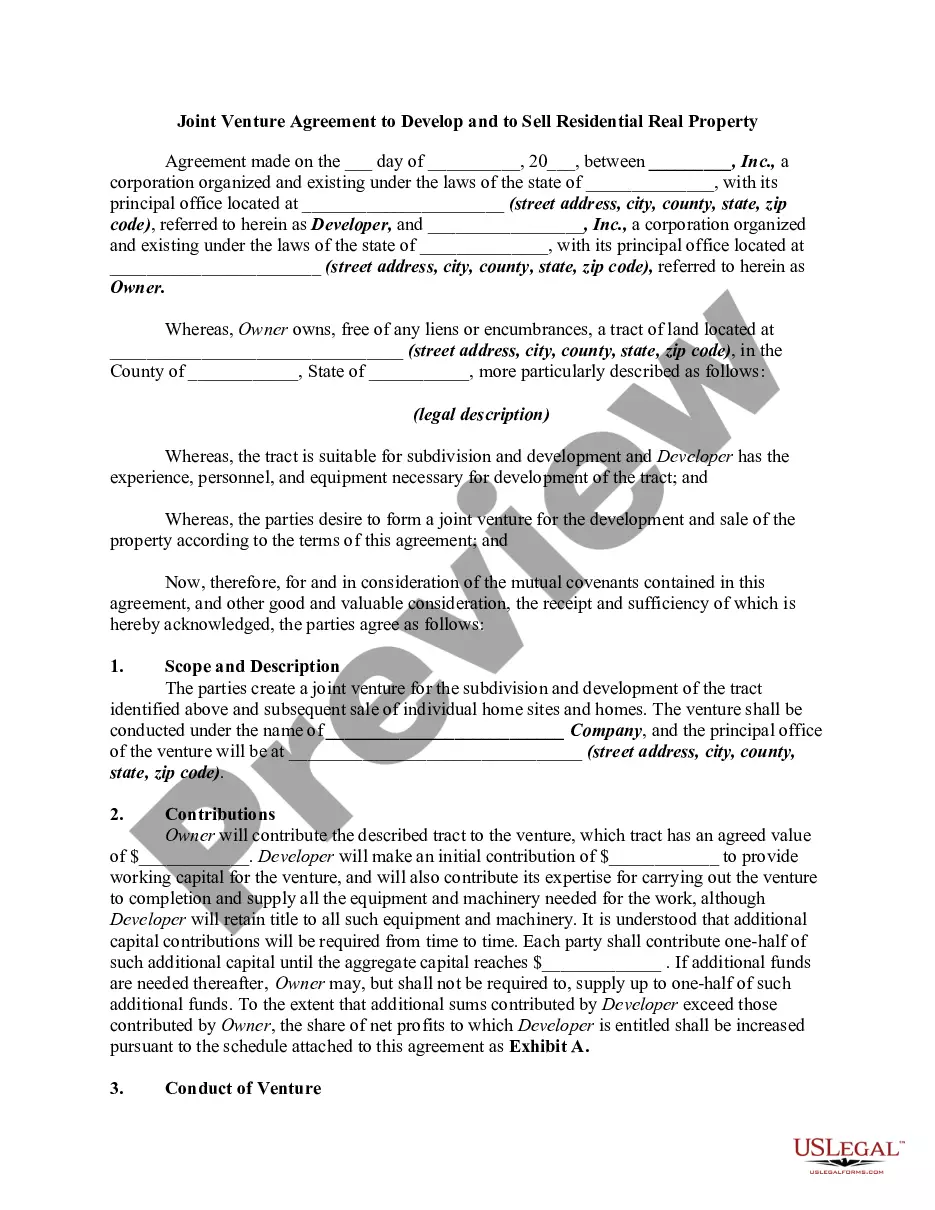
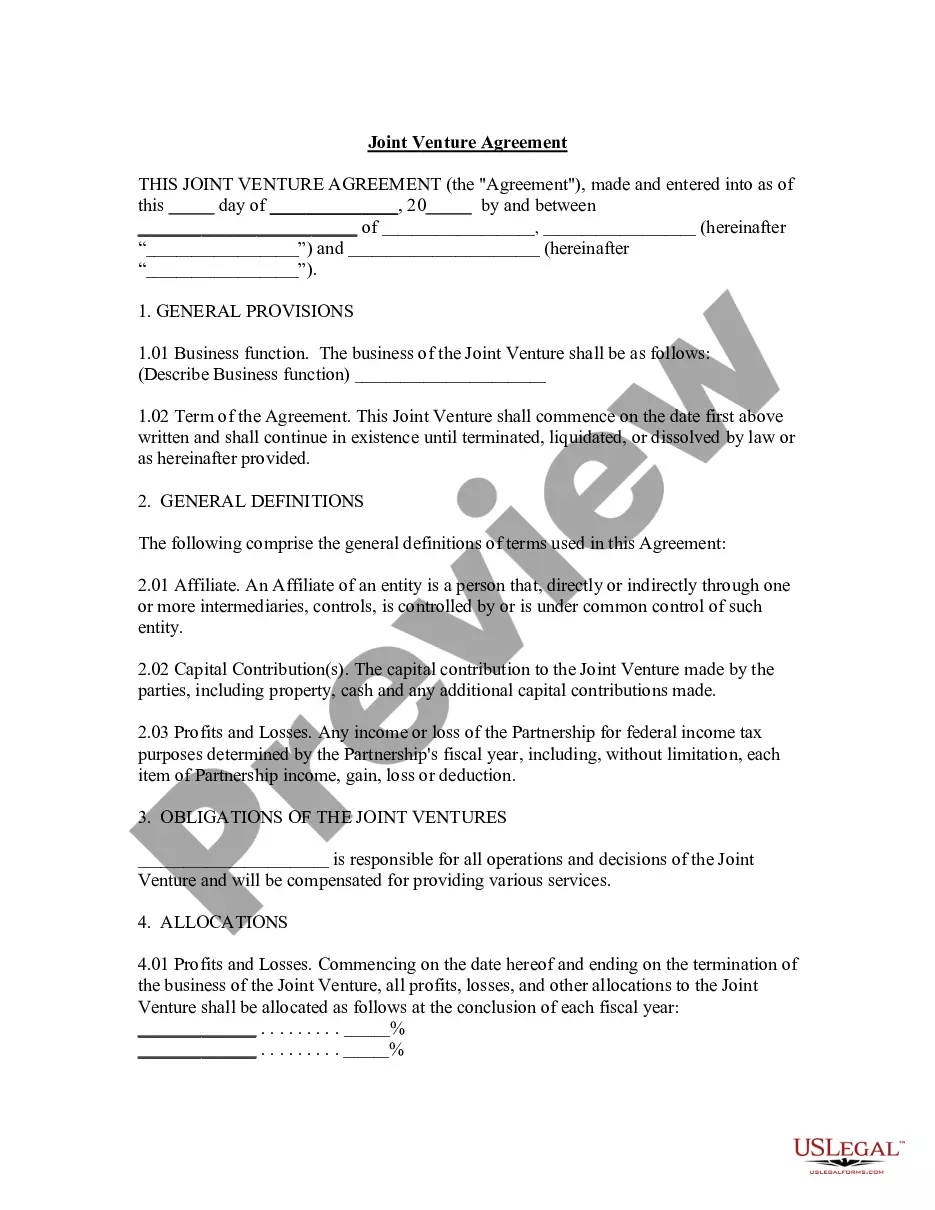
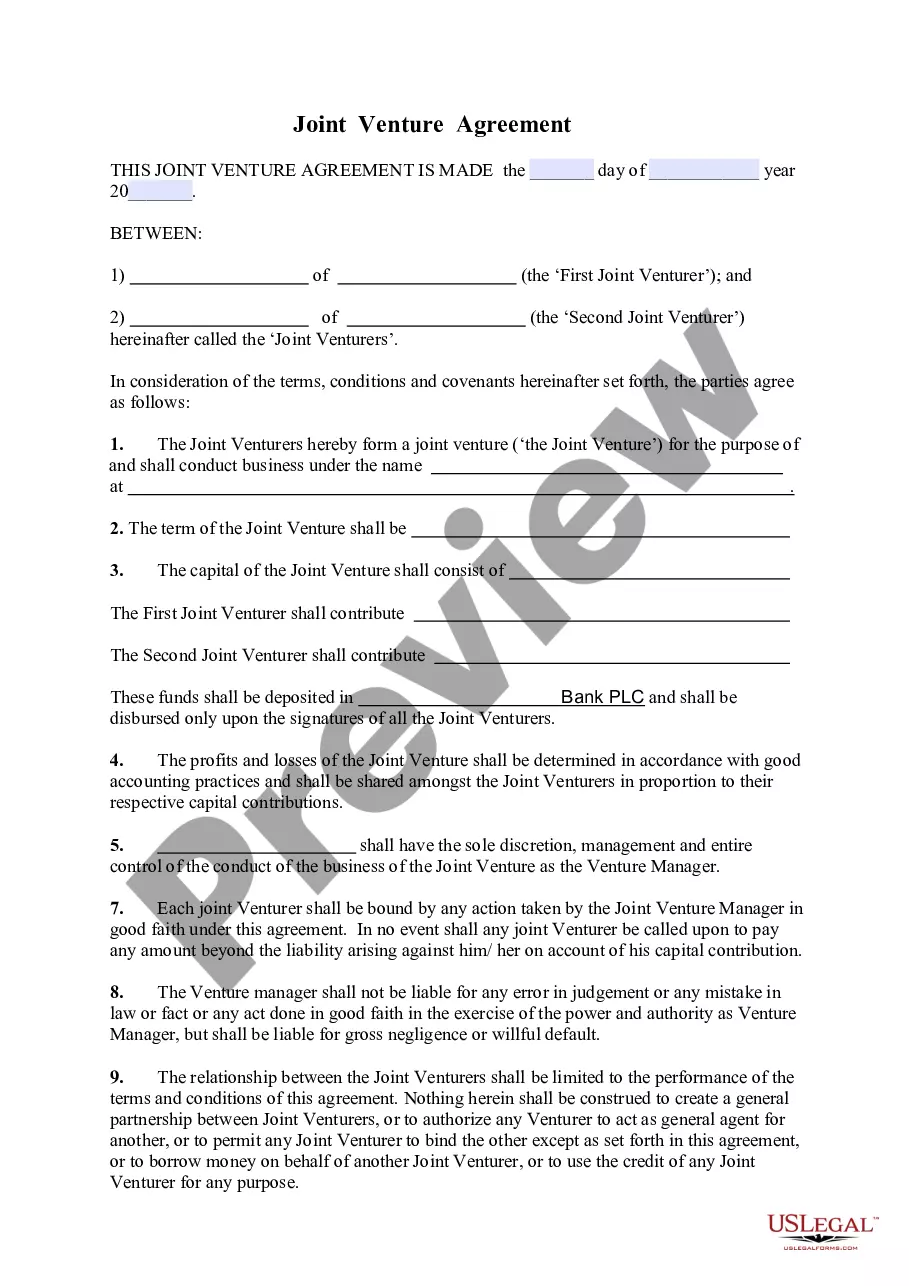
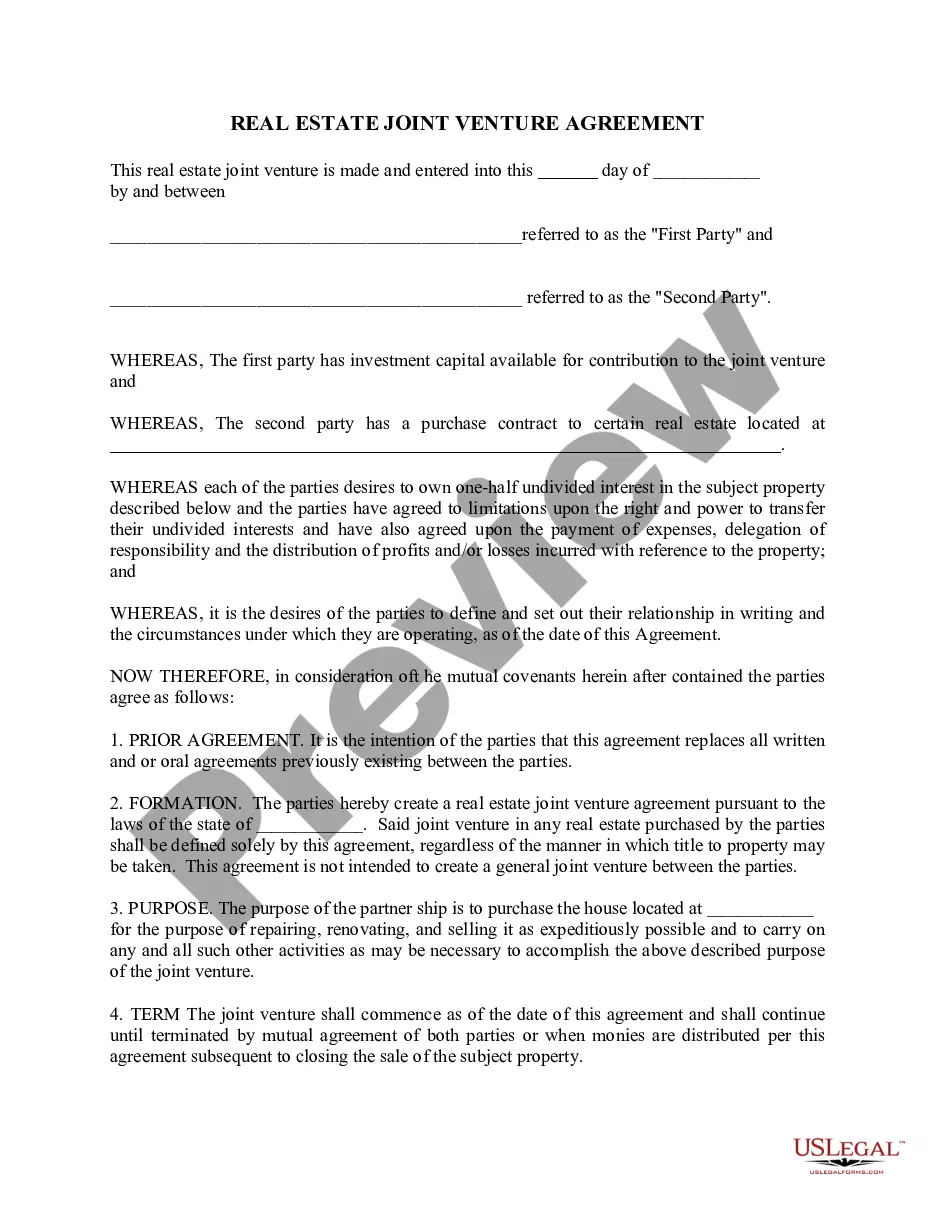
The Real Estate Joint Venture Agreement is a legal document that outlines the terms and conditions under which two or more parties collaborate on a real estate project. This form allows parties to define their roles, contributions, and profit-sharing arrangements while protecting their interests. Unlike other real estate agreements, this document specifically addresses the joint venture structure, making it suitable for co-investors looking to leverage resources together.
Form components explained
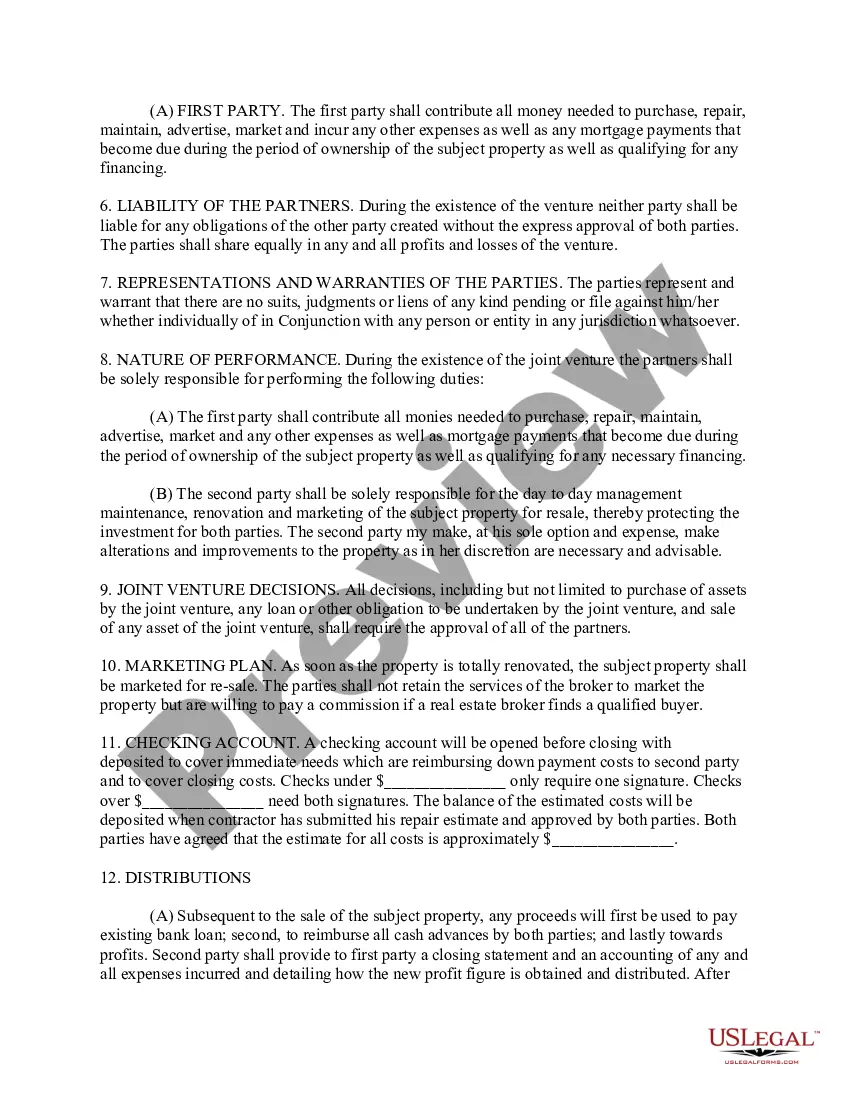
- Identification of the parties involved in the joint venture.
- Capital contribution requirements for each party.
- Distribution of profits and losses from the real estate project.
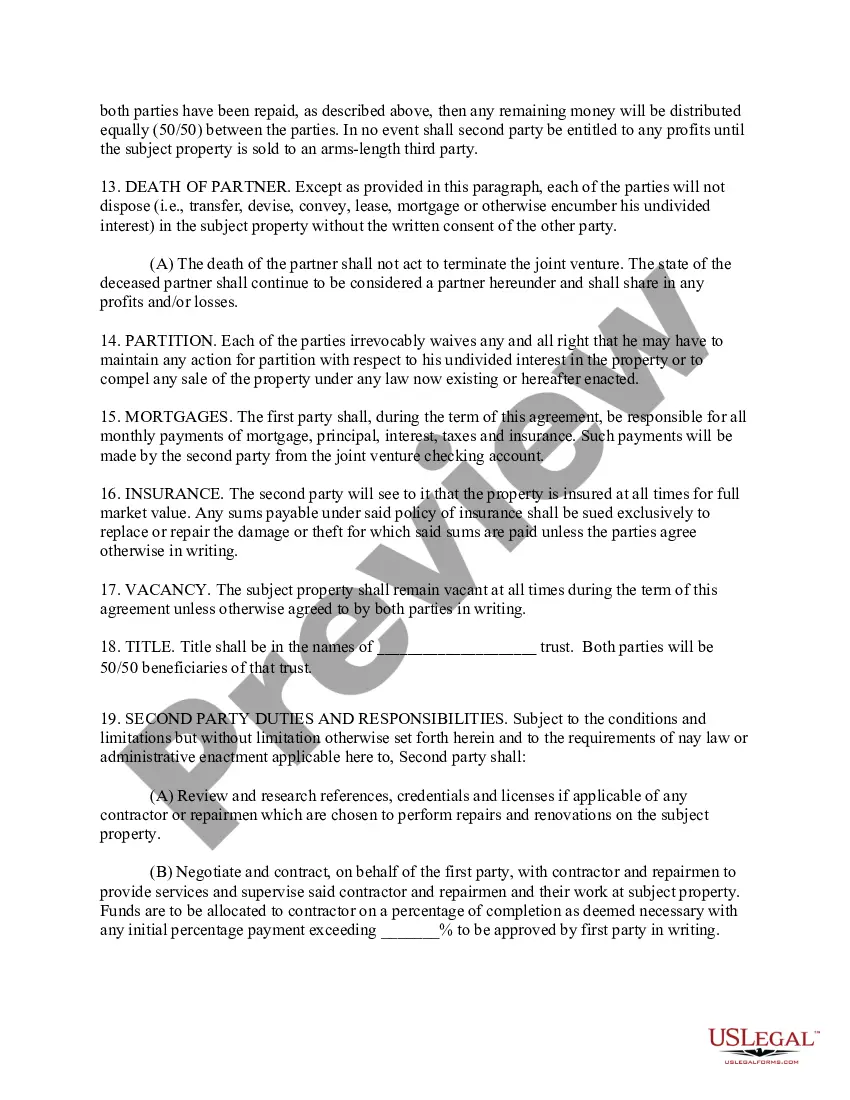
- Decision-making process for joint venture actions.
- Responsibilities and duties of each party regarding property management and renovation.
- Termination conditions for the joint venture.
When this form is needed
This Real Estate Joint Venture Agreement is used when two or more individuals or entities wish to collaborate on the purchase, renovation, and sale of a property. It is particularly useful in situations where parties want to pool resources for investment, manage shared risks, and define clear operational structures for the venture. Consider using this form when planning to begin a joint project in real estate, such as buying a fix-and-flip property, developing new construction, or managing multi-family rental properties.
Intended users of this form
- Real estate investors seeking to partner with others on property projects.
- Individuals with varying expertise and resources who want to collaborate in real estate ventures.
- Real estate professionals looking to formalize their partnership agreements.
- Anyone involved in investment opportunities requiring clear delineation of roles and profits.
How to prepare this document
- Identify the parties involved by entering their names and contact information.
- Specify the real estate property by providing the property address and description.
- Detail each party's capital contributions, including monetary amounts and responsibilities for expenses.
- Outline the responsibilities for property management, renovations, and marketing duties assigned to each party.
- Include terms for profit distribution, decision-making processes, and termination conditions of the joint venture.
Notarization guidance
This form does not typically require notarization unless specified by local law. However, parties may choose to have it notarized for added legal assurance and to avoid future disputes. Consider legal advice to understand if notarization is beneficial in your specific situation.
Get your form ready online
Our built-in tools help you complete, sign, share, and store your documents in one place.
Make edits, fill in missing information, and update formatting in US Legal Forms—just like you would in MS Word.
Download a copy, print it, send it by email, or mail it via USPS—whatever works best for your next step.
Sign and collect signatures with our SignNow integration. Send to multiple recipients, set reminders, and more. Go Premium to unlock E-Sign.
If this form requires notarization, complete it online through a secure video call—no need to meet a notary in person or wait for an appointment.
We protect your documents and personal data by following strict security and privacy standards.

Make edits, fill in missing information, and update formatting in US Legal Forms—just like you would in MS Word.

Download a copy, print it, send it by email, or mail it via USPS—whatever works best for your next step.

Sign and collect signatures with our SignNow integration. Send to multiple recipients, set reminders, and more. Go Premium to unlock E-Sign.

If this form requires notarization, complete it online through a secure video call—no need to meet a notary in person or wait for an appointment.

We protect your documents and personal data by following strict security and privacy standards.
Typical mistakes to avoid
- Failing to clearly define the roles and responsibilities of each party.
- Not specifying the profit-sharing ratio leading to disputes later.
- Overlooking state-specific requirements related to joint ventures.
- Neglecting to include termination clauses which could lead to complications if the partnership ends.
Advantages of online completion
- Convenience of completing the form from any location at any time.
- Editable format allows customization to meet specific partnership terms.
- Access to professionally drafted templates ensures legal credibility.
- Streamlined process for navigating legal complexities associated with joint ventures.
Looking for another form?
Form popularity
FAQ
What is a joint venture (JV) in real estate? Simply put, a joint venture in real estate is when two or more investors pool their resources and knowledge for a development project or investment. Each party maintains their own unique business identity while working together.
A joint venture (JV) is a business arrangement in which two or more parties agree to pool their resources for the purpose of accomplishing a specific task. This task can be a new project or any other business activity. Each of the participants in a JV is responsible for profits, losses, and costs associated with it.
Taxi giant Uber and heavy vehicle manufacturer Volvo announced a joint venture agreement to develop self-driving cars. The two companies planned to jointly invest $300 million in the project, each contributing $150 million. Hence, the ownership ratio between the two companies was 50%-50%.
The JV contact should include legal names only, current addresses, and phone numbers to reach each member. By law, a joint venture's members are individuals who contribute capital, resources, and other assets to achieve the shared objective. The JV member will have to be able to sign on the company's behalf.
Structuring a real estate JV The 'investor' will typically be structured as a limited partnership managed by a general partner or other tax efficient vehicle. The investor vehicle will contract with the asset manager?owned by the operator investment vehicle?to form the JV entity.
Joint ventures can be complicated arrangements. While they offer strong advantages to businesses, they can be fraught with risk ? from a lack of transparency and trust to culture clashes than can be a drain on resources and harm operations for both parent companies.
Four types of joint ventures Project-based joint venture. A project-based joint venture has two or more parties working on a specific project.Functional-based joint venture.Vertical joint venture.Horizontal joint venture.