Condidentiality Agreement for Employees/Students at a University or other Higher Learning Institution
Understanding this form
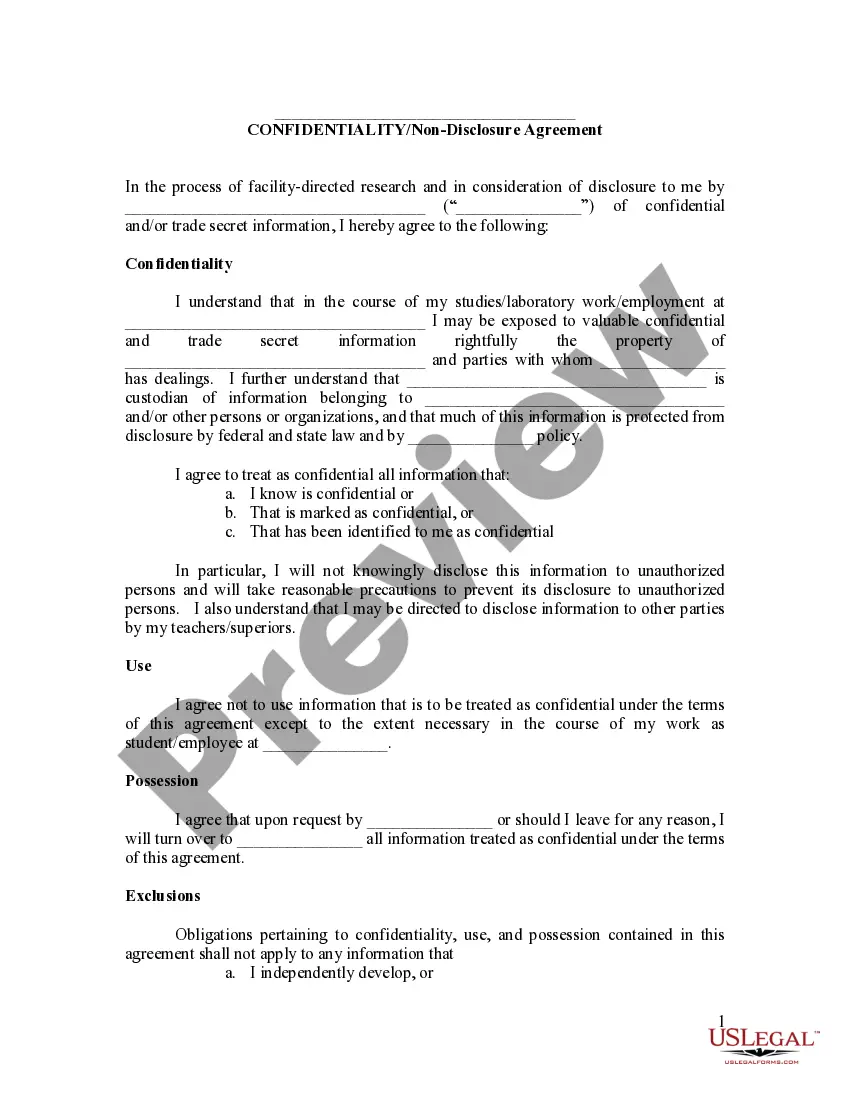
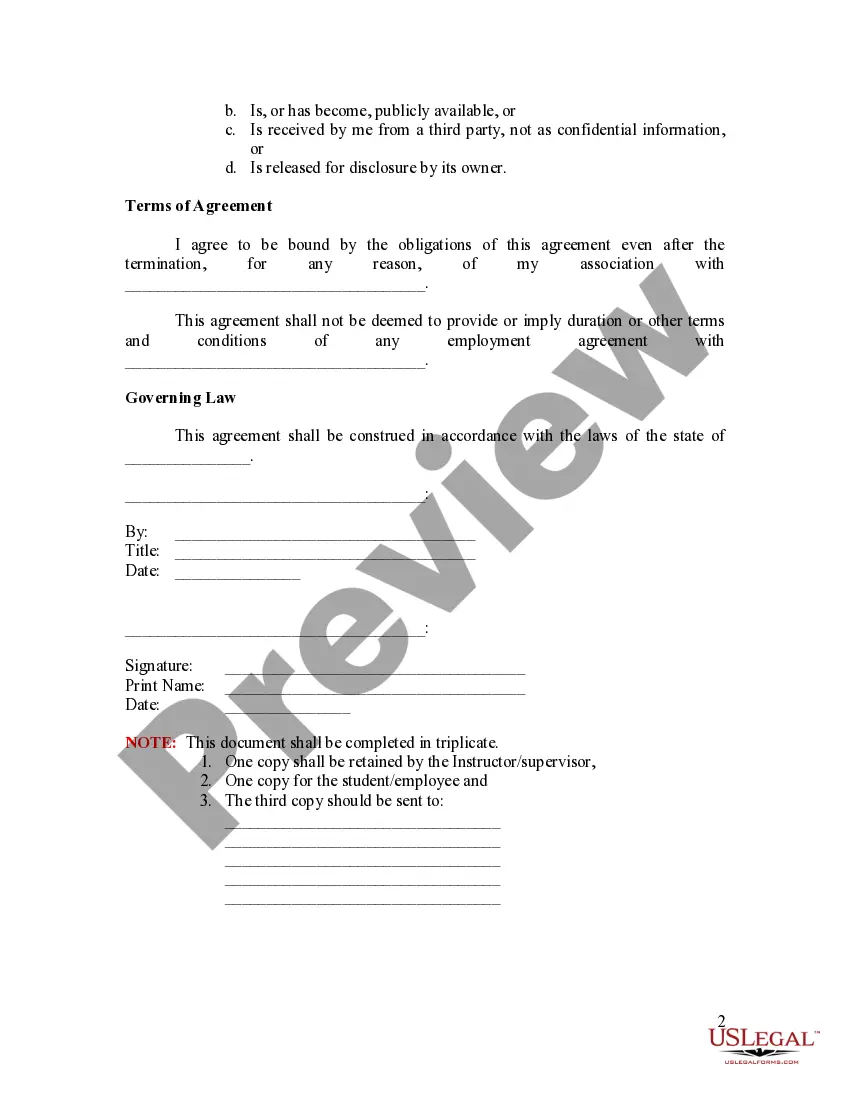
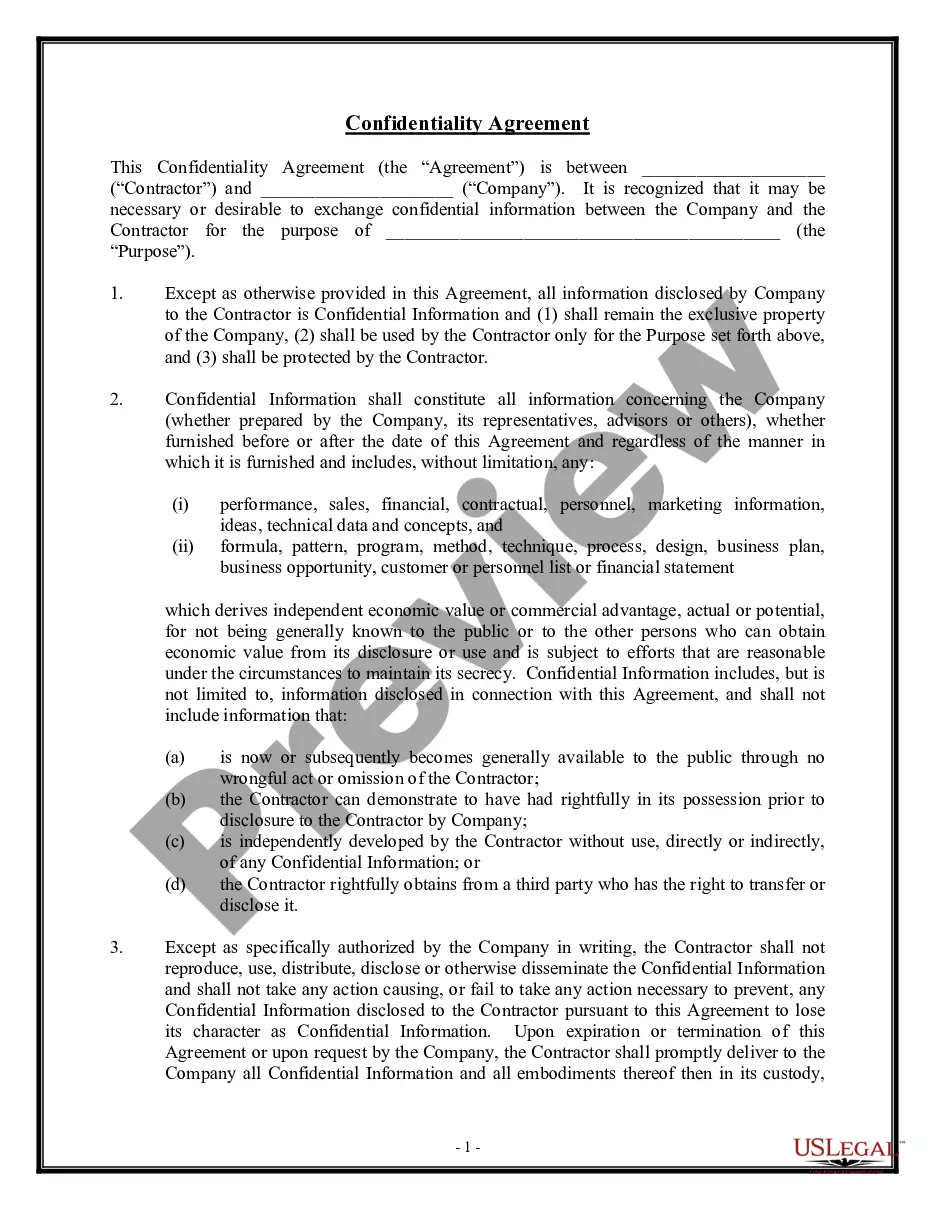
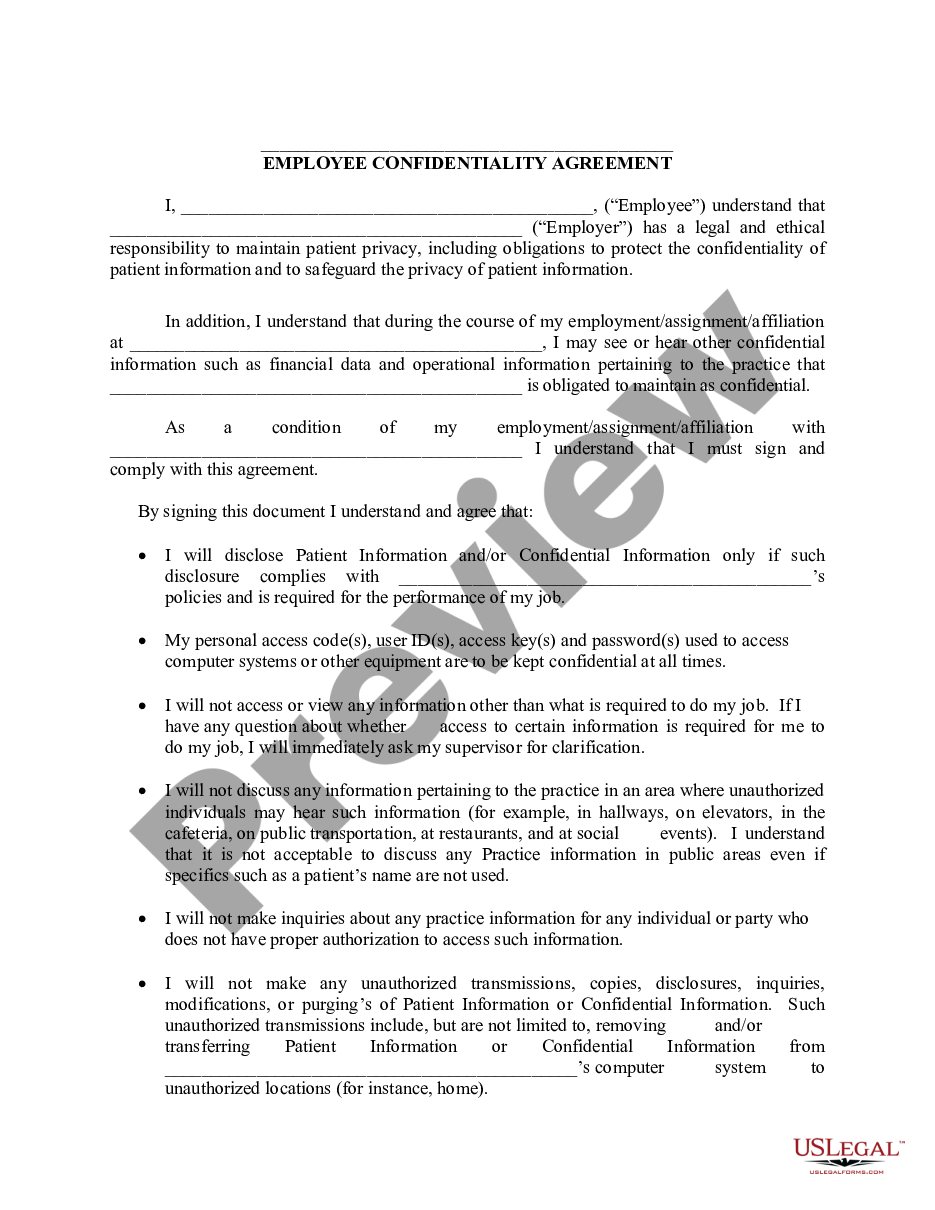
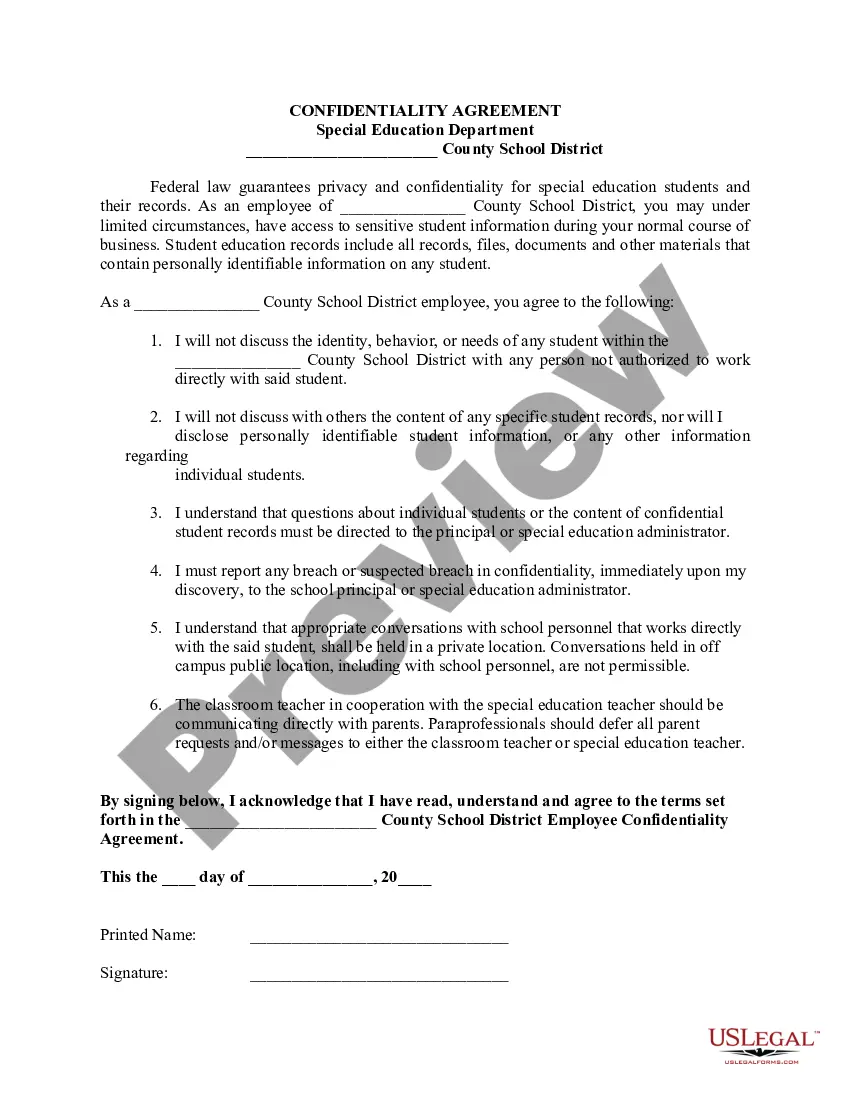
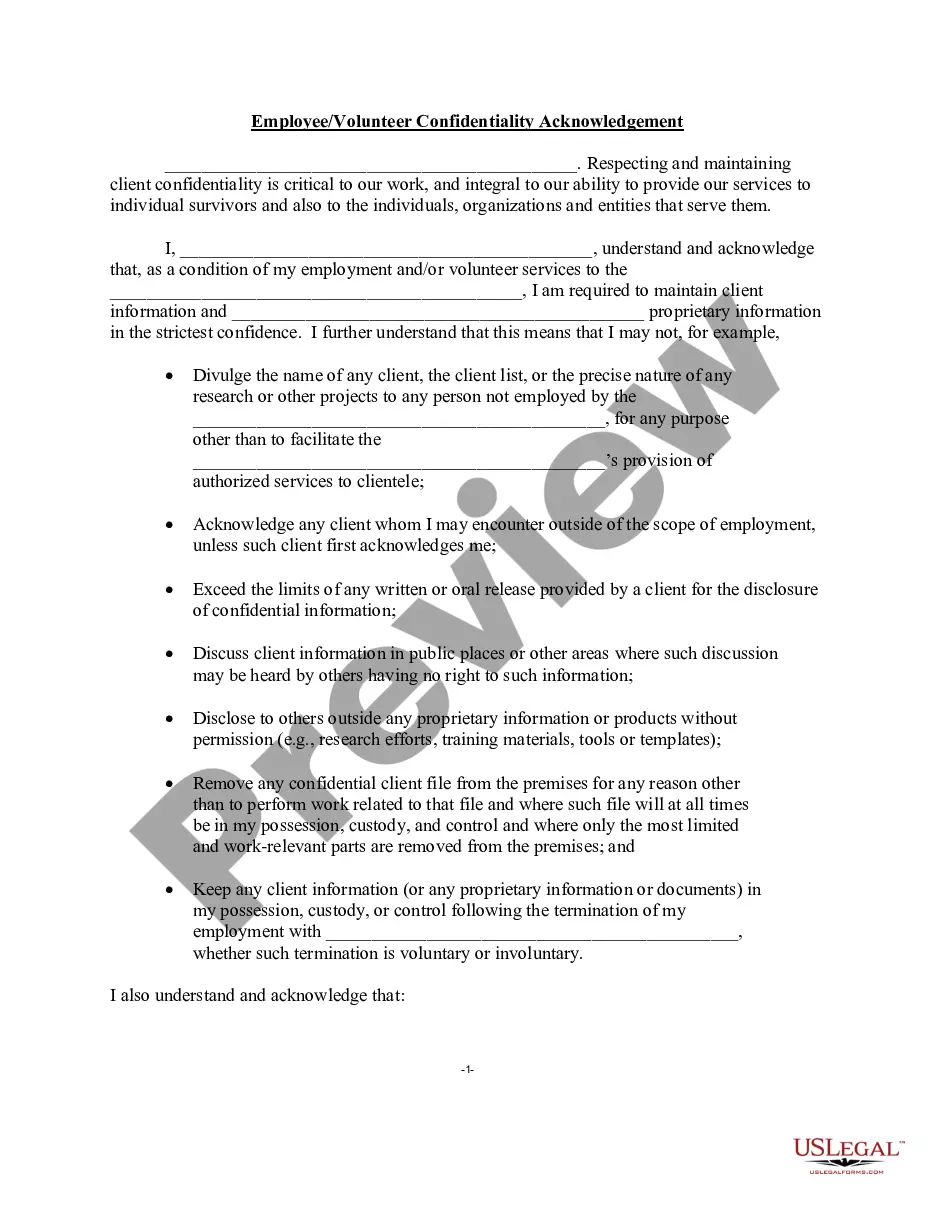
The Confidentiality Agreement for Employees/Students at a University or Other Higher Learning Institution is a legal document that establishes a mutual understanding regarding the handling of confidential information. This form is particularly designed for individuals who may be exposed to sensitive information, such as trade secrets, during their employment or studies at an institution. It ensures that employees and students agree to keep this information private, setting it apart from general non-disclosure agreements by focusing specifically on academic and employment contexts within higher education settings.
What’s included in this form
- Definition of confidential and trade secret information.
- Obligations related to the handling and disclosure of confidential information.
- Provisions regarding the use of information strictly for work/study purposes.
- Return of confidential information upon termination of association with the institution.
- Exclusions from confidentiality obligations.
- Governing law relevant to the agreement.
When to use this form
This Confidentiality Agreement should be utilized when employees or students at a university or other higher learning institution will have access to confidential information during their employment or studies. This is particularly essential in research or projects involving proprietary information, trade secrets, or intellectual property that requires protection from unauthorized disclosure.
Who can use this document
- Employees at universities or higher education institutions.
- Students engaged in research or academic programs where confidential information is present.
- Individuals involved in internships or assistantships that expose them to proprietary information.
Steps to complete this form
- Identify the parties involved, ensuring all names are accurate.
- Specify the nature of the confidential information that will be handled.
- Clearly outline the commitments regarding confidentiality, including usage and possession of information.
- Agree to the governing law applicable to the agreement.
- Ensure that all parties sign and date the agreement to validate it.
Notarization guidance
This form does not typically require notarization unless specified by local law. It is still advisable to consult institutional guidelines regarding any specific requirements for such agreements.
Get your form ready online
Our built-in tools help you complete, sign, share, and store your documents in one place.
Make edits, fill in missing information, and update formatting in US Legal Forms—just like you would in MS Word.
Download a copy, print it, send it by email, or mail it via USPS—whatever works best for your next step.
Sign and collect signatures with our SignNow integration. Send to multiple recipients, set reminders, and more. Go Premium to unlock E-Sign.
If this form requires notarization, complete it online through a secure video call—no need to meet a notary in person or wait for an appointment.
We protect your documents and personal data by following strict security and privacy standards.

Make edits, fill in missing information, and update formatting in US Legal Forms—just like you would in MS Word.

Download a copy, print it, send it by email, or mail it via USPS—whatever works best for your next step.

Sign and collect signatures with our SignNow integration. Send to multiple recipients, set reminders, and more. Go Premium to unlock E-Sign.

If this form requires notarization, complete it online through a secure video call—no need to meet a notary in person or wait for an appointment.

We protect your documents and personal data by following strict security and privacy standards.
Mistakes to watch out for
- Failing to specify what constitutes confidential information.
- Not obtaining all necessary signatures before starting work or studies.
- Overlooking the requirement to return confidential information upon termination.
Benefits of completing this form online
- Immediate access to a legally sound document crafted by licensed attorneys.
- Easy download and edit capabilities to meet specific needs.
- Secure storage options for completed forms, reducing the risk of loss.
Looking for another form?

Form popularity
FAQ
As previously mentioned, in California, employment confidentiality agreements are considered to be enforceable when they contain specific information. Generally speaking, enforcing a confidentiality agreement is the same as enforcing any other sort of contract.
A confidentiality agreement is a standard written agreement that is used to protect the owner of an invention or idea for a new business. It is also an important document between two companies that are contemplating a merger or a commercial transaction that must be withheld from public knowledge.
You agree to promptly and fully disclose to the Company any Confidential Information that You design, create, or develop, including, without limitation, any Information which is patentable or subject to copyright protection or which may be protected as a trade secret.
A confidential disclosure agreement, also called a confidentiality agreement or CDA, is a legal agreement which prohibits employees from disclosing certain information about a company. It is a permanent agreement, which means a signed confidentiality agreement remains valid after employment has ended.
An employee confidentiality agreement, or non-disclosure agreement or an ?NDA,? makes it crystal clear to an employee that he or she cannot under any circumstance, with the exception of prior written approval, disclose company secrets.
Ingly, to protect the Confidential Information that will be disclosed during employment, the Employee agrees as follows: Employee will hold the Confidential Information received from Company Name in strict confidence and will exercise a reasonable degree of care to prevent disclosure to others.