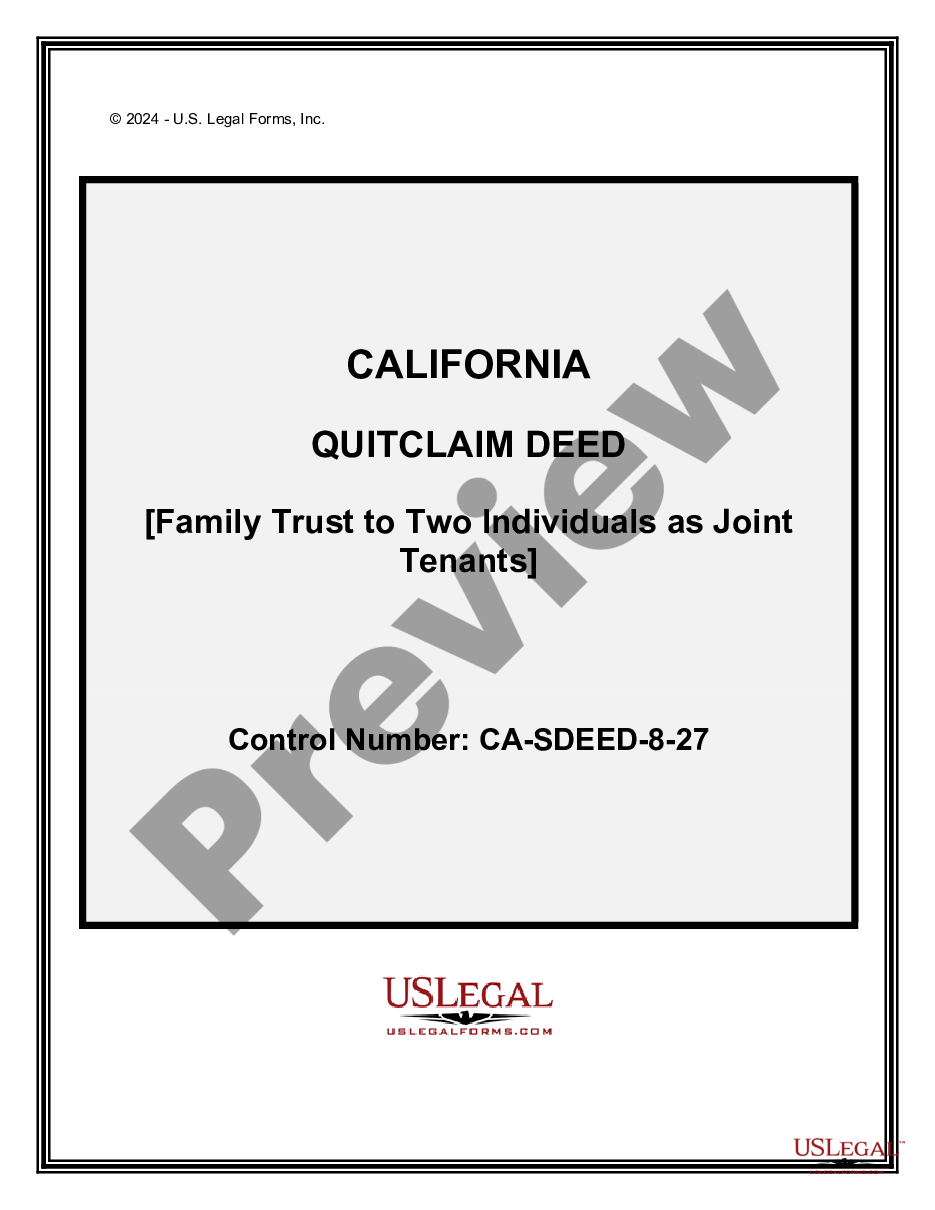
California Quitclaim Deed - Joint Family Trust to Two Trusts
What is this form?
The Quitclaim Deed - Joint Family Trust to Two Trusts is a legal document used to transfer property ownership from a Joint Family Trust to two individual trusts. This form allows the Grantor to convey their interest in the property without making any promises about the title's validity. Unlike warranty deeds, a quitclaim deed does not guarantee that the Grantor possesses clear title, which distinguishes it in property transactions.
Form components explained
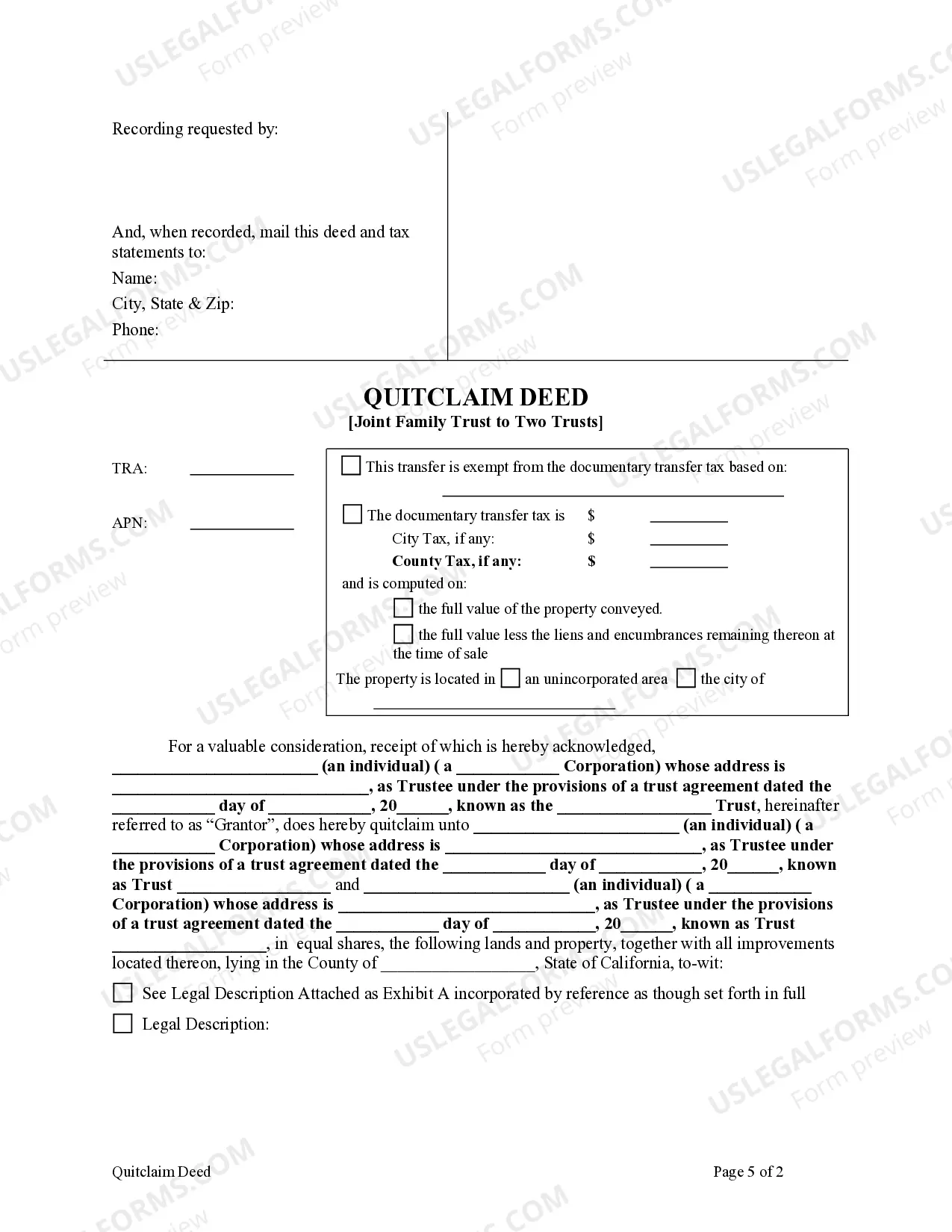
- Grantor and Grantees: Identifies the Joint Family Trust as the Grantor and the two individual trusts as Grantees.
- Property Description: Provides a detailed description of the property being transferred.
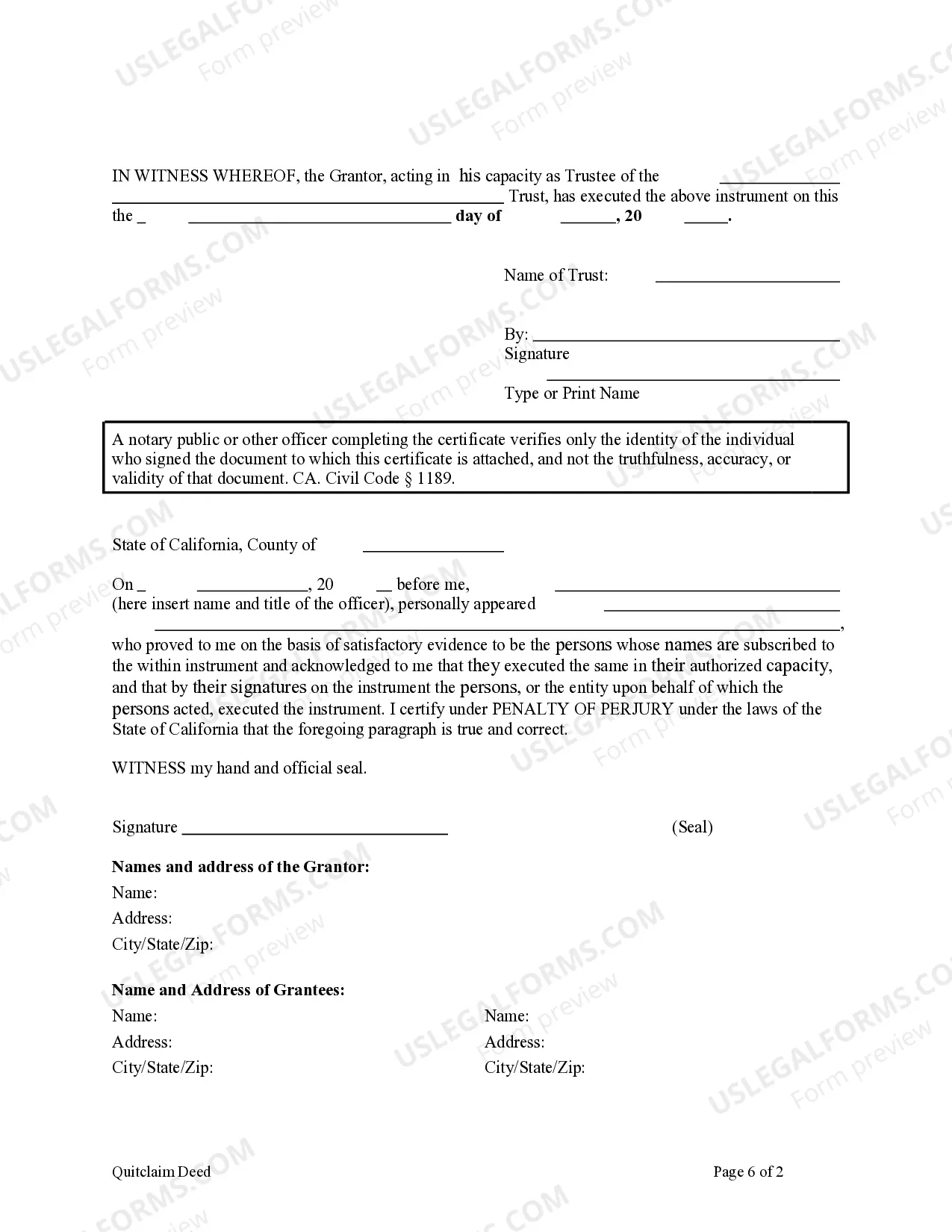
- Signatures: Requires the signature of the Grantor to finalize the conveyance.
- State Compliance: Ensures that the deed complies with all applicable state laws governing property transfers.





Situations where this form applies
This quitclaim deed is typically used when transferring property within family trusts. It may be necessary during estate planning or when adjusting ownership due to changes in trust arrangements. This form can also be used to clarify ownership interests among family members without the need for extensive legal proceedings.
Who can use this document
This form is intended for:
- Trustees of a Joint Family Trust involved in property transfers.
- Individuals acting as trustees for the two individual trusts receiving the property.
- Families looking to manage or consolidate family assets within trust structures.
How to prepare this document
- Identify the parties involved: Clearly state the names of the Grantor (Joint Family Trust) and the Grantees (two individual trusts).
- Specify the property: Provide a detailed legal description of the property being transferred.
- Complete necessary fields: Fill in the required information, including dates and other identifying information.
- Obtain signatures: Have the Grantor sign the deed to acknowledge the transfer.
- File the deed: Record the completed quitclaim deed with the appropriate local government office, if required.
Does this form need to be notarized?
To make this form legally binding, it must be notarized. Our online notarization service, powered by Notarize, lets you verify and sign documents remotely through an encrypted video session.
Get your form ready online
Our built-in tools help you complete, sign, share, and store your documents in one place.
Make edits, fill in missing information, and update formatting in US Legal Forms—just like you would in MS Word.
Download a copy, print it, send it by email, or mail it via USPS—whatever works best for your next step.
Sign and collect signatures with our SignNow integration. Send to multiple recipients, set reminders, and more. Go Premium to unlock E-Sign.
If this form requires notarization, complete it online through a secure video call—no need to meet a notary in person or wait for an appointment.
We protect your documents and personal data by following strict security and privacy standards.

Make edits, fill in missing information, and update formatting in US Legal Forms—just like you would in MS Word.

Download a copy, print it, send it by email, or mail it via USPS—whatever works best for your next step.

Sign and collect signatures with our SignNow integration. Send to multiple recipients, set reminders, and more. Go Premium to unlock E-Sign.

If this form requires notarization, complete it online through a secure video call—no need to meet a notary in person or wait for an appointment.

We protect your documents and personal data by following strict security and privacy standards.
Common mistakes to avoid
- Failing to provide a complete legal description of the property.
- Not having the Grantor's signature properly witnessed or notarized when required.
- Omitting necessary details about the Grantees, leading to confusion in ownership.
Why use this form online
- Convenient access to downloadable templates, saving time and effort.
- Editability allows users to customize the document according to their specific needs.
- Reliability, with forms drafted by licensed attorneys ensuring legal compliance.
Looking for another form?

Form popularity
FAQ
In California, a trustee on a deed of trust can be an individual or a corporate entity. The chosen trustee should be reliable and capable of managing the responsibilities associated with the trust. Qualifying individuals may include family members, friends, or professionals, such as attorneys or financial advisors. When you consider a California Quitclaim Deed - Joint Family Trust to Two Trusts, selecting the right trustee becomes crucial for effective property management and distribution.
In California, the trustee holds legal title to property that is placed in a trust. However, the beneficial ownership resides with the beneficiaries in accordance with the trust's terms. When understanding how a California Quitclaim Deed - Joint Family Trust to Two Trusts fits into this framework, it’s essential to recognize how the trust structure impacts property rights. This clarity can prevent conflicts and promote smooth transitions.
In California, a trust deed involves three essential parties: the trustor, the trustee, and the beneficiary. The trustor is the individual who creates the trust and transfers the property. The trustee holds legal title and manages the trust assets, while the beneficiary is the individual or entity who receives the benefits from the trust. This understanding is particularly relevant when dealing with a California Quitclaim Deed - Joint Family Trust to Two Trusts.
The parties to a trust relationship typically include the grantor, the trustee, and the beneficiaries. The grantor establishes the trust and outlines its terms. The trustee is responsible for managing the trust assets and ensuring they are distributed according to the grantor's wishes. Beneficiaries are the individuals or entities intended to benefit from the trust. This structure is vital when considering the implications of a California Quitclaim Deed - Joint Family Trust to Two Trusts.
In an express trust relationship, there are three primary actors: the grantor, the trustee, and the beneficiaries. The grantor creates the trust and transfers assets into it. The trustee manages these assets according to the terms set by the grantor, while beneficiaries receive the benefits or distributions from the trust. Understanding these roles is crucial when considering a California Quitclaim Deed - Joint Family Trust to Two Trusts.
A trust generally governs how assets are managed and distributed, which can supersede the intentions of a quit claim deed in certain circumstances. If property is placed into a California Quitclaim Deed - Joint Family Trust to Two Trusts, the terms of the trust may dictate what happens to that property, effectively overriding the quit claim deed. However, it is essential to review the specific language of both to determine their interaction. Consulting a legal expert can help clarify the nuances of these documents.
Yes, transferring assets from one trust to another is possible and often necessary, especially to maintain alignment with your estate planning goals. When using a California Quitclaim Deed - Joint Family Trust to Two Trusts, you can reallocate assets as needed to reflect changes in your family's dynamics or financial situation. Just ensure that you follow the correct procedures to keep your transfers valid and recognized by the law. Utilizing platforms like US Legal Forms can simplify this process and provide the necessary documentation.
Certain assets, such as personal effects, insurance policies, and retirement accounts, may not be directly placed in a trust like a California Quitclaim Deed - Joint Family Trust to Two Trusts. Additionally, assets with designated beneficiaries typically pass outside of the trust. It's important to understand these limitations to ensure your estate plan remains effective. Consulting with a legal professional can help clarify any confusion.
Yes, you can establish two trusts in California. Having multiple trusts allows for more tailored management of your assets and can be especially useful for complex estates. A California Quitclaim Deed - Joint Family Trust to Two Trusts can streamline asset management between them. Consulting with a legal expert will help ensure you meet all legal requirements while maximizing your estate planning flexibility.
One trust can distribute assets to another trust under certain circumstances. This practice is generally used to manage financial assets more effectively, and a California Quitclaim Deed - Joint Family Trust to Two Trusts can help facilitate this distribution. By allowing trusts to work together, you can enhance your estate planning strategy. It's important to follow the guidelines set forth in your trust documents to maintain compliance.