Complaint for Wrongful Repossession of Automobile and Impairment of Credit
What this document covers
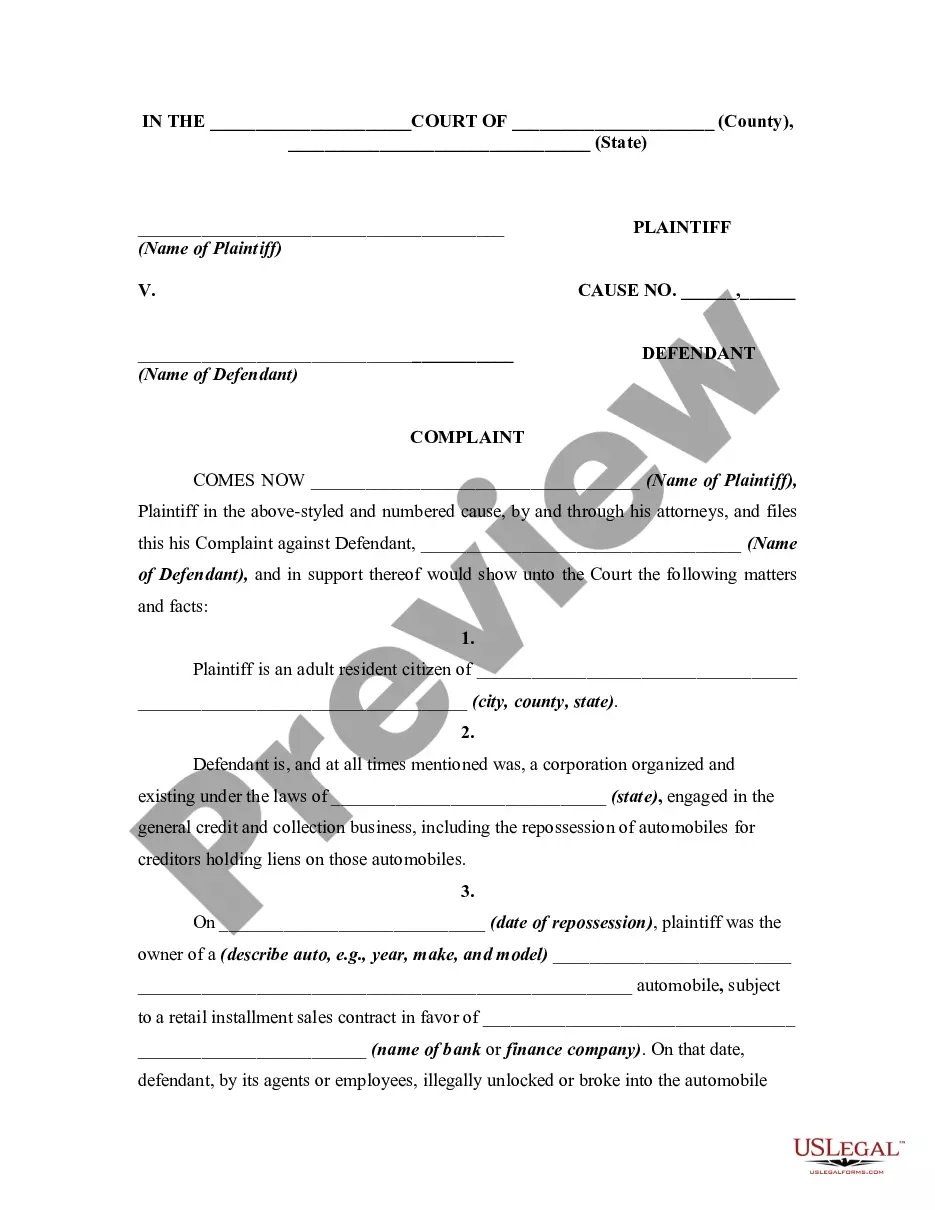
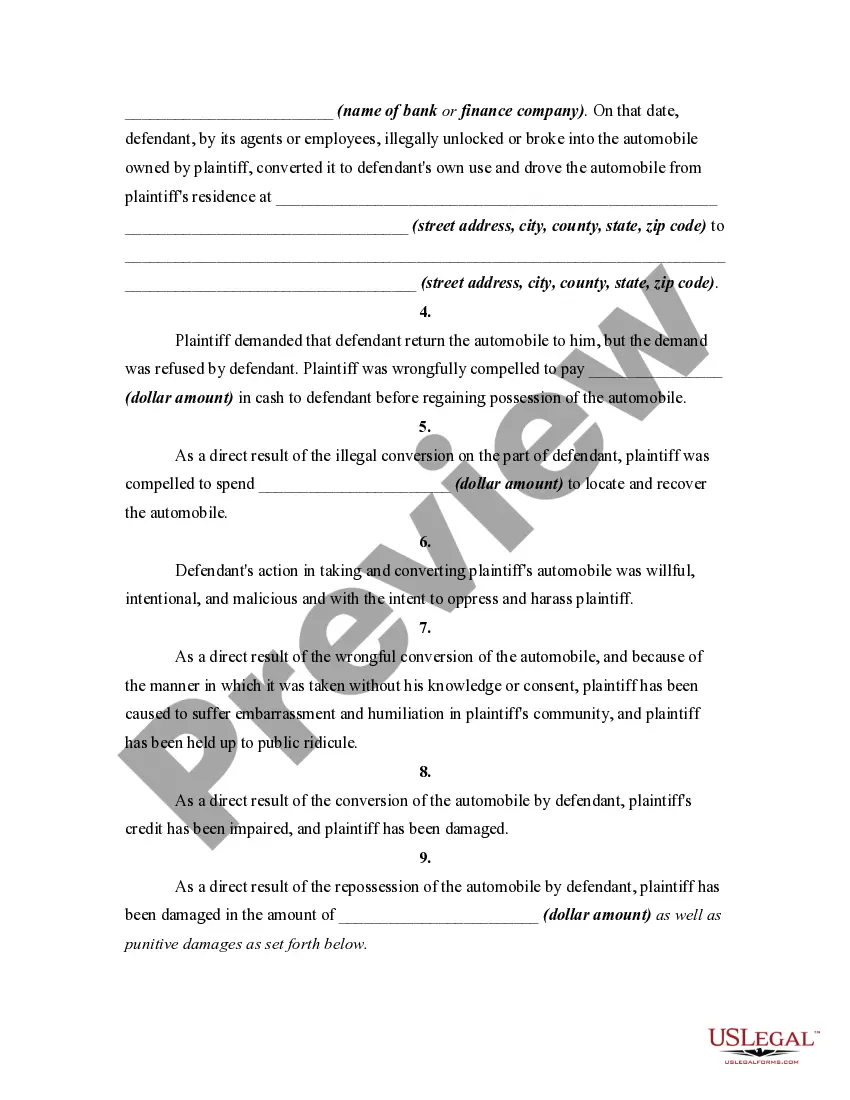
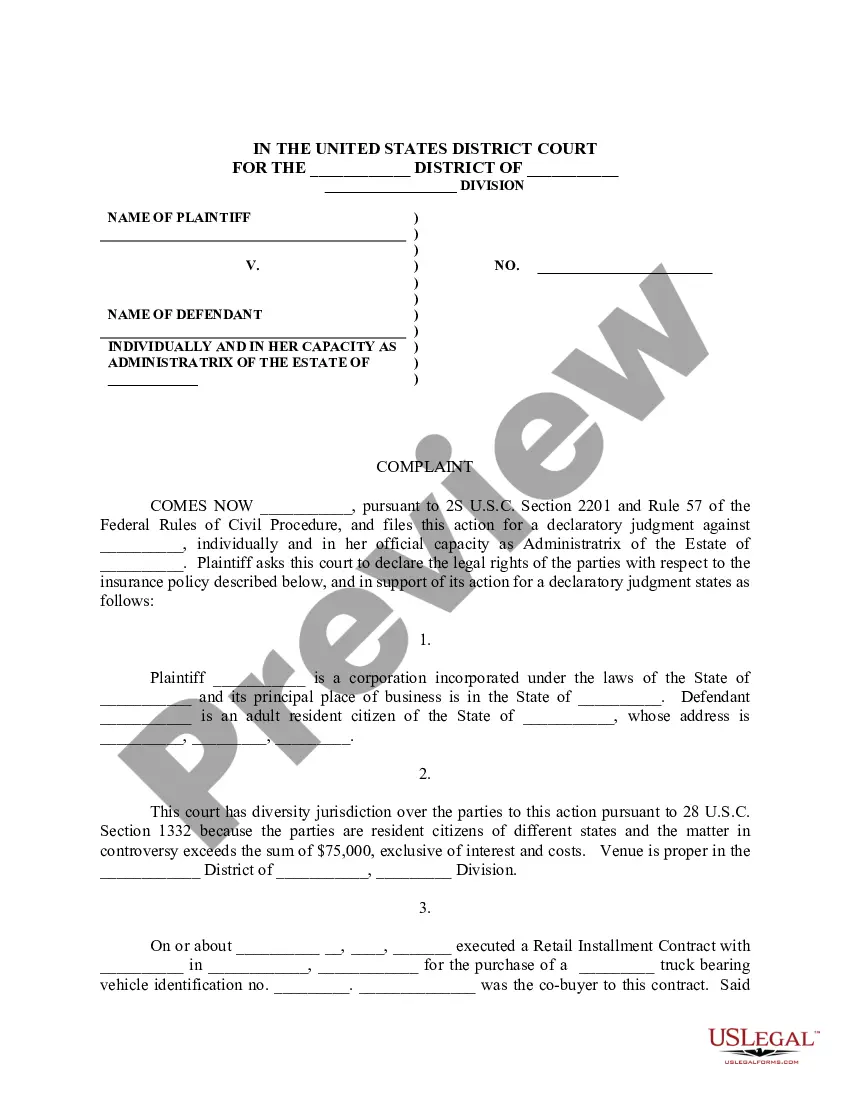
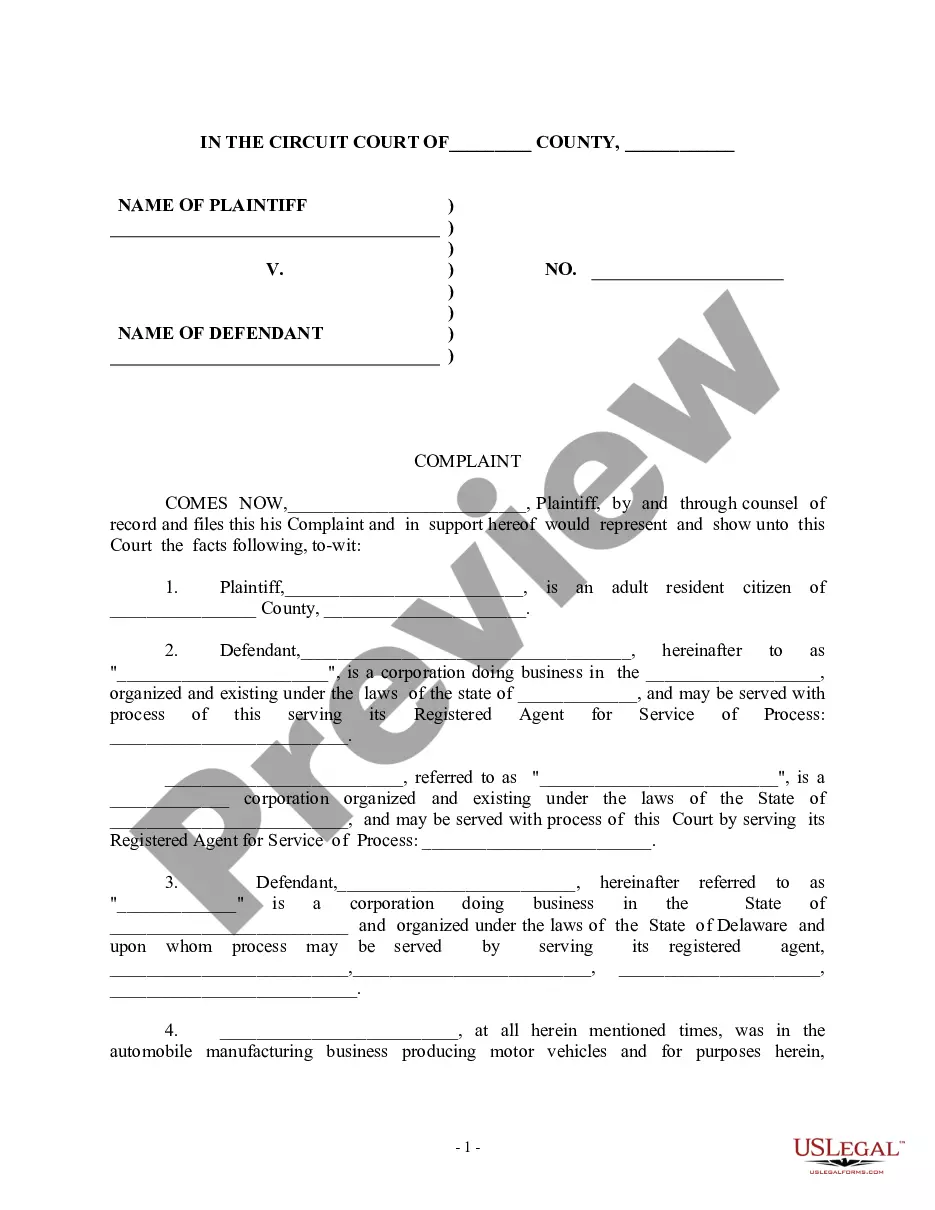
The Complaint for Wrongful Repossession of Automobile and Impairment of Credit is a legal document used to initiate a civil lawsuit against a party that has unlawfully repossessed your vehicle. This form allows the plaintiff to assert their claims of conversion and seek damages. Unlike other legal complaints, this form specifically addresses issues related to automobile repossession and the resultant impact on the plaintiff's credit and reputation.
Key parts of this document
- Identification of the parties involved (plaintiff and defendant).
- Details about the vehicle and the circumstances of its repossession.
- Legal claims regarding wrongful repossession and conversion of property.
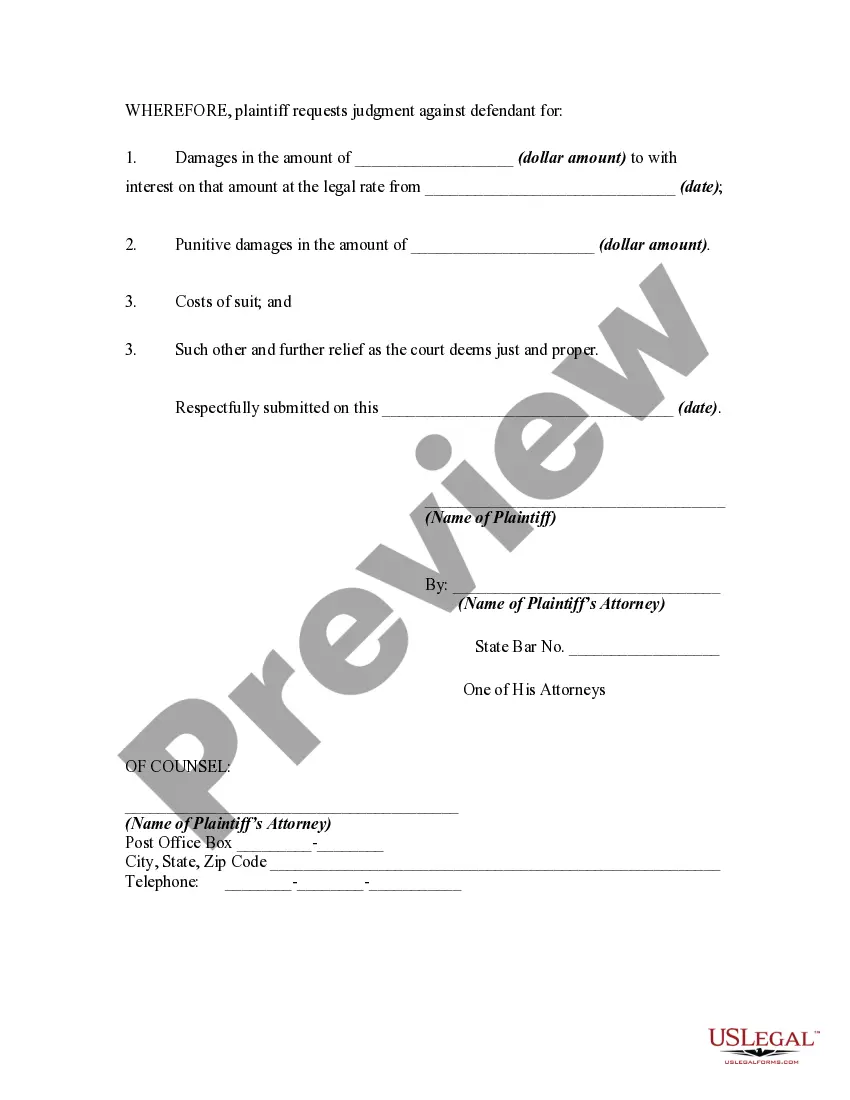
- A statement of the damages suffered by the plaintiff.
- A request for specific types of damages, including punitive damages.

Common use cases
This form should be used when an individual believes their vehicle has been wrongfully repossessed by a creditor or collection agency. If you demanded the return of your automobile but were refused, or if the repossession has negatively affected your credit and reputation, this complaint form can help you take legal action to recover losses.
Who should use this form
- Individuals who are the rightful owners of a repossessed vehicle.
- Plaintiffs seeking to address damages caused by wrongful repossession.
- Anyone needing to formally assert their legal rights regarding their automobile and credit damage.
Instructions for completing this form
- Identify the plaintiff and the defendant by entering the names and addresses.
- Provide details about the vehicle, including the year, make, model, and date of repossession.
- State the specific legal claims you are bringing against the defendant.
- List the damages you have incurred as a result of the repossession.
- Sign and date the form before filing it with the court.
Does this document require notarization?
This form does not typically require notarization unless specified by local law. However, it is wise to check jurisdictional requirements to ensure compliance with the law.
Get your form ready online
Our built-in tools help you complete, sign, share, and store your documents in one place.
Make edits, fill in missing information, and update formatting in US Legal Forms—just like you would in MS Word.
Download a copy, print it, send it by email, or mail it via USPS—whatever works best for your next step.
Sign and collect signatures with our SignNow integration. Send to multiple recipients, set reminders, and more. Go Premium to unlock E-Sign.
If this form requires notarization, complete it online through a secure video call—no need to meet a notary in person or wait for an appointment.
We protect your documents and personal data by following strict security and privacy standards.

Make edits, fill in missing information, and update formatting in US Legal Forms—just like you would in MS Word.

Download a copy, print it, send it by email, or mail it via USPS—whatever works best for your next step.

Sign and collect signatures with our SignNow integration. Send to multiple recipients, set reminders, and more. Go Premium to unlock E-Sign.

If this form requires notarization, complete it online through a secure video call—no need to meet a notary in person or wait for an appointment.

We protect your documents and personal data by following strict security and privacy standards.
Typical mistakes to avoid
- Failing to provide complete and accurate details about the vehicle and repossession.
- Not clearly stating the damages incurred.
- Omitting required signatures or dates from the form.
Advantages of online completion
- Convenient access from anywhere, allowing you to complete the form at your own pace.
- Editability ensures you can customize the form as your situation changes.
- Reliability, knowing the form is drafted based on legal standards and has been reviewed by licensed attorneys.
Looking for another form?

Form popularity
FAQ
Communicate With Your Lender. As soon as you think you might miss a car payment, reach out to your lender to discuss your options. Refinance Your Loan. Reinstate the Loan. Sell the Car Yourself. Surrender the Vehicle Voluntarily.
Start the letter by identifying yourself and the property. The lender will need to identify your loan, so include an account number. Give them your name, address and contact information. Tell the lender that you are voluntarily giving the item back because you can no longer make the payments.
A repo can do serious damage to your credit score. Damage Compensation: If you can prove that your vehicle was harmed during the unlawful repossession, repairs for these damages might be covered by the lender or the repo company. However, you should consult your lawyer before assuming anything.
Liability. When a car is repossessed by a lender, liability for the car and damages made to it transfers to the lender as well. So, if a repossession company damages the car in the course of repossessing it, then the company is legally responsible for the damages. This is because it is acting as a proxy of the lender.
When a car is repossessed by a lender, liability for the car and damages made to it transfers to the lender as well. So, if a repossession company damages the car in the course of repossessing it, then the company is legally responsible for the damages.
A sample repossession letter should include the name and address of the entity repossessing, the name and address of the person whose items are being repossessed and a list of the items being repossessed and how much is owed on them. Templates for repossession letters can be found at office supply websites and stores.
Make Up the Late Payments. Just because you are late on a payment does not automatically mean you are in default. Reinstate the Loan. Even if you are in default, you might have the right to reinstate the loan. Redeem the Car. Negotiate With the Creditor. Refinance the Car Loan. Bankruptcy.
If a car or truck has been wrongfully repossessed, the borrower may have the right to sue the lender and repo agent, even if the borrower missed payments or defaulted in some way.
Negotiate with your lender: Your lender loses money when they repossess. File a dispute: If you go through your credit reports and see anything reported inaccurately about your repossession, you can dispute it with the credit bureaus.