Buying or Receiving Goods Stolen From Interstate Shipment
What this document covers
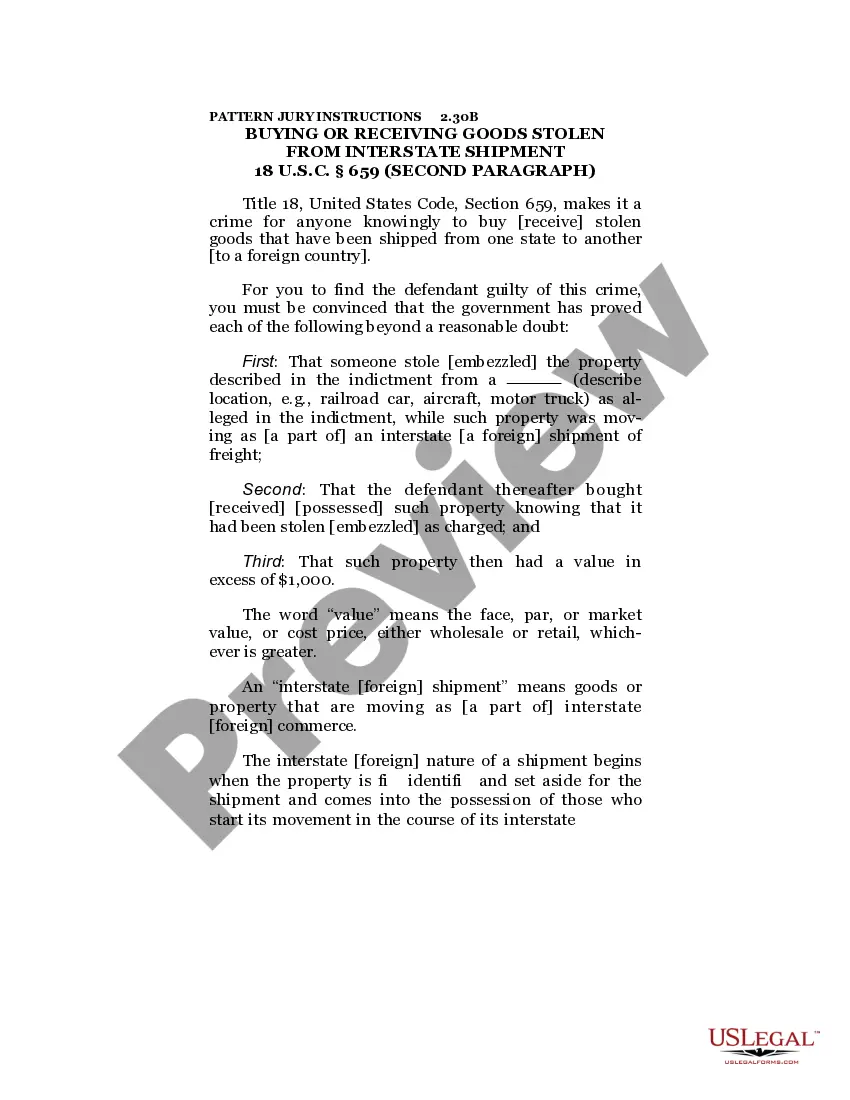
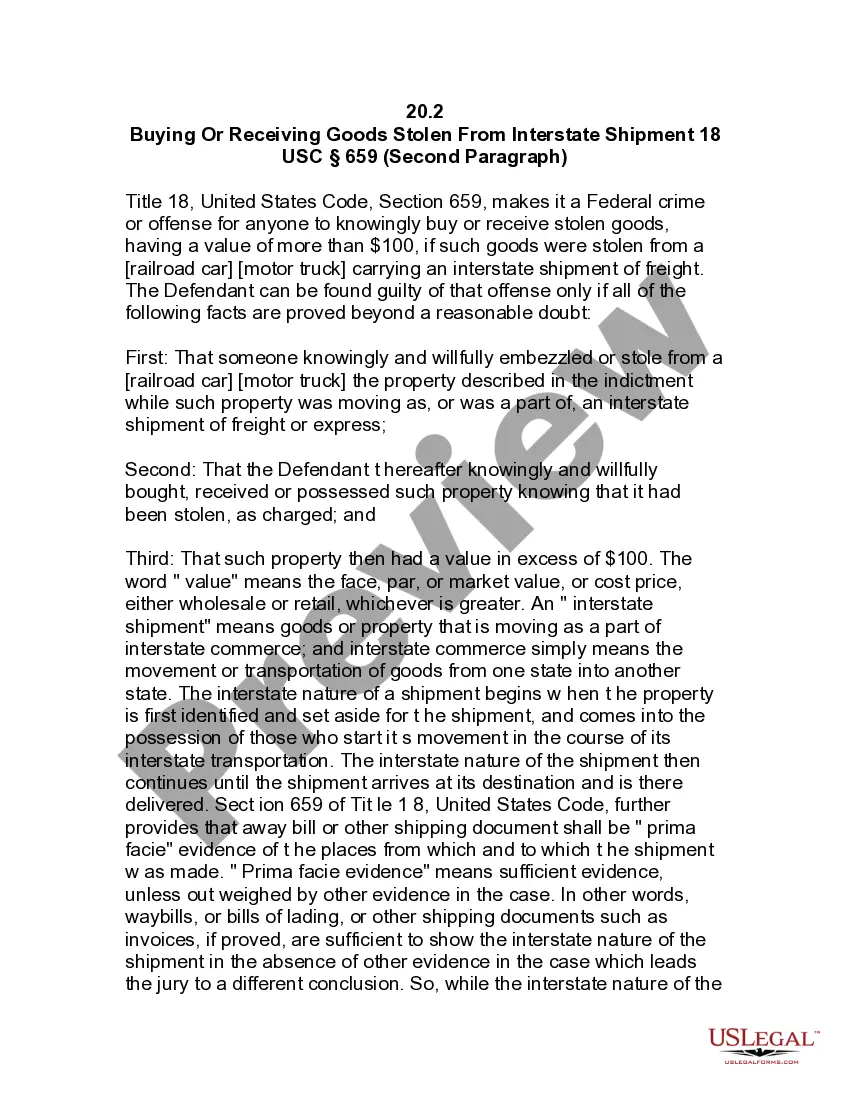
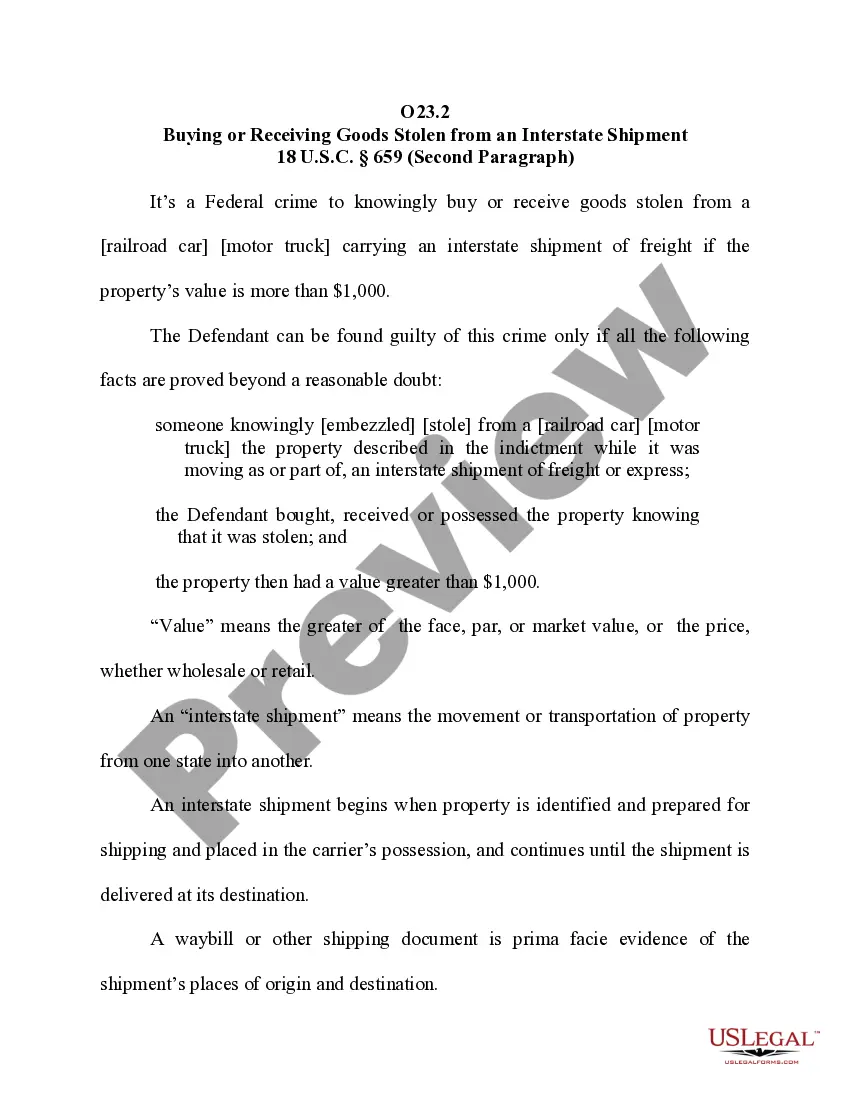
This form is designed to address the legal implications of buying or receiving goods stolen from interstate shipment, as outlined in Title 18, United States Code, Section 659. The primary purpose is to inform individuals of the legal consequences associated with knowingly acquiring stolen property that has crossed state or international borders. This form differs from other theft-related forms by emphasizing the interstate nature of the offense and the specific criteria that must be met for a conviction.
What’s included in this form
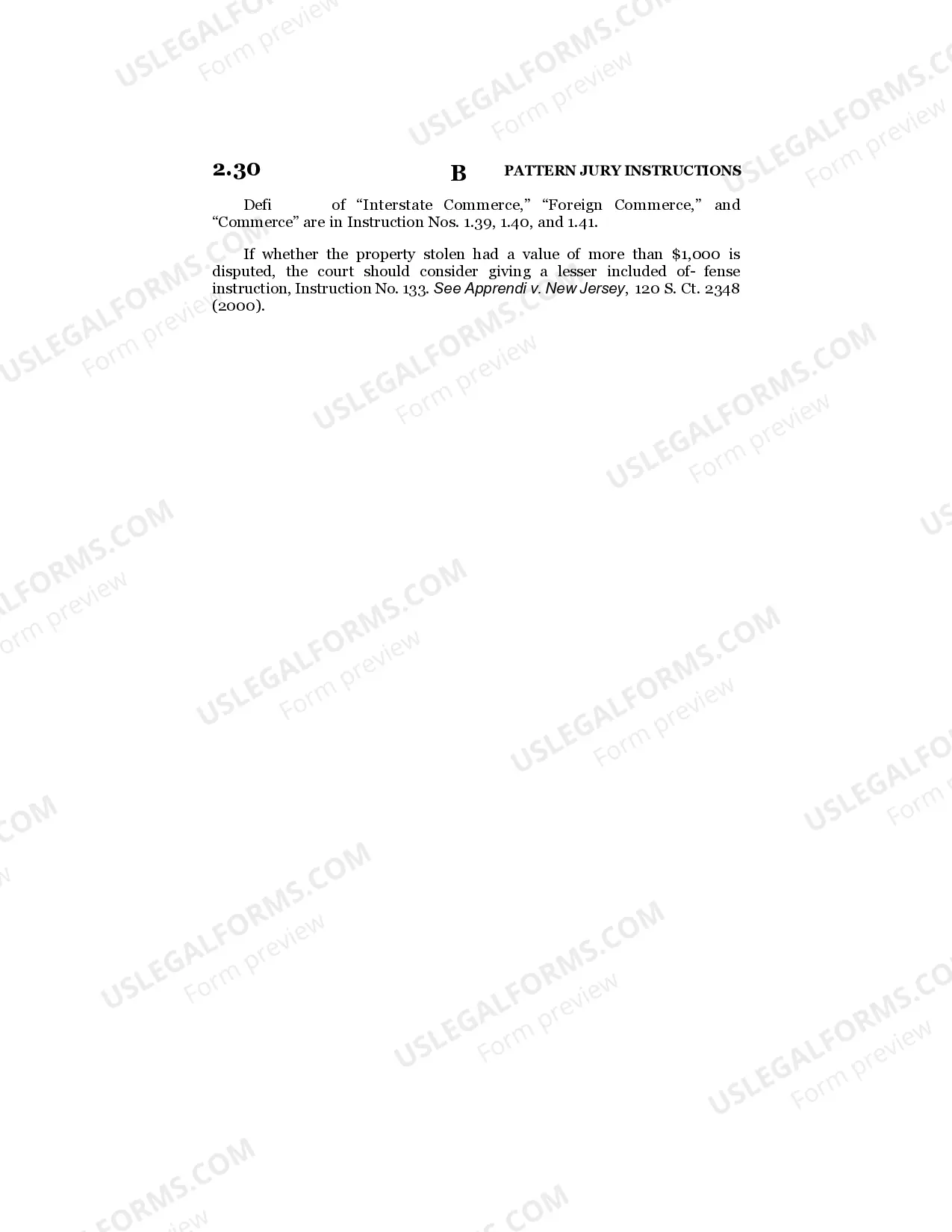
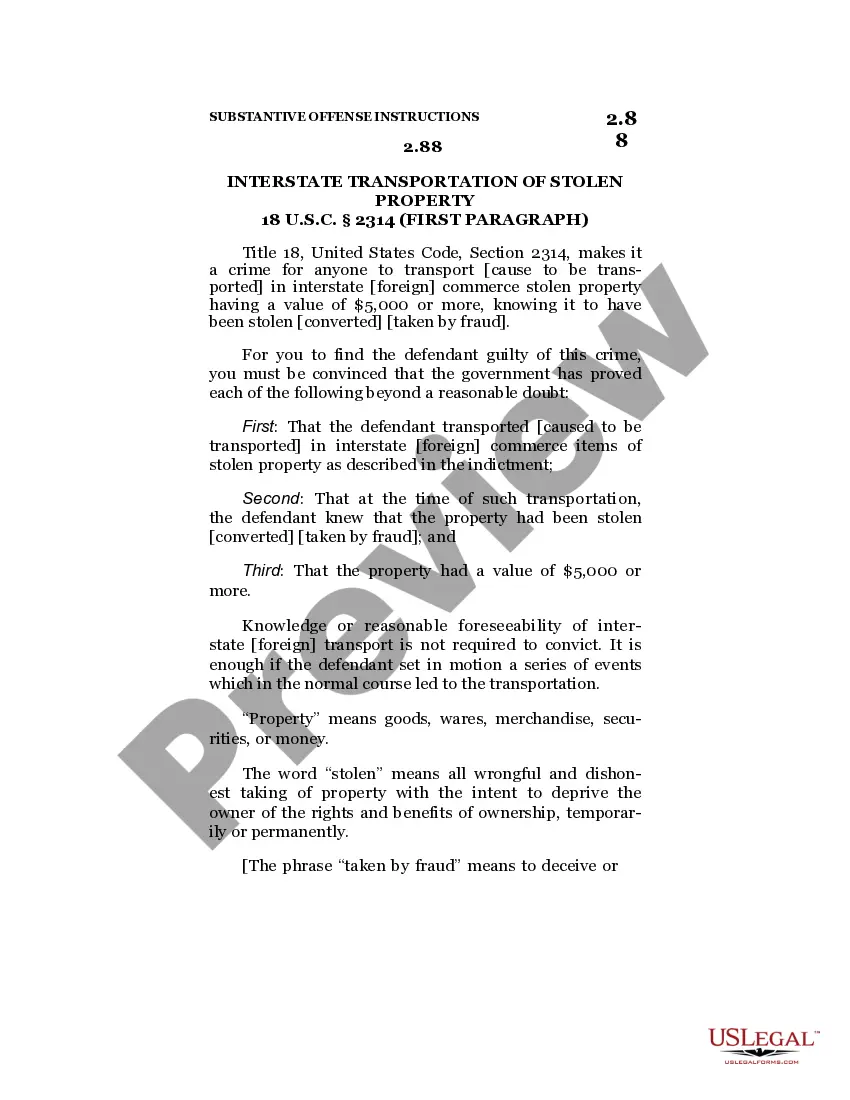
- Definition of interstate and foreign commerce
- Requirements for establishing guilt in purchasing stolen goods
- Clarification of what constitutes value under the law
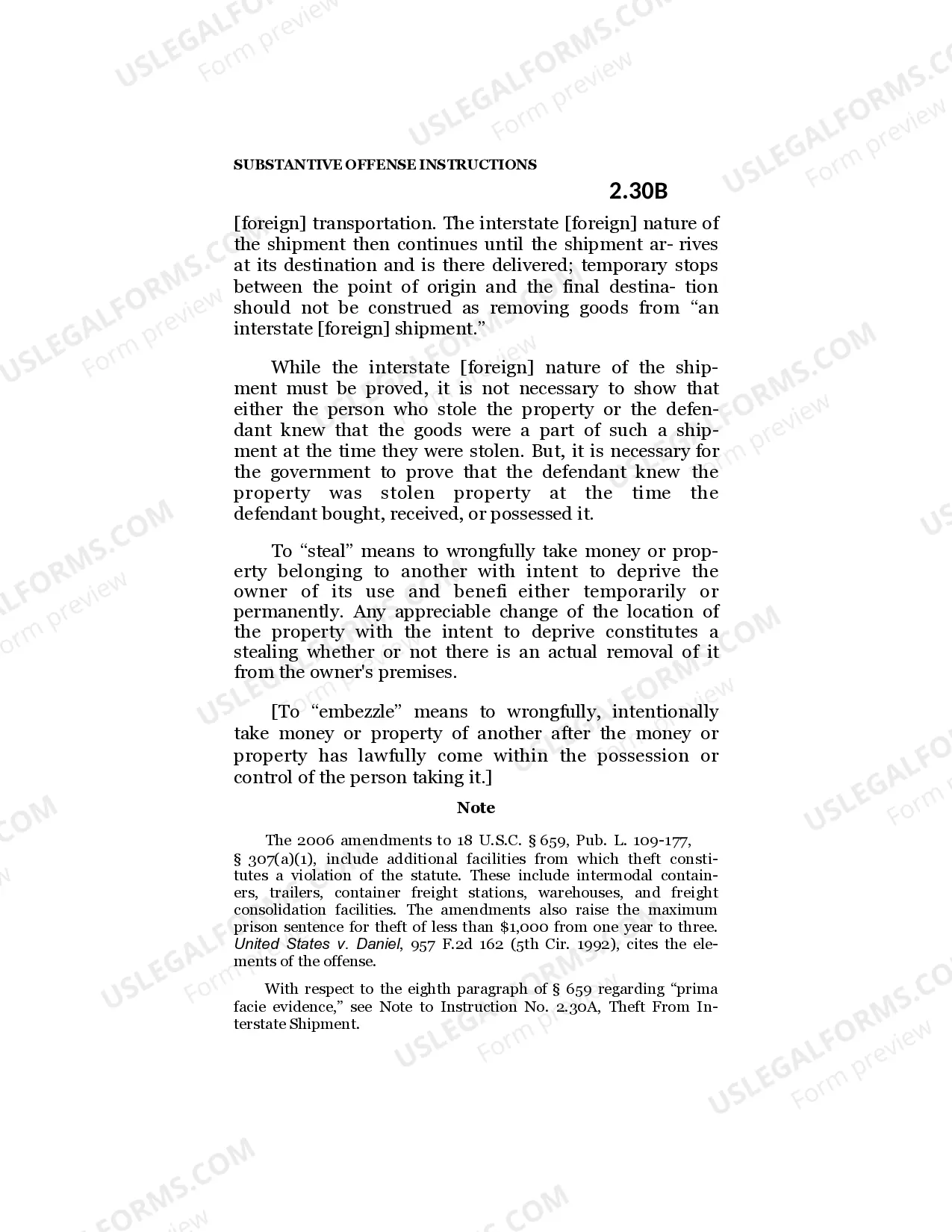
- Guidelines on when the interstate nature of goods begins and ends
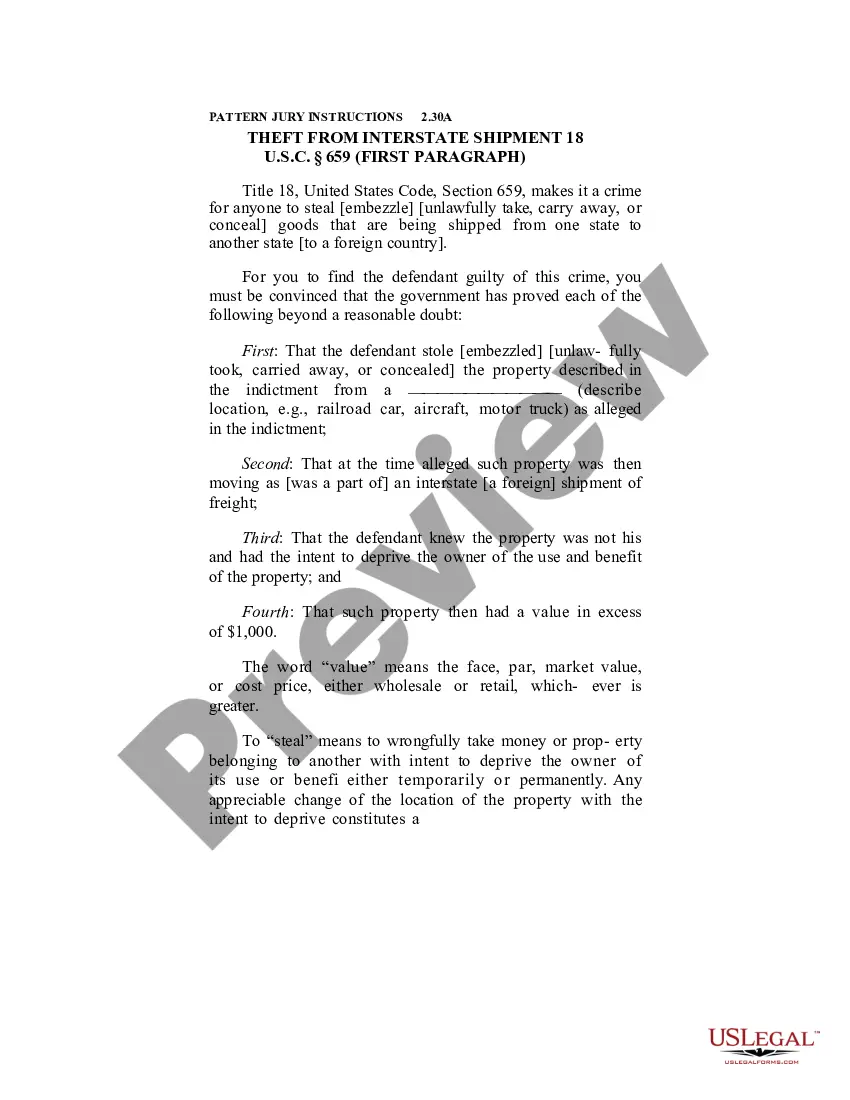
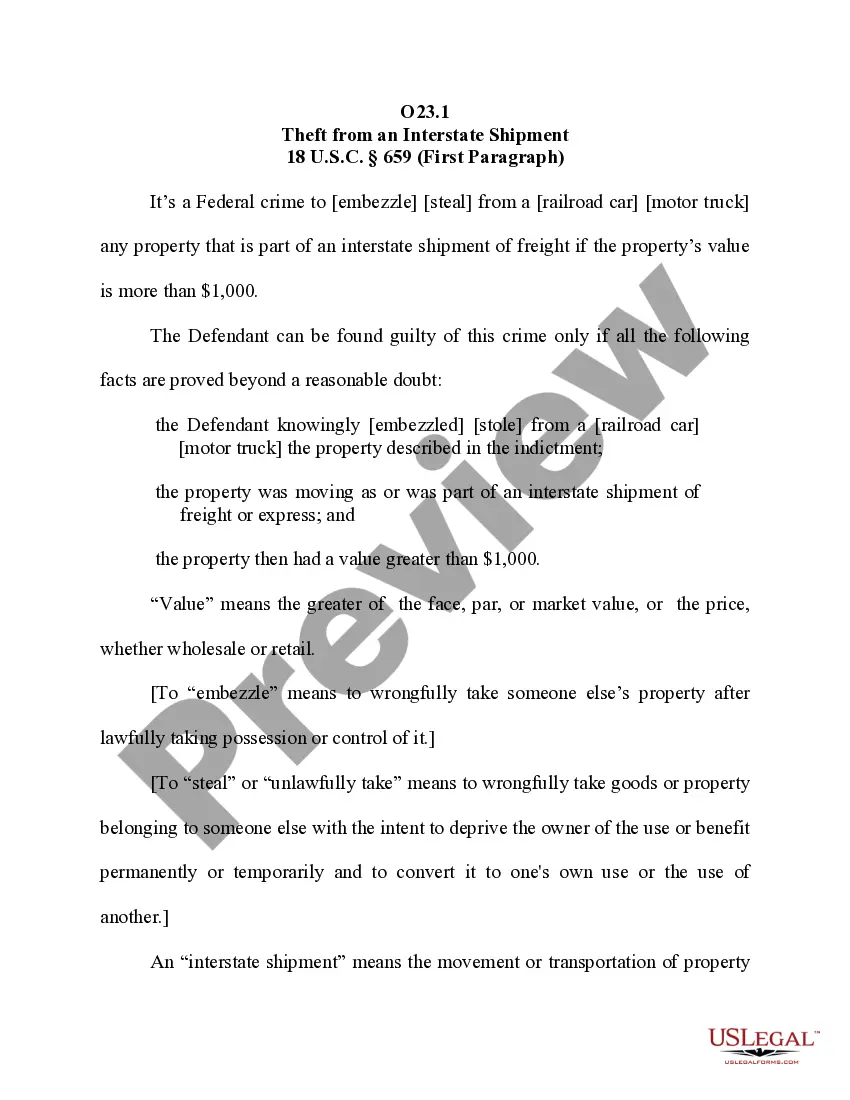
- Explanation of theft and embezzlement
Common use cases
You should use this form if you are facing charges related to the purchase or possession of stolen goods that have been transported across state lines. In addition, this form assists legal practitioners in understanding the nuances of the law involving interstate commerce and theft, clarifying the responsibilities and risks involved in such transactions.
Intended users of this form
- Individuals accused of buying or receiving stolen property
- Legal professionals representing clients in theft cases
- Law enforcement investigating suspected thefts involving interstate shipment
- Students or scholars studying criminal law related to commerce and theft
Completing this form step by step
- Identify the parties involved in the transaction.
- Describe the property in question, including its nature and original location.
- Specify the circumstances under which the property was bought or received.
- Indicate your knowledge of the stolen status of the property at the time of purchase.
- Provide any documentation or evidence supporting your case, if applicable.
Notarization guidance
This form does not typically require notarization unless specified by local law. However, it's recommended to verify any additional requirements in your jurisdiction for greater assurance in legal contexts.
Get your form ready online
Our built-in tools help you complete, sign, share, and store your documents in one place.
Make edits, fill in missing information, and update formatting in US Legal Forms—just like you would in MS Word.
Download a copy, print it, send it by email, or mail it via USPS—whatever works best for your next step.
Sign and collect signatures with our SignNow integration. Send to multiple recipients, set reminders, and more. Go Premium to unlock E-Sign.
If this form requires notarization, complete it online through a secure video call—no need to meet a notary in person or wait for an appointment.
We protect your documents and personal data by following strict security and privacy standards.

Make edits, fill in missing information, and update formatting in US Legal Forms—just like you would in MS Word.

Download a copy, print it, send it by email, or mail it via USPS—whatever works best for your next step.

Sign and collect signatures with our SignNow integration. Send to multiple recipients, set reminders, and more. Go Premium to unlock E-Sign.

If this form requires notarization, complete it online through a secure video call—no need to meet a notary in person or wait for an appointment.

We protect your documents and personal data by following strict security and privacy standards.
Common mistakes to avoid
- Failing to accurately describe the stolen property.
- Not specifying the circumstances under which the property was acquired.
- Neglecting to detail knowledge of the property's stolen status.
- Ignoring state-specific laws that may apply.
Advantages of online completion
- Convenience of obtaining the form anytime, without the need for in-person visits.
- Easy editing capabilities to customize the form as per individual needs.
- Reliable access to legal documents drafted by licensed attorneys.
- Quick download for immediate use in legal proceedings.
Legal use & context
- This form serves as a crucial reference for understanding charges related to stolen goods.
- It reinforces federal regulations regarding theft and interstate commerce.
- Utilizing this form can help defend against legal accusations by clarifying the defendant's knowledge and actions.
What to keep in mind
- Understanding the legal repercussions of buying stolen goods is essential.
- Know the importance of the interstate nature of stolen property in legal defenses.
- Utilizing the appropriate legal forms can clarify roles and responsibilities in theft cases.
Looking for another form?
Form popularity
FAQ
(1)A person handles stolen goods if (otherwise than in the course of the stealing) knowing or believing them to be stolen goods he dishonestly receives the goods, or dishonestly undertakes or assists in their retention, removal, disposal or realisation by or for the benefit of another person, or if he arranges to do so
Mail theft under California Penal Code Section 530.5(e) PC is a misdemeanor offense that is punishable by up to a year in jail and a $1,000 court fine.
A violation of 18 U.S.C. § 659 is a ten-year felony where the value of the stolen goods, chattels, money or baggage is $1,000 or more; otherwise the maximum penalty is three years.
It prohibits the theft or fraudulent acquisition of goods that are part of an interstate or international shipment, whether from the carrier or a holding area, and also the wilful buying, selling or possession of goods obtained in this way.
It prohibits the theft or fraudulent acquisition of goods that are part of an interstate or international shipment, whether from the carrier or a holding area, and also the wilful buying, selling or possession of goods obtained in this way.
Sale or Receipt of Stolen Goods ? 18 U.S.C. 18 U.S.C. §2315 makes it unlawful to knowingly receive, possess, conceal, sell, or dispose of stolen property which has a value of $5,000 or more and which is a part of interstate commerce.
In California, possession of stolen property worth less than $950 is charged as a misdemeanor. Penalties include a maximum fine of $1000 and up to six months in jail. Possession of stolen items valued at more than $950 is considered a ?wobbler? offense in California.
But Section 641 also states that, if the value of the stolen property is $1000 or less, that person shall be fined and imprisoned for no longer than 1 year. The $1000 threshold, therefore, is necessary to make a Section 641 offense into a felony; smaller theft from the government is only a misdemeanor.