Theft from an Interstate Shipment
About this form
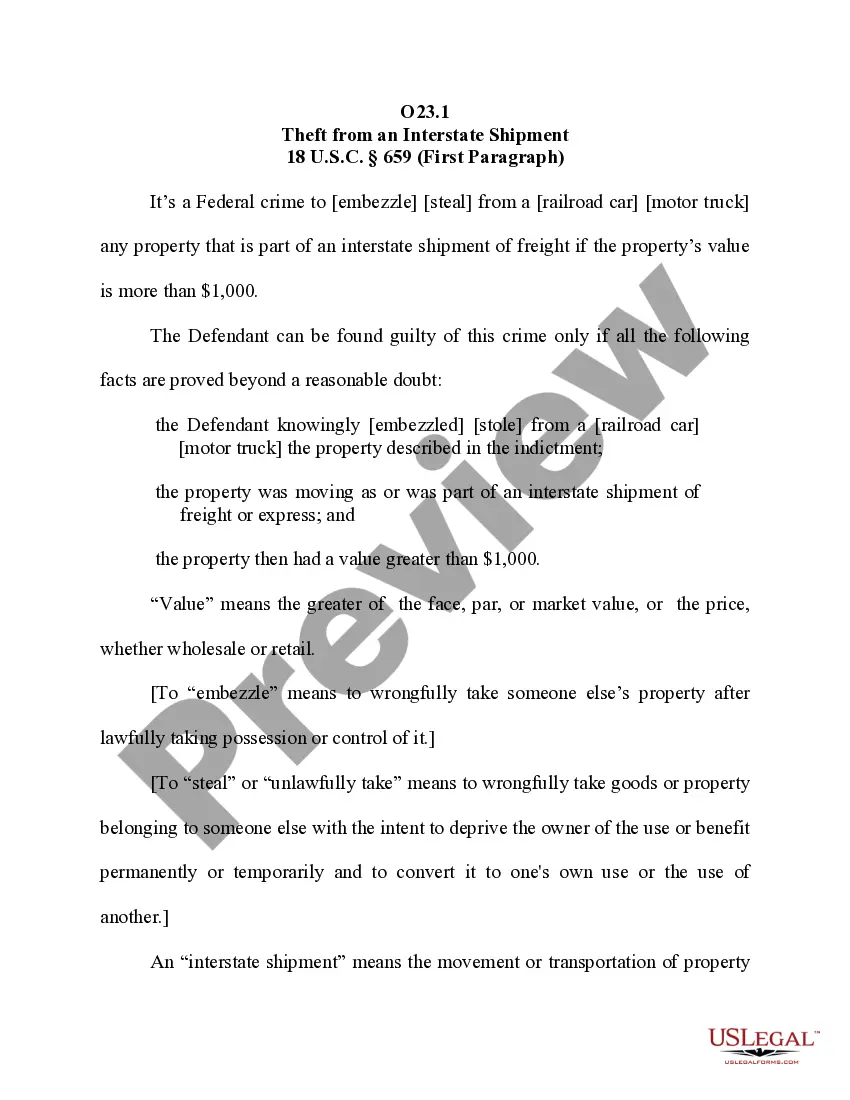
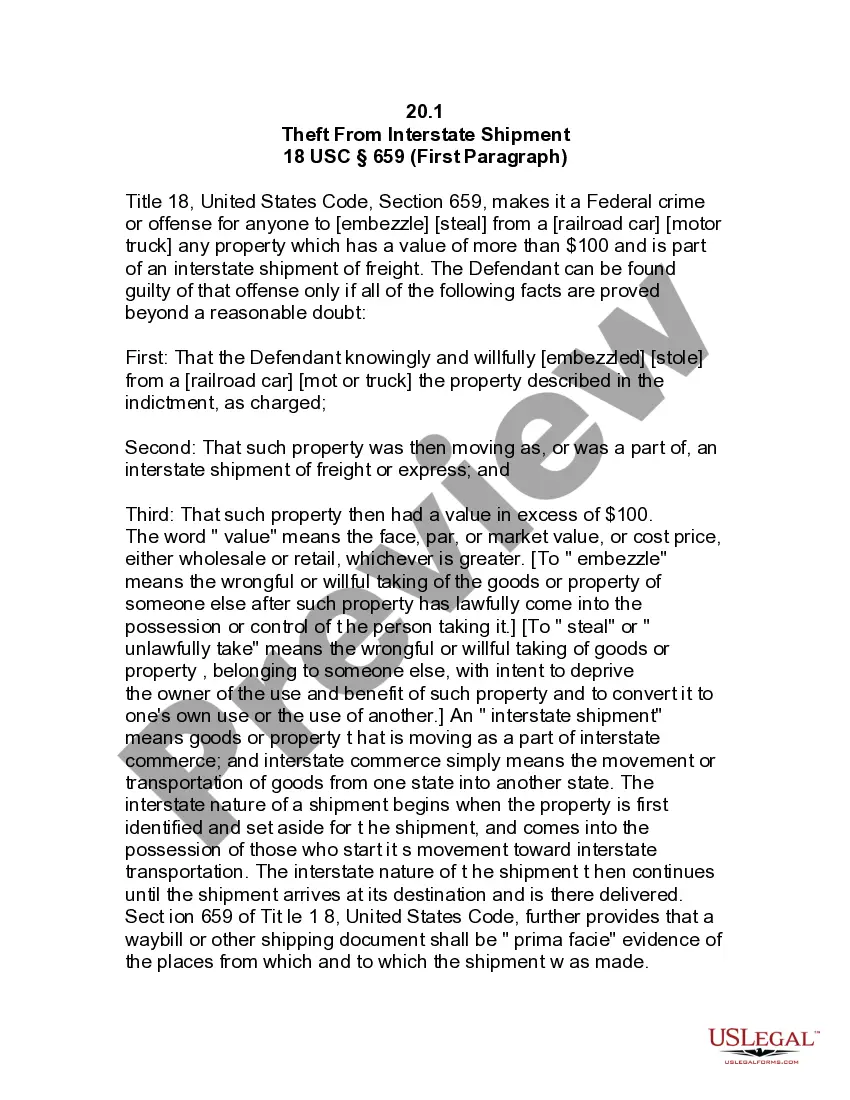
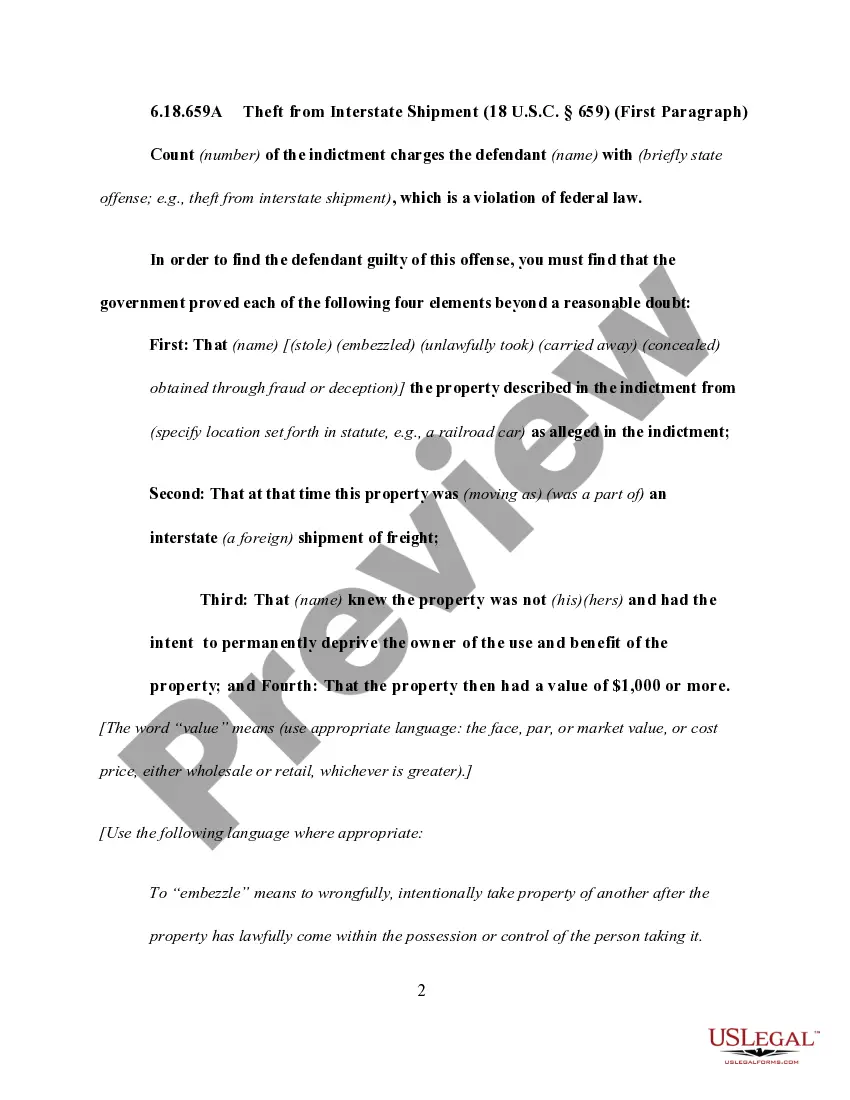
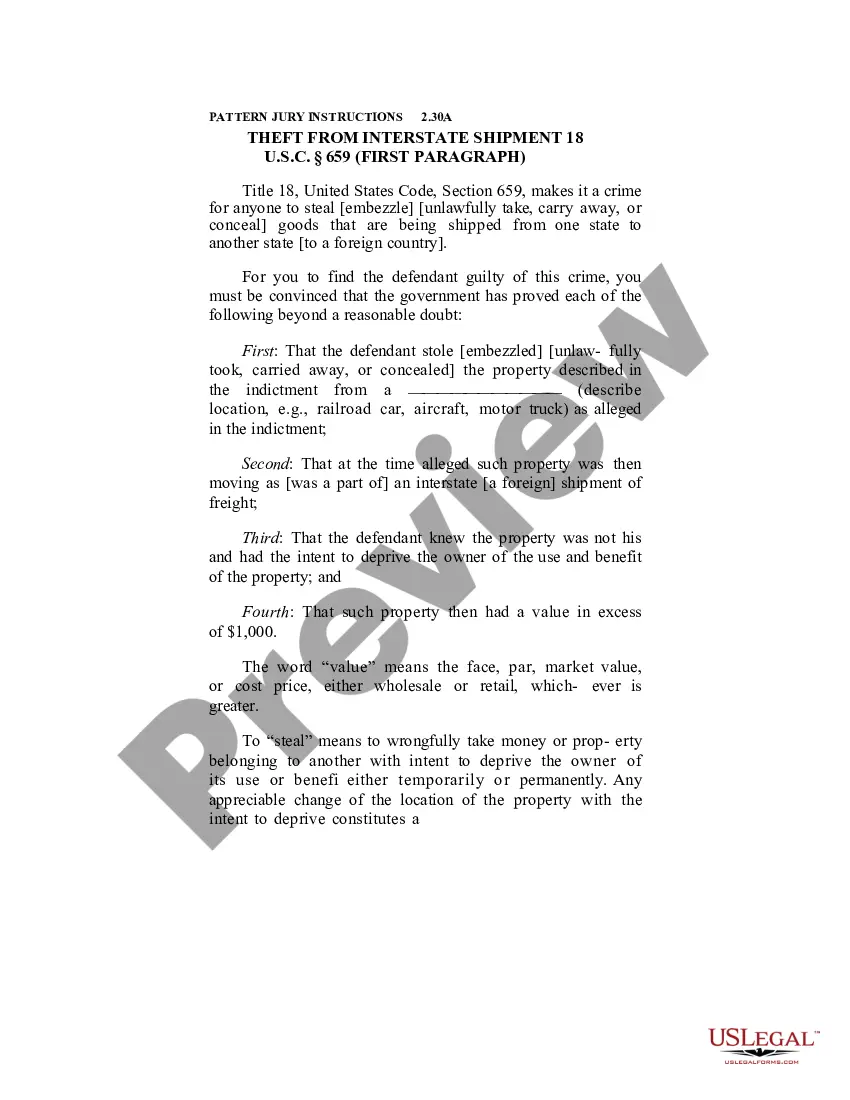
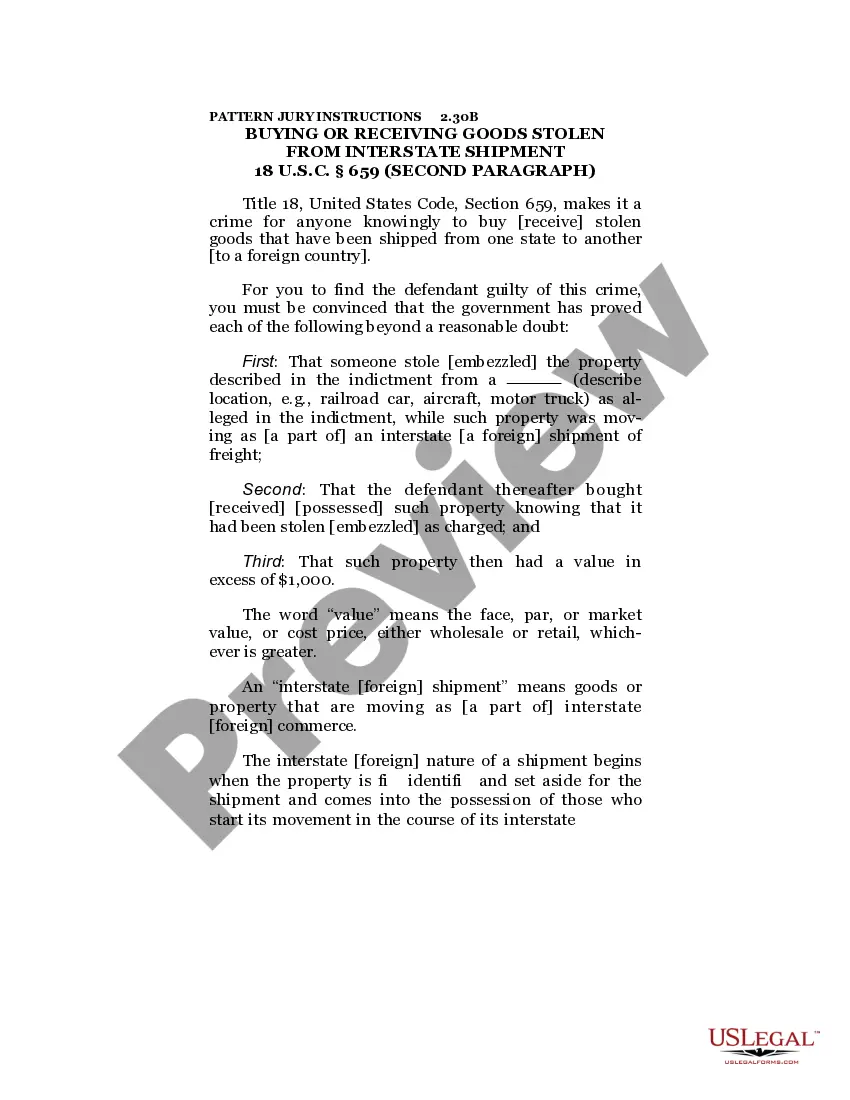
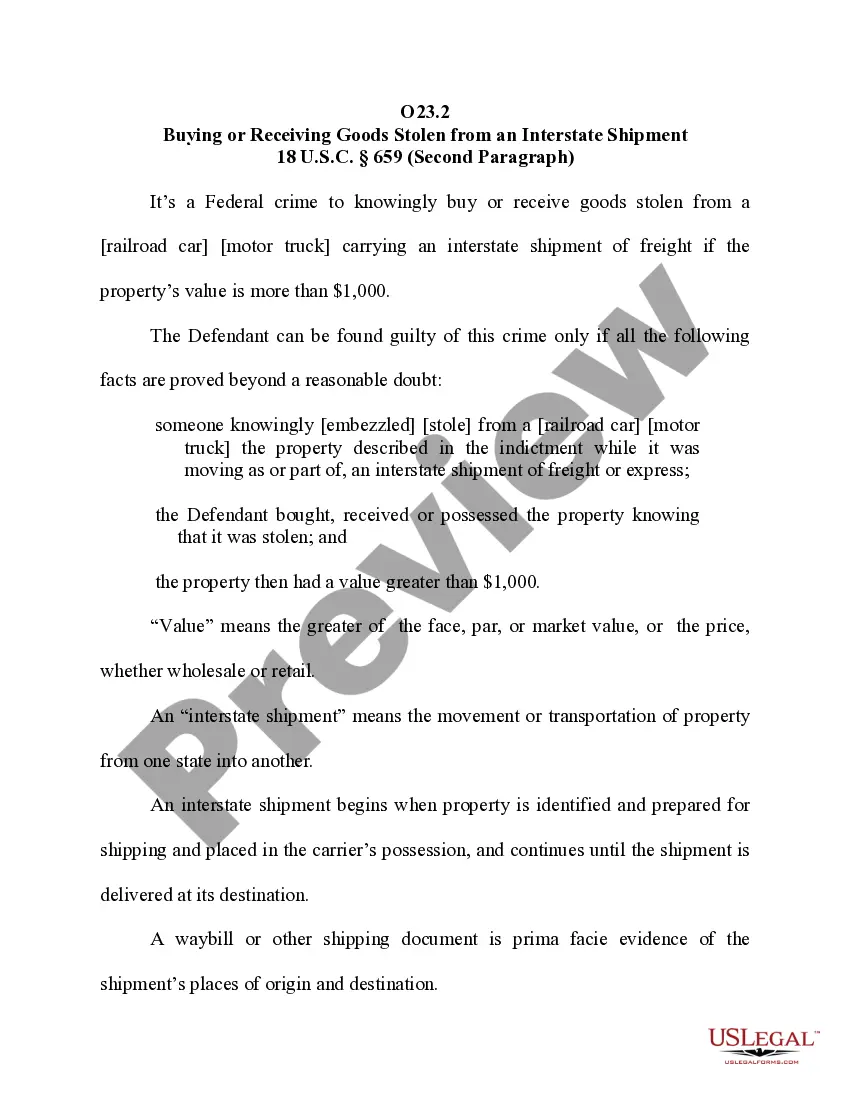
The Theft from an Interstate Shipment form is a legal document that outlines the criteria for prosecuting federal theft crimes involving property that is part of an interstate shipment. This form is crucial for understanding the specific elements required to prove the crime, including the definition of theft, interstate shipment, and the necessary evidence. It is distinct from other theft-related forms as it focuses specifically on federal jurisdiction and interstate commerce implications.
Key components of this form
- Definition of theft, including embezzlement and unlawful taking.
- Criteria that must be met to establish guilt, including awareness of theft and the value of the property.
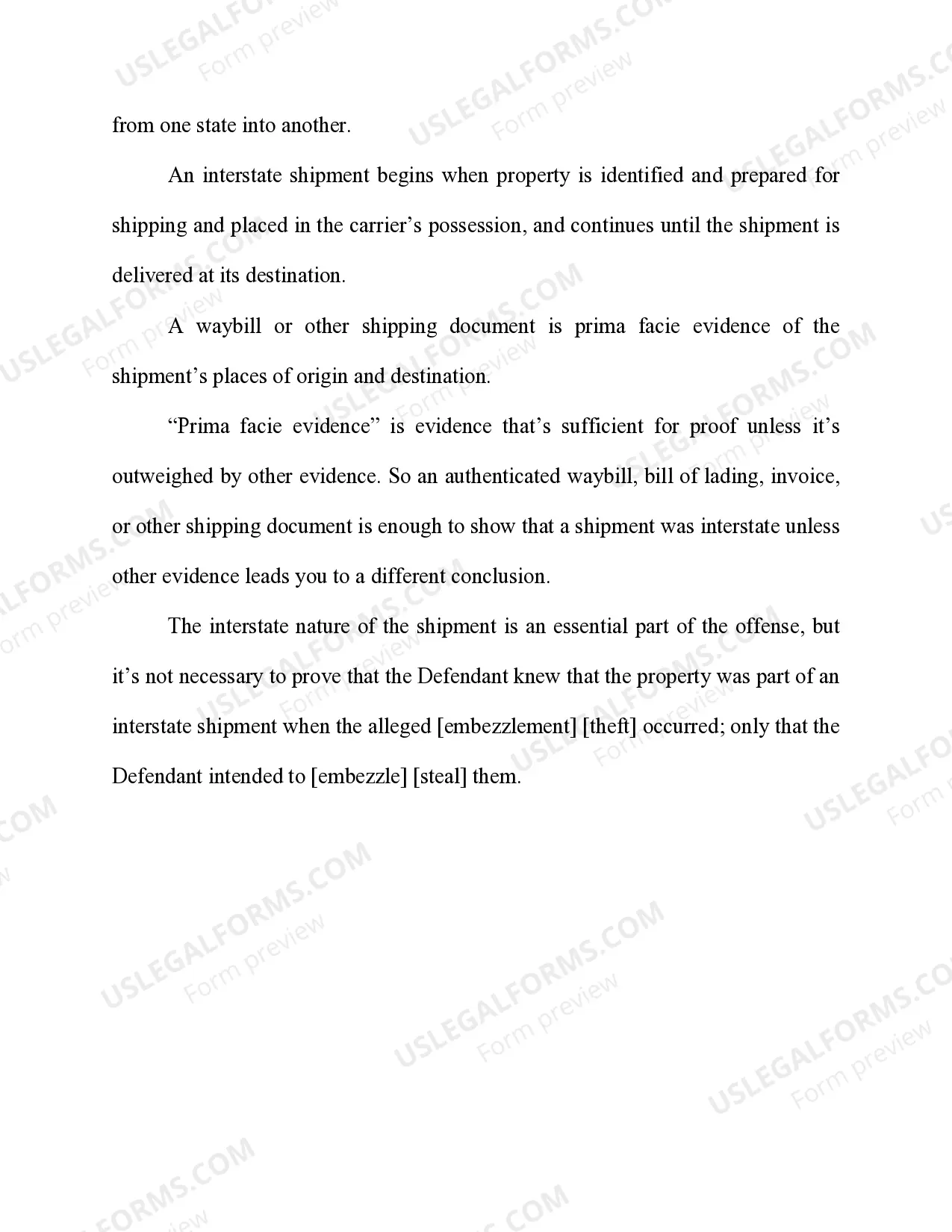
- Explanation of what constitutes an interstate shipment and its legal significance.
- Information on what constitutes prima facie evidence for proving interstate shipment.
When to use this form
This form is used in cases where there is an alleged theft or embezzlement of property valued at over $1,000 from an interstate shipment. It is relevant in situations involving railroad cars or motor trucks and serves as a guide for legal proceedings related to these crimes in federal court.
Who should use this form
- Legal professionals involved in federal theft cases.
- Defendants who have been accused of theft from interstate shipments.
- Attorneys seeking to build a defense or prosecution case based on federal theft laws.
- Individuals or companies dealing with theft related to interstate commerce.
Completing this form step by step
- Identify the defendant and the alleged crime.
- Clearly describe the property involved and its value.
- Establish the interstate nature of the shipment with appropriate documentation.
- Provide evidence of the defendant's intent to embezzle or steal.
- Prepare for potential courtroom presentations using this form as a guide.
Is notarization required?
This form does not typically require notarization unless specified by local law. However, having a notarized statement may add credibility to the submitted evidence in legal proceedings.
Get your form ready online
Our built-in tools help you complete, sign, share, and store your documents in one place.
Make edits, fill in missing information, and update formatting in US Legal Forms—just like you would in MS Word.
Download a copy, print it, send it by email, or mail it via USPS—whatever works best for your next step.
Sign and collect signatures with our SignNow integration. Send to multiple recipients, set reminders, and more. Go Premium to unlock E-Sign.
If this form requires notarization, complete it online through a secure video call—no need to meet a notary in person or wait for an appointment.
We protect your documents and personal data by following strict security and privacy standards.

Make edits, fill in missing information, and update formatting in US Legal Forms—just like you would in MS Word.

Download a copy, print it, send it by email, or mail it via USPS—whatever works best for your next step.

Sign and collect signatures with our SignNow integration. Send to multiple recipients, set reminders, and more. Go Premium to unlock E-Sign.

If this form requires notarization, complete it online through a secure video call—no need to meet a notary in person or wait for an appointment.

We protect your documents and personal data by following strict security and privacy standards.
Common mistakes
- Failing to prove the value of the property exceeds $1,000.
- Not adequately demonstrating the interstate nature of the shipment.
- Confusing embezzlement with theft in legal definitions.
Why complete this form online
- Convenience of downloading and completing from anywhere.
- Editable format allows users to customize information easily.
- Reliability of professionally drafted legal language.
Legal use & context
- This form is used in federal court to establish the parameters of theft from interstate shipments.
- It provides statutory references necessary for legal proceedings.
- Failure to meet the outlined criteria could result in case dismissal.
Quick recap
- The form is essential for addressing theft crimes under federal law.
- Understanding the interstate shipment definition is crucial for the case.
- Proper documentation and evidence are vital for proving the case.
Looking for another form?

Form popularity
FAQ
Ing to the FBI, cargo theft is estimated to cost trucking companies and retailers at least $15 billion to $30 billion a year. It is adding to the supply chain disruptions that have fueled inflation.
It prohibits the theft or fraudulent acquisition of goods that are part of an interstate or international shipment, whether from the carrier or a holding area, and also the wilful buying, selling or possession of goods obtained in this way.
A violation of 18 U.S.C. § 659 is a ten-year felony where the value of the stolen goods, chattels, money or baggage is $1,000 or more; otherwise the maximum penalty is three years.
A violation of 18 U.S.C. § 659 is a ten-year felony where the value of the stolen goods, chattels, money or baggage is $1,000 or more; otherwise the maximum penalty is three years.
Penalties for Possessing Stolen Property in the First Degree in Washington: Possession of stolen property in the first degree is a class B felony, which RCW §9A. 20.021 defines as punishable by a maximum sentence of ten years in prison, a maximum fine of $20,000, or both.
Mail theft under California Penal Code Section 530.5(e) PC is a misdemeanor offense that is punishable by up to a year in jail and a $1,000 court fine.
Cargo Theft is the criminal taking of any cargo including, but not limited to, goods, chattels, money, or baggage that constitutes, in whole or in part, a commercial shipment of freight moving in commerce, from any pipeline system, railroad car, motor truck, or other vehicle, or from any tank or storage facility,
It prohibits the theft or fraudulent acquisition of goods that are part of an interstate or international shipment, whether from the carrier or a holding area, and also the wilful buying, selling or possession of goods obtained in this way.