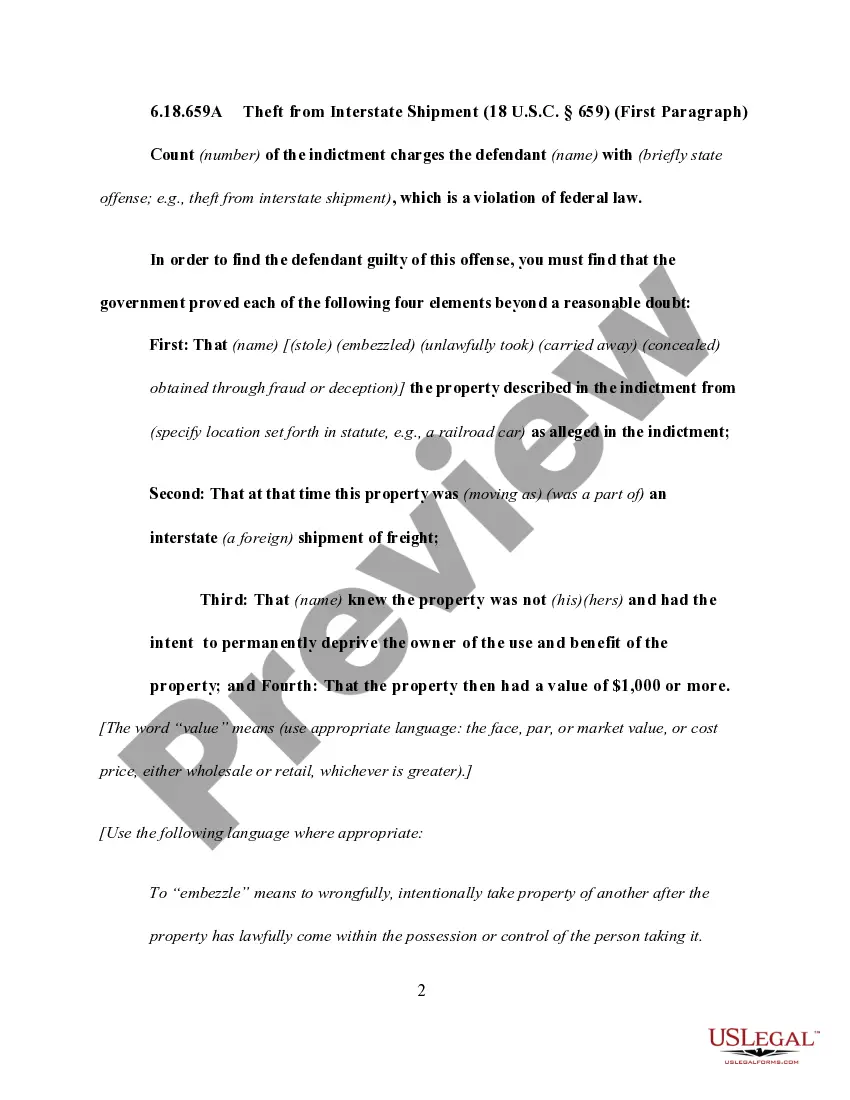
Theft From Interstate Shipment (18 U.S.C. Sec.659) (First Paragraph)
Understanding this form
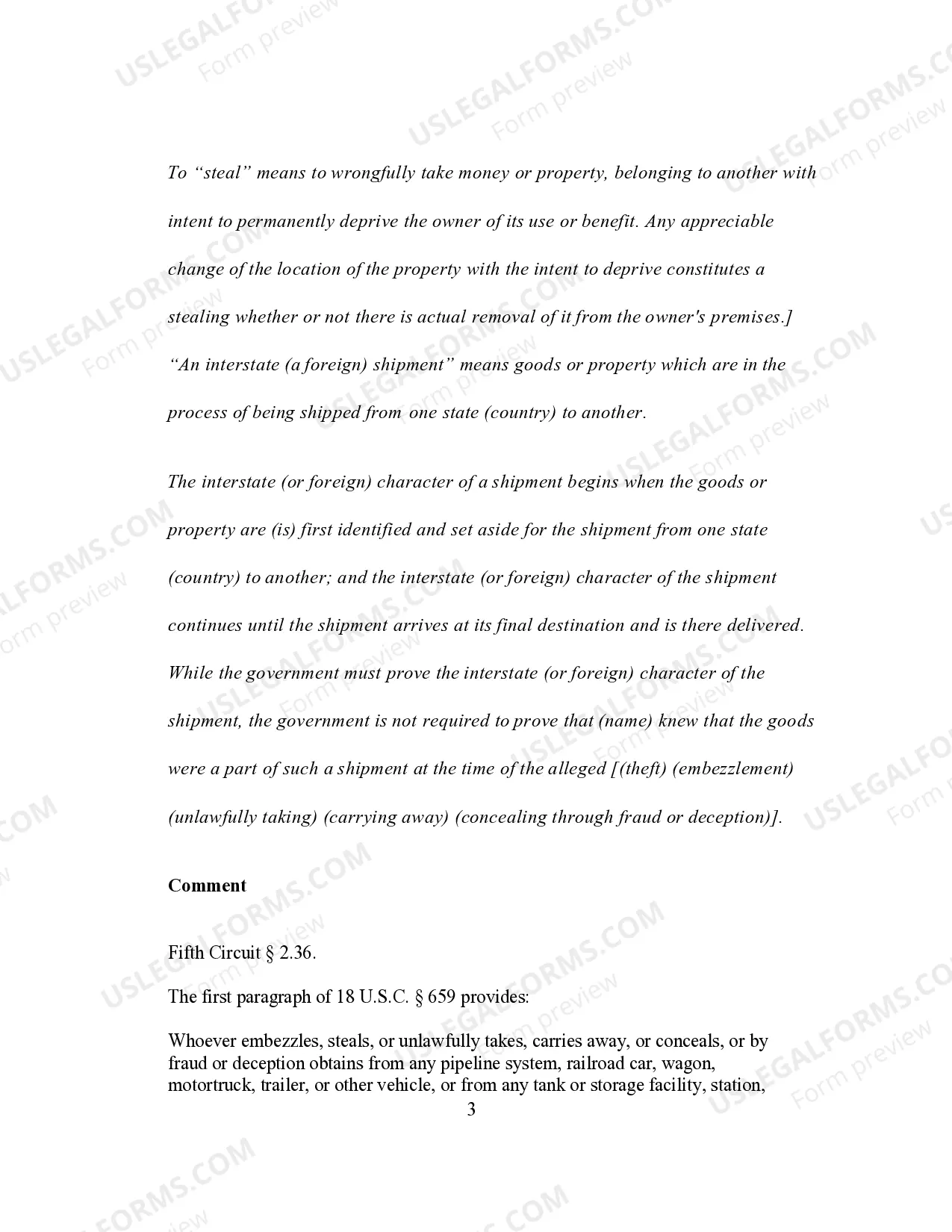
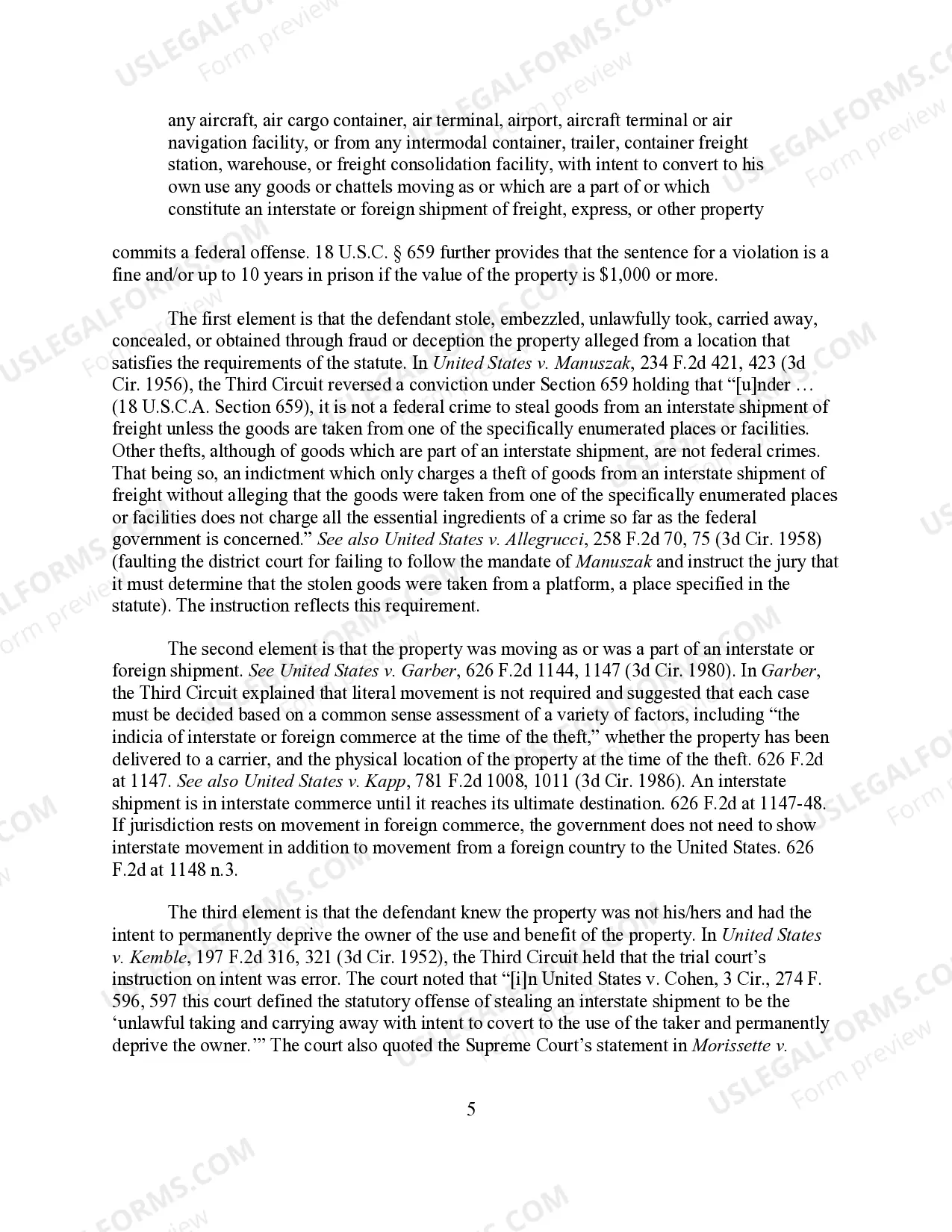
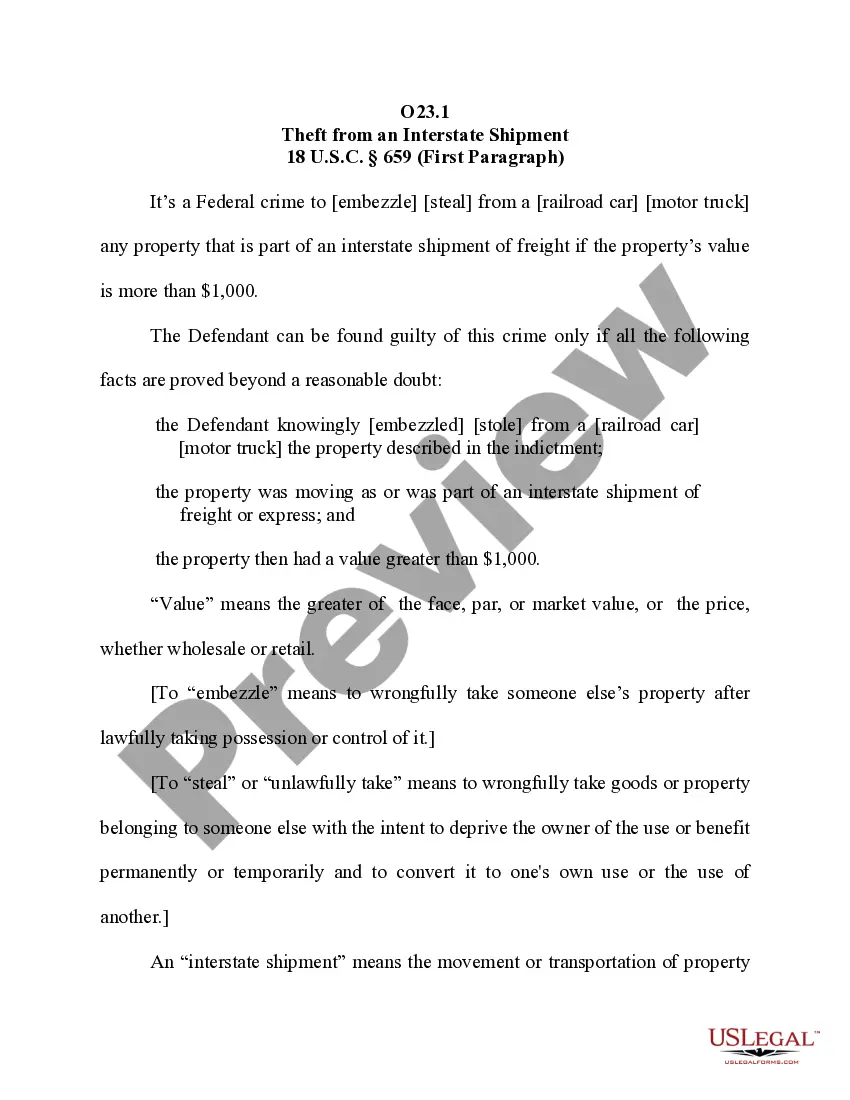
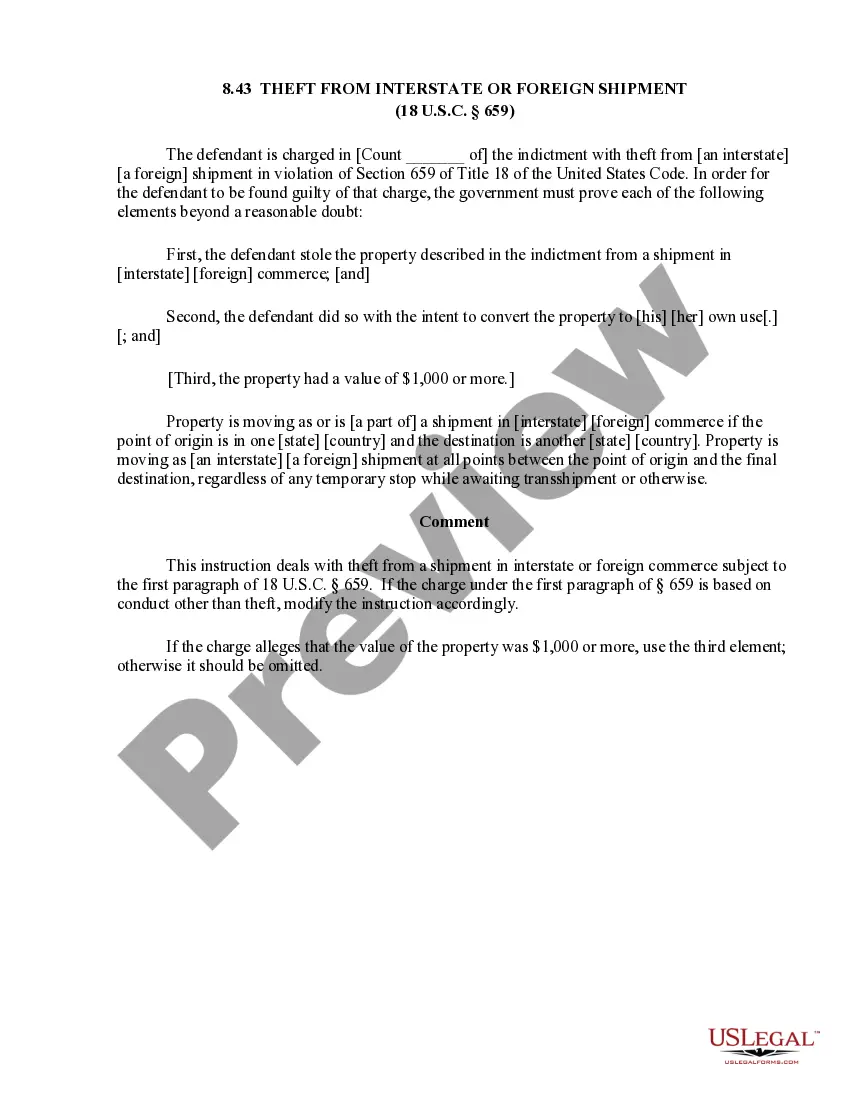
The Theft From Interstate Shipment form is a legal document used in federal prosecutions for theft, embezzlement, or unlawful taking of property involved in interstate commerce. This form outlines the specific charges and legal standards under 18 U.S.C. Sec. 659, which differentiates it from state theft forms by focusing on federal regulations regarding interstate shipments. It ensures that all essential elements of the crime are clearly defined for legal proceedings.
What’s included in this form
- Identification of the defendant and specific charges.
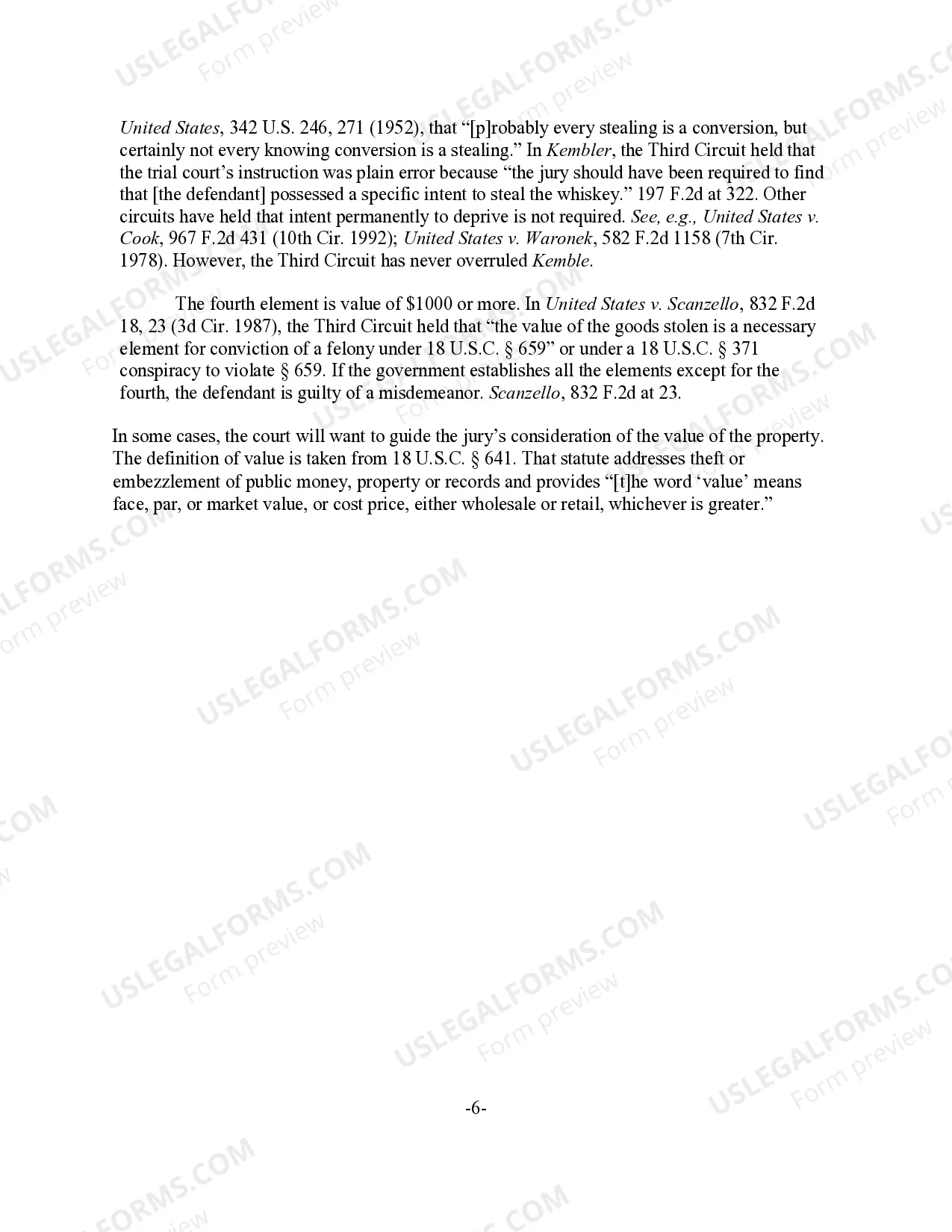
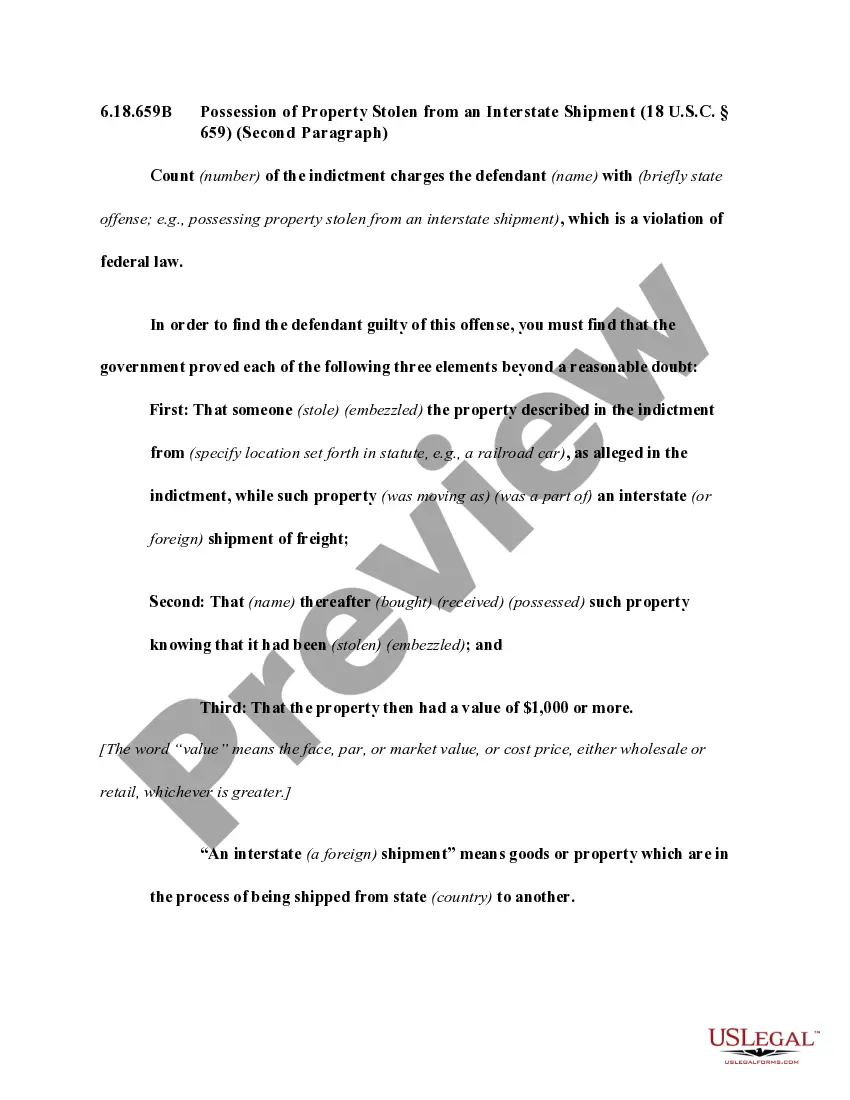
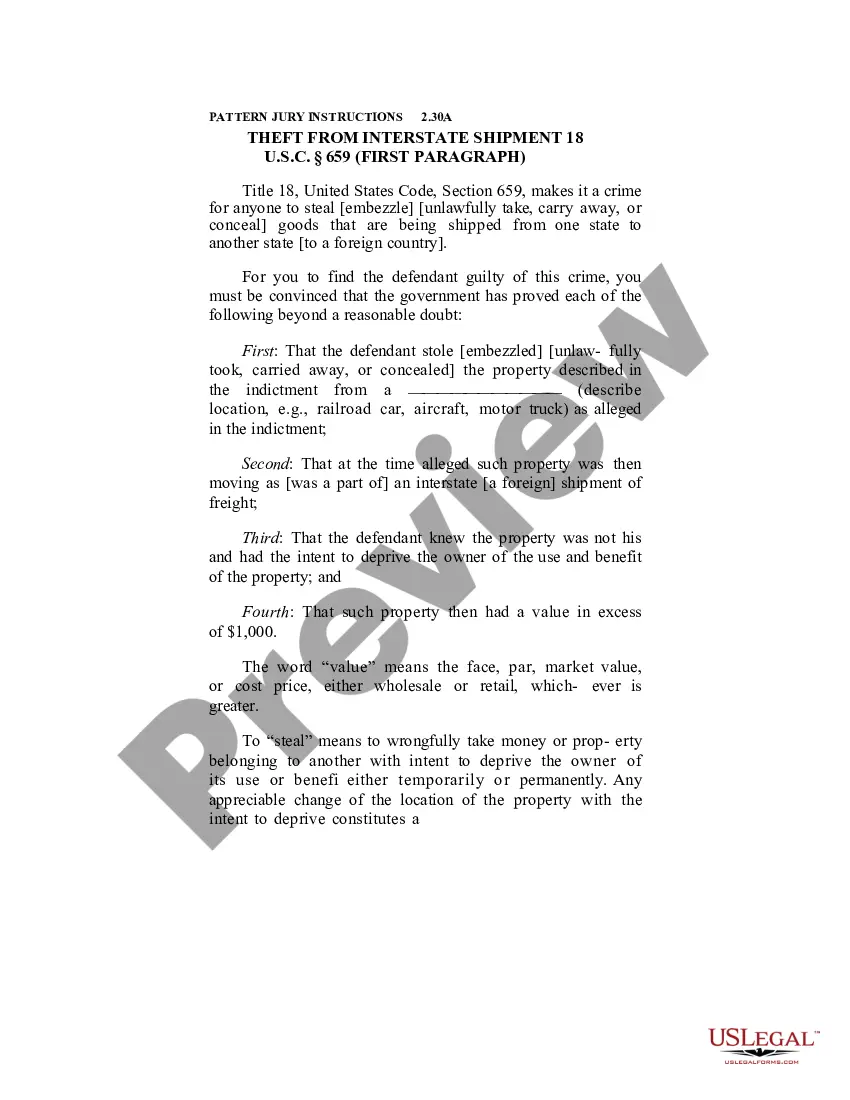
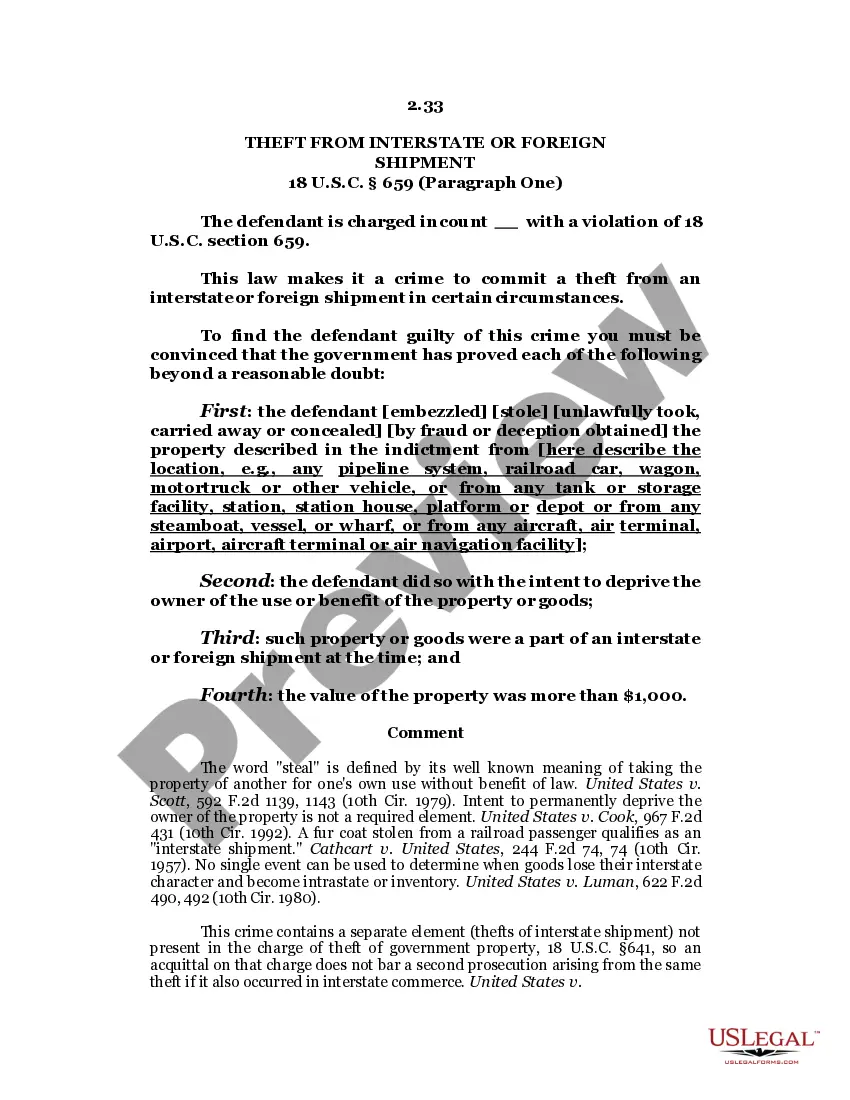
- Four elements that must be proven for conviction: theft, interstate shipment status, knowledge and intent, and property value.
- Definitions of key terms such as "steal" and "embezzle."
- Requirements regarding the location from which property was taken.
- Valuation of the stolen goods, establishing the threshold for felony charges.

When to use this document
This form is necessary when dealing with cases of theft involving goods that are part of an interstate shipment. It is typically used in federal legal proceedings where the government must prove that certain conditions were met for the alleged theft to be classified under federal law. Scenarios may include theft from shipping facilities, vehicles transporting goods across state lines, or other authorized shipment locations specified under federal statute.
Who should use this form
- Prosecutors aiming to file charges for theft from interstate shipment.
- Defense attorneys representing clients accused of theft under federal jurisdiction.
- Legal professionals seeking to understand the elements required for a case under 18 U.S.C. Sec. 659.
How to complete this form
- Identify the defendant's name and specify the theft charges being filed.
- Clearly state the location from which the property was taken, ensuring it aligns with the legal definitions provided.
- Demonstrate the interstate character of the shipment by describing the context of the goods at the time of theft.
- Outline the defendant's knowledge regarding the property's ownership and their intent to deprive the owner of its use.
- Assess and document the value of the property involved to meet the $1,000 threshold necessary for felony charges.
Notarization guidance
This form usually doesn’t need to be notarized. However, local laws or specific transactions may require it. Our online notarization service, powered by Notarize, lets you complete it remotely through a secure video session, available 24/7.
Get your form ready online
Our built-in tools help you complete, sign, share, and store your documents in one place.
Make edits, fill in missing information, and update formatting in US Legal Forms—just like you would in MS Word.
Download a copy, print it, send it by email, or mail it via USPS—whatever works best for your next step.
Sign and collect signatures with our SignNow integration. Send to multiple recipients, set reminders, and more. Go Premium to unlock E-Sign.
If this form requires notarization, complete it online through a secure video call—no need to meet a notary in person or wait for an appointment.
We protect your documents and personal data by following strict security and privacy standards.

Make edits, fill in missing information, and update formatting in US Legal Forms—just like you would in MS Word.

Download a copy, print it, send it by email, or mail it via USPS—whatever works best for your next step.

Sign and collect signatures with our SignNow integration. Send to multiple recipients, set reminders, and more. Go Premium to unlock E-Sign.

If this form requires notarization, complete it online through a secure video call—no need to meet a notary in person or wait for an appointment.

We protect your documents and personal data by following strict security and privacy standards.
Typical mistakes to avoid
- Failing to specify the exact location from which the property was taken, as required by the statute.
- Not clearly demonstrating the interstate nature of the shipment at the time of the alleged theft.
- Neglecting to establish the defendant's knowledge and intent, which are crucial for a conviction.
Why complete this form online
- Convenient access to legal documents from anywhere, anytime.
- Editability allows for customization to fit specific case needs.
- Reliable templates drafted by licensed attorneys ensure compliance with legal standards.
Looking for another form?
Form popularity
FAQ
The provisions for fine of not more than $1,000 or imprisonment of not more than 1 year for an offense involving $100 or less and for fine of not more than $10,000 or imprisonment of not more than 10 years, or both, for an offense involving a greater amount were written into this section as more in conformity with the
Section 641 protects "any record, voucher, money, or thing of value of the United States or any department or agency thereof, or any property made or being made under contract for the United States or any department or agency thereof."
A violation of 18 U.S.C. § 659 is a ten-year felony where the value of the stolen goods, chattels, money or baggage is $1,000 or more; otherwise the maximum penalty is three years.
Sale or Receipt of Stolen Goods ? 18 U.S.C. 18 U.S.C. §2315 makes it unlawful to knowingly receive, possess, conceal, sell, or dispose of stolen property which has a value of $5,000 or more and which is a part of interstate commerce.
But Section 641 also states that, if the value of the stolen property is $1000 or less, that person shall be fined and imprisoned for no longer than 1 year. The $1000 threshold, therefore, is necessary to make a Section 641 offense into a felony; smaller theft from the government is only a misdemeanor.
2312. The elements of a violation under 18 U.S.C. § 2312 are that the defendant: (1) unlawfully transported or caused to be transported in interstate or foreign commerce; (2) a stolen motor vehicle or aircraft; and (3) knowing the same to be stolen.