Affidavit that Real Property is not Abandoned Pursuant to Michigan Mich. Comp. Laws - 600.3241(d)
About this form
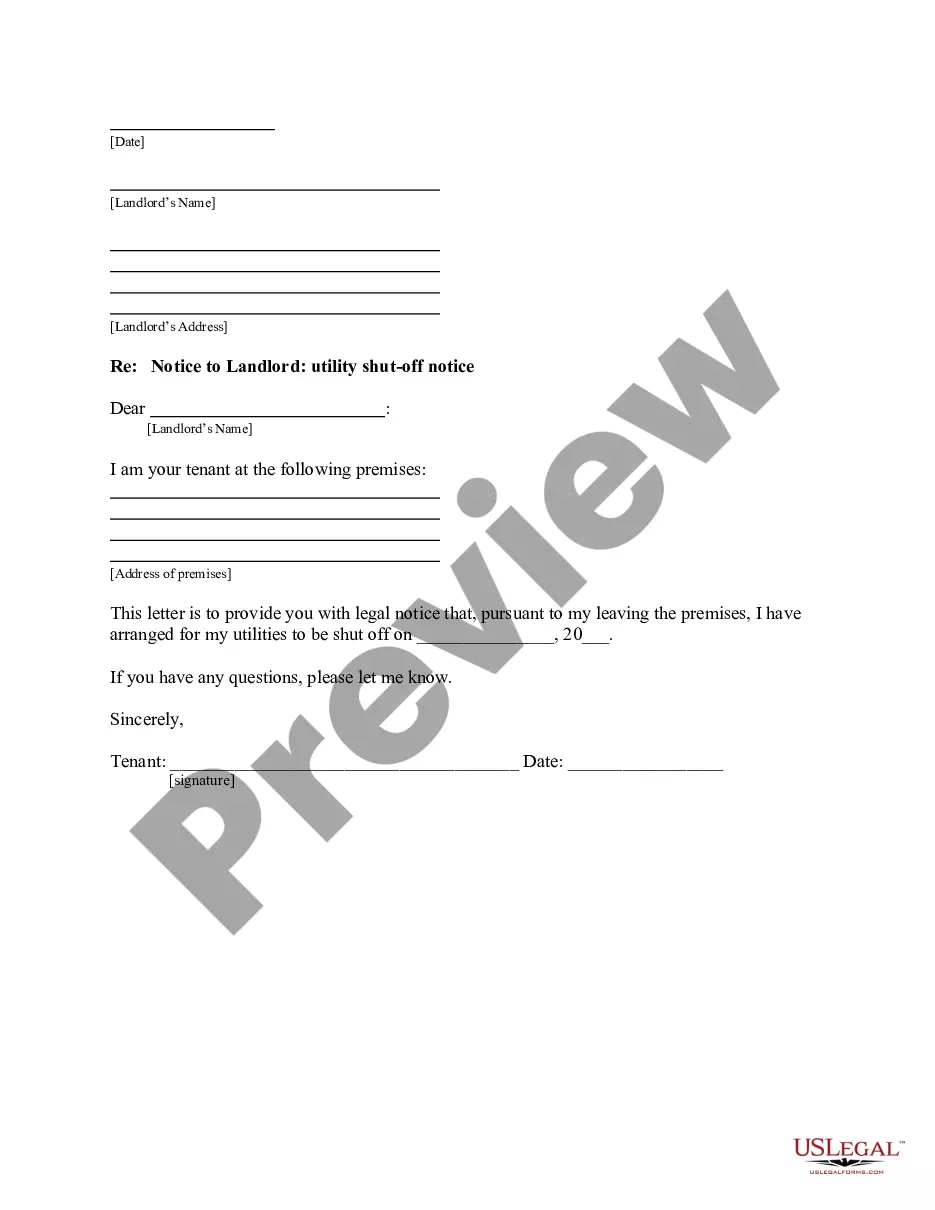
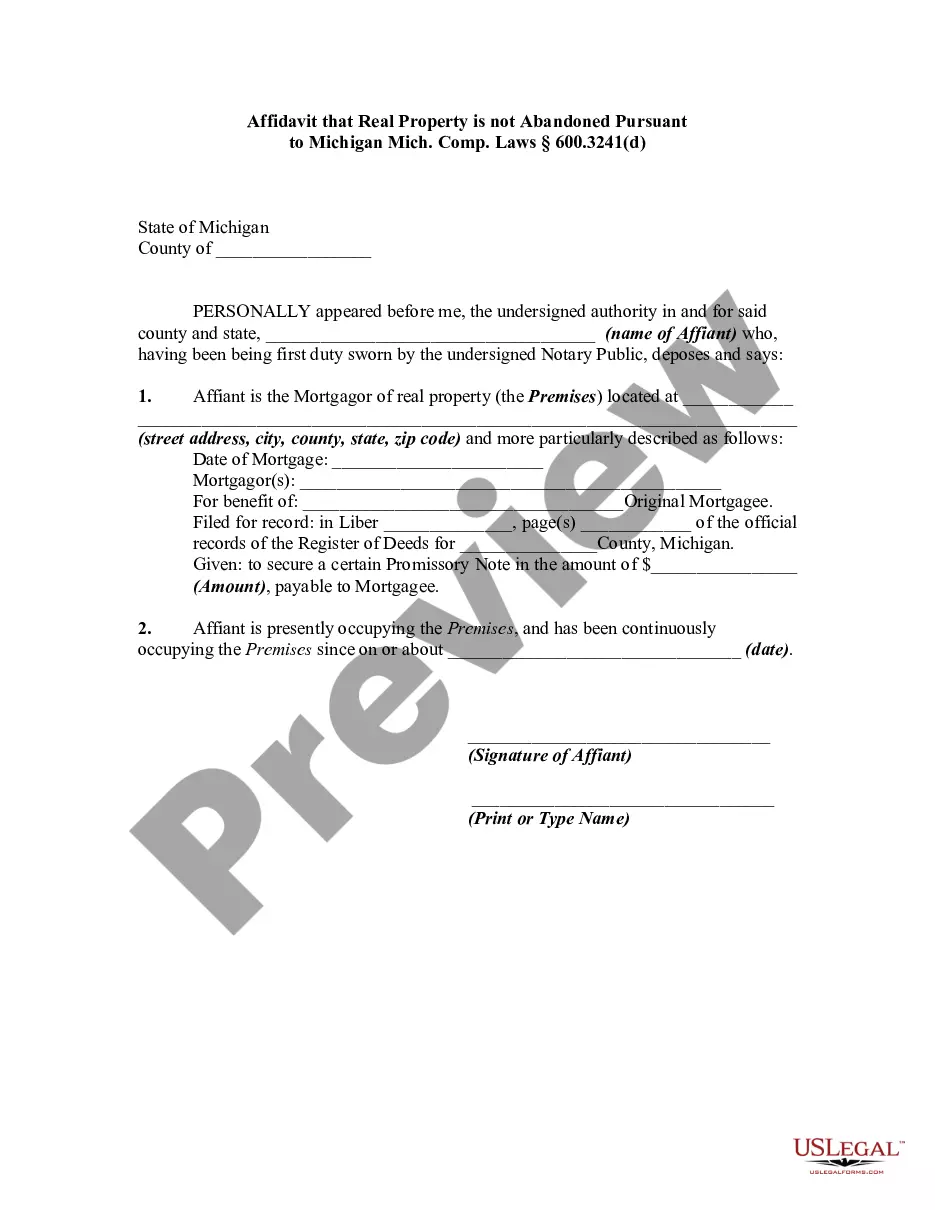
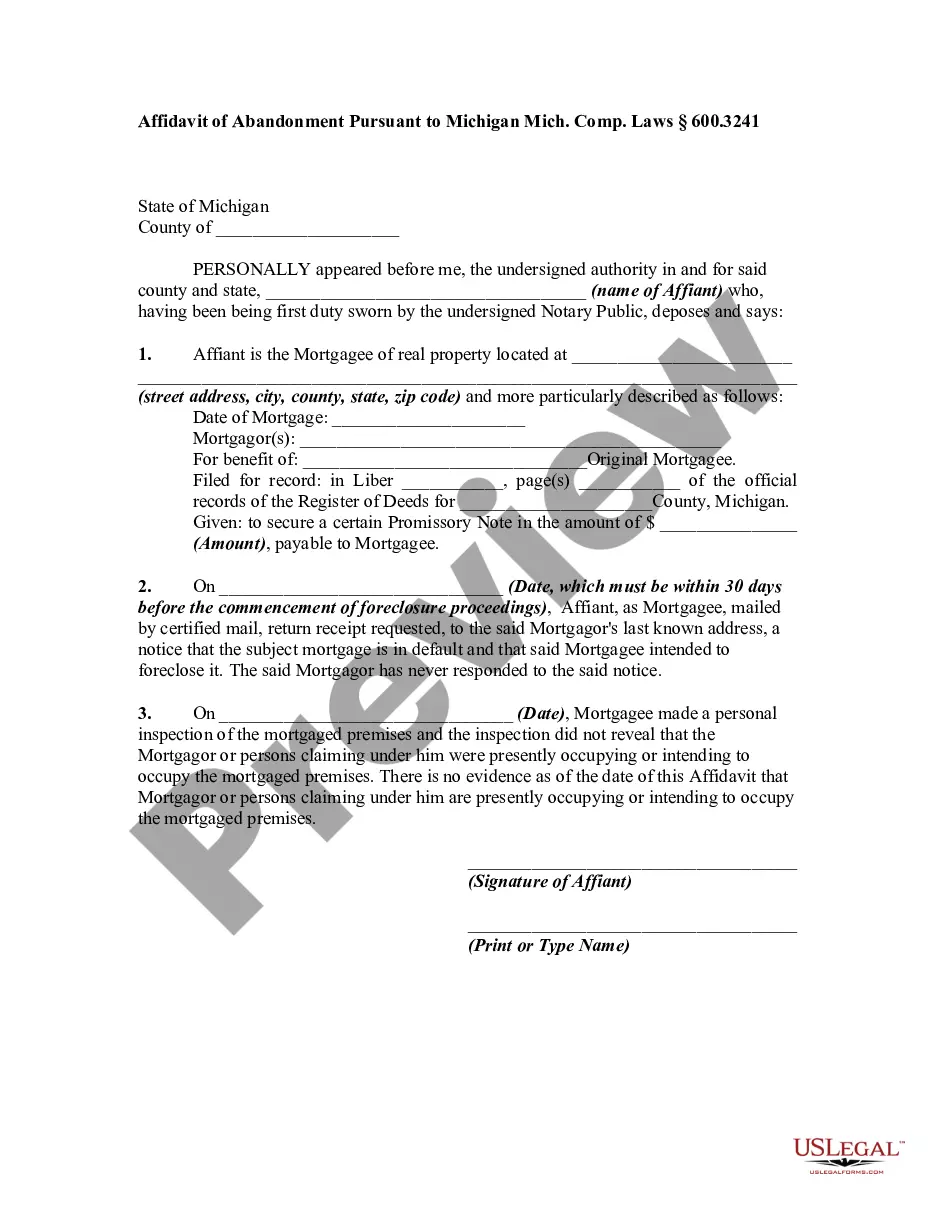
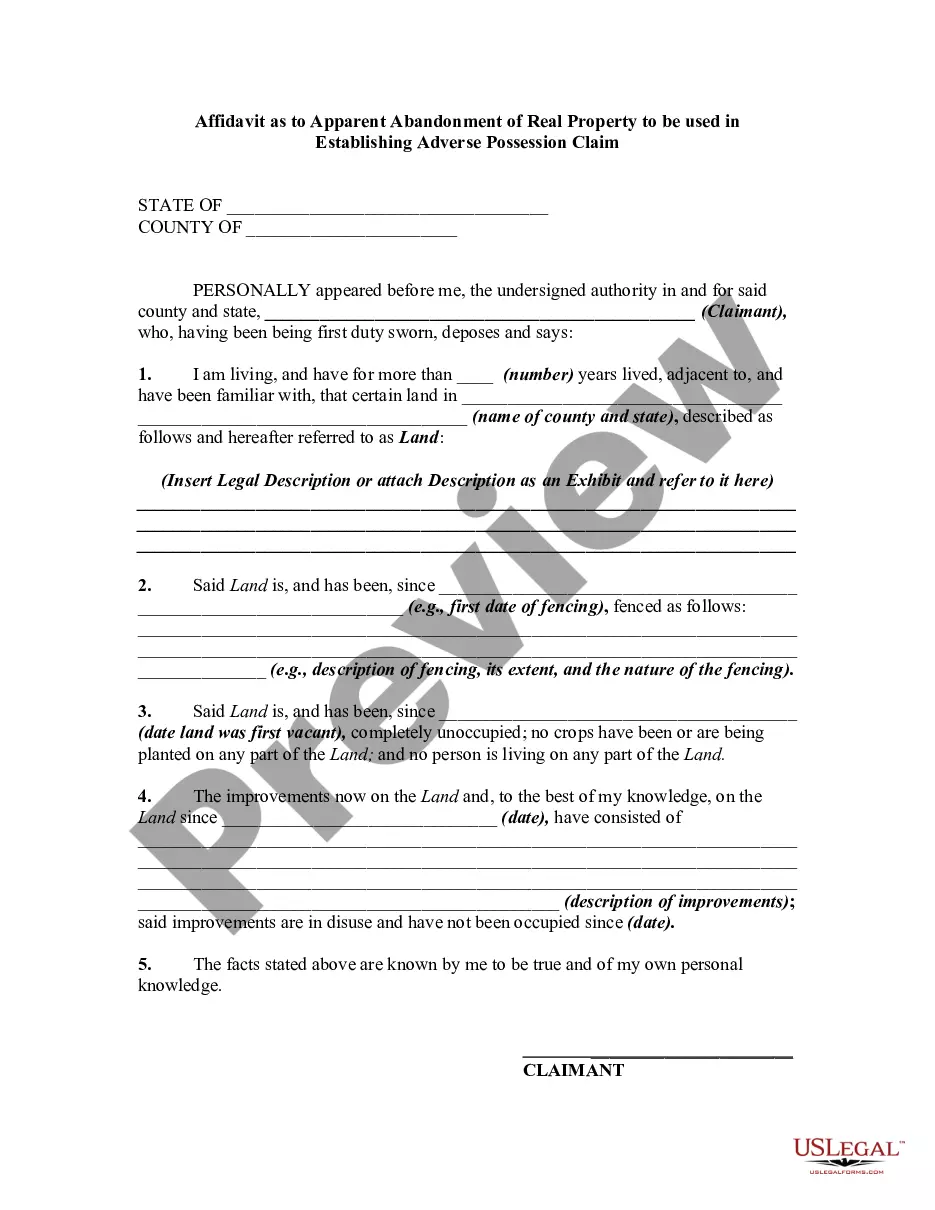
The Affidavit that Real Property is not Abandoned is a legal document used in Michigan to assert that a mortgaged property has not been abandoned. This form is crucial in certain foreclosure cases, as the timeline for redemption of a foreclosed property varies based on its abandonment status. By completing this affidavit, the affiant declares continuous occupation of the property, which helps extend the redemption period under Michigan law.
Main sections of this form
- Identification of the affiant (the person making the affidavit).
- Details of the mortgaged property, including address and legal description.
- Confirmation of the affiant's occupancy of the property and duration of residence.
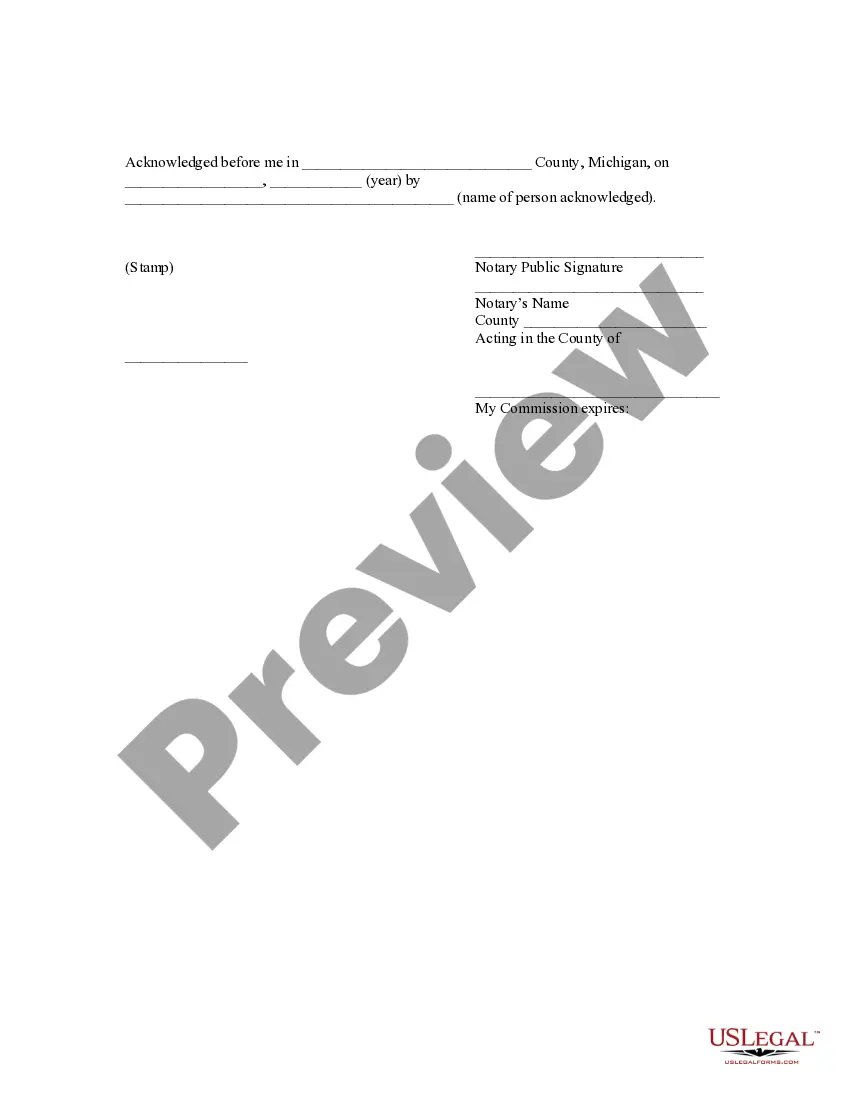
- Signature of the affiant and the notary public.
- Notary acknowledgment to validate the document.
When to use this document
This affidavit is used in situations where a property owner needs to clarify that their property is not abandoned, particularly after a foreclosure sale. It is typically filed when the owner intends to redeem the property during the redemption period, which may be shortened if the property is deemed abandoned.
Who needs this form
- Homeowners facing foreclosure in Michigan.
- Mortgagors seeking to confirm their occupancy status.
- Individuals involved in legal proceedings regarding property redemption.
- Real estate professionals assisting clients in foreclosure matters.
Completing this form step by step
- Enter the affiant's name and address at the top of the form.
- Provide the street address and legal description of the property.
- Fill in details regarding the mortgage, including the date and amount.
- Specify the dates of occupancy and ensure all information is accurate.
- Sign the affidavit in the presence of a notary public, who will then notarize the document.
Does this form need to be notarized?
Yes, this form must be notarized to be legally valid. It requires the signature of a notary public to confirm the identity of the affiant and the authenticity of the affidavit. US Legal Forms offers integrated online notarization services, allowing you to complete this process securely via video call at any time.
Get your form ready online
Our built-in tools help you complete, sign, share, and store your documents in one place.
Make edits, fill in missing information, and update formatting in US Legal Forms—just like you would in MS Word.
Download a copy, print it, send it by email, or mail it via USPS—whatever works best for your next step.
Sign and collect signatures with our SignNow integration. Send to multiple recipients, set reminders, and more. Go Premium to unlock E-Sign.
If this form requires notarization, complete it online through a secure video call—no need to meet a notary in person or wait for an appointment.
We protect your documents and personal data by following strict security and privacy standards.

Make edits, fill in missing information, and update formatting in US Legal Forms—just like you would in MS Word.

Download a copy, print it, send it by email, or mail it via USPS—whatever works best for your next step.

Sign and collect signatures with our SignNow integration. Send to multiple recipients, set reminders, and more. Go Premium to unlock E-Sign.

If this form requires notarization, complete it online through a secure video call—no need to meet a notary in person or wait for an appointment.

We protect your documents and personal data by following strict security and privacy standards.
Mistakes to watch out for
- Failing to include all necessary property details.
- Not providing accurate dates of occupancy.
- Leaving fields blank or using unclear language.
- Not signing in front of a notary public.
- Neglecting to check local legal requirements that may affect the use of the form.
Why use this form online
- Convenient access to legal documents anytime, anywhere.
- Easy to complete and adjust as needed.
- Reliability of forms that are drafted by licensed attorneys.
- Ability to download and print immediately for submission.
Quick recap
- The Affidavit that Real Property is Not Abandoned is essential for property owners in foreclosure situations.
- Accurate completion of the form can extend the redemption period, protecting the owner's rights.
- Notarization is a necessary step to ensure the affidavitâs validity.
Looking for another form?

Form popularity
FAQ
Therapy. Seek out the help of a mental health professional, such as a therapist or counselor. They can help you overcome fears of being abandoned. Self-care. People with abandonment issues may benefit from self-care.
Abandon means to give up or discontinue any further interest in something because of discouragement, weariness, distaste, or the like: to abandon one's efforts. Relinquish implies being or feeling compelled to give up something one would prefer to keep: to relinquish a long-cherished desire.
One such fault ground is willful desertion and abandonment. In order for a party to prove willful desertion or abandonment he/she must prove (1) that the deserting spouse intended to end the marriage; (2) that the deserted spouse did nothing to justify the desertion; and (3) the desertion was against the wishes of
Abandoned child syndrome is a proposed behavioral or psychological condition that is said to result from the loss of one or both parents. Abandonment may be physical or emotional; that is, the parent may abandon the child by failing to be present in their life, or by withholding affection, nurturing, or stimulation.
Get Clear on Emotional Responsibility. When your abandonment paranoia gets out of control, do you expect your partner to calm your anxiety? Correct Idealistic Expectations. Learn to Self-Validate. Be Authentic. Practice Self-Confrontation.
In order to prove abandonment, the abandoned spouse must use direct or constructive evidence to demonstrate their claim. The spouse claiming abandonment must prove that the couple kept separate residences and didn't engage in marital relations for a required period, usually a year.
Intrusive, debilitating anxiety. Chronic feelings of insecurity. Chronic depression. Decreased self-esteem. Feelings of loss of control over life. Self-depreciation. Isolation. Obsessive thinking and intrusive thoughts about the abandonment.
If you fear abandonment, it can be almost impossible to maintain healthy relationships. This paralyzing fear can lead you to wall yourself off to avoid getting hurt. Or you might be inadvertently sabotaging relationships. The first step in overcoming your fear is to acknowledge why you feel this way.
State laws differ about what is needed for a parent to be deemed to have abandoned a child. Generally, there needs to be a period of time during which the parent does not have any contact with the child and does not pay child support. In most states, the period of time is one year, but this varies.
Abandonment is a feeling of disconnectedness, rejection, and neediness. The aftermath of this type of trauma generates a looming fear of not only losing connection with the people you love, but being forced to fend for yourself.