Agreement to Partition Real Property among Surviving Spouse and Children of Decedent
What is this form?
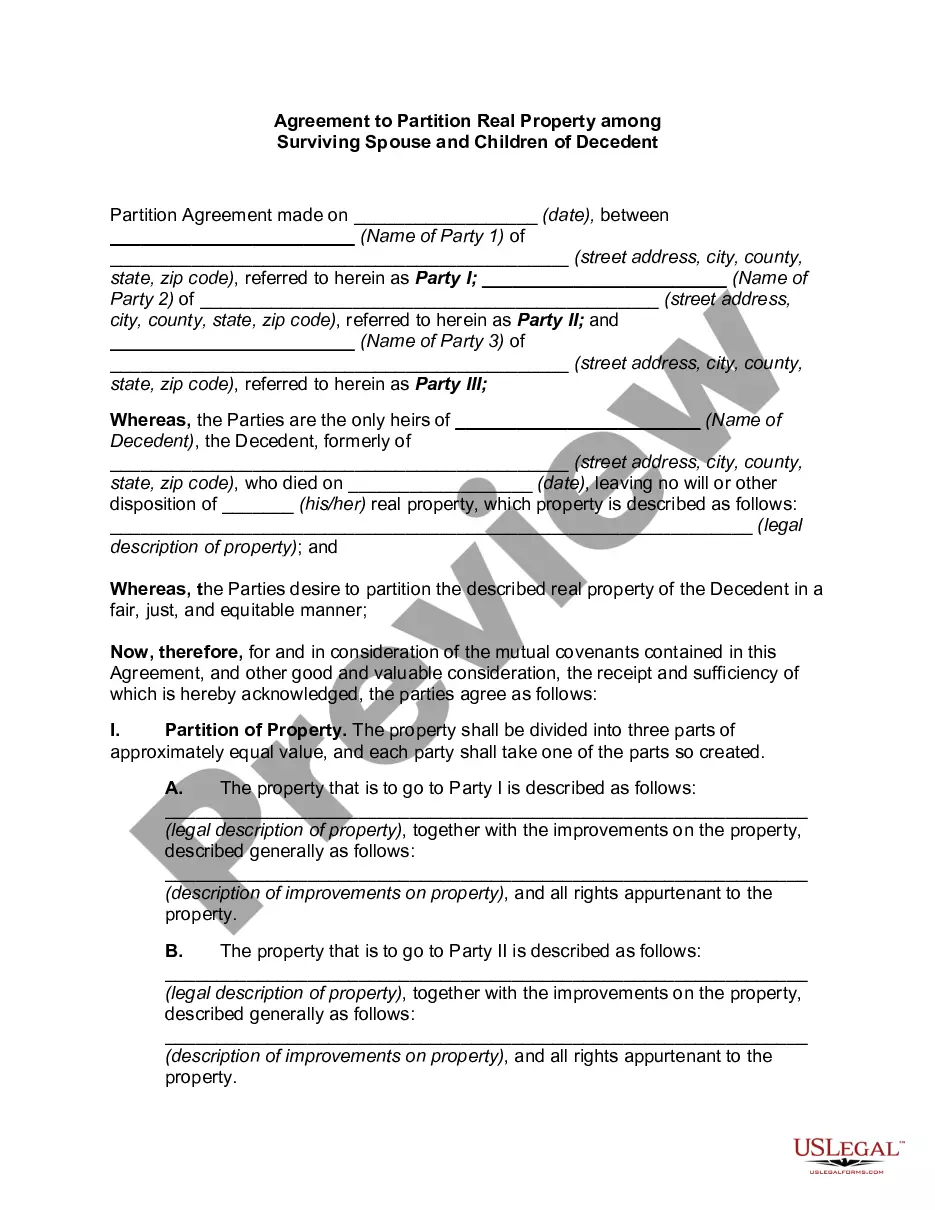
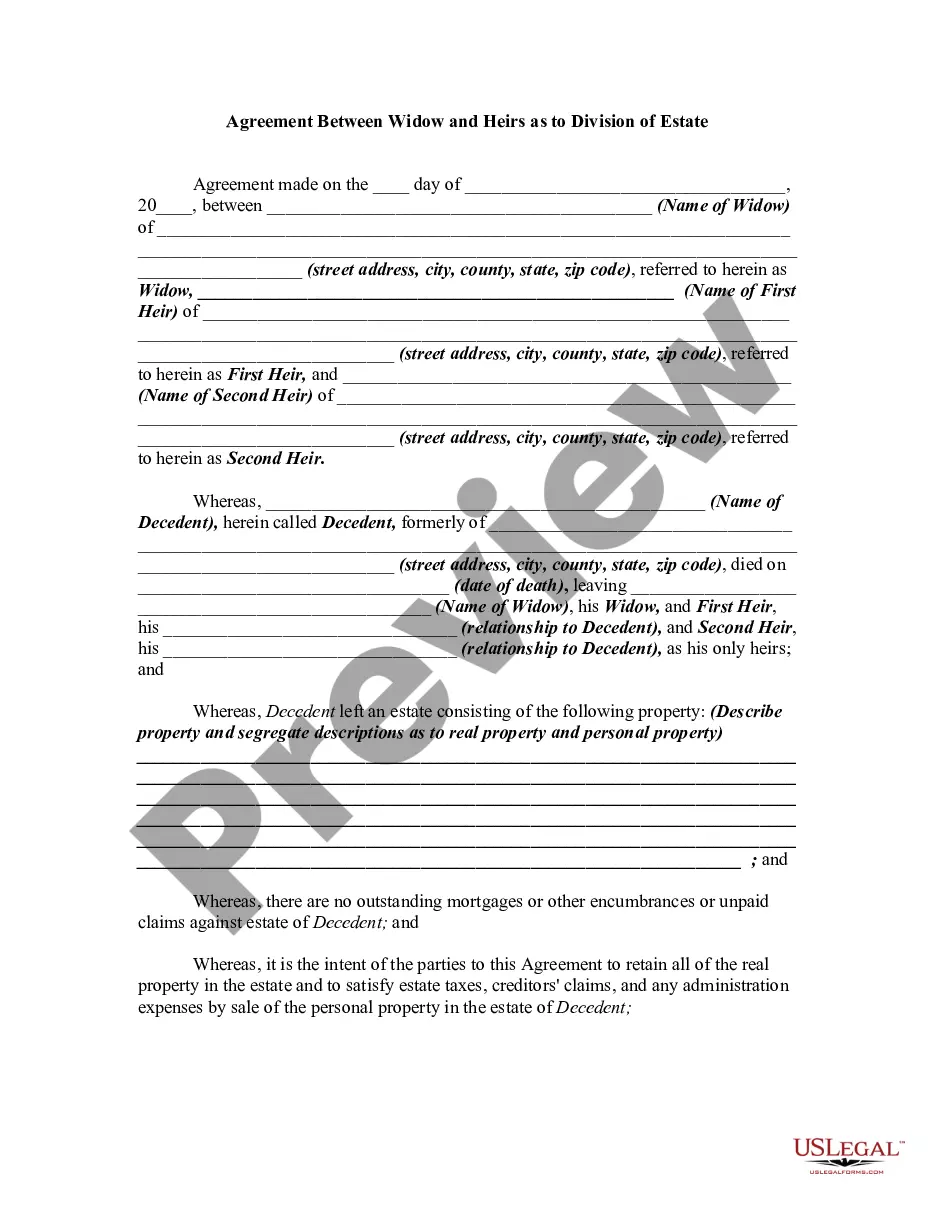
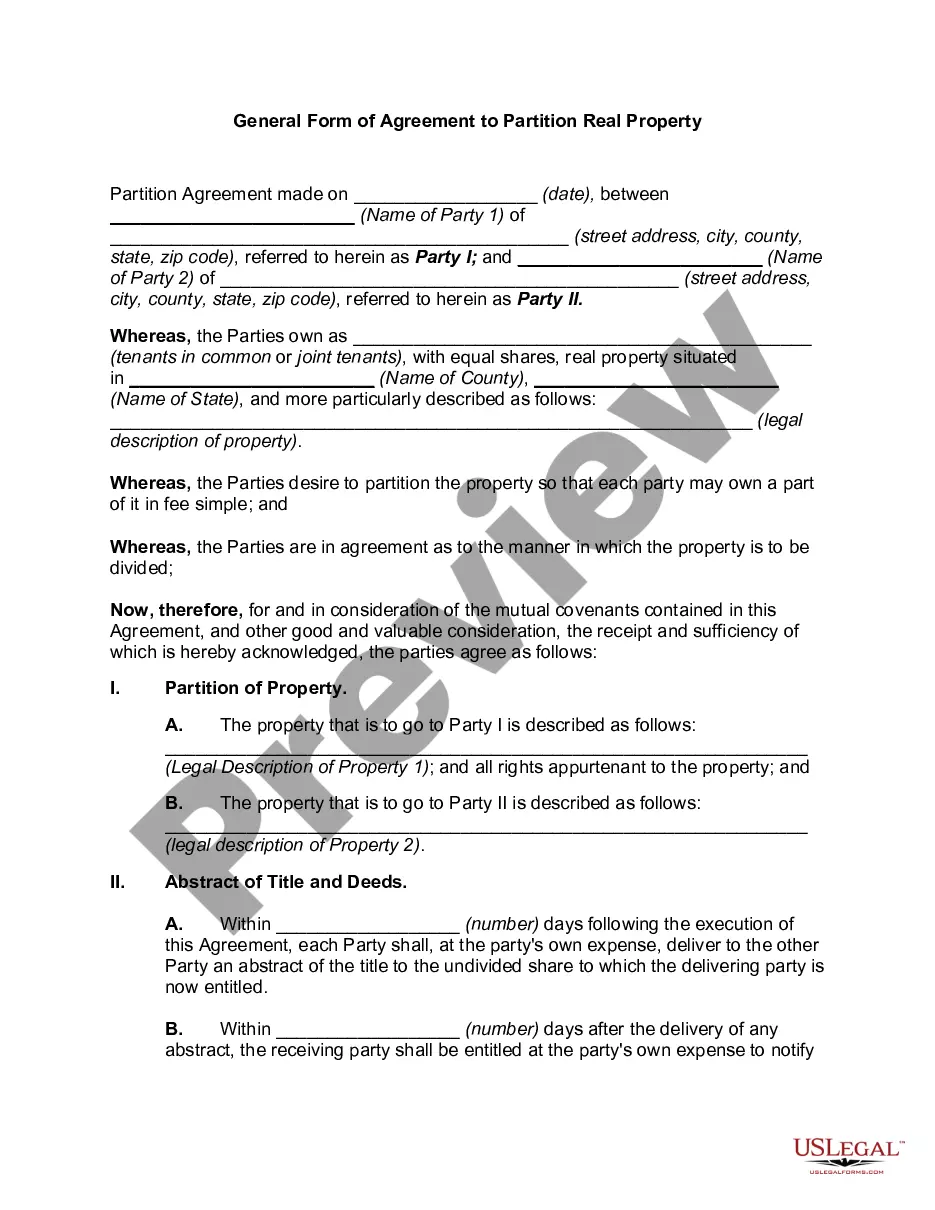
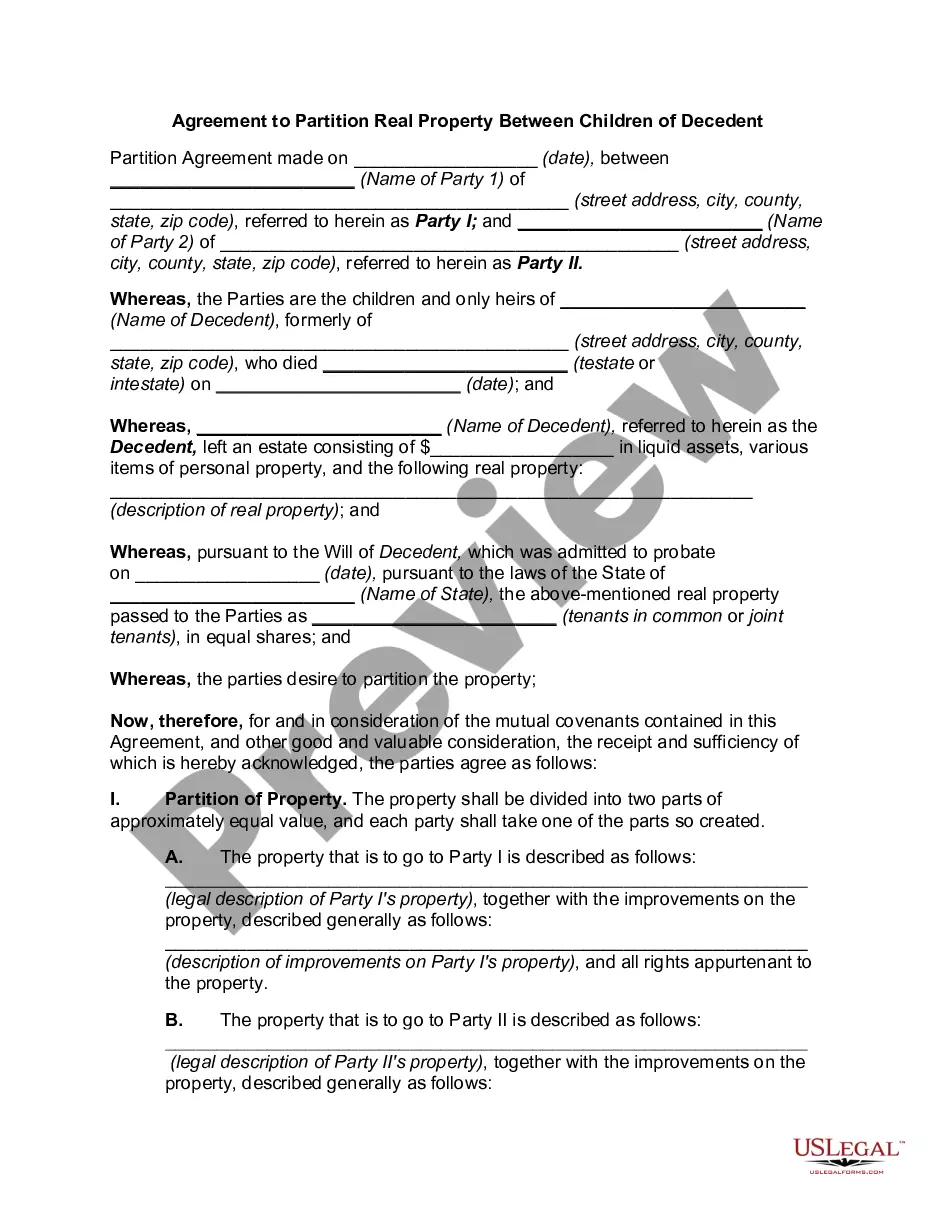
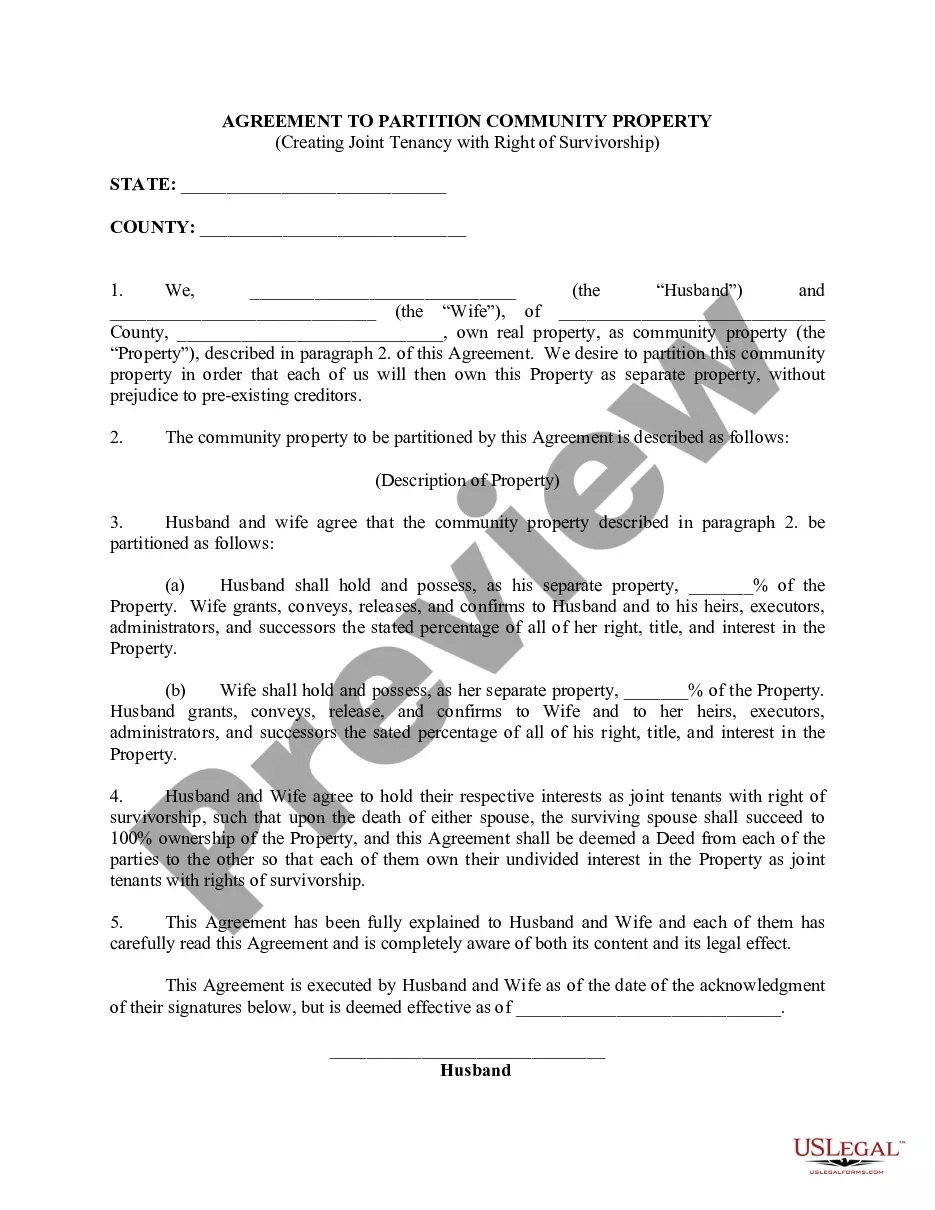
The Agreement to Partition Real Property among Surviving Spouse and Children of Decedent is a legal document used to divide real property among heirs. This agreement is particularly necessary when a decedent dies without a will, and multiple heirs wish to partition the property fairly. Unlike a will, which outlines distribution before death, this form addresses property division post-death, ensuring each heir receives a specific portion of the real estate owned in common.
Key parts of this document
- Identification of parties involved, including names and addresses of the heirs.
- Legal description of the decedentâs property being partitioned.
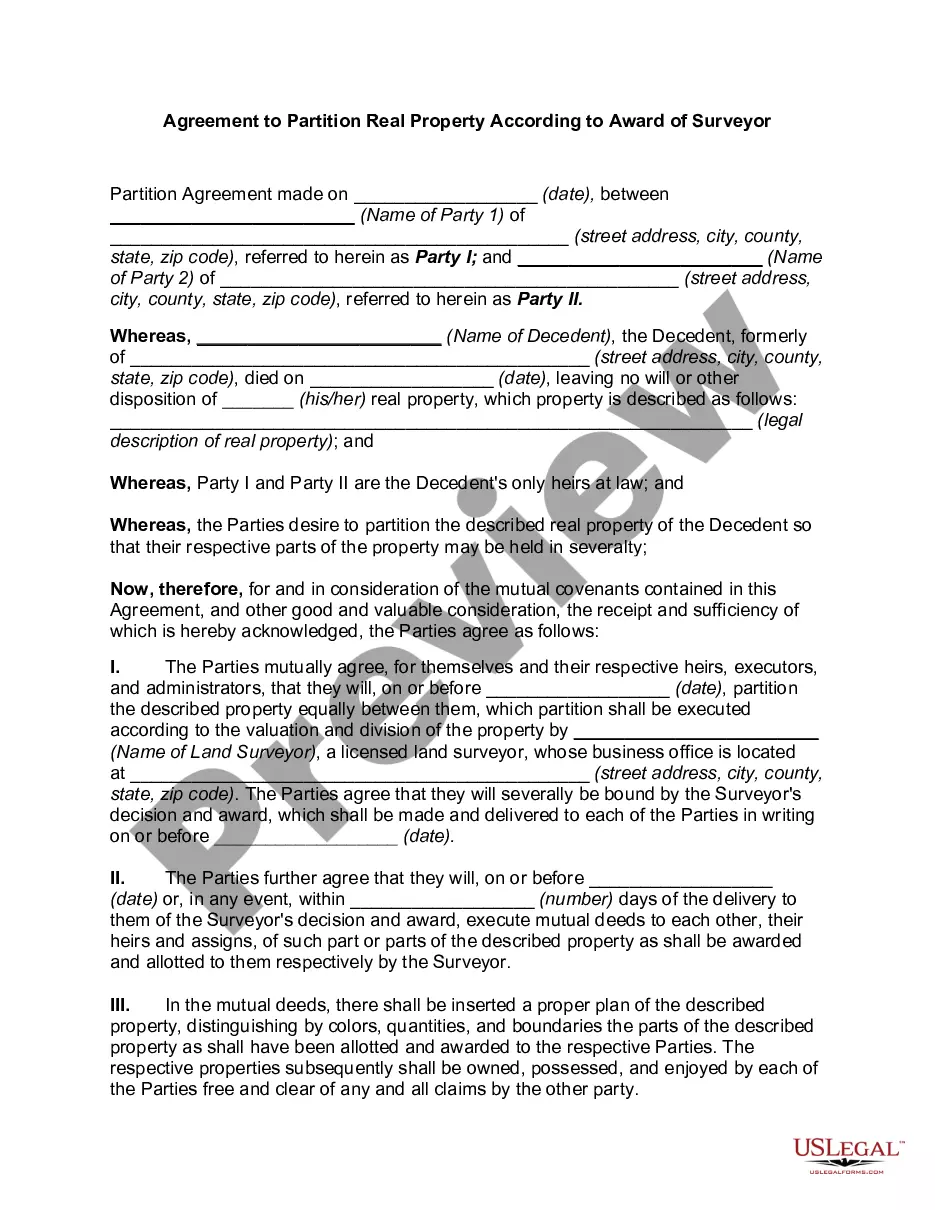
- Details on how the property will be divided among the parties.
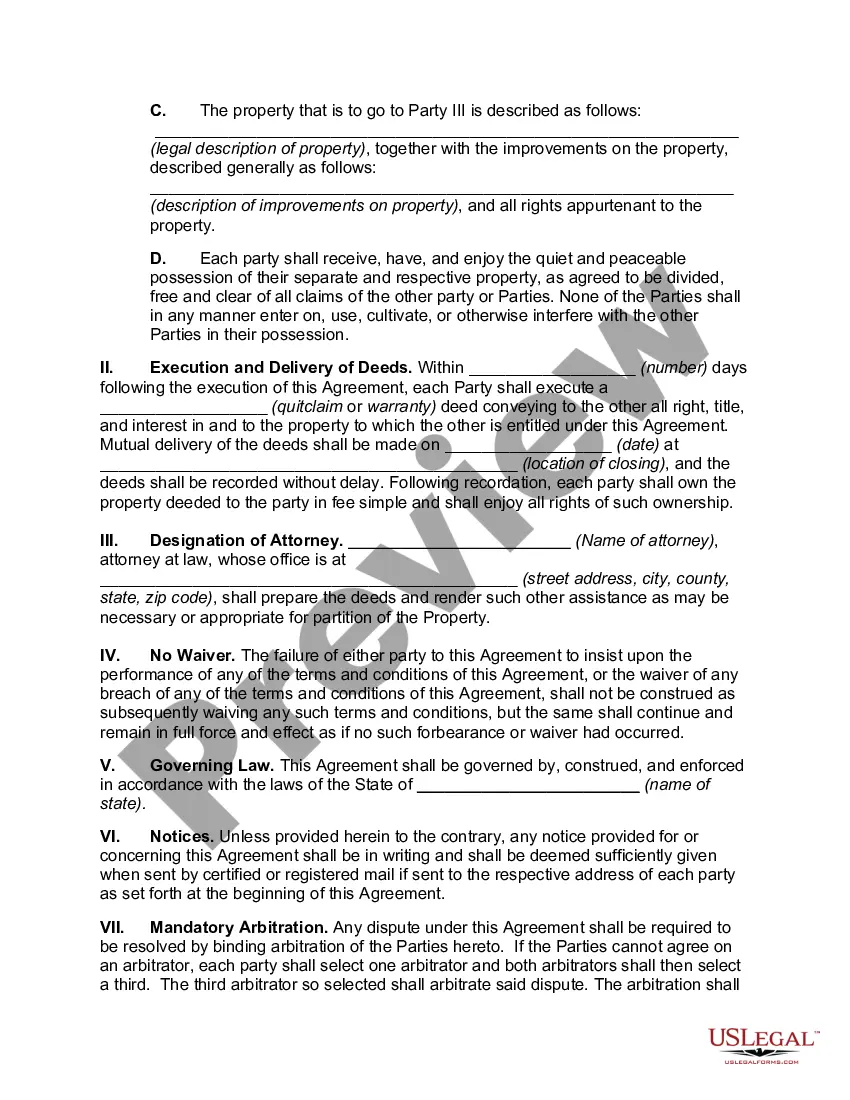
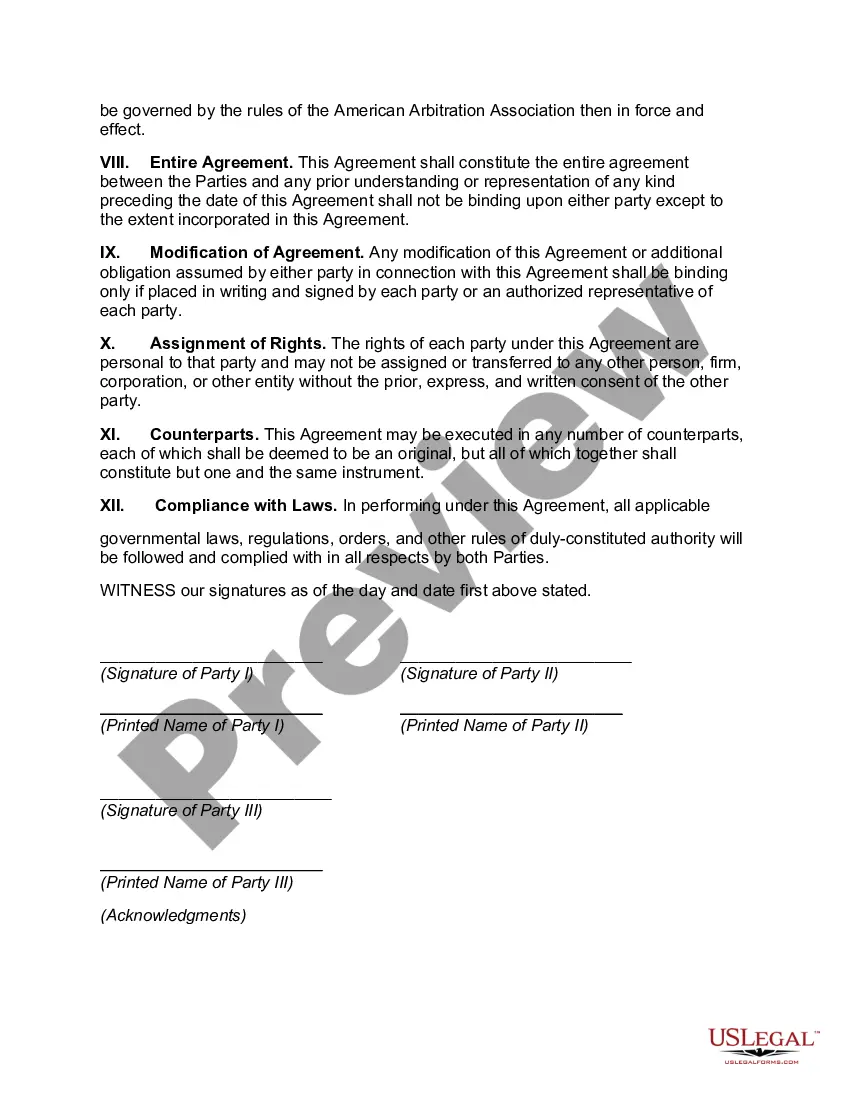
- Specifications for executing and delivering deeds to formalize the partition.
- Provisions for conflict resolution through binding arbitration.
Situations where this form applies
This form should be used when the owner of real property (the decedent) has passed away without leaving a will, and the surviving spouse and children need to divide the property among themselves. It is also applicable when siblings or heirs are unable to agree on property management or distribution, and a formal agreement is needed to ensure clarity and prevent future disputes.
Who should use this form
This agreement is suitable for:
- Surviving spouses of decedents who own property in common.
- Children of a decedent who are heirs to real property.
- Any party with a legal interest in the property who seeks a clear, equitable division.
Completing this form step by step
- Identify the parties involved by entering their names and addresses in the designated spaces.
- Provide the legal description of the property owned by the decedent.
- Specify how the property will be divided among the parties, ensuring fairness in terms of value.
- Determine the timeline for executing and delivering deeds to transfer property ownership.
- Include the name of the attorney responsible for preparing the deeds and any necessary legal documentation.
Notarization guidance
This form does not typically require notarization unless specified by local law. However, having the signatures notarized may add an additional layer of authenticity and may be beneficial when filing the agreement in certain jurisdictions.
Get your form ready online
Our built-in tools help you complete, sign, share, and store your documents in one place.
Make edits, fill in missing information, and update formatting in US Legal Forms—just like you would in MS Word.
Download a copy, print it, send it by email, or mail it via USPS—whatever works best for your next step.
Sign and collect signatures with our SignNow integration. Send to multiple recipients, set reminders, and more. Go Premium to unlock E-Sign.
If this form requires notarization, complete it online through a secure video call—no need to meet a notary in person or wait for an appointment.
We protect your documents and personal data by following strict security and privacy standards.

Make edits, fill in missing information, and update formatting in US Legal Forms—just like you would in MS Word.

Download a copy, print it, send it by email, or mail it via USPS—whatever works best for your next step.

Sign and collect signatures with our SignNow integration. Send to multiple recipients, set reminders, and more. Go Premium to unlock E-Sign.

If this form requires notarization, complete it online through a secure video call—no need to meet a notary in person or wait for an appointment.

We protect your documents and personal data by following strict security and privacy standards.
Mistakes to watch out for
- Failing to accurately describe the legal boundaries of the property.
- Omitting the signatures of all parties involved, making the agreement invalid.
- Not including a clear timeline for deed execution and delivery.
- Overlooking state-specific laws that may affect the partitioning process.
Advantages of online completion
- Immediate access to a legally sound template created by licensed attorneys.
- Convenient download and customization options to cater to specific needs.
- Time-saving as the form can be completed and executed without the need for extensive legal consultation.
- Built-in guidance to help users understand each section of the form.
Main things to remember
- The Agreement to Partition Real Property assists heirs in fairly dividing property after the decedent's death.
- It is important to clearly identify all parties and the property involved.
- Make sure all required signatures are obtained for the agreement to be valid.
- Consider consulting with an attorney to ensure adherence to local laws and ordinances.
Looking for another form?
Form popularity
FAQ
Property distribution upon death or separation: When one spouse passes away, his or her half of the community property passes to the surviving spouse. Their separate property can be devised to whomever they wish according to their will, or via probate without a will.
Divide up assets based on their value. Instruct your executor to divide assets equally. Instruct your executor to sell everything and then distribute the proceeds to your beneficiaries equally.
California is a community property state, which means that following the death of a spouse, the surviving spouse will have entitlement to one-half of the community property (i.e., property that was acquired over the course of the marriage, regardless of which spouse acquired it).
To transfer it, you will have to get a succession certificate (for moveable property) and a letter of administration (for Immoveable property). While doing so, get the son and daughter to give no objections in court that they have no objection if all the property is transferred to the widow.
How do you divide that three ways? In a best-case scenario, the siblings would agree unanimously on a fair and equitable settlement: Sell the home and split the proceeds, distribute other assets so one heir retains the property or negotiates buyouts for those wanting cash.
Get the proper estate distribution documents. Verify your role as executor or administrator. Bring the will to the city or county office in charge of estate disbursements. Open a bank account in the name of the decedent's estate. Itemize the property of the estate. Pay the estate's bills.
A partition deed for a property is executed to divide the property among different people - usually among the family members. A partition is a division of a property held jointly by several persons, so that each person gets a share and becomes the owner of the share allotted to him.
To transfer it, you will have to get a succession certificate (for moveable property) and a letter of administration (for Immoveable property). While doing so, get the son and daughter to give no objections in court that they have no objection if all the property is transferred to the widow.
Basis of Division The quantity of any particular form of property does not affect how it is distributed or divided. In most states, the fair market value of all the deceased's intestate property is added to together to form the intestate estate. It is this value that is divided among the heirs.