Minnesota Drainage Contractor Package
What this form package covers
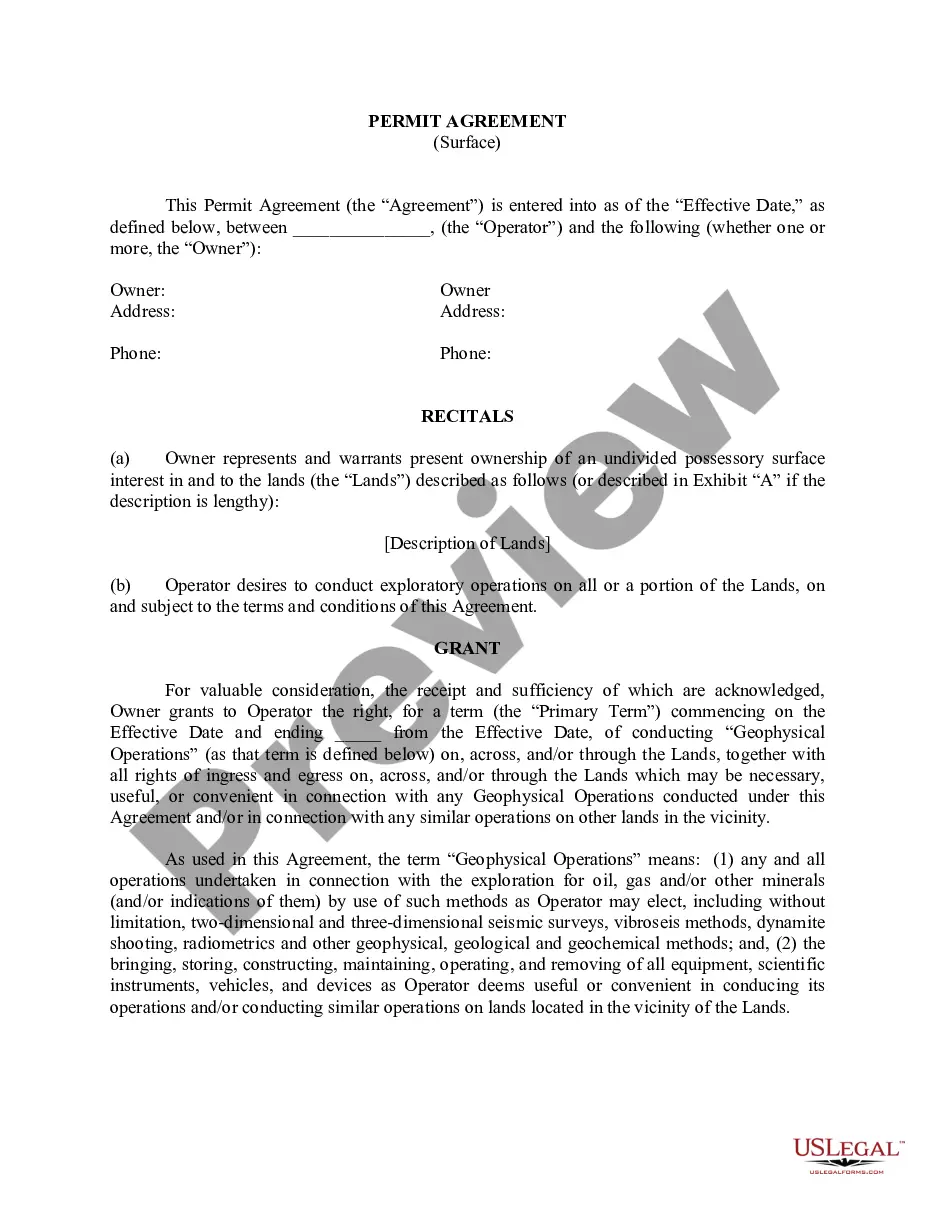
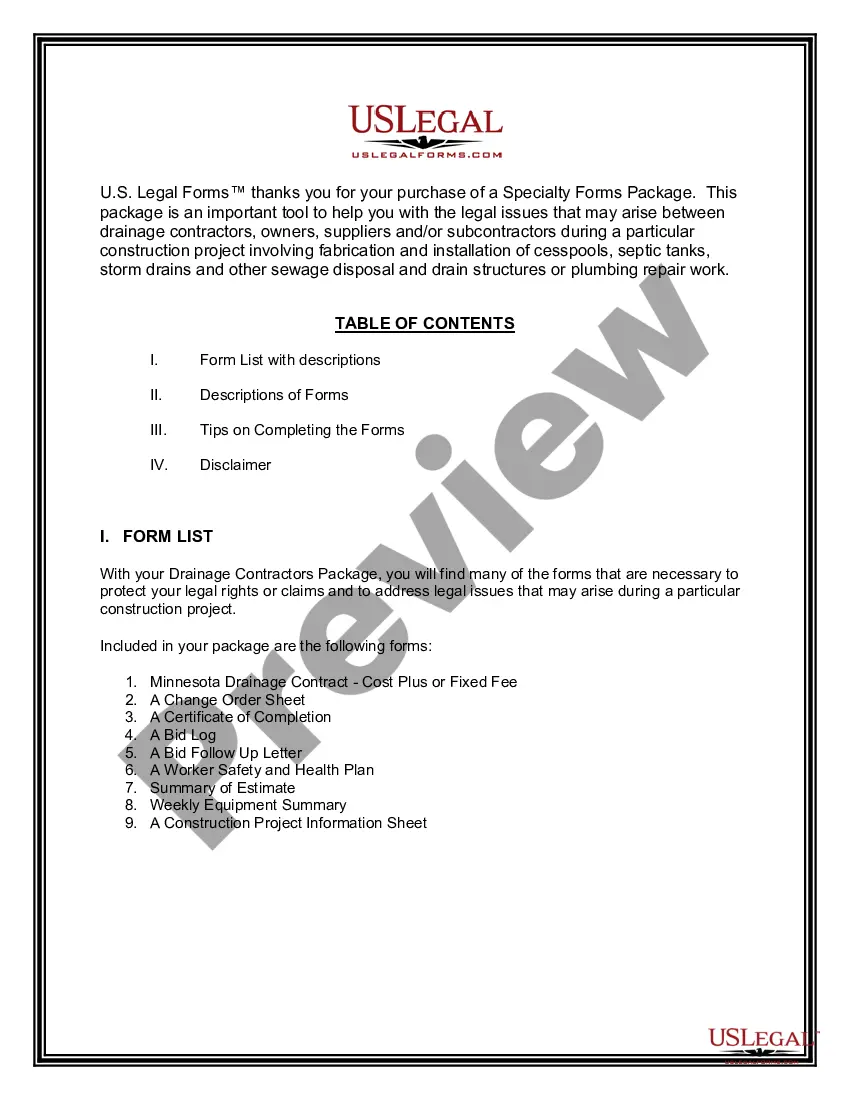
The Minnesota Drainage Contractor Package is designed to provide essential legal documents specifically tailored for drainage contractors. This package includes forms that help assert legal rights and manage important legal issues arising during construction projects involving the installation of cesspools, septic tanks, storm drains, and other drainage structures. The centerpiece of this package is a drainage contract that complies with Minnesota state law, ensuring it meets all necessary legal requirements.
Documents contained in this package
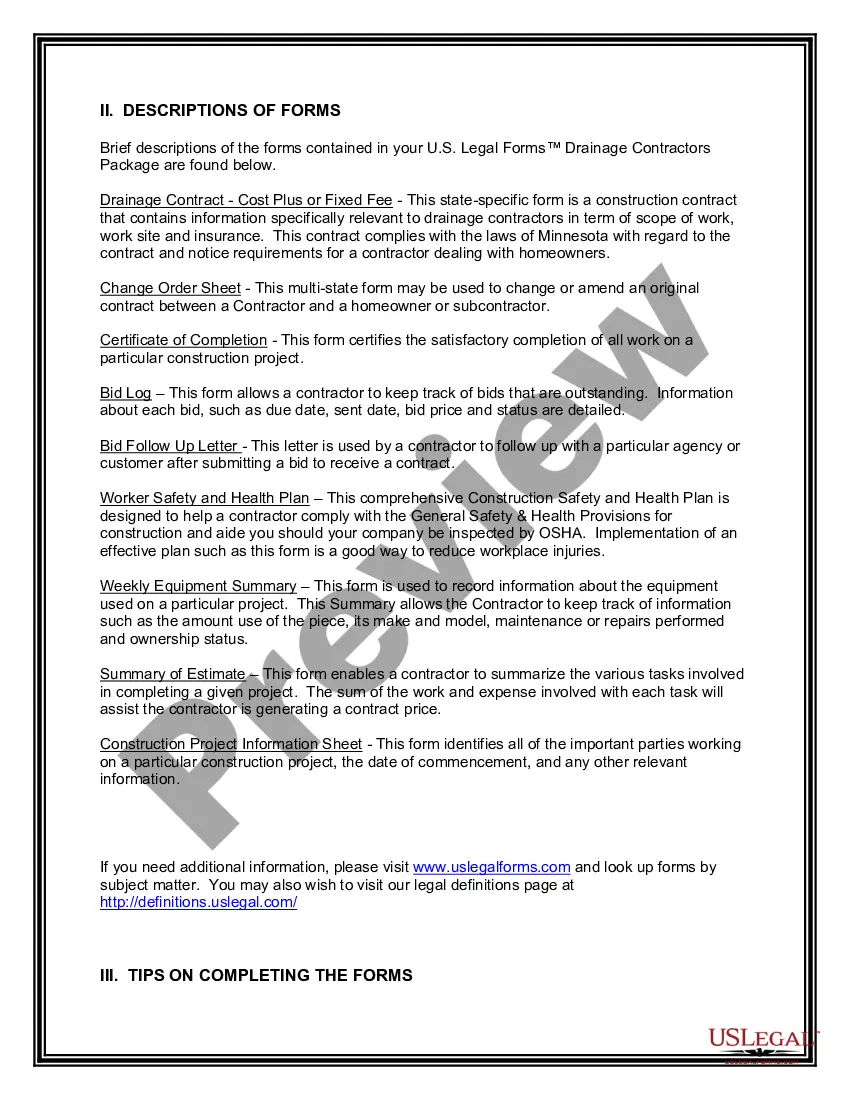
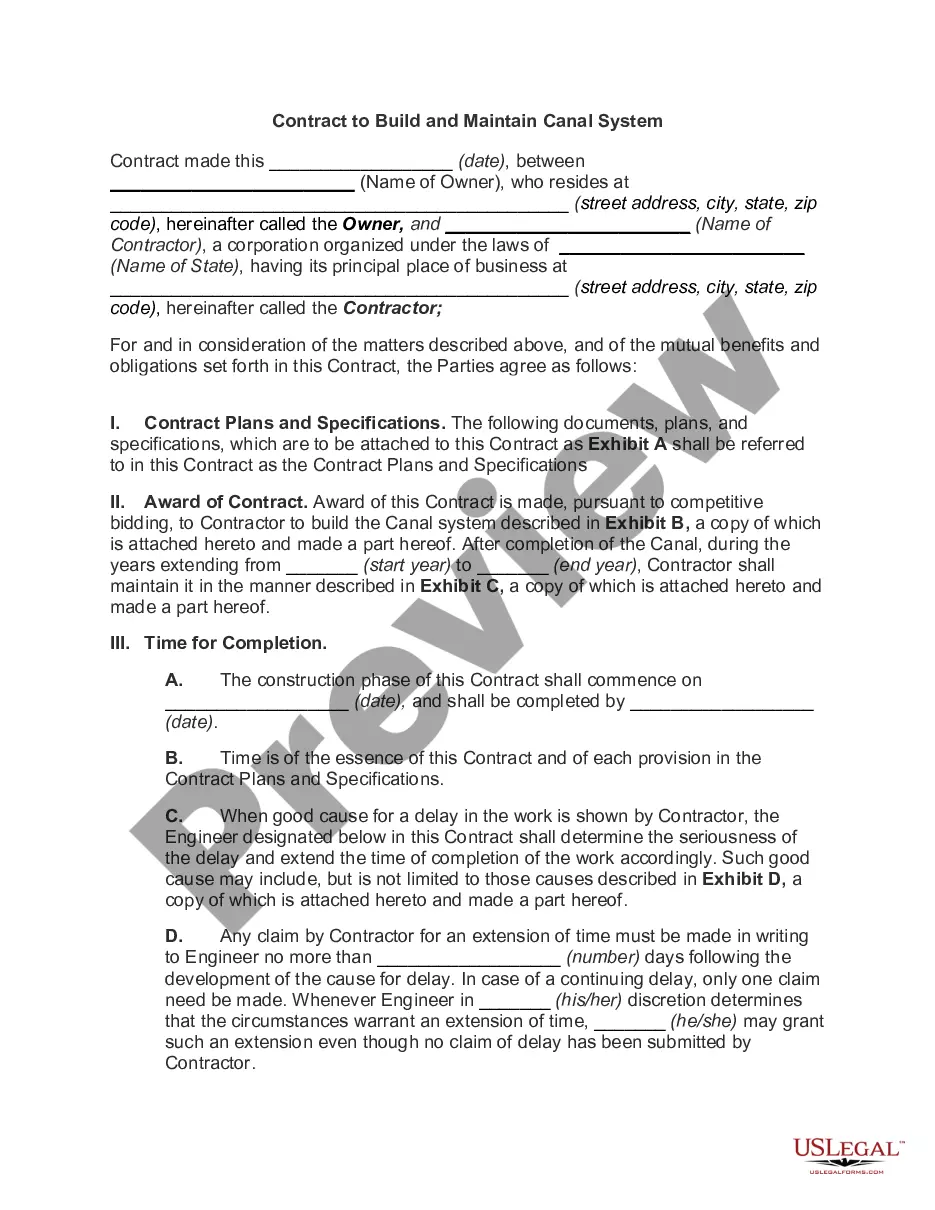
- Drainage Contract for Contractor
- Contractor's Weekly Equipment Summary
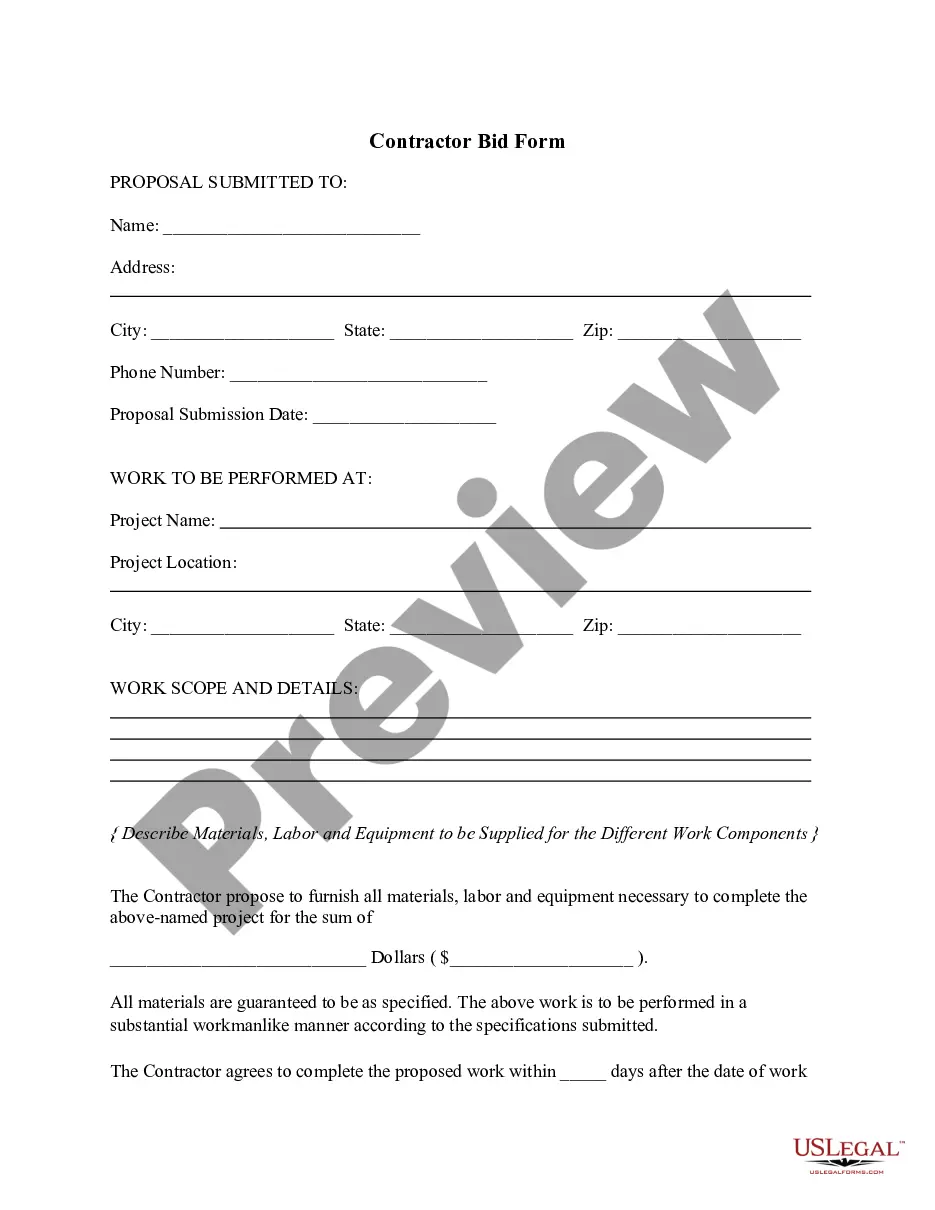
- Contractor's Bid Log
- Contractor's Bid Follow Up Letter
- Contractor's Summary of an Estimate
- Construction Safety and Health Plan
- Change Order for Construction or Repairs by Contractor
- Certification of Completion by Contractor
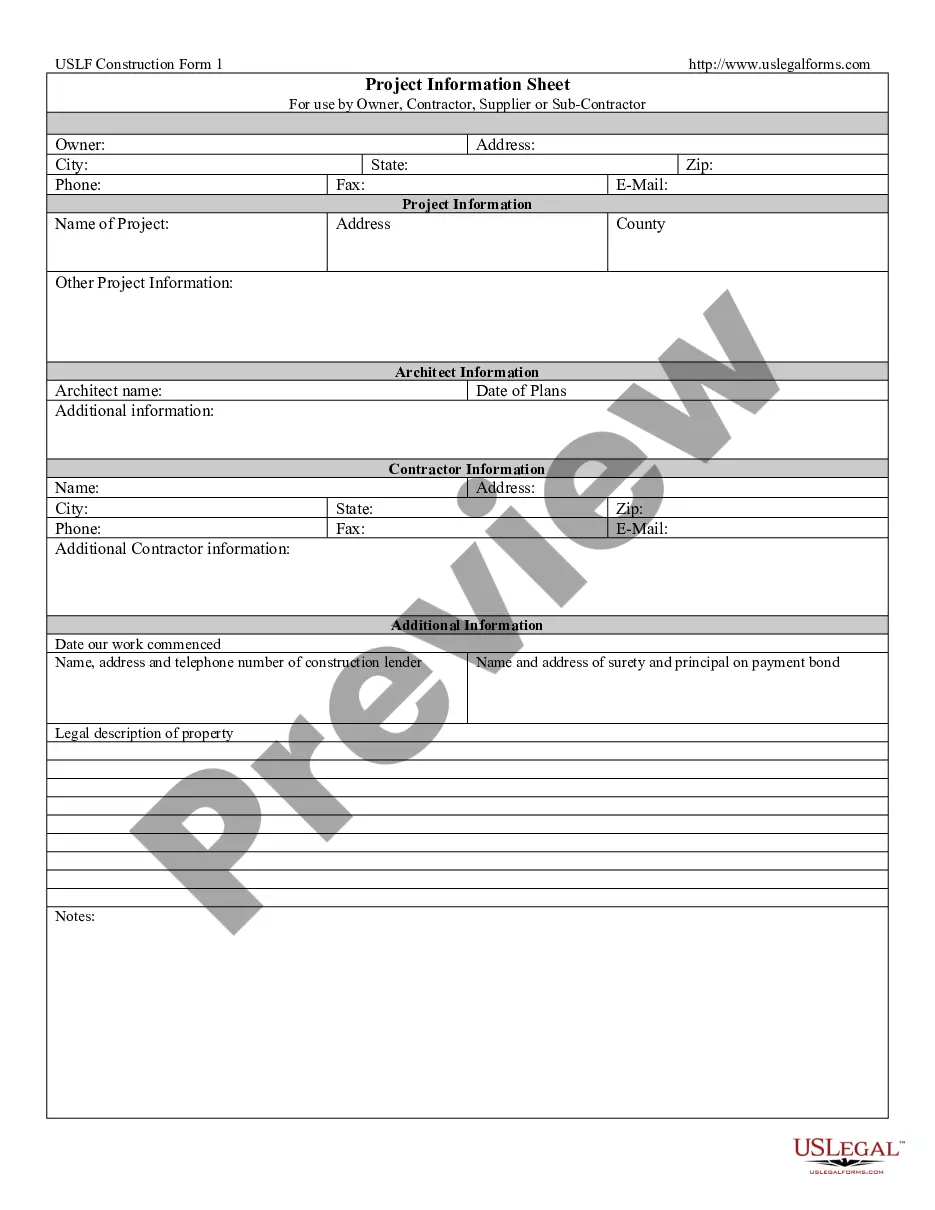
- Construction Project Information Sheet
Situations where these forms applies
This package is useful in various scenarios, including:
- Starting a new drainage construction project and needing a formal contract.
- Making amendments to existing contracts through change orders.
- Documenting the completion of construction work with a Certificate of Completion.
- Tracking and managing bids effectively with the Bid Log and Follow Up Letter.
- Ensuring compliance with worker safety regulations via the Safety and Health Plan.
Who should use this form package
- Licensed drainage contractors working in Minnesota.
- Subcontractors involved in drainage or plumbing work.
- Property owners hiring drainage contractors for construction projects.
- Suppliers providing materials or services related to drainage projects.
Steps to complete these forms
- Review the included forms to understand the specific legal requirements.
- Identify all parties involved in the contract and enter their details accurately.
- Complete the Drainage Contract by selecting either a Cost Plus or Fixed Fee structure.
- Use the Change Order Sheet to document any amendments needed during the project.
- Fill out the Weekly Equipment Summary to track the usage of equipment on the job site.
- Ensure all necessary signatures and dates are entered on the Certificate of Completion once the work is finished.
Do documents in this package require notarization?
Forms in this package usually don’t need notarization, but certain jurisdictions or signing circumstances may require it. US Legal Forms provides a secure online notarization option powered by Notarize, accessible 24/7 from anywhere.
Get your form ready online
Our built-in tools help you complete, sign, share, and store your documents in one place.
Make edits, fill in missing information, and update formatting in US Legal Forms—just like you would in MS Word.
Download a copy, print it, send it by email, or mail it via USPS—whatever works best for your next step.
Sign and collect signatures with our SignNow integration. Send to multiple recipients, set reminders, and more. Go Premium to unlock E-Sign.
If this form requires notarization, complete it online through a secure video call—no need to meet a notary in person or wait for an appointment.
We protect your documents and personal data by following strict security and privacy standards.

Make edits, fill in missing information, and update formatting in US Legal Forms—just like you would in MS Word.

Download a copy, print it, send it by email, or mail it via USPS—whatever works best for your next step.

Sign and collect signatures with our SignNow integration. Send to multiple recipients, set reminders, and more. Go Premium to unlock E-Sign.

If this form requires notarization, complete it online through a secure video call—no need to meet a notary in person or wait for an appointment.

We protect your documents and personal data by following strict security and privacy standards.
Common mistakes to avoid
- Failing to fully complete all fields on the forms.
- Not customizing the Drainage Contract to fit specific project requirements.
- Neglecting to collect signatures from all parties involved.
- Overlooking local regulations that may apply to drainage projects.
Why complete this package online
- Instant access to essential documents designed by licensed attorneys.
- Edit and customize forms easily to meet your specific needs.
- Save over 50 percent compared to purchasing forms individually.
- Conveniently download and print the forms for immediate use.
- Regular updates to forms to ensure compliance with changing legal standards.
Looking for another form?
Form popularity
FAQ
To report a contractor in Minnesota, you should first gather all relevant documentation regarding the issue, such as contracts and correspondence. You can then file a complaint with the Minnesota Department of Labor and Industry, which oversees contractor practices. If your concerns relate to services covered under the Minnesota Drainage Contractor Package, detailing your experience can help address the issue effectively. For additional resources or legal forms to assist in the process, visit US Legal Forms.
In Minnesota, a contractor has 120 days from the last date of work performed to file a lien against a property. This is crucial for securing payment for services rendered, especially when dealing with projects like those included in the Minnesota Drainage Contractor Package. Filing a lien protects the contractor’s financial interests and ensures they receive compensation. To simplify the process, you can find the necessary forms and guidance on the US Legal Forms platform.
A contractor affidavit is a legal document that confirms a contractor's right to receive payment for work completed on a project. In the context of the Minnesota Drainage Contractor Package, it serves to protect both the contractor and property owner. By filing this affidavit, contractors affirm they have fulfilled their contractual obligations, thus ensuring a smoother payment process. If you need assistance with creating or filing an affidavit, consider using US Legal Forms for reliable templates.
In Minnesota, drainage law governs how water is managed on agricultural and residential properties. The law aims to protect landowners' rights while ensuring that drainage systems function effectively to prevent flooding. The Minnesota Drainage Contractor Package provides essential resources and guidance for contractors to comply with these regulations. By utilizing this package, you can ensure that your drainage projects align with state laws and best practices.
Select basic utilities are also included in the association fees. Utilities like gas, water, sewer, trash, and even heat are common services included.Condo fees cover all operation and maintenance costs of these facilities.
What HOAs Can Legally Do. Covenants, conditions, and restrictions fall under the scope of the HOA bylaws or articles. They are (in some cases) forged with the power to fine, place liens against mortgages, and even foreclose on a homeowner's property.
Some of the repairs the Board is typically responsible for includes the exterior portions of residences, landscaping, common areas such as lobbies and stairwells, and fences and exterior walls. When there is a maintenance issue in a common area that requires repair, an HOA member should notify the Board in writing.
A homeowner can sue HOA for selective enforcement if they feel it is warranted they have every right to do so. Naturally, an HOA board will want to do everything in its power to prevent legal action from taking place.
Determine the cause for poor drainage. You need to first determine what is causing water to accumulate in your yard before looking into potential solutions. Till the soil. Install a dry well. Grow trees and shrubs. Use drainage pipe. Slope the yard away from your home.
While the rules and regulations of an HOA are legally binding for association members, they generally aren't enforceable by law enforcement.These laws could include parking violations for public streets or county noise restrictions that may mirror your HOA rules.