Communication Systems Right of Way Easement
About this form
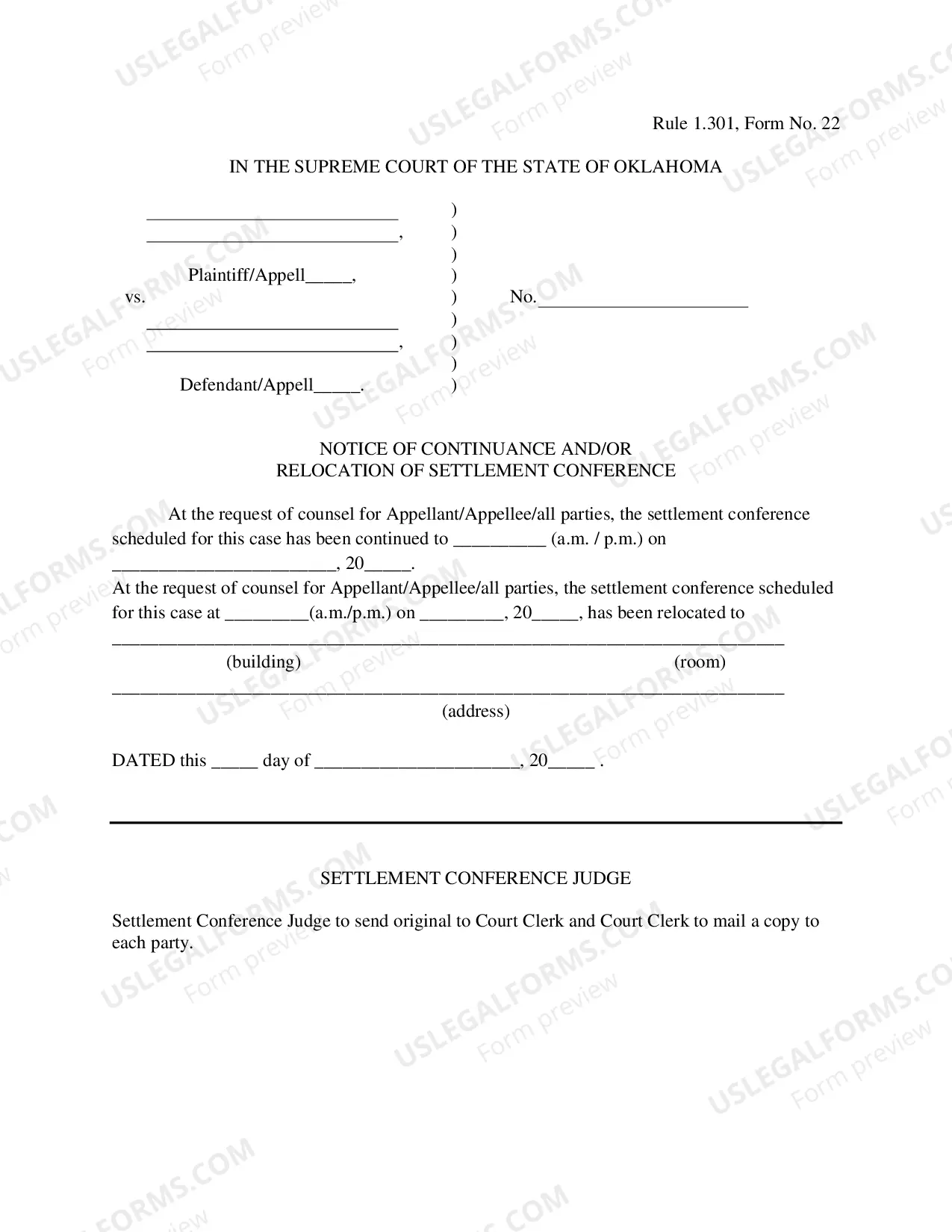
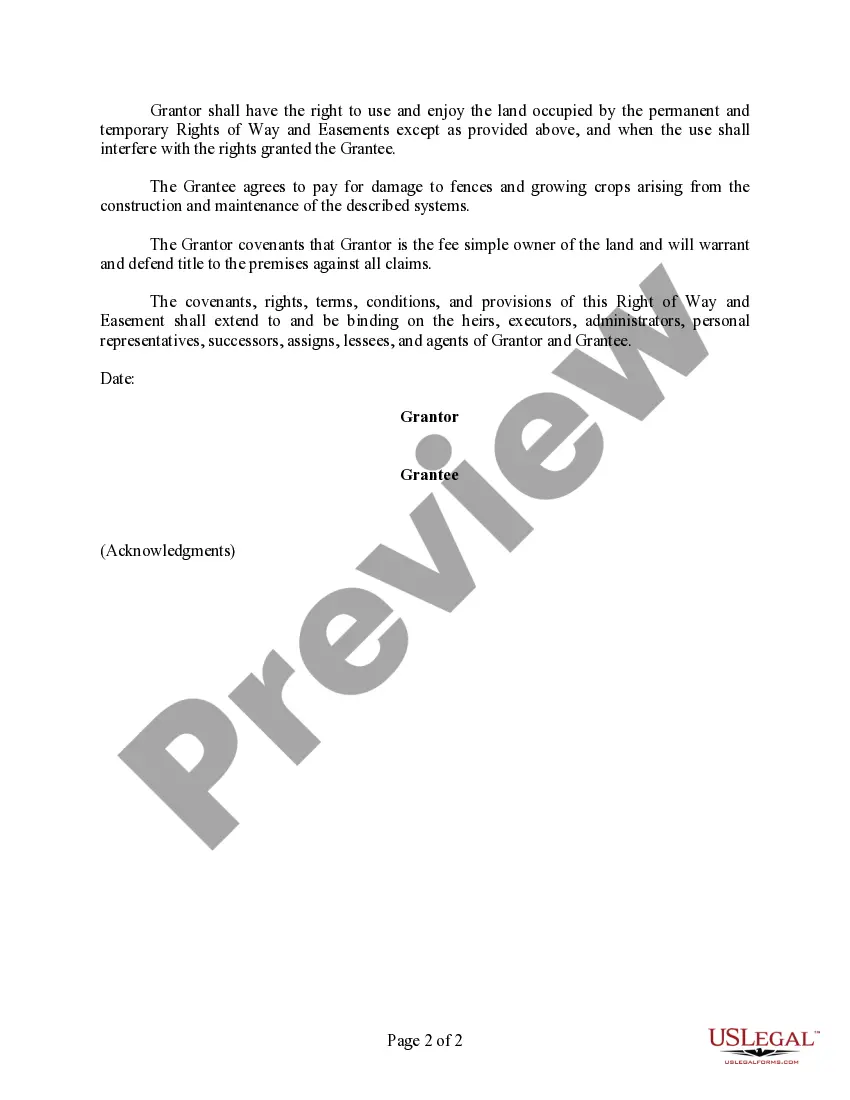
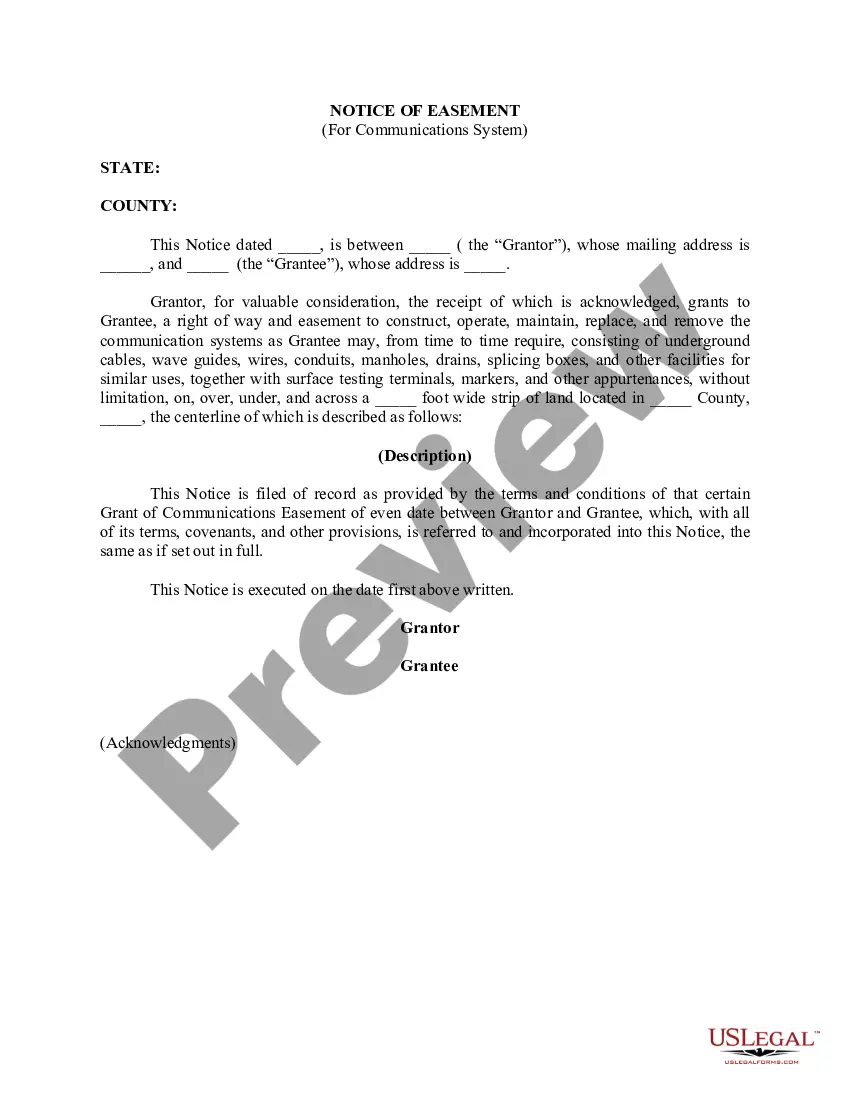
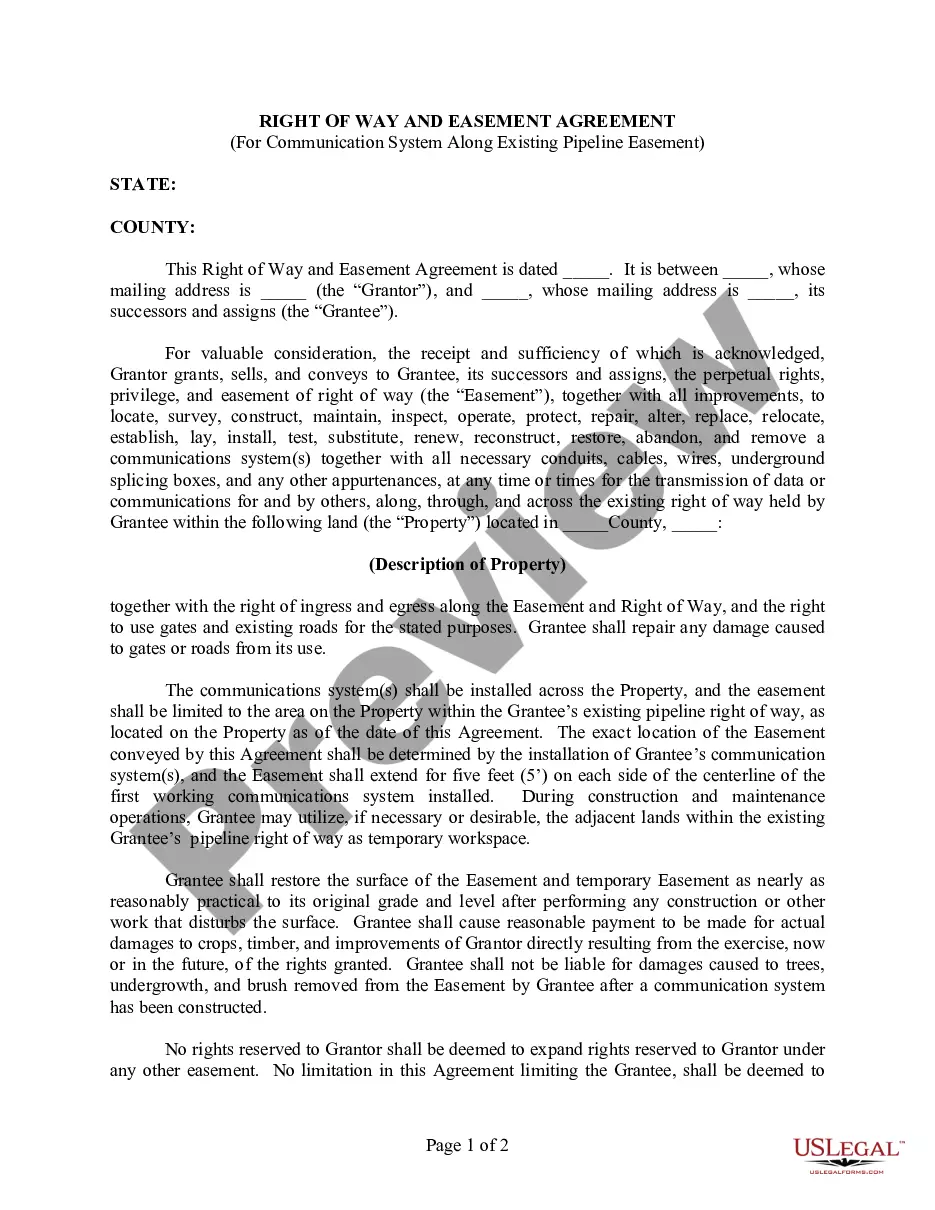
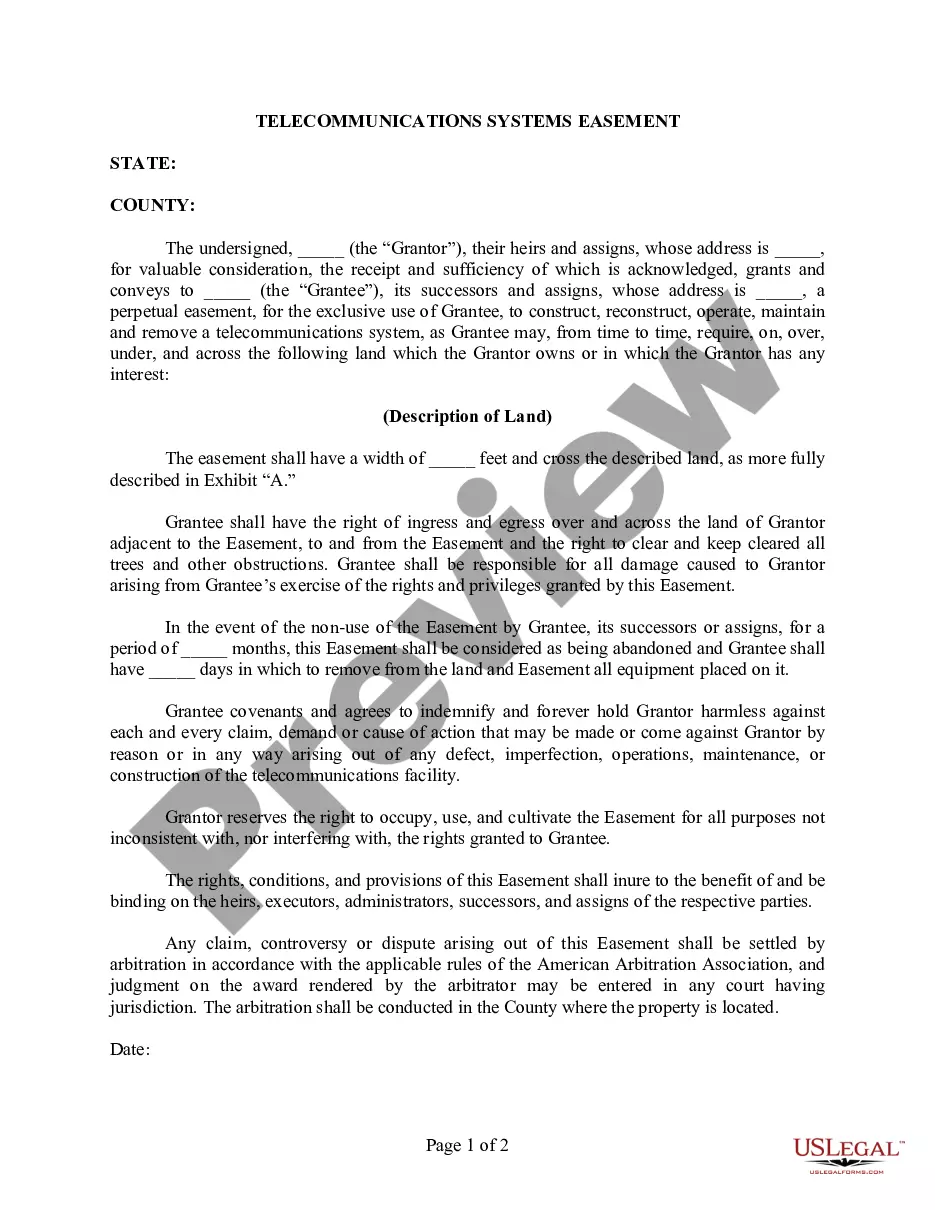
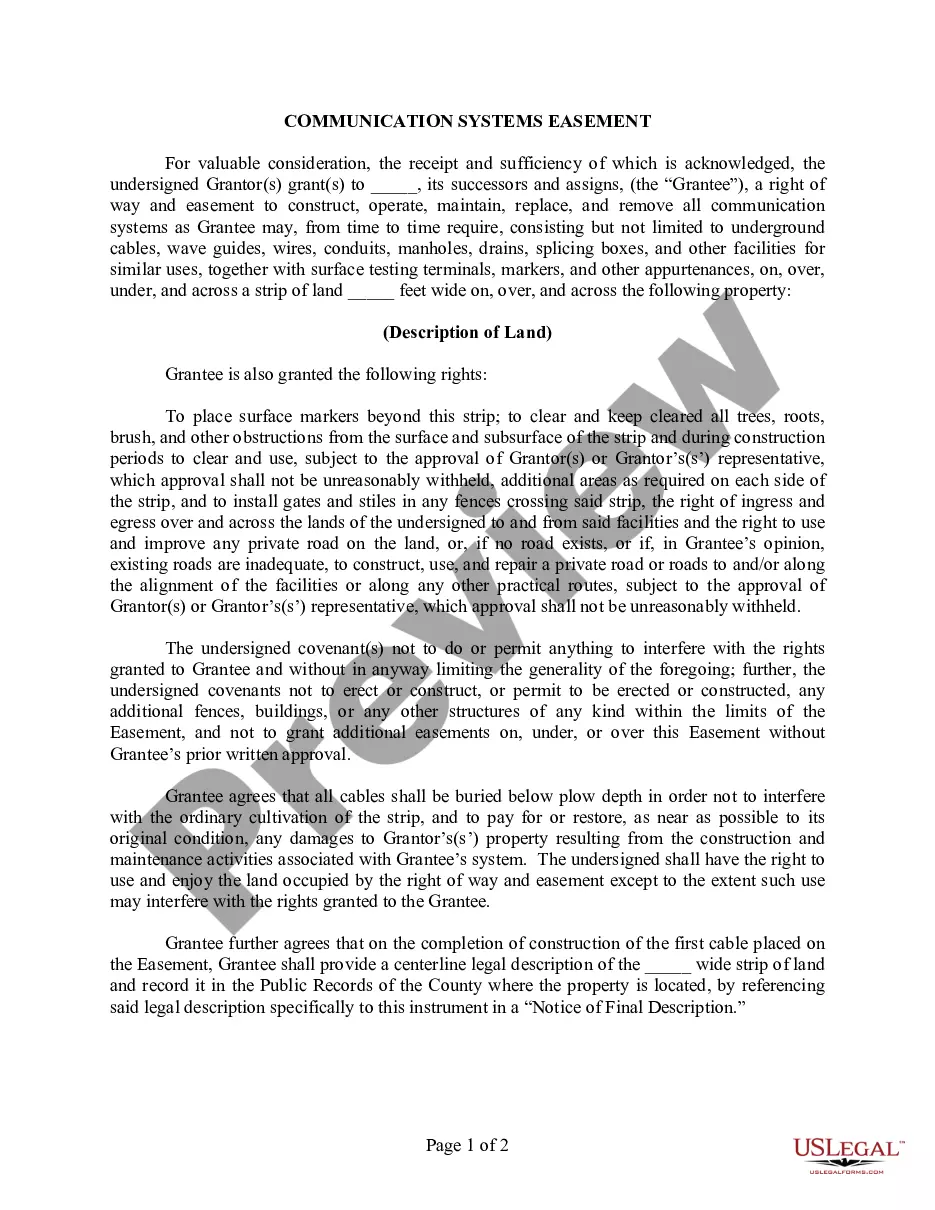
The Communication Systems Right of Way Easement is a legal document that grants a specified party the permanent right to access and use designated land for installing and maintaining communication systems. This form is essential for companies requiring unobstructed access for underground cables and other communication infrastructure, differentiating it from similar easement agreements that may not specifically address communication systems.
Form components explained
- Grantor and Grantee: Identifies the landowner (Grantor) and the entity receiving the right of way (Grantee).
- Description of Land: Outlines the specific area of land being affected by the easement.
- Rights Granted: Details the rights related to installing, operating, and maintaining communication systems.
- Temporary Easement: Provides information about additional rights for temporary access during construction activities.
- Obligation of the Grantor: States that no structures or obstructions can be built on the easement strip.
- Compensation for Damages: Covers the Grantee's liability for damages to fences and crops during installation and maintenance.
Situations where this form applies
This form should be utilized when a communication provider needs to install or maintain infrastructure such as underground cables or conduits on private property. It is applicable in situations where access to the land is necessary for operational efficiency, ensuring both parties are protected legally with defined rights and responsibilities.
Who should use this form
- Landowners who wish to legally allow a communication company to access their property.
- Communication companies needing to establish rights to install and maintain their systems.
- Developers looking to ensure access compliance when planning communication infrastructure.
- Legal representatives assisting clients with real estate and easement agreements.
Steps to complete this form
- Identify the Grantor and Grantee by providing their names and addresses.
- Specify the width and location of the right of way easement on the property.
- Clearly describe the rights being granted, including any temporary easement provisions.
- Enter the necessary dates for the agreement to be effective.
- Have both parties sign the document to create a legally binding agreement.
Notarization guidance
This form does not typically require notarization unless specified by local law. It can be signed by both parties without a notary; however, depending on jurisdiction, it may be beneficial to have it notarized for added legal validation.
Get your form ready online
Our built-in tools help you complete, sign, share, and store your documents in one place.
Make edits, fill in missing information, and update formatting in US Legal Forms—just like you would in MS Word.
Download a copy, print it, send it by email, or mail it via USPS—whatever works best for your next step.
Sign and collect signatures with our SignNow integration. Send to multiple recipients, set reminders, and more. Go Premium to unlock E-Sign.
If this form requires notarization, complete it online through a secure video call—no need to meet a notary in person or wait for an appointment.
We protect your documents and personal data by following strict security and privacy standards.

Make edits, fill in missing information, and update formatting in US Legal Forms—just like you would in MS Word.

Download a copy, print it, send it by email, or mail it via USPS—whatever works best for your next step.

Sign and collect signatures with our SignNow integration. Send to multiple recipients, set reminders, and more. Go Premium to unlock E-Sign.

If this form requires notarization, complete it online through a secure video call—no need to meet a notary in person or wait for an appointment.

We protect your documents and personal data by following strict security and privacy standards.
Avoid these common issues
- Failing to accurately describe the easement's location and dimensions.
- Not including details about temporary access rights during construction.
- Leaving out necessary signatures or acknowledgment sections.
- Neglecting to address damage compensation for land affected by the easement.
Why complete this form online
- Convenience of accessing the form anytime, allowing for specific customization.
- Editability to tailor the document to individual situations before printing.
- Reliable access to templates drafted by licensed attorneys, ensuring legal compliance.
Looking for another form?
Form popularity
FAQ
More simply, an easement is the right to use another's property for a specific purpose. Rights-of-way are easements that specifically grant the holder the right to travel over another's property.
Terminals and channels. All telecommunications networks depend on terminals. Telecommunications processors. As you may already be aware, the information that passes through channels requires a lot of processing before it reaches the end-user. Telecommunications software. The types of data being submitted.
If an authority has an easement registered over your land, they have the right to access the easement to maintain or repair the easement land or their equipment on the land.
Types of Easements An easement may be classified as either an easement appurtenant or an easement in gross. Easement Appurtenant. An easement appurtenant is an easement that benefits one parcel of land, known as the dominant tenement, to the detriment of another parcel of land, known as the servient tenement.
Easement holders have the right to use the land to their enjoyment as long as it does not place an unreasonable burden on the servient estate. Landowners have the right to make whatever use of the land as long as it doesn't unduly affect the easement.
Technological Skills. An individual must have certain technological skills to be a successful telecommunications worker. Organization. Multitasking. Communication. Self-Motivation.
Right of Way charge is a levy paid by telecommunication companies to state governments, permitting telecommunication companies to dig up the roads and install telecommunications hardware such as optic fibre cables that carry internet traffic.
The Telecommunications (Lawful Business Practice) (Interception of Communications) Regulations 2000 (the Regulations) give businesses the right to monitor communications on their own networks. Previously such interception would have been unlawful unless consent had been given by both the sender and the recipient.
Telecommunications are the means of electronic transmission of information over distances. The information may be in the form of voice telephone calls, data, text, images, or video. Today, telecommunications are used to organize more or less remote computer systems into telecommunications networks.