Contract to Build and Maintain Canal System
What is this form?
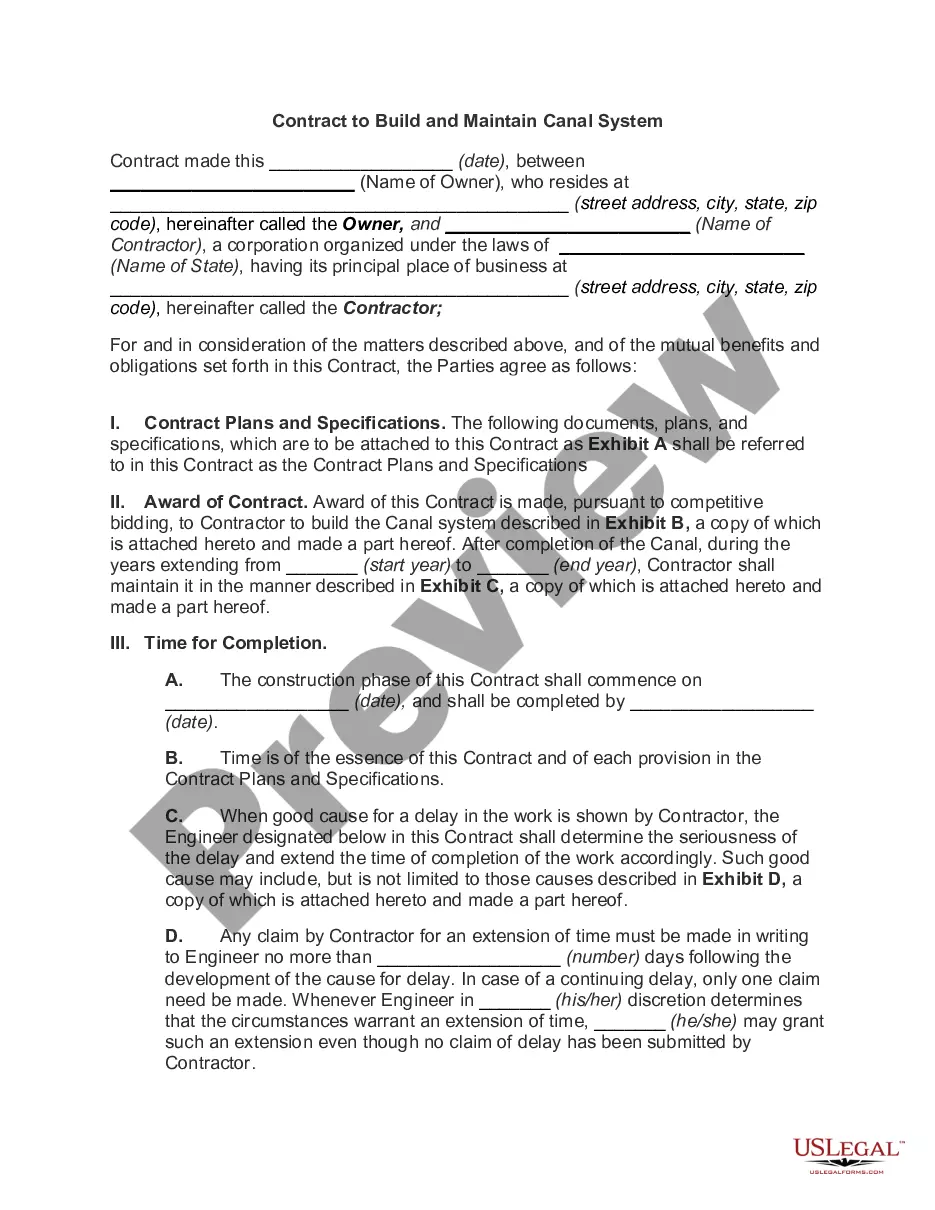
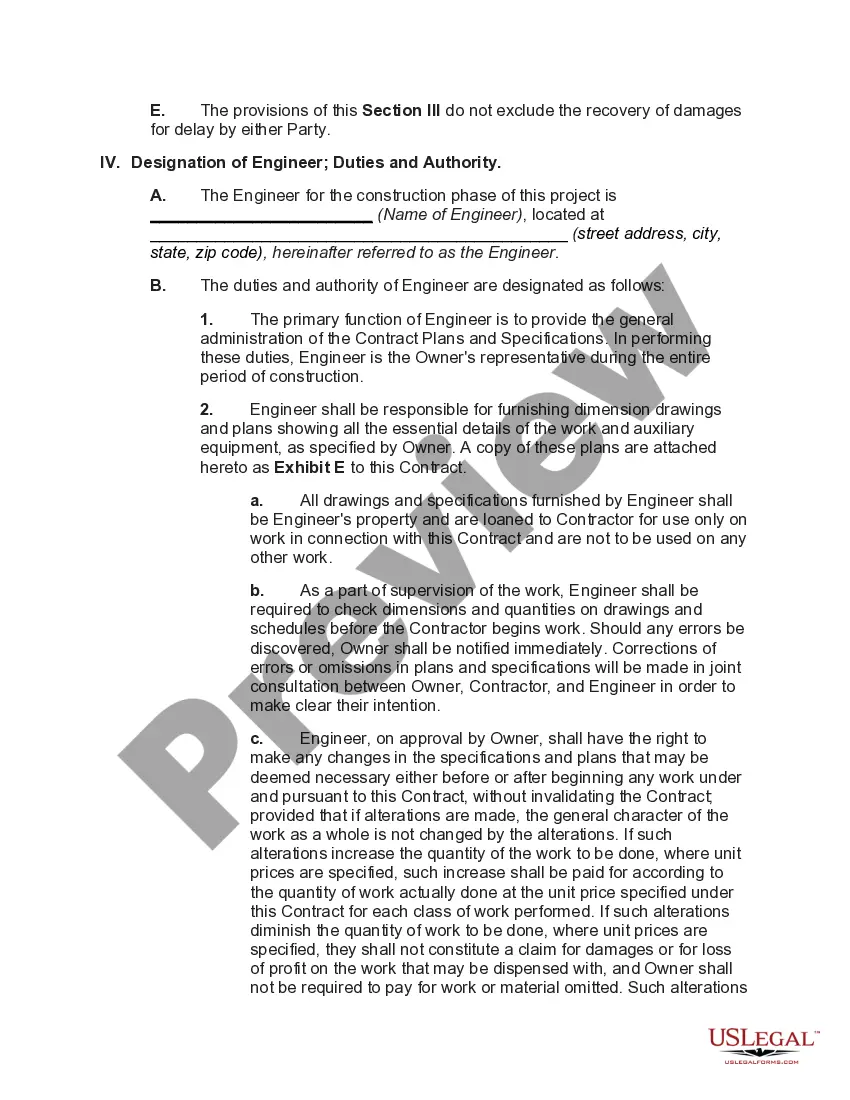
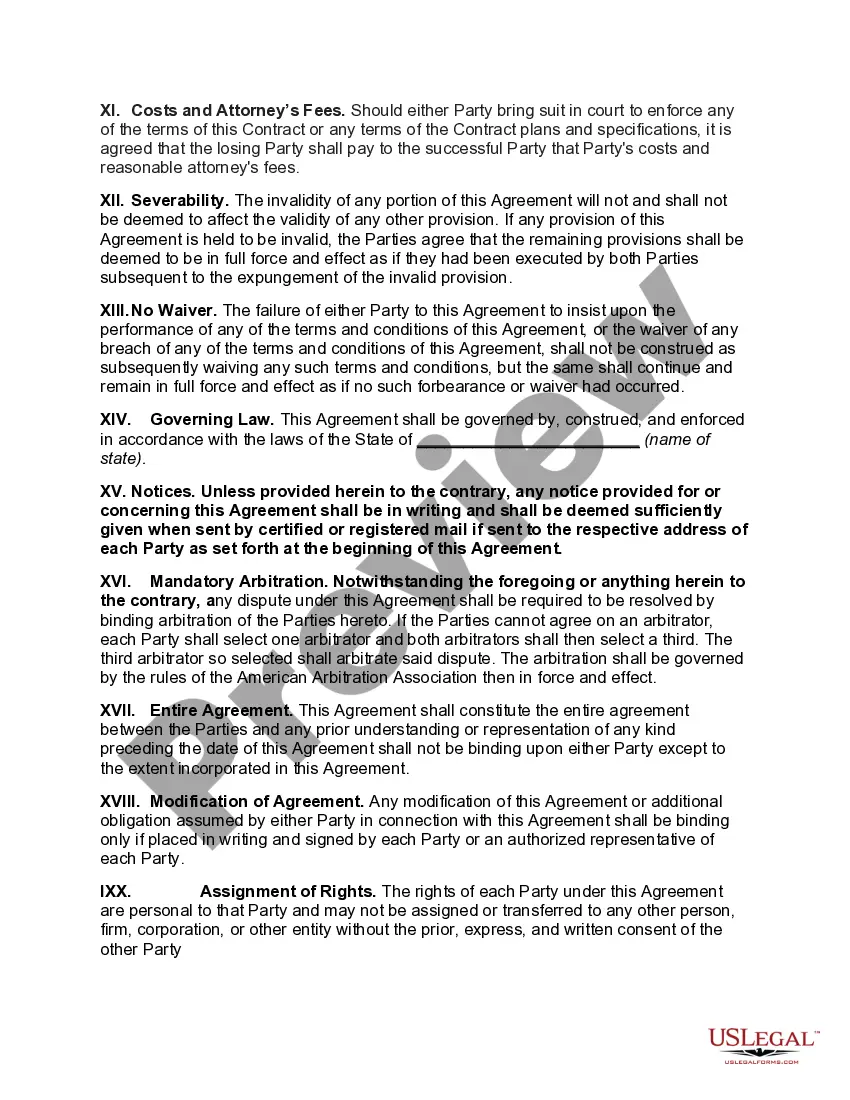
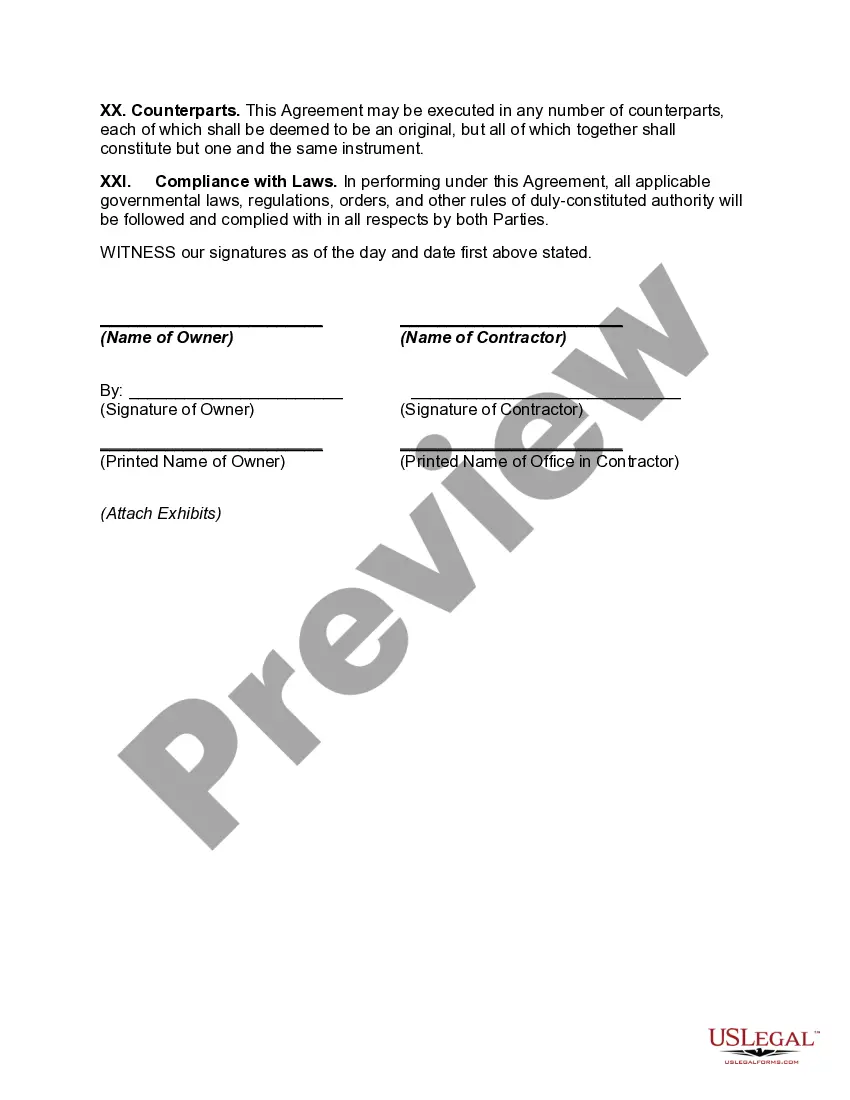
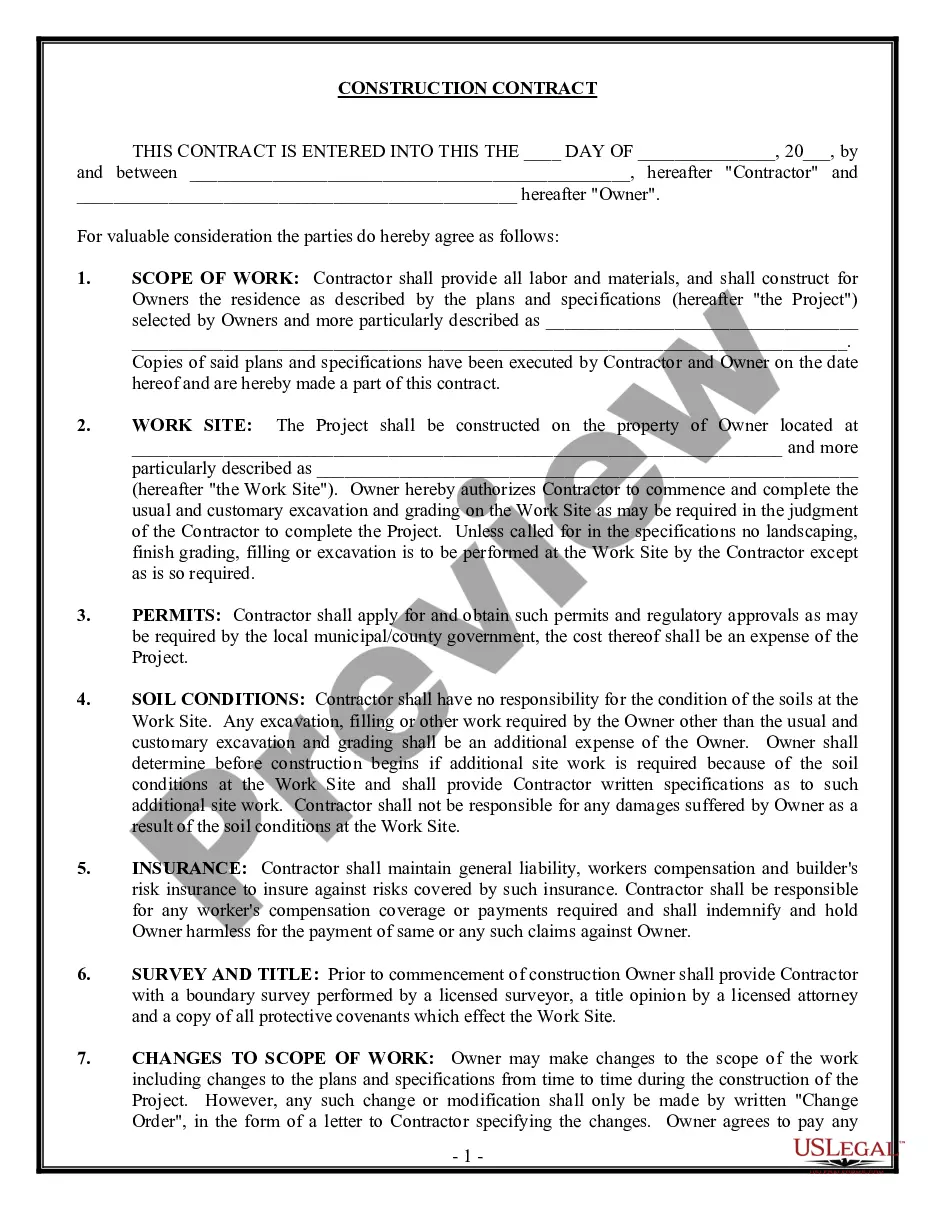
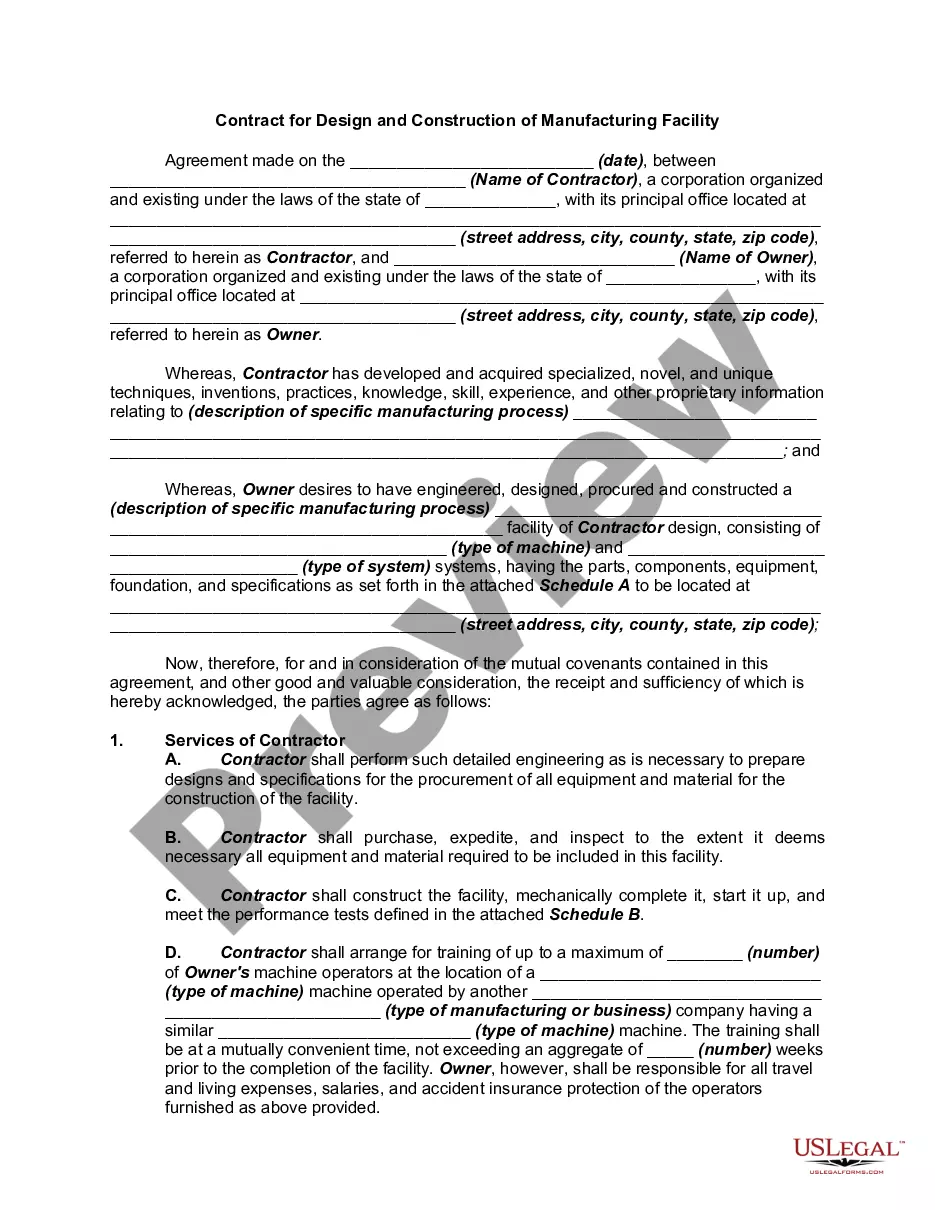
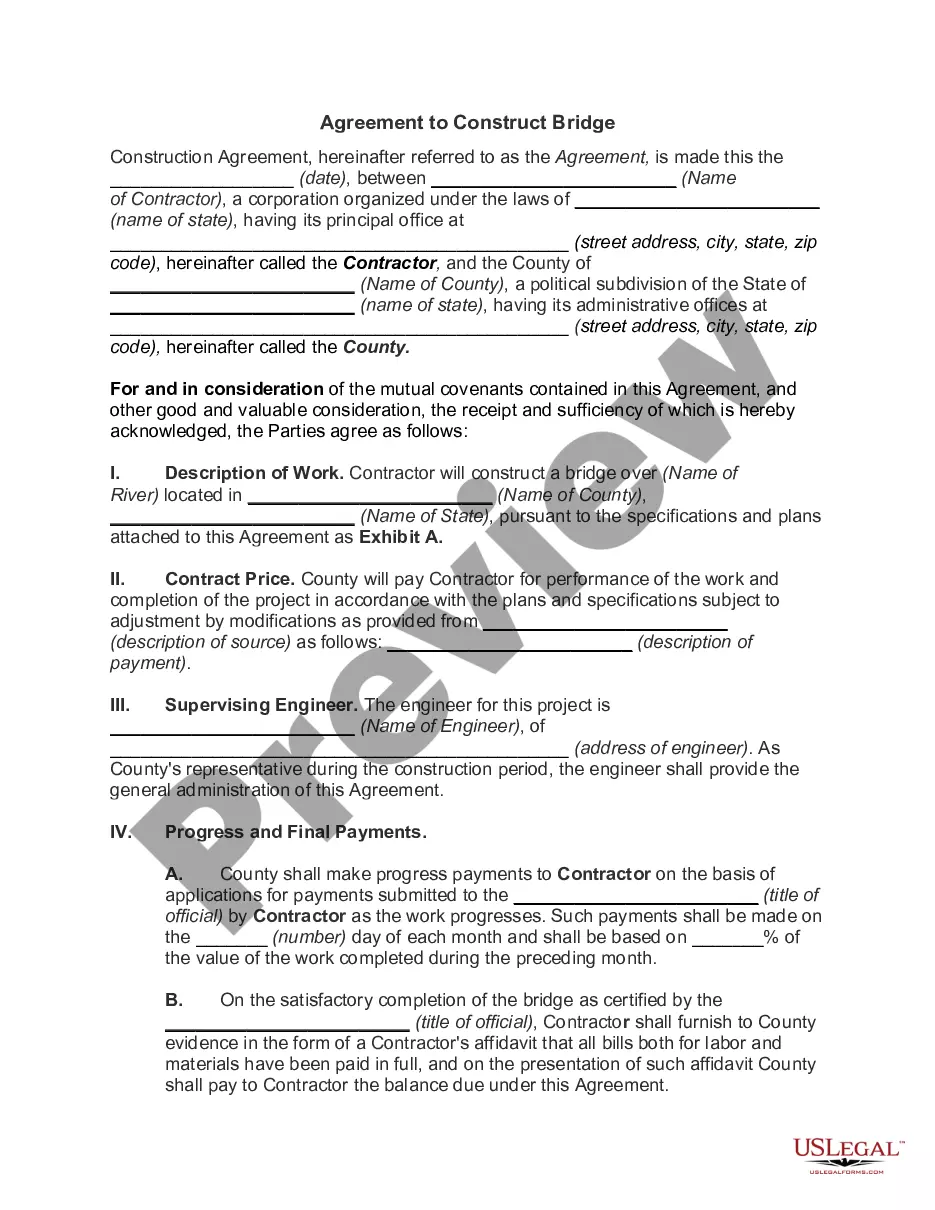
This Contract to Build and Maintain Canal System is a legal document outlining the agreement between an owner and a contractor for the construction and ongoing maintenance of a canal system. Unlike other construction contracts, this form is tailored specifically for projects involving artificial waterways, focusing on detailed managerial roles, timelines, and legal obligations essential for such infrastructure projects.
What’s included in this form
- Contract Plans and Specifications: Attachments detailing the plans for the canal build.
- Award of Contract: Specifies the competitive bidding process and acknowledgment of the contractor's responsibility.
- Time for Completion: Sets schedules and conditions for project timelines, including allowances for delays.
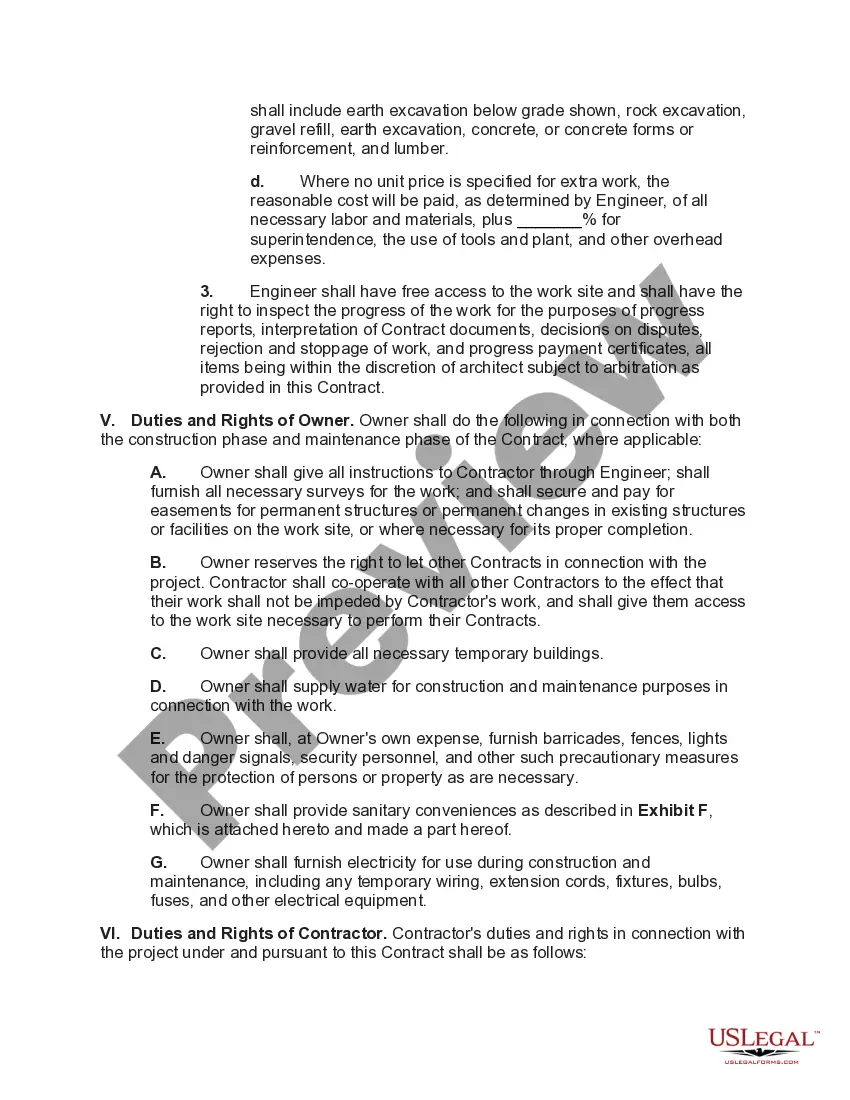
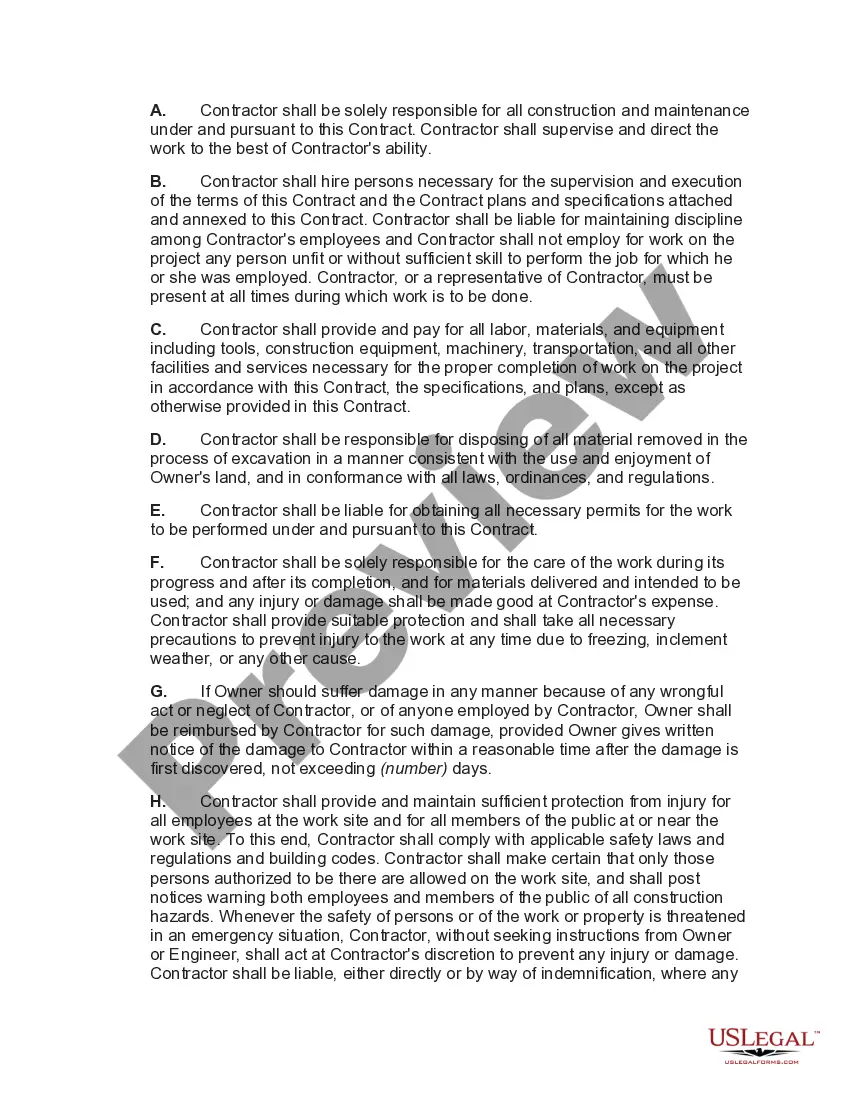
- Duties and Rights: Defines responsibilities for both the owner and contractor throughout the project.
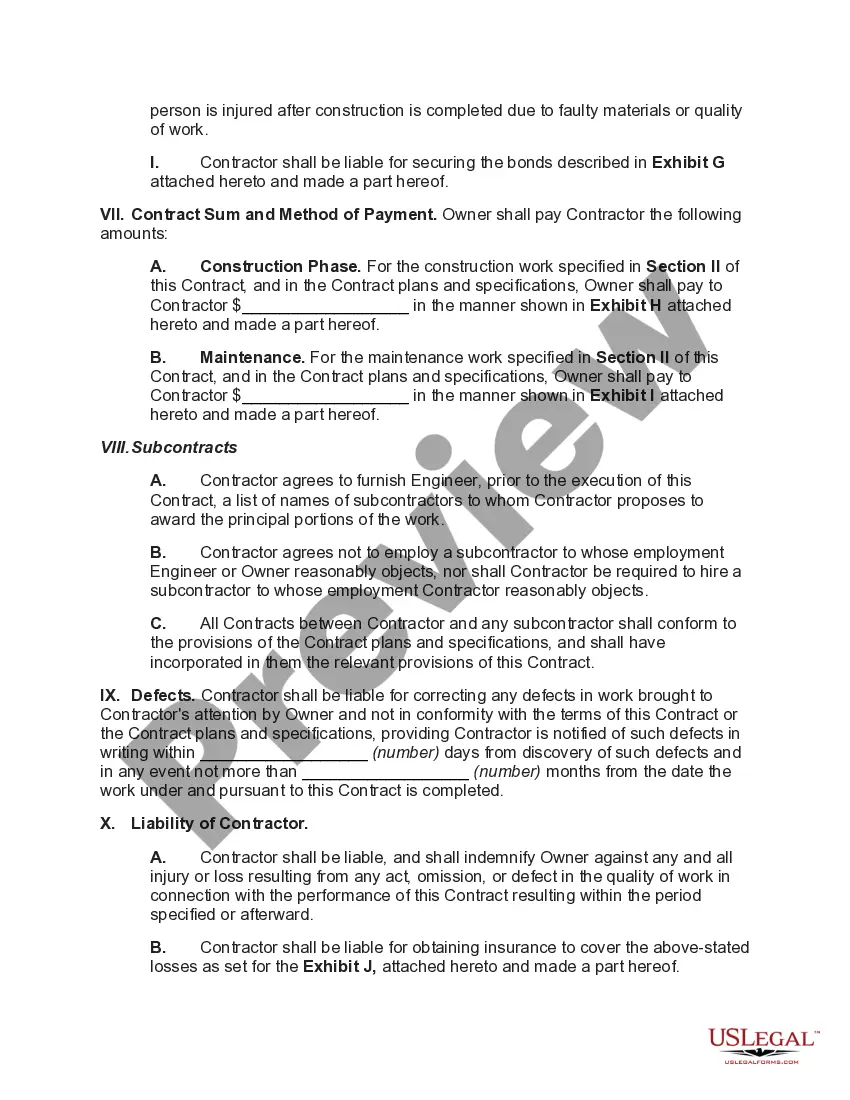
- Liability: Addresses potential damages and liabilities related to construction and maintenance.
When this form is needed
This form is used when an owner wishes to contract a professional contractor to construct a canal system for purposes such as irrigation, transportation, or hydroelectric power generation. It is necessary when both construction and long-term maintenance responsibilities need to be clearly defined and legally binding. This is essential in scenarios where precise specifications, timelines, and compliance with state regulations are critical.
Who needs this form
- Property owners or developers looking to construct a canal system.
- Contractors specializing in large-scale infrastructure projects.
- Government agencies or municipalities overseeing water management projects.
- Legal representatives needing to formalize agreements for construction-related services.
Completing this form step by step
- Identify the parties: Enter the names and addresses of both the owner and the contractor.
- Specify project details: Attach and reference the plans and specifications as Exhibit A.
- Set timelines: Clearly state start and completion dates for the construction work.
- Define responsibilities: Outline the duties of both parties and attach relevant exhibits.
- Enter payment terms: Specify the contract sum and method of payment.
Notarization requirements for this form
This form does not typically require notarization unless specified by local law. It is important to confirm any notarization requirements specific to your jurisdiction to ensure the contract's enforceability.
Get your form ready online
Our built-in tools help you complete, sign, share, and store your documents in one place.
Make edits, fill in missing information, and update formatting in US Legal Forms—just like you would in MS Word.
Download a copy, print it, send it by email, or mail it via USPS—whatever works best for your next step.
Sign and collect signatures with our SignNow integration. Send to multiple recipients, set reminders, and more. Go Premium to unlock E-Sign.
If this form requires notarization, complete it online through a secure video call—no need to meet a notary in person or wait for an appointment.
We protect your documents and personal data by following strict security and privacy standards.

Make edits, fill in missing information, and update formatting in US Legal Forms—just like you would in MS Word.

Download a copy, print it, send it by email, or mail it via USPS—whatever works best for your next step.

Sign and collect signatures with our SignNow integration. Send to multiple recipients, set reminders, and more. Go Premium to unlock E-Sign.

If this form requires notarization, complete it online through a secure video call—no need to meet a notary in person or wait for an appointment.

We protect your documents and personal data by following strict security and privacy standards.
Mistakes to watch out for
- Failing to detail the scope of work clearly, leading to misunderstandings.
- Not including all necessary exhibits or documents with the contract.
- Leaving out critical timelines, which can result in project delays or disputes.
- Ignoring local regulations that could affect the validity of the contract.
Why complete this form online
- Easy access to a legally compliant template drafted by licensed attorneys.
- Convenient download options for immediate use and customization.
- Structured format ensures all essential components are included.
- Time-saving with pre-filled sections that require simple completion.
Looking for another form?

Form popularity
FAQ
Think of a canal as man-made a river or a tube in a living organism. Channel is a route connecting one point to another point or points, though which something flows. If it carries water you'll know it's natural, not man-made.
Channels and canals are artificial structures that use gravity to convey water for flood protection, drainage, irrigation, water supply or other purposes. Aqueducts are any system of pipes, ditches, canals, tunnels, and other structures used to convey water.
Regardless of what type of specific construction was needed, there were four basic steps in building a canal: digging the canal, providing means for the canal to cross rivers and streams, overcoming changes of altitude in the route of the canal, and getting water into--and keeping it in--the canal.
Canals are also used to transport water for irrigation and other human uses. While the advent of more efficient forms of transportation has reduced the need for canals, they still play a vital role as conduits for transportation and fostering global commerce. There are two types of canals: waterways and aqueducts.
How canals work - YouTube YouTube Start of suggested clip End of suggested clip When. The water in the lock is level with the lower water the operator opens the gates. And the shipMoreWhen. The water in the lock is level with the lower water the operator opens the gates. And the ship sails. Through to move a ship upstream. The procedure is reverse.
Beijing-Hangzhou Grand Canal Popularly known as Grand Canal, the Beijing?Hangzhou Grand Canal is the longest and the oldest canal in the world. Connecting China's the Yellow River and Yangtze River, the canal goes through several provinces in the country as well as connects with several other rivers.
A canal is a human-made waterway that allows boats and ships to pass from one body of water to another. Canals are also used to transport water for irrigation and other human uses.
A canal can be constructed by dredging a channel in the bottom of an existing lake. When the channel is complete, the lake is drained and the channel becomes a new canal, serving both drainage of the surrounding polder and providing transport there.