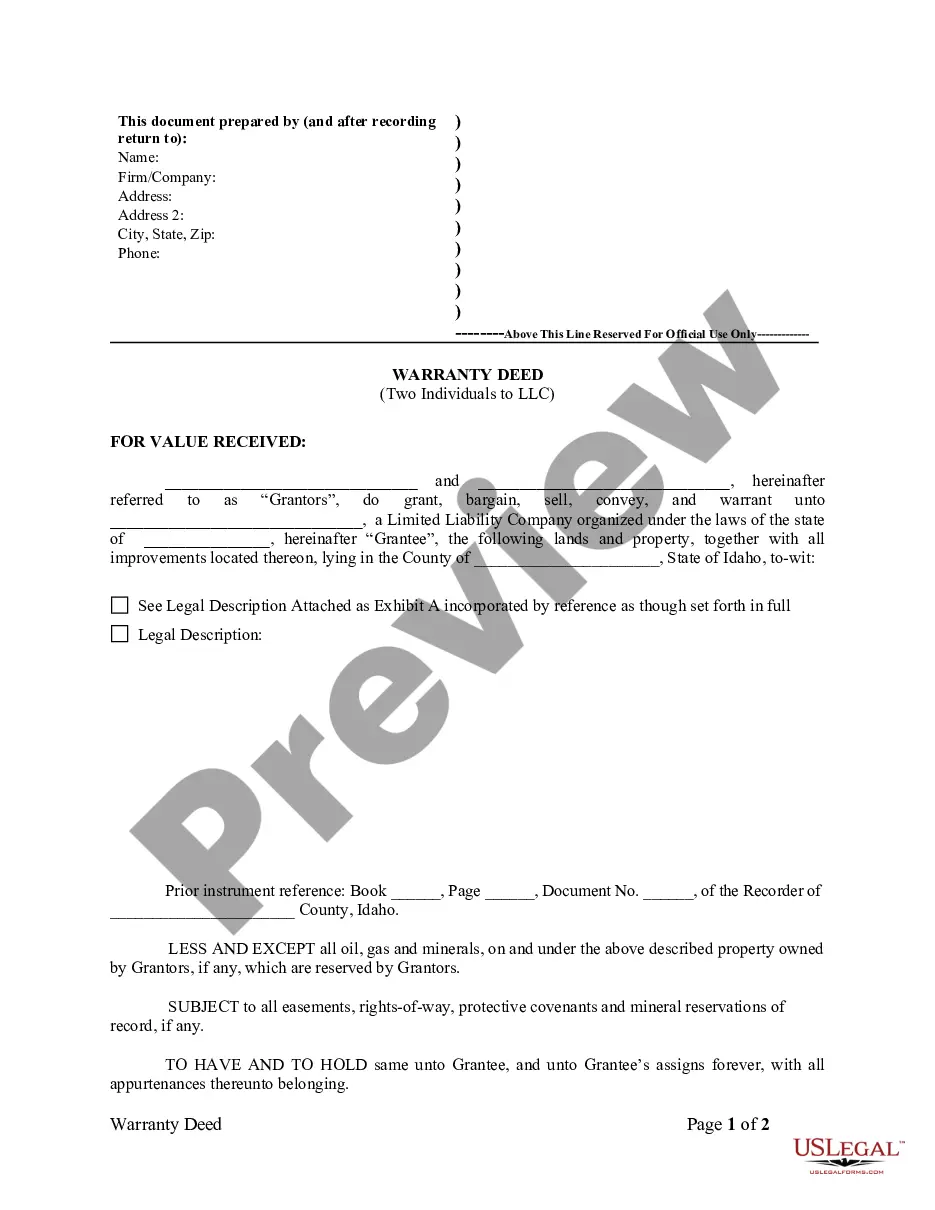
Sample Letter for Claim to Funds
Understanding this form
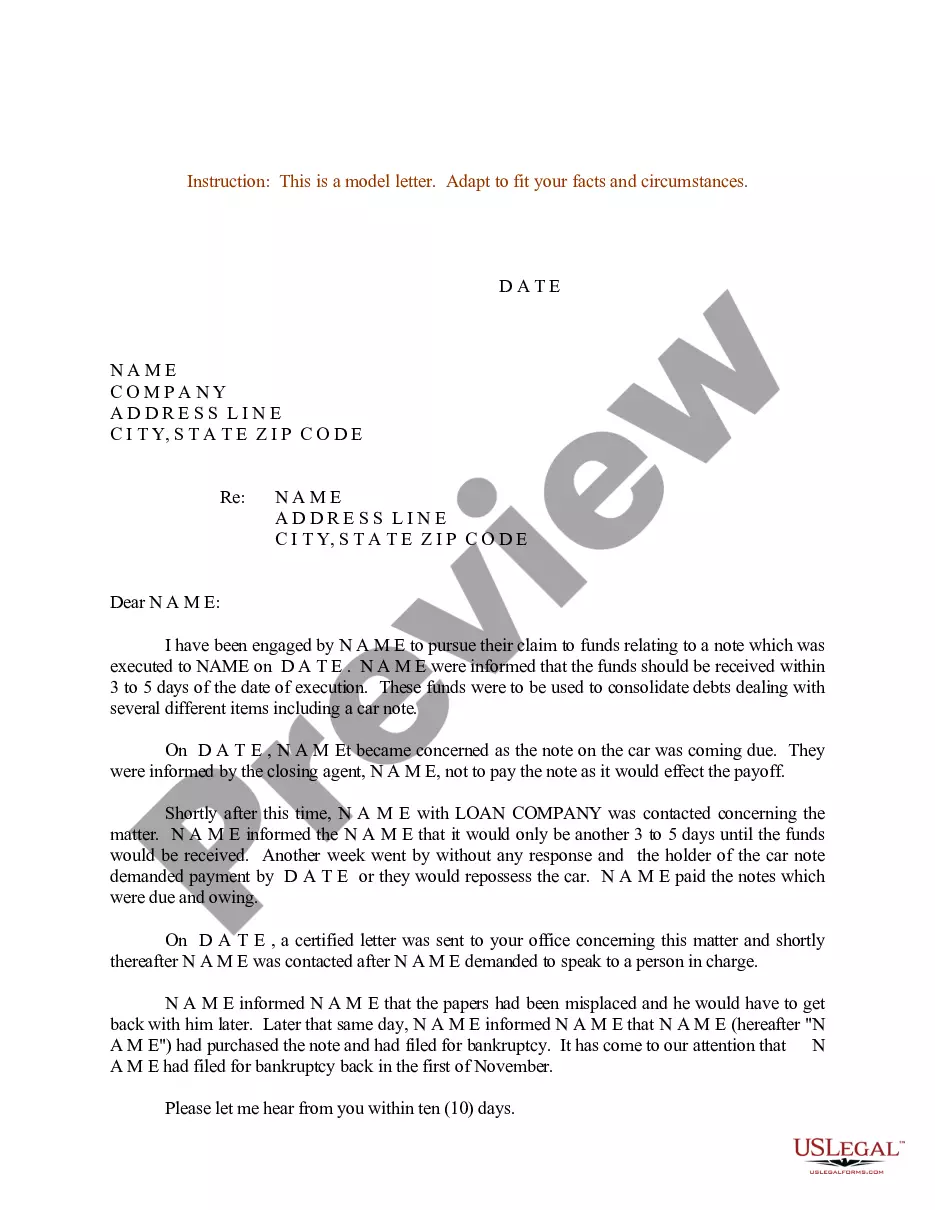
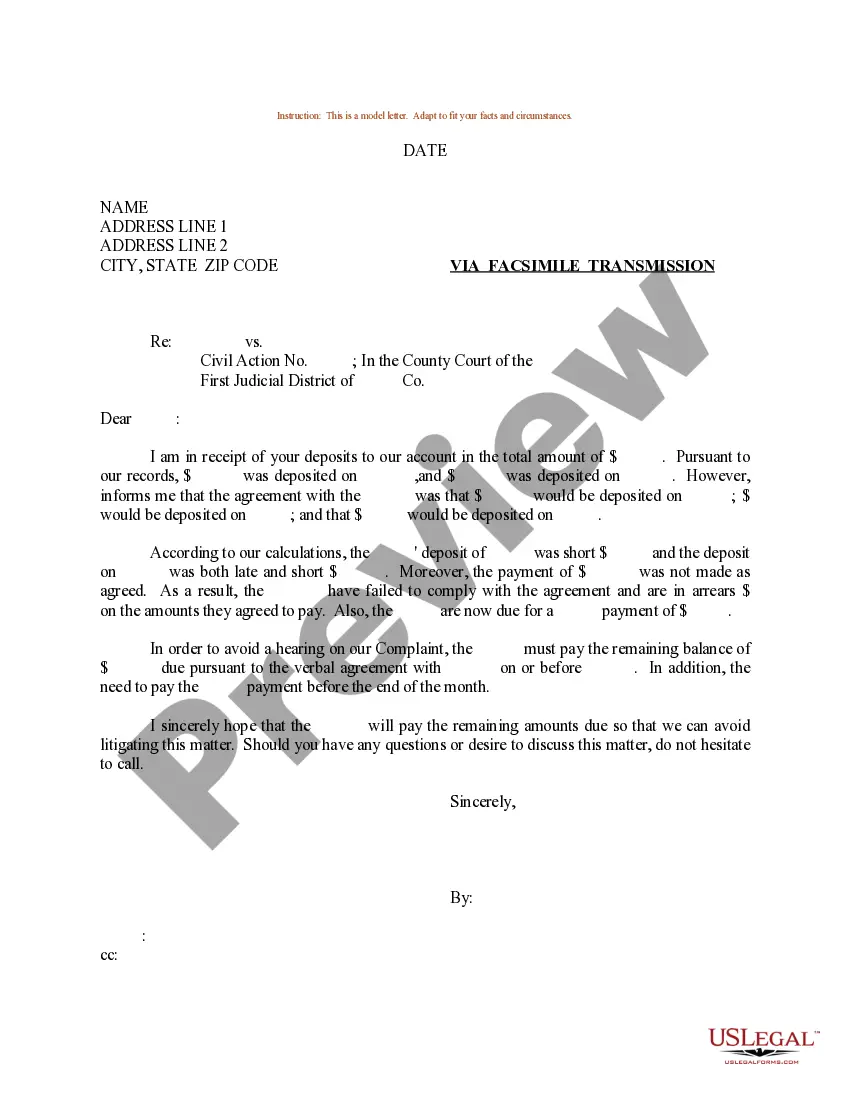
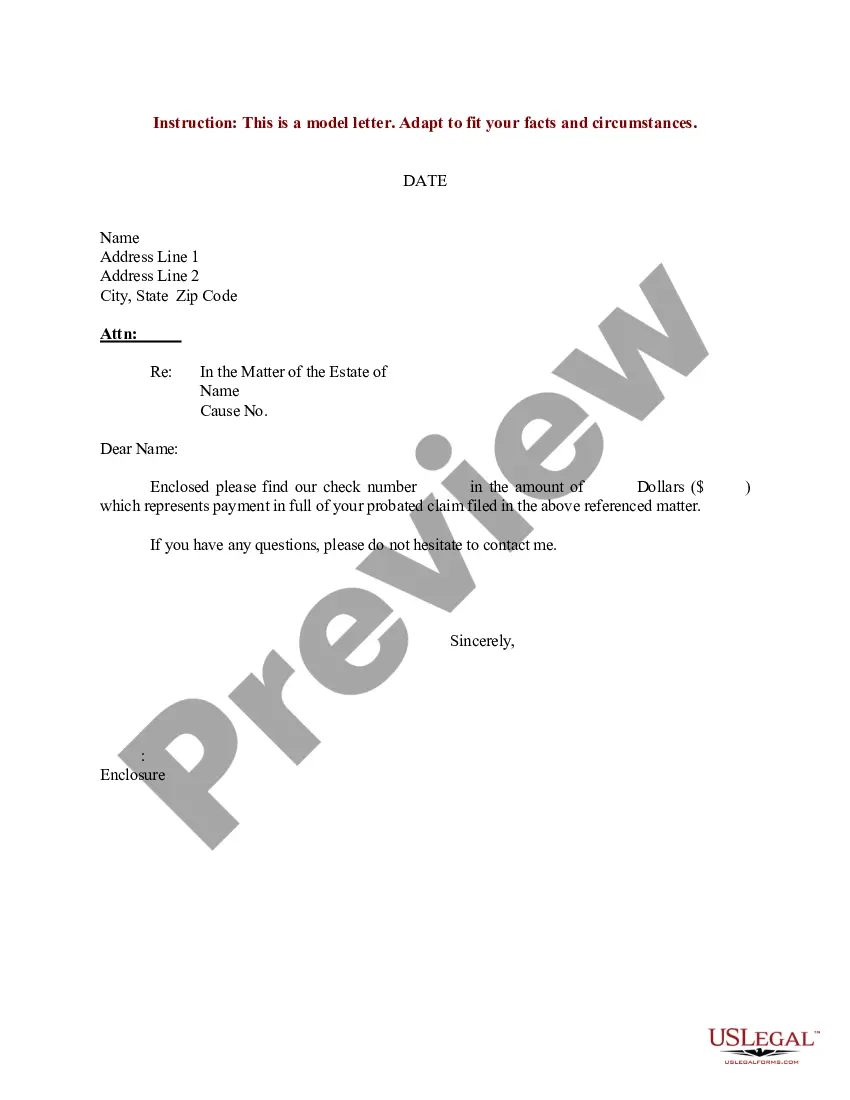
The Sample Letter for Claim to Funds is a template designed to help individuals or entities communicate formally with a party regarding the retrieval of funds. This letter outlines the circumstances surrounding the claim and requests a response within a specified time frame. Unlike other forms, this document serves as a model letter that can be customized to fit specific situations, making it a useful tool for anyone needing to assert a claim for funds owed.
Main sections of this form
- Date: The date when the letter is drafted.
- Sender's and recipient's details: Names and addresses of the parties involved.
- Subject matter: A brief introduction to the claim regarding the funds.
- Details of the claim: A narrative explaining the circumstances surrounding the claim.
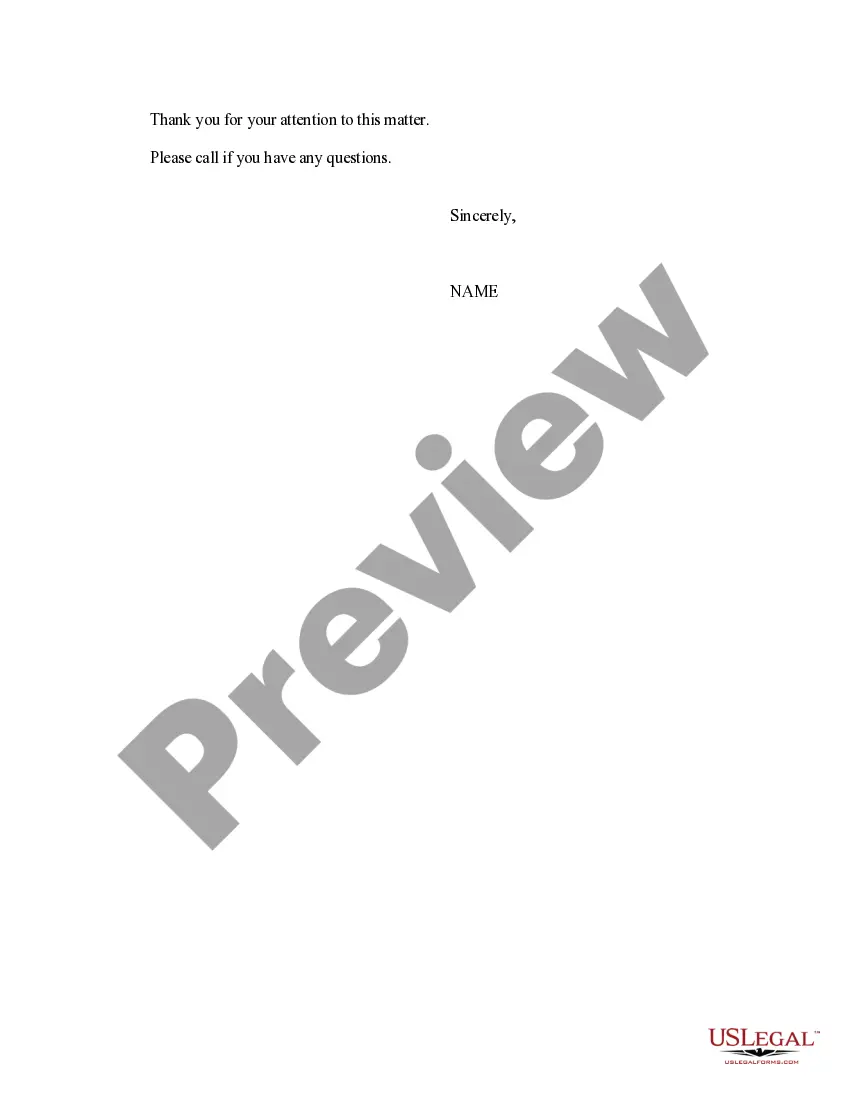
- Request for response: A clear request for the recipient to respond within ten days.


When to use this document
This form is suitable for situations where an individual or business has been assured of receiving funds but has not yet received them, particularly in contexts involving loans, debts, or financial agreements. It may also be used when a closing agent has failed to deliver promised funds, and the recipient wishes to formally escalate the issue and seek resolution.
Who should use this form
- Individuals seeking recovery of funds due to them.
- Businesses needing to communicate formal claims regarding payments.
- Legal representatives acting on behalf of clients in financial matters.
- Anyone who has previously communicated with a financial institution or agent about missing funds.
How to complete this form
- Fill in the date at the top of the letter.
- Enter your name and address in the sender's section.
- Provide the recipient's name and address accurately.
- Clearly state the subject of your claim and detail the events leading up to your letter.
- Request a response within ten days and provide your contact information for follow-up.
Notarization requirements for this form
Notarization is generally not required for this form. However, certain states or situations might demand it. You can complete notarization online through US Legal Forms, powered by Notarize, using a verified video call available anytime.
Get your form ready online
Our built-in tools help you complete, sign, share, and store your documents in one place.
Make edits, fill in missing information, and update formatting in US Legal Forms—just like you would in MS Word.
Download a copy, print it, send it by email, or mail it via USPS—whatever works best for your next step.
Sign and collect signatures with our SignNow integration. Send to multiple recipients, set reminders, and more. Go Premium to unlock E-Sign.
If this form requires notarization, complete it online through a secure video call—no need to meet a notary in person or wait for an appointment.
We protect your documents and personal data by following strict security and privacy standards.

Make edits, fill in missing information, and update formatting in US Legal Forms—just like you would in MS Word.

Download a copy, print it, send it by email, or mail it via USPS—whatever works best for your next step.

Sign and collect signatures with our SignNow integration. Send to multiple recipients, set reminders, and more. Go Premium to unlock E-Sign.

If this form requires notarization, complete it online through a secure video call—no need to meet a notary in person or wait for an appointment.

We protect your documents and personal data by following strict security and privacy standards.
Common mistakes to avoid
- Failing to customize the letter for specific circumstances.
- Omitting important details related to the financial agreement.
- Not specifying a clear timeline for response.
- Neglecting to proofread for accuracy in names and addresses.
Why complete this form online
- Convenient access to download and customize the template according to your needs.
- Editable format allows for easy adjustments and personalization.
- PDF and Word formats enable users to choose their preferred document type.
- Confidence in using a professionally drafted template created by licensed attorneys.
Legal use & context
- This letter serves as a formal communication that may be used in further legal proceedings if necessary.
- Ensure that your claim aligns with any contractual obligations or local laws governing financial agreements.
- Documentation of your claim through this letter can support potential litigation if payment is not made.
Looking for another form?
Form popularity
FAQ
Establish the letter's objective. The objective of the letter is to ensure the complainant that the unsatisfactory situation or the complaint is getting addressed or corrected. Determine the scope. Organize the letter. Draft the letter. Close the letter. Proofread your letter.
Letter date. Your full name and contact information. Injury date and location. Brief description of the incident, such as car accident or slip and fall The at-fault party's name and contact information. The at-fault party's insurance policy number, if available.
Dear Sir/Madam, I, (Name) need my (mention any important document for example, birth certificate) for official purpose. I authorize, Mr/Ms. (Name) to collect this document on my behalf as I am unable to attend your office due to (XYZ) reason.
Indicate at the start of the letter that you're making a claim then specify the type of claim you're making. If applicable indicate the policy number. Explain the specific details or circumstances of your claim. Make sure to mention all the significant facts about the claim.
Indicate at the start of the letter that you're making a claim then specify the type of claim you're making. If applicable indicate the policy number. Explain the specific details or circumstances of your claim.
State precisely what the problem is. Suggest what can be done to solve the problem. Provide relevant details about your account. Mention how long you have been the bank's customer. Refrain from writing a sarcastic, threatening or angry letter. Use professional and polite language.
Identify yourself. Explain the situation in details. Provide facts in the form of numbers, names, and dates. List your rights. Reference polices, contracts, or laws if necessary. Make a demand or a claim. Give a deadline if necessary. Request for actions of feedback.
Be clear and concise. State exactly what you want done and how long you're willing to wait for a response. Don't write an angry, sarcastic, or threatening letter. Include copies of relevant documents, like receipts, work orders, and warranties. Include your name and contact information.
What should you include in the body of a direct claim letter? The body of a claim letter should explain the problem and justify the request by documenting the facts logically, objectively, and unemotionally; by providing specific details about what went wrong; and by avoiding blame and accusation.