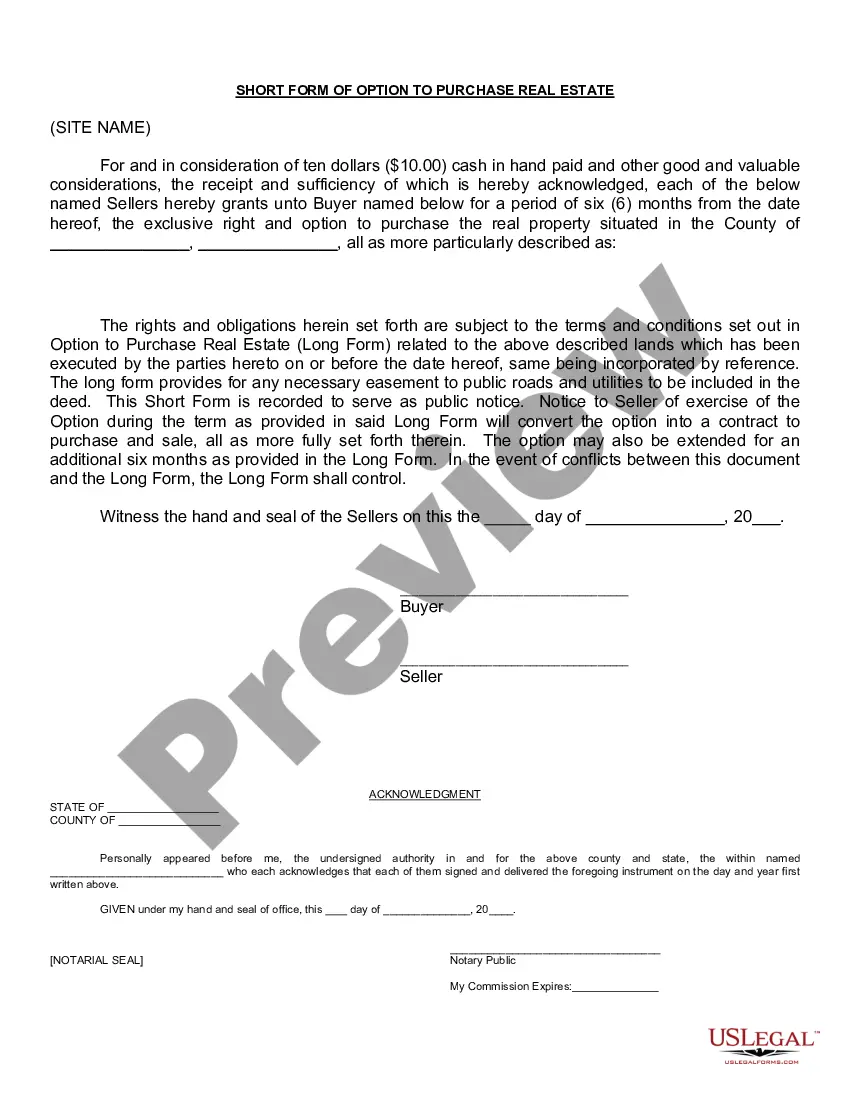
New Jersey Last Will and Testament for Divorced Person not Remarried with Adult Children
Understanding this form
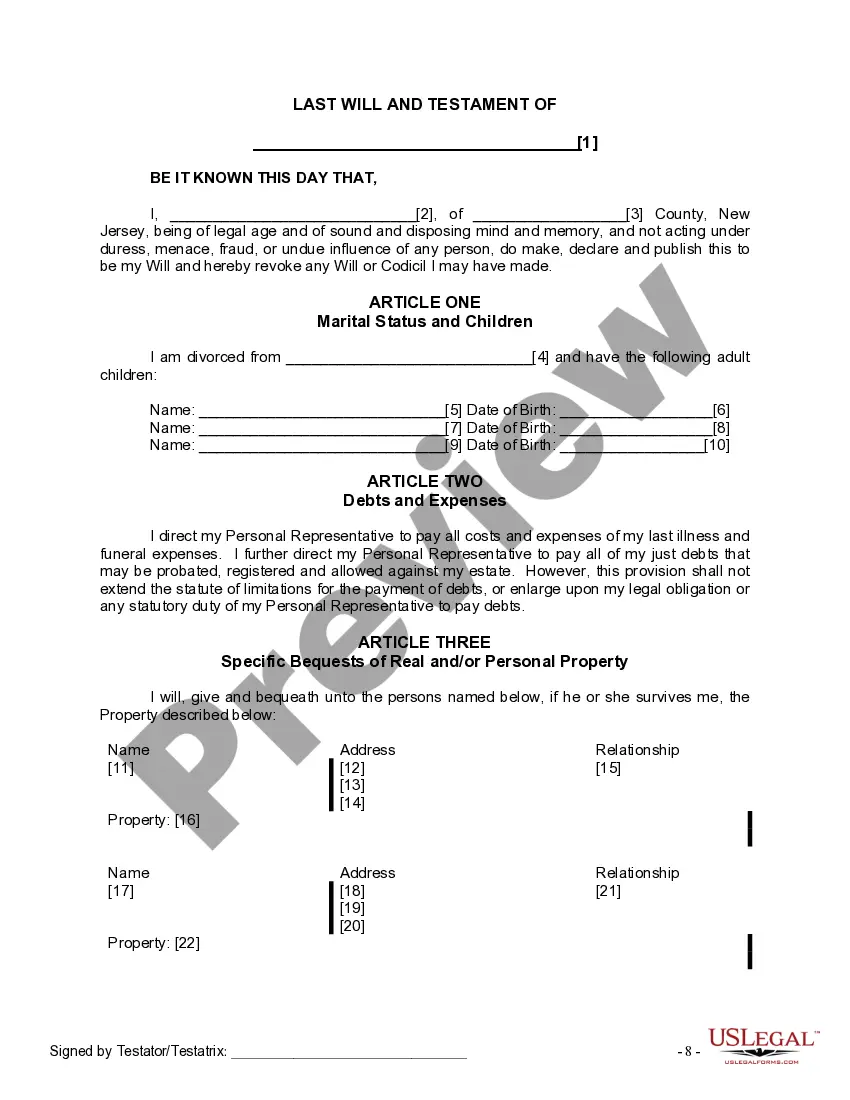
This form is a Last Will and Testament specifically designed for a divorced person who has not remarried and has adult children. It clearly outlines how your assets will be distributed upon your death, including provisions for appointing a personal representative or executor. This form also differs from standard wills by accommodating the unique circumstances of individuals who are divorced and wish to specify their adult children as beneficiaries.
What’s included in this form
- Name and personal information of the testator.
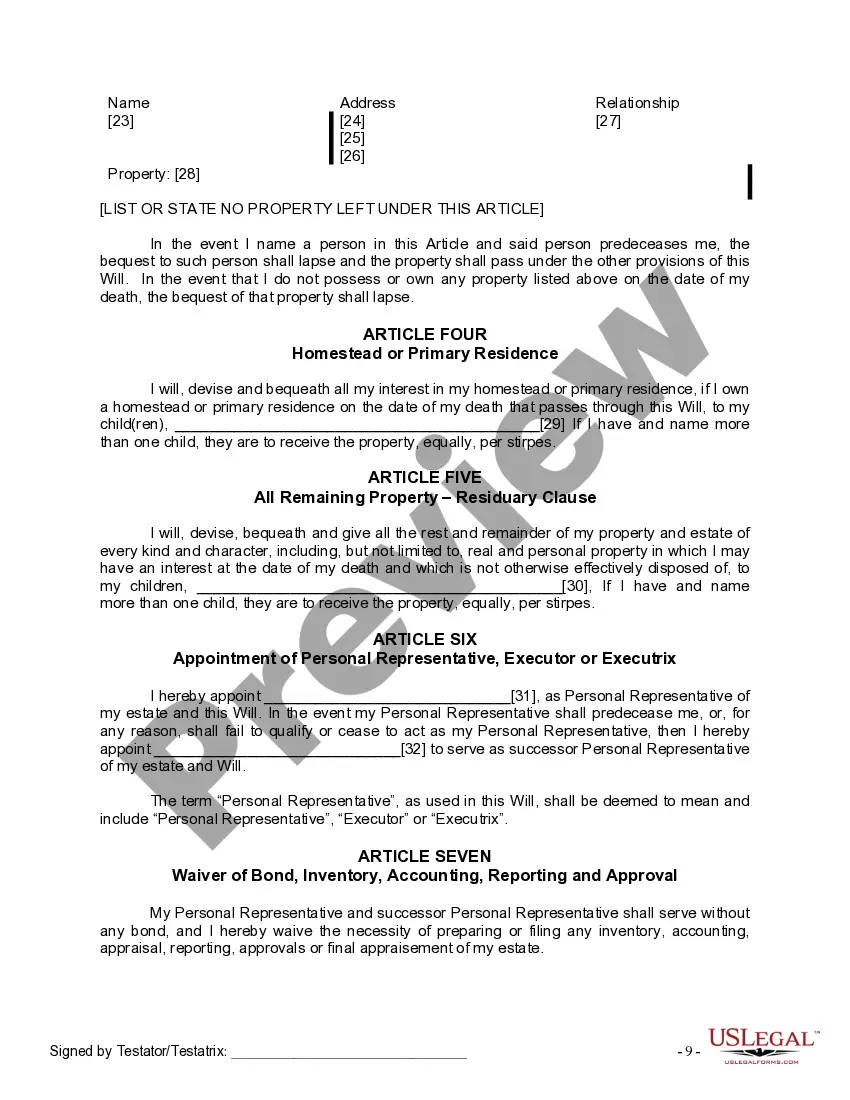
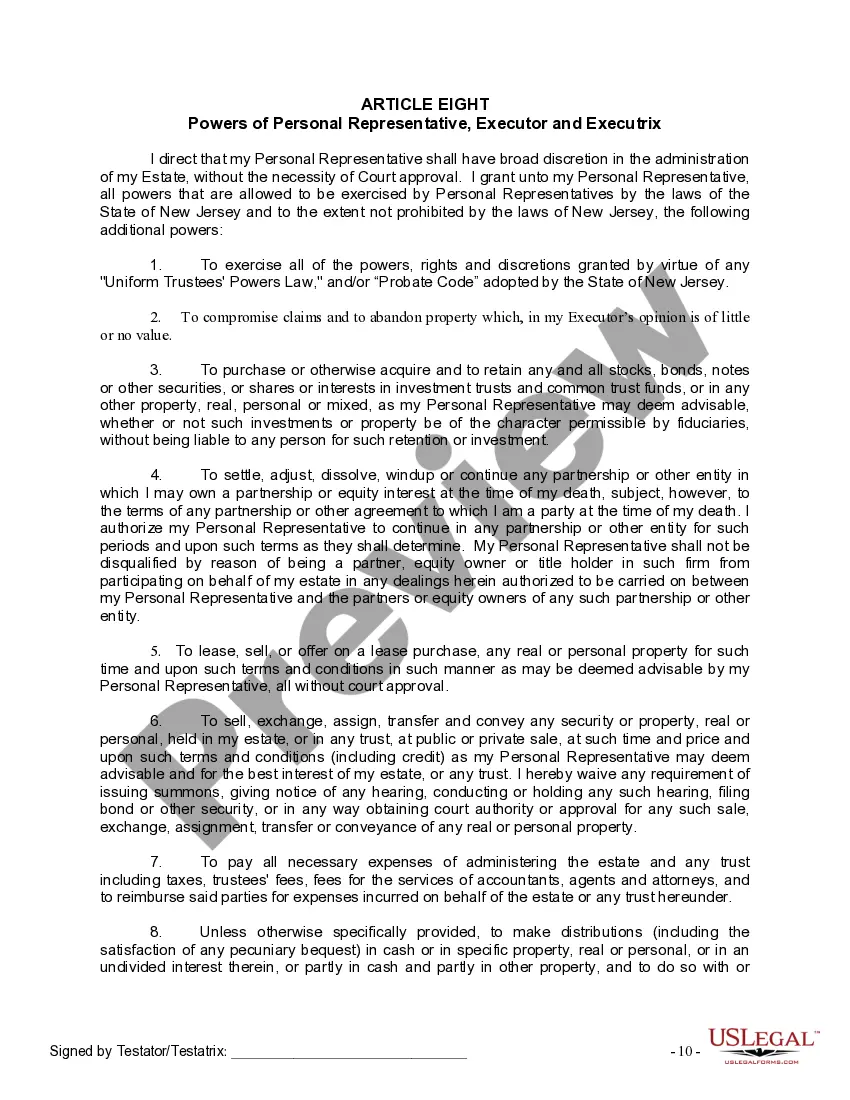
- Appointment of a personal representative to manage the estate.
- Designation of beneficiaries, especially adult children.
- Specific bequests of property and assets.
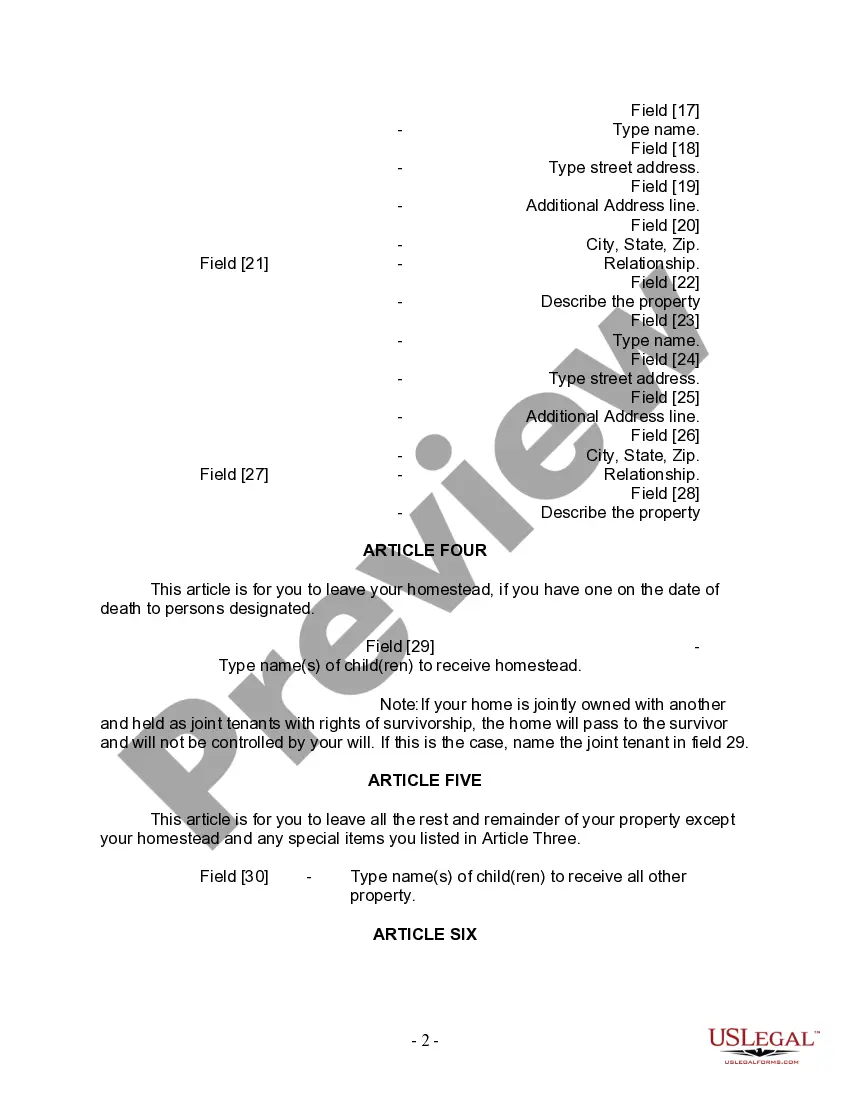
- Provisions for the distribution of a homestead or primary residence.
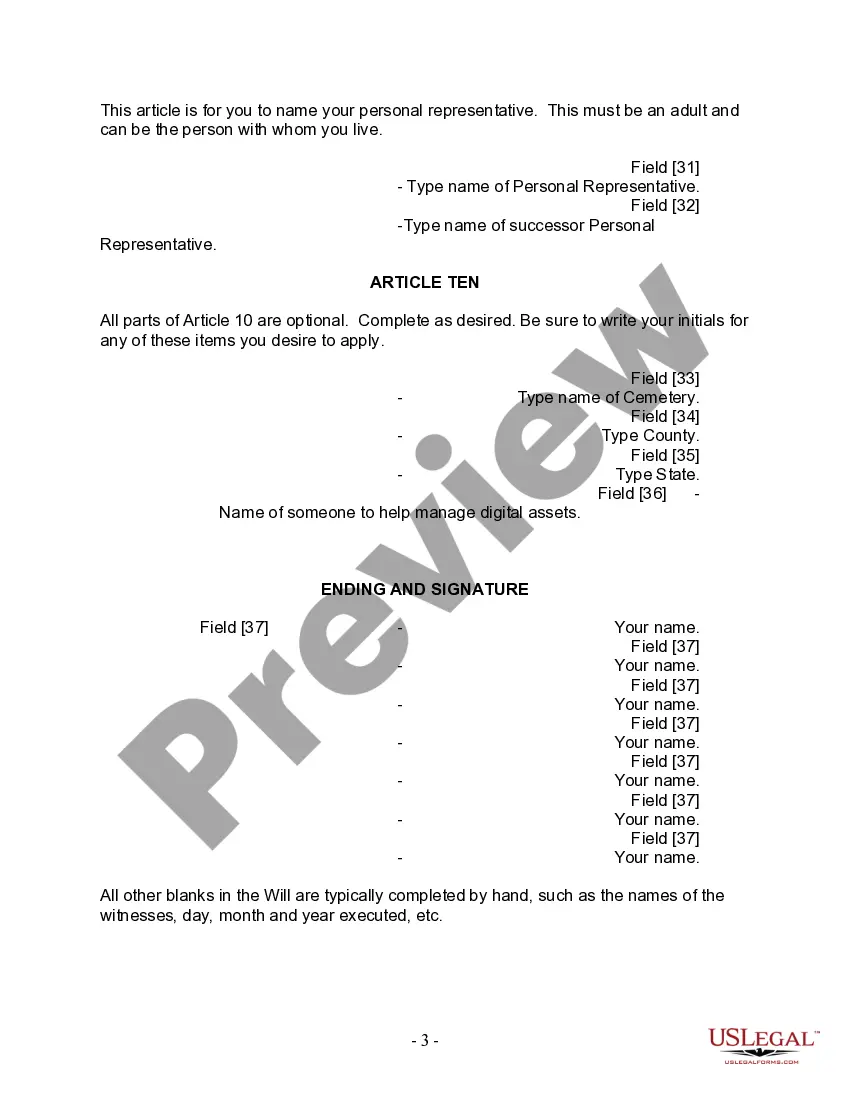
- Optional articles for additional wishes, such as burial or cremation preferences.





Common use cases
You should use this Last Will and Testament form when you are a divorced individual with adult children who need to clarify how your estate is handled after your passing. It is particularly useful if you have specific assets to leave to your children or wish to avoid complications in the probate process by clearly outlining your wishes in advance.
Intended users of this form
This form is intended for:
- Divorced individuals who have not remarried.
- Those with adult children and specific wishes for asset distribution.
- Individuals seeking to simplify the probate process for their heirs.
Steps to complete this form
To complete this form, follow these steps:
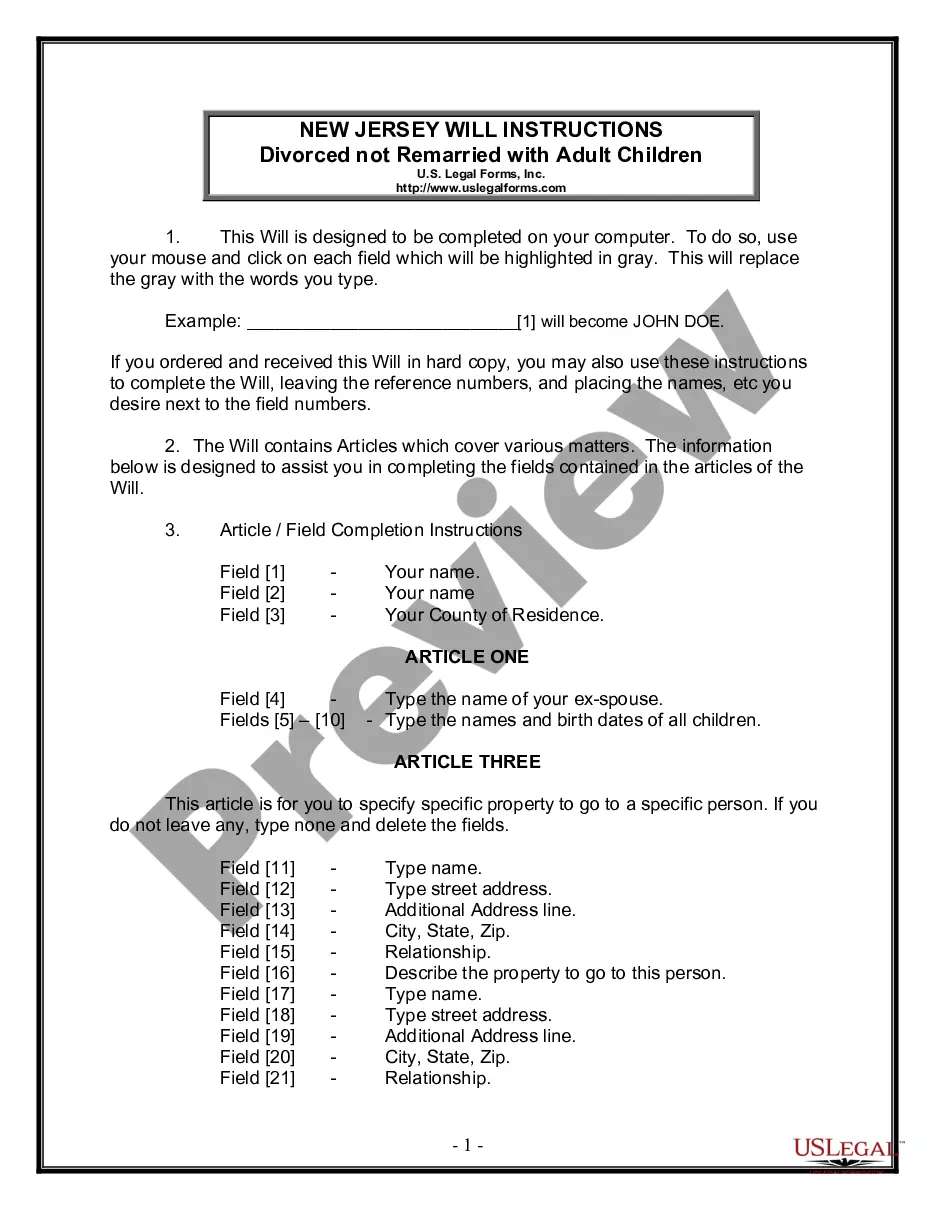
- Enter your full name and residence details in the designated fields.
- Include the name of your ex-spouse and birth dates of your adult children.
- Specify any specific property and who it should be bequeathed to.
- Designate your personal representative and any successors in the appropriate fields.
- Review the entire document, ensuring all information is accurate, and then print it out.
- Sign the will in front of two witnesses and have it notarized if necessary.
Notarization requirements for this form
Yes, this form must be notarized to be legally valid. You can use US Legal Forms' integrated online notarization service, which offers secure video calls and convenient availability without the need for in-person meetings.
Get your form ready online
Our built-in tools help you complete, sign, share, and store your documents in one place.
Make edits, fill in missing information, and update formatting in US Legal Forms—just like you would in MS Word.
Download a copy, print it, send it by email, or mail it via USPS—whatever works best for your next step.
Sign and collect signatures with our SignNow integration. Send to multiple recipients, set reminders, and more. Go Premium to unlock E-Sign.
If this form requires notarization, complete it online through a secure video call—no need to meet a notary in person or wait for an appointment.
We protect your documents and personal data by following strict security and privacy standards.

Make edits, fill in missing information, and update formatting in US Legal Forms—just like you would in MS Word.

Download a copy, print it, send it by email, or mail it via USPS—whatever works best for your next step.

Sign and collect signatures with our SignNow integration. Send to multiple recipients, set reminders, and more. Go Premium to unlock E-Sign.

If this form requires notarization, complete it online through a secure video call—no need to meet a notary in person or wait for an appointment.

We protect your documents and personal data by following strict security and privacy standards.
Common mistakes to avoid
- Failing to have the will signed by two qualified witnesses.
- Not including a self-proving affidavit if required in your state.
- Leaving property to individuals not named in the will or failing to clarify specific bequests.
- Not reviewing or updating the will if life circumstances change.
Benefits of using this form online
- Convenience of completing the form online from any location.
- Editable fields allow for customization based on specific needs.
- Access to templates prepared by licensed attorneys ensures reliability.
- Allows for easy storage of a digital copy alongside printed versions.
- This will serves as a legally binding document regarding your estate distribution upon death.
- It helps to avoid intestate succession, where state laws dictate asset distribution.
- Failure to properly execute the will may lead to complications in probate.
Quick recap
- The form is specifically designed for divorced individuals with adult children.
- It requires signatures from witnesses and possibly notarization for validity.
- Completing the will ensures that your estate is handled according to your wishes.
Looking for another form?

Form popularity
FAQ
Effect of marriage on your will When you marry, any existing will is automatically revoked (cancelled) and becomes no longer valid. If you do not make a new one, then when you die the law of intestacy decides how your assets are divided. Usually, your entire estate would go to your wife, husband or civil partner.
Here are our top 5 reasons why it is better to have a separate Will for each spouse. When someone dies, their Will becomes locked in since they can no longer express a change to their wishes. This means that if one spouse passes away, the joint Will would become locked and difficult to update for the surviving spouse.
Like most wills, a joint will lets the will-makers name who will get their property and assets after they die. Joint wills are usually created by married couples.After one spouse has died, all the couple's property will be left to the surviving spouse; and.
If your marriage is ended by a court order (like divorce or annulment) your will is not void or invalid.However, because your will does not become invalid at divorce, you can make a new will at any time after separation but before divorce so that these issues do not occur. You do not have to await the decree absolute.
A joint will is one that two people, typically a married couple, sign together. Instead of each spouse having a separate will, they have one document that they've both agreed to.Then the entire estate goes to their children when the second spouse passes away.
Can a former spouse or de facto partner contest your Will after you die? In NSW the answer is yes BUT only if the former spouse can overcome some significant hurdles.
If you divorce, then your existing Will is not cancelled. However, the divorce does have the effect that your former spouse will no longer act as an Executor, nor inherit from your Will. Sometimes, a married couple may choose to judicially separate rather than divorce for example for religious reasons.
The only way that a spouse can obtain ownership and override the Will is if the law in the state in which they live allows a "right of election" against the Will.