Employee Coaching Script
What this document covers
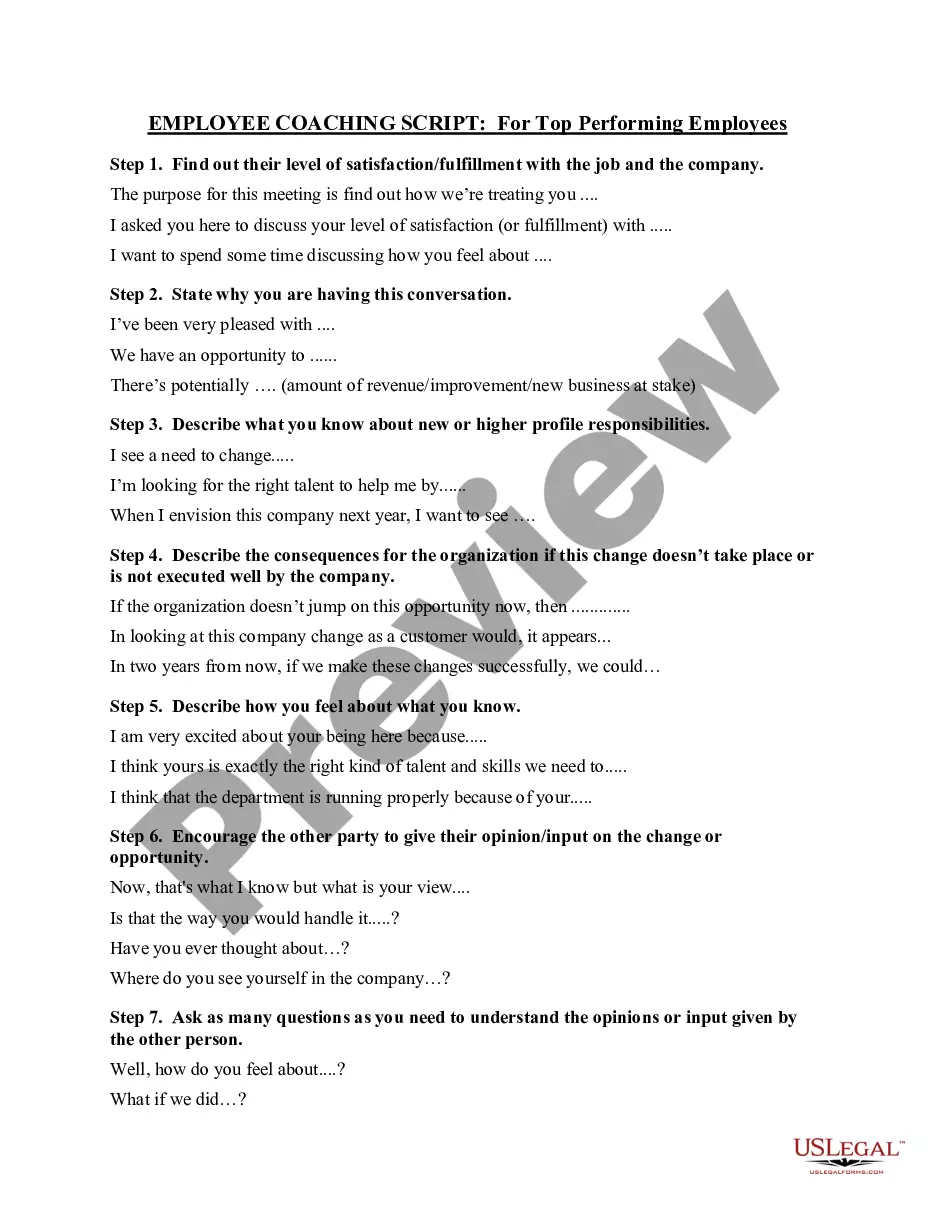
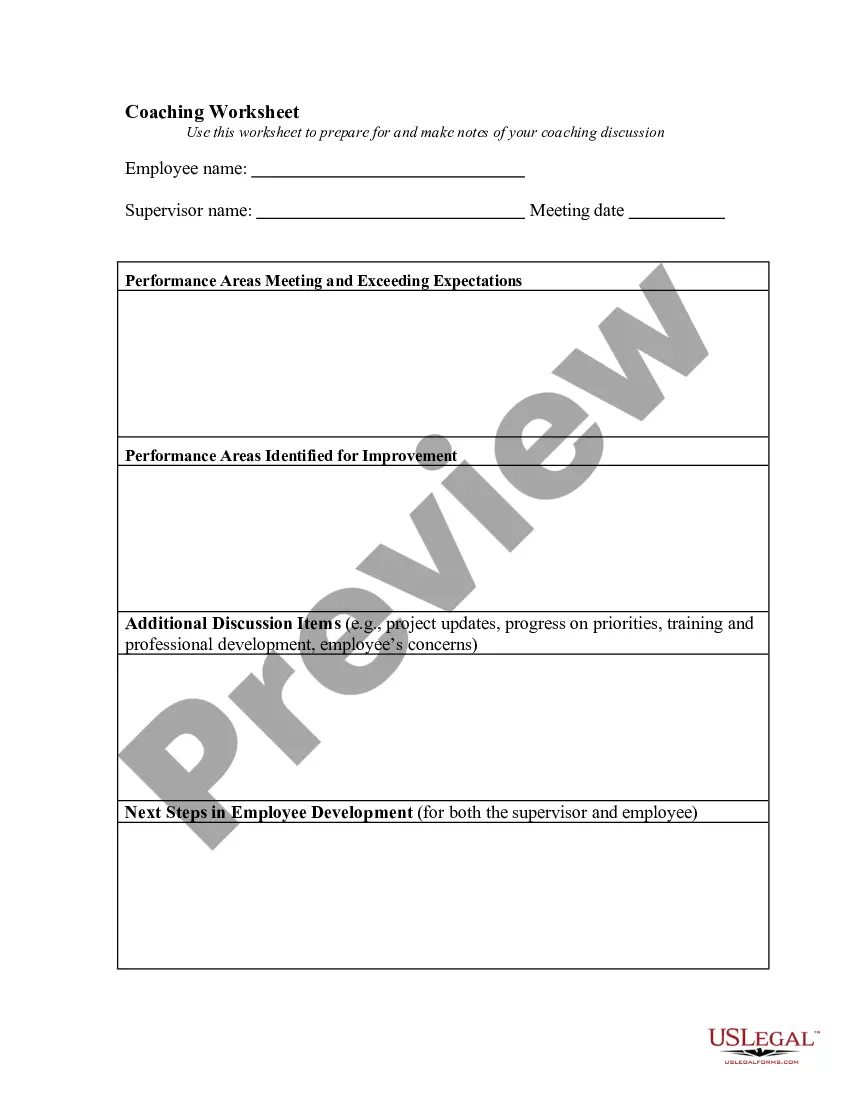
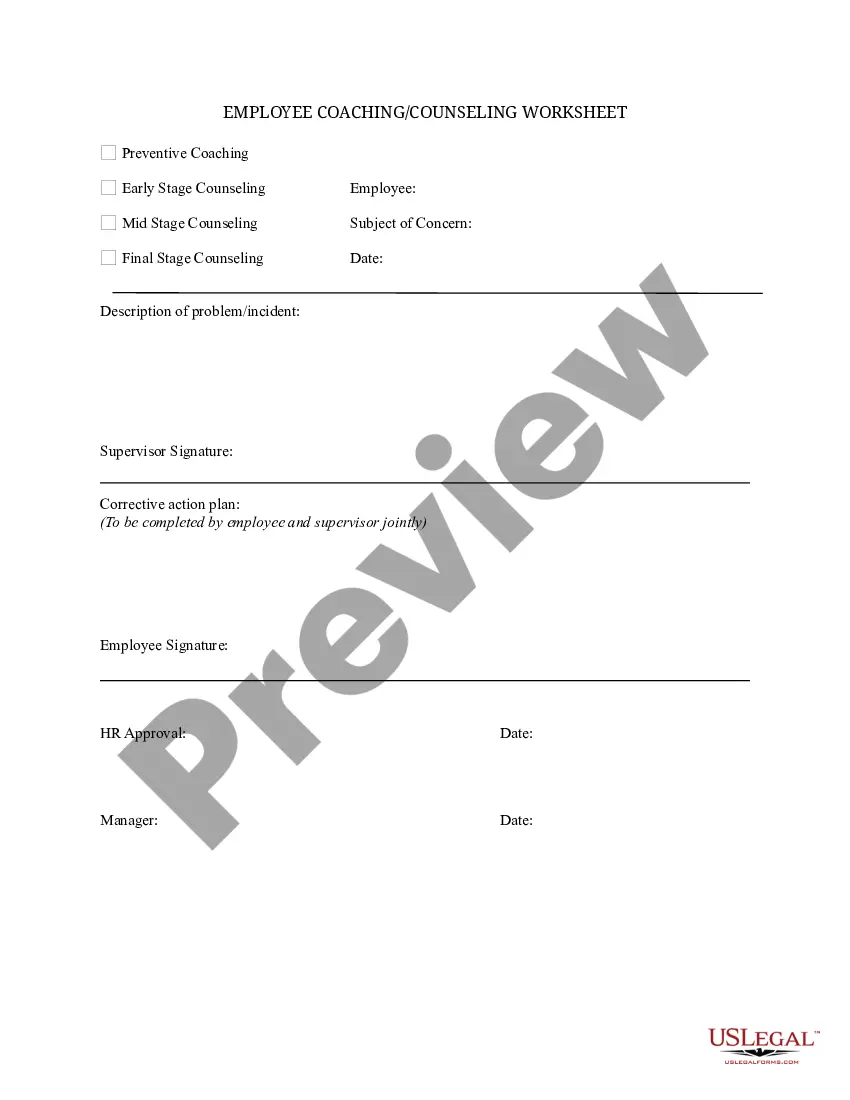
The Employee Coaching Script is a structured tool designed to aid management in evaluating employee job satisfaction and initiating critical conversations with high-performing staff. It sets a clear framework for discussions that can lead to improved employee engagement and organizational effectiveness, distinguishing itself from other forms by focusing specifically on coaching and feedback processes.
Main sections of this form
- Steps to assess employee satisfaction and fulfillment.
- Guidelines for articulating the purpose of the coaching conversation.
- Suggestions for discussing new responsibilities and opportunities.
- Consequences for the organization if changes are not implemented.
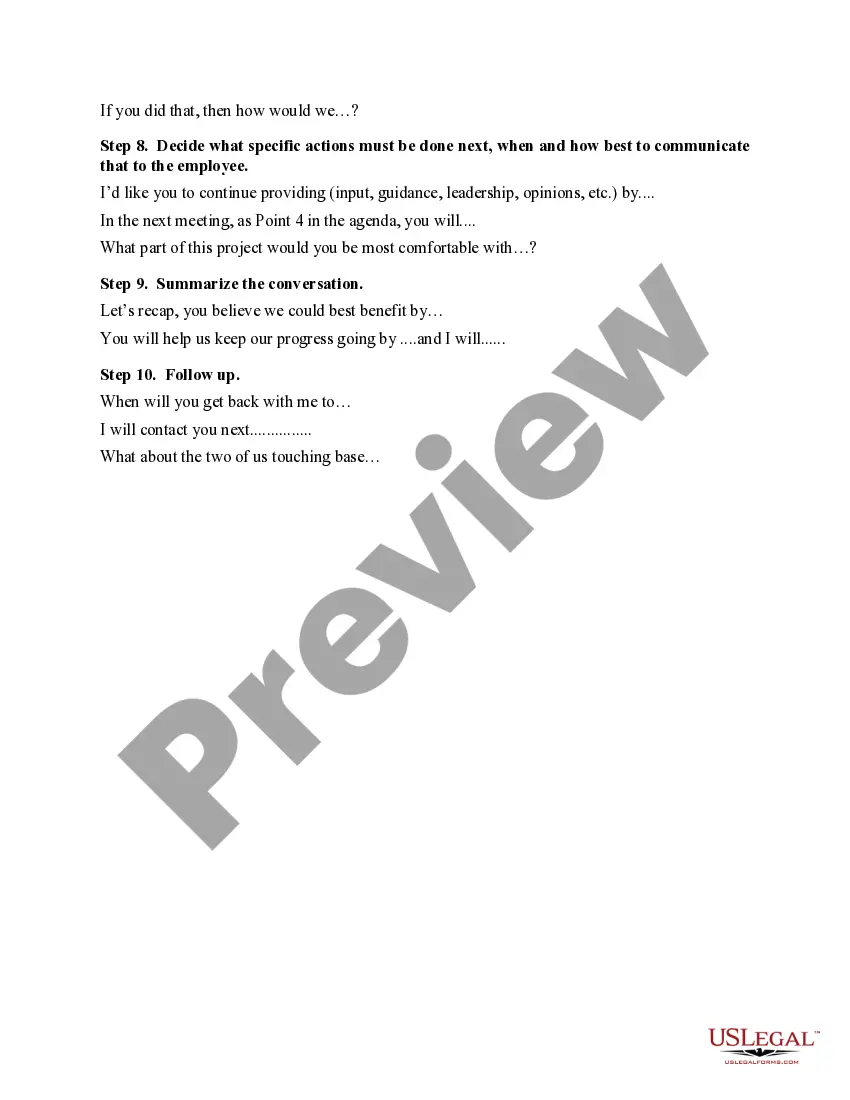
- Encouragement for employee input and feedback on proposed changes.
- Action planning and follow-up strategies post-conversation.
When this form is needed
This form is ideal when management needs to hold coaching sessions with employees to discuss their job satisfaction, address potential changes in responsibilities, or explore opportunities for advancement. It is particularly useful in settings where feedback is essential for improving performance and retaining talent.
Who can use this document
- Managers and team leaders looking to enhance employee engagement.
- HR professionals responsible for conducting staff evaluations.
- Supervisors interested in promoting career development opportunities.
- Company executives aiming to align employee goals with organizational objectives.
How to complete this form
- Initiate a coaching meeting by asking for the employee's feelings about their current role.
- Clearly explain the purpose of the meeting and highlight the positive aspects of the employee's performance.
- Discuss potential new responsibilities and expectations for the future.
- Encourage the employee to share their views and any concerns they may have.
- Outline specific next steps and duties to be performed after the meeting.
Is notarization required?
This form does not typically require notarization to be legally valid. However, some jurisdictions or document types may still require it. US Legal Forms provides secure online notarization powered by Notarize, available 24/7 for added convenience.
Get your form ready online
Our built-in tools help you complete, sign, share, and store your documents in one place.
Make edits, fill in missing information, and update formatting in US Legal Forms—just like you would in MS Word.
Download a copy, print it, send it by email, or mail it via USPS—whatever works best for your next step.
Sign and collect signatures with our SignNow integration. Send to multiple recipients, set reminders, and more. Go Premium to unlock E-Sign.
If this form requires notarization, complete it online through a secure video call—no need to meet a notary in person or wait for an appointment.
We protect your documents and personal data by following strict security and privacy standards.

Make edits, fill in missing information, and update formatting in US Legal Forms—just like you would in MS Word.

Download a copy, print it, send it by email, or mail it via USPS—whatever works best for your next step.

Sign and collect signatures with our SignNow integration. Send to multiple recipients, set reminders, and more. Go Premium to unlock E-Sign.

If this form requires notarization, complete it online through a secure video call—no need to meet a notary in person or wait for an appointment.

We protect your documents and personal data by following strict security and privacy standards.
Mistakes to watch out for
- Failing to prepare adequately for the meeting.
- Not allowing enough time for an open discussion.
- Neglecting to follow up on agreed actions.
- Not actively listening to the employee's feedback.
Why complete this form online
- Convenience of having a ready-to-use script available for download.
- Editable format allows managers to tailor the conversation to fit their style.
- Reliability provided by templates drafted by licensed attorneys.
Legal use & context
- The form provides a legal framework for conducting employee evaluations.
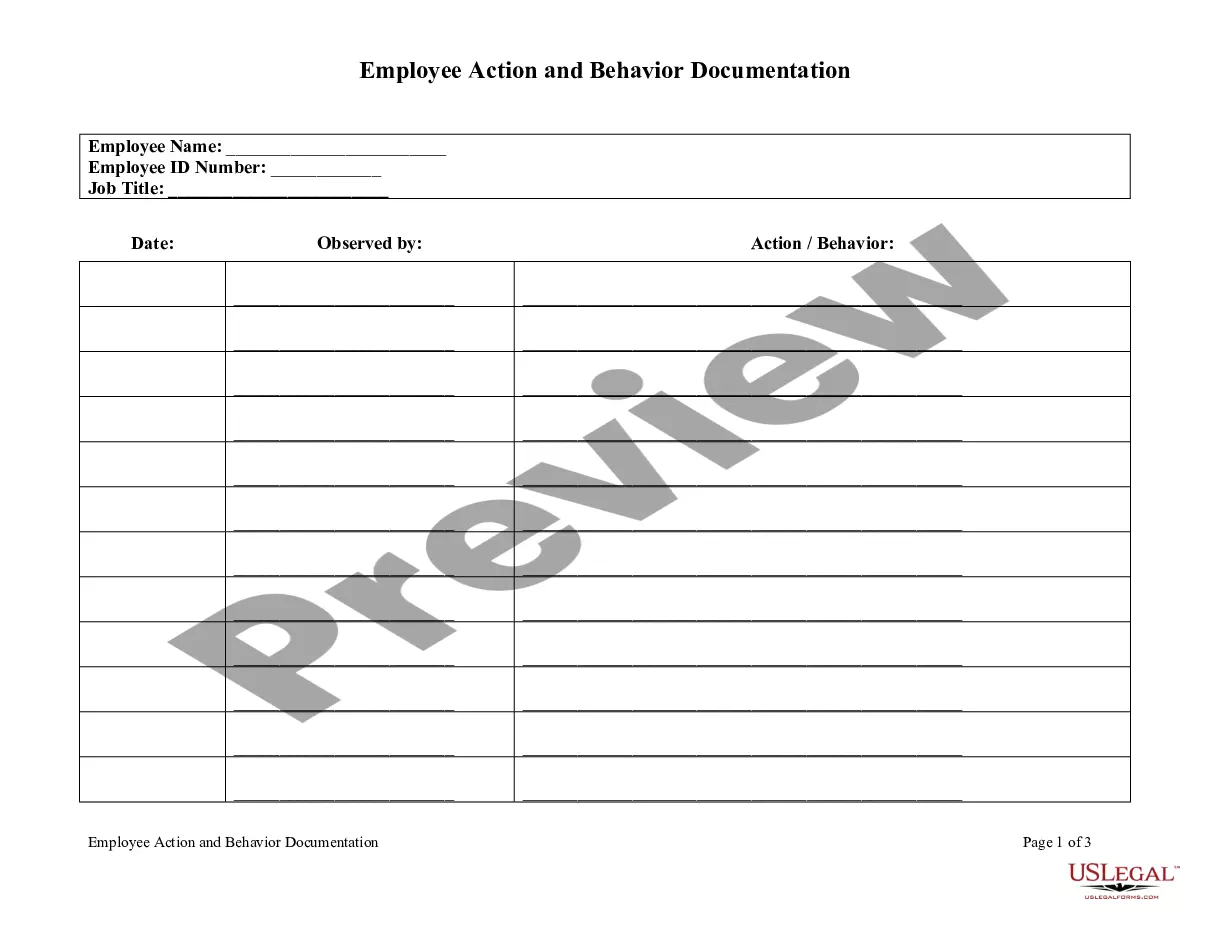
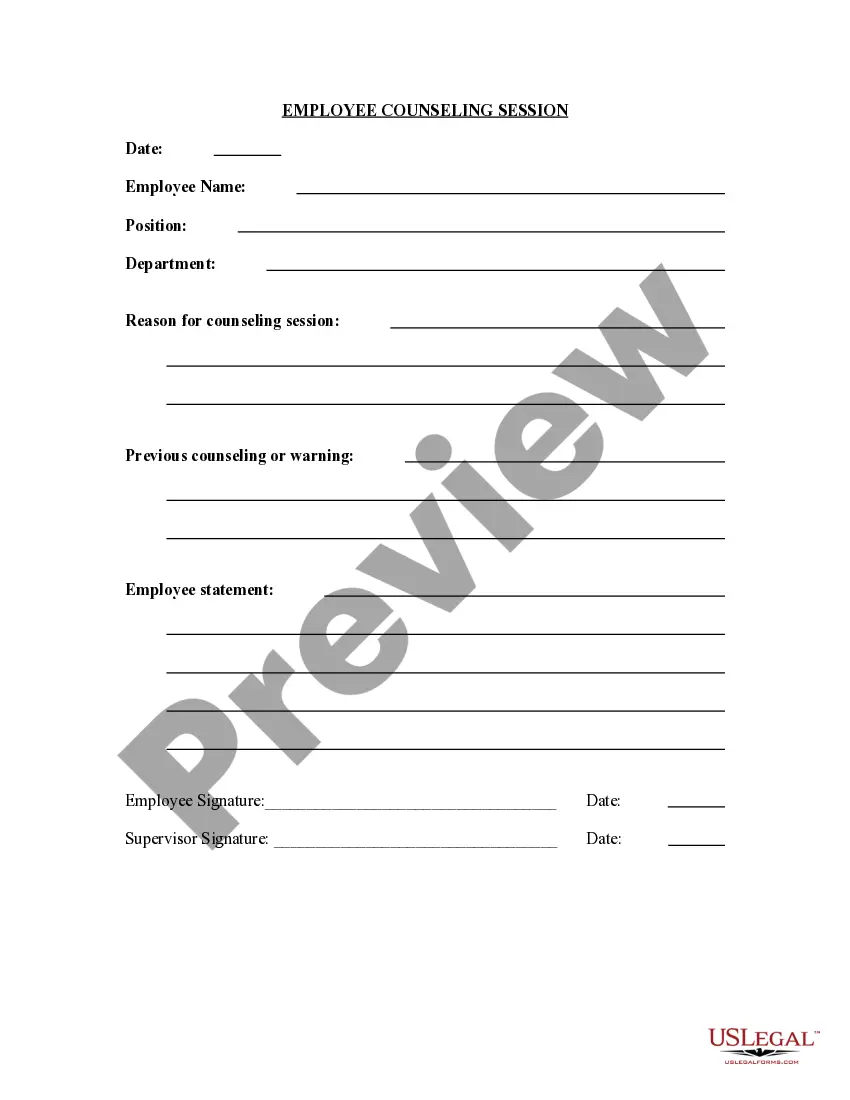
- It aids in documenting discussions which may be important for compliance and record-keeping.
- Promotes a transparent approach to employee feedback processes.
Summary of main points
- Use the Employee Coaching Script to facilitate effective communication with staff.
- Encourage feedback to foster a culture of openness.
- Follow up on the action items to ensure accountability and progress.
Looking for another form?
Form popularity
FAQ
Begin with POSITIVE intent. Start with an open, encouraging attitude. Focus on the impact of behaviors and actions instead of judgments and reactions. Make the conversation COLLABORATIVE. Engage in a two-way conversation, not a lecture. Ensure a SUPPORTIVE environment.
Deepen your coaching skills by learning the four types of conversations, which are awareness, vision, reflection, and next steps.
Start a coaching-out conversation. Explain how the needs of the role have changed. Focus on the high bar for performance you need, and explain the gap between the staff member's performance and that bar. Give the staff member time to reflect on how to move forward.
The Coach-Client Relationship. Problem Identification and Goal Setting. Problem-Solving. Transformational Processes. Outcome Definition and Measurement.
Start your conversation with the mindset that all feedback is a gift. Let the employee know that you're both working toward the same goal of helping them reach their potential. After you've shared your feedback ask the employee what support they need from you to follow through on the coaching your provided.
Send follow-up e-mails. Send direct reports a follow-up e-mail after every performance- or coaching-related conversation. Make notes or memos to self. Keep a running log. Set up an e-mail file.
A coaching action plan is meant to develop the employee's skills, guide them towards a specific outcome, and complete goals faster, easier, and more efficiently.It can motivate the coachee to persistently take action that will progress her development in a professional workspace for years to come.
Initiate approach. Set goals. Establish coaching methodology. Develop coaching schedule. Identify and specify benefits. Quantifiable benchmarks. Review and refocus.
A warm intro. Your coach is going to be excited to meet you and learn more about how they can help. Time to ask your coach questions. Feel free to ask your coach anything you'd like to know about them or the process ahead. Sharing your story. Some powerful questions. Goal talk.