Employee Code of Conduct for Business
What is this form?
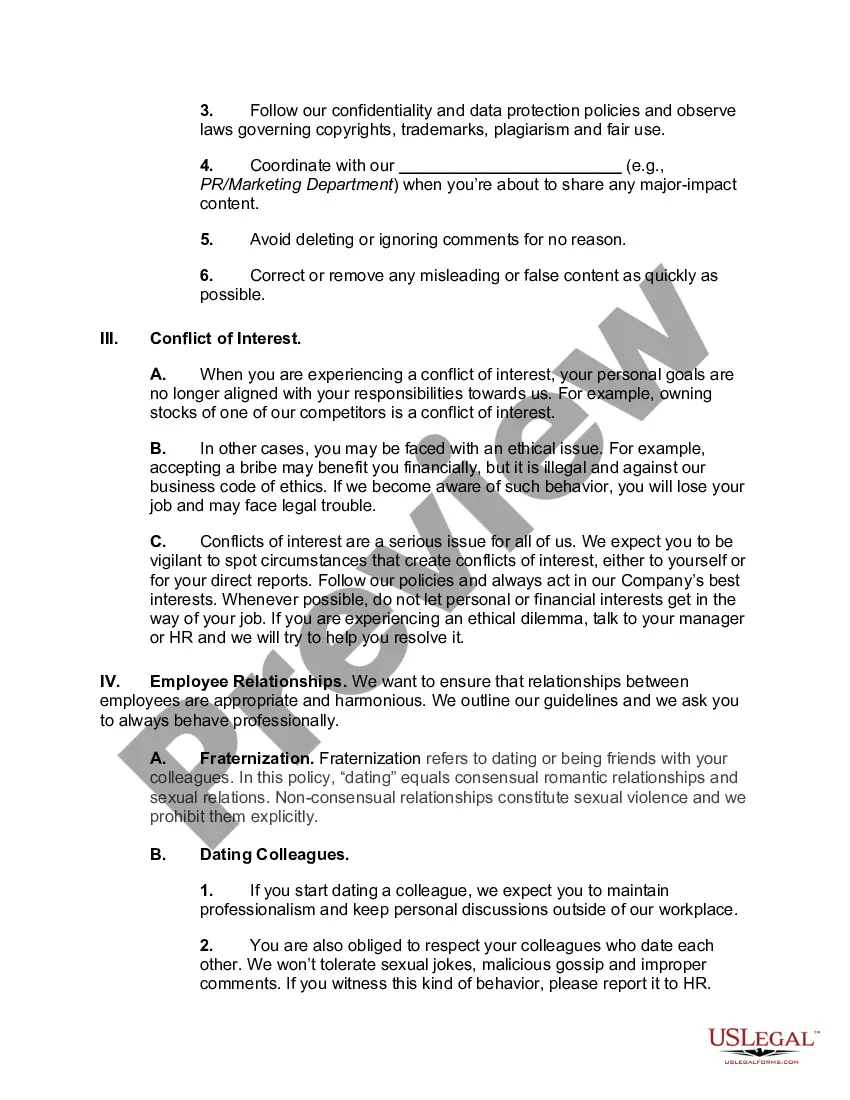
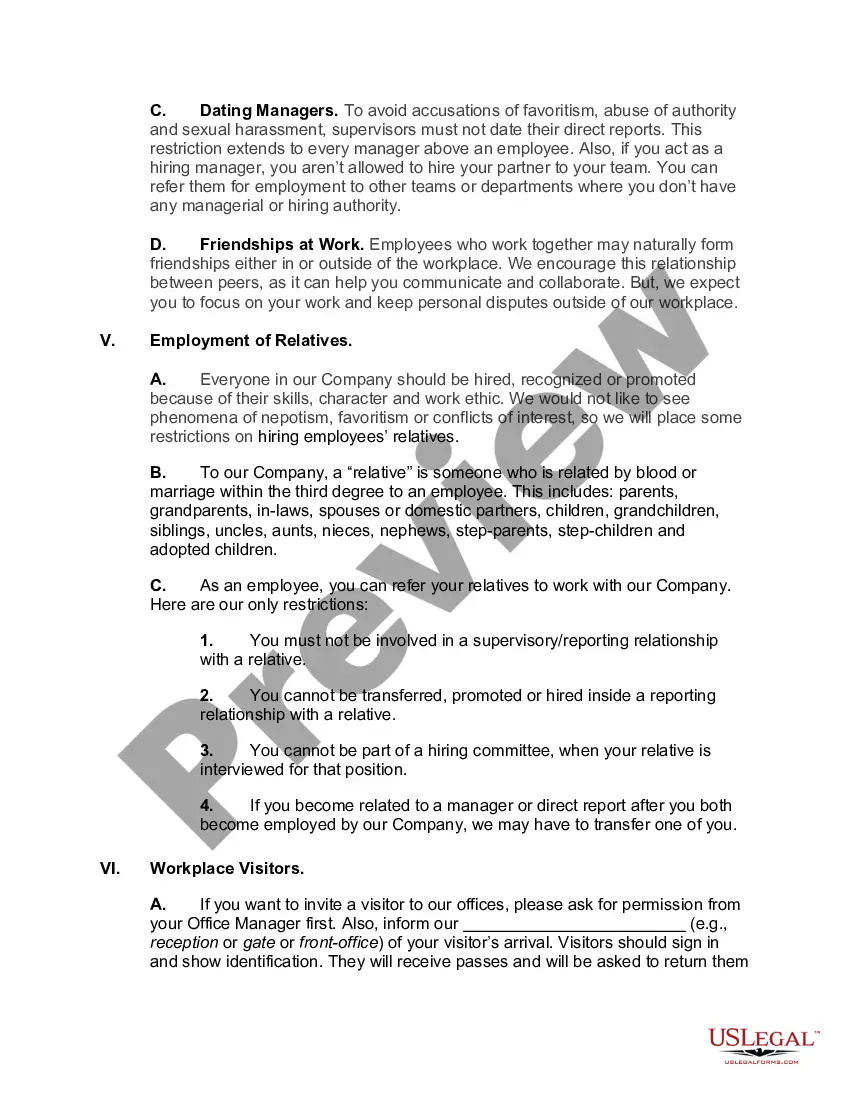
The Employee Code of Conduct for Business is a legal document that outlines the expected behavior and norms for employees within an organization. This form serves to provide clear guidelines on acceptable conduct, helping to establish a professional workplace environment. It differs from other forms by specifically addressing workplace etiquette, digital security, and interpersonal relationships among employees.
Key components of this form
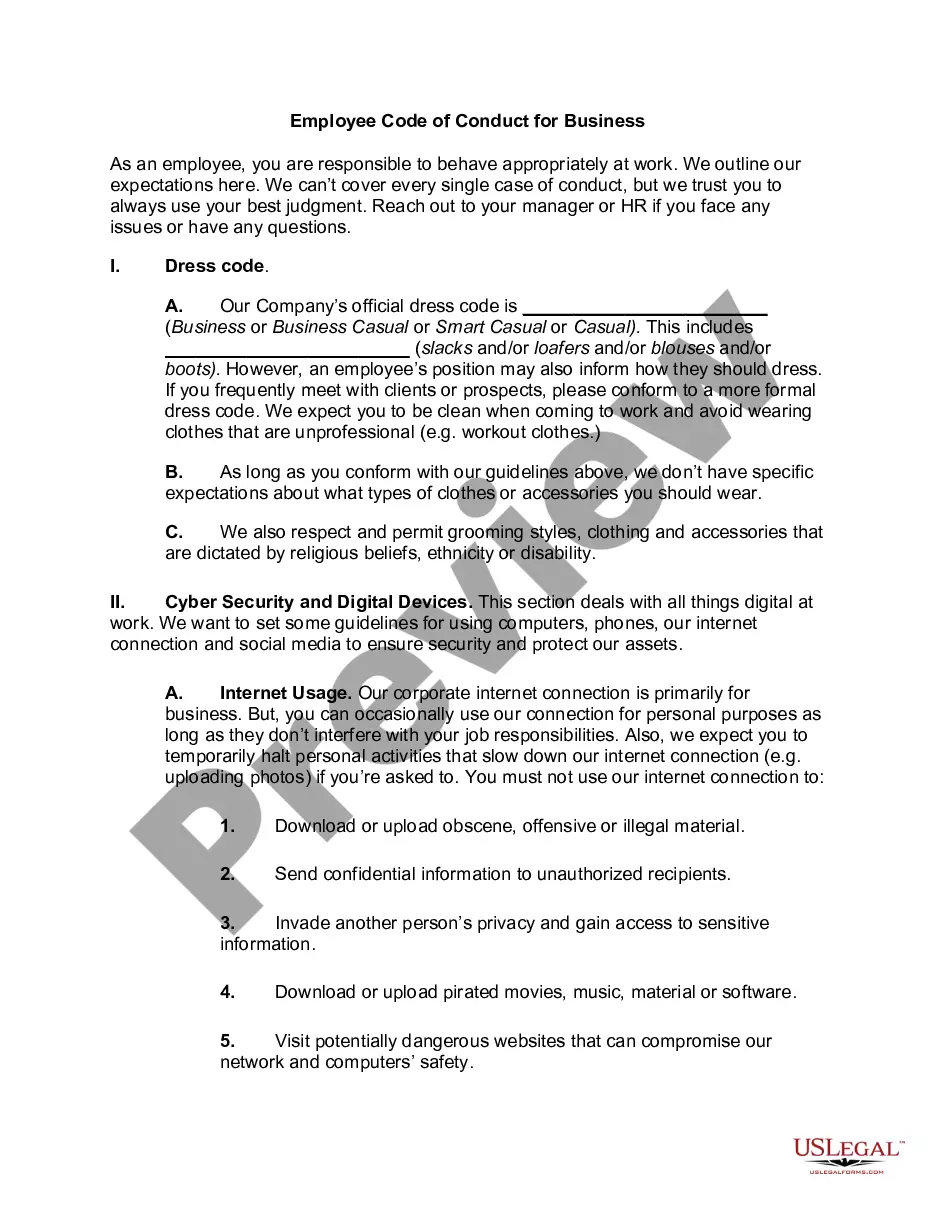
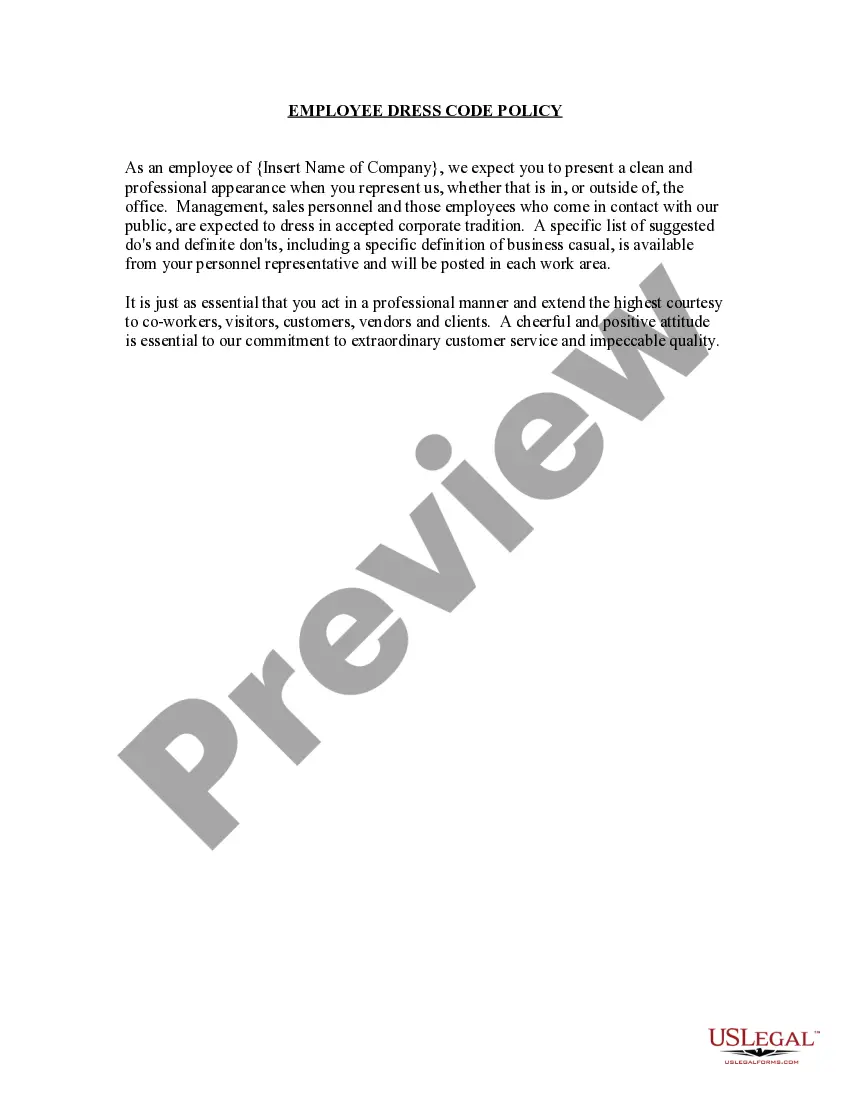
- Dress code guidelines to maintain a professional appearance.
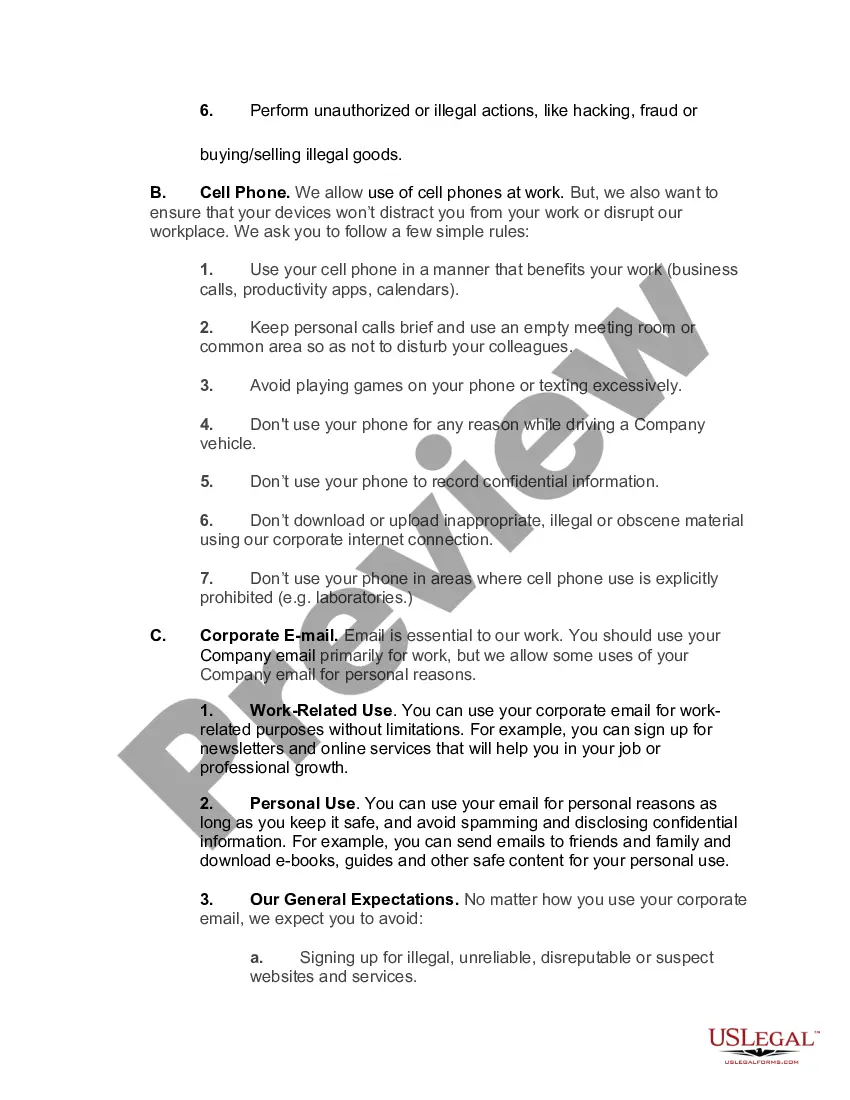
- Rules governing internet usage and cyber security to protect company resources.
- Expectations for cell phone use to minimize workplace distractions.
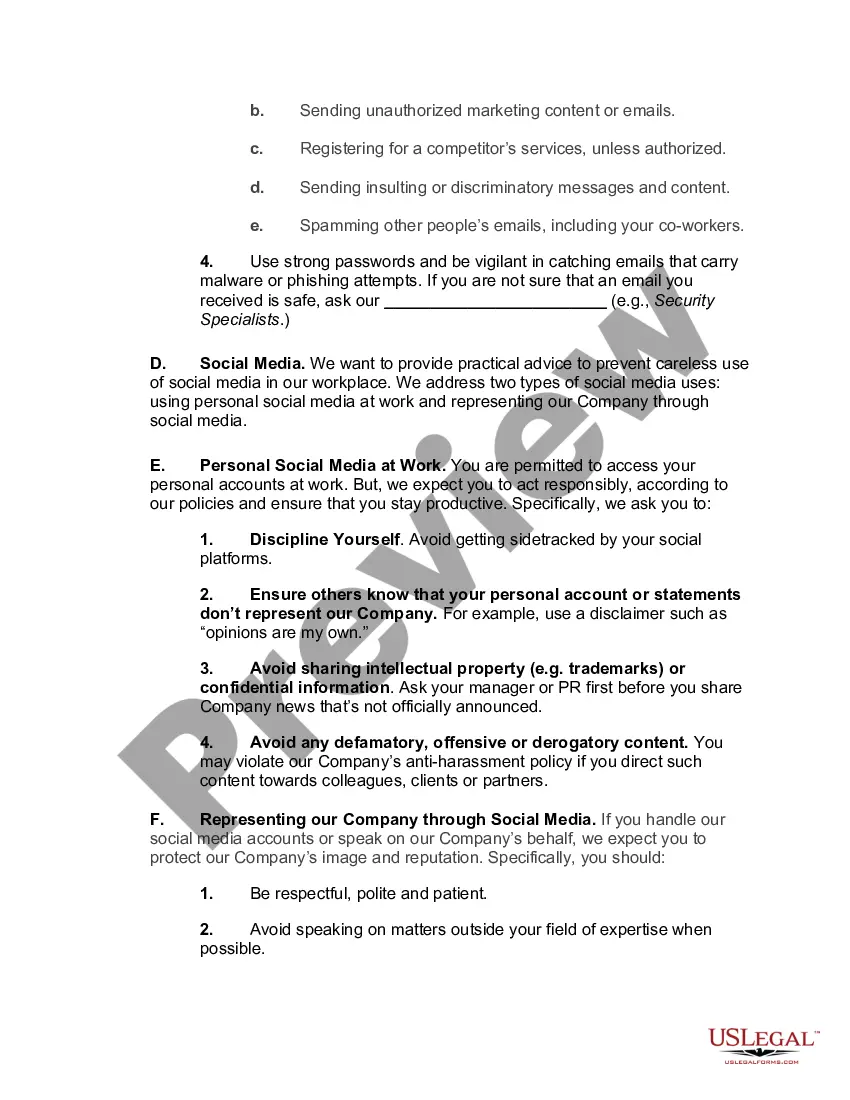
- Social media usage policies, both personal and official.
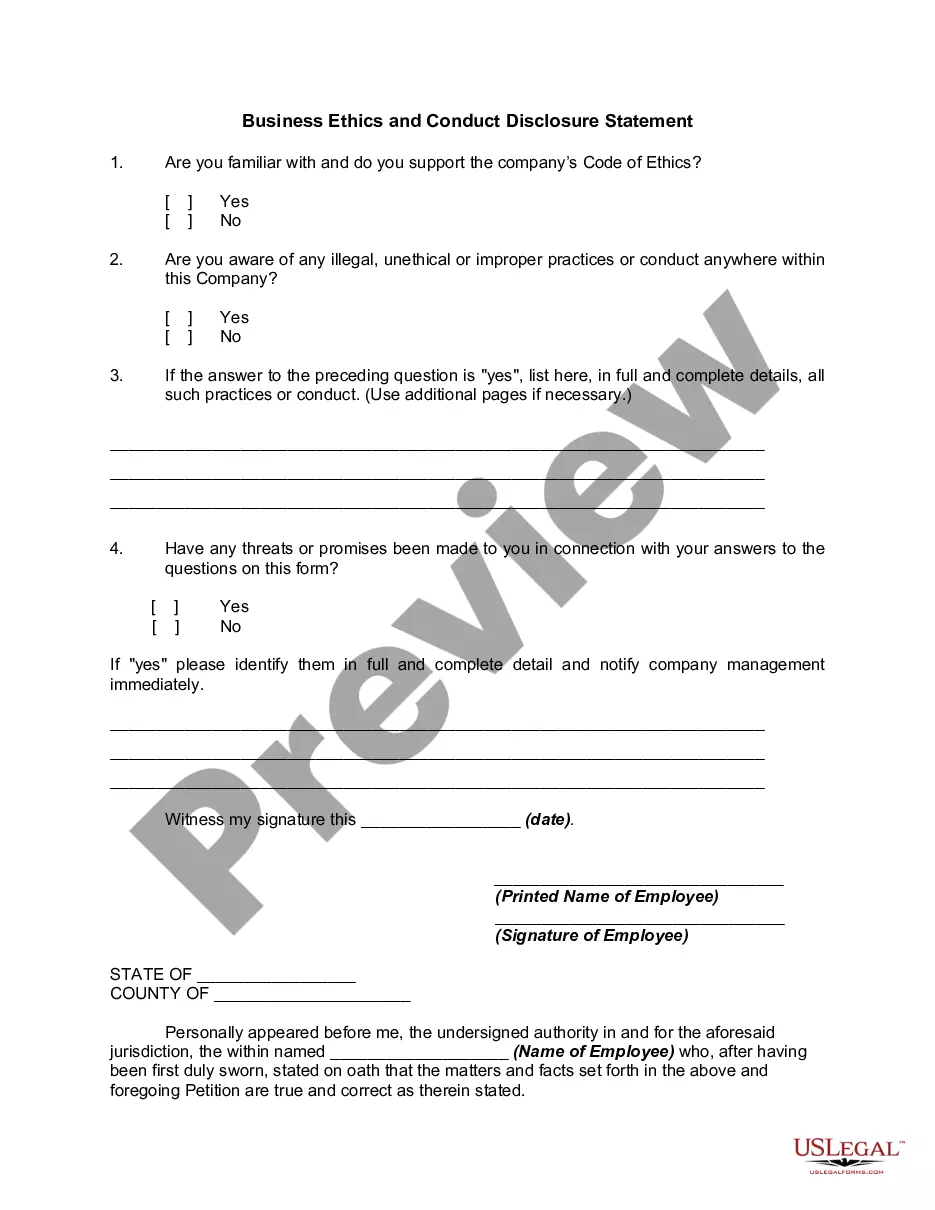
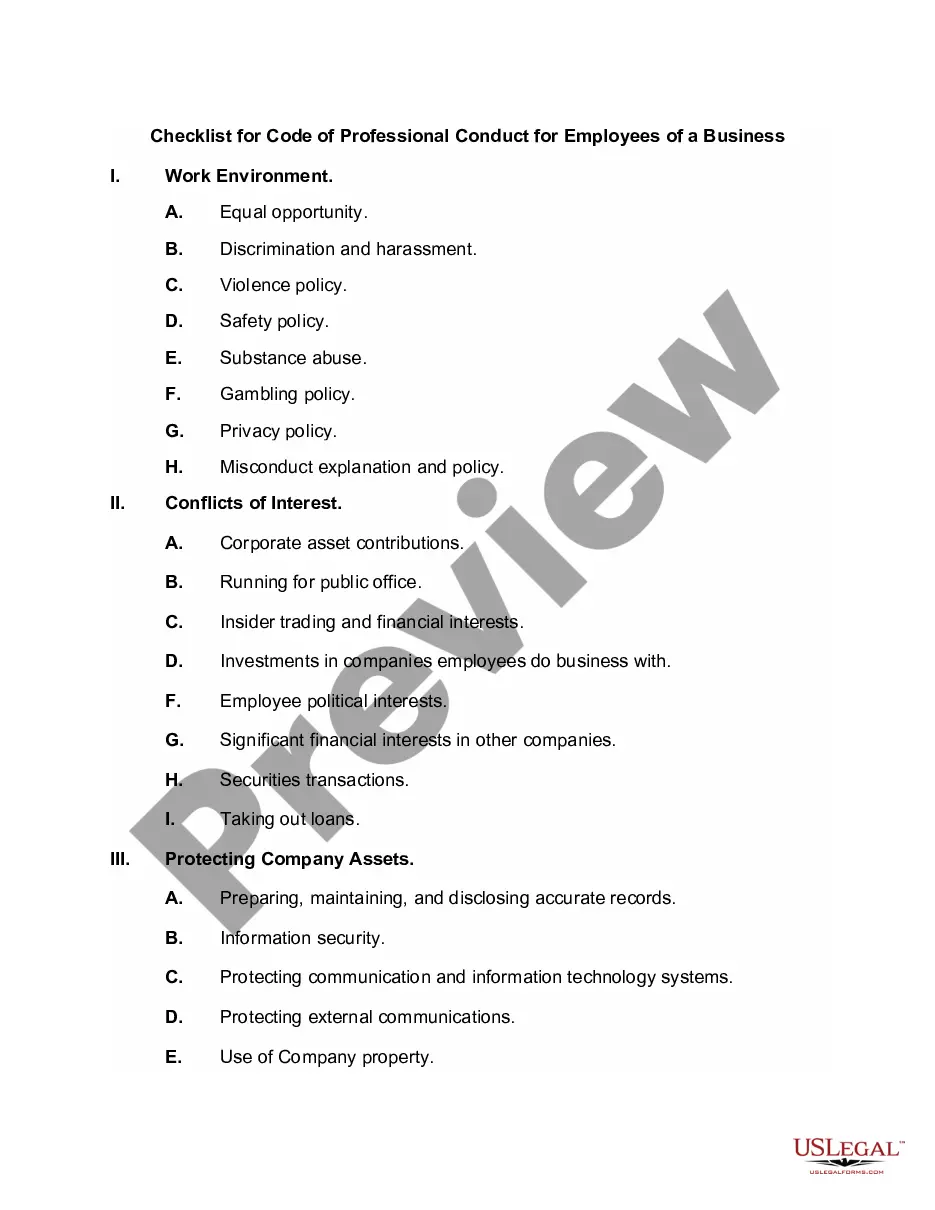
- Protocols for dealing with conflicts of interest and employee relationships.
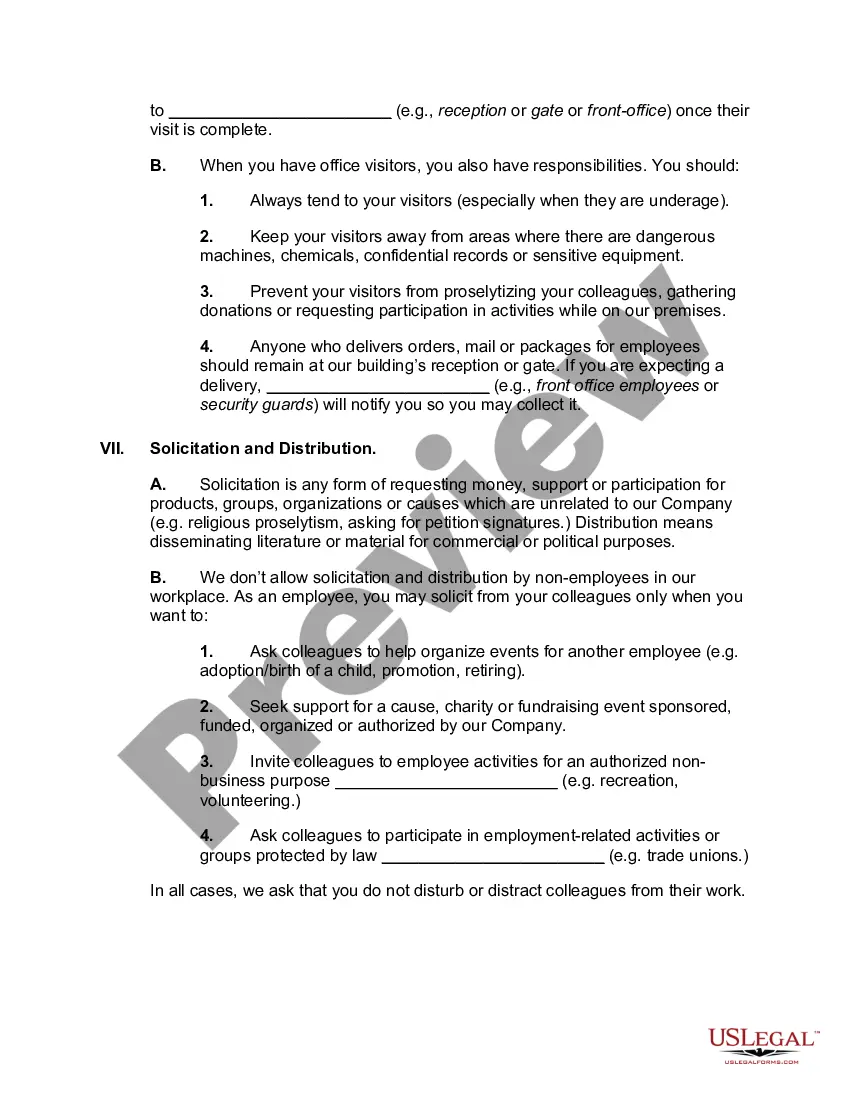
- Guidelines for the employment of relatives and workplace visitors.
When to use this document
This form is essential when implementing or updating an employee code of conduct within a business. It is particularly useful for new employees during onboarding, existing employees when policies are revised, or organizations needing to address specific workplace behavior issues. Use this form to clarify expectations and prevent misunderstandings about acceptable conduct in the workplace.
Who can use this document
- Employers and HR professionals responsible for developing employee policies.
- Managers or team leaders seeking to establish clear behavior expectations.
- New employees required to understand workplace guidelines upon hiring.
- Organizations aiming to maintain a professional and respectful work environment.
How to complete this form
- Identify the company's dress code policy, and clearly outline acceptable attire.
- Establish guidelines for internet and email usage, including security protocols.
- Define rules for appropriate cell phone use to minimize distractions.
- Detail regulations regarding social media interactions, both personal and professional.
- Create sections addressing conflicts of interest and the employment of relatives.
Notarization guidance
Notarization is not commonly needed for this form. However, certain documents or local rules may make it necessary. Our notarization service, powered by Notarize, allows you to finalize it securely online anytime, day or night.
Get your form ready online
Our built-in tools help you complete, sign, share, and store your documents in one place.
Make edits, fill in missing information, and update formatting in US Legal Forms—just like you would in MS Word.
Download a copy, print it, send it by email, or mail it via USPS—whatever works best for your next step.
Sign and collect signatures with our SignNow integration. Send to multiple recipients, set reminders, and more. Go Premium to unlock E-Sign.
If this form requires notarization, complete it online through a secure video call—no need to meet a notary in person or wait for an appointment.
We protect your documents and personal data by following strict security and privacy standards.

Make edits, fill in missing information, and update formatting in US Legal Forms—just like you would in MS Word.

Download a copy, print it, send it by email, or mail it via USPS—whatever works best for your next step.

Sign and collect signatures with our SignNow integration. Send to multiple recipients, set reminders, and more. Go Premium to unlock E-Sign.

If this form requires notarization, complete it online through a secure video call—no need to meet a notary in person or wait for an appointment.

We protect your documents and personal data by following strict security and privacy standards.
Mistakes to watch out for
- Not tailoring the code of conduct to the specific workplace culture.
- Failing to communicate the policy effectively to all employees.
- Omitting important issues such as social media guidelines or workplace harassment.
- Neglecting to regularly review and update the code as needed.
Why complete this form online
- Convenient access to download and customize the Employee Code of Conduct.
- Easy editing capabilities to adapt the form to specific business needs.
- Structured format ensures clarity and consistency in guiding employee behavior.
- Availability of professionally drafted legal language by licensed attorneys.
Legal use & context
- This form is legally recognized as a standard approach to governance in the workplace.
- It helps establish a safe and respectful environment, reducing liabilities related to misconduct.
- Compliance with this code can reinforce organizational culture and ethical standards.
Looking for another form?

Form popularity
FAQ
I. I am an American, fighting in the forces which guard my country and our way of life. II. I will never surrender of my own free will. III. If I am captured I will continue to resist by all means available. IV. If I become a prisoner of war, I will keep faith with my fellow prisoners. V. VI.
Specifically, Article II is the following: I will never surrender of my own free will.The responsibility and authority of a commander never extend to the surrender of command, even if isolated, cut off, or surrounded, while the unit has a reasonable power to resist, break out, or evade to rejoin friendly forces.
Company values. Company values are your code of conduct's foundation. Respecting others. Your code of conduct policy should explain what constitutes appropriate and inappropriate behavior in the workplace. Reporting misconduct. Violations and discipline.
An example of conduct is to lead a meeting. An example of conduct is to lead an orchestra. To direct the course of; manage or control. A police officer who conducts traffic; a scientist who conducts experiments.
Company's values. Employee behaviors. Dress code. Tardiness/absenteeism. Leave policy. Employee break policy. Conflicts of interest. Communication.
A code of conduct defines how a company's employees should act on a day-to-day basis. It reflects the organization's daily operations, core values and overall company culture. As a result, every code of conduct is unique to the organization it represents.
The Code of Conduct applies to all members of the U. S. Armed Forces, at all times. There are six (6) articles in the Code of Conduct. The Code of Conduct was established 17 August, 1955 by President Eisenhower.
The fifth article of the Code of Conduct reads, When questioned, should I become a prisoner of war, I am required to give name, rank, service number and date of birth. I will evade answering further questions to the utmost of my ability.The Code of Conduct creates a structure for how you are supposed to act.