Indiana Instructions to Personal Representative of Unsupervised Estate - Form PR 00-2 (PDF)Opens a New Window.
What is this form?
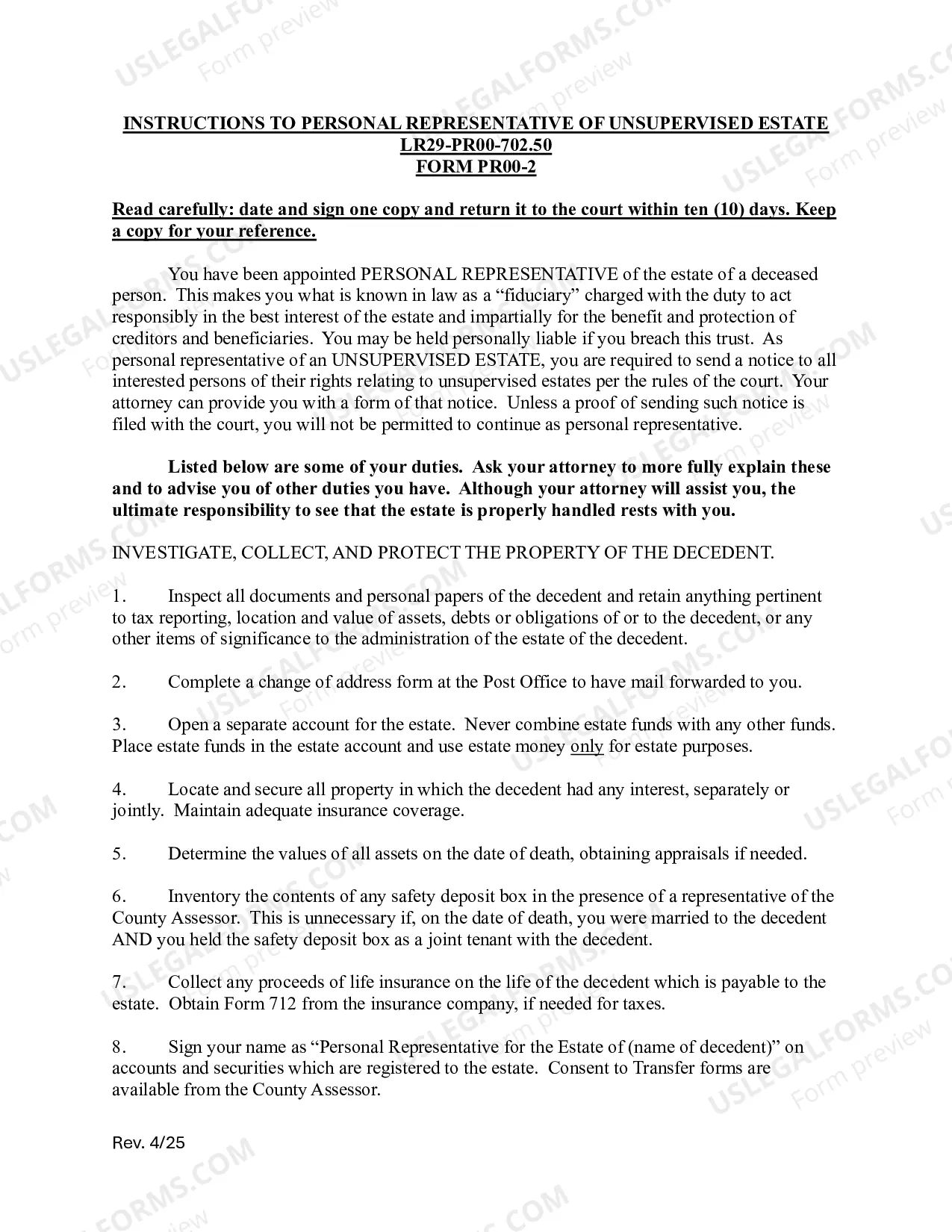
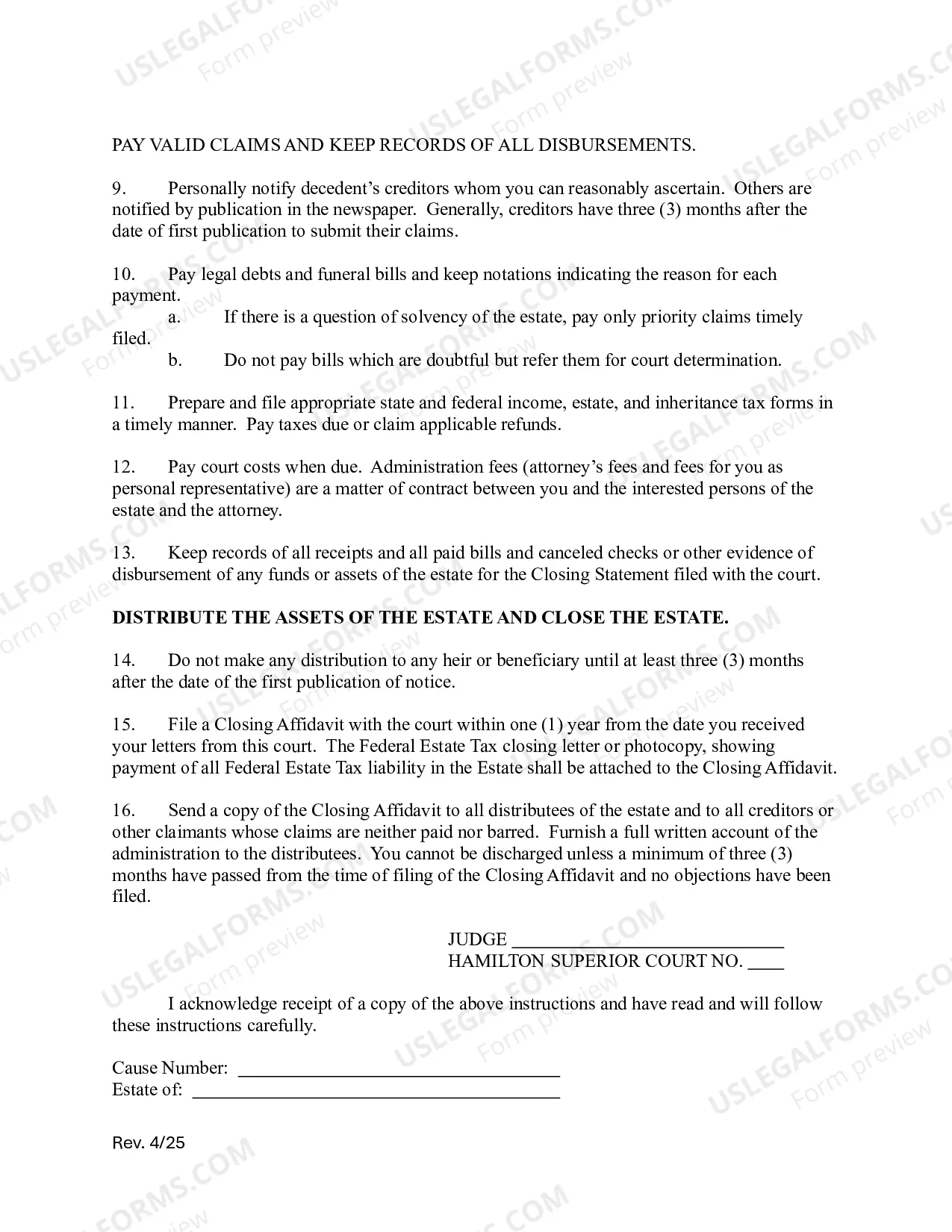
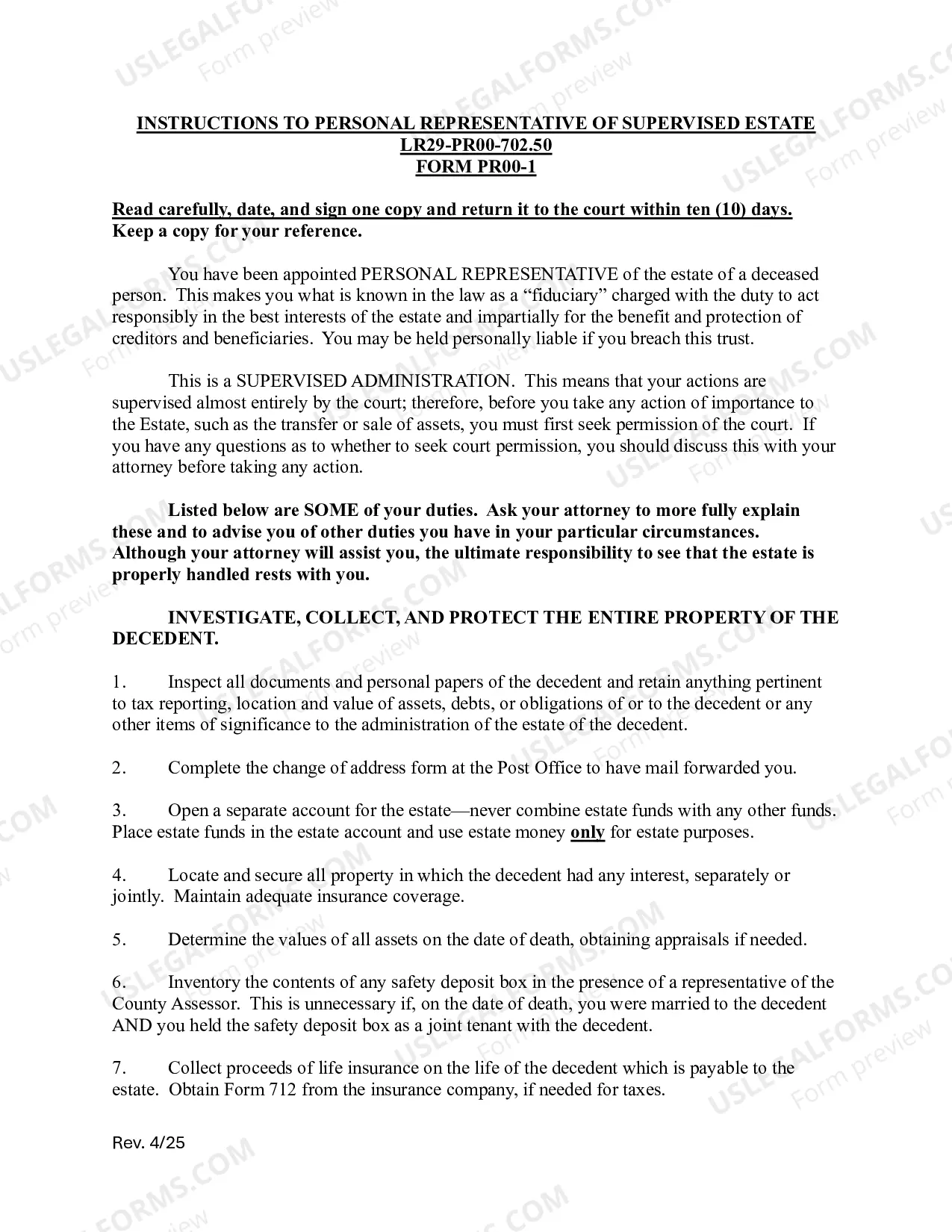
The Instructions to Personal Representative of Unsupervised Estate - Form PR 00-2 provides essential guidelines for individuals appointed as personal representatives of a deceased person's unsupervised estate. As a fiduciary, the personal representative has specific responsibilities and must adhere to legal requirements to manage the estate effectively. This form outlines the key duties of the personal representative, ensuring they understand their role and obligations to creditors and beneficiaries.
Key parts of this document
- Appointment of personal representative and obligations as a fiduciary.
- Requirements for notifying interested persons about their rights.
- Steps for investigating, collecting, and protecting the decedent's property.
- Guidelines for paying valid claims and maintaining accurate records.
- Instructions for distributing assets and formally closing the estate.

When this form is needed
This form should be used when you have been appointed the personal representative of a deceased person's unsupervised estate. It is necessary for ensuring that you understand your legal responsibilities and the steps needed to manage the estate appropriately. This form is applicable in situations where the deceased left a will, appointing you as a personal representative, or where required by state law after someone's passing.
Who needs this form
- Individuals appointed as personal representatives of a deceased person's estate.
- Heirs or beneficiaries tasked with estate management duties.
- Anyone looking for guidance on administering an unsupervised estate effectively.
Completing this form step by step
- Read through the entire instructions carefully to understand your responsibilities.
- Sign and date the acknowledgment section provided in the form.
- Ensure you notify all interested parties as required by the court rules.
- Keep detailed records of all actions taken on behalf of the estate.
- File the signed form with the court within the stipulated timeframe.
Notarization requirements for this form
This form does not typically require notarization unless specified by local law. It is important to verify any additional requirements that may pertain to your jurisdiction regarding the signature of the personal representative.
Get your form ready online
Our built-in tools help you complete, sign, share, and store your documents in one place.
Make edits, fill in missing information, and update formatting in US Legal Forms—just like you would in MS Word.
Download a copy, print it, send it by email, or mail it via USPS—whatever works best for your next step.
Sign and collect signatures with our SignNow integration. Send to multiple recipients, set reminders, and more. Go Premium to unlock E-Sign.
If this form requires notarization, complete it online through a secure video call—no need to meet a notary in person or wait for an appointment.
We protect your documents and personal data by following strict security and privacy standards.

Make edits, fill in missing information, and update formatting in US Legal Forms—just like you would in MS Word.

Download a copy, print it, send it by email, or mail it via USPS—whatever works best for your next step.

Sign and collect signatures with our SignNow integration. Send to multiple recipients, set reminders, and more. Go Premium to unlock E-Sign.

If this form requires notarization, complete it online through a secure video call—no need to meet a notary in person or wait for an appointment.

We protect your documents and personal data by following strict security and privacy standards.
Typical mistakes to avoid
- Failing to notify all interested persons promptly.
- Mixing personal and estate funds instead of maintaining a separate estate account.
- Not keeping adequate records of disbursements and payments.
- Distributing assets before the appropriate waiting period has passed.
Advantages of online completion
- Convenient access to the form anytime and anywhere.
- Editable PDF format allows customization to your specific situation.
- Easy download and printing for court submission.
- Access to legal templates drafted by licensed attorneys, ensuring legal compliance.
Looking for another form?


Form popularity
FAQ
Is Probate Required in Indiana? Any estate worth more than $50,000 is subject to probate in Indiana. Estates worth less than $50,000 transfer ownership to heirs through the small estate administration with a written statement proving entitlement to the assets.
In Indiana, you can make a living trust to avoid probate for virtually any asset you own?real estate, bank accounts, vehicles, and so on. You need to create a trust document (it's similar to a will), naming someone to take over as trustee after your death (called a successor trustee).
Inspect all documents and personal papers of the decedent and retain anything pertinent to tax reporting, location and value of assets, debts or obligations of or to the decedent, or any other items of significance to administration of the estate of the decedent.
Conducting a probate in Indiana commonly takes six months to a year, depending on the situation. It can take longer if there is a court fight over the will (which is rare) or unusual assets or debts that complicate matters.
Unsupervised administration is conducted by personal representatives who operate without court supervision. It is typically authorized pursuant to the decedent's will, although heirs and other interested parties can request unsupervised administration if it is not provided by will and if the estate is solvent.
With unsupervised administration, the Personal Representative of the estate can carry out his or her duties without obtaining court approval for things like selling assets or dealing with inheritances and taxes. With supervised administration, the probate court must approve all actions taken.
With unsupervised administration, the Personal Representative of the estate can carry out his or her duties without obtaining court approval for things like selling assets or dealing with inheritances and taxes. With supervised administration, the probate court must approve all actions taken.