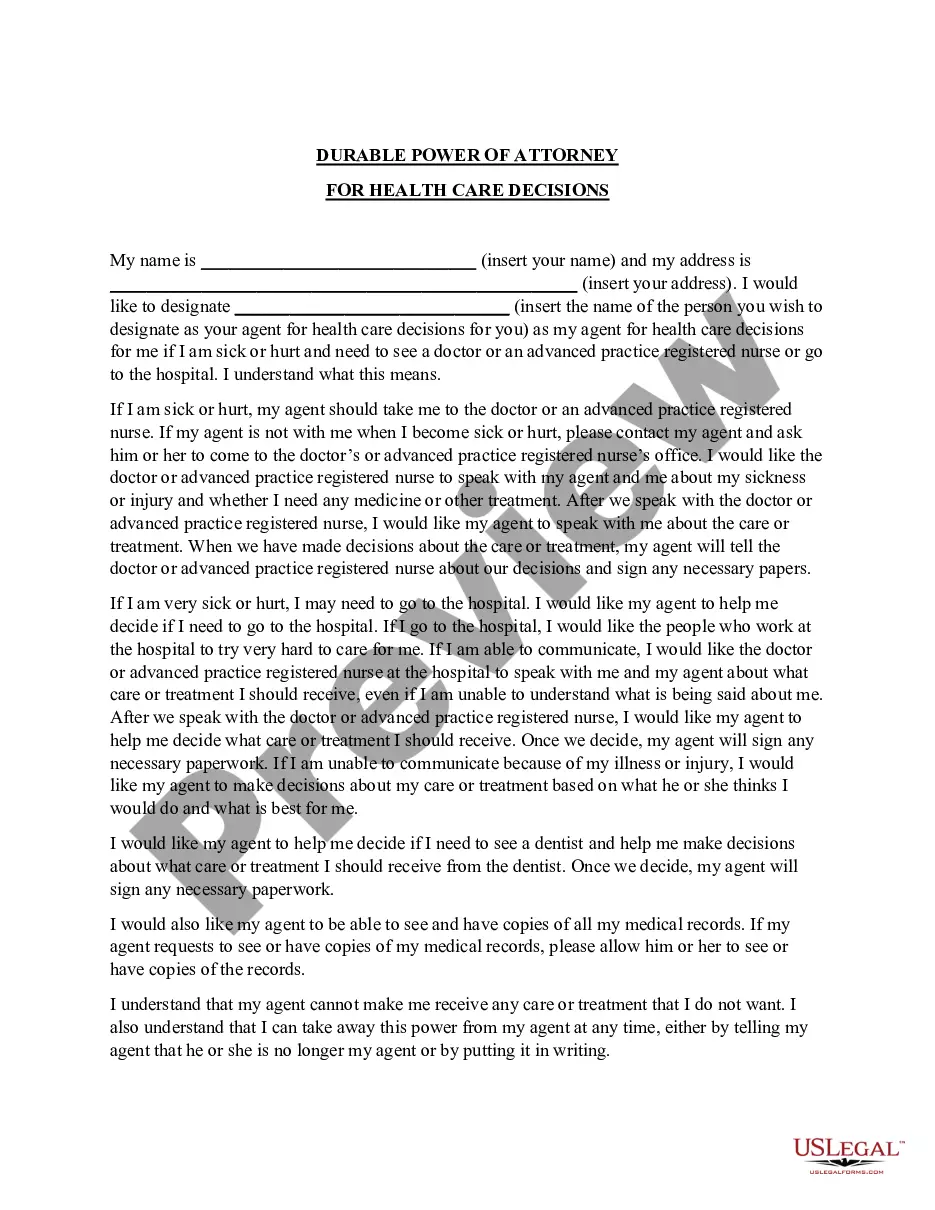
South Carolina Quitclaim Deed - Eight 8 Grantors to an individual Grantee
About this form
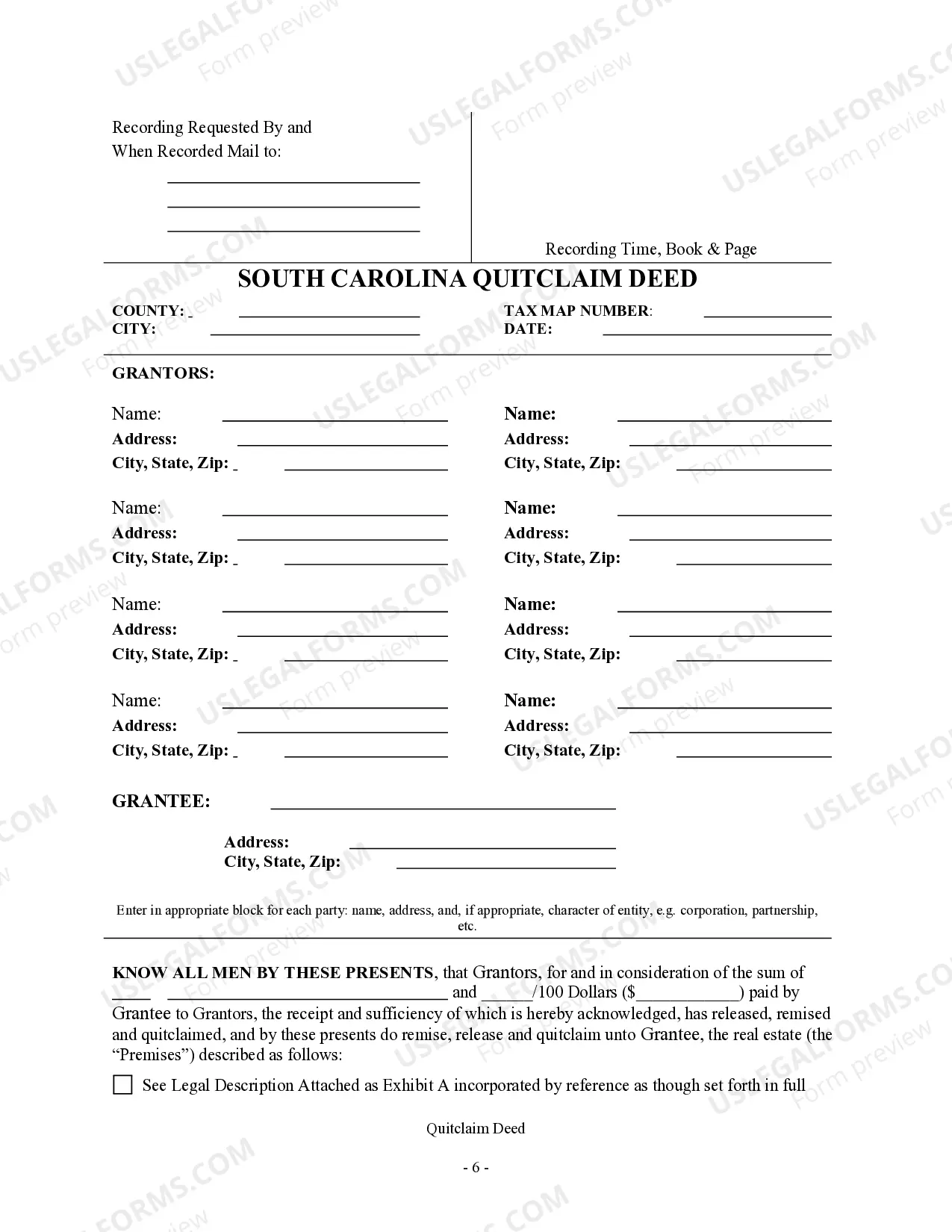
The Quitclaim Deed - Eight Grantors to an individual Grantee is a legal document used to transfer property ownership from multiple parties (eight Grantors) to a single recipient (the Grantee). Unlike a warranty deed, a quitclaim deed does not guarantee that the property is free from liens or other claims; it simply conveys whatever interest the Grantors have in the property. This form is essential for efficiently transferring property interests, especially in situations involving multiple owners or informal family arrangements.
Key parts of this document
- Identification of the Grantors and Grantee
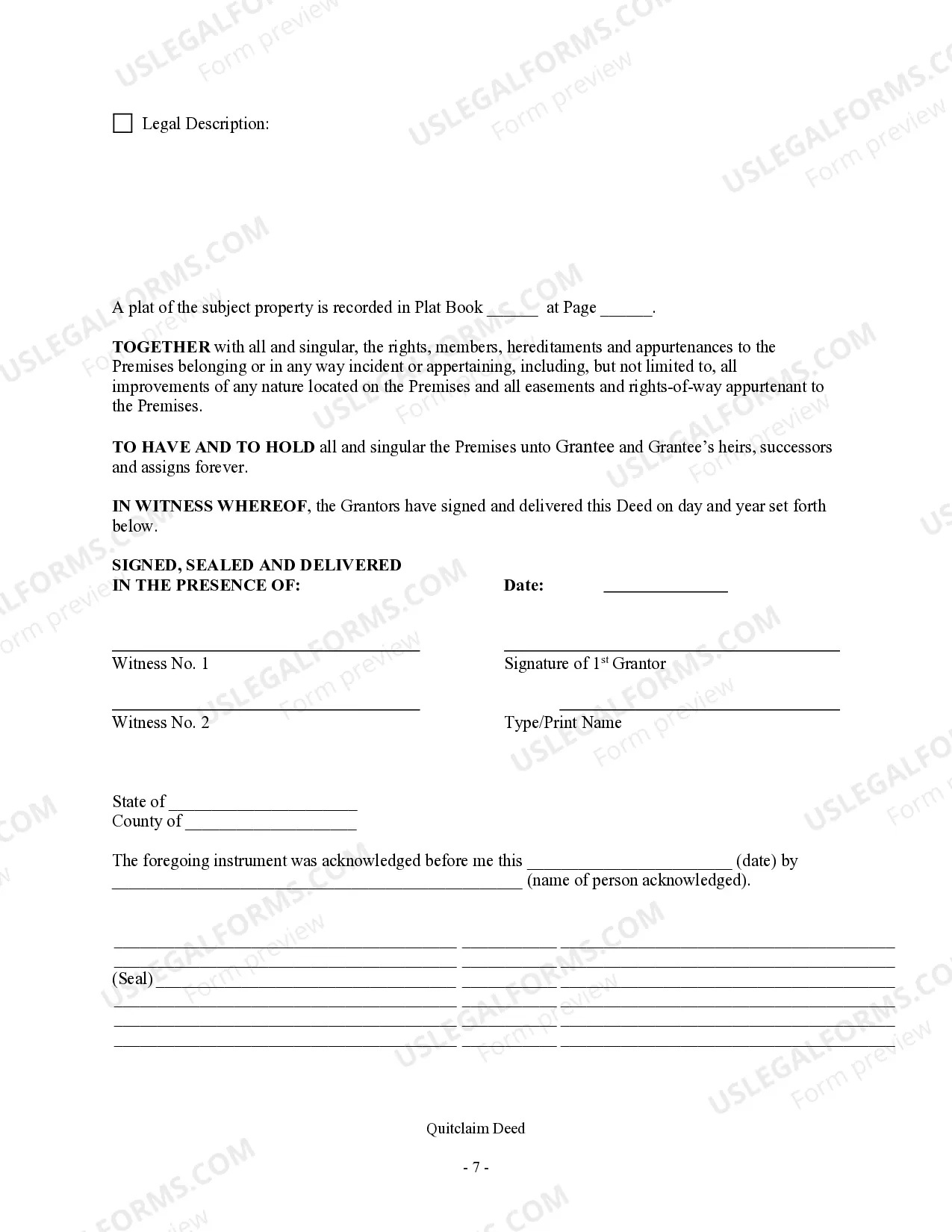
- Legal description of the property being conveyed
- Date of execution
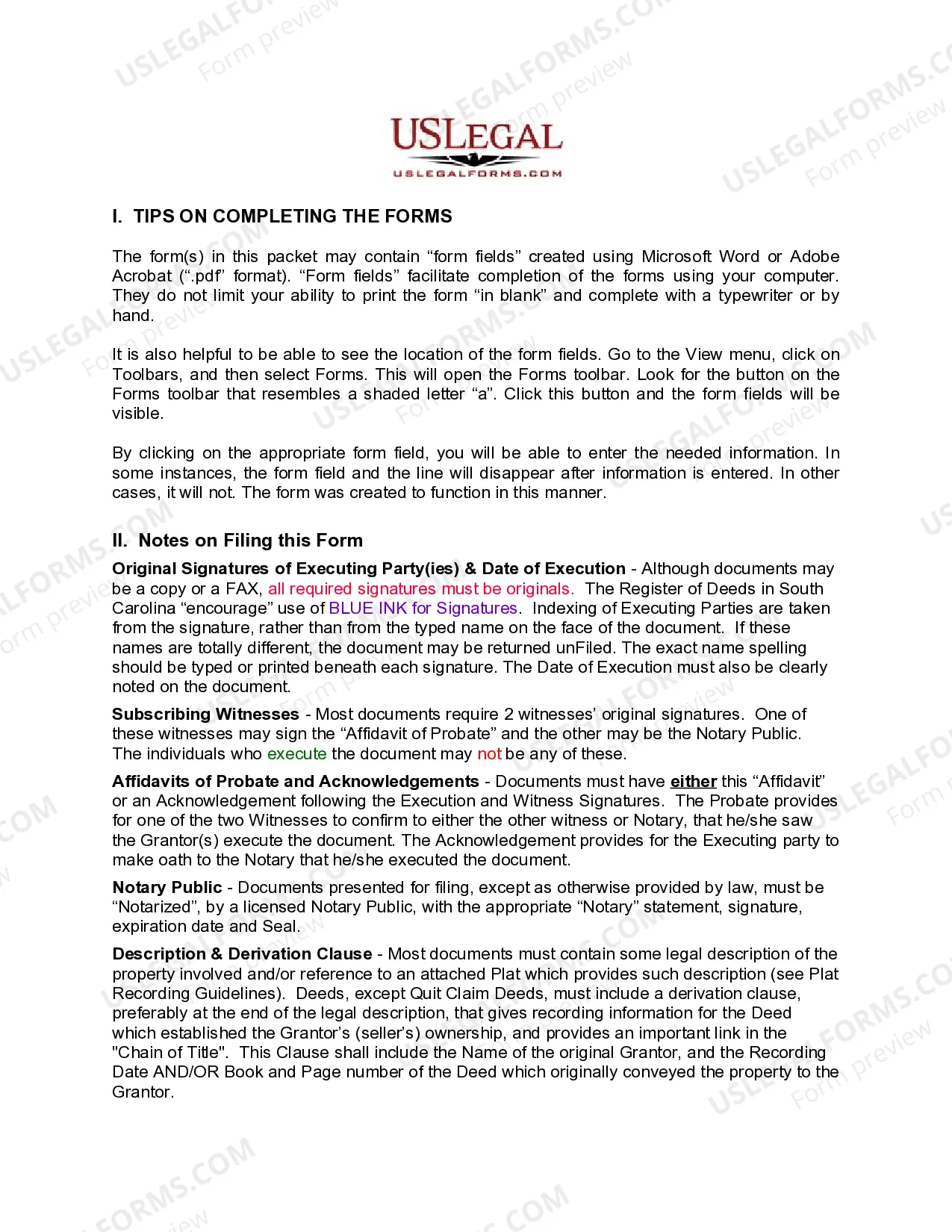
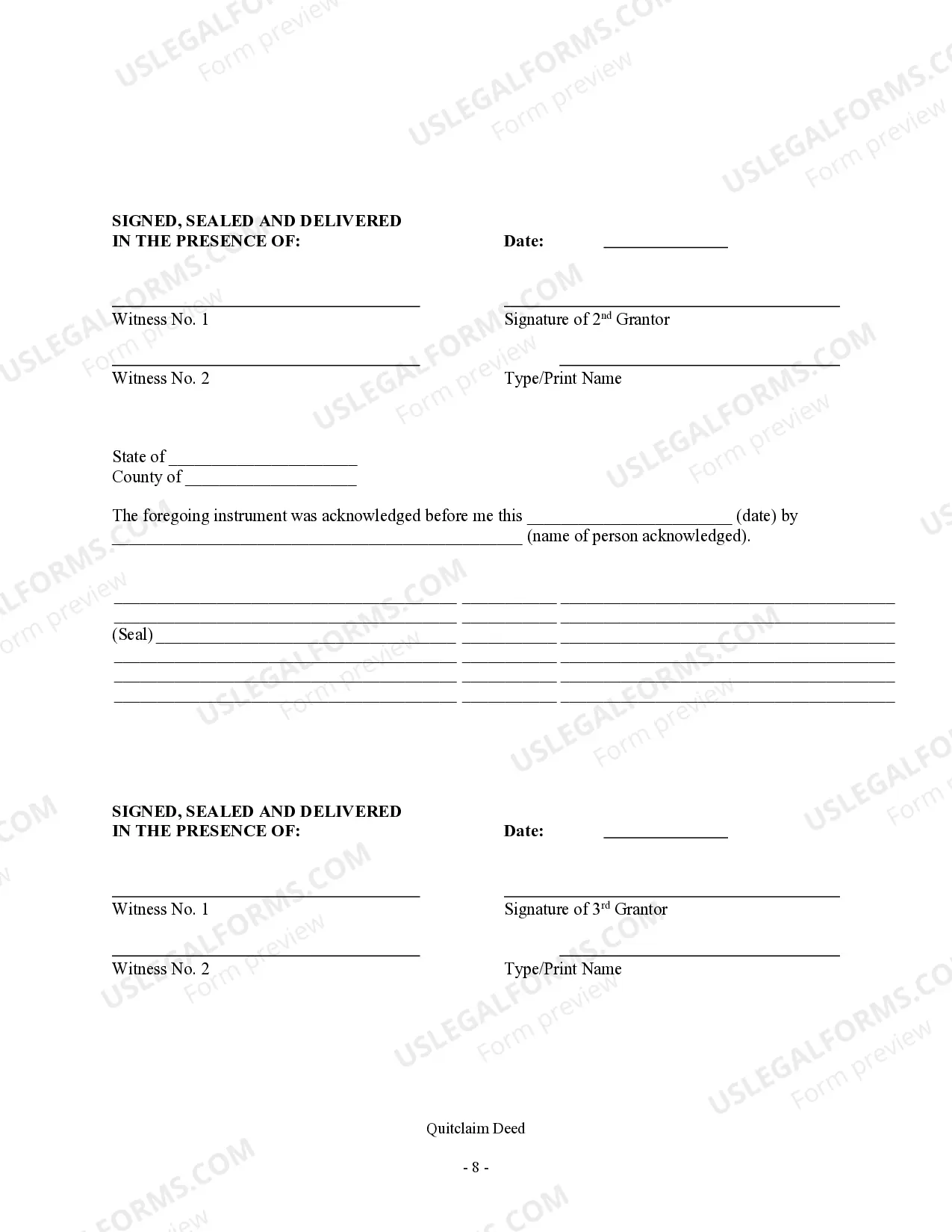
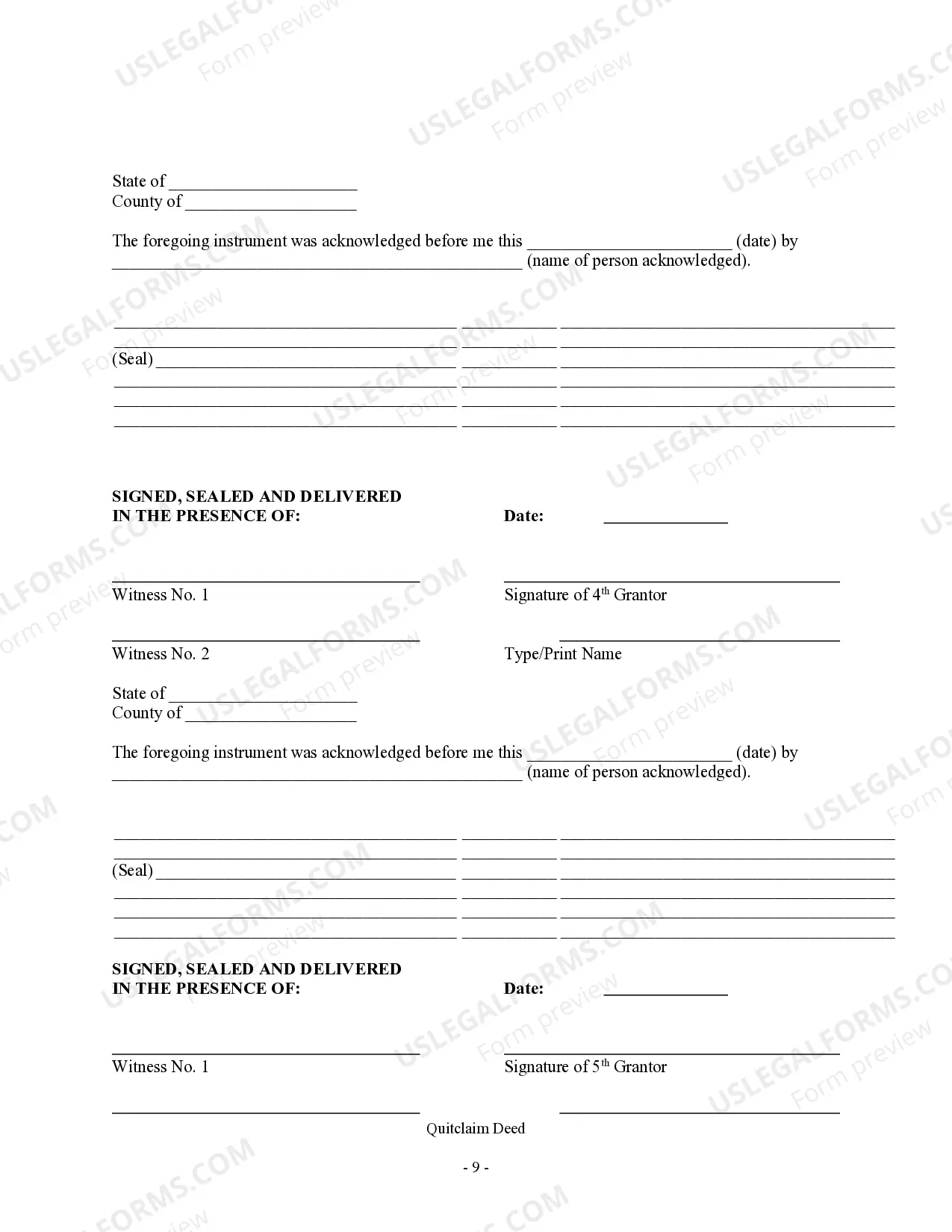
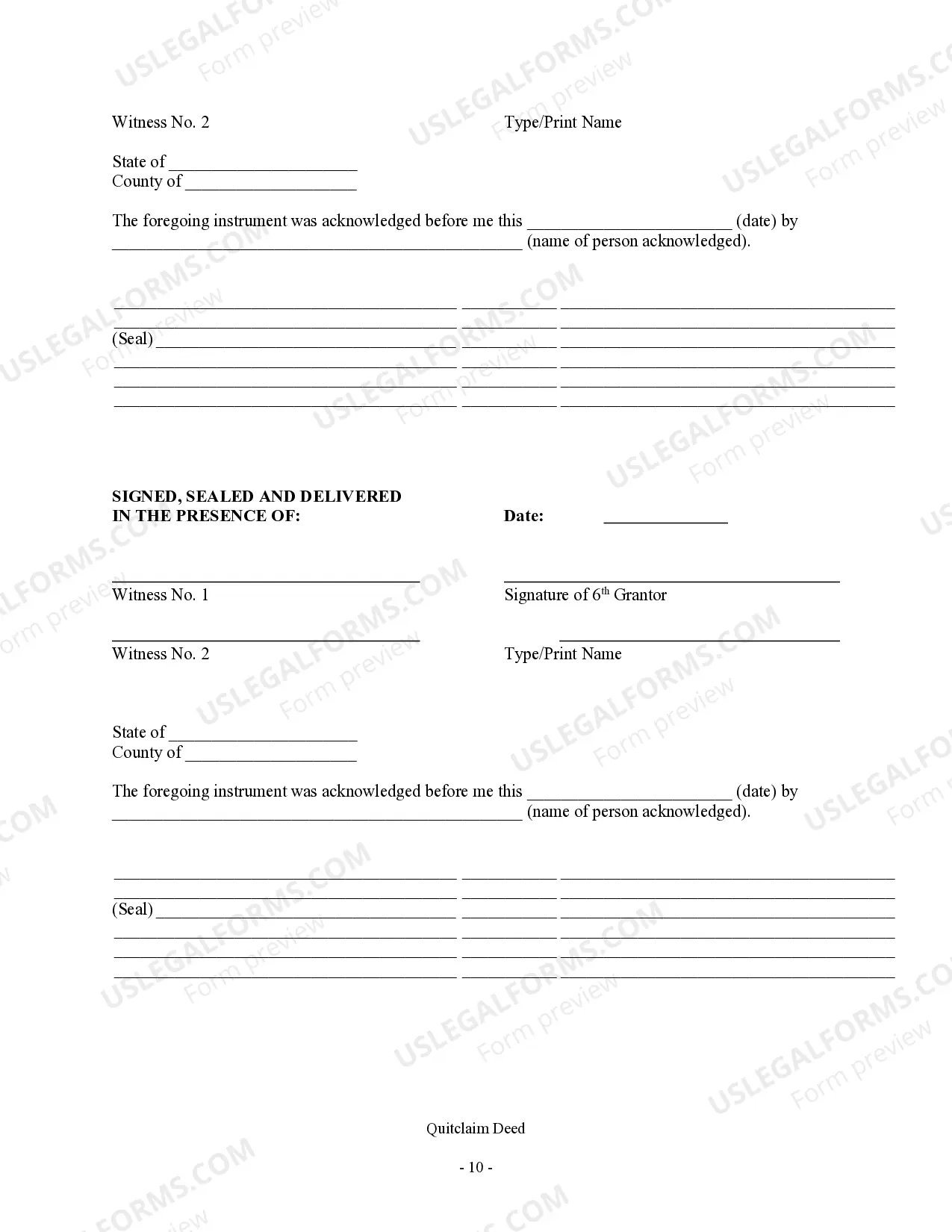
- Signatures of all Grantors, preferably in blue ink
- Notarization by a licensed notary public
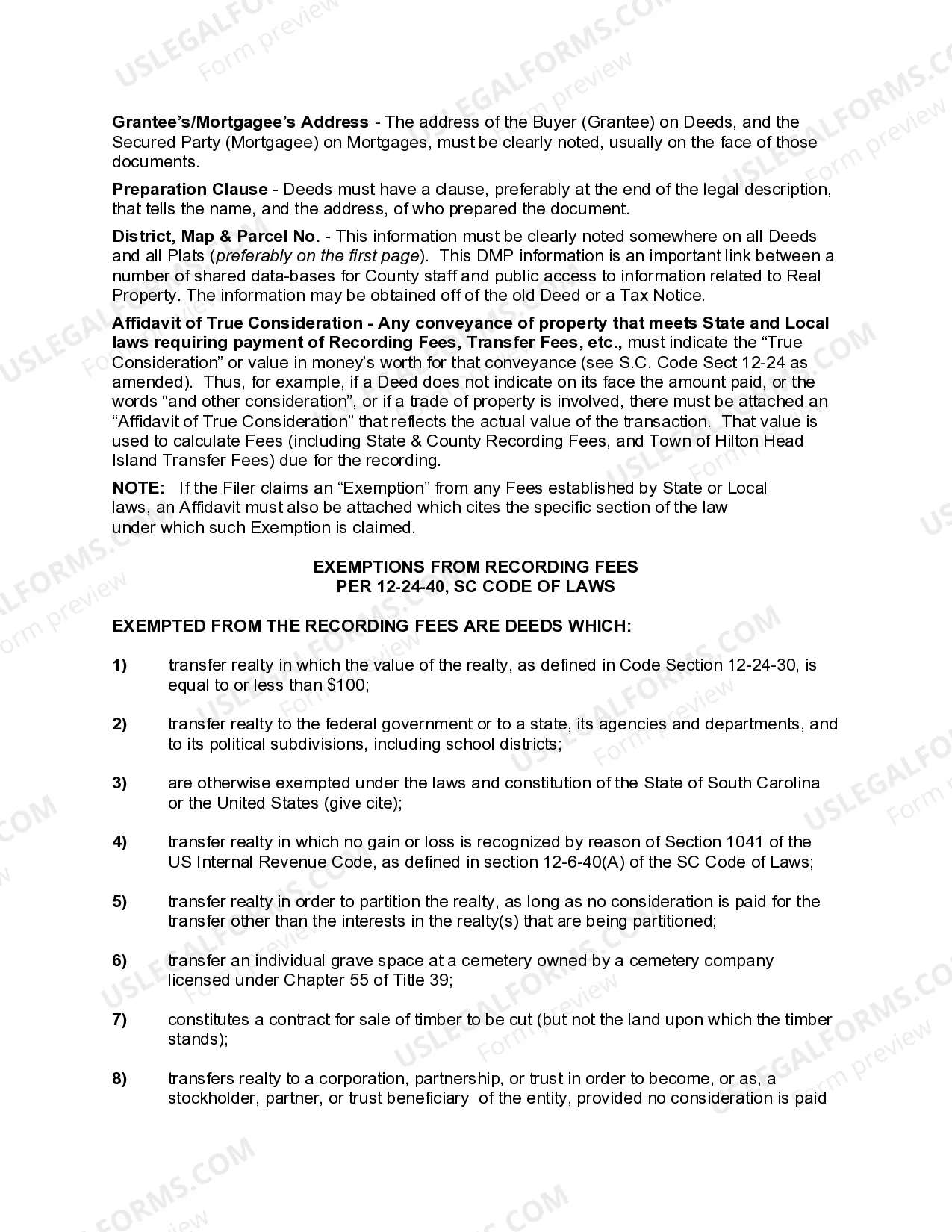
- Affidavit of True Consideration detailing the property's value






When to use this document
This quitclaim deed is typically used when multiple individuals want to transfer their interests in a property to one person. Situations may include family transfers, gift transfers, or when clearing titles in estate cases. It's useful when there is a clear intent among Grantors to relinquish their interests without warranties regarding the title's quality.
Who needs this form
- Property owners who wish to transfer their interests to a single individual
- Individuals involved in estate planning or settling estates
- Family members conducting property transfers among themselves
- Those needing to simplify property ownership structures
How to prepare this document
- Identify all Grantors and the Grantee, providing their full legal names.
- Enter the legal description of the property being transferred.
- Include the date of execution at the appropriate section of the deed.
- Gather original signatures from all Grantors and ensure they are notarized.
- Complete the Affidavit of True Consideration detailing the value of the transfer.
Does this document require notarization?
Yes, this form must be notarized to be legally valid. It is essential to have a licensed notary public witness the signing of the deed. U.S. Legal Forms offers integrated online notarization services that are available 24/7, allowing for secure video calls and ensuring that your document is properly notarized without the need to travel.
Get your form ready online
Our built-in tools help you complete, sign, share, and store your documents in one place.
Make edits, fill in missing information, and update formatting in US Legal Forms—just like you would in MS Word.
Download a copy, print it, send it by email, or mail it via USPS—whatever works best for your next step.
Sign and collect signatures with our SignNow integration. Send to multiple recipients, set reminders, and more. Go Premium to unlock E-Sign.
If this form requires notarization, complete it online through a secure video call—no need to meet a notary in person or wait for an appointment.
We protect your documents and personal data by following strict security and privacy standards.

Make edits, fill in missing information, and update formatting in US Legal Forms—just like you would in MS Word.

Download a copy, print it, send it by email, or mail it via USPS—whatever works best for your next step.

Sign and collect signatures with our SignNow integration. Send to multiple recipients, set reminders, and more. Go Premium to unlock E-Sign.

If this form requires notarization, complete it online through a secure video call—no need to meet a notary in person or wait for an appointment.

We protect your documents and personal data by following strict security and privacy standards.
Common mistakes
- Failing to provide original signatures, leading to rejection by the Register of Deeds.
- Inaccurate legal description of the property, which can cause future disputes.
- Not including an Affidavit of True Consideration when required, resulting in additional fees.
- Using different names or misspellings among Grantors, which could invalidate the deed.
Advantages of online completion
- Easy completion using customizable fields allows for quick edits and adjustments.
- Instant download provides immediate access and convenience.
- Forms are drafted in compliance with state laws, reducing the need for additional legal advice.
Legal use & context
- Quitclaim deeds are commonly used for property transfers among family members.
- This form does not protect against any claims on the property, unlike warranty deeds.
- It's crucial to understand that relinquishing property interests through a quitclaim deed may not confer clear title.
Quick recap
- The Quitclaim Deed - Eight Grantors to an individual Grantee is crucial for transferring property among multiple owners.
- Always ensure that the form is completed accurately to avoid processing delays.
- Notarization is required to validate the deed, making it essential to engage a notary public.
- Consider what type of deed best suits your needsâthis does not provide warranties regarding the title.
Looking for another form?
Form popularity
FAQ
If the quitclaim deed requires the signature of all co-owners, the deed is invalid unless all co-owners have signed it and the deed is then delivered to the grantee.If one individual owns real estate and desires to add a co-owner such as a spouse, a quitclaim deed might be used.
A quitclaim deed is dangerous if you don't know anything about the person giving you the property. You should be sure that a person actually has rights to a property before signing it over with a quitclaim deed.
Once you sign a quitclaim deed and it has been filed and recorded with the County Clerks Office, the title has been officially transferred and cannot be easily reversed. In order to reverse this type of transfer, it would require your spouse to cooperate and assist in adding your name back to the title.
Signing the deed For a deed to be valid, the grantor must sign it.The grantee doesn't need to sign the deed for it to be valid; only the grantor needs to sign.
No, in most states, the Grantee is not required to sign the Quitclaim Deed. However, some counties do require that the Quitclaim Deed be signed by the Grantee in addition to the Grantor.
Transfer property quickly and easily using this simple legal form. You can use a quitclaim deed to:transfer property you own by yourself into co-ownership with someone else. change the way owners hold title to the property.
A deed, of course, is a legal document representing property ownership. But you might be wondering if an owner can transfer a deed to another person without a real estate lawyer. The answer is yes. Parties to a transaction are always free to prepare their own deeds.
Quitclaim deeds are most often used to transfer property between family members.Examples include when an owner gets married and wants to add a spouse's name to the title or deed, or when the owners divorce and one spouse's name is removed from the title or deed.
Unlike a general warranty deed, there's no guarantee made as to the ownership. There's no title search completed and no title insurance issued. Lenders wouldn't accept a quitclaim deed being used to purchase a property.