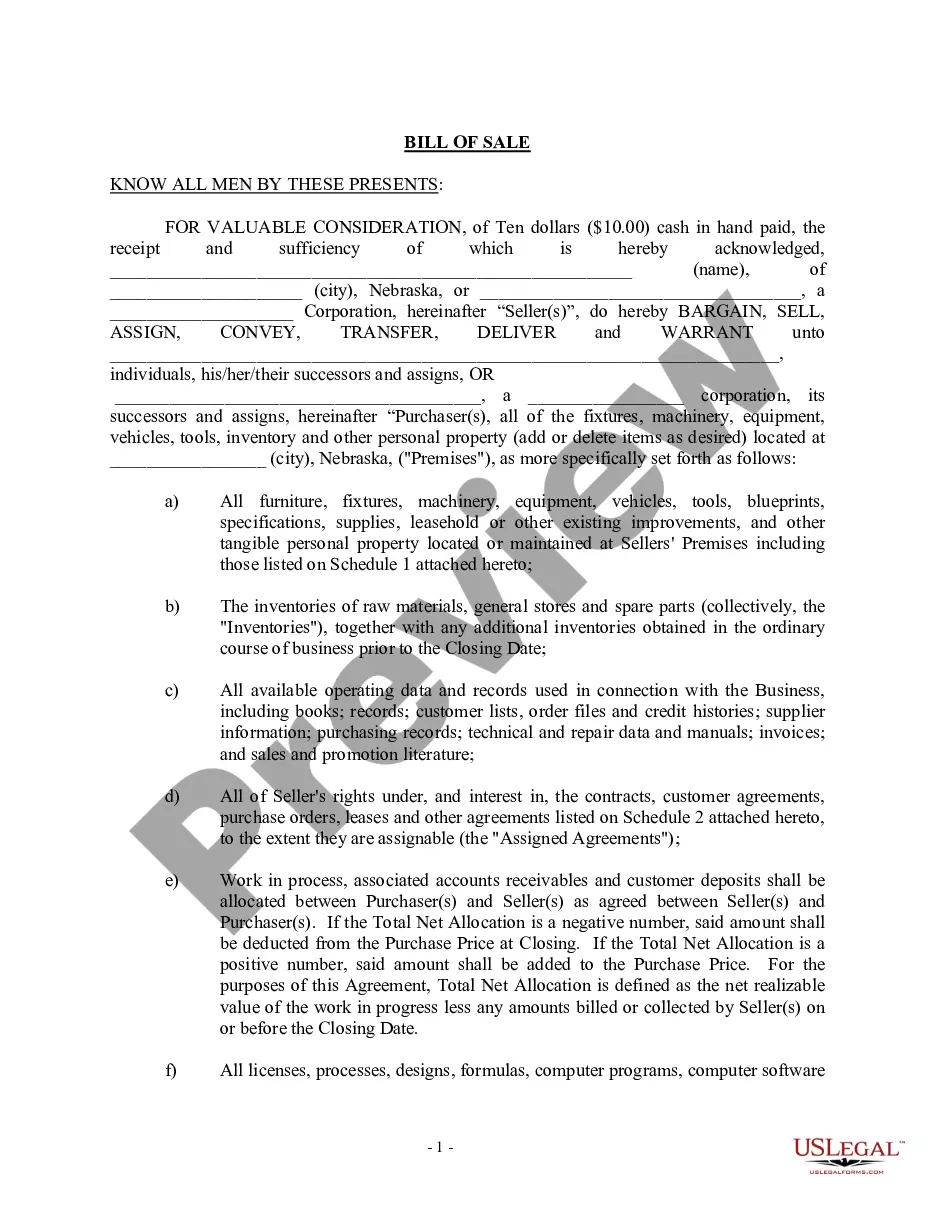
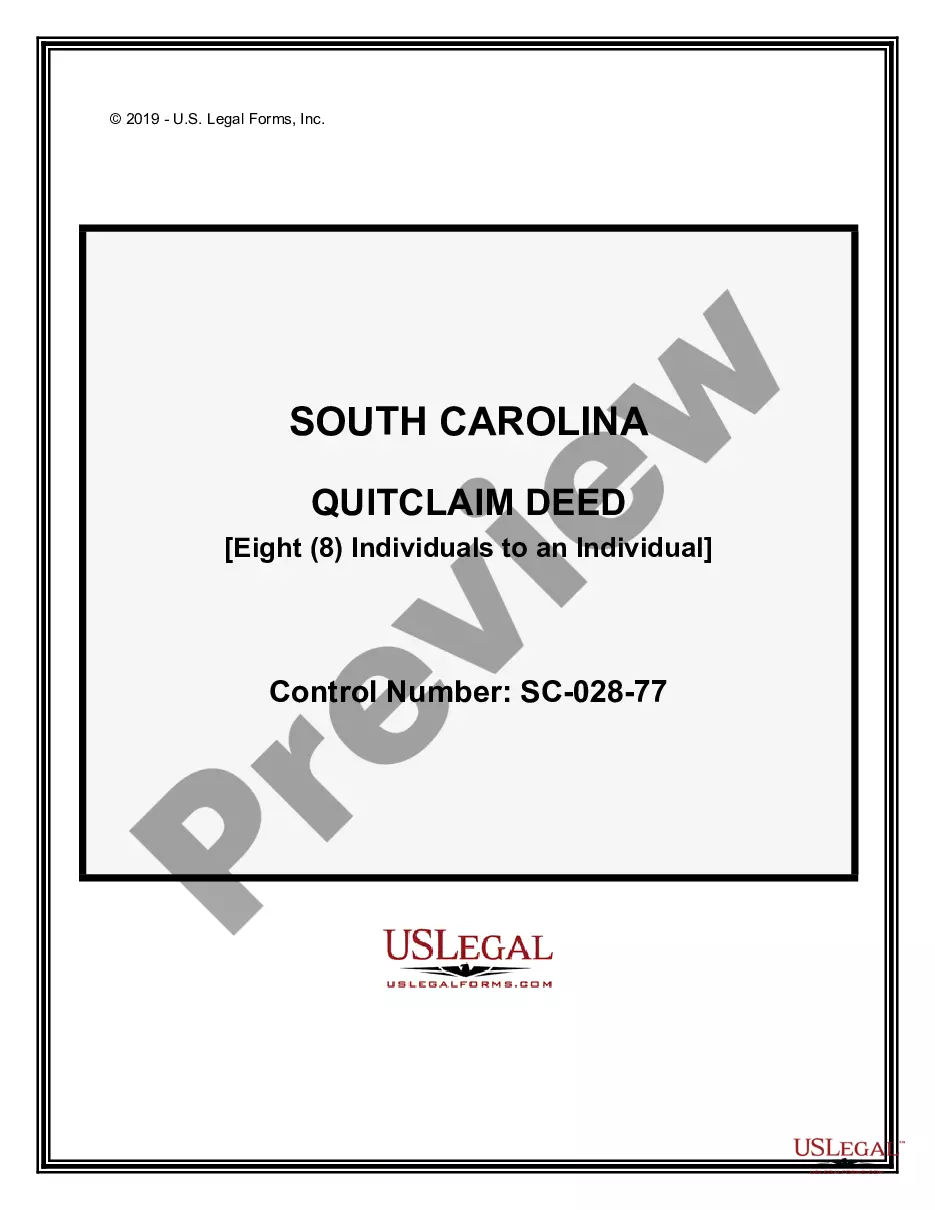
South Carolina Quitclaim Deed - Eight 8 Grantors to an individual Grantee
Understanding this form
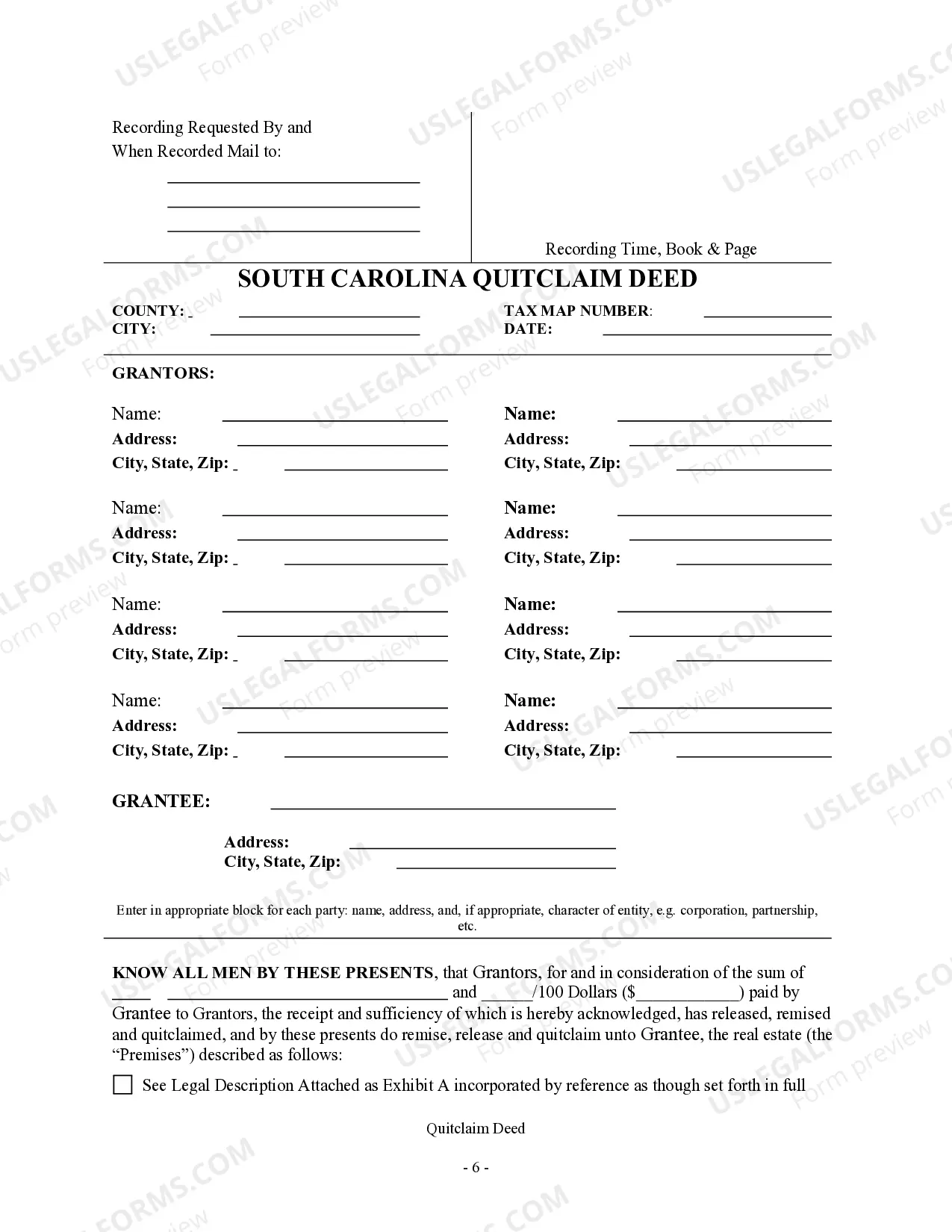
This Quitclaim Deed is a legal document used to transfer property from eight grantors to a single individual grantee. Unlike other types of deeds, a Quitclaim Deed does not guarantee that the grantor holds clear title to the property being transferred. Instead, it conveys whatever interest the grantors may have in the property, making it essential for situations where ownership rights are ambiguous or when family members wish to adjust property ownership among themselves.
What’s included in this form
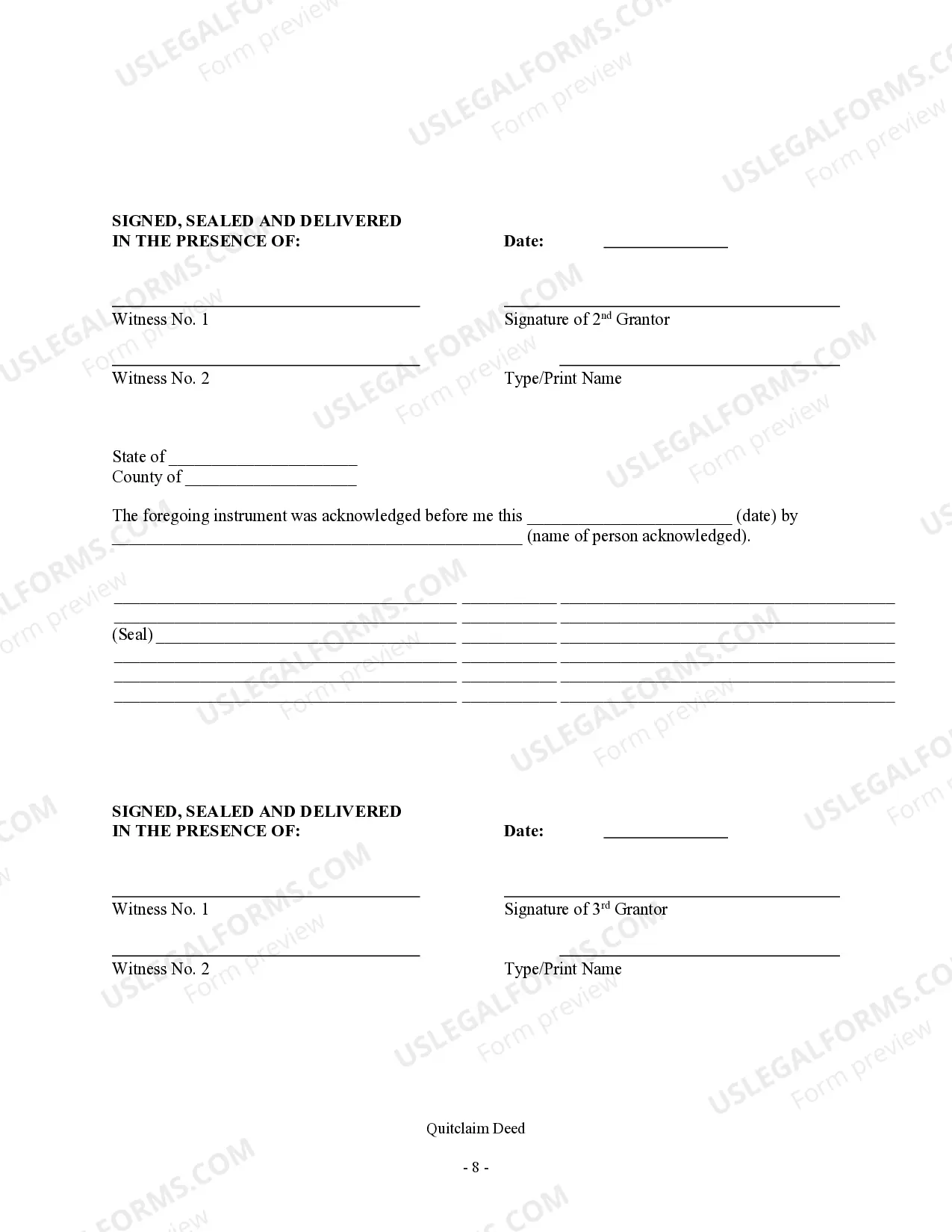
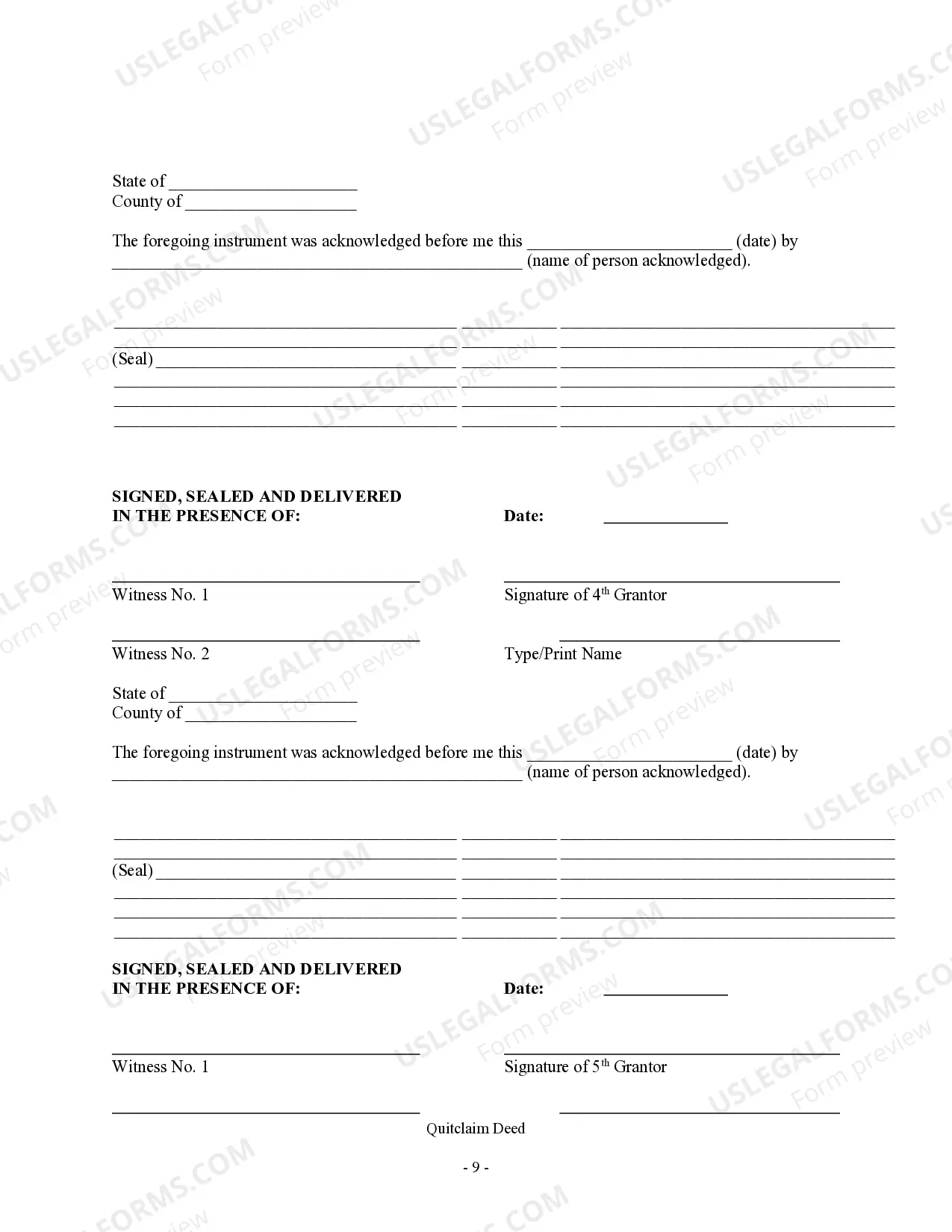
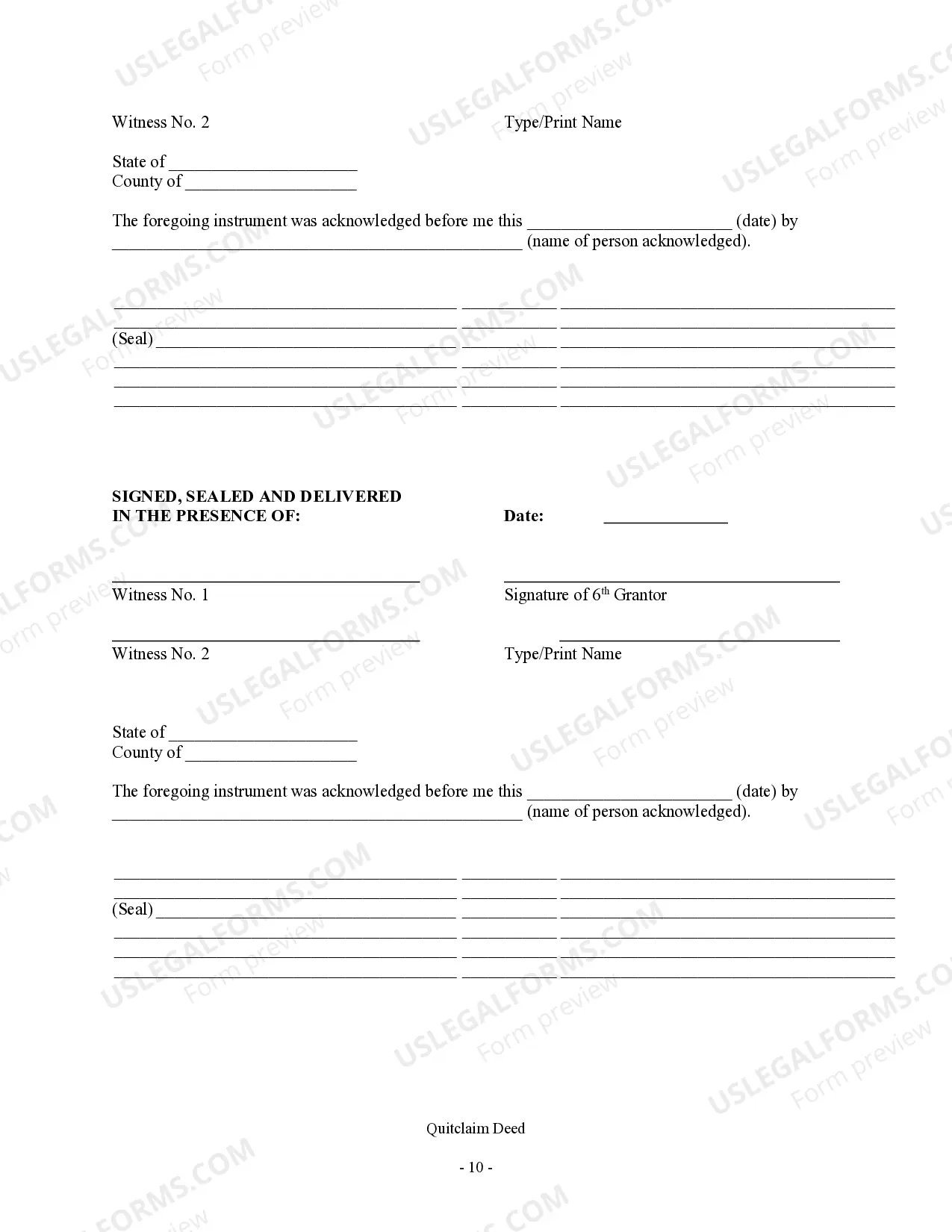
- Names and signatures of the eight grantors.
- Name and address of the individual grantee.
- Legal description of the property being transferred.
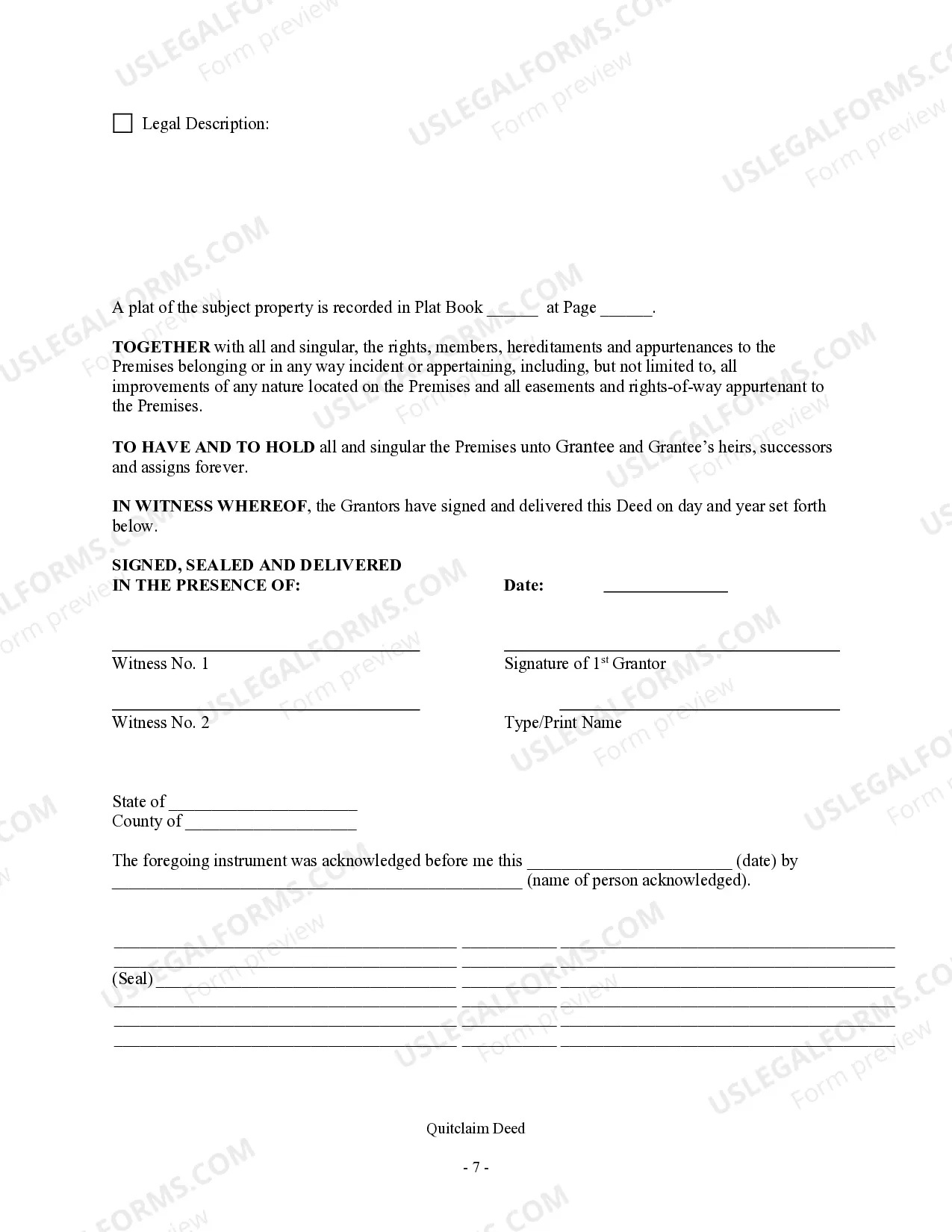
- Notarization section for verifying the authenticity of the signatures.
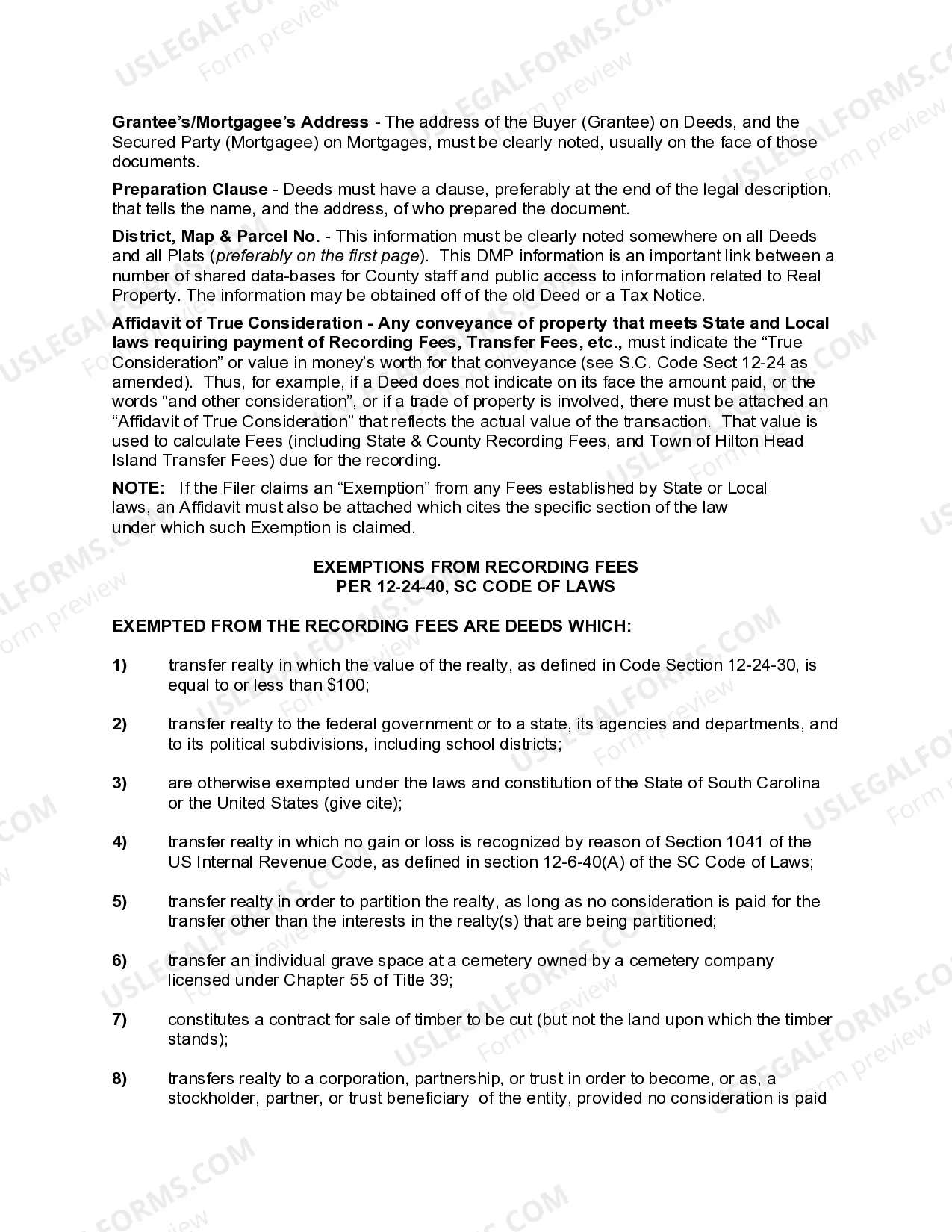
- Affidavit of True Consideration, indicating the value exchanged, if applicable.
- Witness signatures to validate the execution of the deed.






When to use this form
This form is typically used when property owners need to transfer ownership without warranty of title. Common scenarios include: - Family members transferring property among themselves. - Divorced spouses wanting to settle property disputes. - Owners wanting to clarify property titles in situations of inheritance or co-ownership.
Who this form is for
This Quitclaim Deed is suitable for:
- Individuals or family members transferring property rights.
- Grantors who may not have clear title to the property.
- Those seeking a simple way to convey property without a formal sales agreement.
Instructions for completing this form
- Identify and enter the full names of all eight grantors.
- Clearly spell out the name of the grantee and include their address.
- Provide a detailed legal description of the property being conveyed.
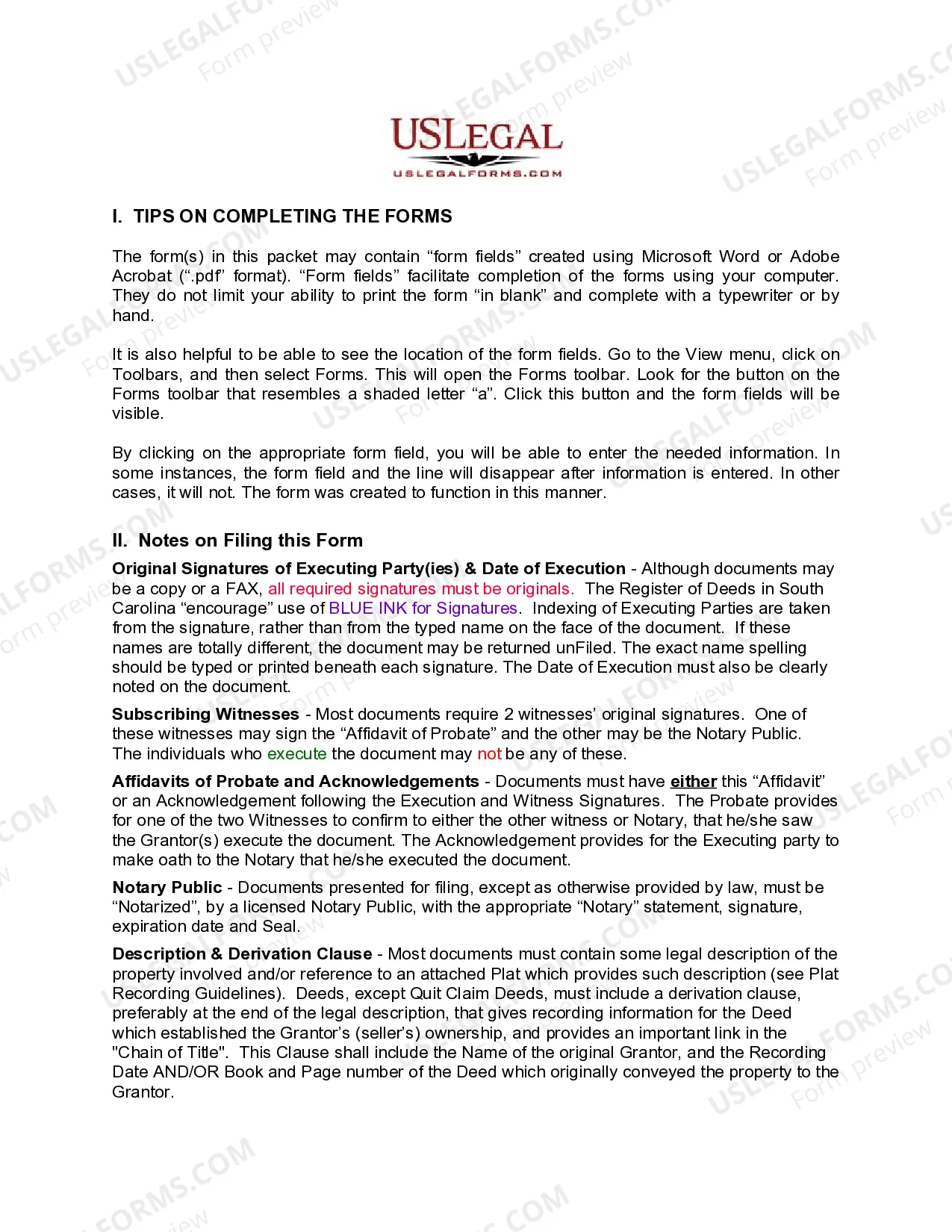
- Sign the deed in blue ink and ensure all grantorsâ signatures are original.
- Complete the notarization section and add witness signatures as required.
- Submit the completed form to the appropriate local authority for recording.
Notarization requirements for this form
This document requires notarization to meet legal standards. US Legal Forms provides secure online notarization powered by Notarize, allowing you to complete the process through a verified video call, available 24/7.
Get your form ready online
Our built-in tools help you complete, sign, share, and store your documents in one place.
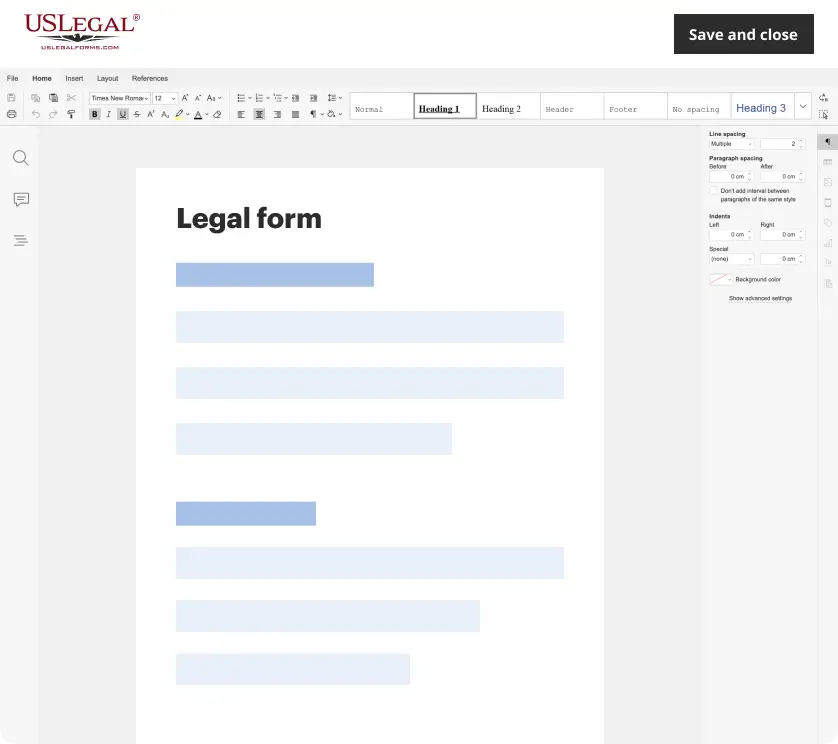
Make edits, fill in missing information, and update formatting in US Legal Forms—just like you would in MS Word.
Download a copy, print it, send it by email, or mail it via USPS—whatever works best for your next step.
Sign and collect signatures with our SignNow integration. Send to multiple recipients, set reminders, and more. Go Premium to unlock E-Sign.
If this form requires notarization, complete it online through a secure video call—no need to meet a notary in person or wait for an appointment.
We protect your documents and personal data by following strict security and privacy standards.
Make edits, fill in missing information, and update formatting in US Legal Forms—just like you would in MS Word.
Download a copy, print it, send it by email, or mail it via USPS—whatever works best for your next step.
Sign and collect signatures with our SignNow integration. Send to multiple recipients, set reminders, and more. Go Premium to unlock E-Sign.

If this form requires notarization, complete it online through a secure video call—no need to meet a notary in person or wait for an appointment.
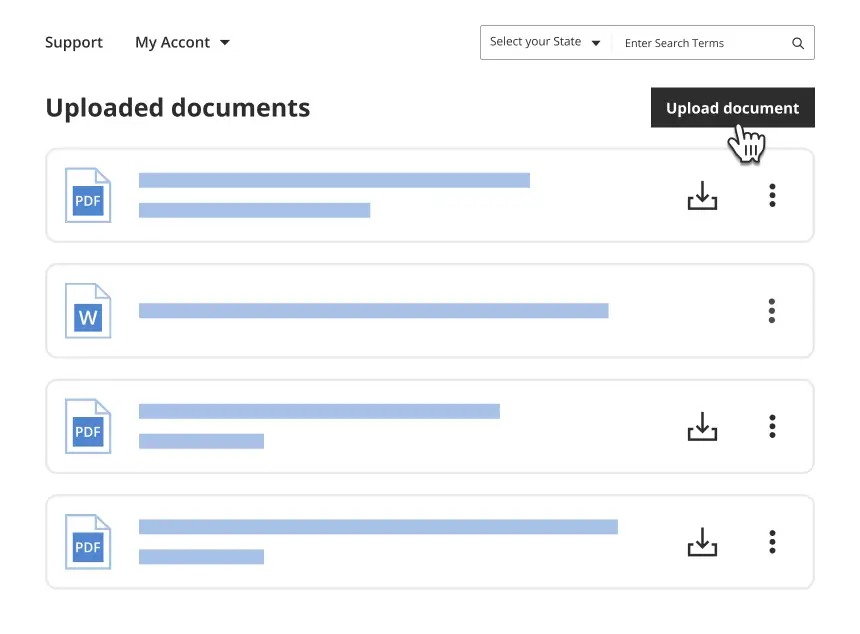
We protect your documents and personal data by following strict security and privacy standards.
Avoid these common issues
- Not providing original signatures from all grantors.
- Failing to include a complete and accurate legal description of the property.
- Leaving out witness signatures or notarization if required by local laws.
- Not explaining the consideration or listing it inaccurately in the Affidavit of True Consideration.
Why complete this form online
- Convenience of filling out the form at your own pace.
- Easy navigation through required fields to ensure completeness.
- Reliable templates drafted by licensed attorneys to ensure compliance with state laws.
Looking for another form?
Form popularity
FAQ
If the quitclaim deed requires the signature of all co-owners, the deed is invalid unless all co-owners have signed it and the deed is then delivered to the grantee.If one individual owns real estate and desires to add a co-owner such as a spouse, a quitclaim deed might be used.
A quitclaim deed is dangerous if you don't know anything about the person giving you the property. You should be sure that a person actually has rights to a property before signing it over with a quitclaim deed.
Once you sign a quitclaim deed and it has been filed and recorded with the County Clerks Office, the title has been officially transferred and cannot be easily reversed. In order to reverse this type of transfer, it would require your spouse to cooperate and assist in adding your name back to the title.
Signing the deed For a deed to be valid, the grantor must sign it.The grantee doesn't need to sign the deed for it to be valid; only the grantor needs to sign.
No, in most states, the Grantee is not required to sign the Quitclaim Deed. However, some counties do require that the Quitclaim Deed be signed by the Grantee in addition to the Grantor.
Transfer property quickly and easily using this simple legal form. You can use a quitclaim deed to:transfer property you own by yourself into co-ownership with someone else. change the way owners hold title to the property.
A deed, of course, is a legal document representing property ownership. But you might be wondering if an owner can transfer a deed to another person without a real estate lawyer. The answer is yes. Parties to a transaction are always free to prepare their own deeds.
Quitclaim deeds are most often used to transfer property between family members.Examples include when an owner gets married and wants to add a spouse's name to the title or deed, or when the owners divorce and one spouse's name is removed from the title or deed.
Unlike a general warranty deed, there's no guarantee made as to the ownership. There's no title search completed and no title insurance issued. Lenders wouldn't accept a quitclaim deed being used to purchase a property.