Nebraska Paternity Law and Procedure Handbook
What is this form?
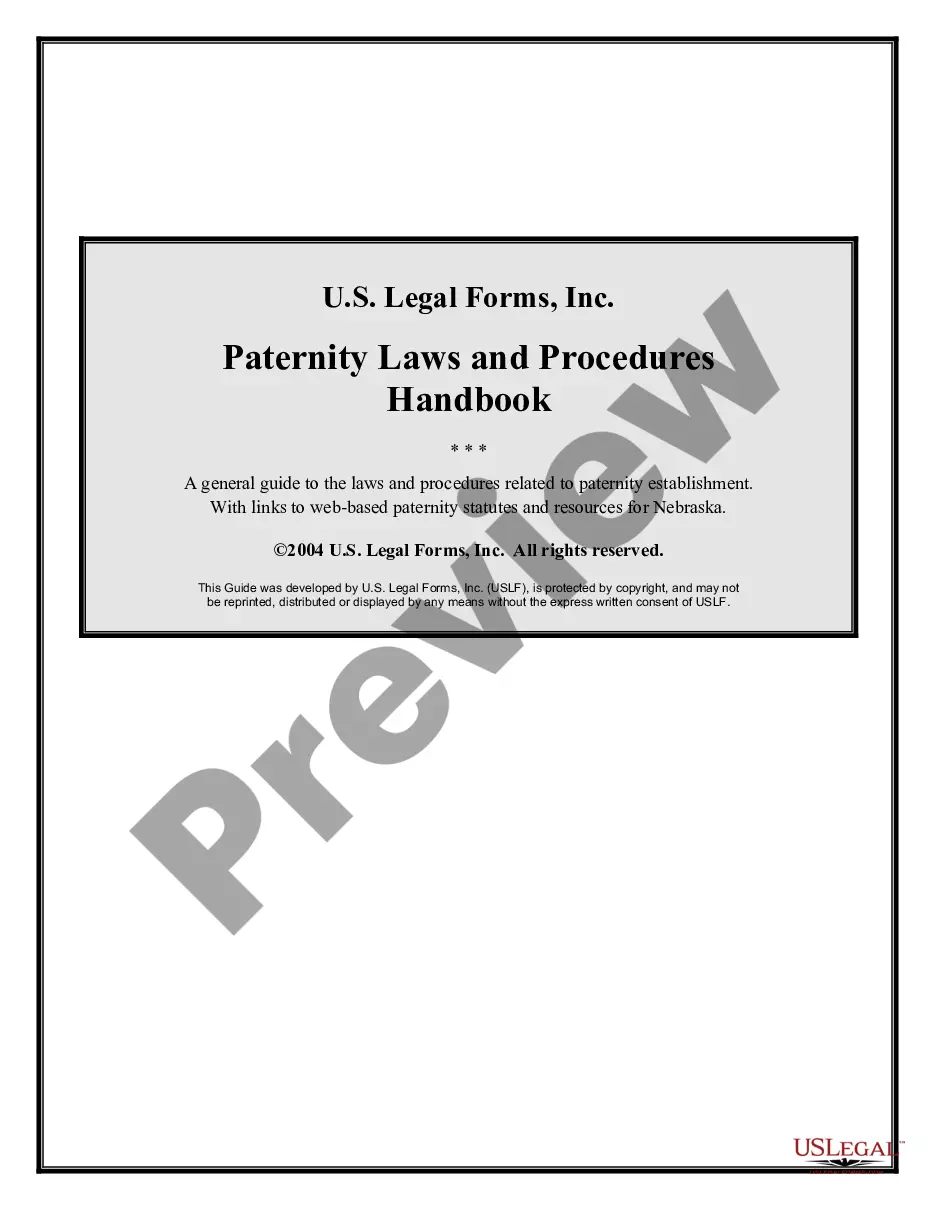
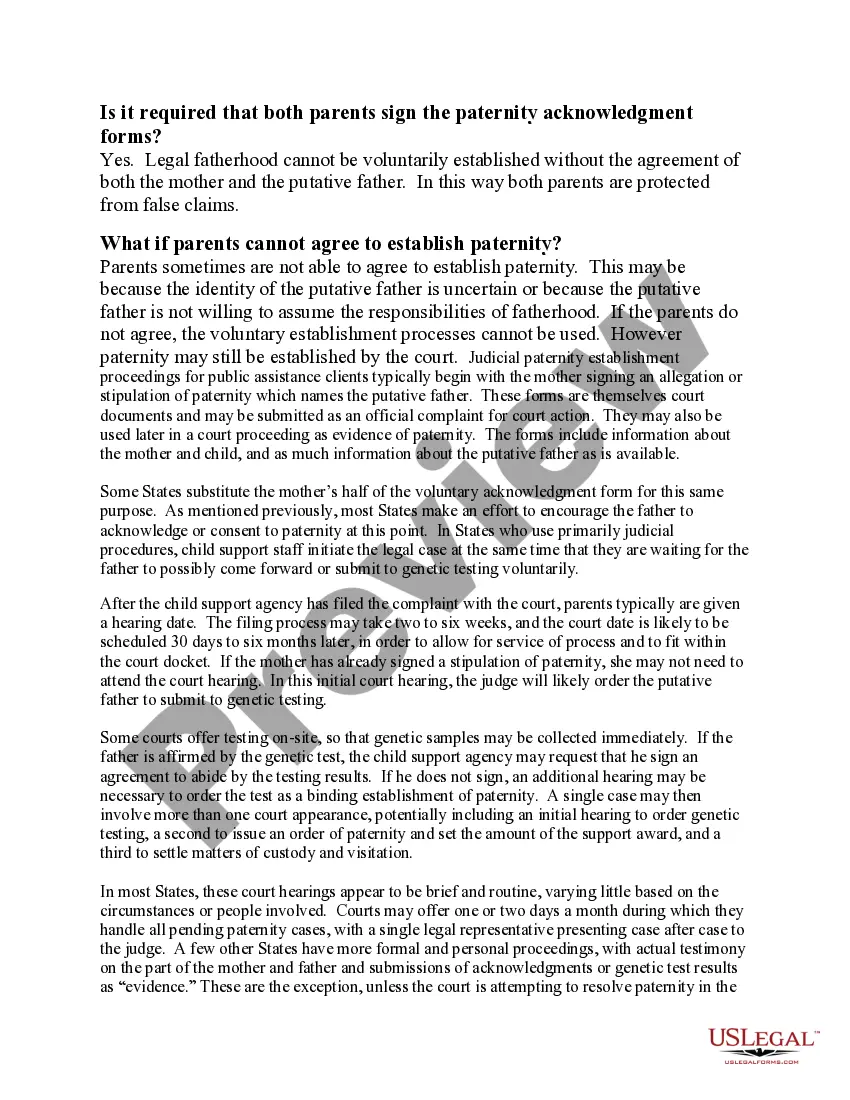
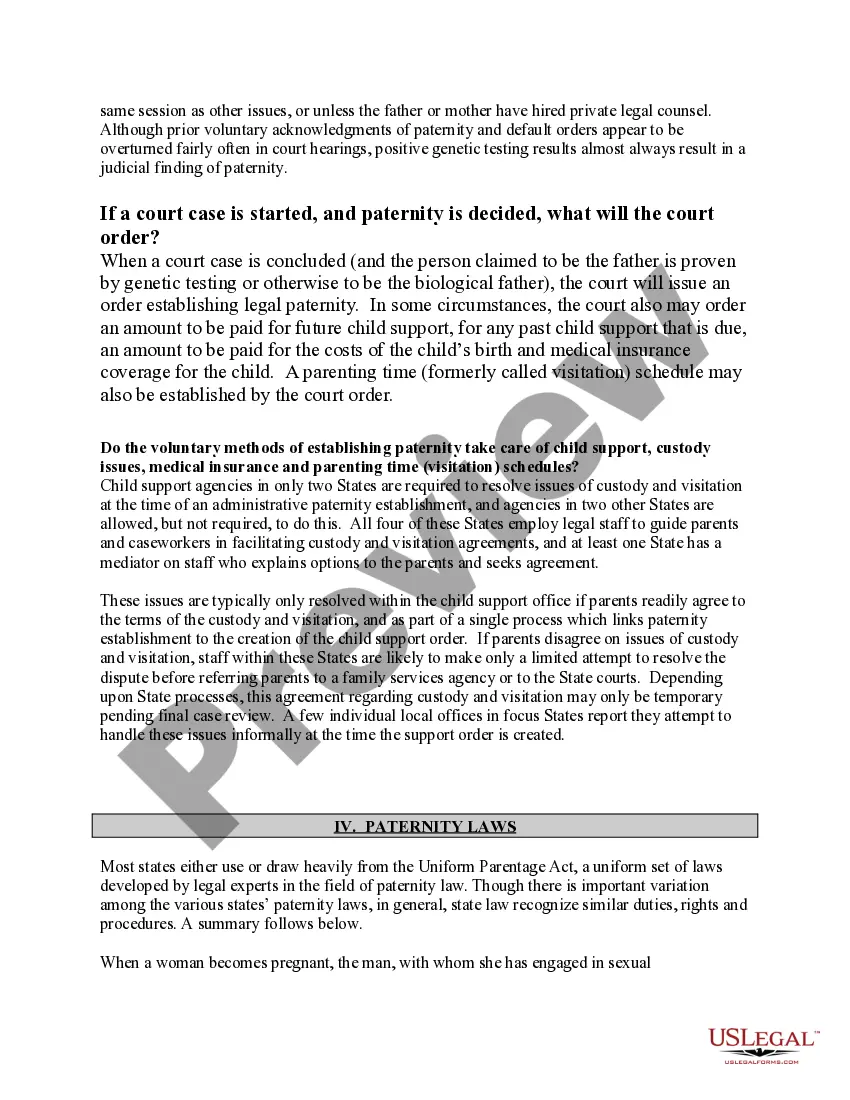
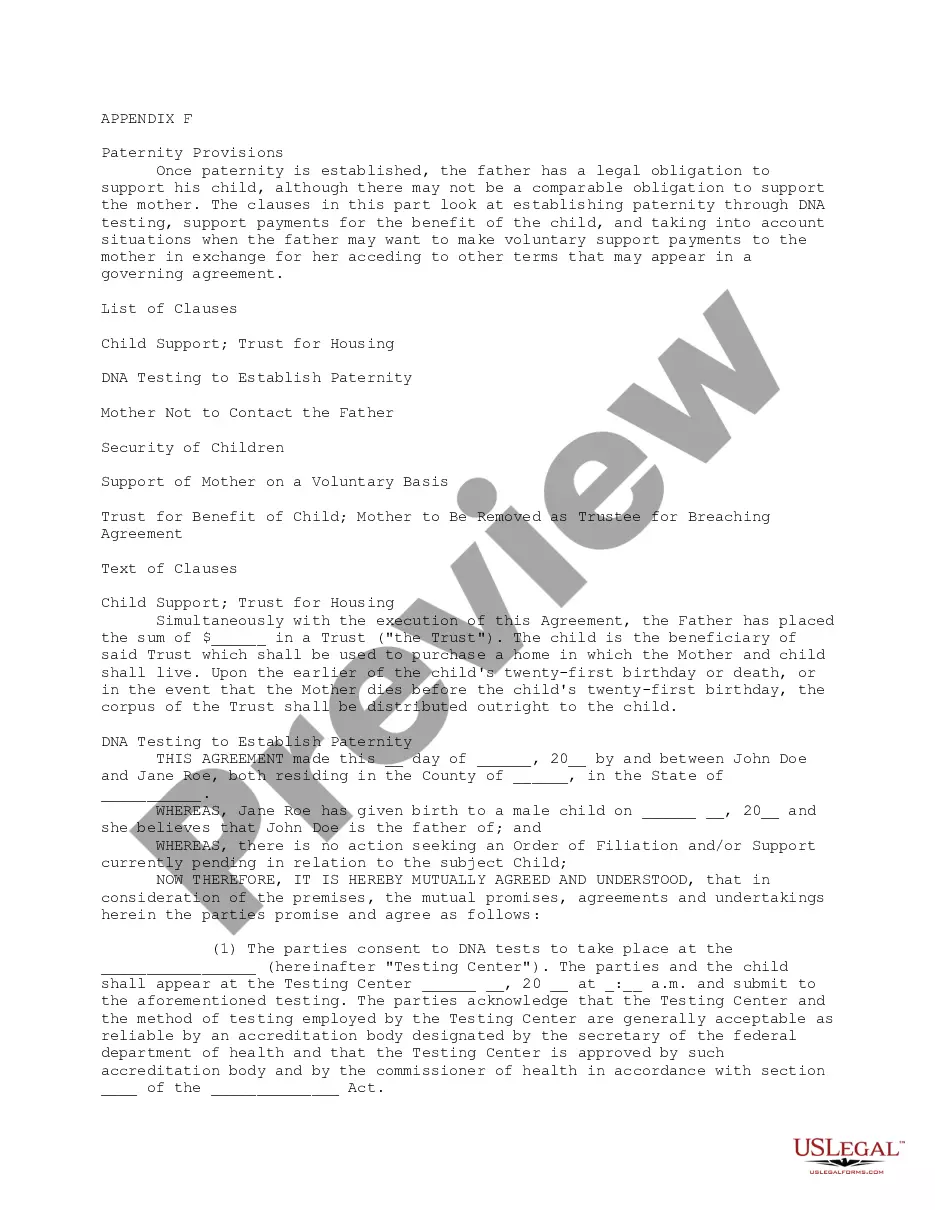
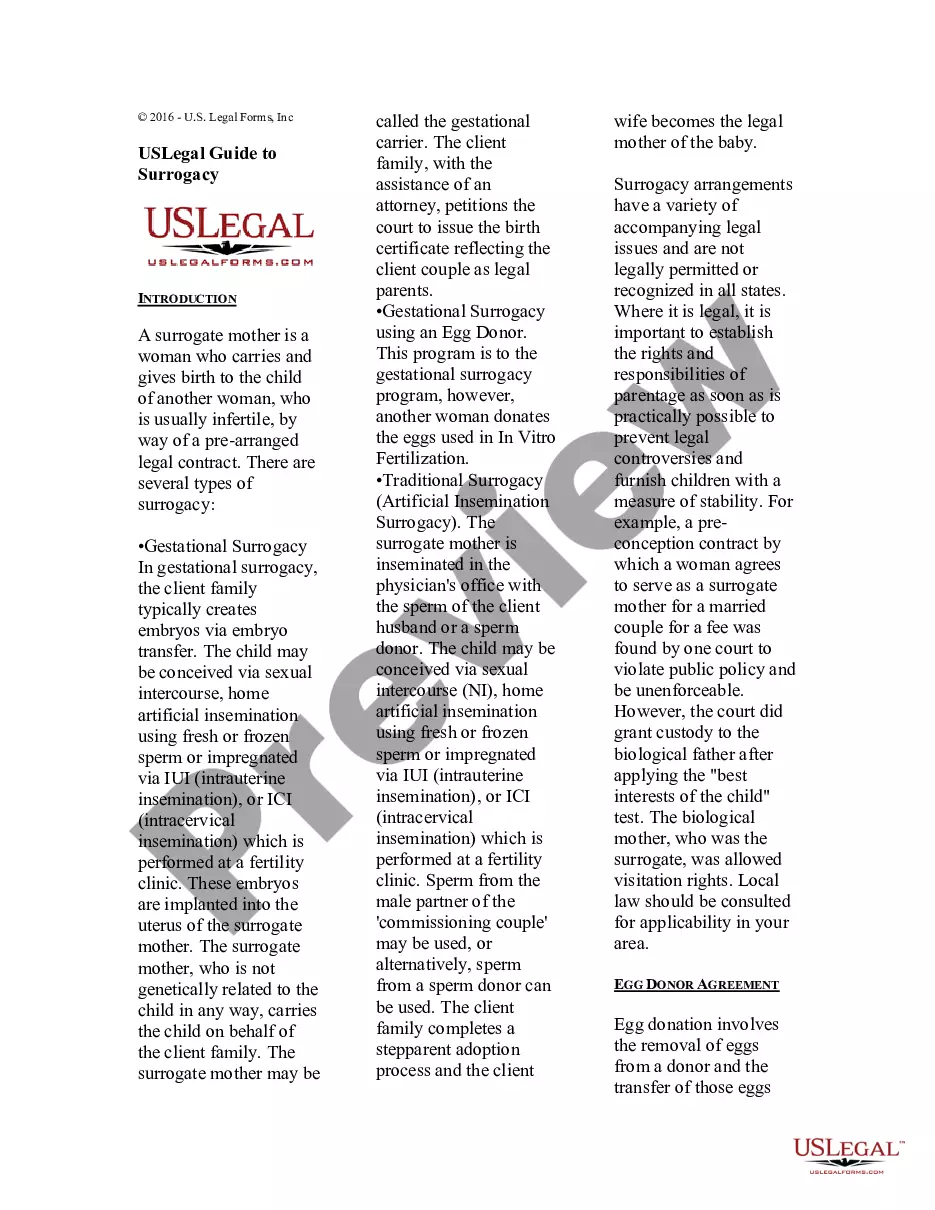
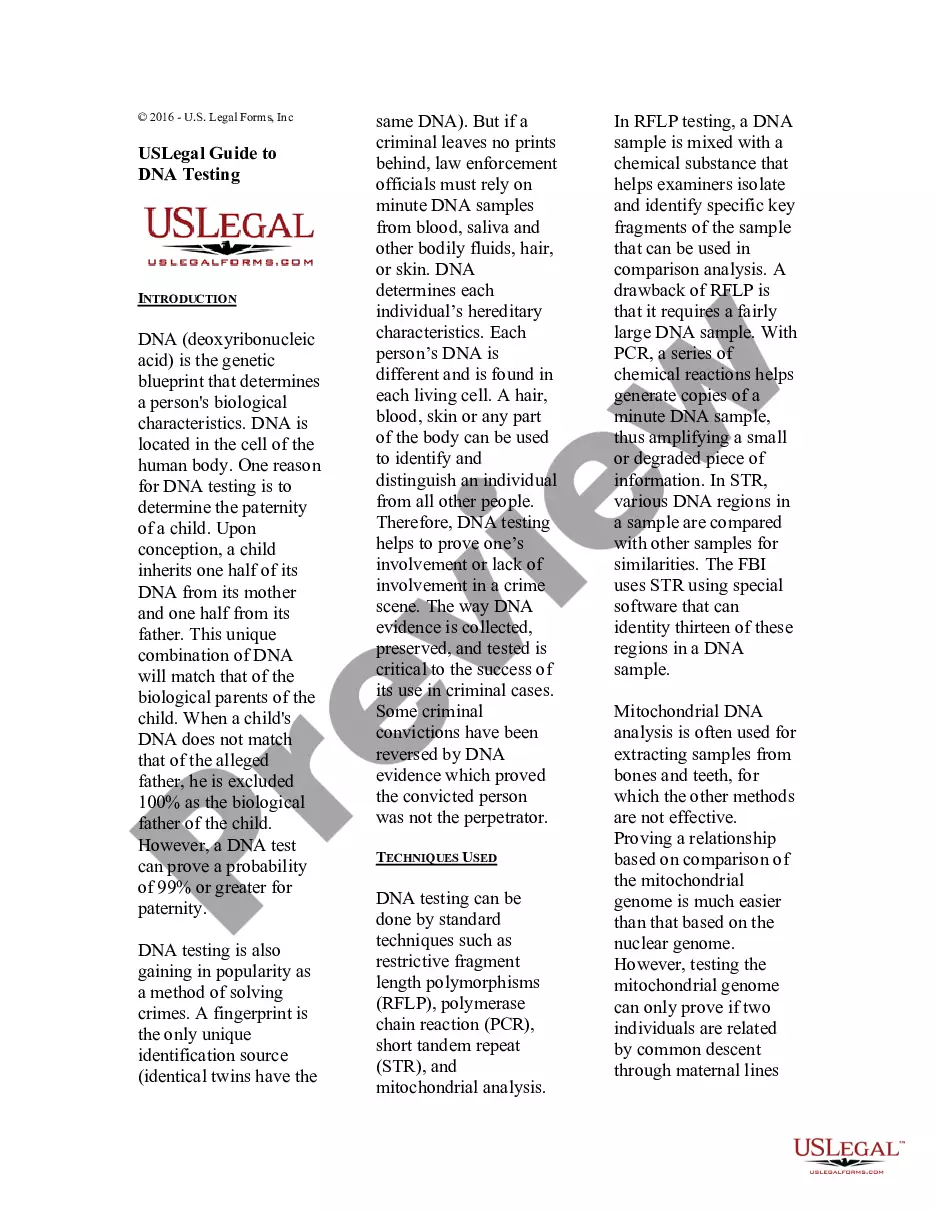
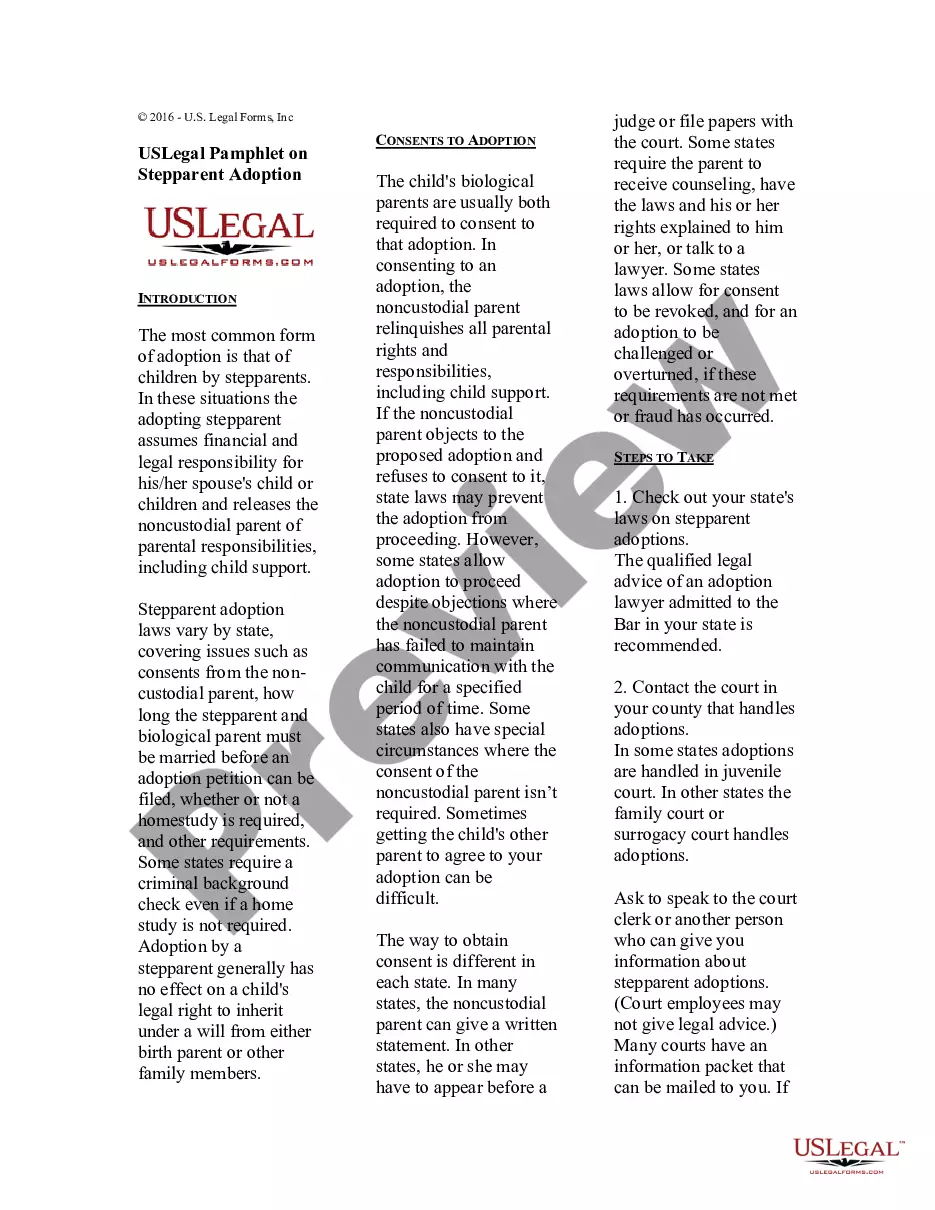
The Paternity Law and Procedure Handbook is a comprehensive guide designed to help unmarried parents navigate the complexities of establishing paternity. It outlines the legal requirements and processes involved in paternity acknowledgment, whether voluntarily or through court action. This handbook is distinct from other legal forms in that it serves as an educational resource tailored to understanding paternity laws specific to each state, providing crucial information and procedures needed to protect the rights of both parents and their child.
Key components of this form
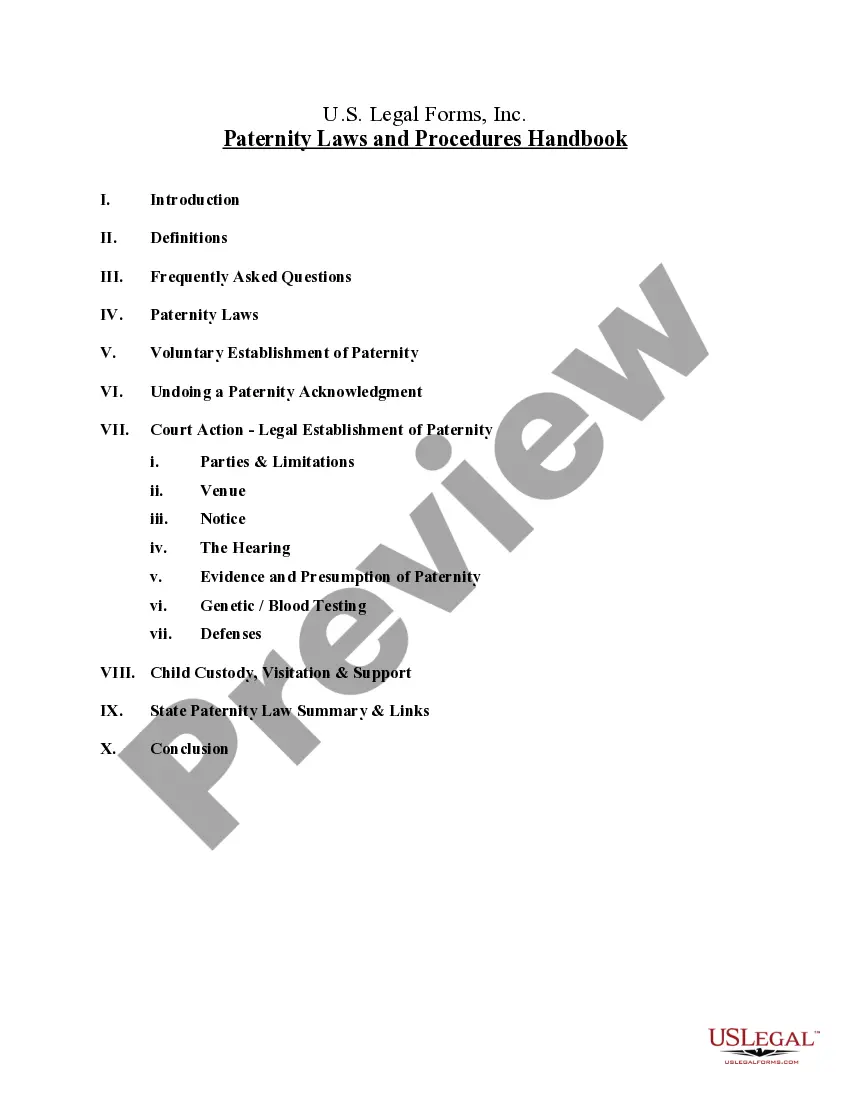
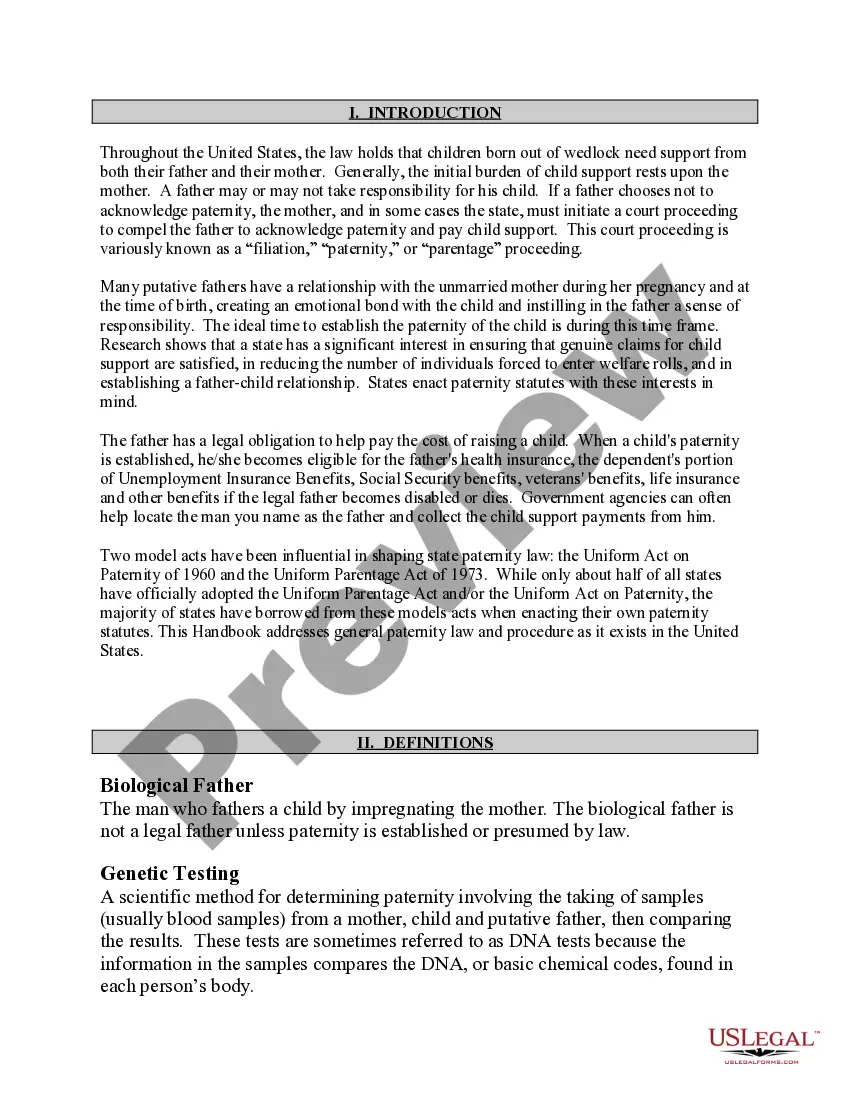
- Introduction to the concept of paternity and its legal implications.
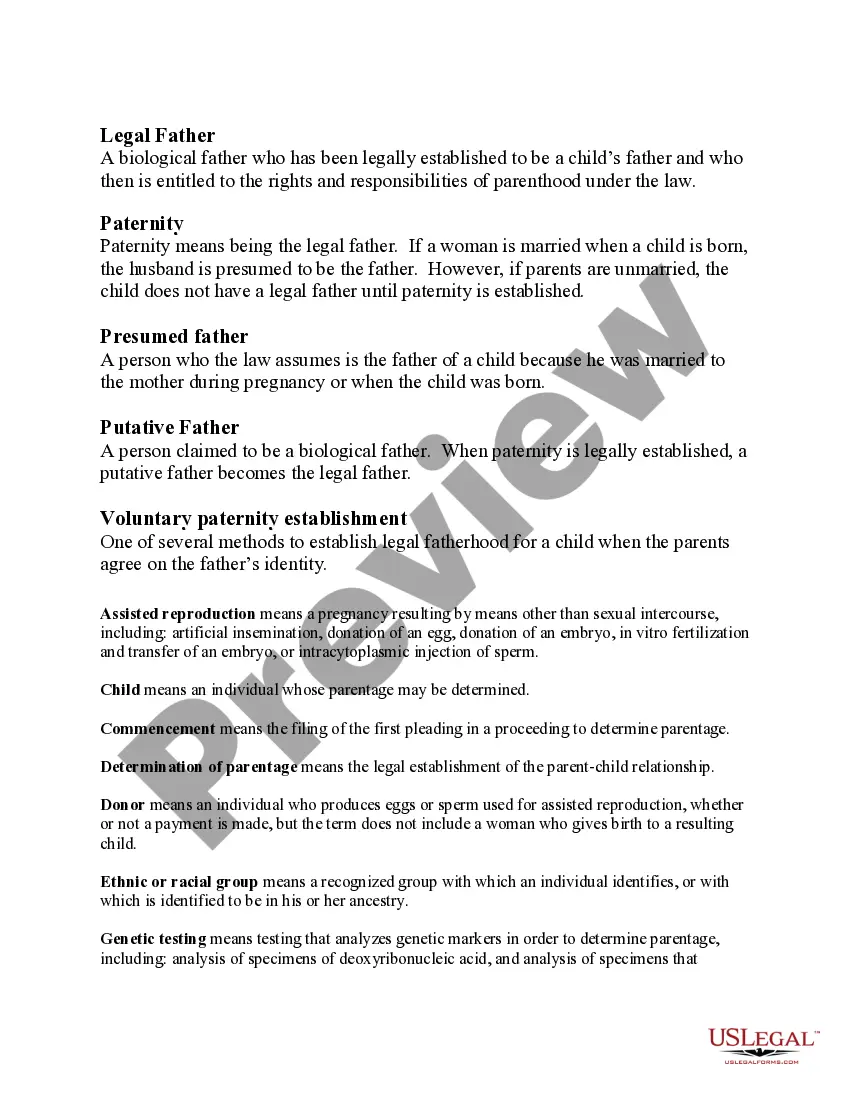
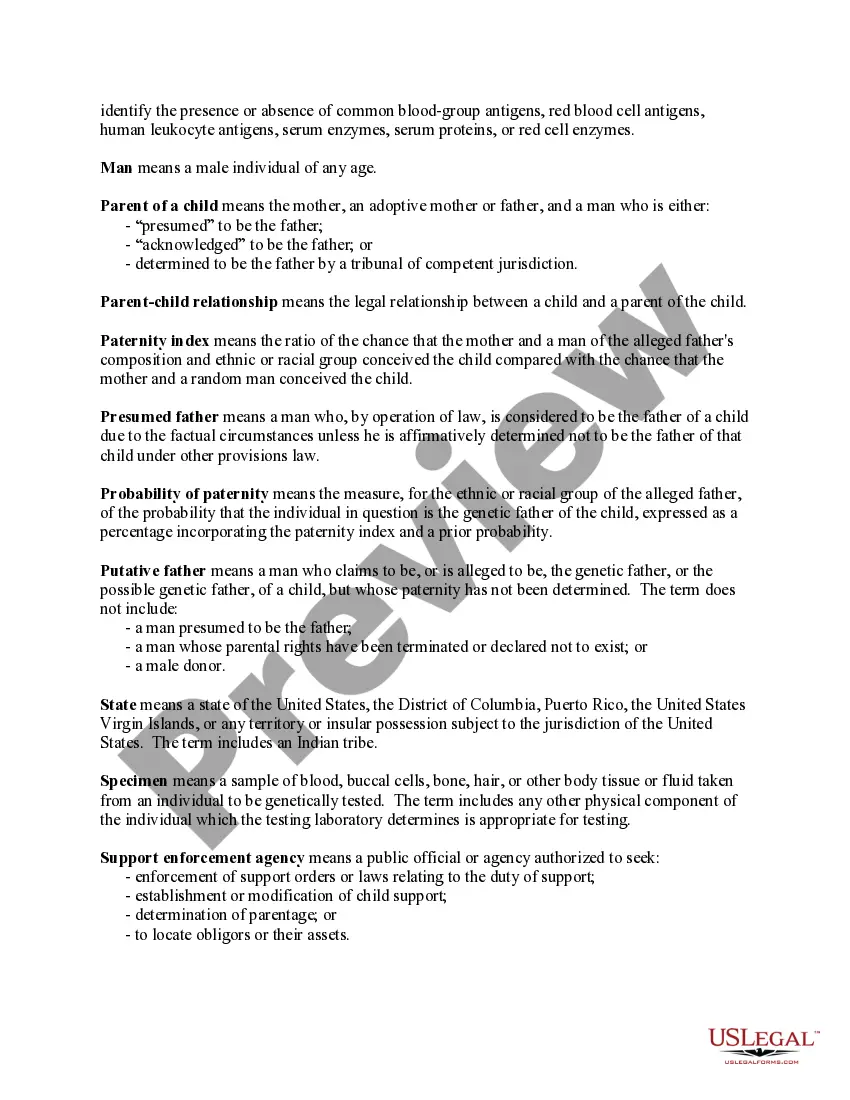
- Definitions of key terms such as biological father, genetic testing, and legal father.
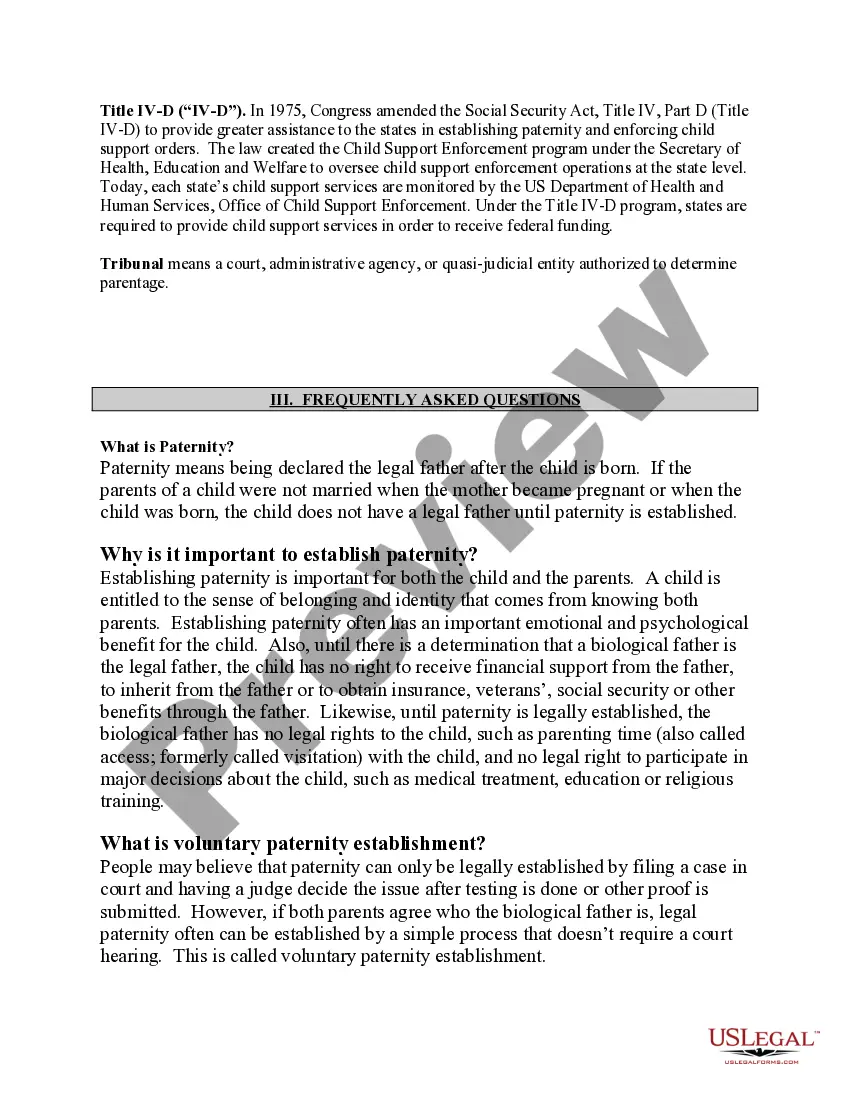
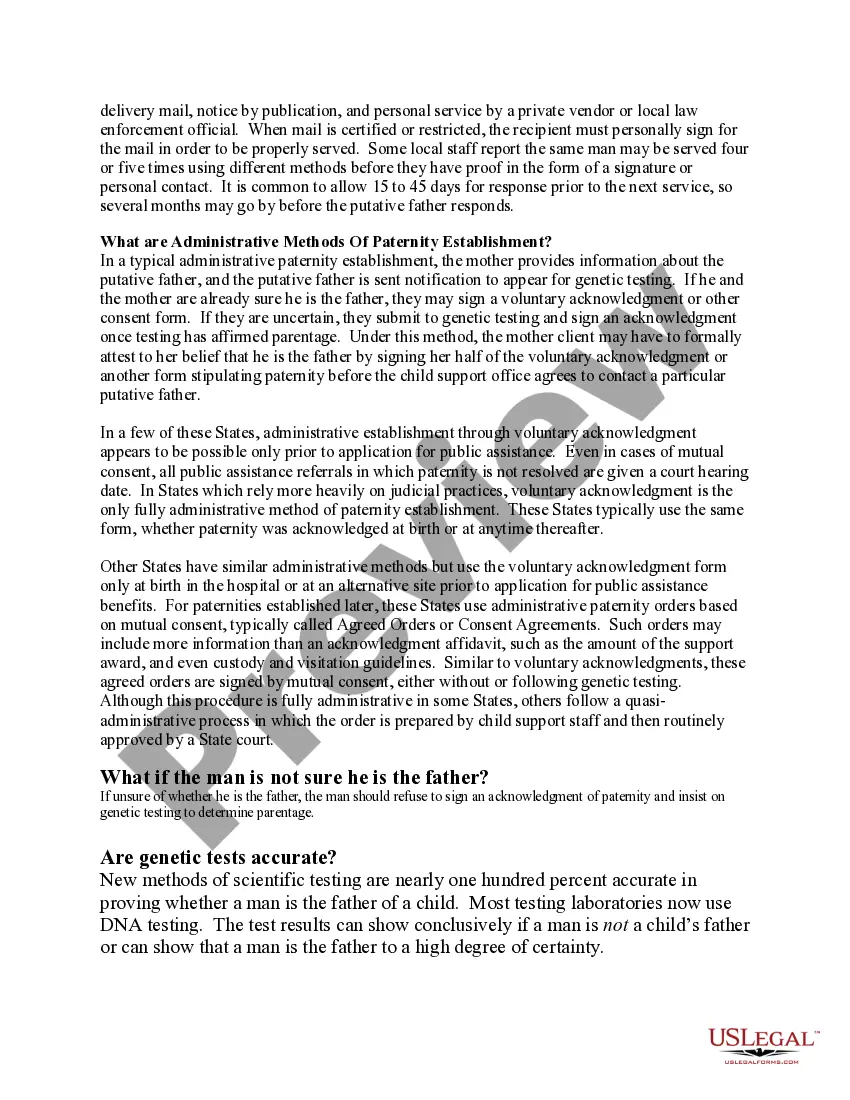
- Guidance on frequently asked questions related to paternity establishment.
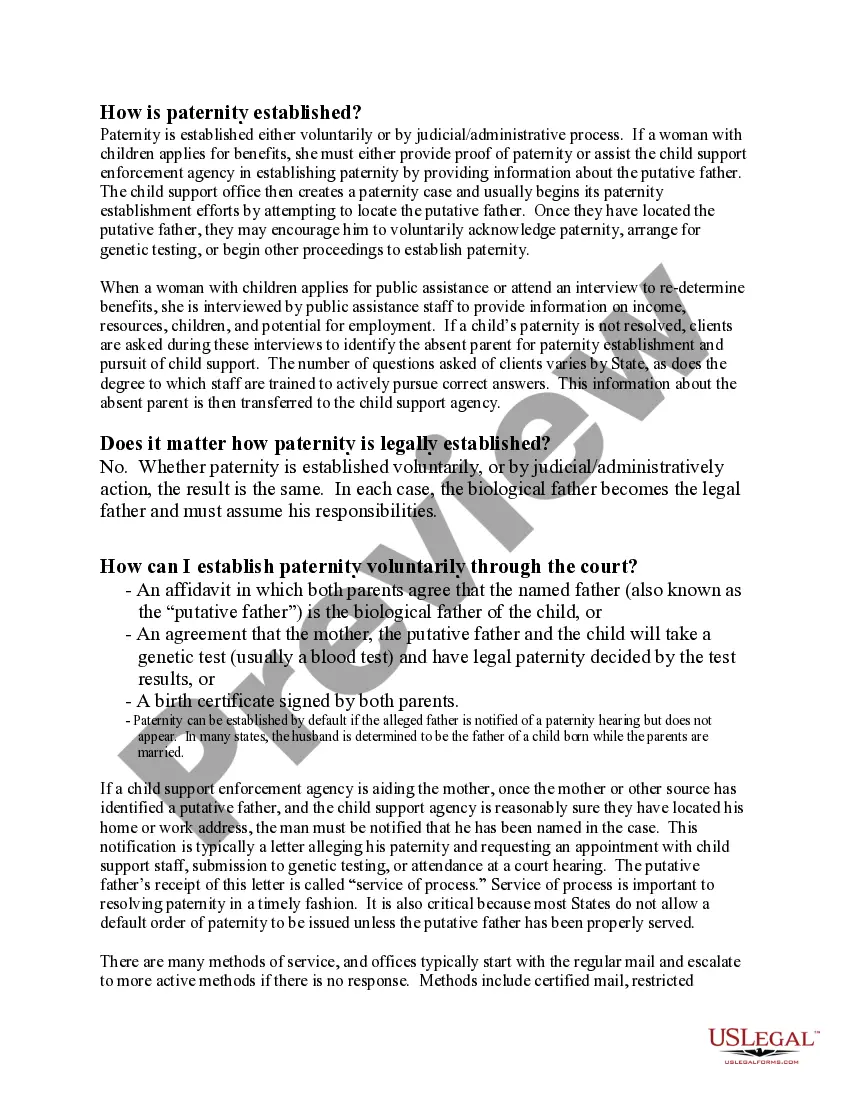
- Descriptions of the process for both voluntary and court-ordered paternity establishment.
- Information on undoing a paternity acknowledgment if doubts arise.
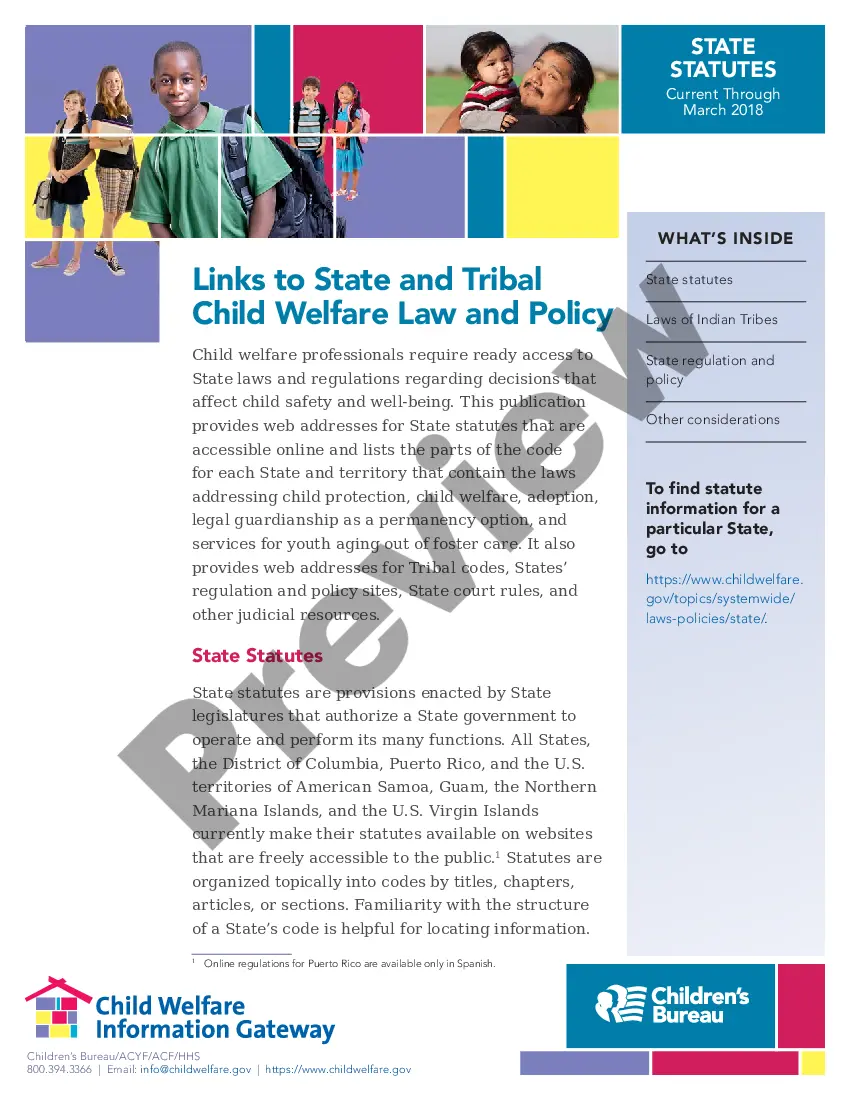
- A state-specific summary of paternity laws with resources for parents.

Situations where this form applies
This handbook should be used when parents are seeking to establish paternity for a child born out of wedlock. It is particularly useful in scenarios where:
- The father is hesitant to acknowledge paternity.
- Child support and parental rights need to be determined.
- There is a need for legal validation of the father-child relationship.
- Genetic testing may be required to confirm parentage.
Who needs this form
- Unmarried parents seeking to establish legal fatherhood for a child.
- Fathers wanting to understand their rights and responsibilities related to paternity.
- Mothers seeking to compel acknowledgment of paternity for child support.
- Legal guardians or advocates for children born out of wedlock.
How to prepare this document
- Begin by reviewing the definitions of paternity-related terms to understand your rights and obligations.
- Identify if you will establish paternity voluntarily or through court action.
- If voluntarily acknowledging, complete the necessary acknowledgment form available at healthcare facilities or state offices.
- If opting for court action, gather required documents and file a petition with the appropriate court.
- Notify the other parent and any involved parties about the proceedings, and be prepared to attend court hearings if necessary.
Does this form need to be notarized?
Notarization is generally not required for this form. However, certain states or situations might demand it. You can complete notarization online through US Legal Forms, powered by Notarize, using a verified video call available anytime.
Get your form ready online
Our built-in tools help you complete, sign, share, and store your documents in one place.
Make edits, fill in missing information, and update formatting in US Legal Forms—just like you would in MS Word.
Download a copy, print it, send it by email, or mail it via USPS—whatever works best for your next step.
Sign and collect signatures with our SignNow integration. Send to multiple recipients, set reminders, and more. Go Premium to unlock E-Sign.
If this form requires notarization, complete it online through a secure video call—no need to meet a notary in person or wait for an appointment.
We protect your documents and personal data by following strict security and privacy standards.

Make edits, fill in missing information, and update formatting in US Legal Forms—just like you would in MS Word.

Download a copy, print it, send it by email, or mail it via USPS—whatever works best for your next step.

Sign and collect signatures with our SignNow integration. Send to multiple recipients, set reminders, and more. Go Premium to unlock E-Sign.

If this form requires notarization, complete it online through a secure video call—no need to meet a notary in person or wait for an appointment.

We protect your documents and personal data by following strict security and privacy standards.
Common mistakes to avoid
- Failing to seek legal advice when unsure about paternity rights and responsibilities.
- Waiting too long to establish paternity, risking loss of rights to support and visitation.
- Signing paternity acknowledgment forms without confirming biological parentage through testing.
- Neglecting to notify all parties involved in paternity proceedings.
Why complete this form online
- Convenience of accessing comprehensive guidelines tailored to paternity laws in your state.
- Editable forms that can be completed at your pace and convenience.
- Reliable information curated by licensed attorneys focused on protecting parental rights.
Quick recap
- Understanding paternity laws is crucial for unmarried parents.
- Establishing paternity provides legal rights and responsibilities.
- State-specific information is key to navigating the process effectively.
Looking for another form?


Form popularity
FAQ
1 attorney answer Although a child's wishes are one factor among many the court must consider in determining the child's best interests, a minor child never gets to "decide" which parent to live with.
Establishing paternity ensures a father's legal rights and various rights and privileges for their children, such as rights to inheritance, father's medical and life insurance benefits, and Social Security and veterans' benefits, plus access to paternal family health history.
Birth certificate. If a birth certificate declares the father and he signs it, this is a legally binding qualification of paternity. DNA test. Court order.
When parents are not married, paternity may be established by submitting a notarized Acknowledgment of Paternity form to DHHS Vital Records Management or through a court order. Nebraska hospitals have Acknowledgement of Paternity forms available to be completed at the time of the child's birth.
Nebraska statutes make it clear that there is no presumption favoring either the mother or the father. Nebraska has abolished, as have many other states, the maternal preference, which was a presumption that the mother would be most capable of caring for a child during its earliest childhood years.
Nebraska statutes make it clear that there is no presumption favoring either the mother or the father. Nebraska has abolished, as have many other states, the maternal preference, which was a presumption that the mother would be most capable of caring for a child during its earliest childhood years.
Although the law specifically permits children at least 14-years-old to express an opinion, there is no specific age when a judge will listen to a child's opinion. California statutes also permit a child younger than 14 years old to testify regarding a custodial preference, unless the court decides it's not in the
Children cannot decide for themselves until they are 19 years old and legal adults. However, judges in Nebraska will take a child's wishes into consideration in making a custody determination only if the child is of sufficient age and maturity and the child's wishes are based on good, sound reasons.
Joint Physical CustodyCustody laws in Nebraska do not favor one parent over the other due to sex. So, without extenuating circumstances, they try to award 50/50 joint custody when possible.Schedules can vary based on the parents' schedules and child's needs.