Private Line Service Level Agreement
What this document covers
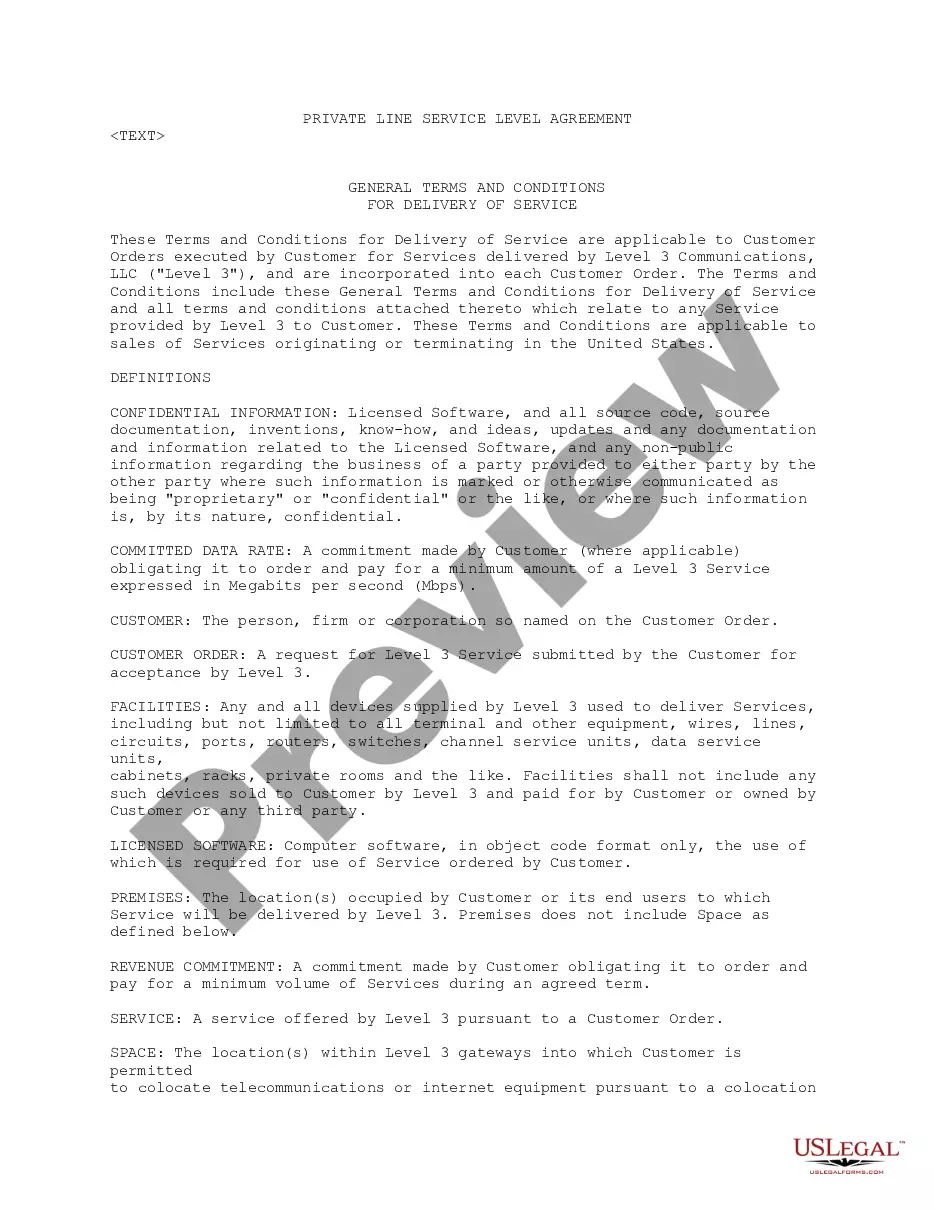
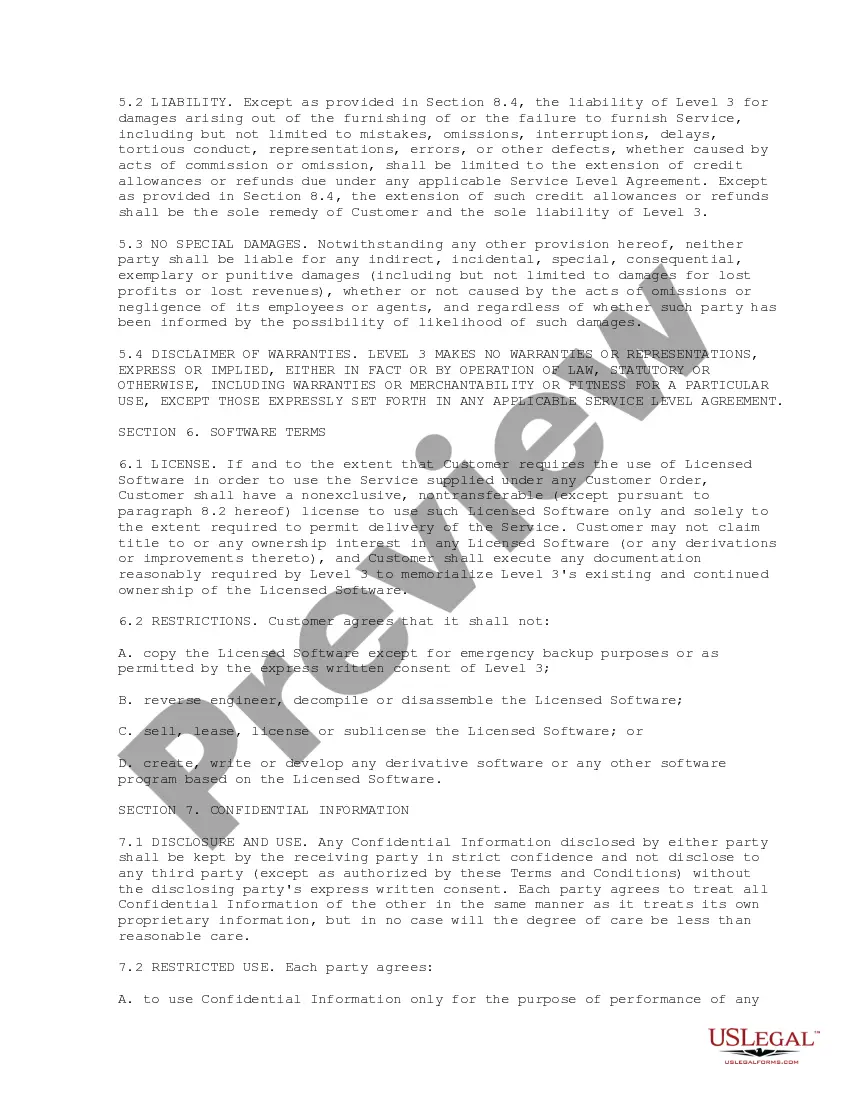
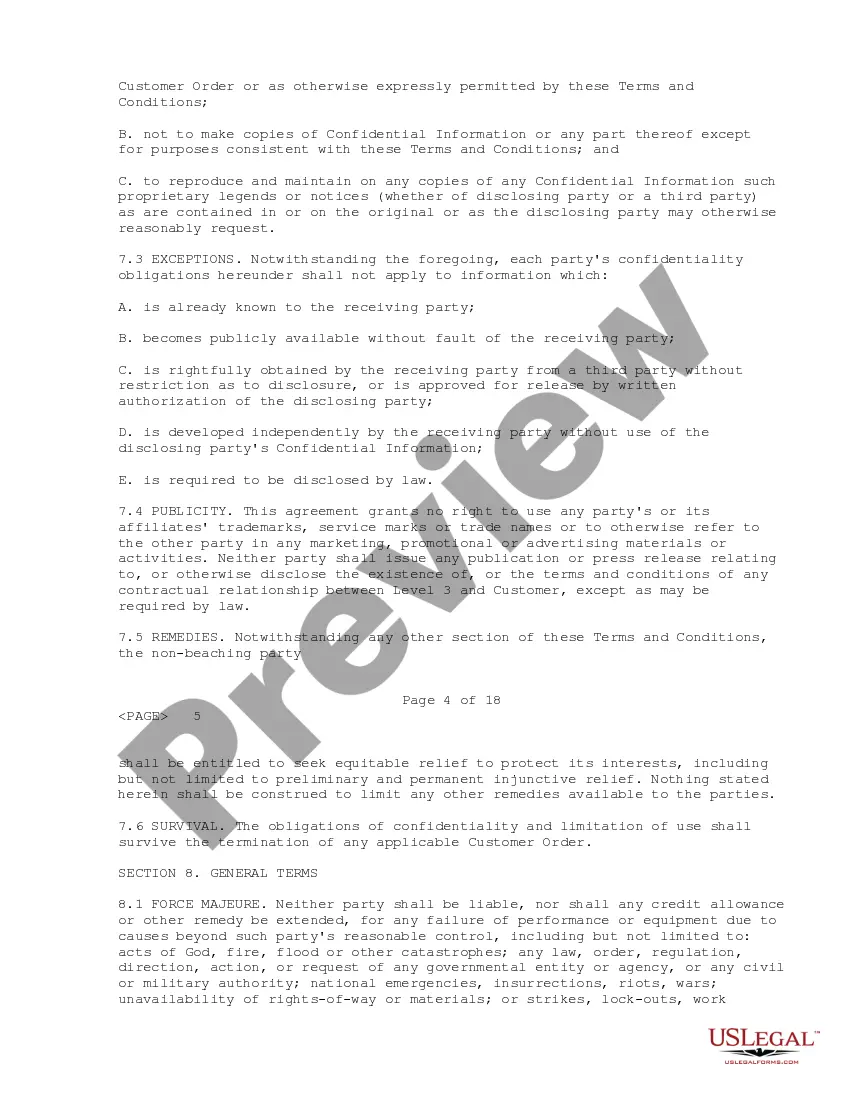
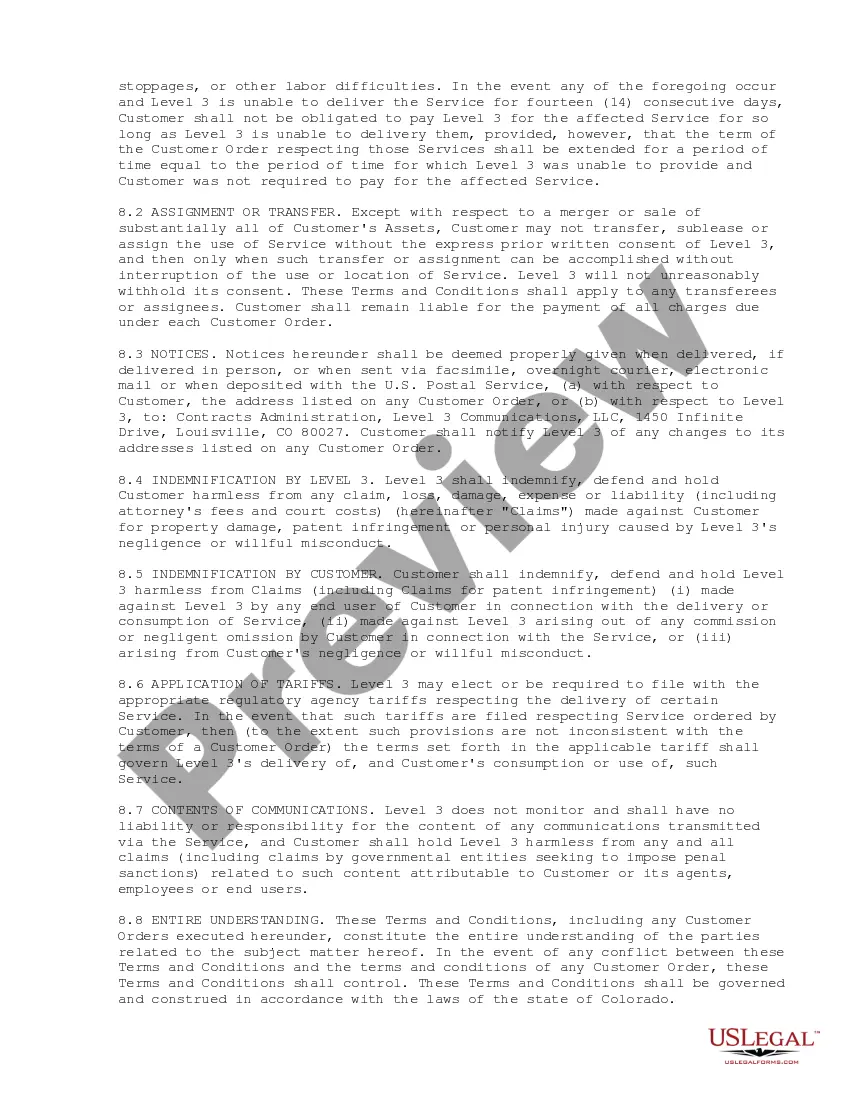
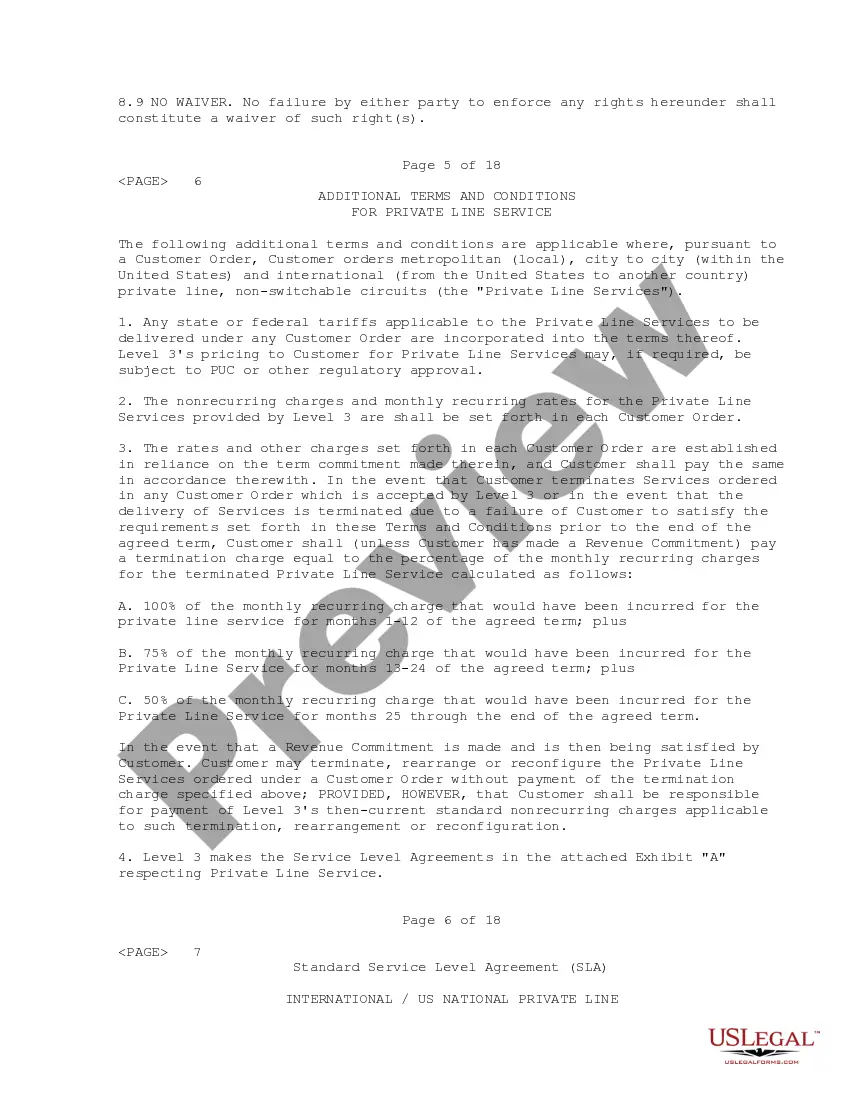
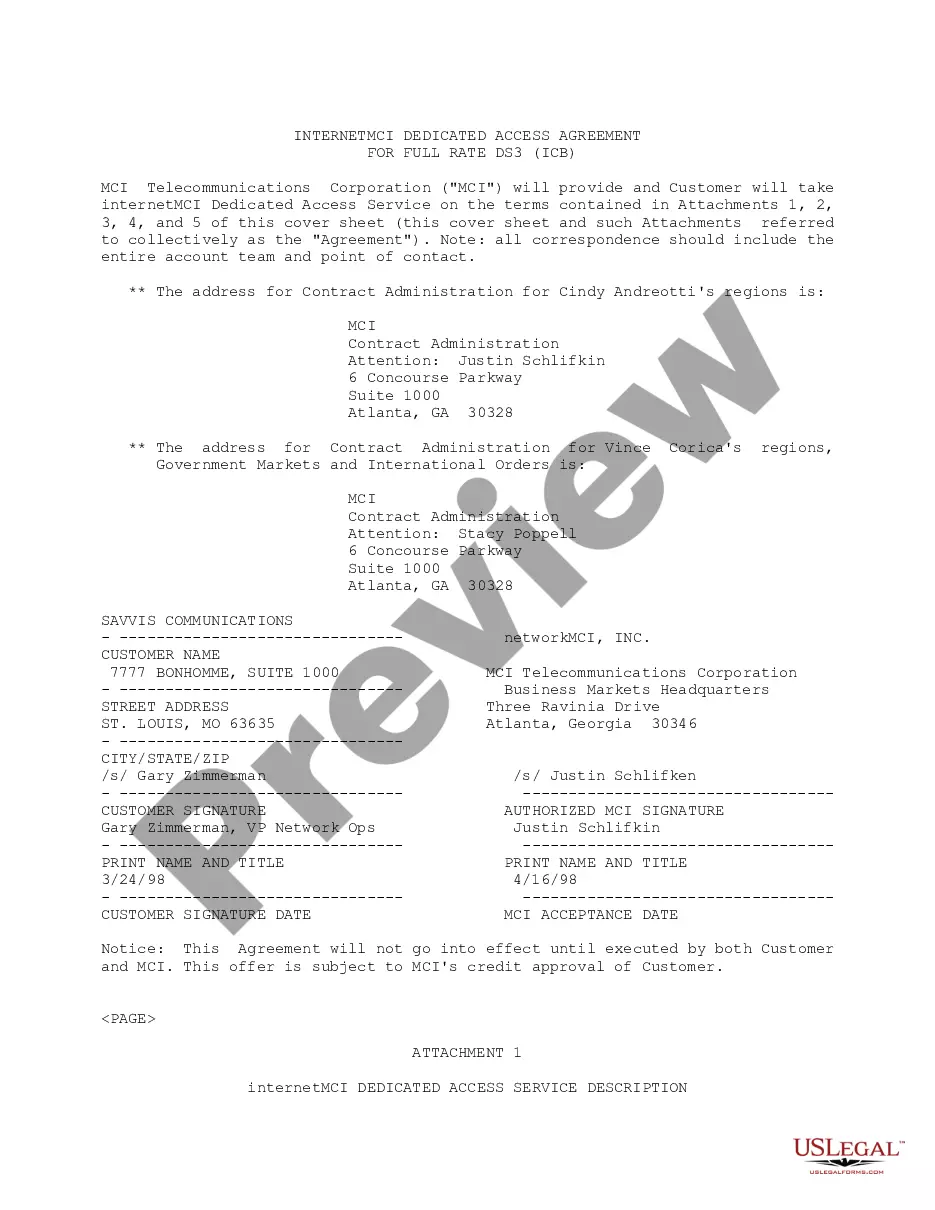
The Private Line Service Level Agreement is a legal document that outlines the terms and conditions between Level 3 Communications, LLC and the customer for private line telecommunications services. This agreement specifies the commitments, billing processes, service level expectations, and rights of both parties involved. Unlike general telecommunications service agreements, this document focuses specifically on dedicated private line services and the associated performance metrics to ensure both parties understand their obligations and expectations.
Main sections of this form
Definitions: Clarifies key terms used throughout the agreement.
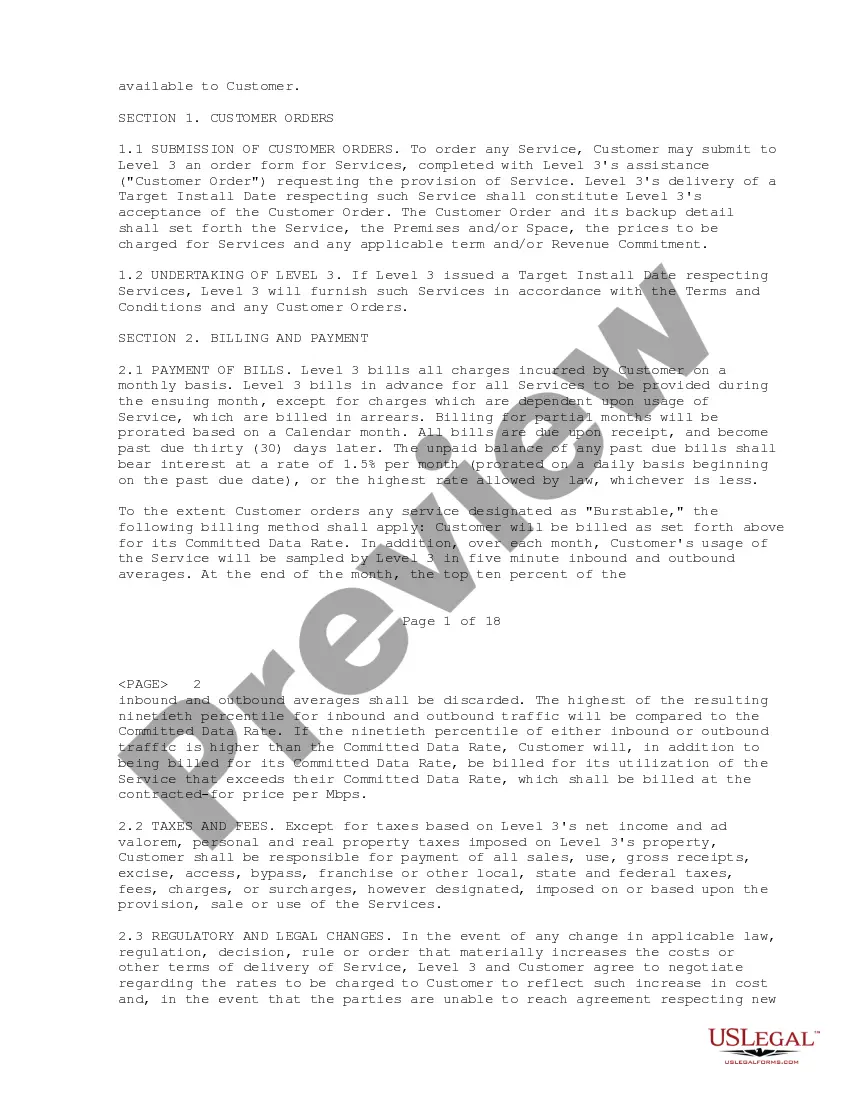
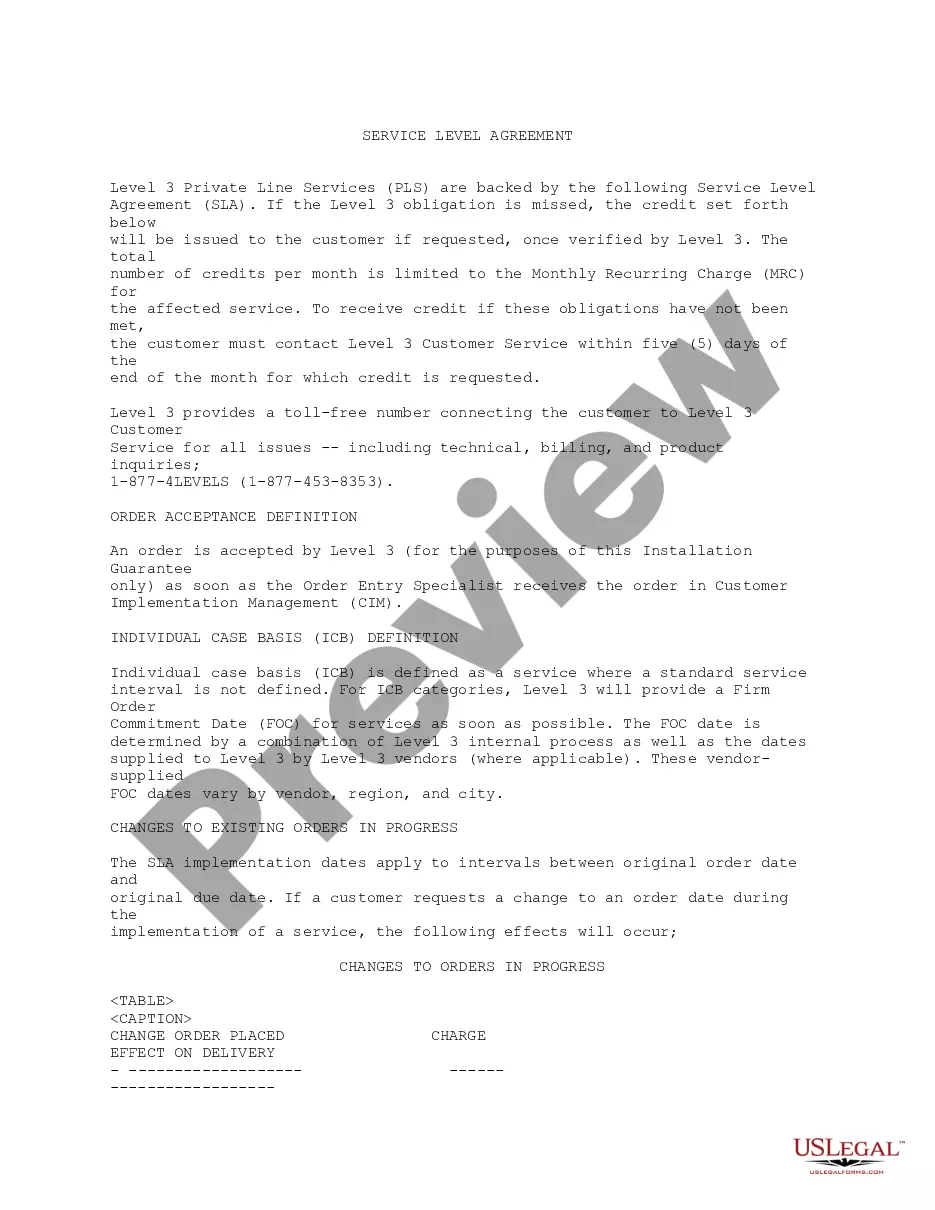
Customer Orders: Details the submission process for service requests and the acceptance of those orders by Level 3.
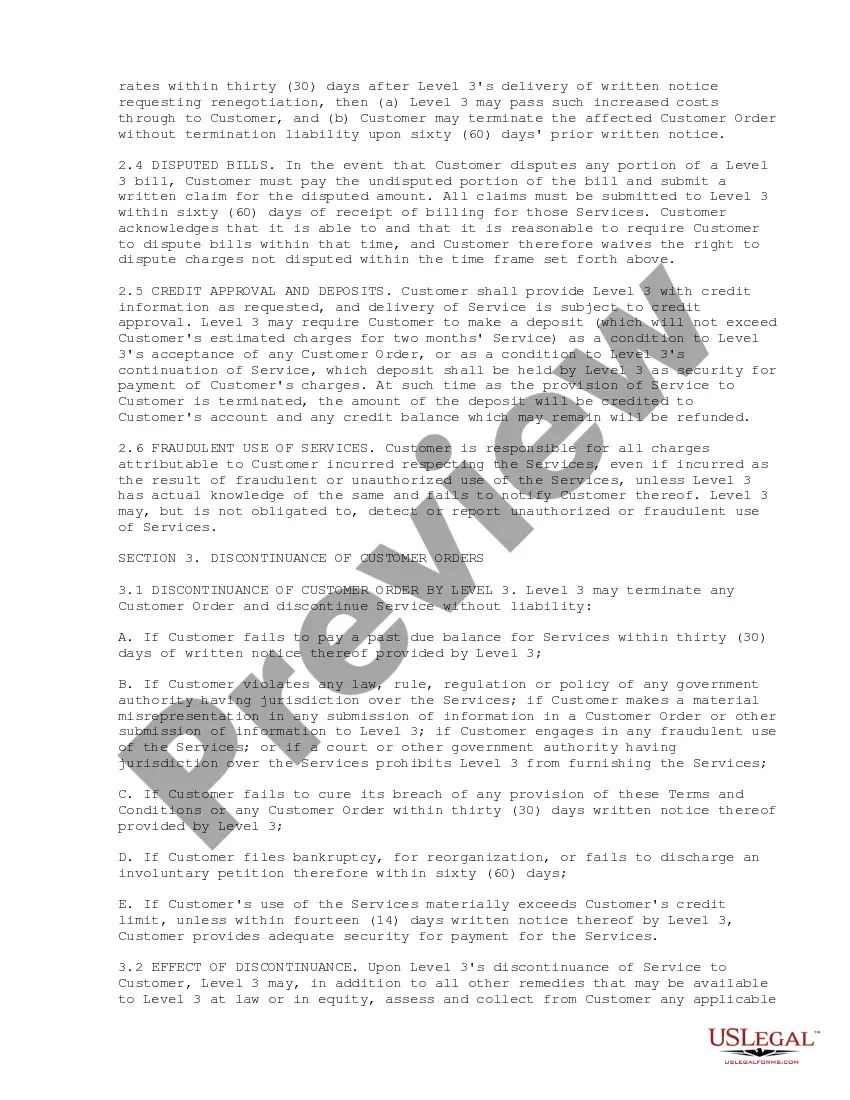
Billing and Payment: Outlines how charges are applied, billing cycles, and payment obligations.
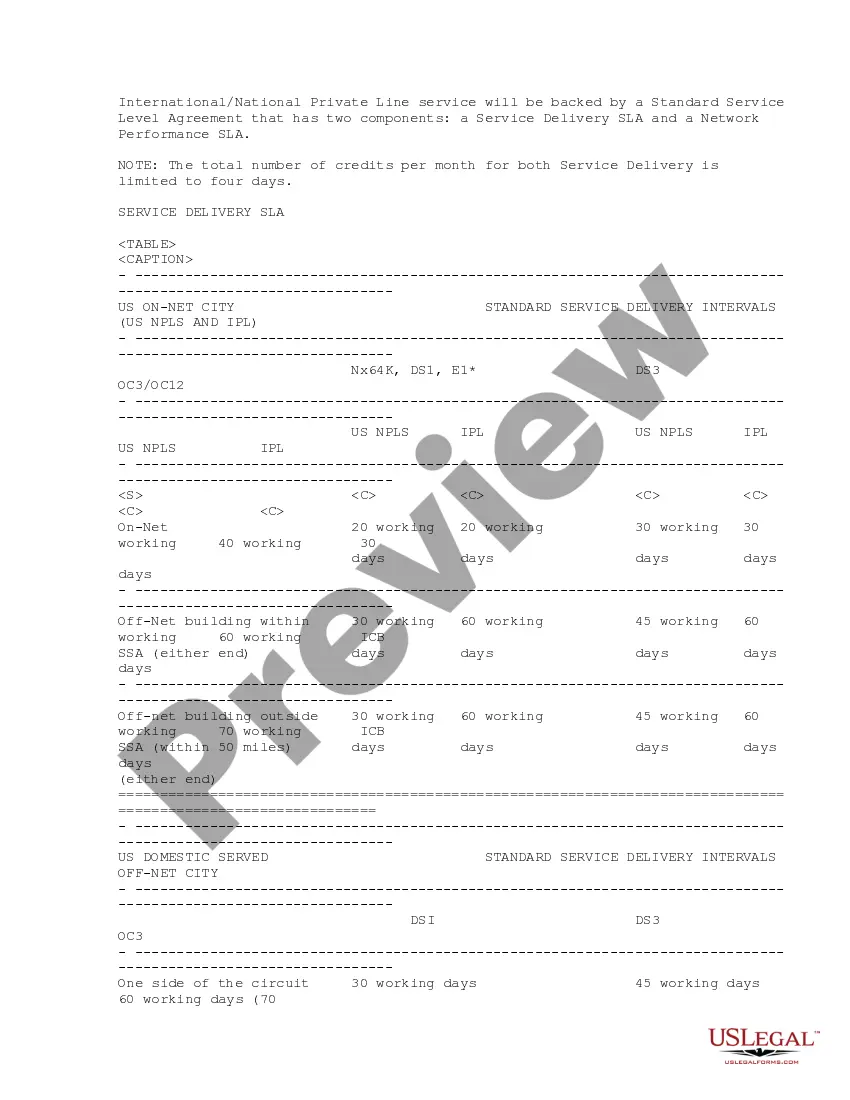
Service Level Agreements: Describes the performance metrics that Level 3 must meet and the customer's rights in the event of non-compliance.
Confidential Information: Explains how sensitive information is handled between the parties.
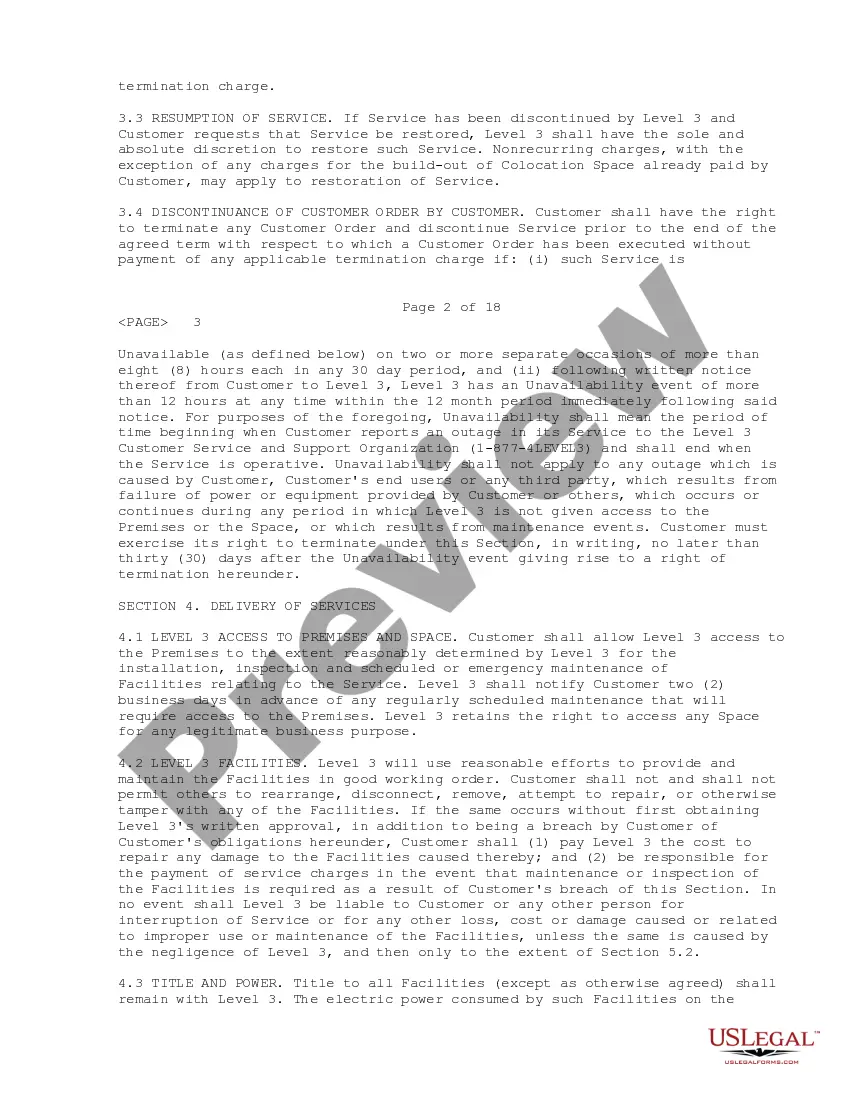
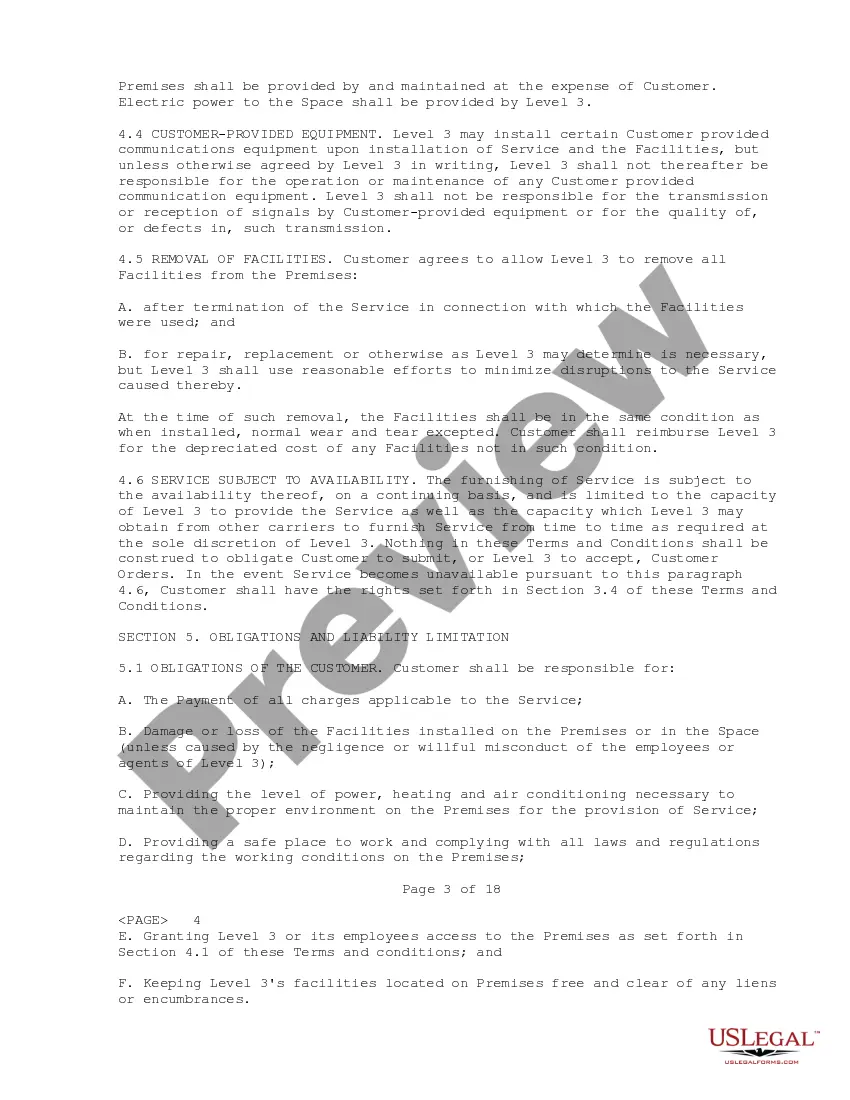
Term and Termination: Specifies the duration of the agreement and conditions under which it can be terminated by either party.


When this form is needed
This form should be used when contracting private line telecommunications services from Level 3 Communications, LLC. It is essential for businesses that require dedicated, reliable telecommunication lines for operations, particularly if there are specific performance metrics and service levels that must be adhered to. Additionally, if a business anticipates needing to negotiate service commitments, this agreement serves as a formal basis for those discussions.
Who can use this document
Businesses seeking dedicated private line telecommunications services from Level 3 Communications, LLC.
Corporate clients requiring clear service level expectations and performance metrics.
Organizations needing formal agreements for reliable telecommunications infrastructure.
How to prepare this document
Identify the parties involved: Enter the customer name and address in the designated areas.
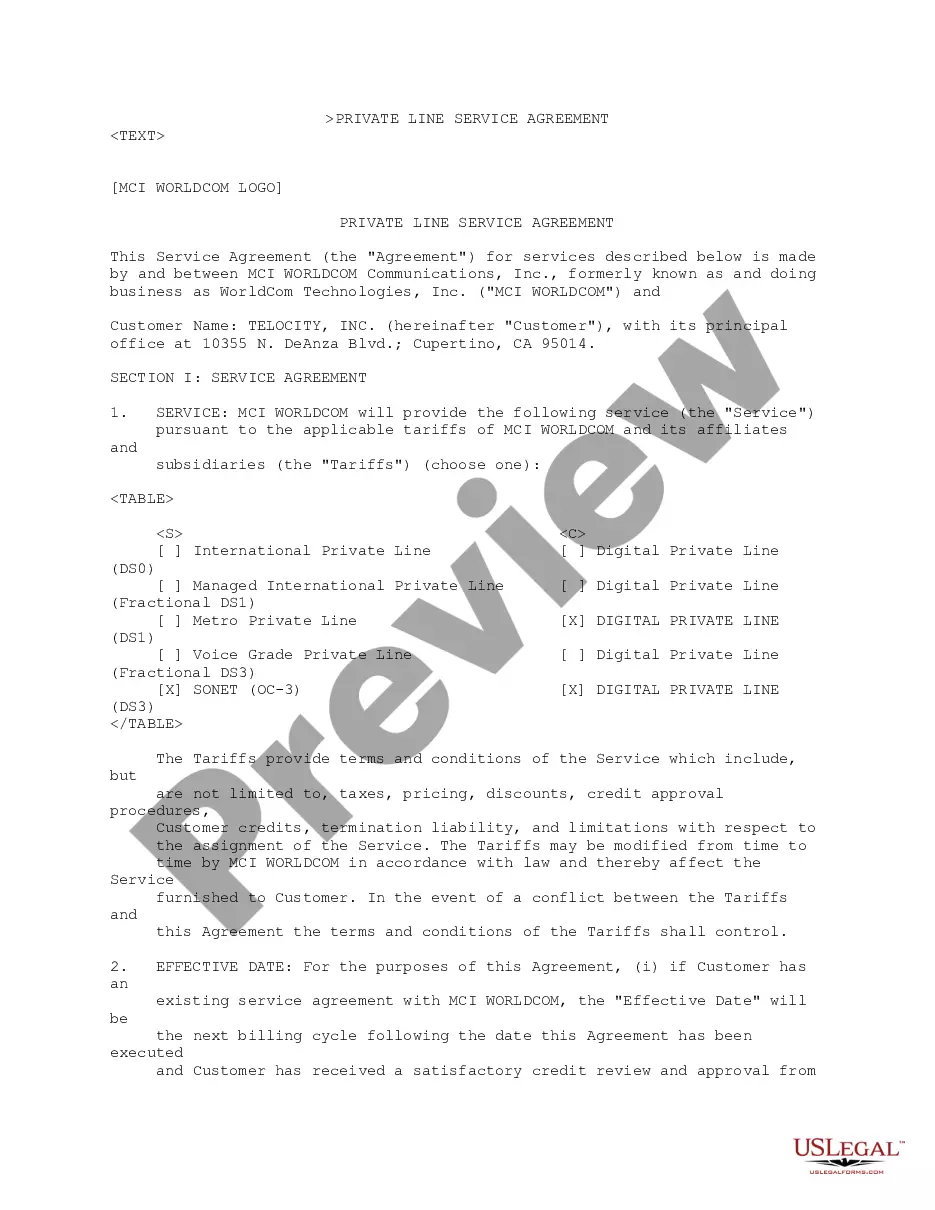
Specify service details: Include information regarding the private line service being requested.
Fill in the Target Install Date: Indicate the anticipated date for service availability.
Review billing terms: Ensure understanding and acceptance of the billing process and any potential costs.
Sign and date the agreement: Both parties should sign to acknowledge and accept the terms outlined in the agreement.
Notarization guidance
Notarization is not commonly needed for this form. However, certain documents or local rules may make it necessary. Our notarization service, powered by Notarize, allows you to finalize it securely online anytime, day or night.
Get your form ready online
Our built-in tools help you complete, sign, share, and store your documents in one place.
Make edits, fill in missing information, and update formatting in US Legal Forms—just like you would in MS Word.
Download a copy, print it, send it by email, or mail it via USPS—whatever works best for your next step.
Sign and collect signatures with our SignNow integration. Send to multiple recipients, set reminders, and more. Go Premium to unlock E-Sign.
If this form requires notarization, complete it online through a secure video call—no need to meet a notary in person or wait for an appointment.
We protect your documents and personal data by following strict security and privacy standards.

Make edits, fill in missing information, and update formatting in US Legal Forms—just like you would in MS Word.

Download a copy, print it, send it by email, or mail it via USPS—whatever works best for your next step.

Sign and collect signatures with our SignNow integration. Send to multiple recipients, set reminders, and more. Go Premium to unlock E-Sign.

If this form requires notarization, complete it online through a secure video call—no need to meet a notary in person or wait for an appointment.

We protect your documents and personal data by following strict security and privacy standards.
Common mistakes
Failing to specify the service details clearly, which can lead to misunderstandings.
Not entering correct customer information, leading to potential legal issues.
Overlooking the billing terms and conditions, resulting in unexpected charges.
Advantages of online completion
Convenience of accessing and filling out the form from anywhere at any time.
Ability to ensure that all necessary fields are completed, reducing the chance of errors.
Instant proof of completion and submission for your records.
Legal use & context
This document is legally binding upon execution by both parties and is enforceable in accordance with its terms.
If disputes occur, this agreement provides a framework for resolution based on specified service levels.
Compliance with local laws is necessary for the enforceability of terms related to billing and service commitments.
Looking for another form?
Form popularity
FAQ
Service-based SLA: An agreement for all customers using the services being delivered by the service provider. For example: A mobile service provider offers a routine service to all the customers and offers certain maintenance as a part of an offer with the universal charging.
Define the service you want to outsource. Determine what you can measure. Describe your business need and metrics. Obtain your baselines/set service targets. Decide on how you will monitor and review performance. Determine your reporting procedures. Identify the project's business owner/manager.
The SLA should include not only a description of the services to be provided and their expected service levels, but also metrics by which the services are measured, the duties and responsibilities of each party, the remedies or penalties for breach, and a protocol for adding and removing metrics.
A service level agreement (SLA) is an agreement between an IT Service provider and a customer. For instance, you are a customer of a bank and the bank provides services to you.That is an example of a service level agreement and it is part of service level management.
A service level agreement (SLA) is an agreement between an IT Service provider and a customer.There are three types of service level agreements that can be documented. Before defining ITIL service level requirements and agreeing on the service levels through SLA, the most appropriate SLA structure must be designed.
Customer-based SLA. This type of agreement is used for individual customers and comprises all relevant services that a client may need, while leveraging only one contract. Service-based SLA. This SLA is a contract that includes one identical type of service for all of its customers. Multi-level SLA.
A service level agreement (SLA) is a documented agreement between a service provider and a customer that identifies both the services required and the expected level of service. The agreement varies between vendors, services, and industries.
ITIL focuses on three types of options for structuring SLA: Service-based, Customer-based, and Multi-level or Hierarchical SLAs. Many different factors will need to be considered when deciding which SLA structure is most appropriate for an organization to use.