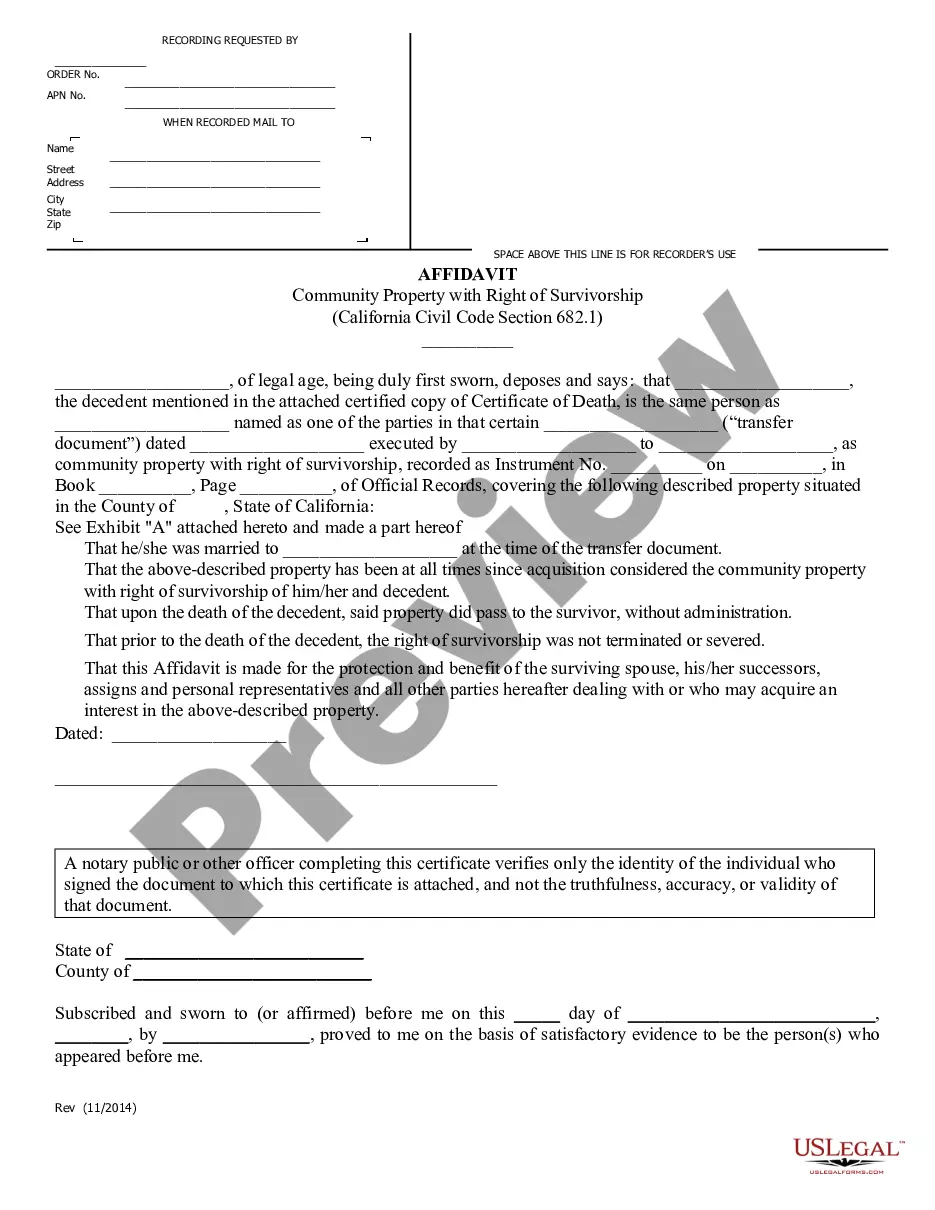
Motion to Vacate or Nullify Divorce Decree Obtained by Fraud as a Result of Failing to Serve Respondent at Known Address
About this form
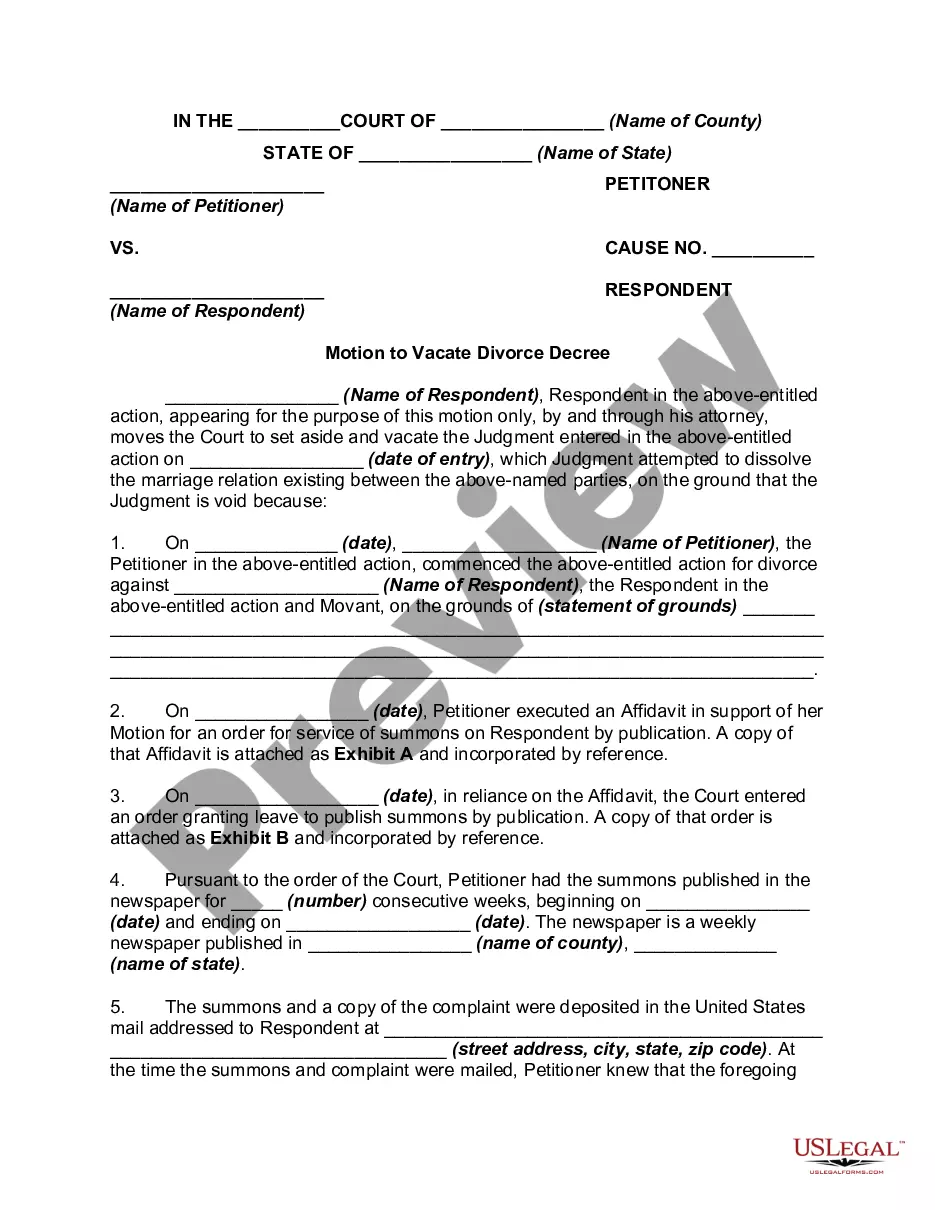
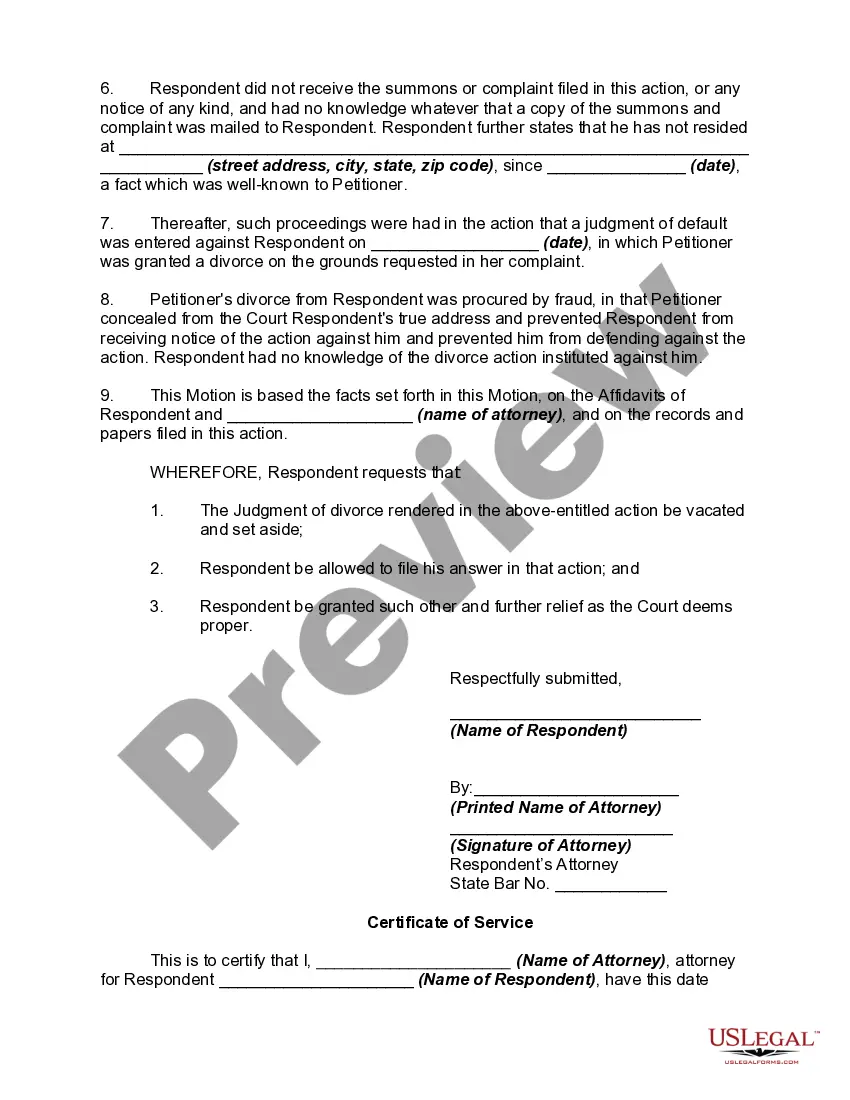
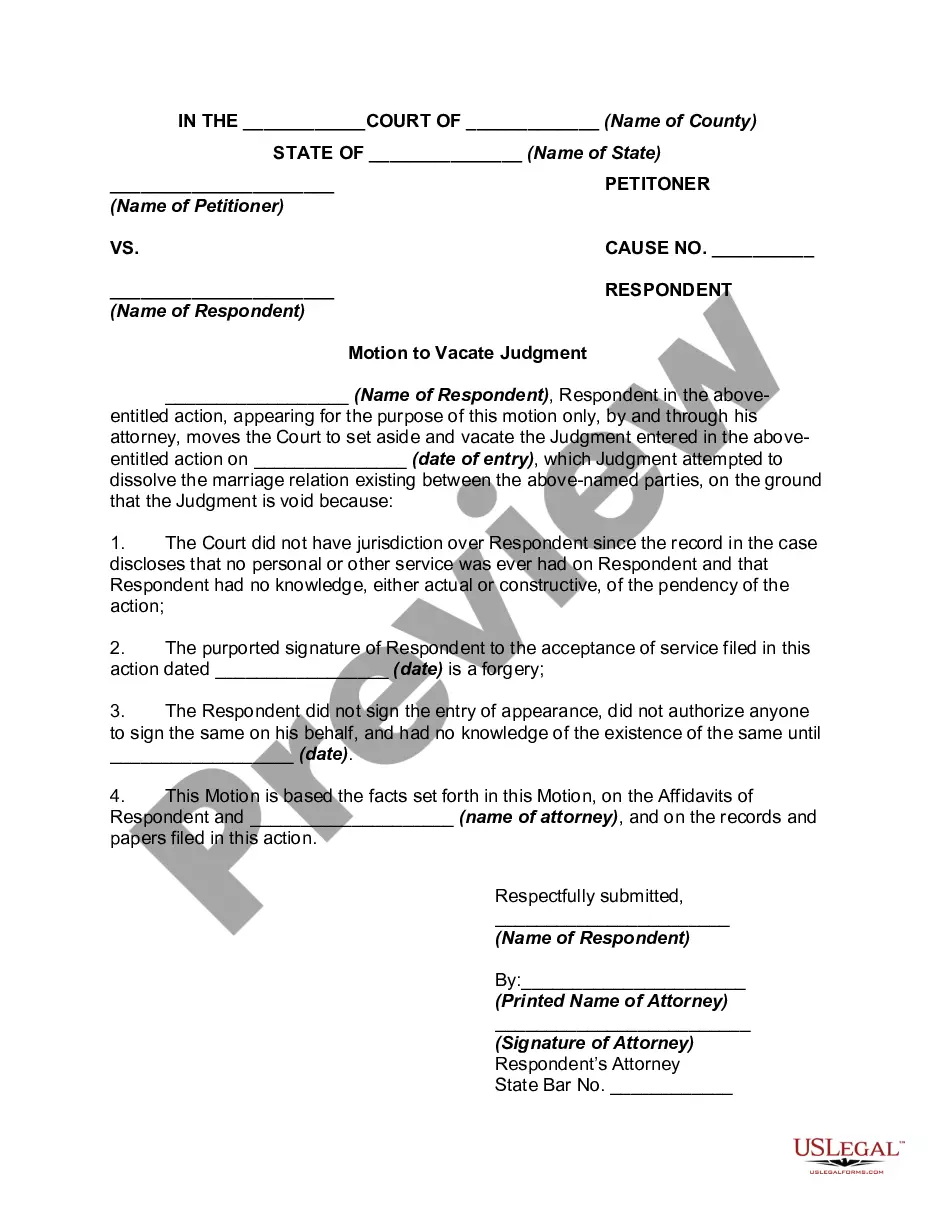
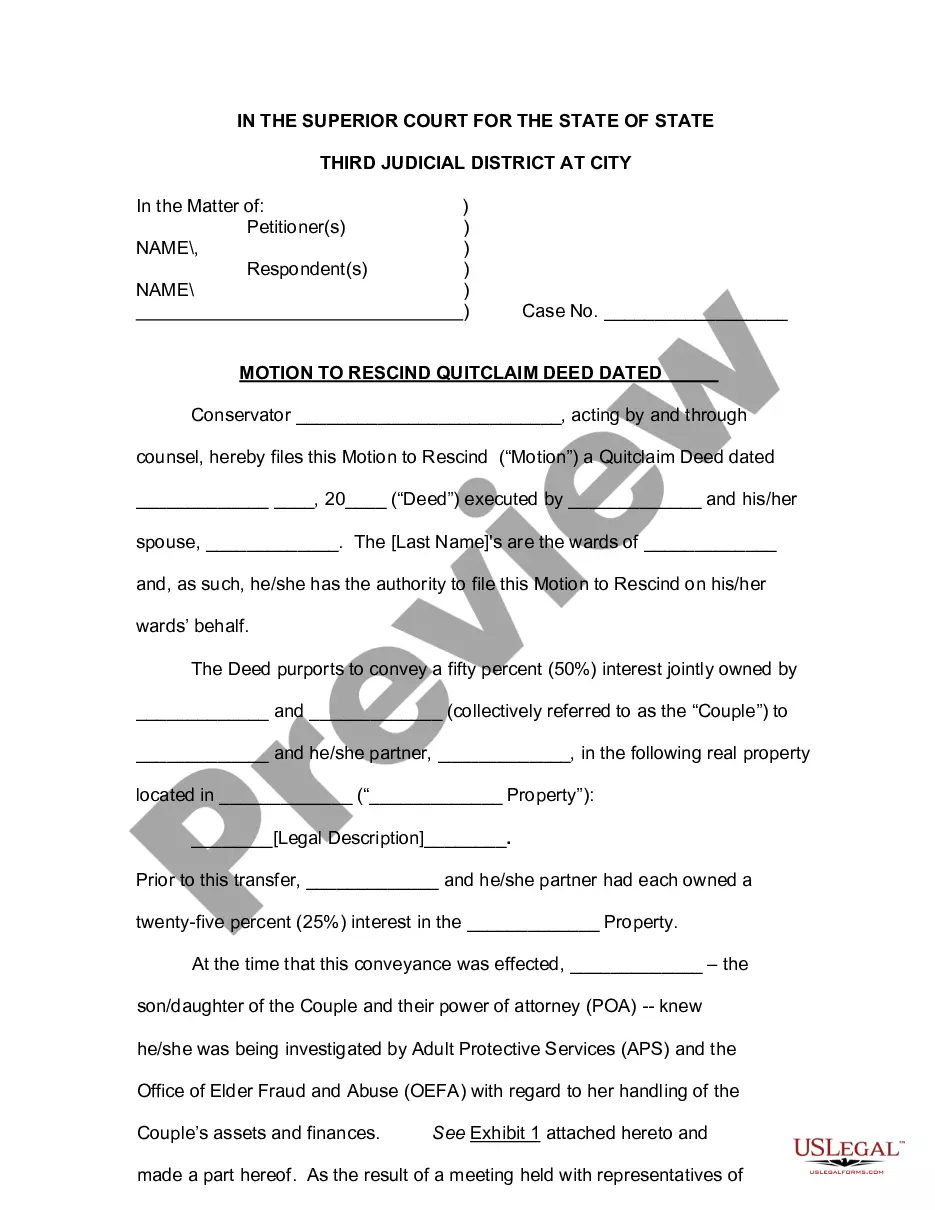
This Motion to Vacate or Nullify Divorce Decree Obtained by Fraud is a legal document used to request the court to set aside a divorce judgment due to fraudulent practices. It is specifically useful when the divorce decree was issued without proper notice to the respondent, which may have prevented them from defending themselves in court. This form ensures that the respondent has the opportunity to contest the divorce judgment and assert their rights.
Main sections of this form
- Identifying information for the petitioner and respondent
- Grounds for the motion including the fraudulent act of not properly serving the respondent
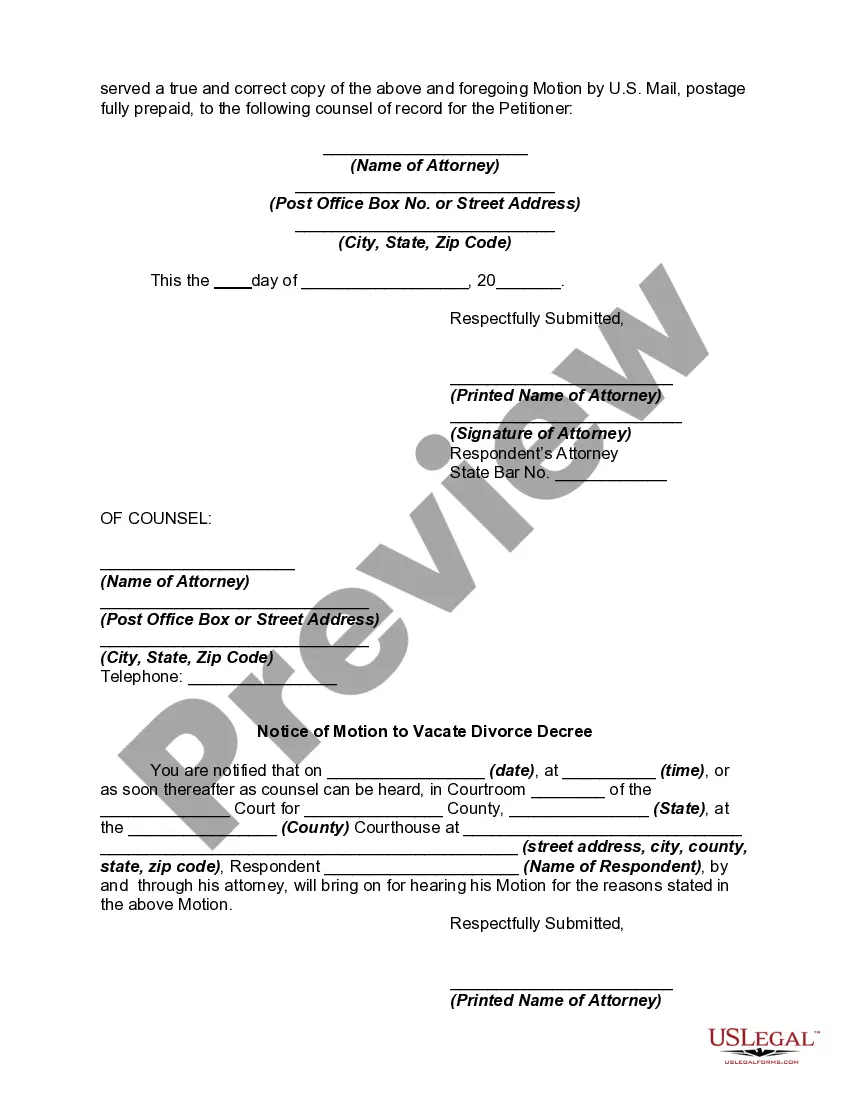
- Details regarding the service of summons and evidence of awareness of the correct address
- Request for the court to vacate the divorce judgment
- Certificate of service confirming delivery of the motion to the opposing party
When to use this form
This form should be used when a party to a divorce believes that the divorce decree was obtained fraudulently, particularly if it was issued without notifying the respondent at their correct address. Use this motion if you were unaware of the divorce proceedings and wish to have the judgment declared void, allowing you to respond and present your case appropriately in court.
Intended users of this form
- Individuals who are respondents in a divorce case and did not receive proper notice of the proceedings
- Those who believe a divorce decree was issued based on fraudulent information
- Anyone seeking to challenge a divorce judgment due to improper handling of service
How to prepare this document
- Identify the petitioner and respondent by entering their names in the designated fields.
- State the grounds for the motion, detailing the fraudulent service and lack of notice.
- Attach supporting documents, such as affidavits that provide evidence of the respondent's correct address.
- Specify the details of the motion, including the dates of service and the newspaper publication.
- Sign the motion, and ensure it is served to the opposing counsel as indicated in the certificate of service.
Notarization guidance
This form usually doesn’t need to be notarized. However, local laws or specific transactions may require it. Our online notarization service, powered by Notarize, lets you complete it remotely through a secure video session, available 24/7.
Get your form ready online
Our built-in tools help you complete, sign, share, and store your documents in one place.
Make edits, fill in missing information, and update formatting in US Legal Forms—just like you would in MS Word.
Download a copy, print it, send it by email, or mail it via USPS—whatever works best for your next step.
Sign and collect signatures with our SignNow integration. Send to multiple recipients, set reminders, and more. Go Premium to unlock E-Sign.
If this form requires notarization, complete it online through a secure video call—no need to meet a notary in person or wait for an appointment.
We protect your documents and personal data by following strict security and privacy standards.

Make edits, fill in missing information, and update formatting in US Legal Forms—just like you would in MS Word.

Download a copy, print it, send it by email, or mail it via USPS—whatever works best for your next step.

Sign and collect signatures with our SignNow integration. Send to multiple recipients, set reminders, and more. Go Premium to unlock E-Sign.

If this form requires notarization, complete it online through a secure video call—no need to meet a notary in person or wait for an appointment.

We protect your documents and personal data by following strict security and privacy standards.
Common mistakes to avoid
- Failing to provide accurate details of both parties' identification.
- Not including necessary attachments, such as affidavits and prior court orders.
- Neglecting to serve the motion to the opposing party, which can lead to delays.
- Submitting the motion without clearly stating the fraudulent actions that warrant vacating the decree.
Why complete this form online
- Convenience of downloading and completing the form from home.
- Editable digital format for customized entries based on individual circumstances.
- Access to attorney-drafted templates ensuring legal compliance and accuracy.
- Ease of obtaining additional legal resources and information related to your case.
Looking for another form?


Form popularity
FAQ
What Does Vacating a Divorce Mean? In essence, it's a do-over. A motion to vacate a judgment is a request for the court that decided the original divorce case make the verdict unenforceable because of some mistake.
It means an order of dismissal was granted AND now that order is being vacated or opened up. The case is no longer dismissed. It is active.
You can't take back or rescind the divorce once the courts have finalized it, even if the defendant never received the petition and did not know a spouse filed for divorce.
From Wikipedia, the free encyclopedia. A vacated judgment makes a previous legal judgment legally void. A vacated judgment is usually the result of the judgment of an appellate court, which overturns, reverses, or sets aside the judgment of a lower court. An appellate court may also vacate its own decisions.