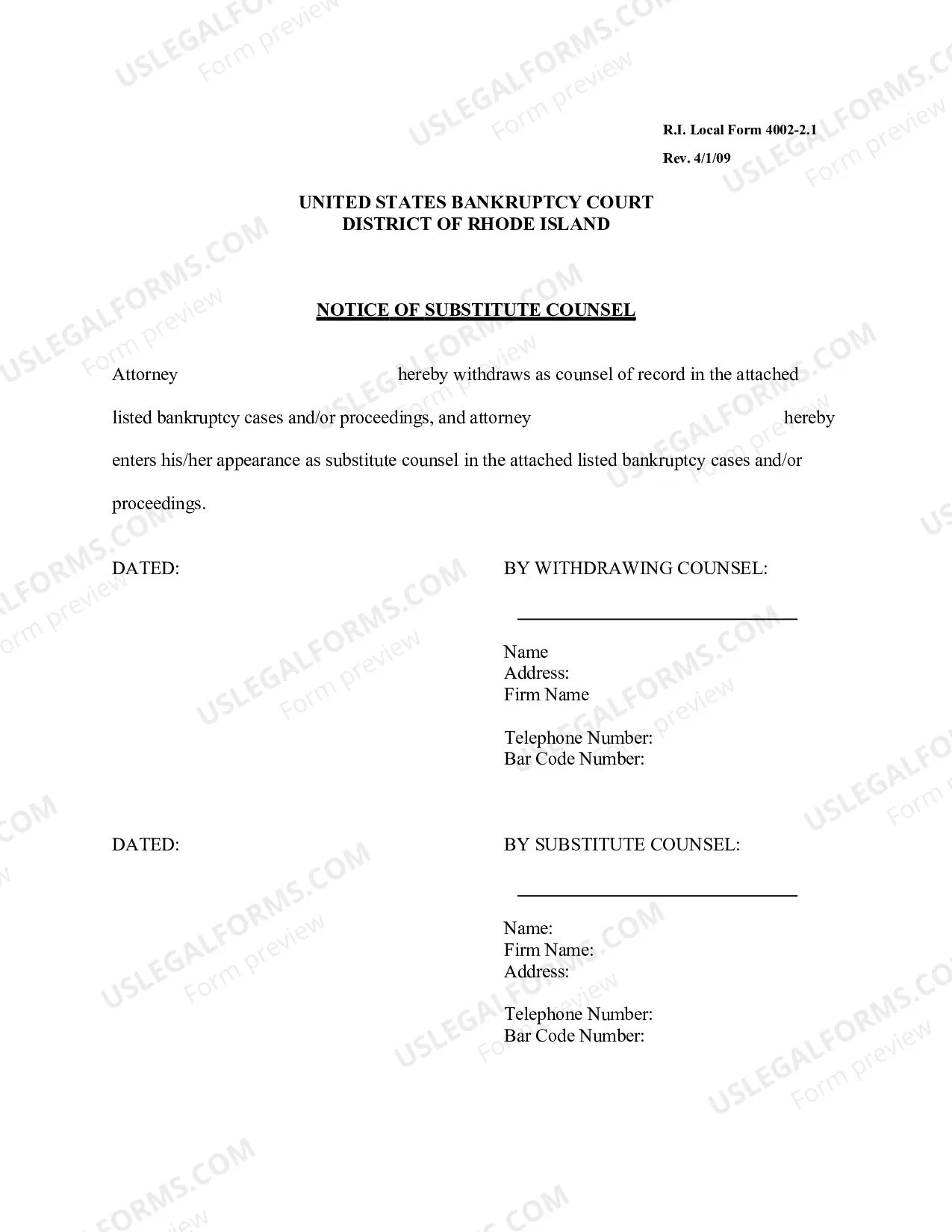
Motion to Rescind Quitclaim Deed Dated on a Specific Date
About this form
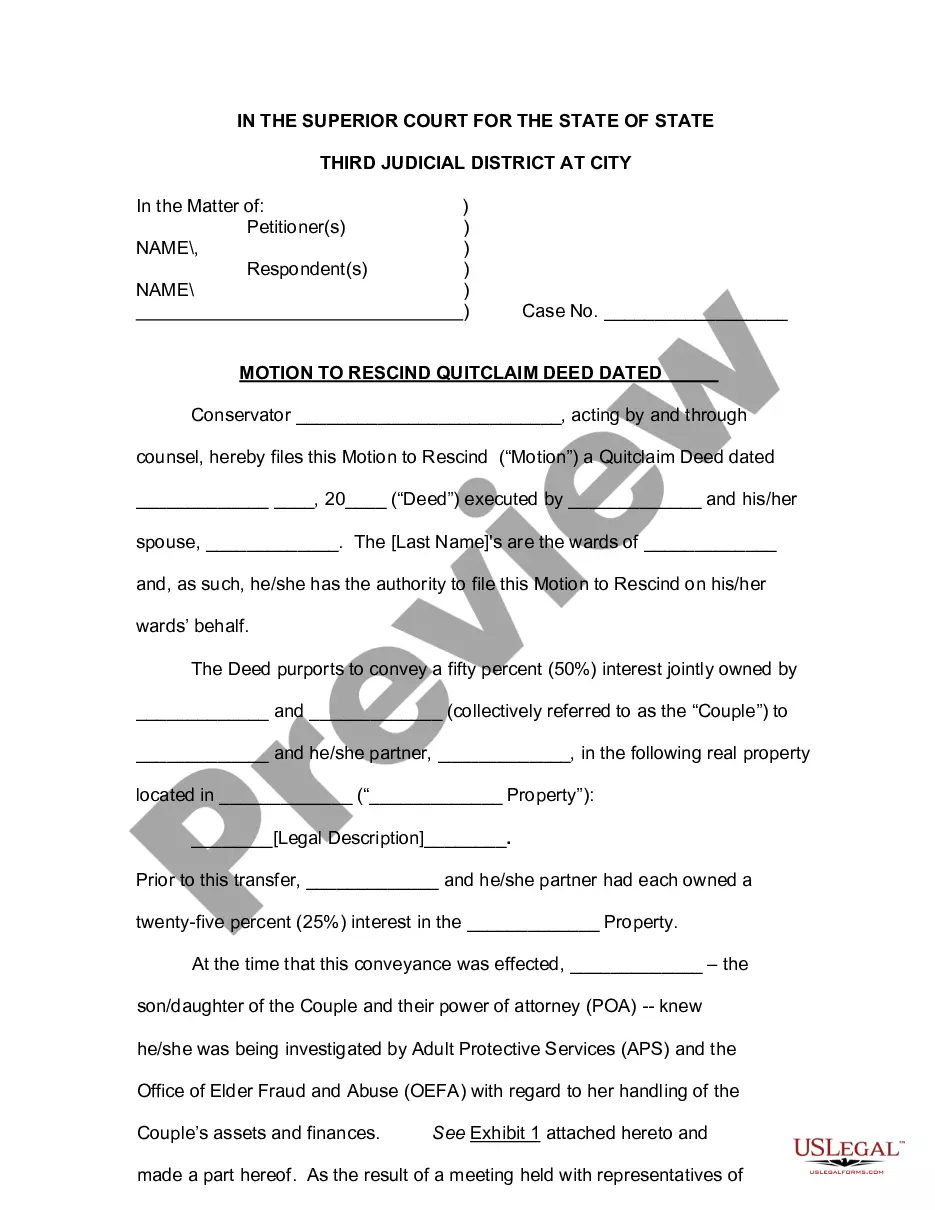
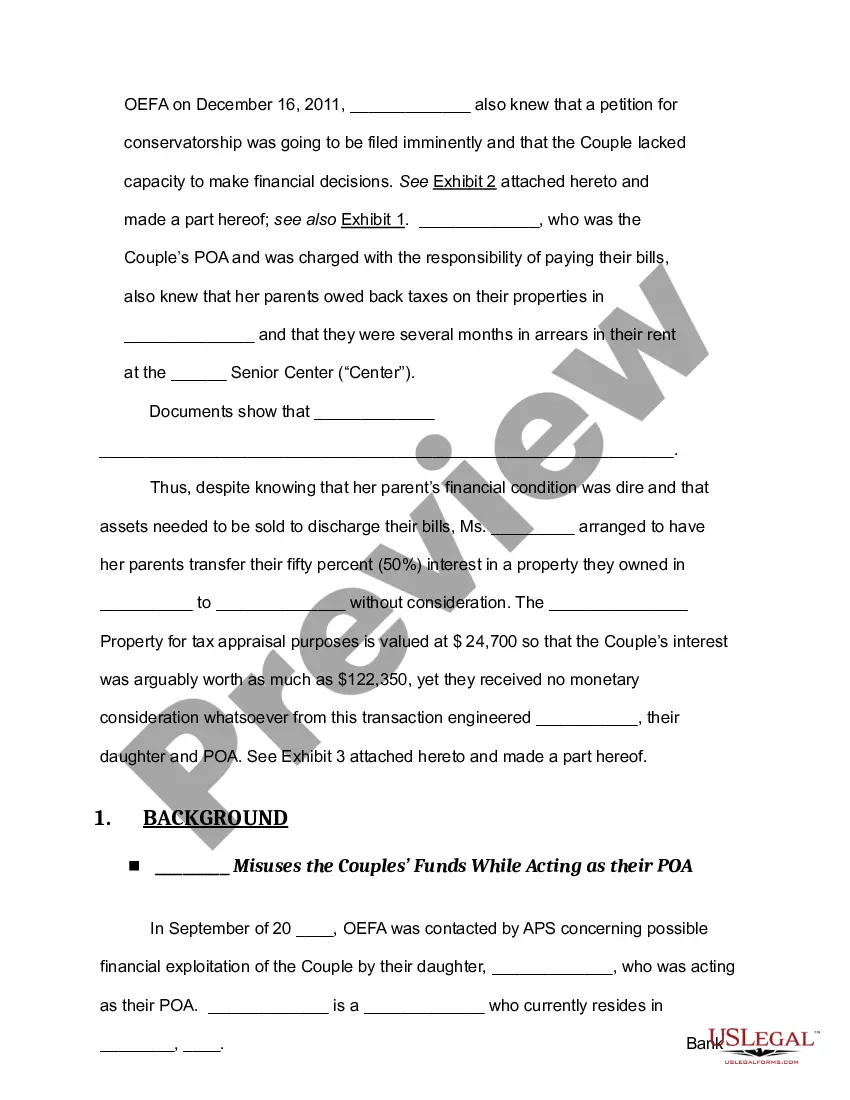
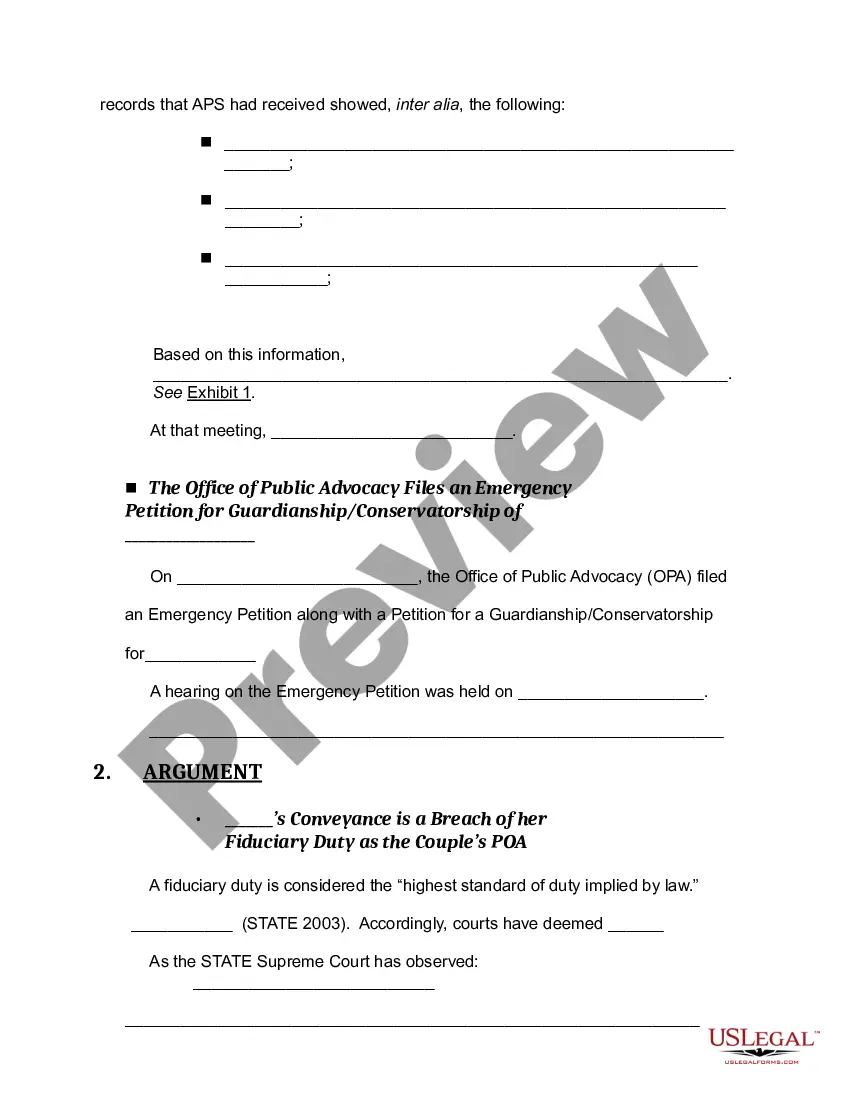
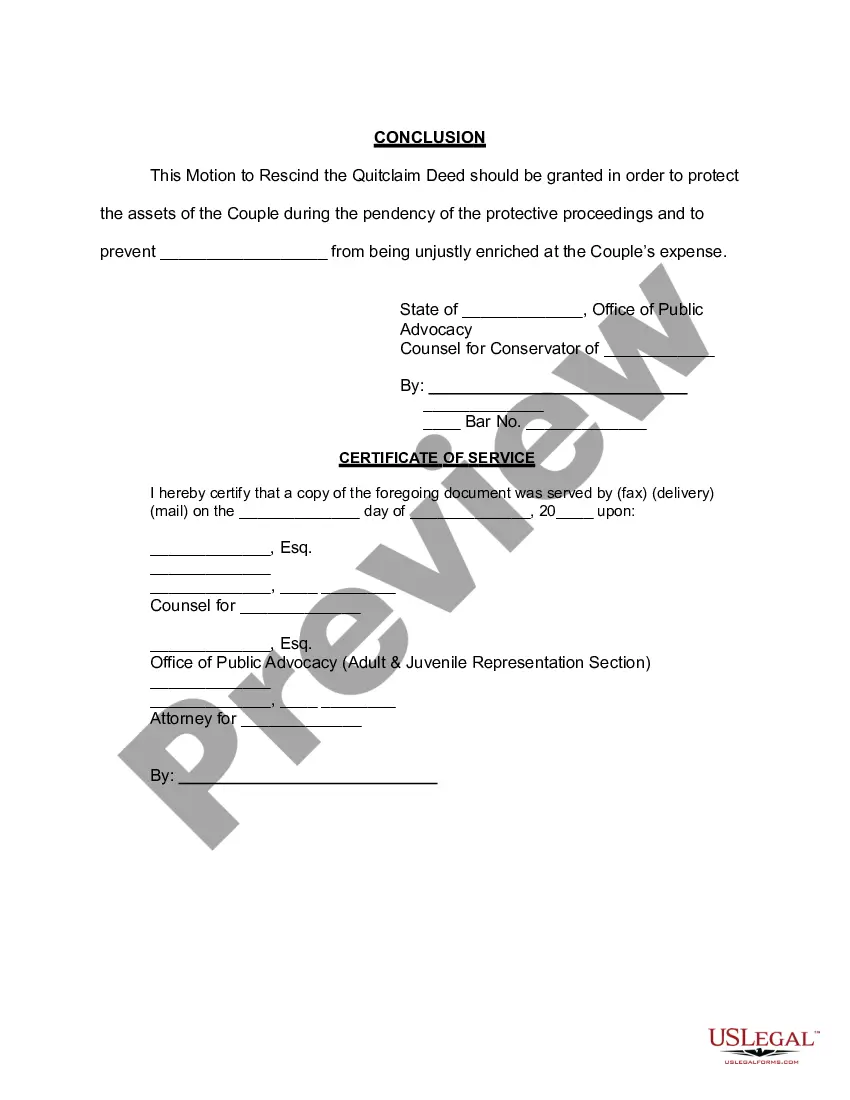
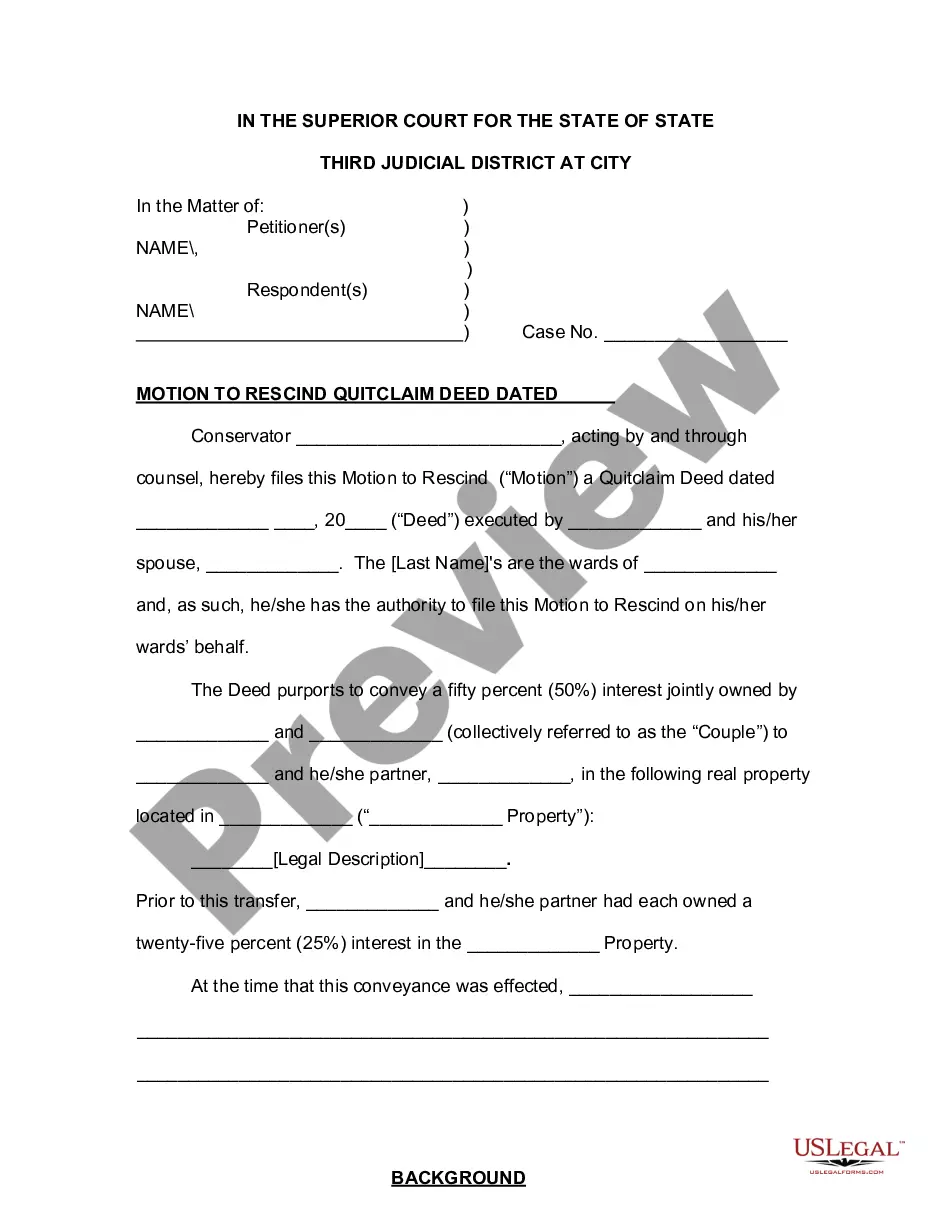
The Motion to Rescind Quitclaim Deed allows a petitioner to challenge a deed transfer that was executed under questionable circumstances. This legal form is primarily used when a property transfer may have occurred due to undue influence, financial exploitation, or lack of capacity. It serves to reverse an improper transaction, ensuring the protection of the individuals' assets and rights, distinguishing it from standard quitclaim deeds or property transfer forms.
Key parts of this document
- Case information: Identification of the involved parties and case number.
- Property description: Details about the real property and interests involved.
- Background information: Context regarding the nature of the financial exploitation and the parties' capacity.
- Fiduciary duty arguments: Legal reasoning supporting why the deed should be rescinded.
- Certification of service: Documentation confirming that all parties were notified of the motion.
When to use this document
This form is relevant in situations where a property owner wishes to contest a quitclaim deed that may have been executed without the owner's full understanding or under duress. It is particularly applicable when the transfer resulted from the actions of a power of attorney or family member who may have acted against the best interests of the property owners.
Who can use this document
- Individuals who believe they have been financially exploited by a family member or their power of attorney.
- Caretakers or conservators managing the assets of individuals lacking capacity.
- Estate planning attorneys assisting clients in reversing potentially harmful property transfers.
How to prepare this document
- Identify the parties: Fill in the names of the petitioner(s) and respondent(s).
- Describe the property: Clearly describe the real property involved in the quitclaim deed.
- Provide background: Summarize the circumstances surrounding the deed transfer and any concerns regarding capacity.
- State your arguments: Clearly articulate why the quitclaim deed should be rescinded.
- Sign and date the document: Ensure all necessary parties have signed the motion in accordance with state requirements.
Is notarization required?
This form does not typically require notarization unless specified by local law. However, it is advisable to consult with local legal authorities or an attorney to ensure compliance with all requirements.
Get your form ready online
Our built-in tools help you complete, sign, share, and store your documents in one place.
Make edits, fill in missing information, and update formatting in US Legal Forms—just like you would in MS Word.
Download a copy, print it, send it by email, or mail it via USPS—whatever works best for your next step.
Sign and collect signatures with our SignNow integration. Send to multiple recipients, set reminders, and more. Go Premium to unlock E-Sign.
If this form requires notarization, complete it online through a secure video call—no need to meet a notary in person or wait for an appointment.
We protect your documents and personal data by following strict security and privacy standards.

Make edits, fill in missing information, and update formatting in US Legal Forms—just like you would in MS Word.

Download a copy, print it, send it by email, or mail it via USPS—whatever works best for your next step.

Sign and collect signatures with our SignNow integration. Send to multiple recipients, set reminders, and more. Go Premium to unlock E-Sign.

If this form requires notarization, complete it online through a secure video call—no need to meet a notary in person or wait for an appointment.

We protect your documents and personal data by following strict security and privacy standards.
Common mistakes
- Failing to adequately describe the property involved.
- Neglecting to include required signatures or certifications.
- Omitting relevant background information that supports the case.
Why use this form online
- Convenience: Download and complete the form from anywhere at any time.
- Editability: Tailor the form to suit specific circumstances or legal requirements.
- Reliability: Access legal forms drafted by licensed attorneys, ensuring compliance with current laws.
Looking for another form?



Form popularity
FAQ
Pennsylvania law uses the name quitclaim deed for deeds that transfer the current owner's interest in property with no warranty. The term may also be written as quit claim deed or as quit-claim deed?both of which are acceptable. Quickclaim deed is a common mistake but is not an actual legal term.
Pennsylvania Quitclaim Deed Laws and Requirements Under Pennsylvania law, a quitclaim deed must contain specific language and be signed by the grantor. To record the deed, the grantor's signature must be acknowledged. Before recording the deed, you will need to pay a recording fee and a transfer tax.
What are the Disadvantages of a Quit Claim Deed? No Protections For The Transaction: Unlike warranty deeds, a quitclaim deeds does not offer protections for the new property owner. There is no way to guarantee that the property is owned free and clear, and that there are no easements or restrictions.
What Is a Quitclaim Deed? Quitclaim deeds are most often for transferring property between family members or to cure a defect on the title, such as a misspelling of a name.
1-Year Subscription. Transfer property in Pennsylvania quickly and easily using this simple legal form. You can use a quitclaim deed to: transfer property to or from a revocable living trust.
Quitclaim deeds are valid and commonly used in California. Title insurers in a few states?including Texas?disfavor quitclaim deeds. In those other states, a deed without warranty (also called a no warranty deed) often substitutes for a quitclaim deed.
If properly executed, a Florida quitclaim deed usually requires two weeks to three months to be recorded. The parties involved in real estate transactions generally seek to record the deed immediately after the closing process is concluded.
A quitclaim deed is often used if the grantor is not sure of the status of the title (whether it contains any defects) or if the grantor wants no liability under the title covenants.