Detailed Tax Increase Clause
About this form
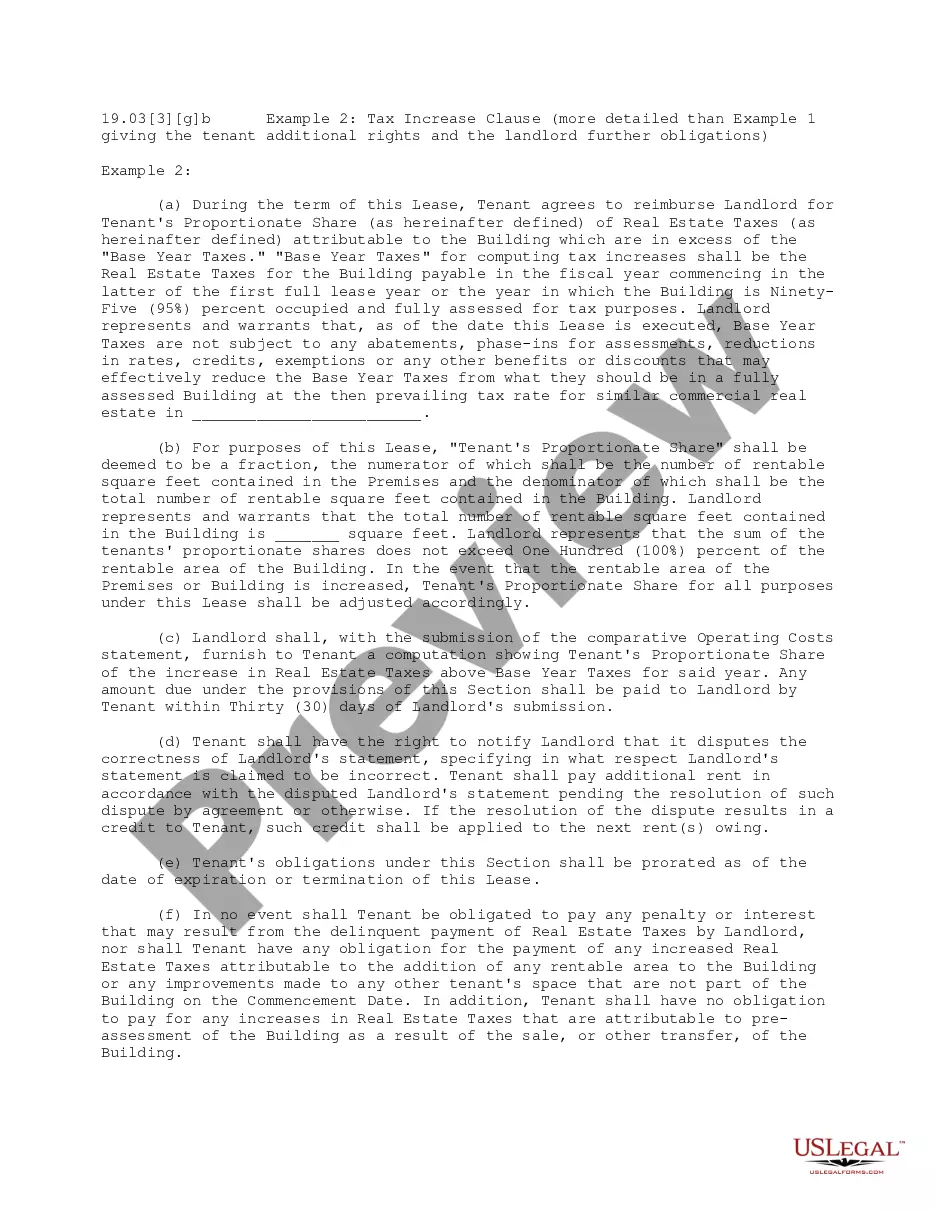
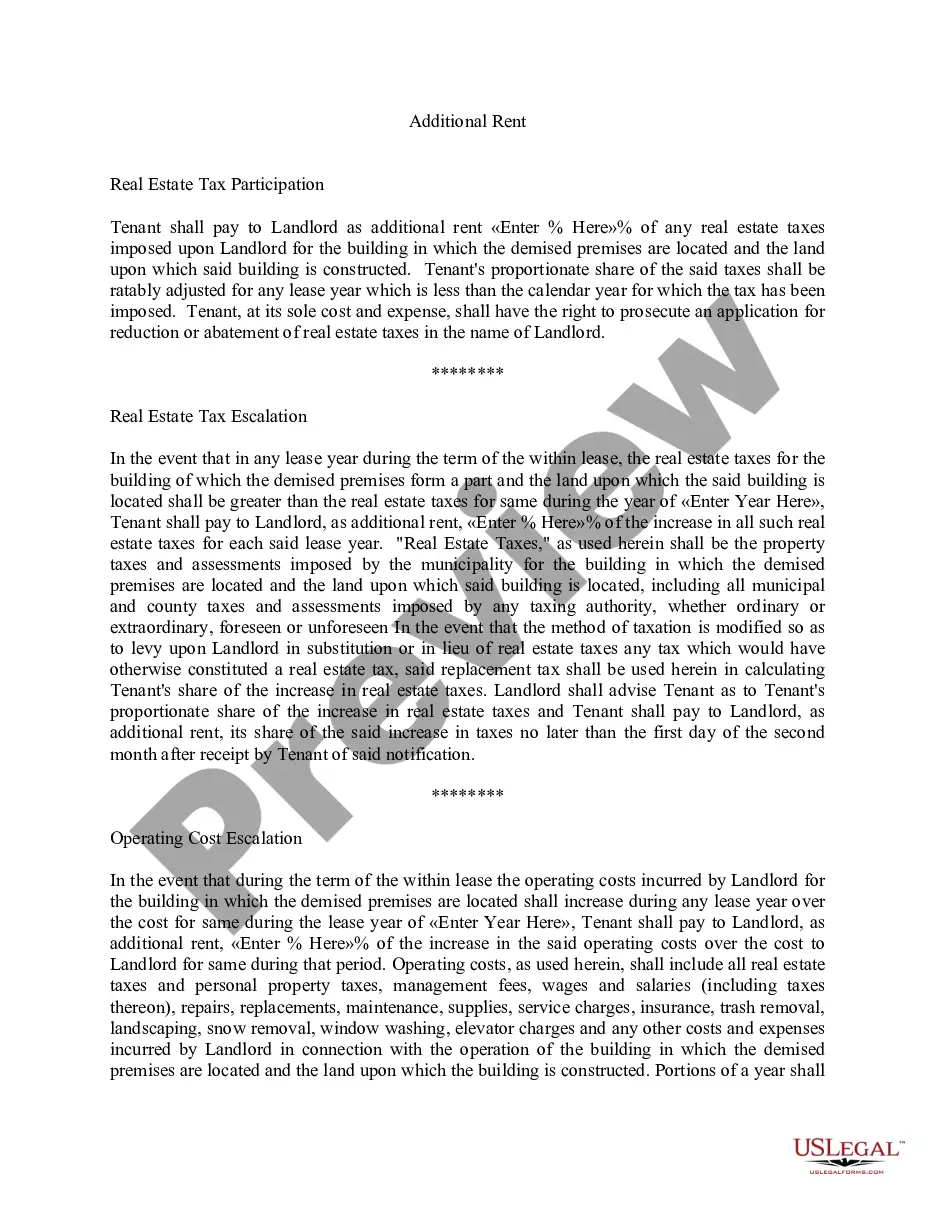
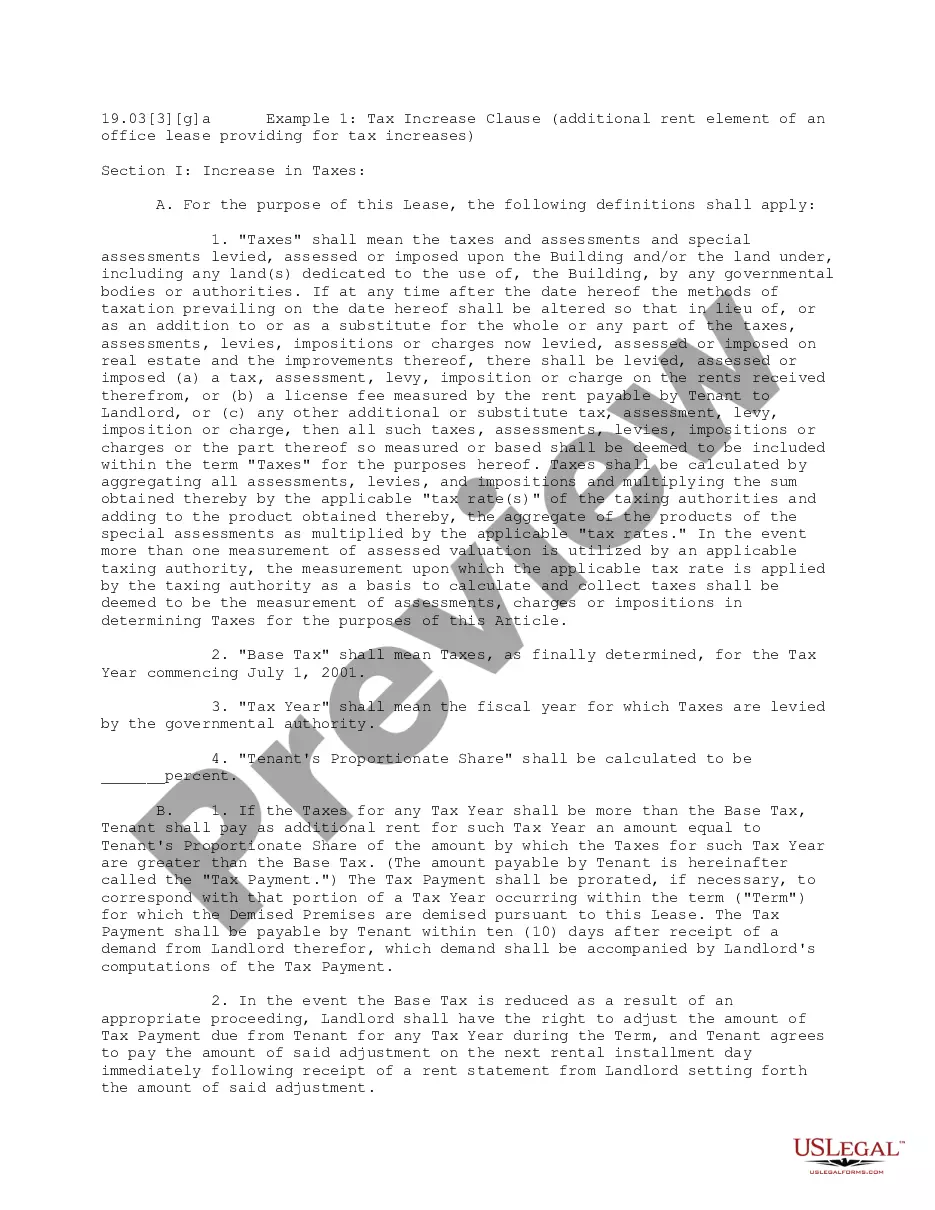
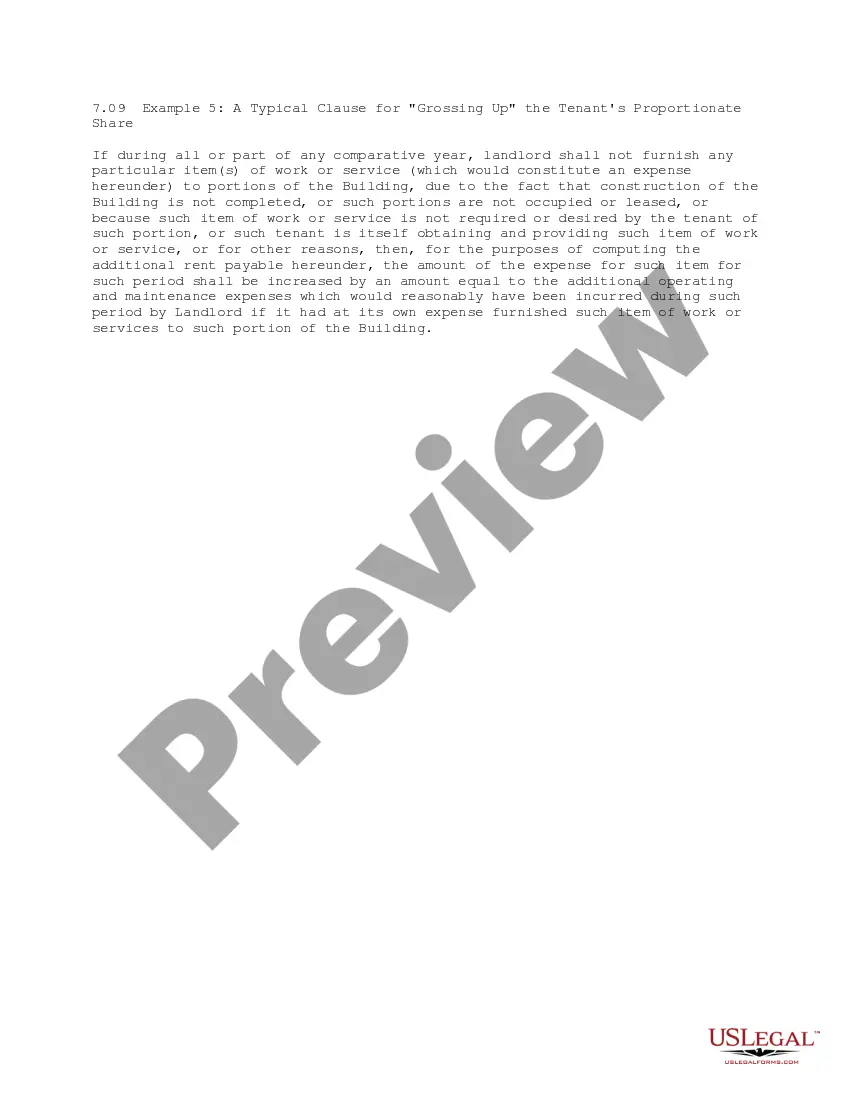
The Detailed Tax Increase Clause is a specific provision used in commercial office lease agreements that outlines the tenant's rights and the landlord's obligations regarding increases in real estate taxes. This form ensures that tenants are only responsible for tax increases exceeding a predefined baseline. It is essential for both landlords and tenants to understand this agreement to maintain transparency and fairness in lease management, particularly as property taxes can fluctuate significantly over time.
Form components explained
- The definition of "Base Year Taxes" to establish a starting point for tax calculations.
- Details on how the tenant's proportionate share of tax increases is calculated.
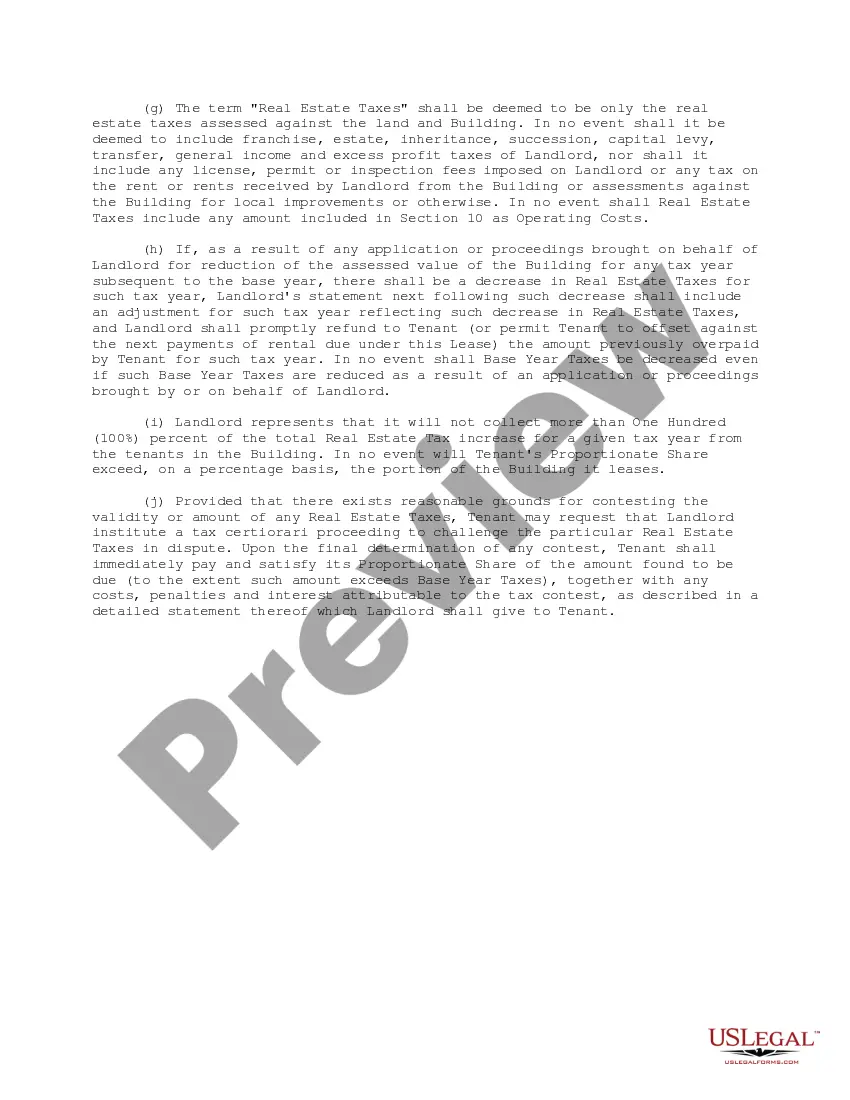
- Procedures for disputing tax statements provided by the landlord.
- Exemptions for tenants regarding penalties and interest due to delayed tax payments by the landlord.
- Clarifications on what constitutes real estate taxes and what is excluded.
- Conditions under which a tenant can request a tax contest to challenge real estate taxes.
Common use cases
This form should be used in commercial lease agreements where real estate taxes may increase during the lease term. It is especially important if the property is subject to variable tax assessments, and it is crucial for tenants who want to protect themselves from unexpected tax increases that exceed the initial base year amount. This clause enables tenants to know their financial responsibilities and provides a structure for handling disputes over tax increases.
Who needs this form
- Commercial landlords seeking to clearly define tax obligations in lease agreements.
- Tenants leasing commercial spaces who want to protect themselves from unforeseen tax increases.
- Legal practitioners drafting or reviewing commercial lease agreements.
- Property managers responsible for negotiating lease terms and conditions.
How to prepare this document
- Identify the parties involved in the lease agreement: the landlord and tenant.
- Clearly define the "Base Year Taxes" relevant to the property.
- Specify the total rentable square footage of the building and the tenant's portion.
- Outline the method for calculating the tenant's proportionate share of tax increases.
- Include clauses regarding dispute resolution and exemptions applicable to the tenant.
Notarization guidance
In most cases, this form does not require notarization. However, some jurisdictions or signing circumstances might. US Legal Forms offers online notarization powered by Notarize, accessible 24/7 for a quick, remote process.
Get your form ready online
Our built-in tools help you complete, sign, share, and store your documents in one place.
Make edits, fill in missing information, and update formatting in US Legal Forms—just like you would in MS Word.
Download a copy, print it, send it by email, or mail it via USPS—whatever works best for your next step.
Sign and collect signatures with our SignNow integration. Send to multiple recipients, set reminders, and more. Go Premium to unlock E-Sign.
If this form requires notarization, complete it online through a secure video call—no need to meet a notary in person or wait for an appointment.
We protect your documents and personal data by following strict security and privacy standards.

Make edits, fill in missing information, and update formatting in US Legal Forms—just like you would in MS Word.

Download a copy, print it, send it by email, or mail it via USPS—whatever works best for your next step.

Sign and collect signatures with our SignNow integration. Send to multiple recipients, set reminders, and more. Go Premium to unlock E-Sign.

If this form requires notarization, complete it online through a secure video call—no need to meet a notary in person or wait for an appointment.

We protect your documents and personal data by following strict security and privacy standards.
Common mistakes to avoid
- Failing to define the Base Year Taxes accurately, leading to confusion later.
- Not specifying the total square footage of the building correctly, resulting in improper calculations of tax shares.
- Overlooking the importance of dispute resolution procedures, which can lead to disputes remaining unresolved.
- Neglecting to update the clause in case of changes to the property or tenant demographics.
Benefits of completing this form online
- Convenience of downloading and completing the form from anywhere at any time.
- Editability to customize the clause as per specific lease agreements and tenant needs.
- Reliable and professional templates drafted by licensed attorneys to ensure compliance with laws.
Legal use & context
- This clause can provide legal protections for both landlords and tenants regarding taxes.
- Understanding and accurately filling out this form helps prevent disputes related to tax reimbursements.
- Ensures compliance with commercial real estate standards across jurisdictions.
Main things to remember
- The Detailed Tax Increase Clause provides a framework for handling property tax increases in commercial leases.
- Both parties must understand their rights and obligations related to these tax increases.
- Using this form can help prevent misunderstandings and foster better landlord-tenant relationships.
Looking for another form?



Form popularity
FAQ
The use clause in a lease tells you how you can utilize your space. It may restrict your lines of business, stipulate office hours that you must adhere to and place restrictions on advertising signage on the premises.
The terms of a contract can be expressly agreed orally or in writing. In addition, terms may even be implied by law, the conduct of the parties, custom in a particular trade, previous dealings or the parties' intentions. Three types of term. Contractual terms are defined as conditions, warranties or innominate terms.
If you're a tenant and your business fails, but you vacate your space and pay rent through the date you vacate, you're a good guy. A good guy clause limits the liability of the personal guarantor for a tenant when a lease is terminated early.
Basic Commercial Contract Principlescontract wording: Generally, contracts should be in writing, signed and dated by both parties. There may be other formalities, such as witnesses, notarization, etc., required by the laws of a particular jurisdiction to create a binding contract.
A commercial agreement is a legally binding contract between parties where both are required to do particular activities or refrain from doing something.
Standard form contracts are seen as a feature of efficient business practice. These contracts allow businesses operating beyond the confines of one state to make uniform offerings to vast number of consumers across different locations, whether these are different cities or countries.
Buy and Sell Agreements. Commercial Leases (Including Retail Leases) Shareholders Agreements. Franchise Agreements. Distribution Agreements. Joint Venture Agreements. Supply Agreements. Terms of Trade Agreements.
Clauses are specific provisions or sections in your contract that address a specific aspect of the agreement. Clauses clearly define each party's duties, rights, and privileges under the terms of the contract.