Bankruptcy: Presenting or Using a False Claim (Bankruptcy Proceeding Pending)
What is this form?
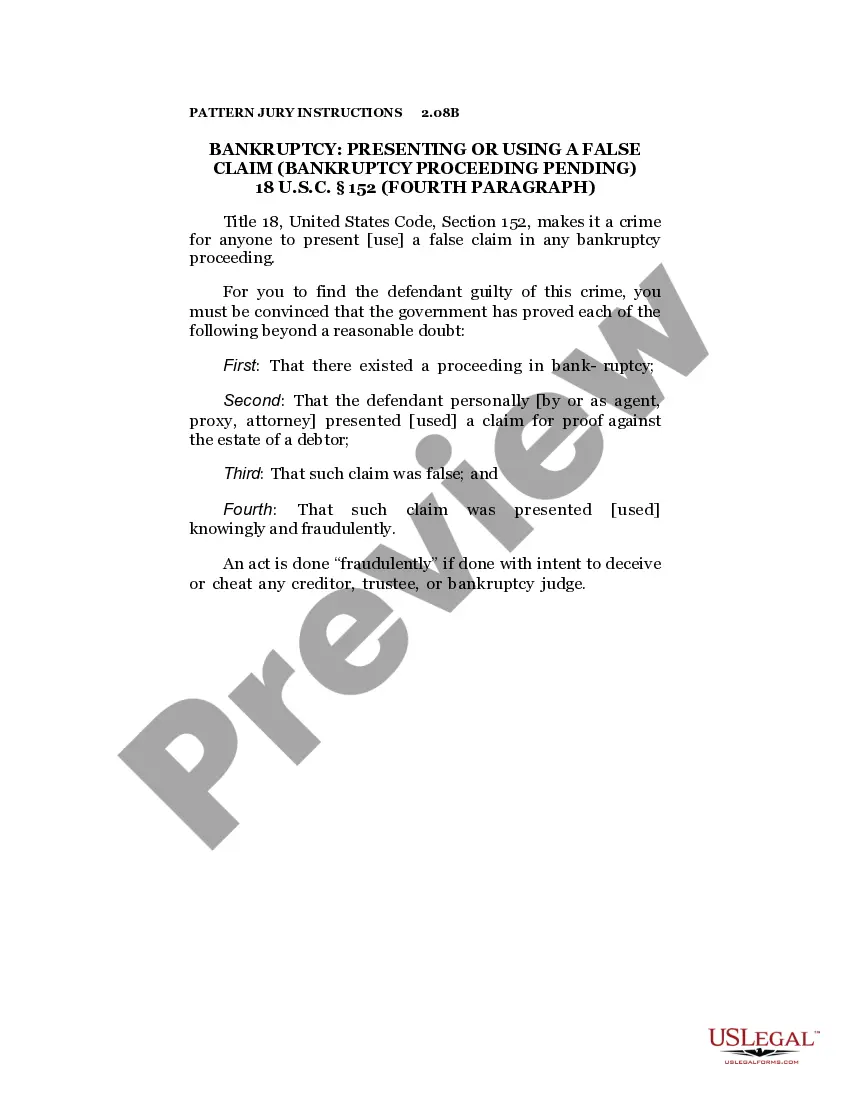
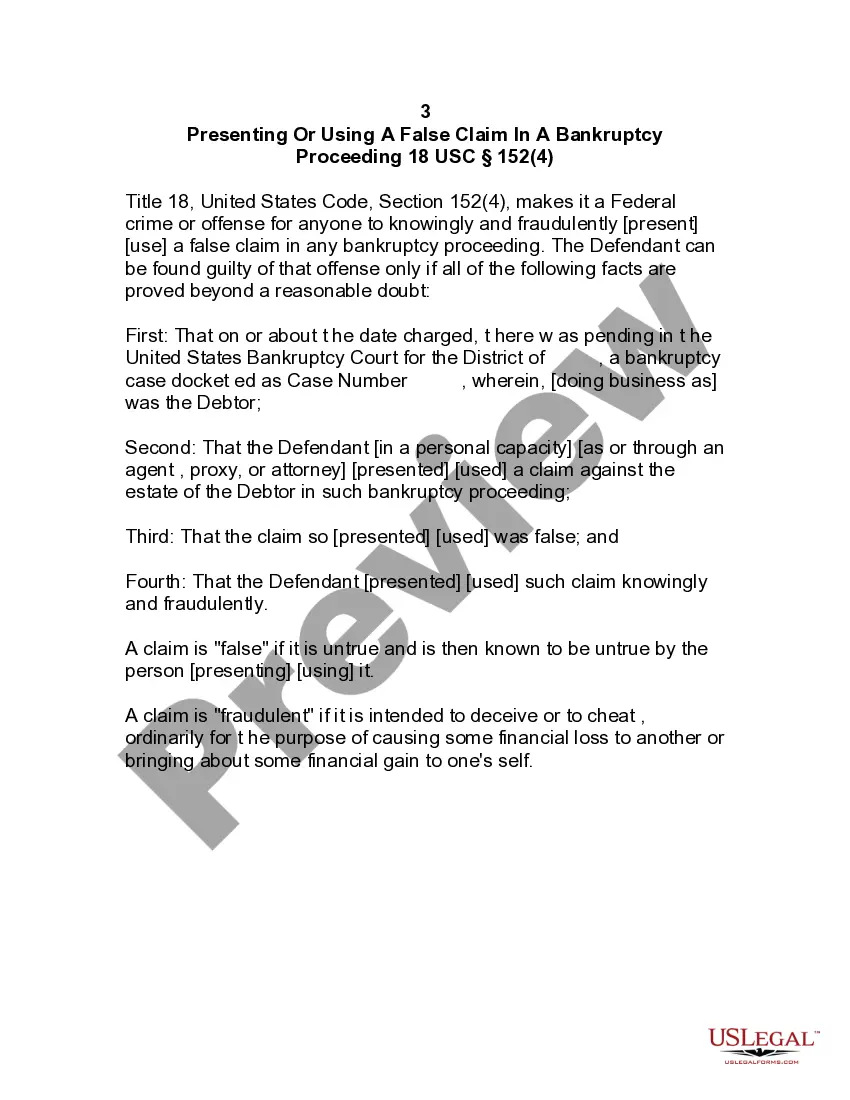
The Bankruptcy: Presenting or Using a False Claim form is a legal document used in bankruptcy proceedings. It addresses the crime of submitting false claims against a debtor's estate. This form ensures that individuals understand the implications of presenting fraudulent claims, aiming to maintain the integrity of the bankruptcy process. Unlike other bankruptcy forms, this one specifically deals with the legal repercussions of dishonesty in bankruptcy claims.
Key components of this form
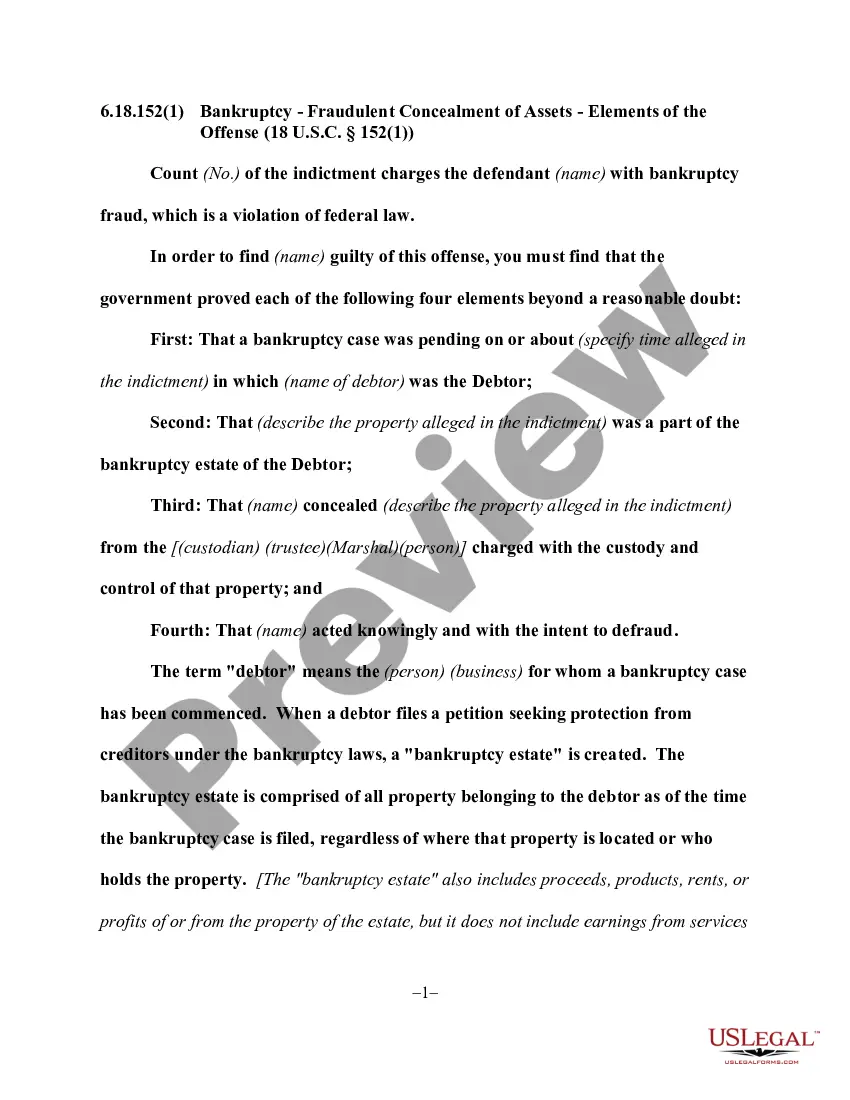
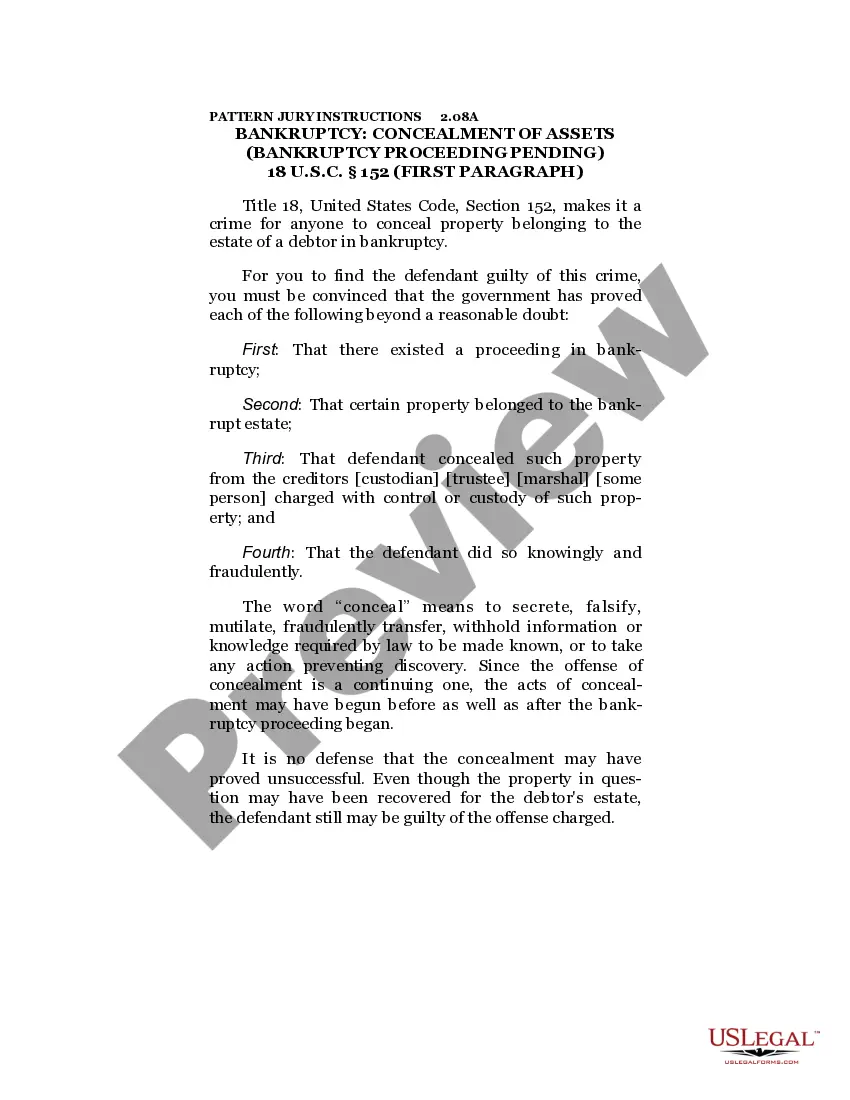
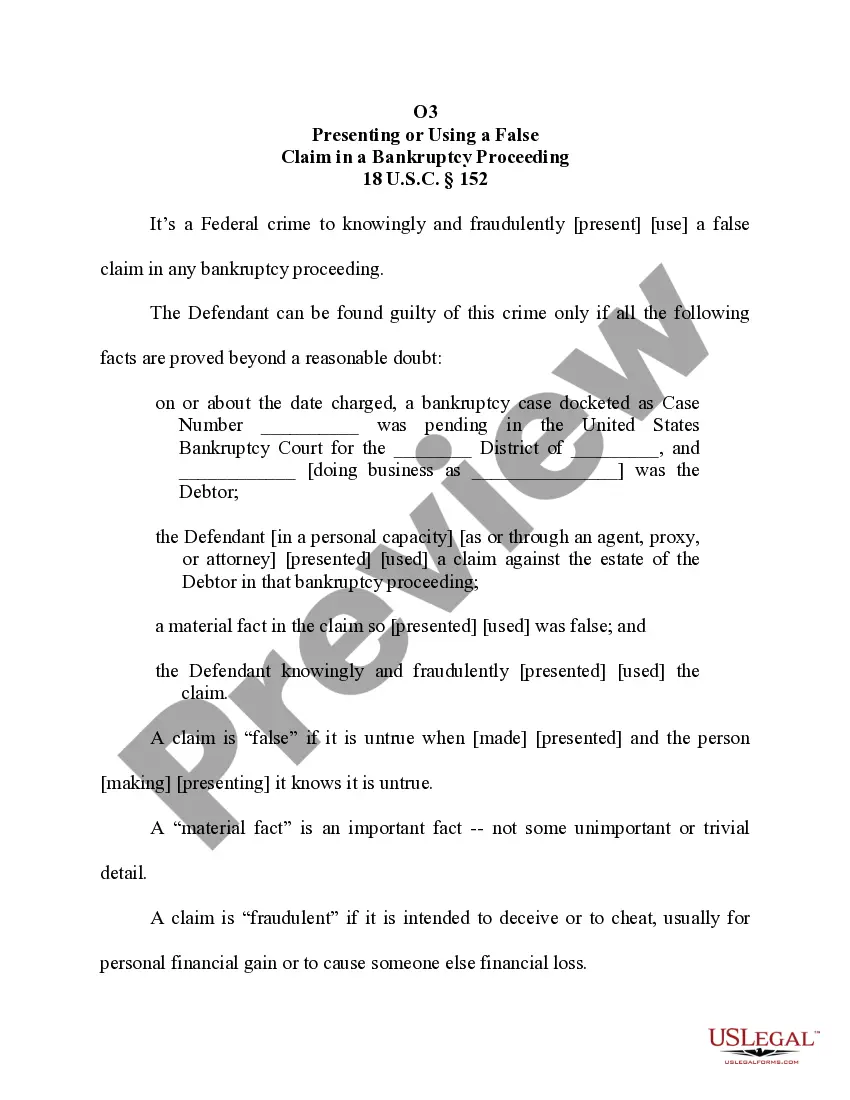
- Definition of false claims in bankruptcy proceedings.
- Criteria for proving a false claim, including the involvement of an agent or attorney.
- Requirements for establishing intent to deceive or cheat.
- Consequences of presenting a false claim, including potential legal penalties.
Situations where this form applies
This form should be used when an individual or entity is facing bankruptcy proceedings and may be tempted to present a claim against the debtor's estate that is knowingly false. It serves as a critical reminder of the legal obligations and potential consequences associated with bankruptcy claims.
Who this form is for
- Debtors involved in bankruptcy proceedings.
- Creditors who may be affected by false claims in bankruptcy.
- Attorneys representing clients in bankruptcy cases.
Instructions for completing this form
- Identify the parties involved in the bankruptcy proceeding.
- Detail the claim being presented, ensuring accuracy and honesty.
- State the nature of the claim clearly, specifying any amounts owed.
- Certify the claim with the necessary signatures, demonstrating knowledge of its truthfulness.
- Submit the form according to the requirements of the bankruptcy court.
Notarization guidance
This form usually doesn’t need to be notarized. However, local laws or specific transactions may require it. Our online notarization service, powered by Notarize, lets you complete it remotely through a secure video session, available 24/7.
Get your form ready online
Our built-in tools help you complete, sign, share, and store your documents in one place.
Make edits, fill in missing information, and update formatting in US Legal Forms—just like you would in MS Word.
Download a copy, print it, send it by email, or mail it via USPS—whatever works best for your next step.
Sign and collect signatures with our SignNow integration. Send to multiple recipients, set reminders, and more. Go Premium to unlock E-Sign.
If this form requires notarization, complete it online through a secure video call—no need to meet a notary in person or wait for an appointment.
We protect your documents and personal data by following strict security and privacy standards.

Make edits, fill in missing information, and update formatting in US Legal Forms—just like you would in MS Word.

Download a copy, print it, send it by email, or mail it via USPS—whatever works best for your next step.

Sign and collect signatures with our SignNow integration. Send to multiple recipients, set reminders, and more. Go Premium to unlock E-Sign.

If this form requires notarization, complete it online through a secure video call—no need to meet a notary in person or wait for an appointment.

We protect your documents and personal data by following strict security and privacy standards.
Mistakes to watch out for
- Failing to provide accurate information about the claim.
- Not understanding the implications of submitting a false claim.
- Neglecting to sign the form, which can invalidate it.
Why complete this form online
- Convenient access to legal documents from anywhere at any time.
- Editable templates that allow for customization based on specific needs.
- Access to documents drafted by licensed attorneys for legal compliance.
Looking for another form?


Form popularity
FAQ
Government entities have 180 days after the petition filing date to file a proof of claim. If a creditor doesn't file a proof of claim, it can't get paid through your bankruptcy. In a no-asset Chapter 7 case, creditors won't file proof of claim forms because there won't be any assets to distribute.
Proof of Claim means a proof of Claim Filed against any of the Debtors in the Chapter 11 Cases. Proof of Interest means a proof of Interest Filed against any of the Debtors in the Chapter 11 Cases.
Bankruptcy is a legal proceeding carried out to free individuals or businesses from their debts. Creditors still have an opportunity for repayment with the bankruptcy process. Bankruptcy is handled in federal courts, and rules are outlined in the U.S. Bankruptcy Code.
This bankruptcy form Notice of Objecton to Proof of Claim and Notice of Hearing and Objection to Claim can be used in Chapter 13 bankruptcy by a debtor's attorney to object to the proof of claim of a creditor who has overstated the amount due.
A bankruptcy debtor is required to sign his/her petition under penalty of perjury, which can result in a fine or even prison time up to 8 years. In other words, there should be one price to filing bankruptcy: full disclosure.
Proof of Claim Requirements for Chapter 11 Bankruptcy Chapter 11 is solely for companies that plan to reorganize and continue business at the conclusion of the bankruptcy. Chapter 11 creditors are not required to file a Proof of Claim because the debtor is required to file a Schedule of Assets and Liabilities.
A proof of claim is a form used by the creditor to indicate the amount of the debt owed by the debtor on the date of the bankruptcy filing. The creditor must file the form with the clerk of the same bankruptcy court in which the bankruptcy case was filed. Secured Claim Under 11 U.S.C. § 506 (a)
A bankruptcy proceeding is a legally authorized procedure that a bankruptcy case follows through the court system which consists of approving arrangements for the repayment of debts to relieve the debtor of their liability to creditors.