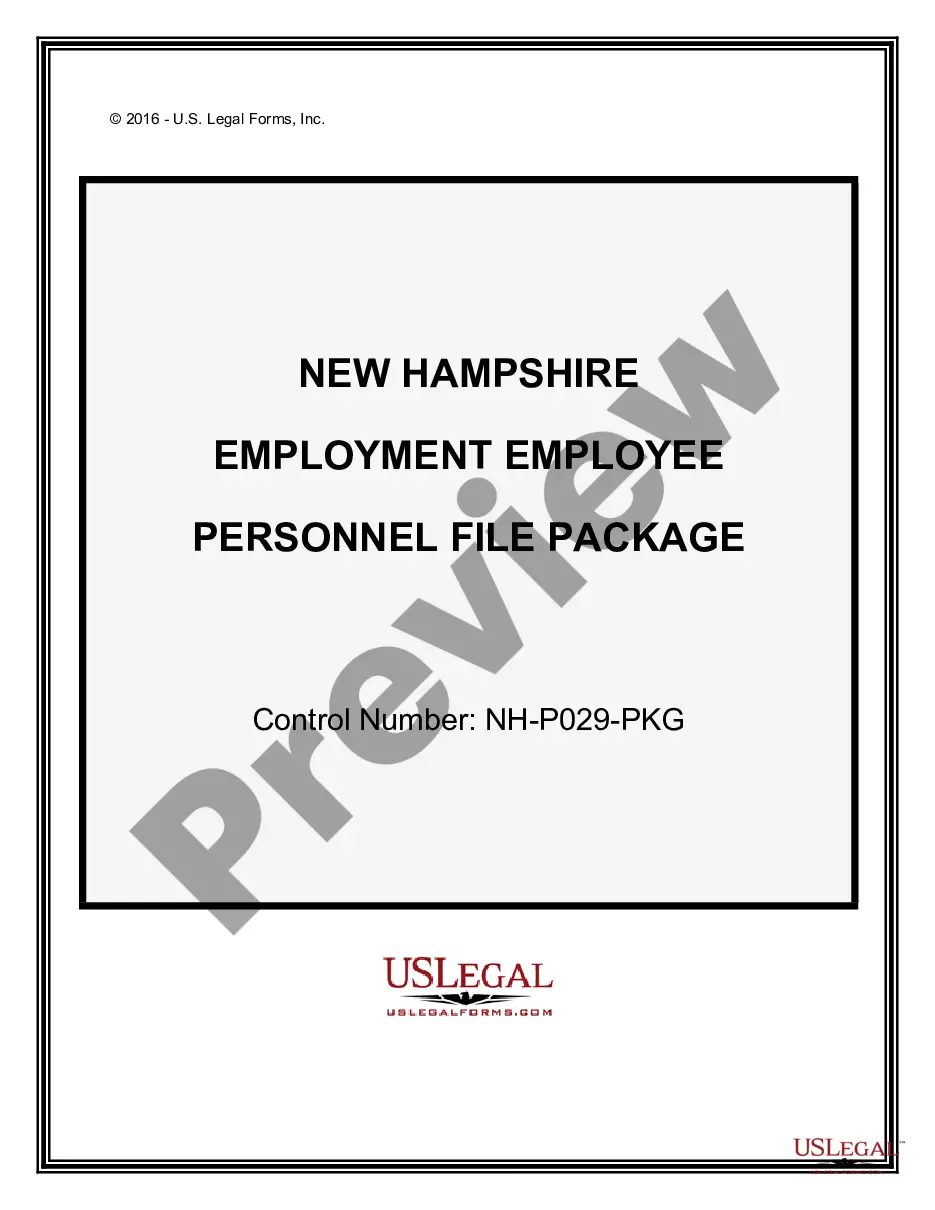
New Hampshire Employment Employee Personnel File Package
What this form package covers
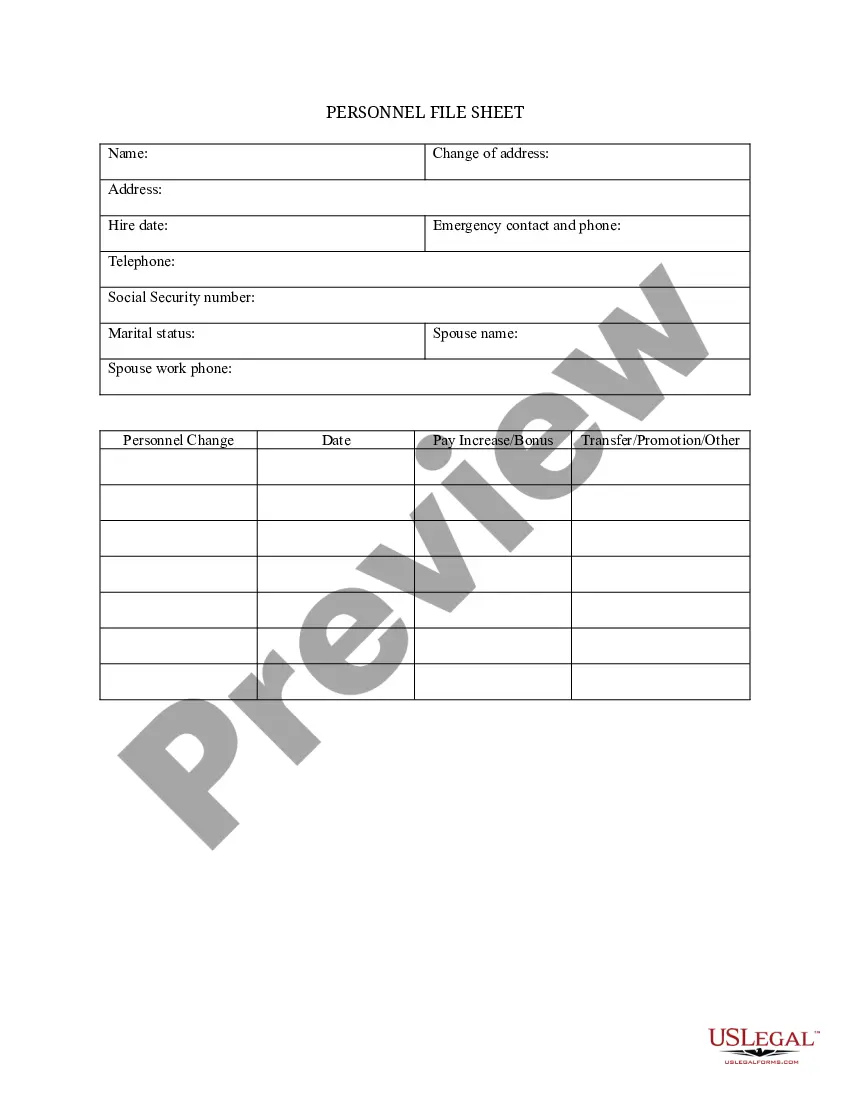
The New Hampshire Employment Employee Personnel File Package is a comprehensive collection of essential personnel forms designed to aid employers in maintaining accurate records of their employees. This package differs from similar offerings by focusing specifically on compliance with federal laws and best practices in employee management. It helps protect employers from costly errors while ensuring organizational adherence to legal standards.
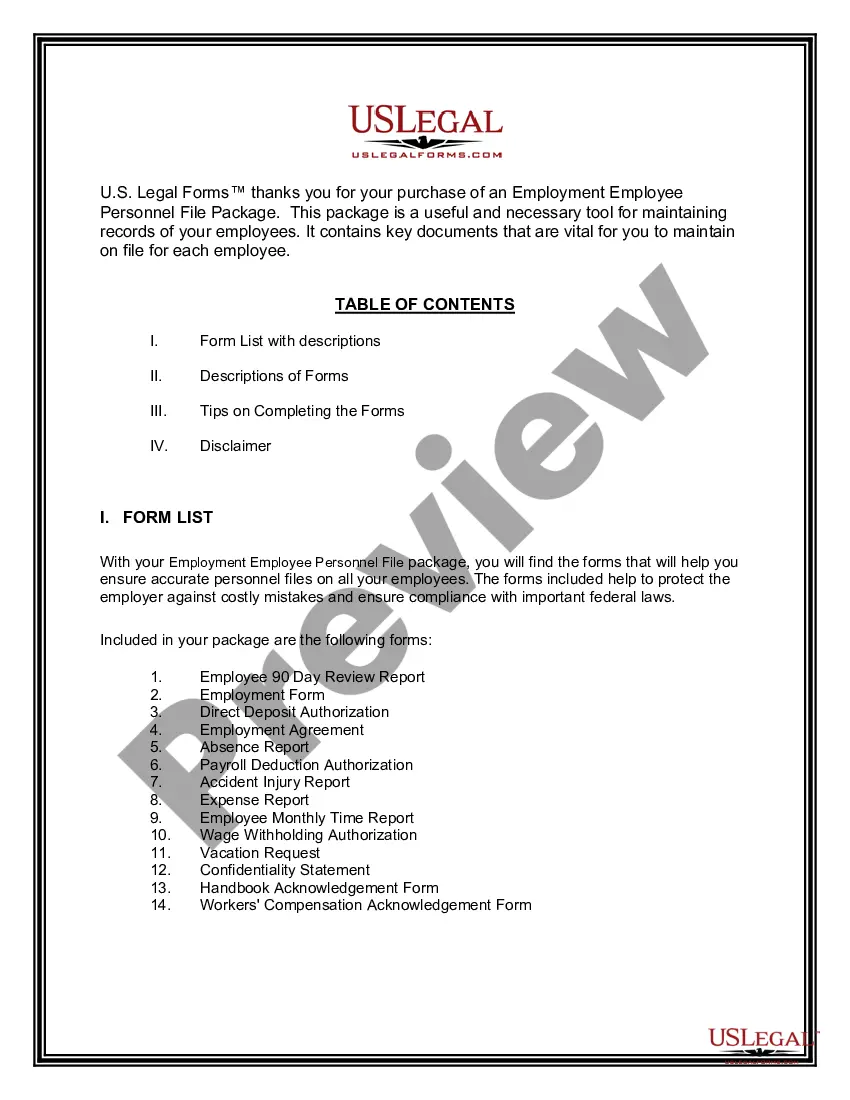
Documents contained in this package
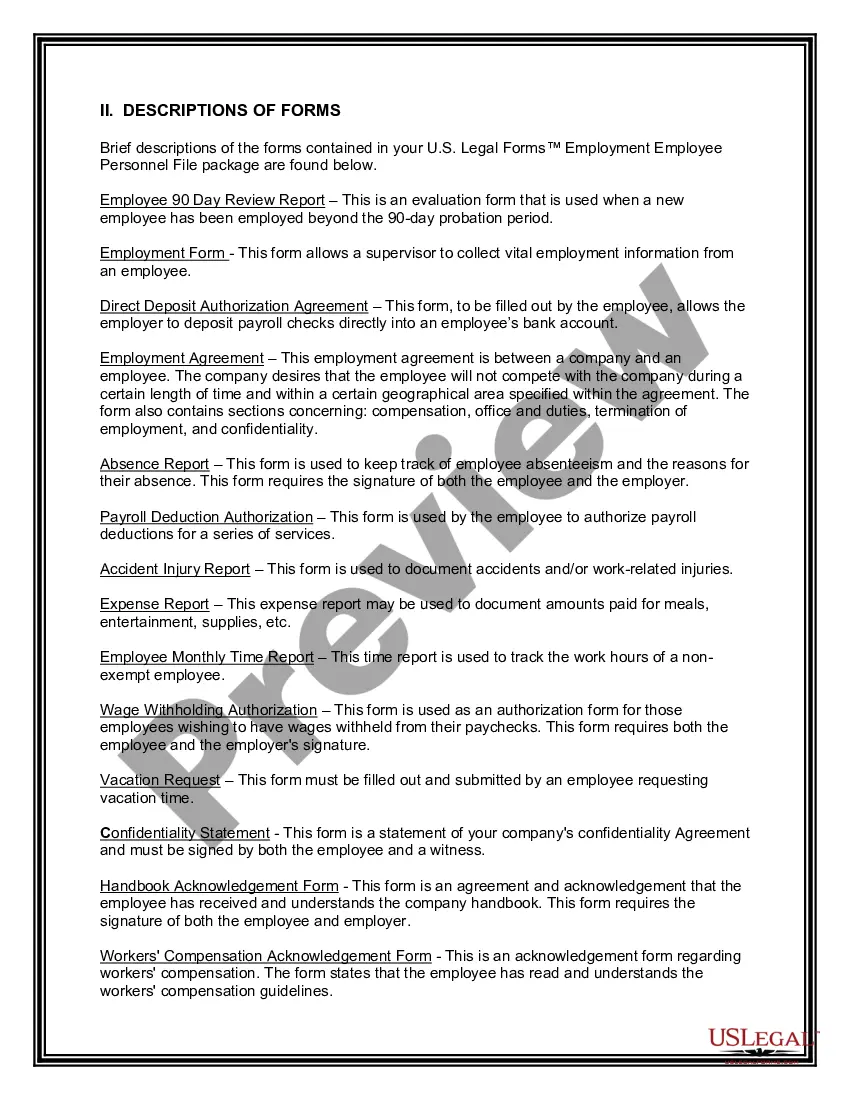
- Employment Agreement between a company and an employee
- Absence Report
- Payroll Deduction Authorization Form
- Accident - Injury Report
- Direct Deposit Authorization
- Nonexempt Employee Time Report
- Employee 90 day Review Report
- Wage Withholding Authorization
- Confidentiality Statement and Agreement for an Employee
- Employee Agreement and Handbook Acknowledgment Form
- Workers' Compensation Acknowledgment Form
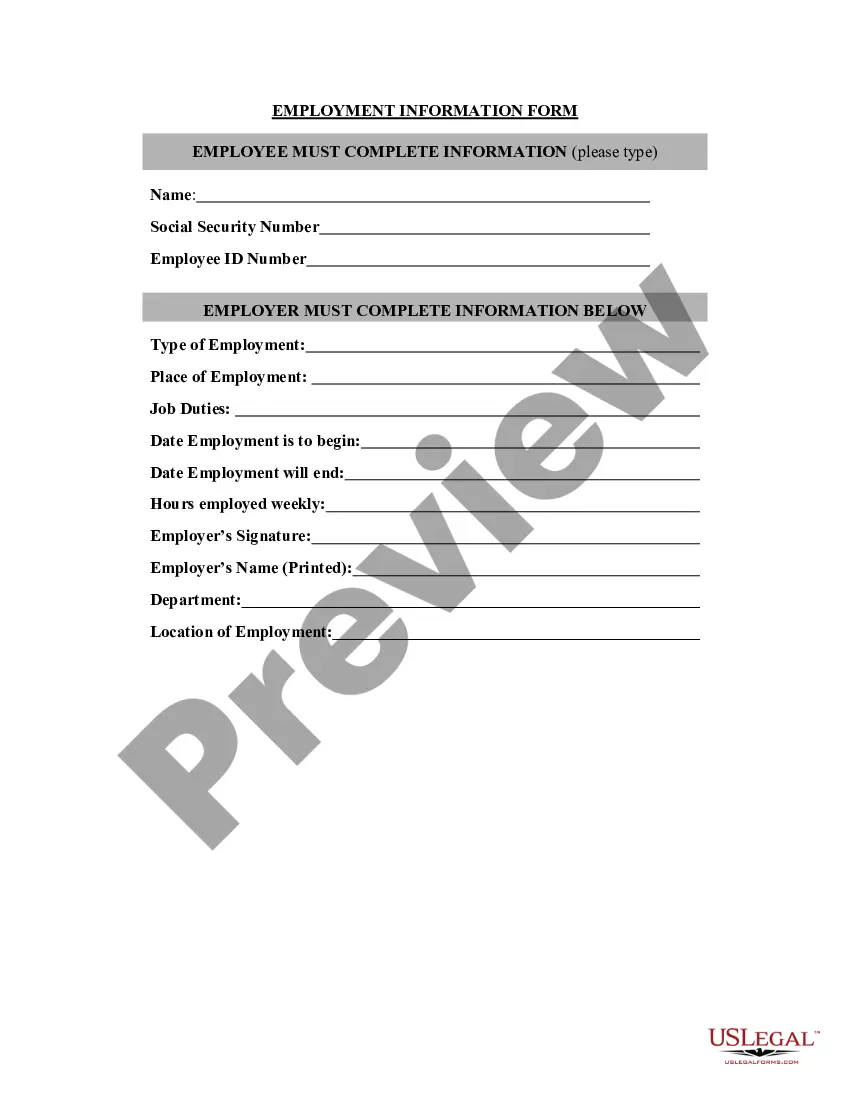
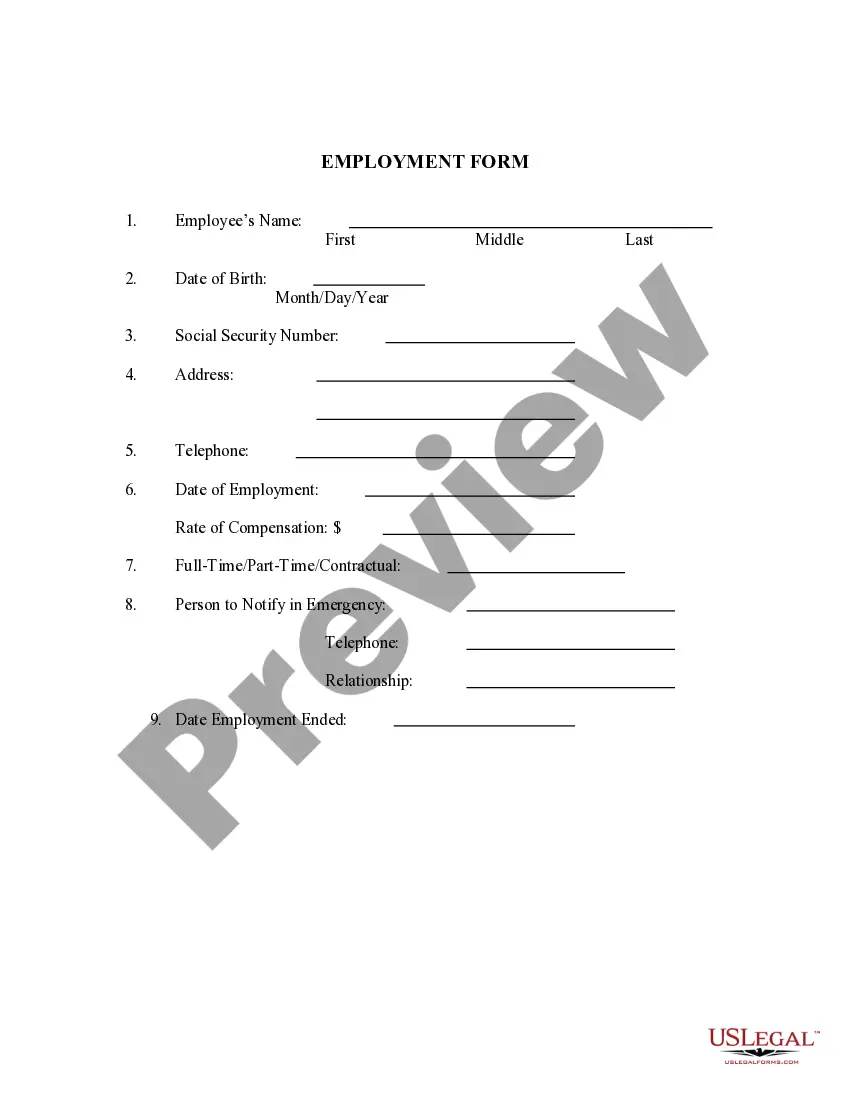
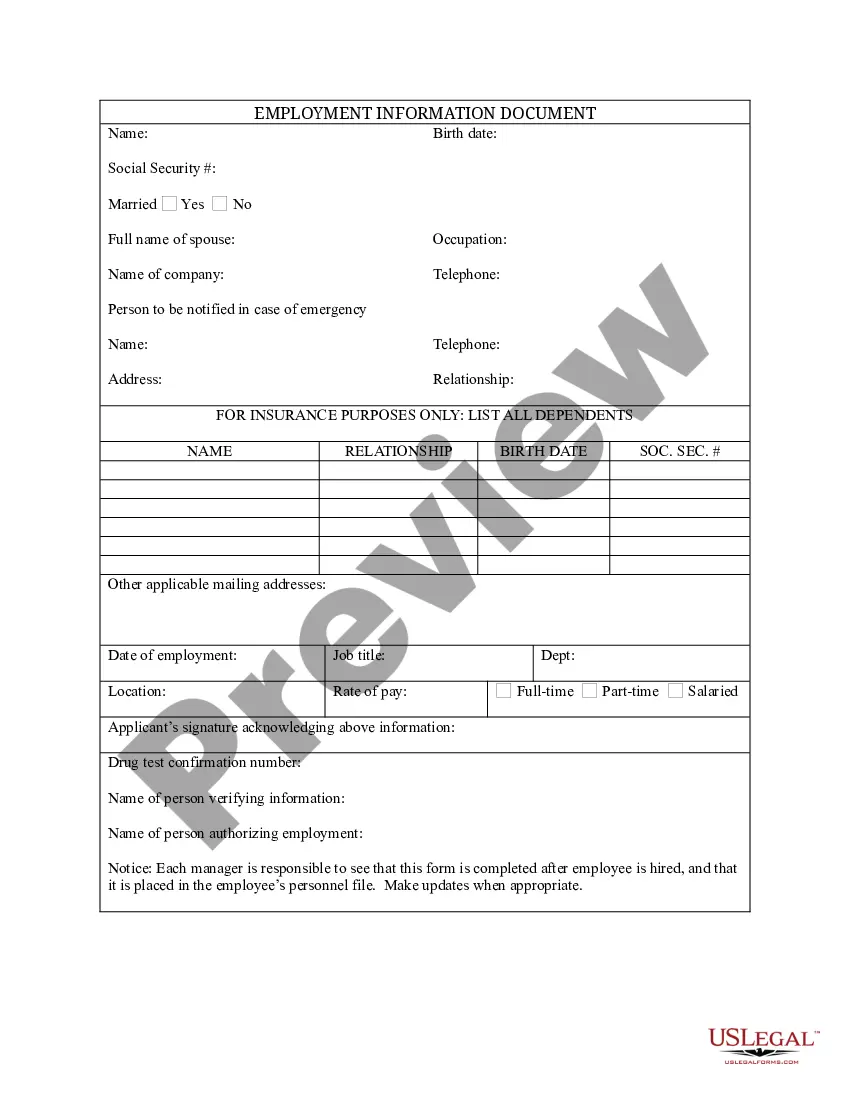
- Employment Form
- Vacation Request Form
Common use cases
This form package is necessary in various scenarios, including:
- When hiring new employees to establish formal agreements and necessary documentation.
- When conducting employee performance reviews, particularly after the initial 90-day probation period.
- When managing employee attendance and absence records.
- When processing payroll and direct deposit requests from employees.
- When maintaining compliance with workplace safety regulations and recording any work-related accidents.
Intended users of this form package
- New Hampshire businesses that employ staff and require formal documentation for hiring and personnel management.
- Human resources professionals needing standardized forms for efficiency and compliance.
- Small business owners managing limited staff and requiring clear record-keeping practices.
Instructions for completing these forms
- Review the included forms to understand their purpose and use.
- Fill out the Employment Form to collect vital employee information.
- Have employees complete relevant authorization forms, such as the Direct Deposit Authorization Agreement.
- Use performance evaluation forms like the Employee 90 Day Review Report during employee reviews.
- Document attendance and any work-related incidents using the Absence Report and Accident Injury Report.
Do documents in this package require notarization?
Most forms in this package do not require notarization. However, local laws or specific situations may demand it. Our online notarization service, powered by Notarize, lets you complete the process through a verified video call, available anytime.
Get your form ready online
Our built-in tools help you complete, sign, share, and store your documents in one place.
Make edits, fill in missing information, and update formatting in US Legal Forms—just like you would in MS Word.
Download a copy, print it, send it by email, or mail it via USPS—whatever works best for your next step.
Sign and collect signatures with our SignNow integration. Send to multiple recipients, set reminders, and more. Go Premium to unlock E-Sign.
If this form requires notarization, complete it online through a secure video call—no need to meet a notary in person or wait for an appointment.
We protect your documents and personal data by following strict security and privacy standards.

Make edits, fill in missing information, and update formatting in US Legal Forms—just like you would in MS Word.

Download a copy, print it, send it by email, or mail it via USPS—whatever works best for your next step.

Sign and collect signatures with our SignNow integration. Send to multiple recipients, set reminders, and more. Go Premium to unlock E-Sign.

If this form requires notarization, complete it online through a secure video call—no need to meet a notary in person or wait for an appointment.

We protect your documents and personal data by following strict security and privacy standards.
Typical mistakes to avoid
- Failing to have both the employee and employer sign required documents.
- Not keeping copies of all completed forms in the employee's personnel file.
- Using outdated forms that do not comply with the latest legal standards.
Why use this package online
- Convenient access to all necessary forms in one downloadable package.
- Easily editable forms that can be completed electronically or printed for handwritten entries.
- Reliable legal documents drafted by licensed attorneys, ensuring compliance and enforceability.
Looking for another form?



Form popularity
FAQ
A typical new hire packet template should include traditional items such as a new hire welcome letter, employee handbook, employment contract, health insurance and other benefit forms, and more.
As an employee, do I have a right to see my personnel files? The short answer is 'yes'. You have a right to make a SAR to your employer, asking to see your personnel files, at any time. Your employer has the right to ask why you want to see your files, but must then provide all your records to you.
Job application, CV and cover letter. Education and past employment info. Role description. Job offer letter and employment contract. Emergency contact information. Training records. Payroll and benefits information (but not bank details) Performance appraisal forms.
A hiring package is essentially a packet of employment-related forms and documents for the new employee, which is provided at the start of employment to help streamline the on-boarding process.
Current and former employees have a right to their personnel records under Labor Code section 1198.5. Under California Labor Code section 1198.5(a) provides that every current and former employee, or their representative, has the right to inspect and receive a copy of their personnel records.
Submit a job requisition form to HR. Complete a background check. Review the schedule and job basics. Review job descriptions and duties. Complete all new hire forms. Prepare team introductions. Prepare their work environment. Prepare for new hire training.
Confidential Files Normally personnel records are kept within a locked file cabinet that only certain people have access to.By setting up such a policy, you will protect the confidentiality of these files, your employee's privacy and also limit the opportunities for false documents to get into the files.
W-4 form (or W-9 for contractors) I-9 Employment Eligibility Verification form. State Tax Withholding form. Direct Deposit form. E-Verify system: This is not a form, but a way to verify employee eligibility in the U.S.
Employer Identification Number (EIN) State/Local Tax ID Number. State Unemployment ID Number. Employee Addresses and SSNs. I-9. W-4. State Withholding Allowance Certificate. Department of Labor (DOL) Records.