Florida Construction Contract Cost Plus or Fixed Fee
About this form
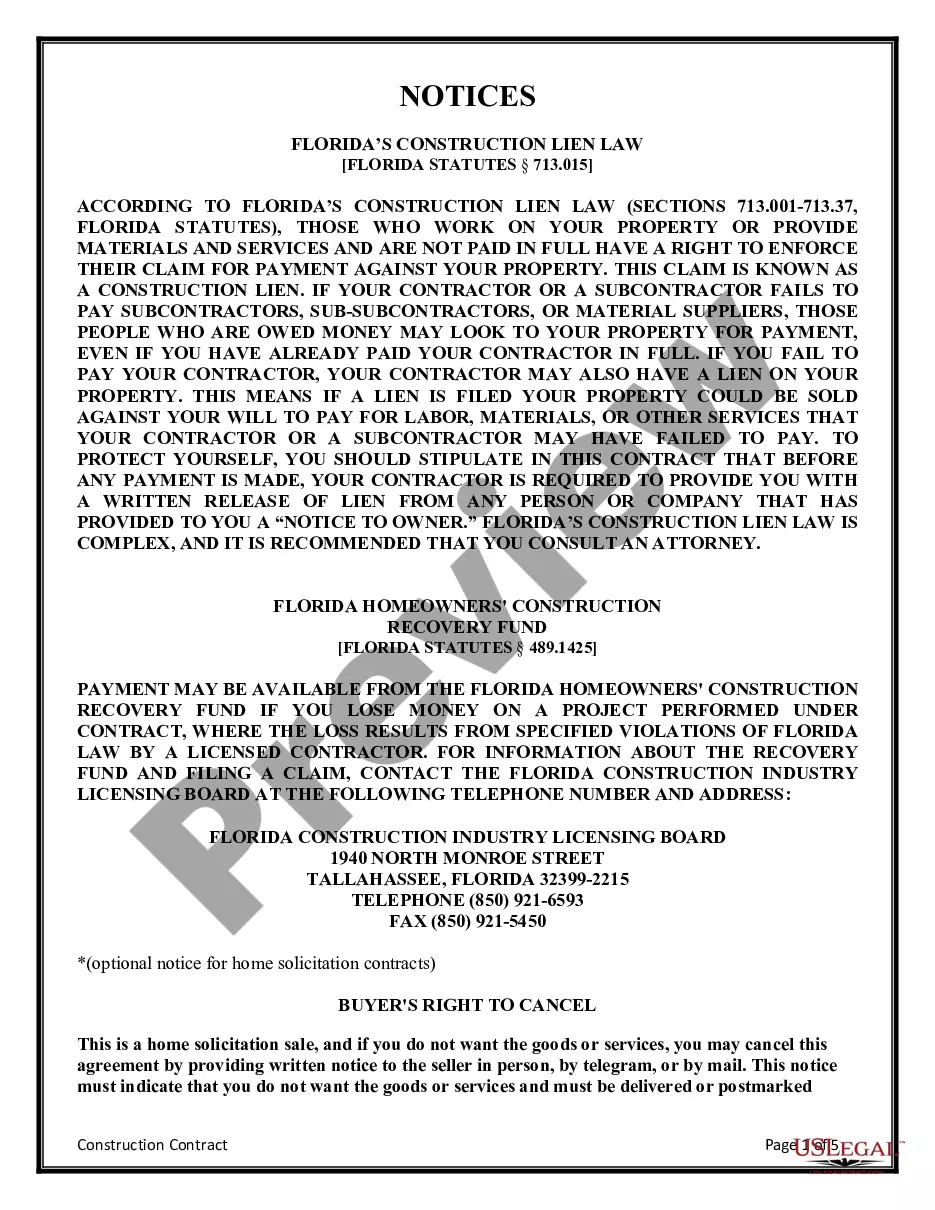
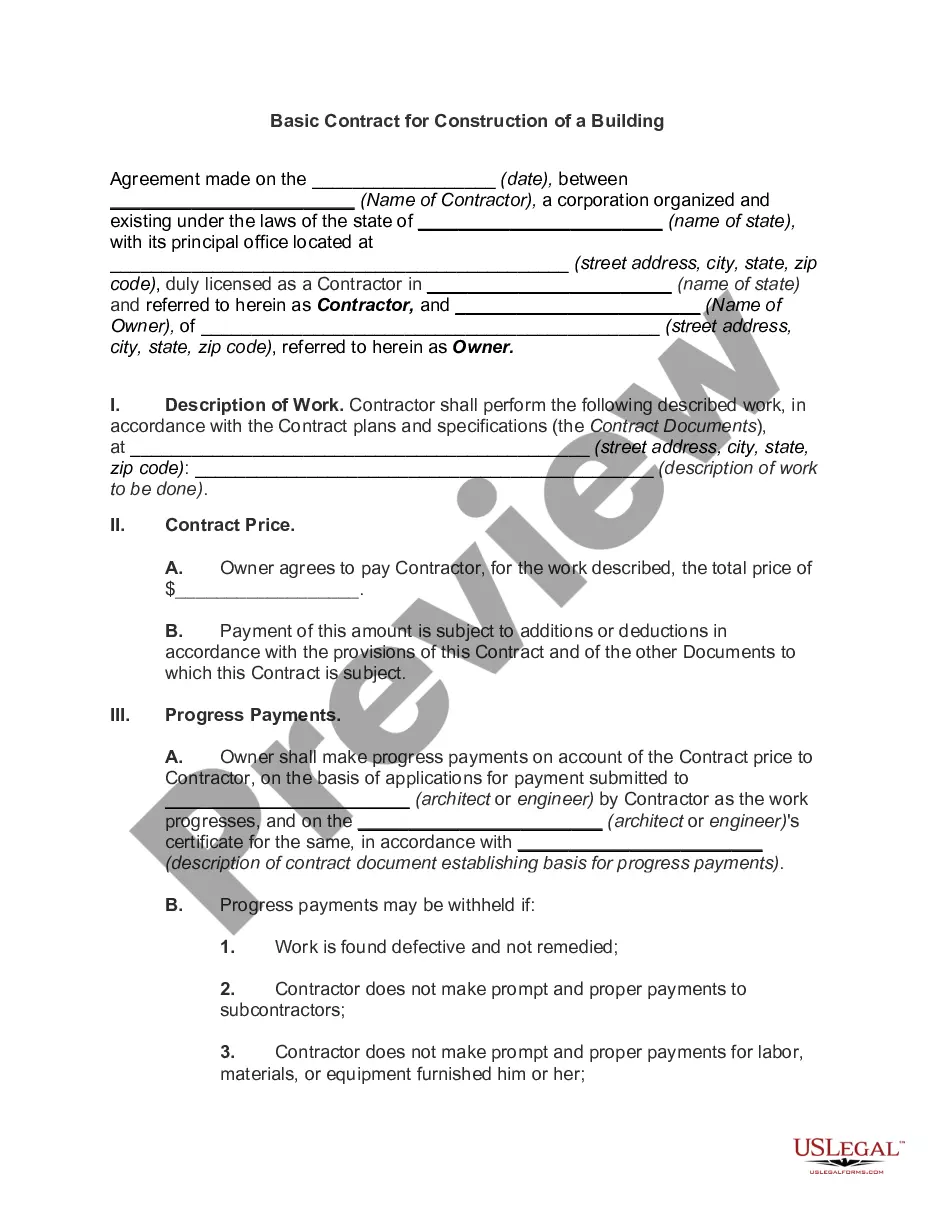
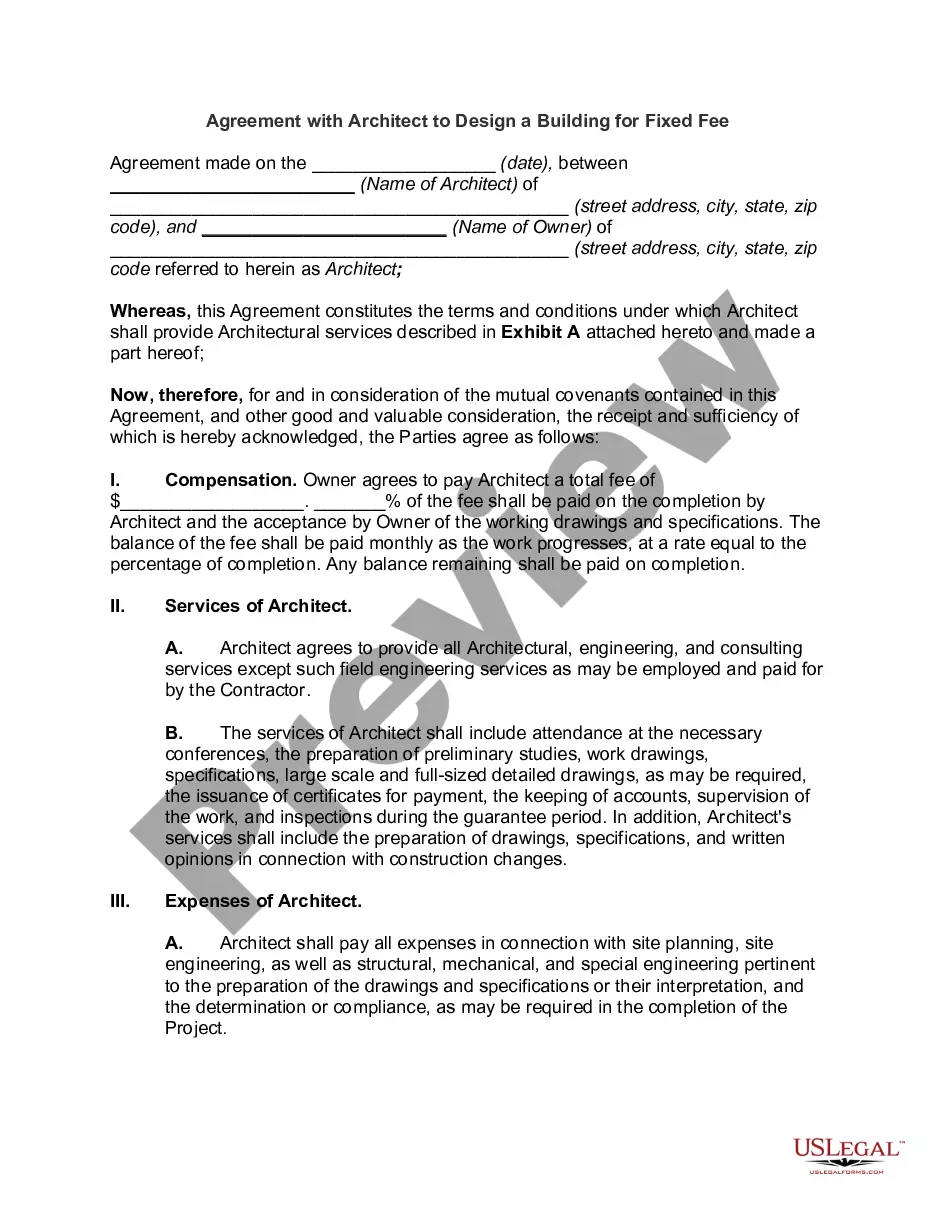
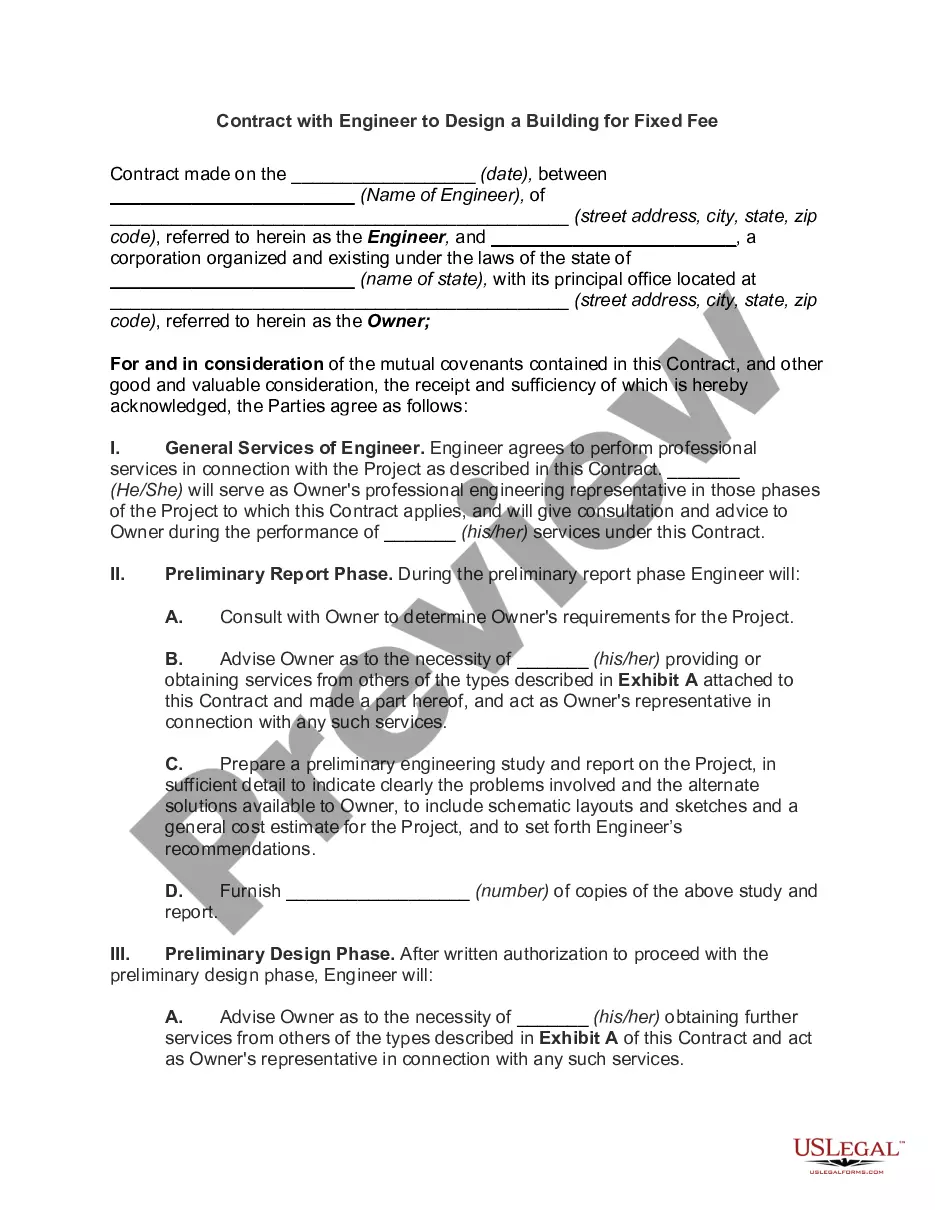
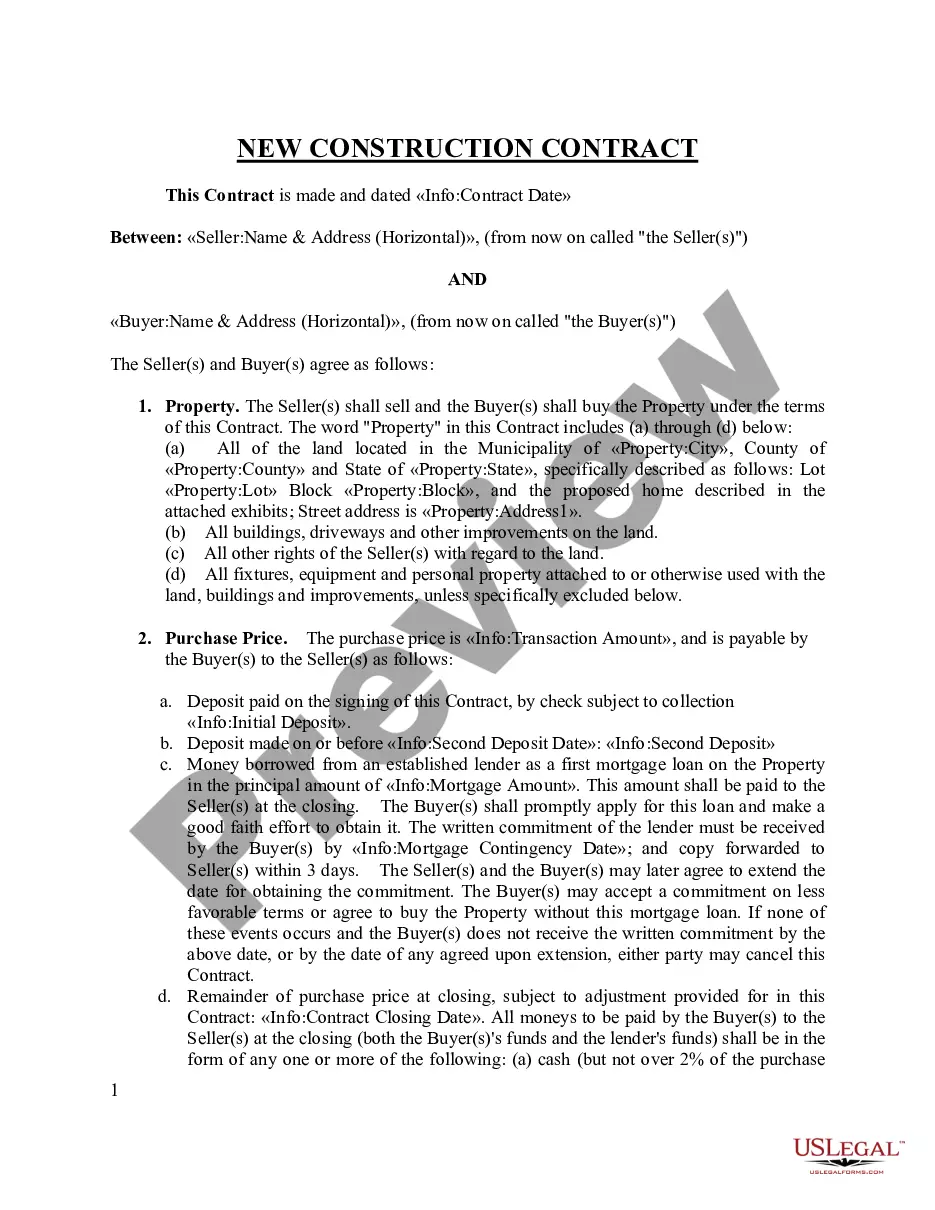
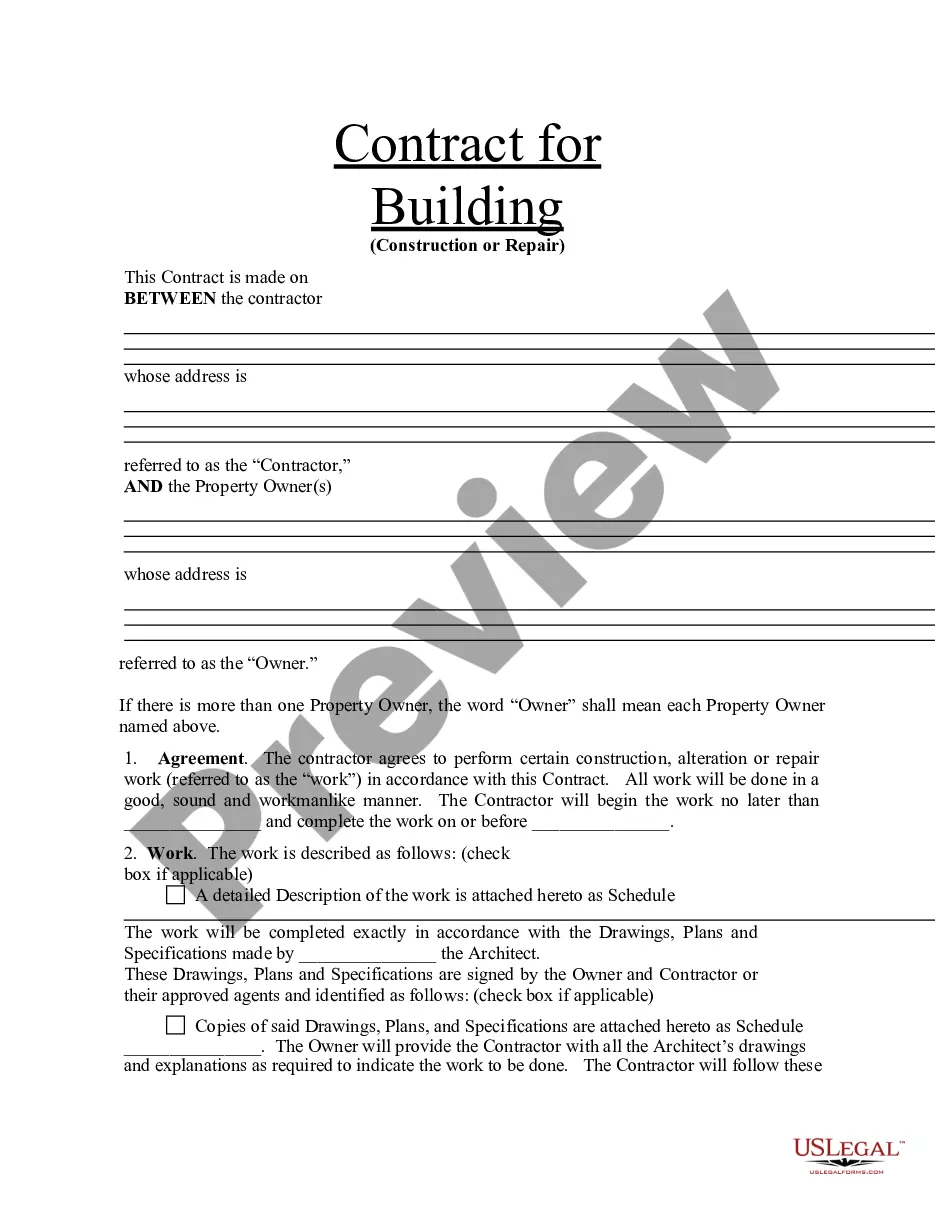
The Construction Contract Cost Plus or Fixed Fee is a legal document tailored for building projects in Florida. This contract allows parties to choose between a cost-plus payment structure or a fixed fee arrangement, ensuring clarity in financial responsibilities. It outlines essential terms, including the scope of work, site details, warranty, and insurance, making it distinct from standard construction contracts by offering flexible payment options.
Main sections of this form
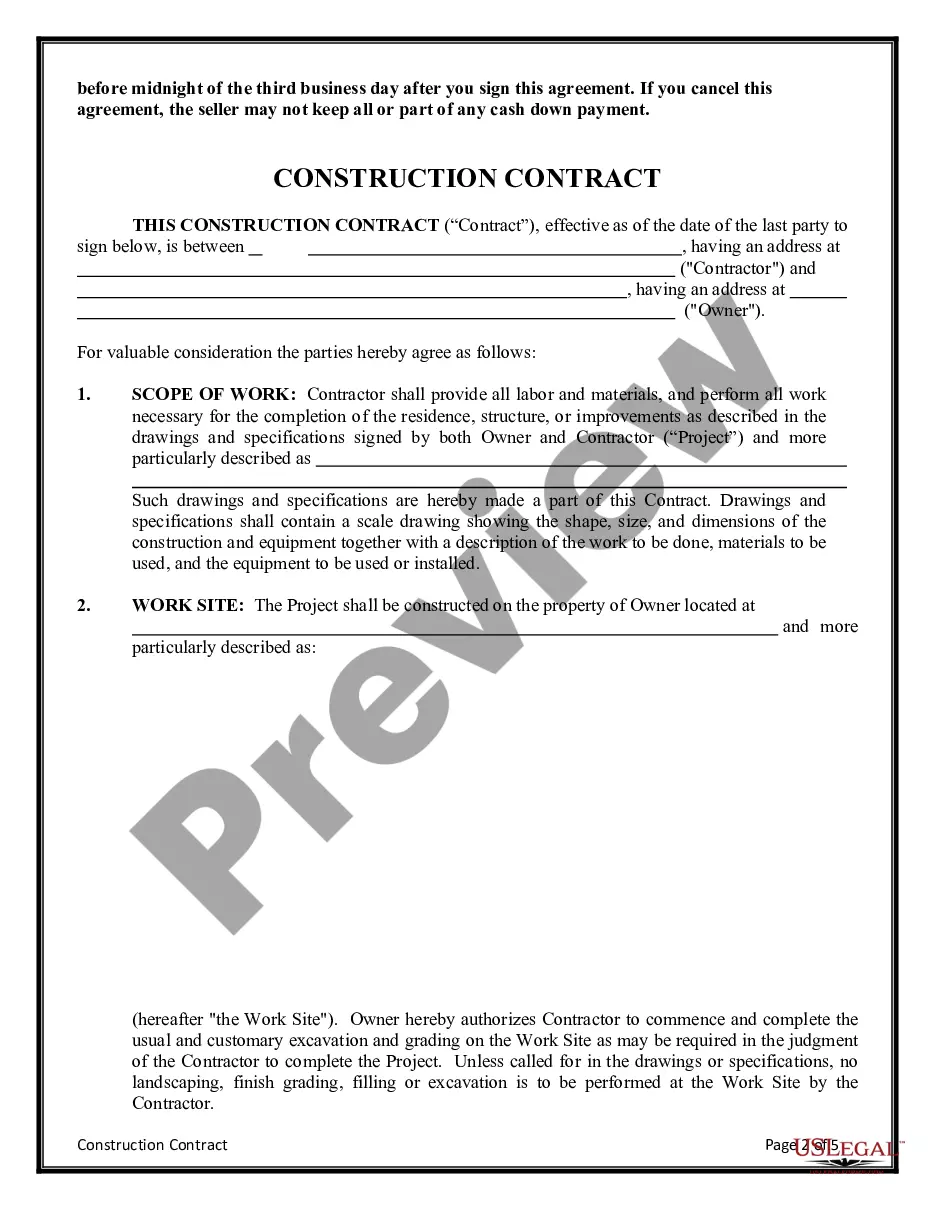
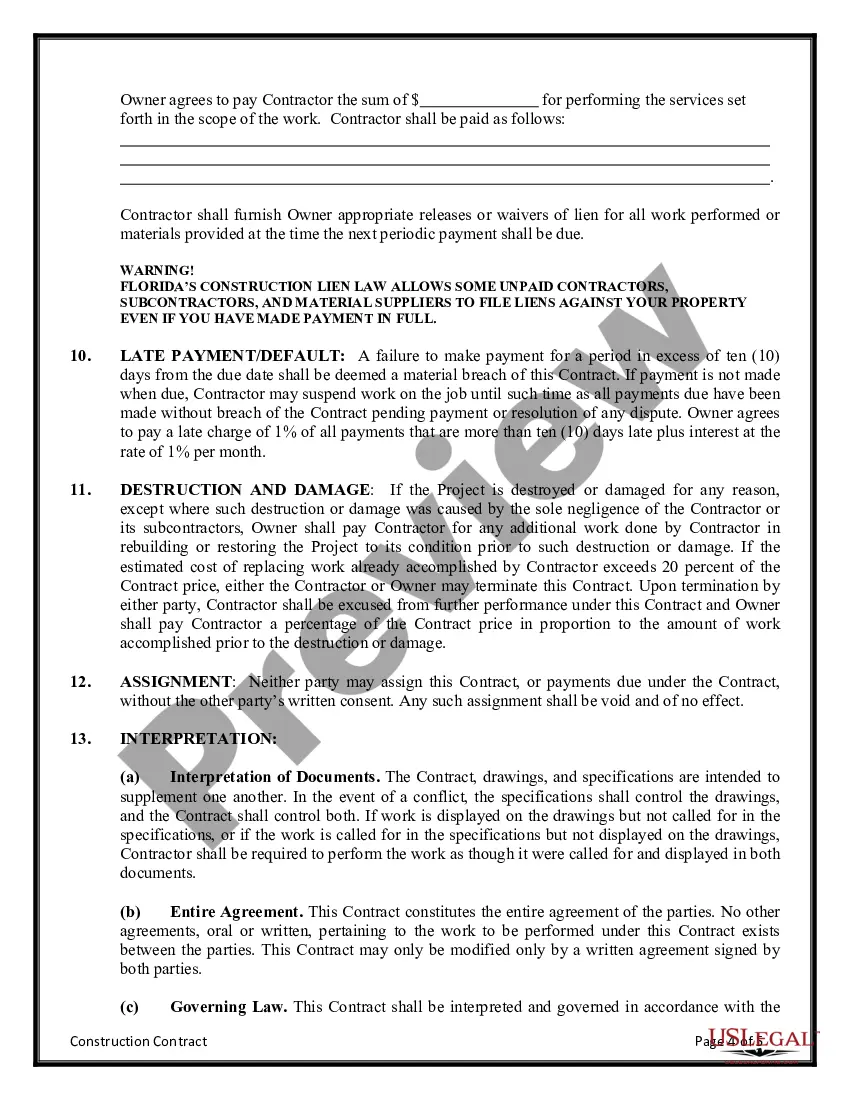
- Scope of work: Defines the tasks and responsibilities of the contractor.
- Work site: Specifies the location where the project will be executed.
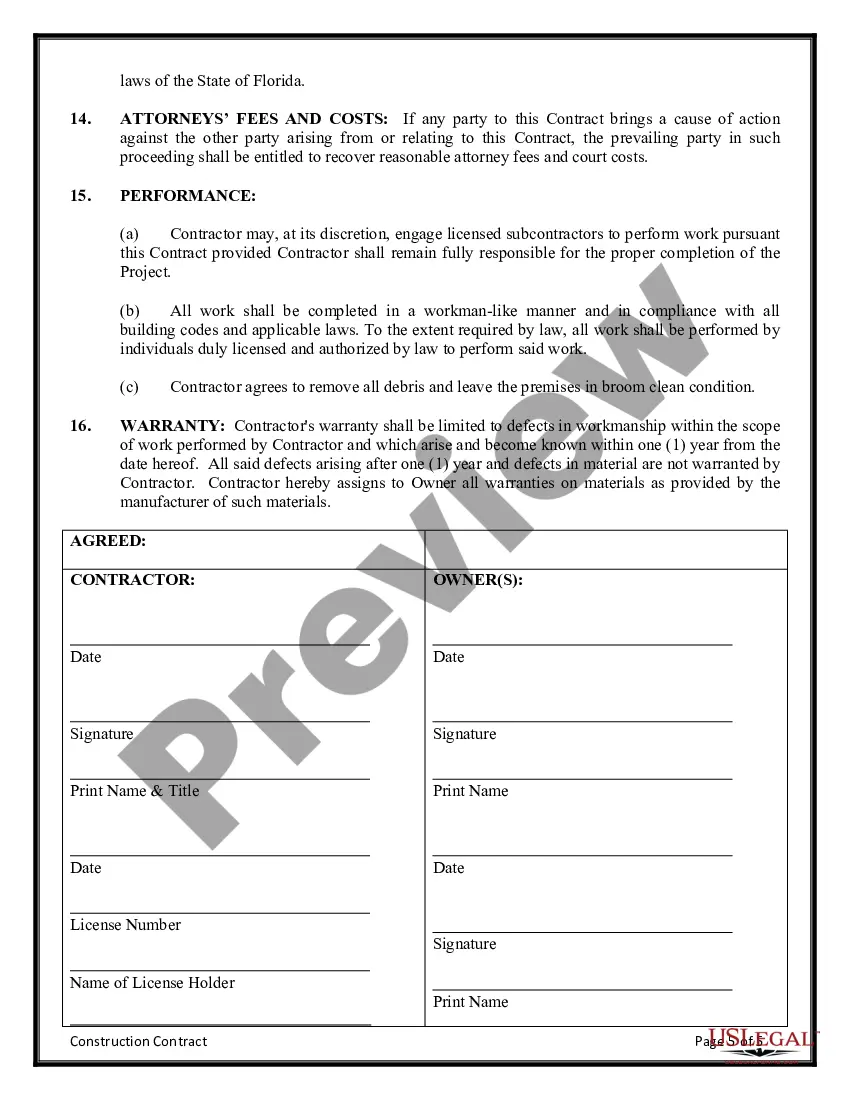
- Warranty: Details the contractor's commitment to remediate defects in workmanship.
- Insurance requirements: Outlines necessary coverage for liability and workers compensation.
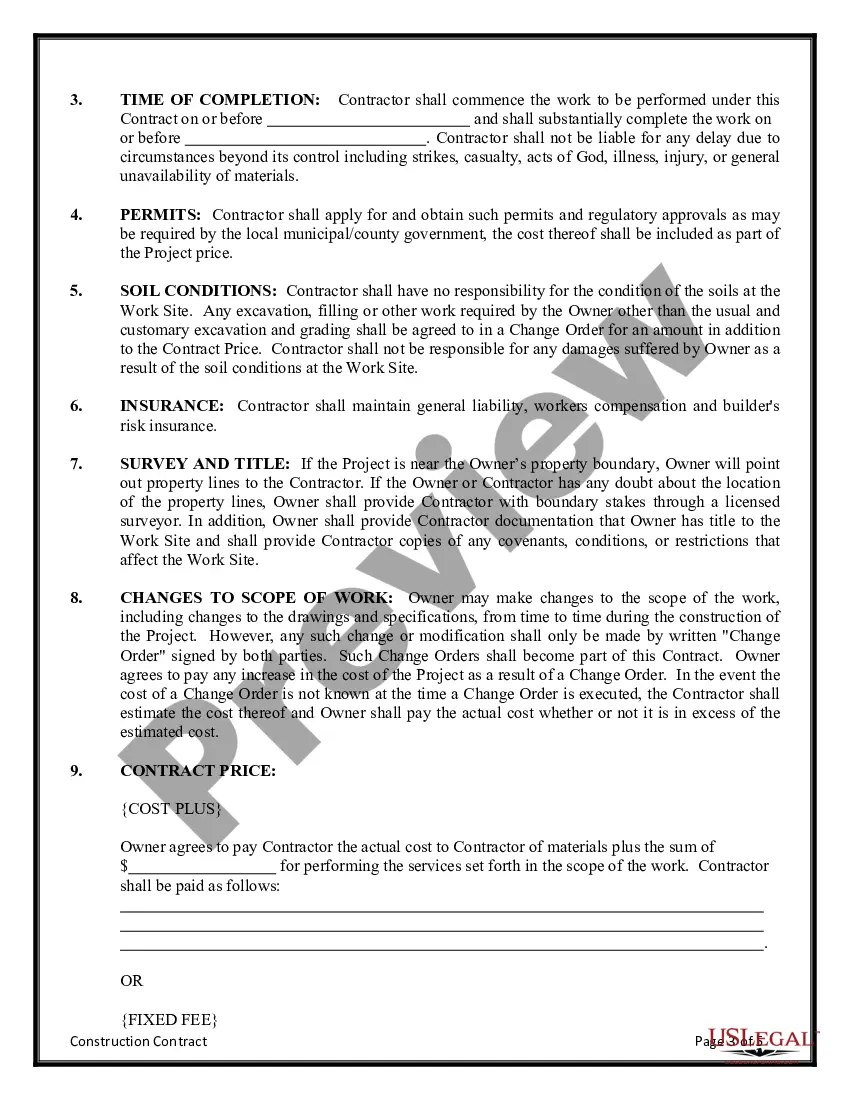
- Change order provisions: Allows for modifications and adjustments during the project.
- Payment structure: Offers options for either cost-plus or fixed fee payment arrangements.
When to use this form
This form is essential when homeowners or property developers hire a contractor for construction purposes in Florida. It is particularly beneficial for projects where budgeting may involve variable costs or when a fixed fee is preferable. Use this contract if you want to ensure a clear understanding between the entities involved regarding project scope and payment terms.
Who this form is for
- Homeowners seeking to hire contractors for construction projects.
- Contractors looking for a legally binding agreement with clients.
- Property developers managing large-scale building or renovation projects.
- Individuals needing a clear payment structure for construction work.
Completing this form step by step
- Identify the parties involved, including the homeowner and contractor.
- Specify the work site and describe the scope of work to be performed.
- Choose the payment structure: cost-plus or fixed fee, and clearly state the contract price.
- Include any necessary permit applications and requirements for insurance.
- Sign and date the document to make it legally binding.
Notarization guidance
This form does not typically require notarization unless specified by local law. It is still important to ensure all parties understand the legal implications of the contract.
Get your form ready online
Our built-in tools help you complete, sign, share, and store your documents in one place.
Make edits, fill in missing information, and update formatting in US Legal Forms—just like you would in MS Word.
Download a copy, print it, send it by email, or mail it via USPS—whatever works best for your next step.
Sign and collect signatures with our SignNow integration. Send to multiple recipients, set reminders, and more. Go Premium to unlock E-Sign.
If this form requires notarization, complete it online through a secure video call—no need to meet a notary in person or wait for an appointment.
We protect your documents and personal data by following strict security and privacy standards.

Make edits, fill in missing information, and update formatting in US Legal Forms—just like you would in MS Word.

Download a copy, print it, send it by email, or mail it via USPS—whatever works best for your next step.

Sign and collect signatures with our SignNow integration. Send to multiple recipients, set reminders, and more. Go Premium to unlock E-Sign.

If this form requires notarization, complete it online through a secure video call—no need to meet a notary in person or wait for an appointment.

We protect your documents and personal data by following strict security and privacy standards.
Common mistakes
- Not specifying the scope of work clearly, leading to potential disputes.
- Failing to include provisions for changes in project scope.
- Overlooking local permit and insurance requirements.
- Not accurately defining the payment structure prior to signing.
Benefits of completing this form online
- Convenient access to a legally vetted contract tailored to Florida regulations.
- Easy customization to meet specific project requirements.
- Downloadable and printable format allows immediate use.
- Secure storage of documents for future reference.
Legal use & context
- The form serves as a legally binding contract that can be enforced in court.
- It protects both parties by outlining responsibilities and expectations.
- Failure to adhere to this agreement can result in legal ramifications or financial penalties.
Quick recap
- The Construction Contract Cost Plus or Fixed Fee is essential for structured agreements in home construction projects.
- Clearly define payment arrangements and scope to prevent disputes.
- Always ensure compliance with Florida-specific laws and regulations.
Looking for another form?

Form popularity
FAQ
It is a Florida construction contract that lets parties choose between a cost-plus payment structure or a fixed fee arrangement for a building project. The form sets out key terms such as the scope of work, site details, warranty, insurance, change orders, and payment structure to clarify responsibilities and budgeting before work begins. Use it when costs may vary or a fixed price is preferred.
Disadvantages include less price certainty than a pure fixed-price contract, since total costs depend on actual expenses plus the negotiated fee. It requires careful cost tracking and documentation, increasing administrative work and oversight. Change orders can complicate budgeting, and disputes may arise over which costs are billable or within the scope.
Responsibility for mistakes depends on who caused the defect and the contract terms. The warranty clause typically requires the contractor to remedy workmanship defects, and insurance provisions may cover related damages. The cost-plus structure does not waive liability; defects should be addressed under warranty with appropriate remedies and cost coverage where applicable.
This contract type is useful when project costs are uncertain or likely to change, such as complex renovations or ongoing site work. It allows tracking actual costs while paying a negotiated fixed fee, providing transparency and flexibility. Use it in Florida when stakeholders want cost visibility and a defined fee regardless of total expenses.
Four common mistakes that can affect enforceability include omitting essential terms, failing to secure a signature from all parties, misrepresenting facts, or misalignment of the scope and price. This form reduces that risk by clearly defining the scope of work, site details, warranty, insurance, change orders, and payment structure.
This form stands out by offering a choice between cost-plus or fixed-fee payment structures within a single agreement, plus explicit provisions for change orders and financing terms. A standard contract typically uses one payment model. The combination provides flexibility for budgeting and project control in Florida projects.