Michigan Last Will and Testament for a Widow or Widower with Adult and Minor Children
What is this form?
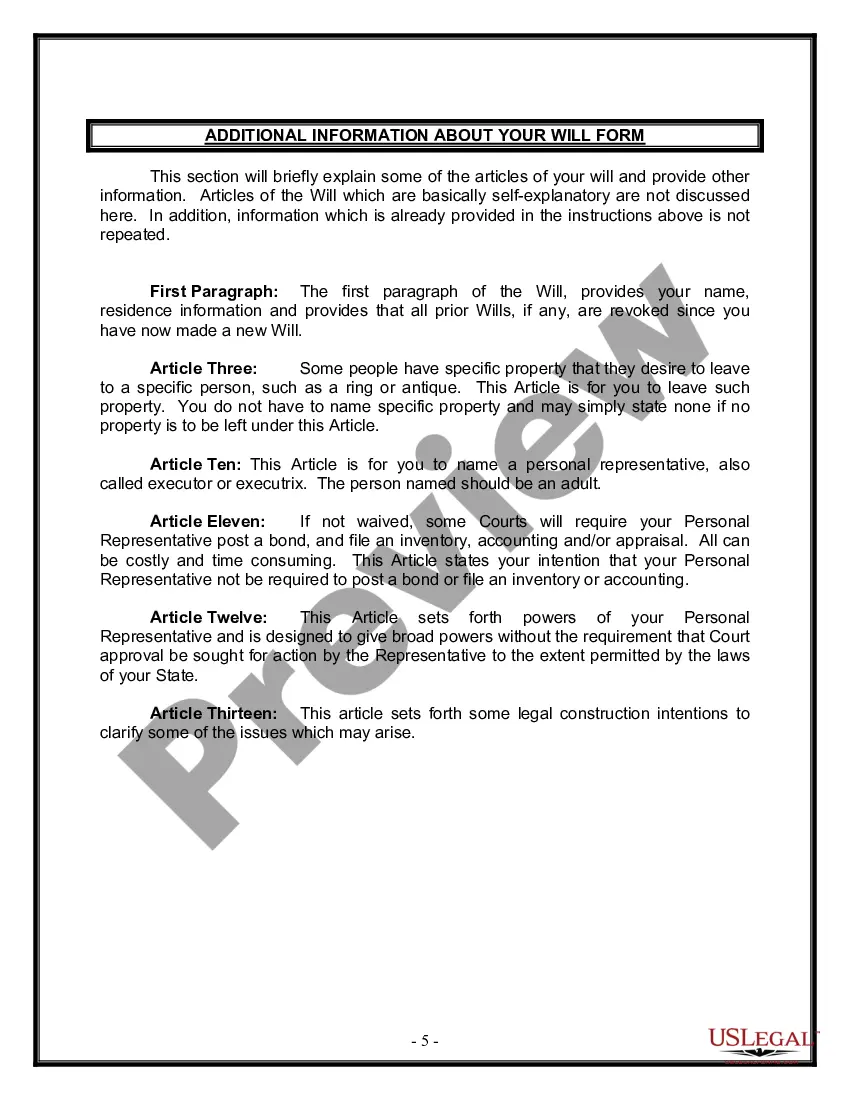
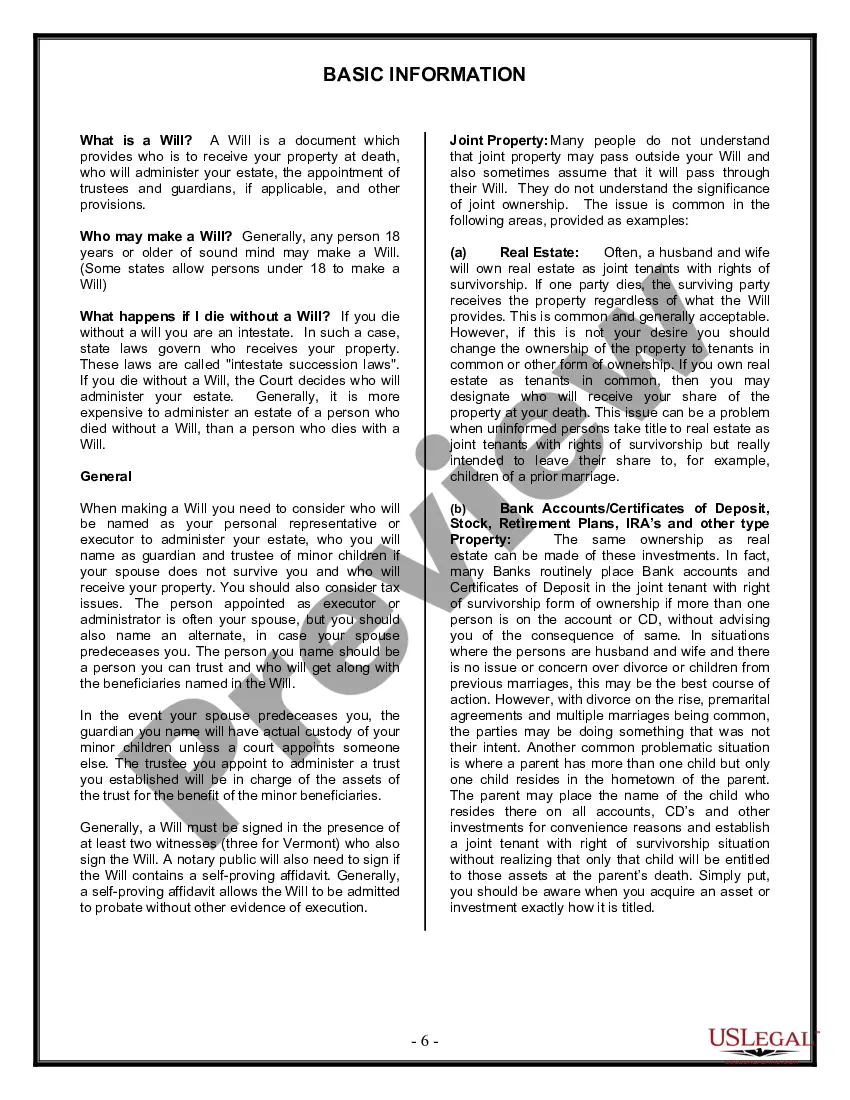
The Last Will and Testament for a Widow or Widower with Adult and Minor Children is a legal document that specifies how a deceased personâs assets will be distributed. This form is designed for individuals who have lost a spouse and have both adult and minor children. It outlines the appointment of a personal representative, the distribution of property, and the establishment of trusts for minor children, making it distinct from general wills.
Form components explained
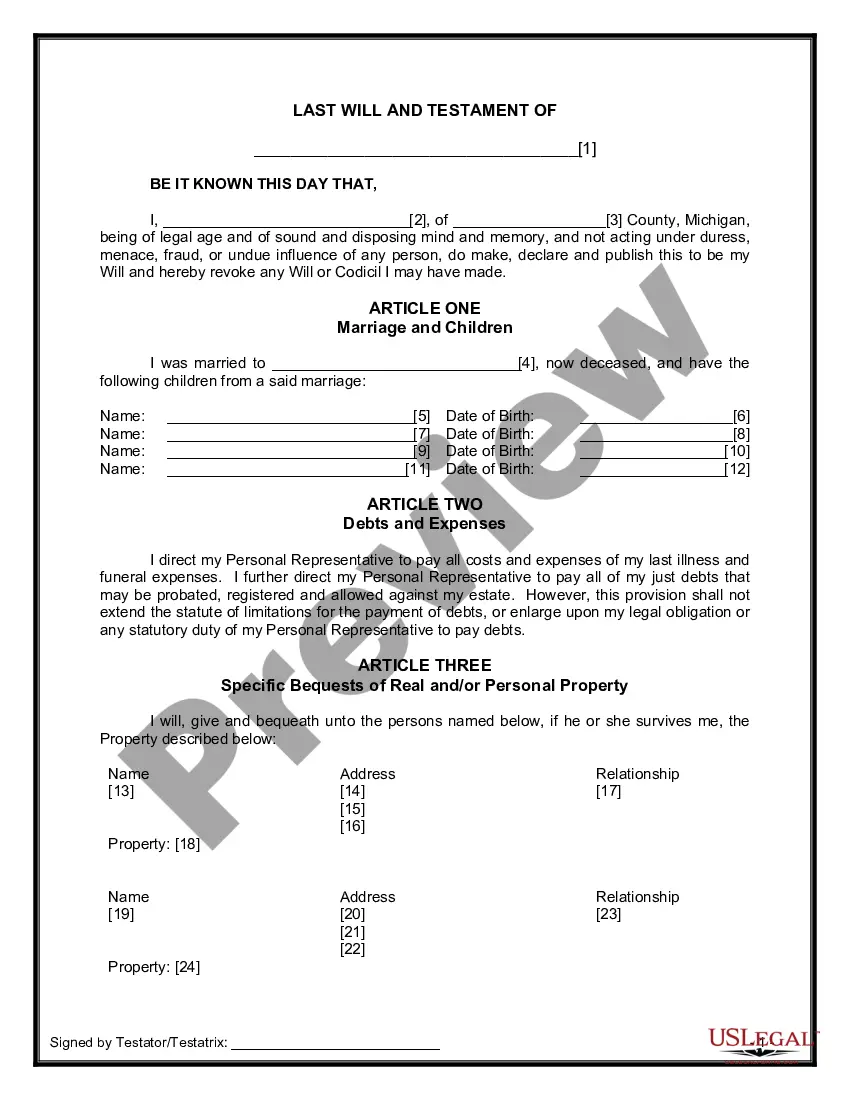
- Identification of the testator (the person making the will) and their place of residence.
- Appointment of a personal representative or executor to manage the estate.
- Designations for divided assets between adult and minor children.
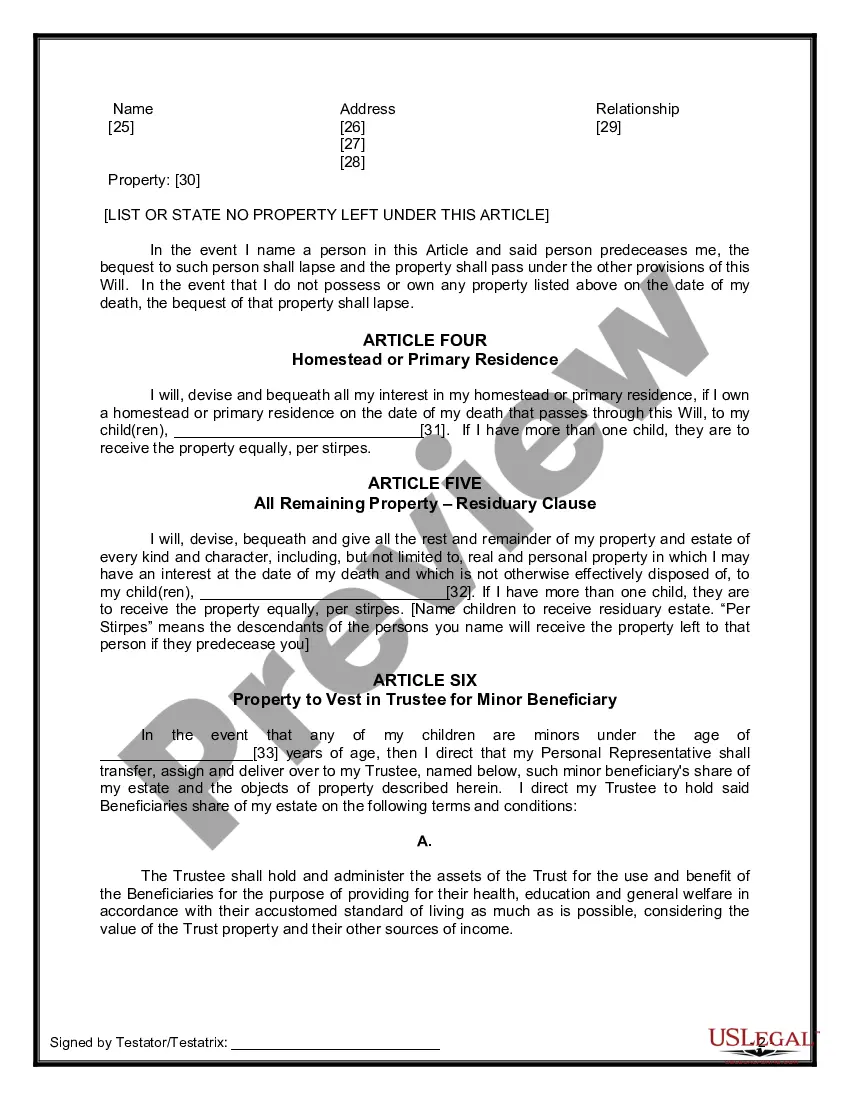
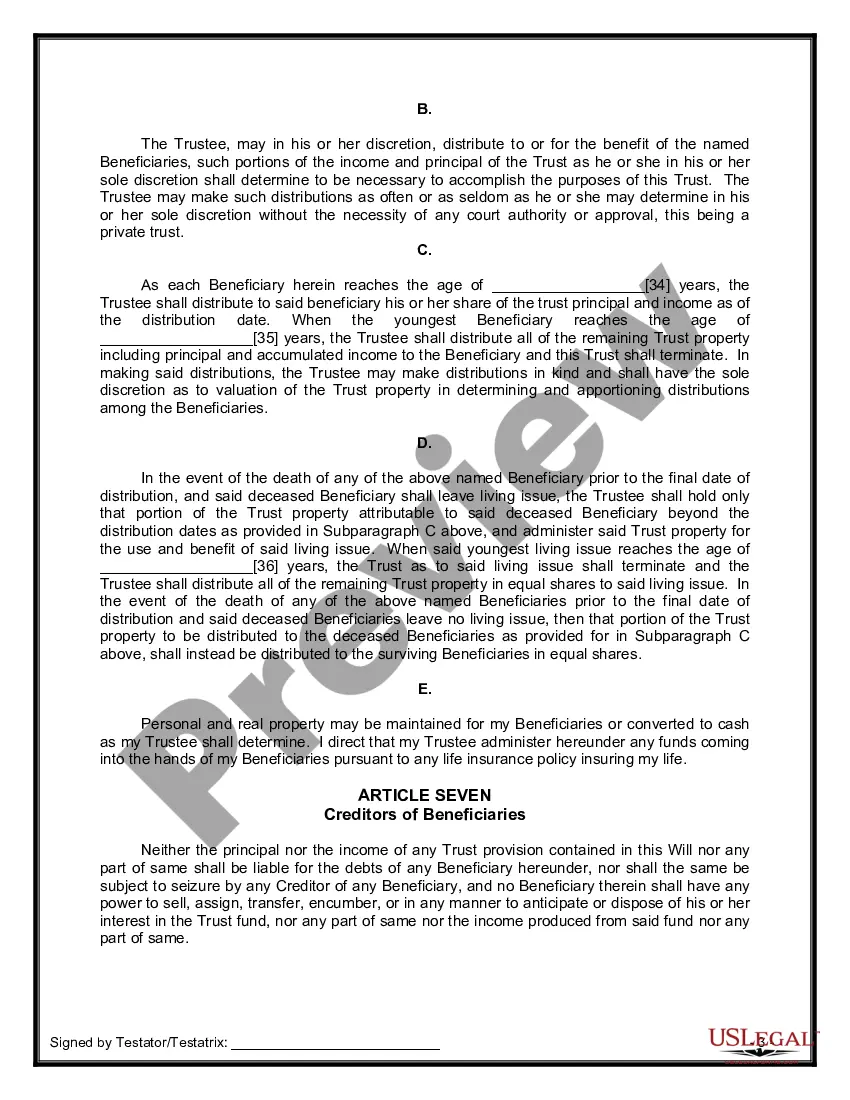
- Creation of a trust for any minor childrenâs inheritance until they reach a specified age.
- Appointment of a guardian for the minor children if necessary.



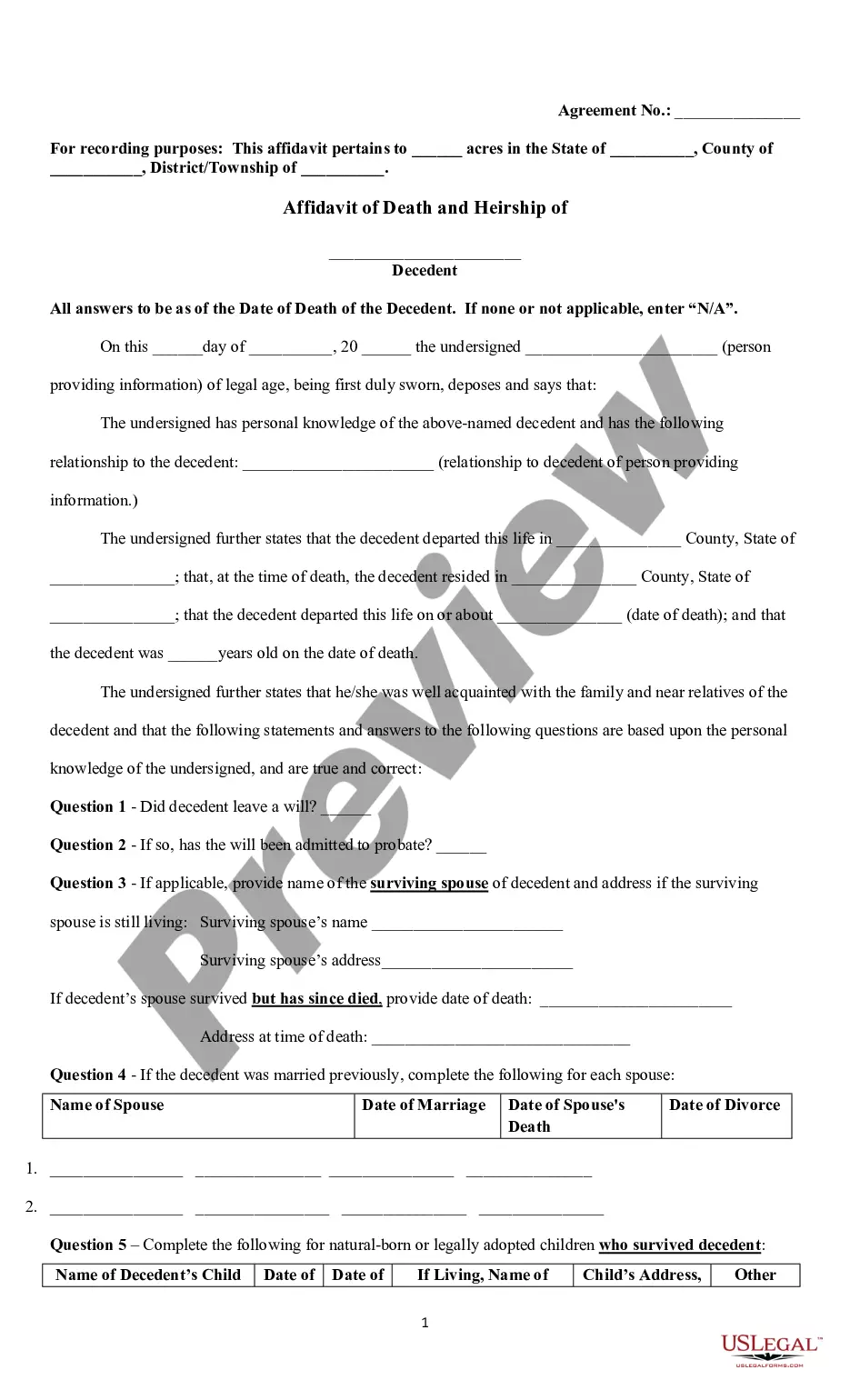

When to use this form
This form is essential when a widow or widower wishes to ensure that their estate is distributed according to their wishes after death, especially when children are involved. It is particularly important for those who want to provide for minor children and establish a guardian in the event of their passing. Individuals should consider using this will when they have specific assets to distribute and wish to avoid state intestacy laws.
Who can use this document
- Widows or widowers with minor and adult children.
- Individuals looking to specify asset distribution in a legally binding manner.
- Those who want to appoint a guardian for their minor children.
- People seeking to minimize complications in the probate process for their heirs.
Instructions for completing this form
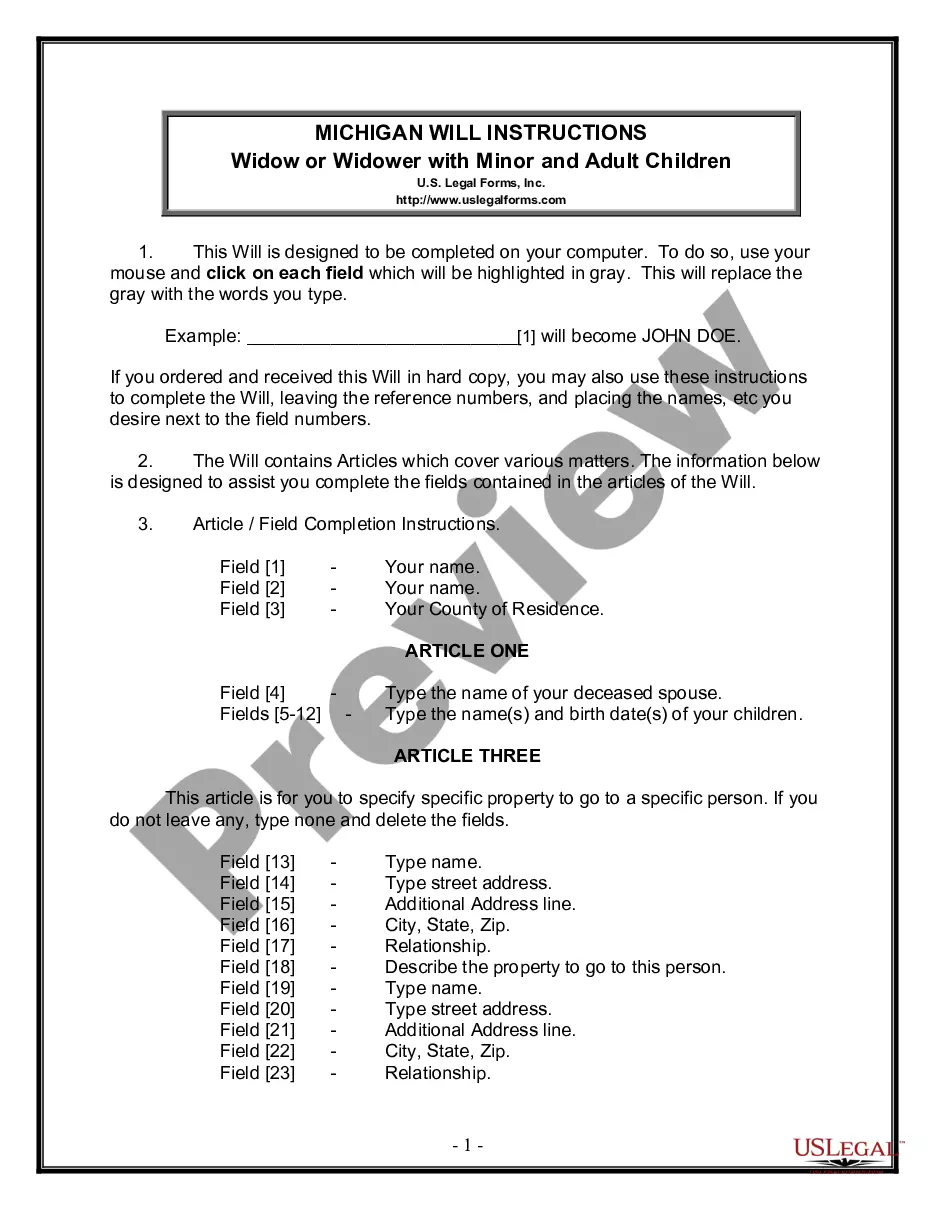
- Identify yourself by entering your full name and county of residence at the beginning of the will.
- Specify the name of your deceased spouse and provide the names and birthdates of your children.
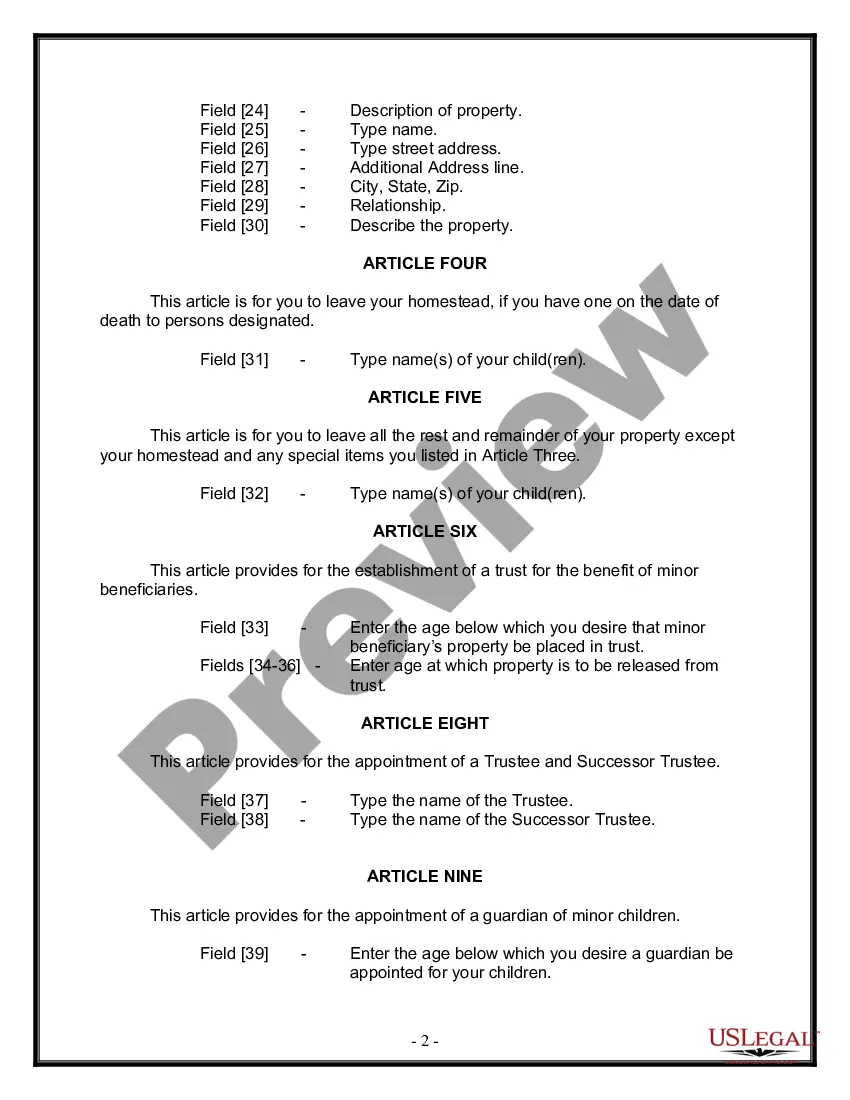
- Designate specific property to be given to particular individuals under the specific bequests section.
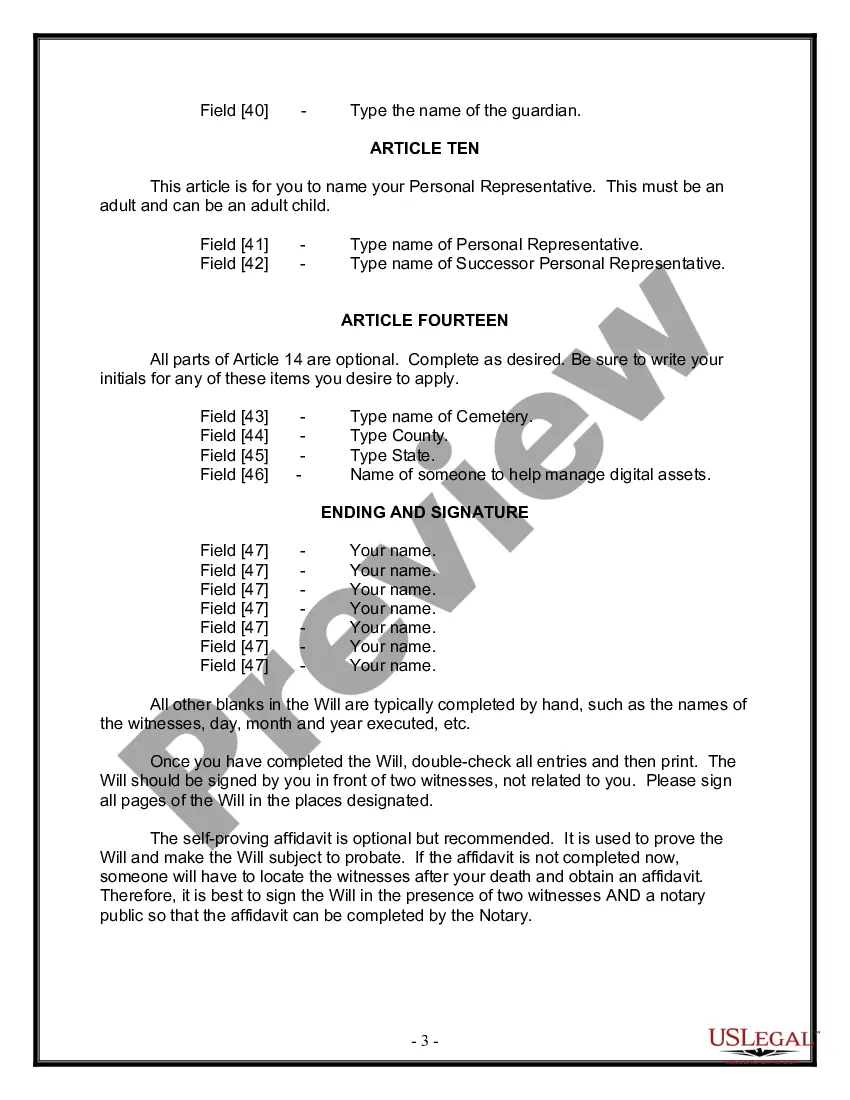
- Appoint a trustee for any assets left to your minor children and specify the terms of the trust.
- Ensure the will is signed in front of two witnesses and a notary public if applicable to validate its legality.
Does this document require notarization?
Yes, this form must be notarized to be legally valid. The self-proving affidavit included allows the will to be admitted to probate without further evidence of execution. Using US Legal Forms' integrated online notarization services, you can have the document signed in a secure manner without the need for in-person meetings.
Get your form ready online
Our built-in tools help you complete, sign, share, and store your documents in one place.
Make edits, fill in missing information, and update formatting in US Legal Forms—just like you would in MS Word.
Download a copy, print it, send it by email, or mail it via USPS—whatever works best for your next step.
Sign and collect signatures with our SignNow integration. Send to multiple recipients, set reminders, and more. Go Premium to unlock E-Sign.
If this form requires notarization, complete it online through a secure video call—no need to meet a notary in person or wait for an appointment.
We protect your documents and personal data by following strict security and privacy standards.

Make edits, fill in missing information, and update formatting in US Legal Forms—just like you would in MS Word.

Download a copy, print it, send it by email, or mail it via USPS—whatever works best for your next step.

Sign and collect signatures with our SignNow integration. Send to multiple recipients, set reminders, and more. Go Premium to unlock E-Sign.

If this form requires notarization, complete it online through a secure video call—no need to meet a notary in person or wait for an appointment.

We protect your documents and personal data by following strict security and privacy standards.
Mistakes to watch out for
- Failing to sign the will in the presence of two witnesses or not identifying them correctly.
- Not clearly specifying guardianship for minor children.
- Leaving out essential details about property distribution.
- Neglecting to update the will after significant life events, such as a new marriage or birth of children.
- Using vague language that may lead to misinterpretation of wishes by the executor or beneficiaries.
Benefits of using this form online
- Convenience of filling out the form at home, at your own pace.
- Editability allows for easy updates and changes as your circumstances change.
- Access to professionally drafted forms ensures that legal requirements are met.
- Secure digital storage solutions to keep your will safe and easily accessible.
What to keep in mind
- The form is specifically designed for widows or widowers with both adult and minor children.
- It helps ensure that your wishes for property distribution are clearly stated.
- It allows for the appointment of a guardian for minor children and a trustee for their inheritance.
- All signatures and witnesses must meet state requirements for validity.
Looking for another form?

Form popularity
FAQ
Yes, you can create a will without a lawyer in Michigan, but it’s essential to follow the state’s legal requirements. A well-crafted Michigan Last Will and Testament for a Widow or Widower with Adult and Minor Children can be completed using online resources, such as USLegalForms, which guide you through the process. However, consulting a legal professional can help ensure that your will accurately reflects your wishes and meets all legal standards.
In Michigan, the order of inheritance typically begins with the surviving spouse and children. If a widow or widower has adult and minor children, the estate is divided among them according to Michigan's laws of intestacy. This means that if there is no valid Michigan Last Will and Testament for a Widow or Widower with Adult and Minor Children, the court will distribute the assets according to these laws. Understanding this order can help you plan effectively.
In Michigan, a surviving spouse does not automatically inherit everything, but they do receive a significant portion of the estate. If there are children involved, the spouse typically inherits the first $150,000 of the estate plus half of the remaining balance. This applies whether you are a widow or widower with adult and minor children. To ensure your wishes are clearly outlined, consider using USLegalForms to create a comprehensive Michigan Last Will and Testament.
In Michigan, a last will and testament does not need to be notarized to be valid. However, having your will signed in front of a notary can provide additional legal protection and simplify the probate process. If you are a widow or widower with adult and minor children, ensuring your Michigan Last Will and Testament is properly executed is crucial. Utilizing platforms like USLegalForms can help you create and manage your will effectively.
A surviving spouse in Michigan has significant inheritance rights, which can include a share of the deceased spouse's estate even if there is a Last Will and Testament. If the deceased left a will that excludes the spouse, Michigan law still grants a minimum inheritance to the surviving partner. To fully protect your rights and ensure your wishes are honored, consider creating a Michigan Last Will and Testament for a Widow or Widower with Adult and Minor Children, which helps clarify your intentions and supports your loved ones.
Typically, the time it takes to receive an inheritance in Michigan can vary widely, often ranging from several months to over a year. This timeframe depends on the complexity of the estate and whether there are any disputes among heirs. Having a Michigan Last Will and Testament for a Widow or Widower with Adult and Minor Children can help streamline the process, as it provides clear instructions on asset distribution.
In Michigan, if a husband dies without a valid Last Will and Testament, his wife generally inherits everything, especially if there are no children involved. However, if there are minor or adult children, the distribution may differ based on the estate's value and the specific circumstances. It is important to have a clear Michigan Last Will and Testament for a Widow or Widower with Adult and Minor Children to ensure that your wishes are followed and to prevent any potential disputes.
Yes, you can write your own Michigan Last Will and Testament for a Widow or Widower with Adult and Minor Children in Michigan. While it is advisable to follow state laws to ensure validity, having it notarized adds an extra layer of protection. However, using a platform like US Legal Forms can simplify the process by providing templates and guidance to ensure your will meets legal requirements.
Wills are filed with the probate court in the county where the deceased person lived at the time of their death. It's important to locate the appropriate court to file your Michigan Last Will and Testament for a Widow or Widower with Adult and Minor Children correctly. Each county has its own probate court, which handles the validation and administration of wills.
Yes, wills must be filed with the probate court in Michigan after the testator's death. This requirement helps in validating the Michigan Last Will and Testament for a Widow or Widower with Adult and Minor Children and ensures that the estate is administered according to your specified terms. It is essential to follow this process to avoid any legal complications for your heirs.