Louisiana Judgment
What this document covers
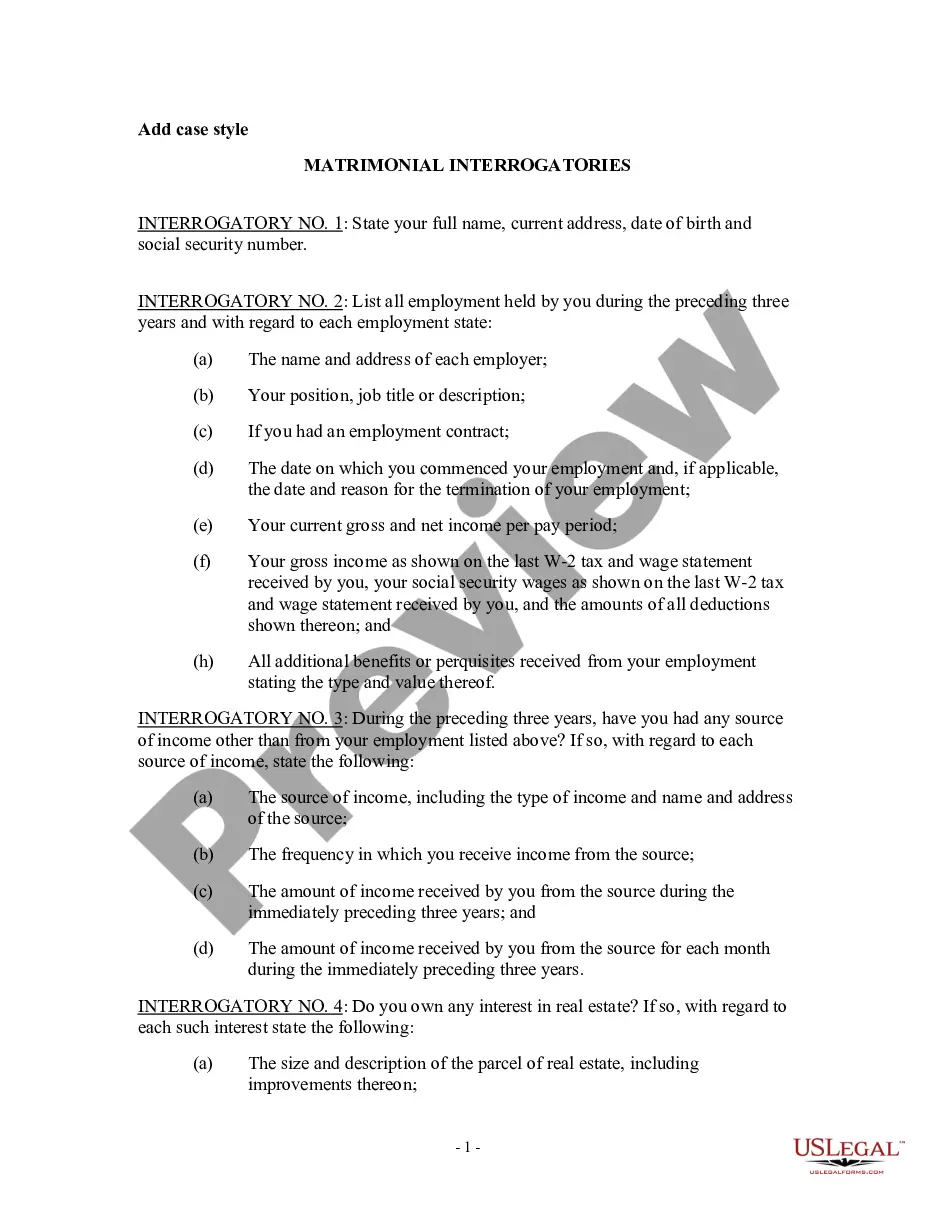
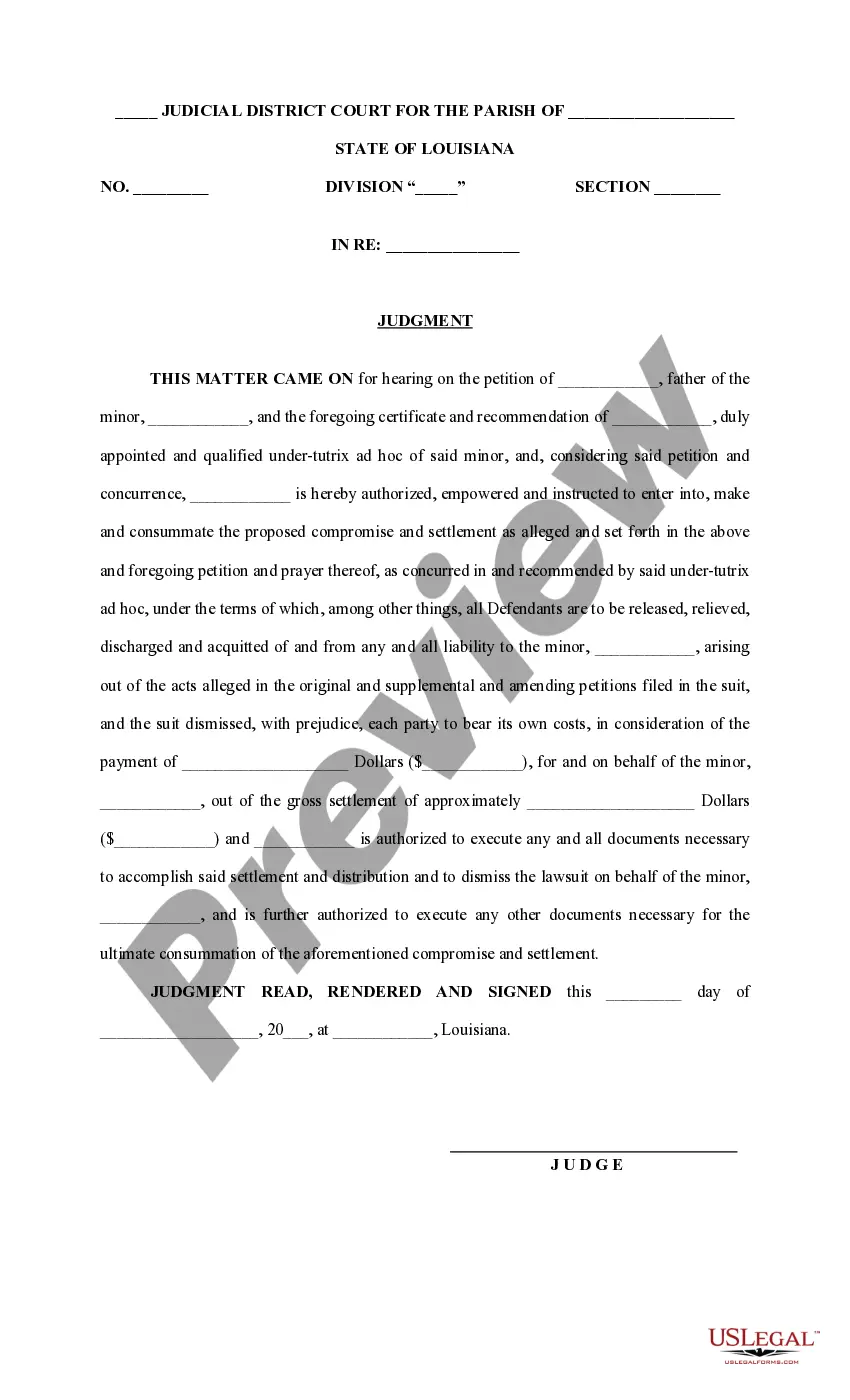
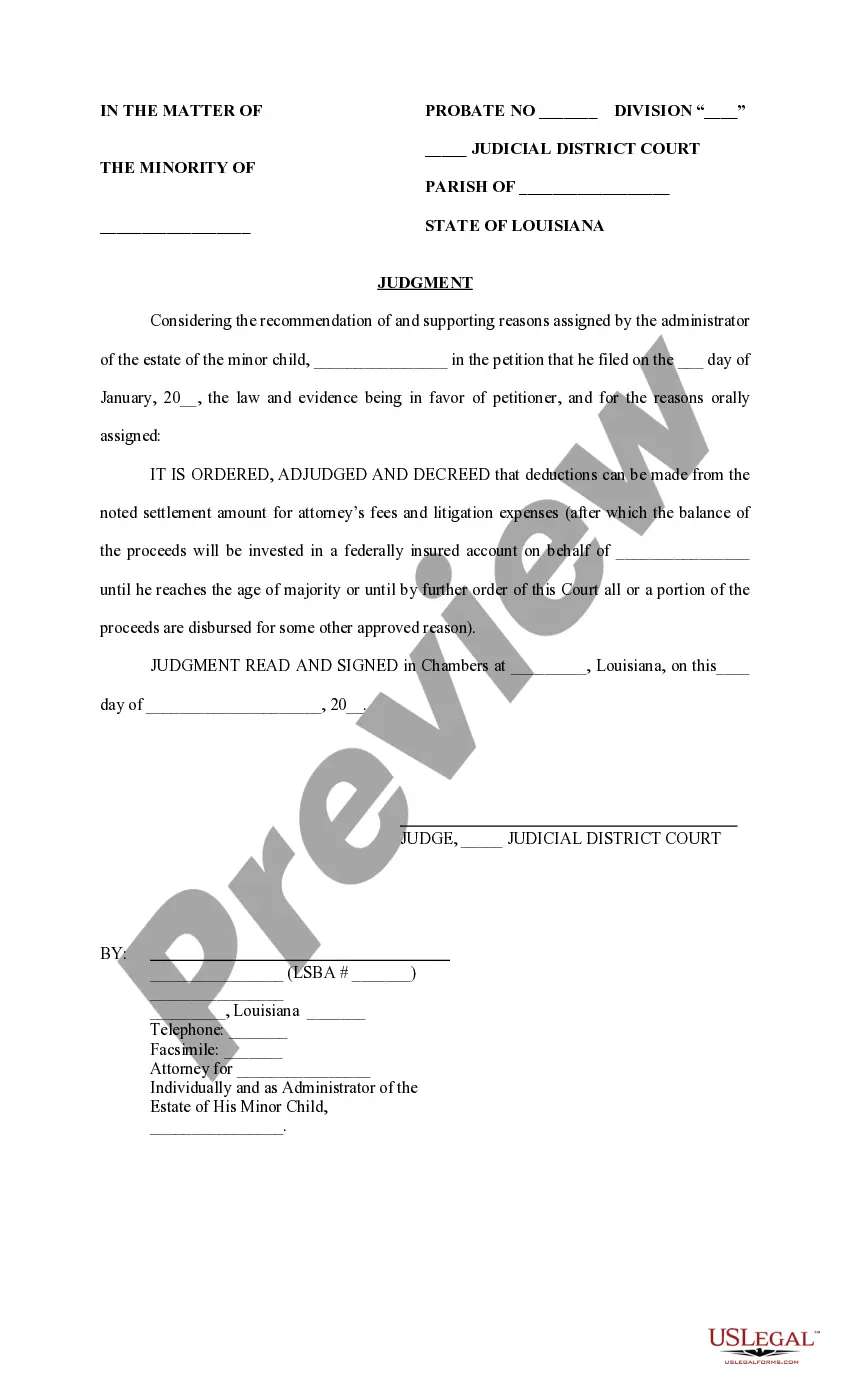
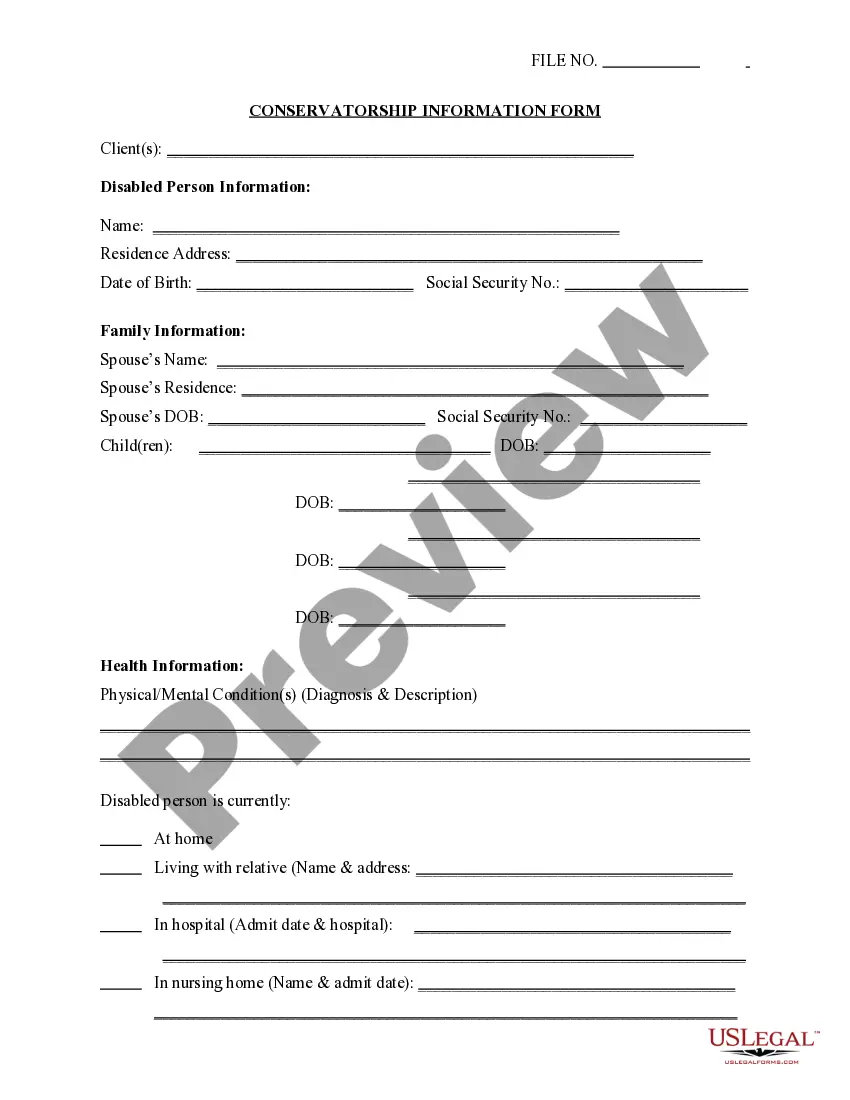
The Judgment form is a legal document executed with the approval of a parent and an appointed under-tutrix to settle claims on behalf of a minor. This form allows the dismissal of a lawsuit with prejudice, meaning the case cannot be brought back to court. It differs from other forms by specifically addressing settlements for minors, ensuring that all parties involved understand their liabilities and the conditions under which the minor's interests are protected.
Key parts of this document
- Identification of the minor and their legal representatives.
- Authorization for the representative to enter into a settlement.
- Terms of dismissal, including the release of all defendants from liability.
- Statement regarding the distribution of settlement funds.
- Signatures of the judge and representatives involved.
Situations where this form applies
This form is used when a lawsuit has been filed on behalf of a minor, and the parties have reached a settlement agreement. It is suitable when the parent or legal guardian wishes to resolve the claims through a compromise without further litigation. This might occur in personal injury cases, custody disputes, or any situation where the minor's interests need to be legally documented and settled.
Intended users of this form
- Parents or legal guardians of a minor involved in a lawsuit.
- Appointed under-tutrix or legal representatives of a minor.
- Attorneys representing minors in legal settlements.
Steps to complete this form
- Identify the minor and their legal representatives, including the parent and under-tutrix.
- Enter the details of the proposed settlement, including the dollar amount agreed upon.
- Specify the conditions under which the lawsuit will be dismissed, including any release of liability.
- Ensure all necessary signatures are obtained from the parent, under-tutrix, and the judge.
- File the completed form with the court as required by local procedures.
Does this document require notarization?
This form does not typically require notarization to be legally valid. However, some jurisdictions or document types may still require it. US Legal Forms provides secure online notarization powered by Notarize, available 24/7 for added convenience.
Get your form ready online
Our built-in tools help you complete, sign, share, and store your documents in one place.
Make edits, fill in missing information, and update formatting in US Legal Forms—just like you would in MS Word.
Download a copy, print it, send it by email, or mail it via USPS—whatever works best for your next step.
Sign and collect signatures with our SignNow integration. Send to multiple recipients, set reminders, and more. Go Premium to unlock E-Sign.
If this form requires notarization, complete it online through a secure video call—no need to meet a notary in person or wait for an appointment.
We protect your documents and personal data by following strict security and privacy standards.

Make edits, fill in missing information, and update formatting in US Legal Forms—just like you would in MS Word.

Download a copy, print it, send it by email, or mail it via USPS—whatever works best for your next step.

Sign and collect signatures with our SignNow integration. Send to multiple recipients, set reminders, and more. Go Premium to unlock E-Sign.

If this form requires notarization, complete it online through a secure video call—no need to meet a notary in person or wait for an appointment.

We protect your documents and personal data by following strict security and privacy standards.
Common mistakes to avoid
- Failing to include all necessary signatures, particularly from the judge and representatives.
- Leaving the settlement amount fields blank or incorrectly filled.
- Not adhering to local court requirements for submission and filing.
Why complete this form online
- Convenience of accessing and downloading the form at any time.
- Editability allows users to customize the form to fit specific needs.
- Reliability from using templates drafted and reviewed by licensed attorneys.
Looking for another form?
Form popularity
FAQ
In Louisiana, you typically have 60 days from the date the judgment is signed to file an appeal. This timeline is critical, as failing to appeal within this period can result in losing your right to challenge the judgment. It is advisable to act promptly if you wish to appeal a Louisiana judgment, as legal procedures can be complex. Consulting resources like US Legal Forms can provide guidance on the appeal process.
A final and executory judgment in Louisiana is a court decision that has reached completion and cannot be appealed. This type of judgment signifies that all legal avenues have been exhausted, making it enforceable. Once you receive a final and executory judgment, you can use it to pursue the remedies outlined, such as collection actions. Understanding this concept is essential for navigating Louisiana judgments effectively.
In Louisiana, certain personal property can be seized to satisfy a judgment, including vehicles, bank accounts, and personal belongings. However, state laws protect some property, such as basic household items and tools necessary for your trade. To navigate these regulations effectively, consider using US Legal Forms to access necessary documentation and expert advice that specifically pertains to Louisiana judgment enforcement.
A Louisiana judgment remains valid for ten years from the date it was rendered. This duration allows the creditor ample time to enforce the Louisiana judgment and collect the owed amount. After ten years, you may need to renew the judgment to maintain its enforceability. It’s essential to keep track of these timelines to protect your rights as a creditor.
To make a judgment executory in Louisiana, you typically need to obtain a certified copy of the judgment from the court. This document allows the judgment creditor to take specific actions for enforcement. Ensure that all applicable procedures are followed according to Louisiana law. Utilizing platforms like US Legal Forms can simplify the process of obtaining the necessary documents.
When a judgment is filed against you in Louisiana, it means a court has ruled in favor of the other party. This ruling may lead to wage garnishments, property liens, or other collection actions. It's essential to take this situation seriously and explore options for contesting the judgment or negotiating a settlement. Consulting with a legal expert can help you navigate this process effectively.
In Louisiana, the statute of limitations for enforcing a judgment is typically ten years. This means you have ten years from the date of the Louisiana judgment to collect on it. If you fail to act within this time frame, the judgment may expire, making it unenforceable. It’s important to keep track of this timeline to protect your interests.
To obtain a judgment of possession in Louisiana, you start by filing a petition with the court. This petition must include details about the property and your legal right to possession. After filing, you may need to attend a court hearing where the judge will review the evidence. If the court rules in your favor, you will receive a Louisiana judgment granting you possession.