Montana First Report of Injury or Occupational Disease
Description
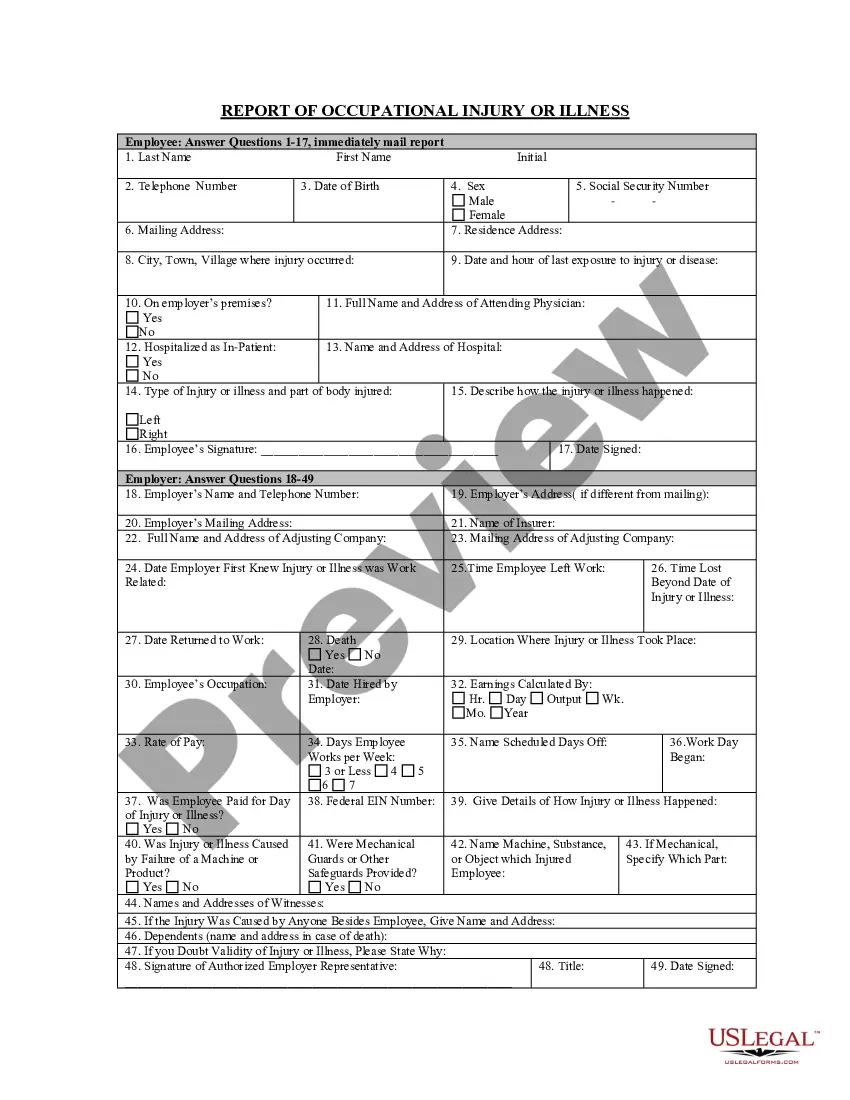
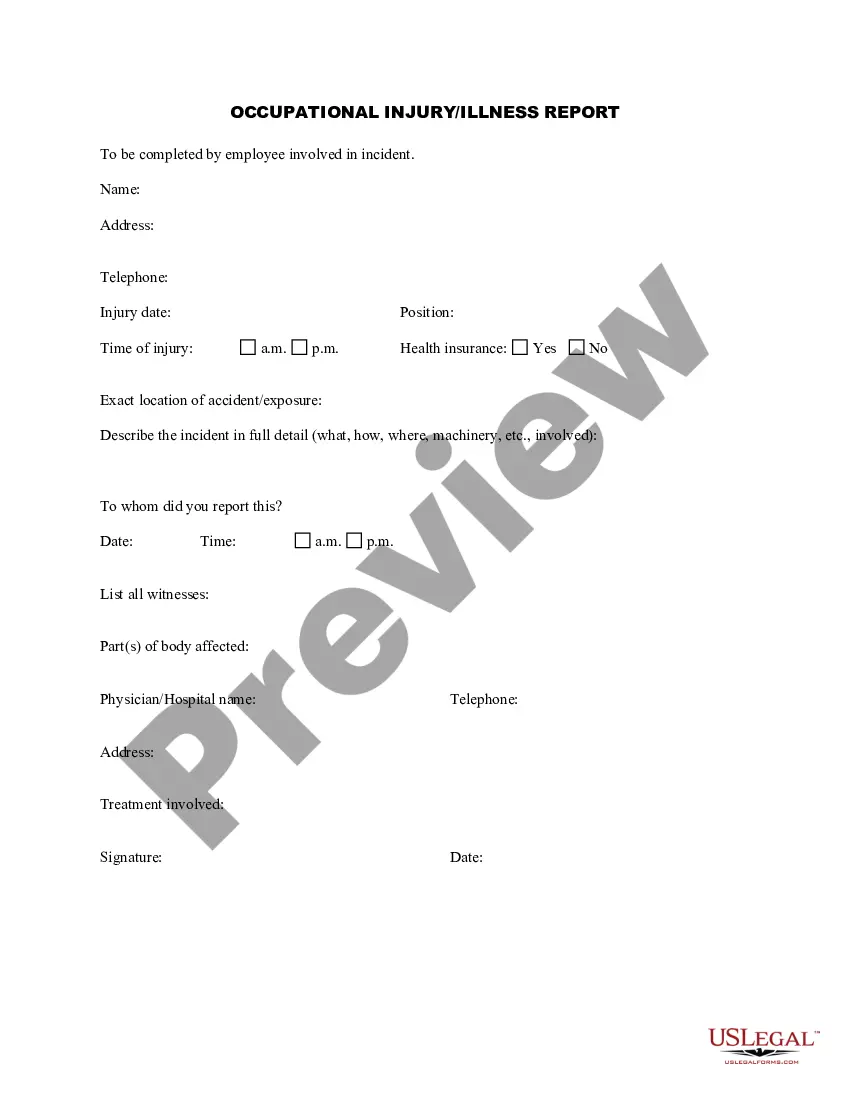
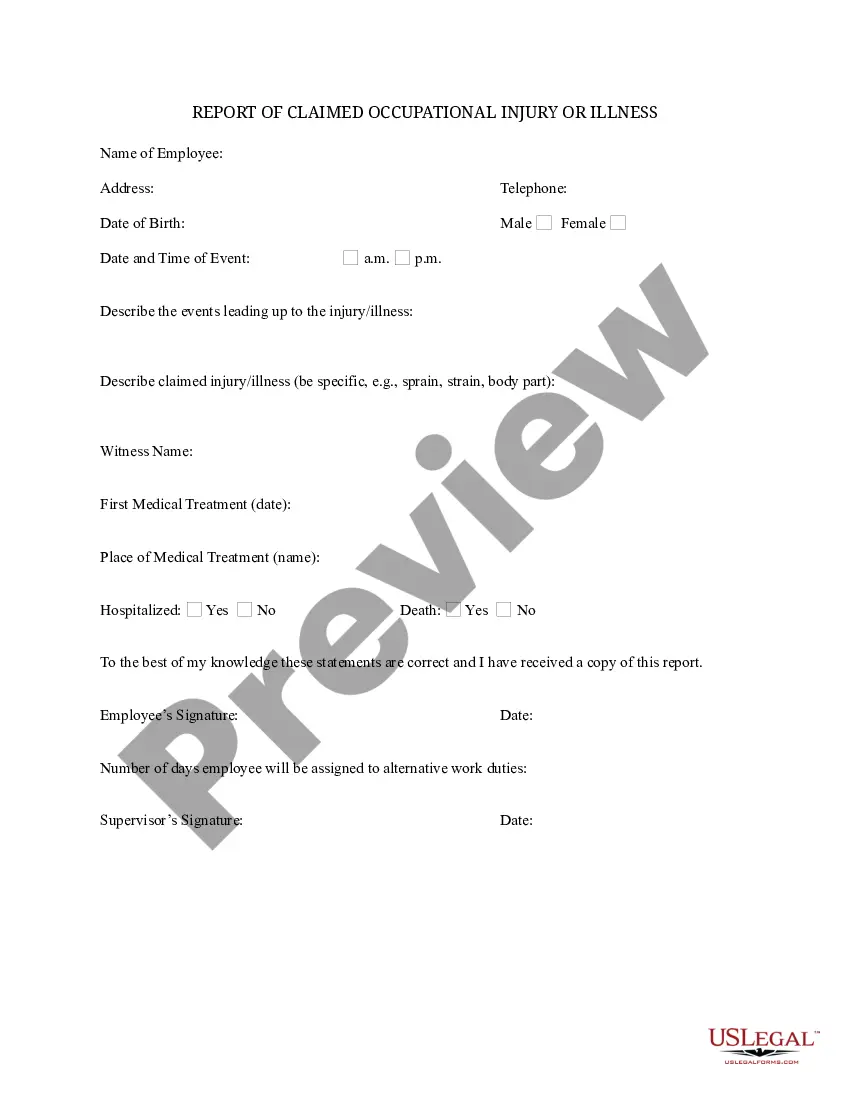
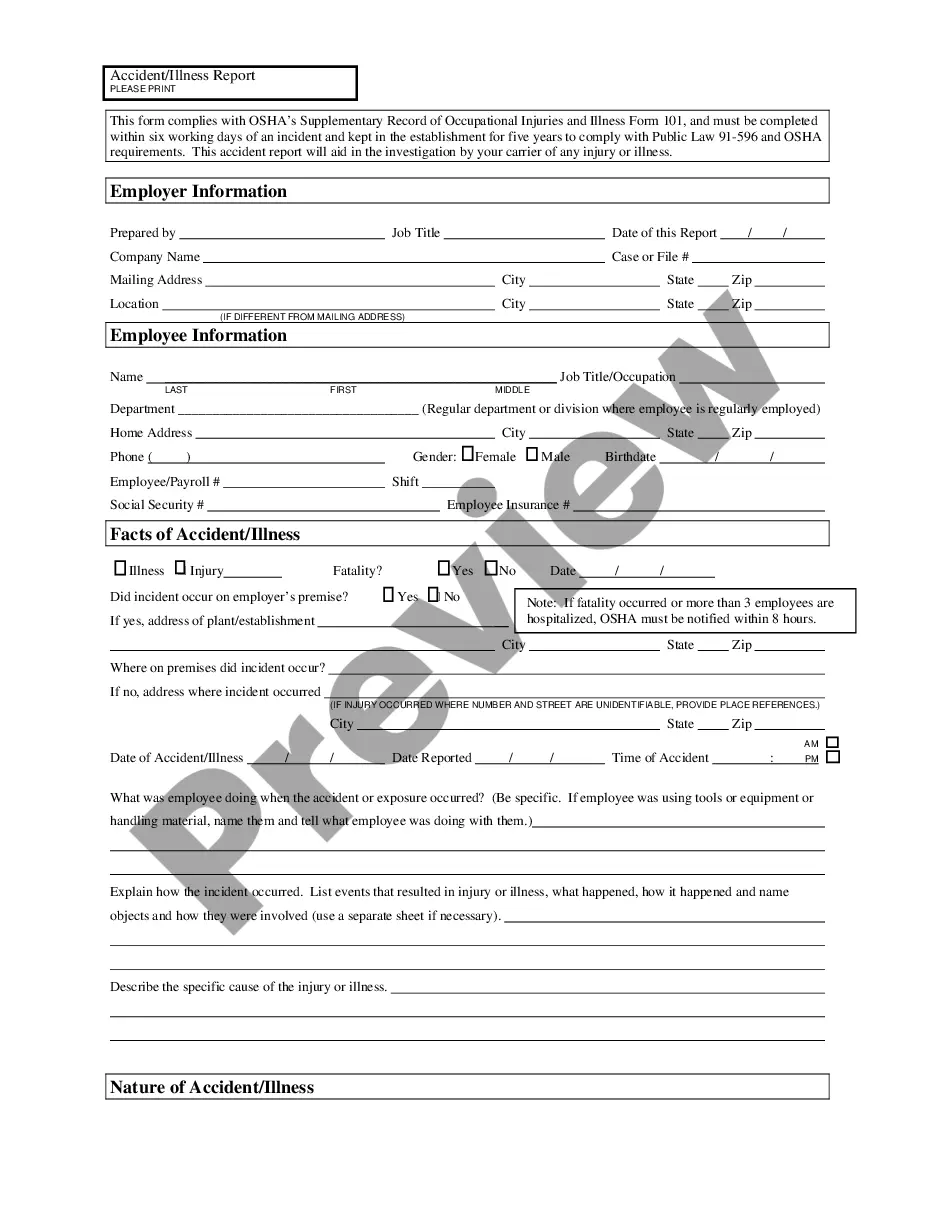




How to fill out Montana First Report Of Injury Or Occupational Disease?
Obtain a printable Montana First Report of Injury or Occupational Disease in just several clicks in the most extensive library of legal e-documents. Find, download and print out professionally drafted and certified samples on the US Legal Forms website. US Legal Forms continues to be the #1 supplier of reasonably priced legal and tax templates for US citizens and residents online starting from 1997.
Users who already have a subscription, need to log in into their US Legal Forms account, get the Montana First Report of Injury or Occupational Disease and find it saved in the My Forms tab. Customers who never have a subscription are required to follow the tips below:
- Ensure your form meets your state’s requirements.
- If available, read the form’s description to learn more.
- If readily available, preview the form to view more content.
- As soon as you are confident the template suits you, click Buy Now.
- Create a personal account.
- Pick a plan.
- through PayPal or credit card.
- Download the form in Word or PDF format.
As soon as you have downloaded your Montana First Report of Injury or Occupational Disease, you are able to fill it out in any online editor or print it out and complete it by hand. Use US Legal Forms to to access 85,000 professionally-drafted, state-specific documents.
Form popularity
FAQ
All injuries, no matter how minor, must be reported within 24 hours of the injury.It must be reported to our workers' compensation department in case the injury becomes worse and needs medical attention in the future. That way, the reporting of the injury will not be considered late by the state.
The workers' comp system in Montana is a no-fault system that compensates injured workers for medical bills, lost wages, and permanent impairments resulting from their injuries. To take advantage of these benefits, injured workers must follow certain procedures required by Montana law.
An occupational disease is covered under workers compensation and employers liability insurance. Both cover claims for bodily injury by disease.
Then, Montana law requires employers to file a First Report of Injury (FROI) form within 6 days of being notified by the injured worker. Employers can submit their FROI to their workers' comp insurer or the Montana State Fund (MSF) via phone, fax, mail or online (see contact information below).
You need to report a work-related injury within 48 hours of becoming aware of the injury. If you don't report a work-related injury within five days of becoming aware of the injury, you may be required to pay a 'claims excess payment', which is equivalent to one week of the worker's weekly payments.
If there is a serious injury or illness, a death or a dangerous incident, you must report it to us immediately on 13 10 50 as an urgent investigation might be needed. Incidents can be notified 24 hours a day, 7 days a week by calling 13 10 50.
Report the injury or illness to your employer If your injury or illness developed gradually, report it as soon as you learn or believe it was caused by your job. Reporting promptly helps avoid problems and delays in receiving benefits, including medical care.
What is the average cost of workers' compensation insurance in Montana? Estimated employer costs for workers' compensation in Montana are $2.01 per $100 covered in payroll.
Report these payments as wages on Line 7 of Form 1040 or Form 1040A, or on Line 1 of Form 1040EZ. If your disability pension is paid under a statute that provides benefits only to employees with service-connected disabilities, part of it may be workers' compensation. That part is exempt from tax.