Amendment No. 1 to Managed Network Agreement between Sprint Communications Company, LP and Bridge Data Company
Overview of this form
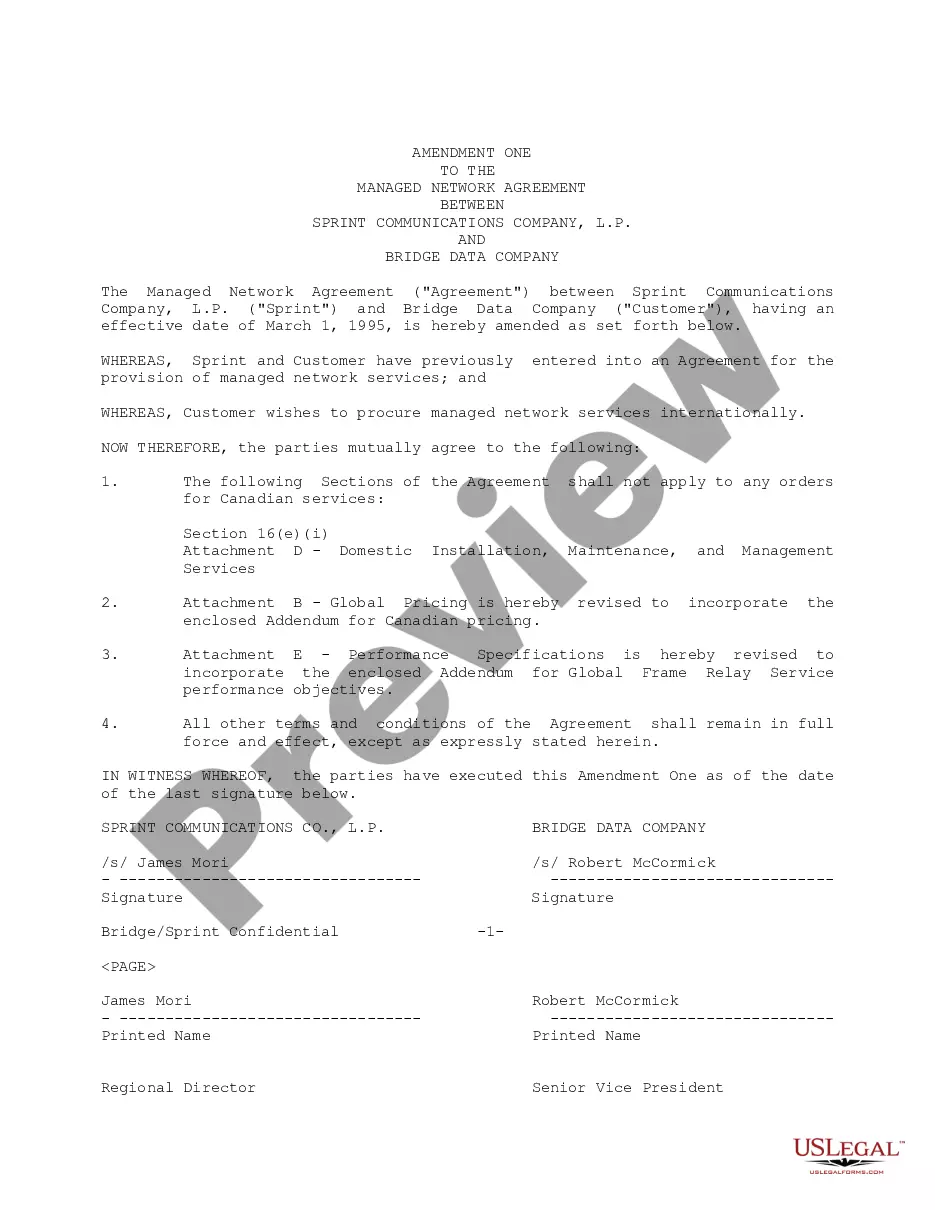
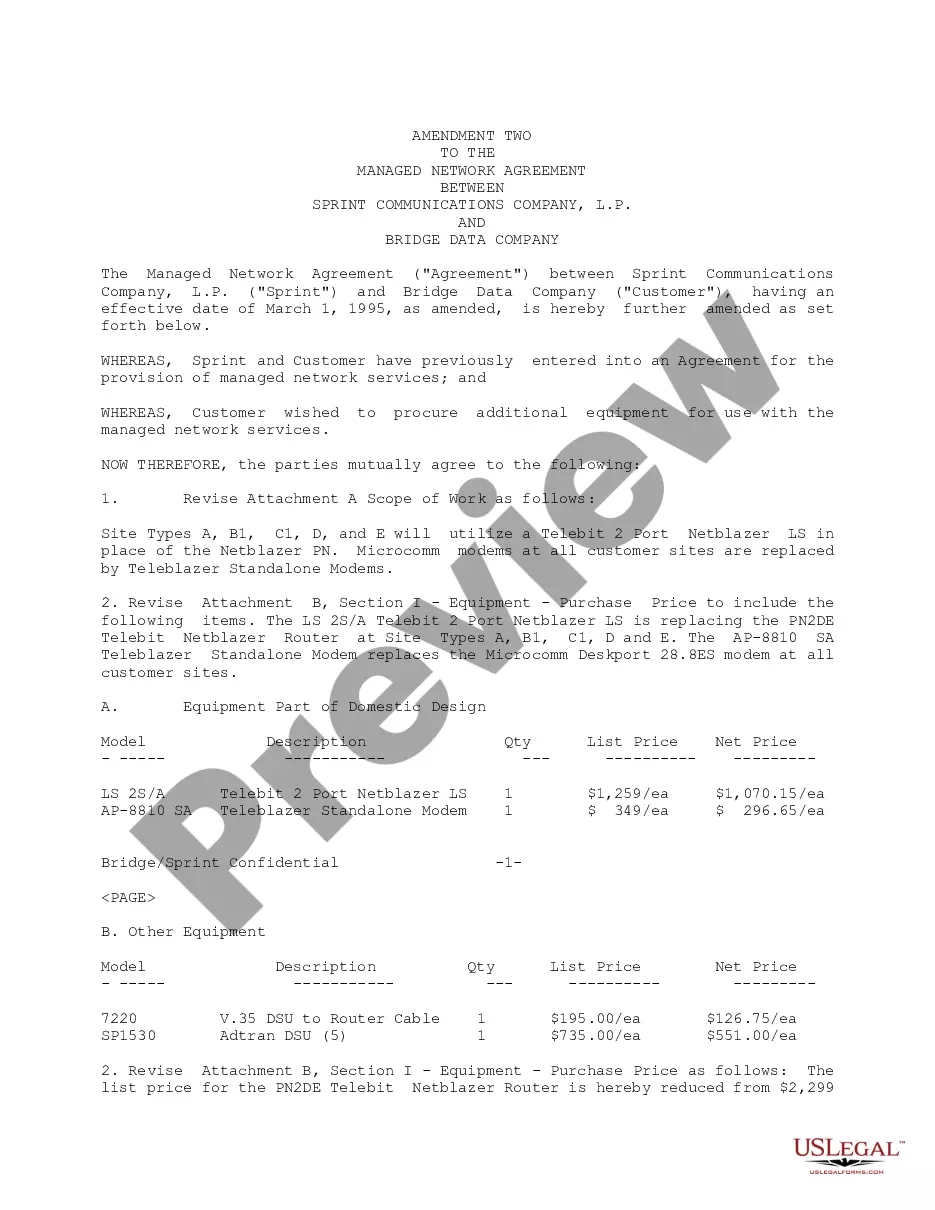
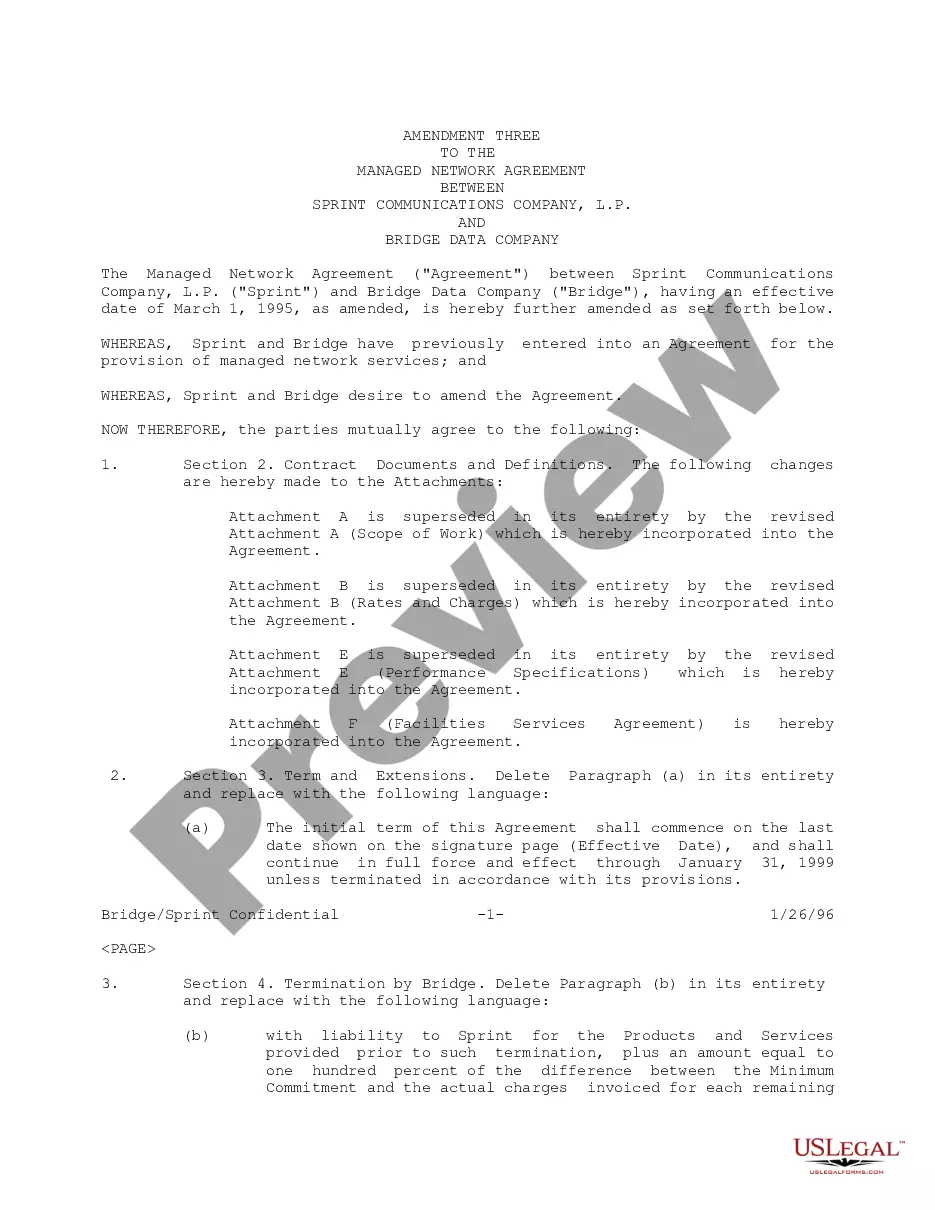
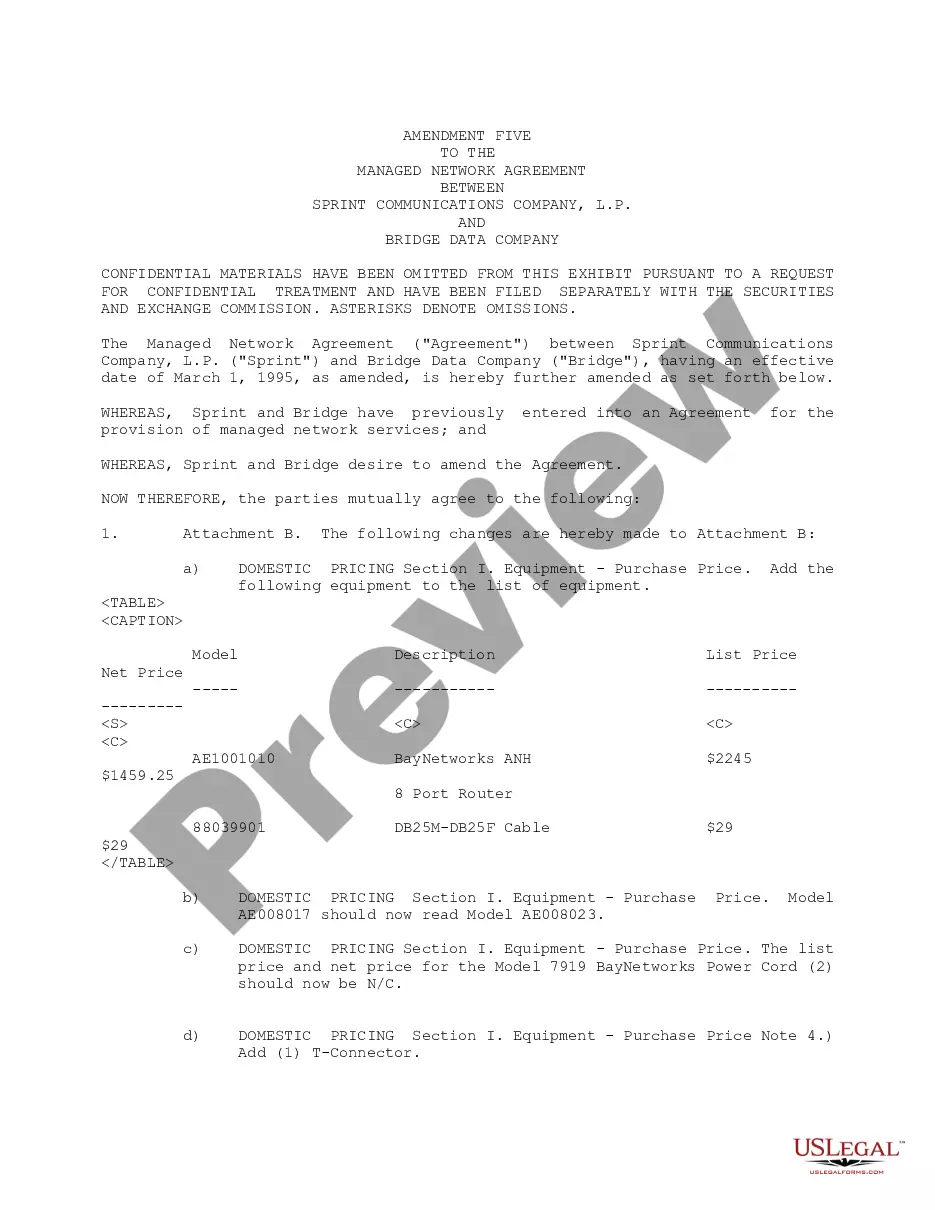
The Amendment No. 1 to Managed Network Agreement between Sprint Communications Company, LP and Bridge Data Company is a legal document that modifies the existing Managed Network Agreement. This document specifies the changes regarding the provision and acquisition of managed network services, particularly for international operations. It provides clarity on which sections of the prior agreement are adjusted or excluded, ensuring that both parties understand their updated obligations and rights while maintaining the integrity of the original agreement.
Main sections of this form
- Effective date: Details the date of the agreement and its amendments.
- Scope of services: Clarifies the terms regarding international managed network services.
- Revised pricing: Includes updated specifications for pricing related to Canadian services.
- Performance specifications: Details modifications to performance metrics for services provided globally.
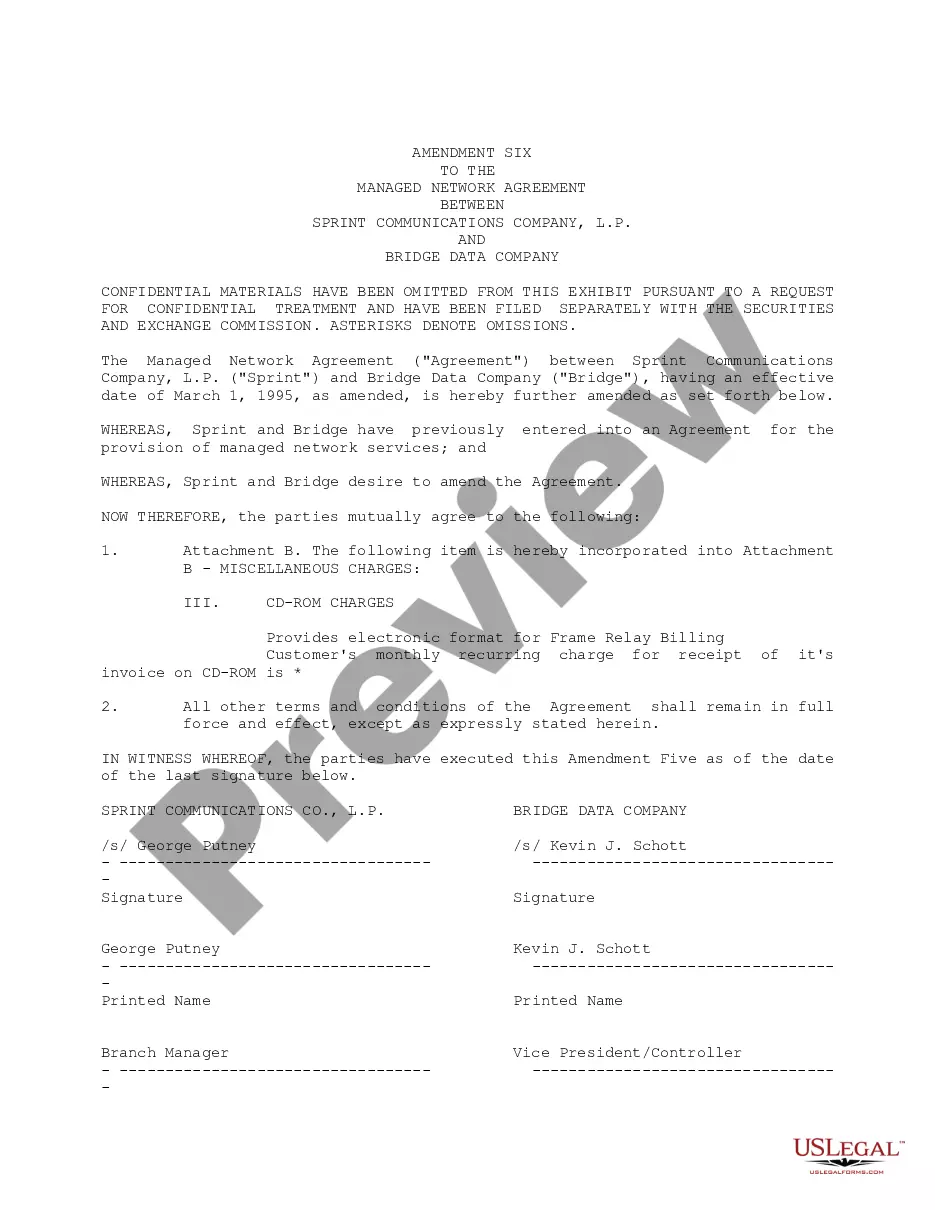
- Signatures and execution: Requires signatures from authorized representatives of both parties, solidifying the agreement.
When to use this document
This form should be used when parties to a Managed Network Agreement wish to modify specific terms or conditions of the existing contract. For instance, if the Customer seeks to expand services into Canada or change pricing for managed network services, this amendment provides the necessary legal documentation to do so. It helps ensure both parties are aligned on the adjustments made to their agreement.
Who can use this document
This amendment is suitable for:
- Businesses entering into or modifying existing agreements for managed network services.
- Legal representatives tasked with drafting and executing amendments to contracts.
- Any authorized signatories of Sprint Communications Company, LP and Bridge Data Company involved in managing the agreement.
Steps to complete this form
To complete the Amendment No. 1, follow these steps:
- Identify the parties involved in the amendment, being sure to include their full legal names.
- Specify the effective date of the amendment to ensure clarity on when it takes effect.
- Reference the specific sections of the original agreement that are being amended or excluded.
- Incorporate any revised pricing or performance specifications as outlined in attachments.
- Obtain signatures from authorized representatives of both parties, along with their printed names and titles.
Notarization guidance
This form does not typically require notarization unless specified by local law. However, it is advisable to consult legal counsel to confirm compliance with any specific requirements that might apply based on jurisdiction.
Get your form ready online
Our built-in tools help you complete, sign, share, and store your documents in one place.
Make edits, fill in missing information, and update formatting in US Legal Forms—just like you would in MS Word.
Download a copy, print it, send it by email, or mail it via USPS—whatever works best for your next step.
Sign and collect signatures with our SignNow integration. Send to multiple recipients, set reminders, and more. Go Premium to unlock E-Sign.
If this form requires notarization, complete it online through a secure video call—no need to meet a notary in person or wait for an appointment.
We protect your documents and personal data by following strict security and privacy standards.

Make edits, fill in missing information, and update formatting in US Legal Forms—just like you would in MS Word.

Download a copy, print it, send it by email, or mail it via USPS—whatever works best for your next step.

Sign and collect signatures with our SignNow integration. Send to multiple recipients, set reminders, and more. Go Premium to unlock E-Sign.

If this form requires notarization, complete it online through a secure video call—no need to meet a notary in person or wait for an appointment.

We protect your documents and personal data by following strict security and privacy standards.
Mistakes to watch out for
- Not specifying the effective date of the amendment, which can lead to confusion.
- Failing to include all relevant parties' signatures, making the amendment potentially unenforceable.
- Inaccurately referencing sections of the original agreement that are being amended.
Why complete this form online
- Convenience of accessing and completing essential legal forms from any location.
- Flexibility to edit the document easily before finalizing and signatures.
- Reliable templates drafted by licensed attorneys, which helps ensure compliance with legal standards.
Legal use & context
- This amendment is legally binding once signed by both parties, provided the original agreement is still in effect.
- The document should clearly reflect the changes agreed upon by both parties to avoid future disputes.
- It is crucial to retain both the original and amended agreements for legal records.
Quick recap
- The amendment clarifies specific modifications to an existing Managed Network Agreement.
- It is essential for businesses seeking to adjust terms related to managed network services.
- Proper completion includes clear identification of parties, effective dates, and necessary signatures.
Looking for another form?

Form popularity
FAQ
Perhaps the most famous section of the Bill of Rights is the First Amendment. This right is so important, because it protects our rights to speech, press, petition, religion, and assembly.This freedom is extended even farther when we as citizens are granted the right to petition and assemble.
The five freedoms it protects: speech, religion, press, assembly, and the right to petition the government.
Assembly: With no First Amendment, protest rallies and marches could be prohibited according to official and/or public whim; membership in certain groups could also be punishable by law. Petition: Threats against the right to petition the government often take the form of SLAPP suits (see resource above).
The five freedoms it protects: speech, religion, press, assembly, and the right to petition the government.The First Amendment protects us against government limits on our freedom of expression, but it doesn't prevent a private employer from setting its own rules.
The First Amendment to the U.S. Constitution protects the freedom of speech, religion and the press. It also protects the right to peaceful protest and to petition the government.The meaning of the First Amendment has been the subject of continuing interpretation and dispute over the years.
The First Amendment is one of the most important amendments for the protection of democracy. Freedom of religion allows people to believe and practice whatever religion they want. Freedom of speech and press allows people to voice their opinions publicly and to publish them without the government stopping them.